


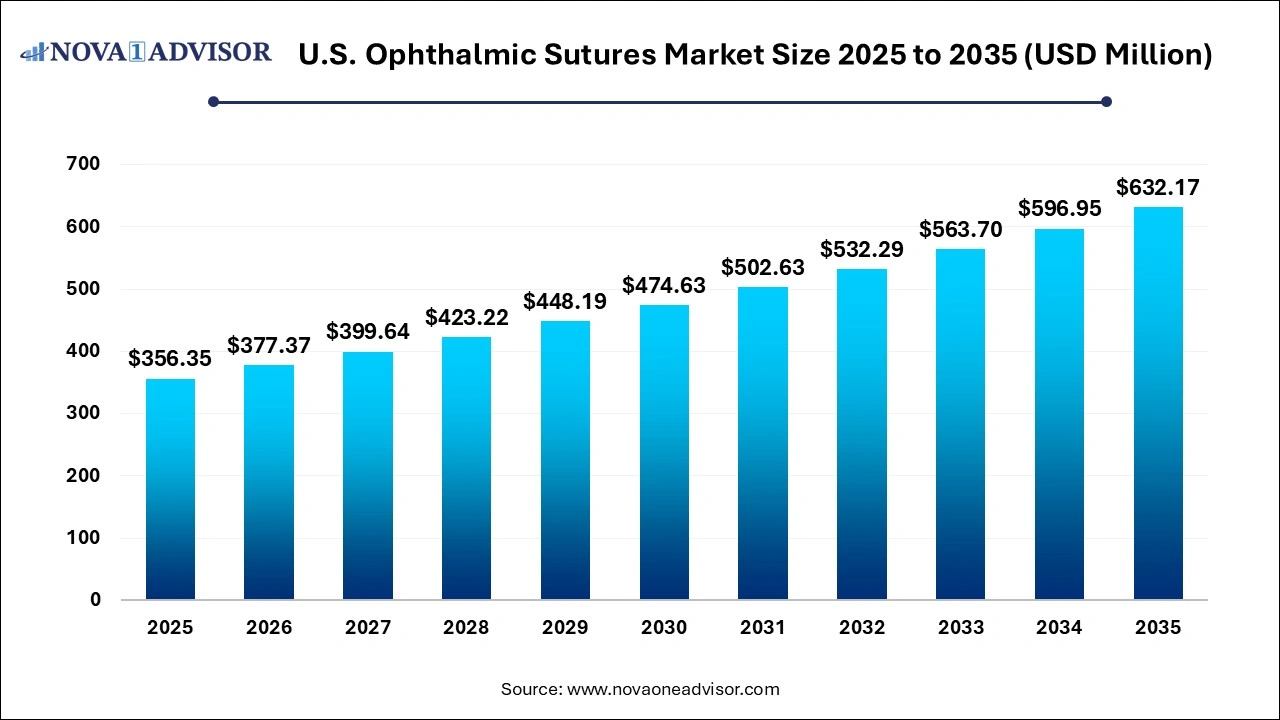
The U.S. ophthalmic sutures market size was exhibited at USD 356.35 million in 2025 and is projected to hit around USD 632.17 million by 2035, growing at a CAGR of 5.9% during the forecast period 2026 to 2035.
AI is transforming the U.S. ophthalmic sutures industry by enhancing surgical precision through AI-powered, robotic-assisted, and image-guided procedures that optimize wound closure accuracy. The integration of AI algorithms allows for real-time tissue recognition during complex, delicate eye surgeries, which in turn drives demand for advanced, specialized suture materials compatible with these modern, minimally invasive techniques. Furthermore, AI facilitates the development of "smart" or bioengineered sutures designed to monitor healing through sensors or release therapeutic agents, signaling a shift toward more personalized, tech-enabled postoperative care.
| Report Attribute | Details |
| Market Size in 2026 | USD 377.37 Million |
| Market Size by 2035 | USD 632.17 Million |
| Growth Rate From 2026 to 2035 | CAGR of 5.9% |
| Base Year | 2025 |
| Forecast Period | 2026 to 2035 |
| Segments Covered | By Type, By Material, By Coating, By Material Structure, By Absorptio, By Application, By End-use |
| Market Analysis (Terms Used) | Value (USD Million/Billion) or (Volume/Units) |
| Key Companies Profiled | Medtronic, Mani, Corza Medical, Teleflex Incorporated, Ethicon (Johnson & Johnson), B. Braun Melsungen AG |
How did the synthetic segment grow the fastest in the U.S. Ophthalmic Sutures Market?
The synthetic segments have superior tensile strength and reduced immunogenicity, which are critical for minimizing inflammation in delicate eye tissues. The shift toward these advanced polymers is accelerated by predictable absorption rates and enhanced handling characteristics that allow for greater precision in complex procedures like vitrectomies. Furthermore, the integration of antimicrobial coatings and ultra-fine diameters addresses the rising demand for better infection control and faster patient recovery times.
How did the uncoated segment lead in the U.S. ophthalmic sutures market?
The uncoated segments' growth is driven by their superior knot security and minimal risk of foreign body reactions in sensitive ocular tissues. Their inherent reliability and high versatility make them an indispensable staple for high-volume procedures such as cataract removal and corneal transplantations. Ultimately, the absence of complex coatings ensures predictable performance and long-term wound closure stability, sustaining their widespread adoption among ophthalmic surgeons.
How did the corneal transplantation surgery segment dominate the market share in the U.S. ophthalmic sutures market?
The corneal transplantation surgery segment is dominated by the rising prevalence of conditions like Fuchs' dystrophy and keratoconus. This demand is sustained by a robust healthcare infrastructure that enables advanced, high-precision surgical techniques such as DMEK, which require specialized, micro-diameter synthetic sutures for optimal graft stability. Furthermore, favorable reimbursement policies and increased awareness of vision-restoring procedures have significantly expanded patient access to these life-changing interventions.
How did the ambulatory surgical centers segment fastest growing in the U.S. ophthalmic sutures market?
The ambulatory surgical centers are driven by the operational efficiency and cost-effectiveness of ASCs, which allow for rapid turnaround times in high-volume surgeries such as cataract removals and glaucoma treatments. Consequently, the rising demand for minimally invasive techniques within these centers necessitates a steady supply of high-precision, specialized sutures to accommodate an aging population requiring vision-restoring interventions.
Segments Covered in the Report
This report forecasts the volume and revenue growth at the country level and provides an analysis of the latest industry trends in each of the sub-segments from 2018 to 2035. For this study, Nova one advisor has segmented the U.S. ophthalmic sutures market.
By Type
By Coating
By Material Structure
By Absorption
By Application
By End-use
U.S. Ophthalmic Sutures Market

 Download Sample
 Request Customization
 Request Customization
 Download Sample