

Abdominal Aortic Aneurysm (AAA) Repair Devices Market Size, Share, and Trends 2026 to 2035
 Status Published
 Category Healthcare


Content
Abdominal Aortic Aneurysm (AAA) Repair Devices Market Size and Growth 2026 to 2035
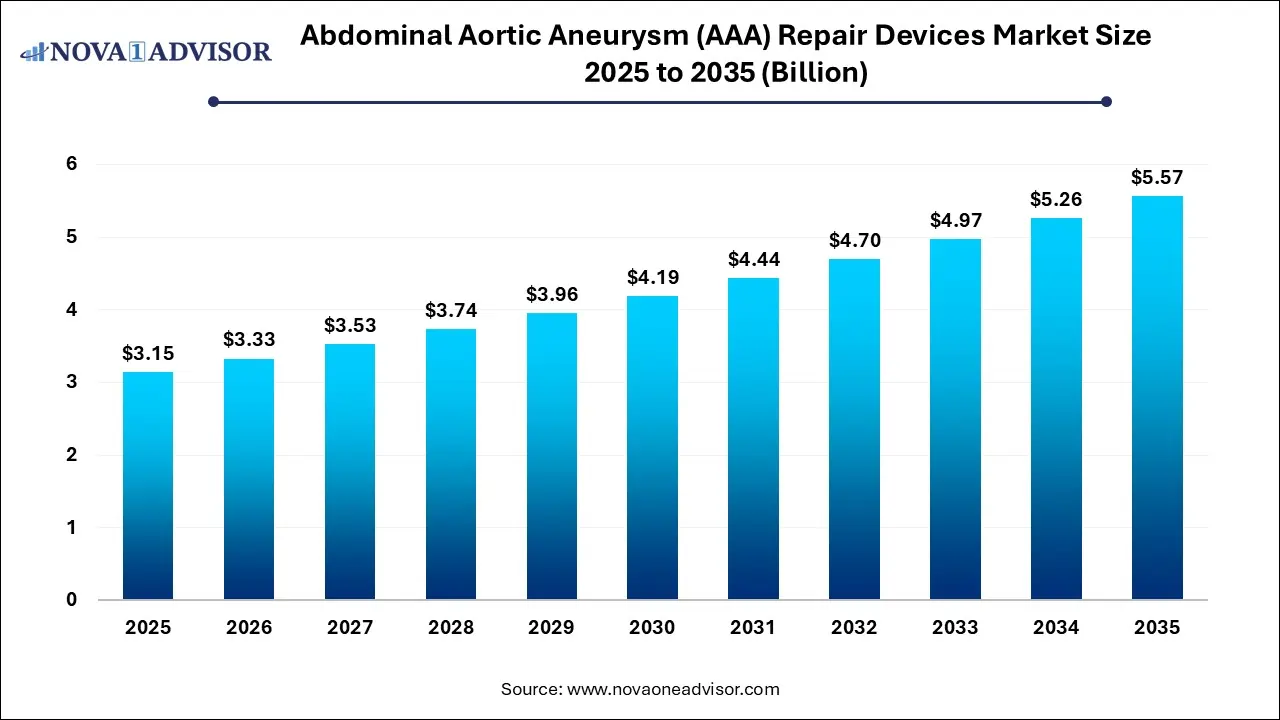
The global abdominal aortic aneurysm (AAA) repair devices market size was valued at USD 3.15 billion in 2025 and is projected to grow from USD 3.33 billion in 2026 to USD 5.57 billion by 2035, at a CAGR of 5.87% from 2026 to 2035. North America dominated the market, accounting for a revenue share of 40.0% in 2025.
Key Takeaway:
- By product type, the endografts segment dominated the market with the largest share in 2025.
- By product type, the delivery systems segment is expected to grow at the fastest CAGR over the forecast period.
- By procedure type, EVAR dominated the market with the largest share in 2025 and is expected to grow at the fastest CAGR over the forecast period.
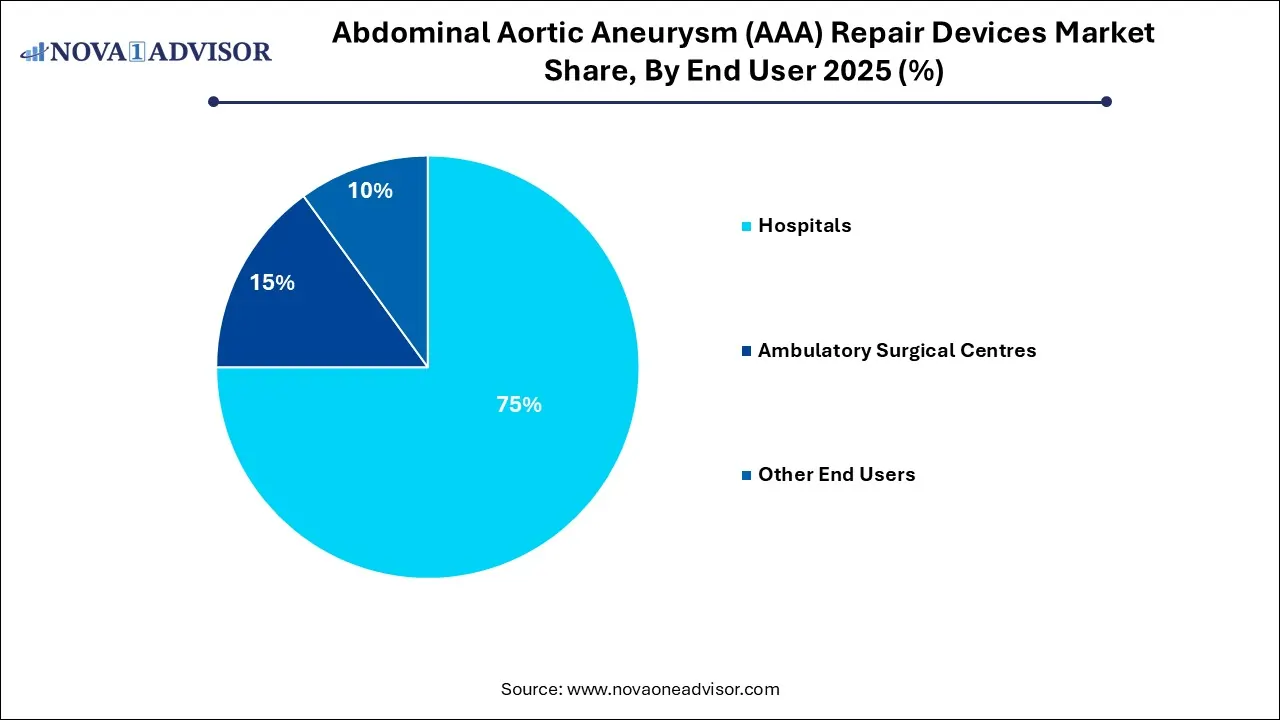
- By end user, the hospitals segment dominated the market with the largest share of 75.0% in 2025.
- By anatomy, the infrarenal repair segment dominated the market with the largest share in 2025.
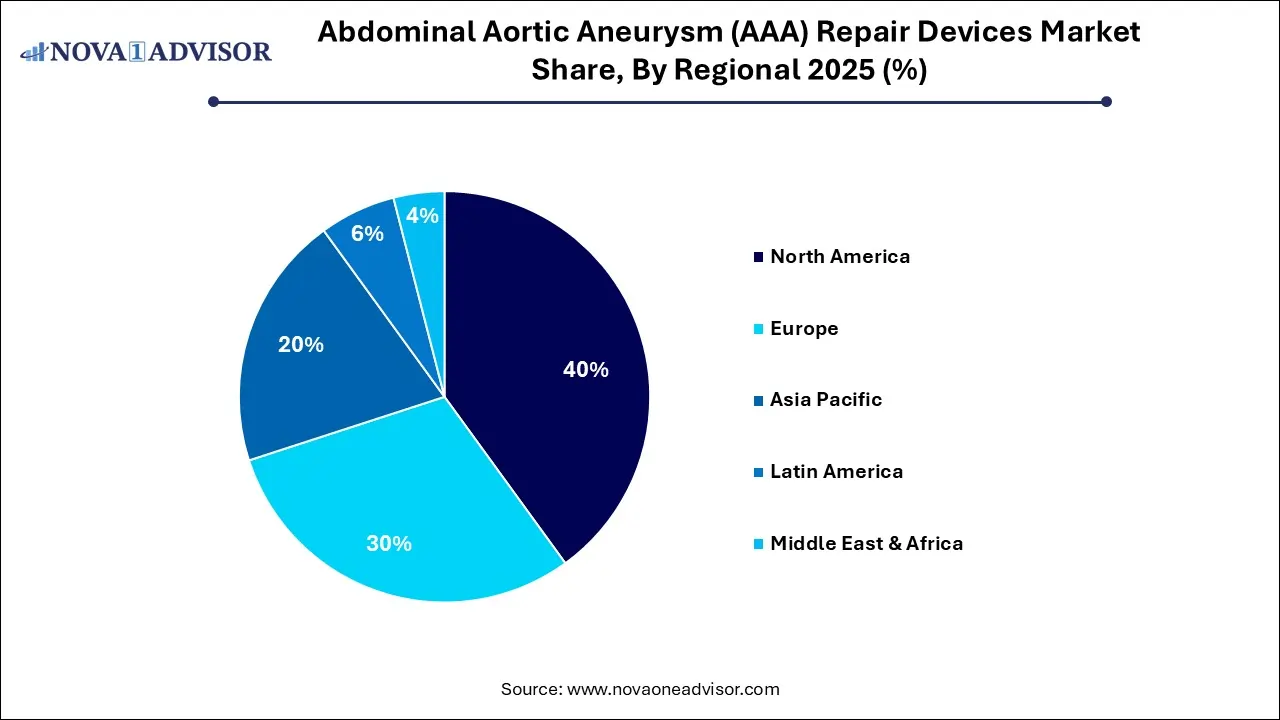
- By region, North America dominated the market with the largest share of 40.0% in 2025.
Market Overview
The global abdominal aortic aneurysm (AAA) repair devices market is witnessing steady growth, driven by the increasing prevalence of abdominal aortic aneurysms, aging populations, and the growing preference for minimally invasive vascular procedures. AAA repair devices are essential for preventing aneurysm rupture, a life-threatening condition associated with high mortality. Rising awareness of early diagnosis through screening programs and improved access to vascular care are supporting greater adoption of advanced repair technologies.
The widespread use of endovascular aneurysm repair (EVAR) has transformed the treatment landscape by offering a less invasive alternative to open surgery, resulting in shorter hospital stays, faster recovery, and improved patient outcomes. Continuous advancements in endograft design, imaging technologies, and procedural planning are enhancing treatment precision and expanding eligibility for patients with complex anatomies. In addition, increasing investments in hybrid operating rooms, growing healthcare expenditure, and ongoing innovation by medical device manufacturers are expected to drive sustained market growth over the forecast period.
Market Outlook
- Market Growth Overview: The global abdominal aortic aneurysm (AAA) repair devices marketis expected to grow significantly between 2025 and 2035, driven by increasing adoption of minimally invasive EVAR procedures.
- Sustainability Trends: Sustainability trends involve reduced supply chain reliance, resource efficiency, and sustainable device design.
- Major Investors: Major investors in the market include Medtronic, W. L. Gore & Associates, Cook Medical, Terumo Corporation, and Endologix.
How is AI impacting the global abdominal aortic aneurysm (AAA) repair devices market?
Artificial intelligence (AI) is revolutionizing the market by transitioning care from a one-size-fits-all model to individualized medicine by predicting and standardizing device sizing along with enhancing long-term monitoring for complications like endoleaks. Furthermore, AI-driven surgical planning software assists surgeons in selecting compatible stent grafts. This technology reduces sizing inaccuracies, which have historically been a primary cause of post-operative endoleaks.
AI also assists in preoperative planning by creating detailed three-dimensional vascular models that enable precise endograft selection and sizing. During endovascular aneurysm repair (EVAR), AI-driven image guidance and fusion imaging improve catheter navigation, reduce radiation exposure and contrast media use, and enhance procedural efficiency. Additionally, predictive analytics helps estimate rupture risk, procedural complications, and long-term outcomes, supporting personalized treatment strategies. As AI technology continues to evolve, it is expected to further advance precision-guided vascular care and improve the safety and effectiveness of AAA repair procedures.
Abdominal Aortic Aneurysm (AAA) Repair Devices Market Report Scope
| Report Coverage | Details |
| Market Size in 2026 | USD 3.33 Billion |
| Market Size by 2035 | USD 5.57 Billion |
| Growth Rate From 2026 to 2035 | CAGR of 5.87% |
| Base Year | 2025 |
| Forecast Period | 2026 to 2035 |
| Segments Covered | By Product Type, By Procedure Type, By End User, By Anatomy, By Region |
| Market Analysis (Terms Used) | Value (USD Million/Billion) or (Volume/Units) |
| Regional Scope | North America; Europe; Asia Pacific; Central and South America; the Middle East and Africa |
| Key Companies Profiled | Cook Medical, Inc., Medtronic PLC, Endologix, Inc., Terumo Corp., W. L. Gore & Associates, Inc., Cardinal Health, Inc., Boston Scientific Corp., CryoLife, Inc, and C. R. Bard, Inc. |
Market Driver
Rising Prevalence of Abdominal Aortic Aneurysms and Aging Population Drives Market Growth
The increasing incidence of abdominal aortic aneurysms (AAA), particularly among the aging population, is a major driver of the AAA repair devices market. Older adults, especially men over 65 with a history of smoking, hypertension, and cardiovascular disease, are at a higher risk of developing aneurysms. Expanding screening programs, greater awareness of early diagnosis, and the growing adoption of minimally invasive endovascular aneurysm repair (EVAR) are boosting demand for advanced repair devices. Improvements in healthcare infrastructure and favorable reimbursement policies further support market growth.
Market Restraint
High Cost of Endovascular Repair Procedures Limits Adoption
The high cost of advanced AAA repair devices and endovascular procedures remains a significant challenge for market expansion. Modern endografts, specialized imaging systems, hybrid operating rooms, and skilled vascular teams require substantial investment, increasing the overall cost of treatment. In addition, long-term postoperative imaging and follow-up care add to healthcare expenses. Limited reimbursement and restricted access to specialized vascular centers, particularly in developing regions, continue to hinder widespread adoption of advanced EVAR technologies.
Market Opportunity
Personalized Endovascular Therapies Create Significant Growth Opportunities
Advancements in personalized vascular medicine are creating strong growth opportunities for the AAA repair devices market. Innovations such as patient-specific endografts, three-dimensional imaging, AI-assisted procedural planning, and computational modeling enable more precise treatment for complex aneurysm anatomies. The increasing adoption of fenestrated and branched endografts is expanding the number of patients eligible for minimally invasive procedures. As personalized implants and precision-guided vascular technologies continue to evolve, they are expected to improve clinical outcomes while driving future market growth.
Segmental Insights
By Product Type
Why did the endografts segment dominate the global abdominal aortic aneurysm (AAA) repair devices market?
The endografts segment dominated the market with the largest share in 2025. The dominance of the segment can be attributed to the surge in aging population globally and superior graft durability. In addition, these custom-engineered grafts feature specialized fenestrations or branches, enabling the treatment of complex aortic aneurysms.
How did the delivery systems segment expected to hold the significantly growing global abdominal aortic aneurysm (AAA) repair devices market in the coming years?
The delivery systems segment is expected to grow at the fastest CAGR over the forecast period. The growth of the segment can be credited to the ongoing innovations in delivery catheters and low-profile sheath technologies. Delivery systems are critical for Endovascular Aneurysm Repair (EVAR), a surgical technique where a stent graft is deployed through minimal incisions, typically in the femoral region, to treat an aneurysm.
By Procedure Type
Why did the EVAR command segment dominate the global abdominal aortic aneurysm (AAA) repair devices market?
The EVAR command dominated the market with the largest share in 2025 and is expected to grow at the fastest CAGR over the forecast period. The dominance and growth of the segment can be linked to the growing elderly population along with the rapid technological innovations in stent graft materials. The development of fenestrated and branched stent grafts enables clinicians to treat highly complex aneurysms situated in close proximity to critical vasculature, leading to segment growth soon.
By End User
Why did the hospitals segment dominate the global abdominal aortic aneurysm (AAA) repair devices market?
The hospitals segment dominated the market with the largest share in 2025. The dominance of the segment is owing to their ability to handle complex cases and rapid transition towards minimally invasive endovascular aneurysm repair (EVAR). Hospitals are heavily investing in this method to achieve fewer invasive procedures, reduced intraoperative blood loss, and significantly shorter recovery periods for patients.
How did the ambulatory surgical centers segment expected to hold the significantly growing global abdominal aortic aneurysm (AAA) repair devices market the coming years?
The ambulatory surgical centers segment is expected to grow at the fastest CAGR over the forecast period. The growth of the segment is due to rapid patient recovery times and reduced healthcare costs globally. In addition, procedures performed in ambulatory surgery centers (ASCs) are generally more cost-effective for both patients and insurers than those conducted in large hospital settings.
By Anatomy
Why did the infrarenal repairs segment dominate the global abdominal aortic aneurysm (AAA) repair devices market?
The infrarenal repairs segment dominated the market with the largest share in 2025. The dominance of the segment can be attributed to the technological innovations in stent-graft designs and the rise in incidence of infrarenal aneurysms. Modern medical devices feature reduced delivery profiles via downsized catheters, enhanced active fixation for superior stability, and advanced biomaterials engineered to reduce leakages.
How did the pararenal repairs centers segment expected to hold the significantly growing global abdominal aortic aneurysm (AAA) repair devices market in the coming years?
The pararenal repairs segment is expected to grow at the fastest CAGR over the forecast period. The growth of the segment can be credited to the increasing adoption of specialized endovascular grafts and a robust clinical preference for minimally invasive treatments. Furthermore, the growing availability of specialized training for surgeons to execute intricate procedures is optimizing the expansion of the market soon.
By Regional
Why did the North American region account for the largest share in the global abdominal aortic aneurysm (AAA) repair devices market?
North America dominated the market with the largest share in 2025. The dominance of the region can be attributed to the extensive preventative screening programs and a robust clinical adoption of minimally invasive endovascular aneurysm repair (EVAR) techniques. In addition, modern medical devices offer superior flexibility, enhanced durability, and precise anatomical customization for each patient. These advancements significantly reduce the risk of adverse complications.
U.S. Global Abdominal Aortic Aneurysm (AAA) Repair Devices Market Trends
The growth of the market in the country can be driven by ongoing technological innovations by domestic market players and a rapid surge in the elderly population. Also, the rapidly expanding elderly demographic in the United States, particularly individuals aged 65 and older, represents the population at the highest risk for abdominal aortic aneurysms (AAAs).
Why did the Asia-Pacific region become the fastest-growing global abdominal aortic aneurysm (AAA) repair devices market during the forecast period?
Asia Pacific is expected to grow at the fastest CAGR over the forecast period. The growth of the region can be credited to the enhanced healthcare insurance coverage and surge in the middle-class population in emerging economies. Furthermore, endovascular aneurysm repair (EVAR) results in shorter hospitalizations, less postoperative pain, and enhanced recovery periods. The expanded accessibility and clinical adoption of this technique are generating major regional demand for these medical devices.
China Global Abdominal Aortic Aneurysm (AAA) Repair Devices Market Trends
The market in the country is growing due to a robust presence of cutting-edge medical infrastructure and a shift towards minimally invasive therapies. Market share for companies such as MicroPort Scientific Corporation is expanding significantly due to their introduction of technologically advanced stent grafts, which reduce overall treatment expenditures.
Key Players in the Global Abdominal Aortic Aneurysm (AAA) Repair Devices Market
- Medtronic plc: Its flagship products include the Endurant II/IIs stent graft systems, highly regarded by vascular surgeons for their clinical durability and conformability in challenging anatomical structures.
- W. L. Gore & Associates, Inc. (Gore Medical): Renowned for its material science innovation, Gore is a top-tier player with its Gore Excluder AAA Endoprosthesis family.
- Cook Medical (Cook Group): A pioneer in endovascular tools, Cook’s Zenith product line (including the Zenith Flex and Zenith Fenestrated [FEVAR] systems) is a benchmark for treating complex, patient-specific configurations.
Recent Developments
- In January 2026, Major Medical Devices, Inc. (MMD), an innovator in vascular intervention technologies, has secured a strategic funding partnership with TCA Venture Group to accelerate the development and commercialization of its breakthrough abdominal aortic aneurysm (AAA) repair device. This partnership supports the advancement of MMD's highly differentiated technology targeting a $3 billion market.
Segments Covered in the Report
This report forecasts revenue growth at country levels and provides an analysis of the latest industry trends in each of the sub-segments from 2021 to 2035. For this study, Nova one advisor, Inc. has abdominal aortic aneurysm (AAA) repair devices market.
By Product Type
- Endografts
- Delivery Systems
- Ancillary Devices
- Others
By Procedure Type
- Open Surgical Repair
- Endovascular Aneurysm Repair (EVAR)
By End User
- Hospitals
- Ambulatory Surgical Centres
- Other End Users
By Anatomy
- Infrarenal AAA
- Pararenal AAA
By Region
- North America
- Europe
- Asia Pacific
- Latin America
- Middle East & Africa

Proceed to Buy
Instant PDF delivery on confirmation

Abdominal Aortic Aneurysm (AAA) Repair Devices Market Size to Hit USD 5.57 Bil...
 Request Customization
 Download Sample

Get a Sample of this Report
Abdominal Aortic Aneurysm (AAA) Repair Devices Market