

Active B12 test Market Size, Share, Growth, Report 2026 to 2035
 Status Published
 Category Healthcare


Content
Active B12 test Market Summary
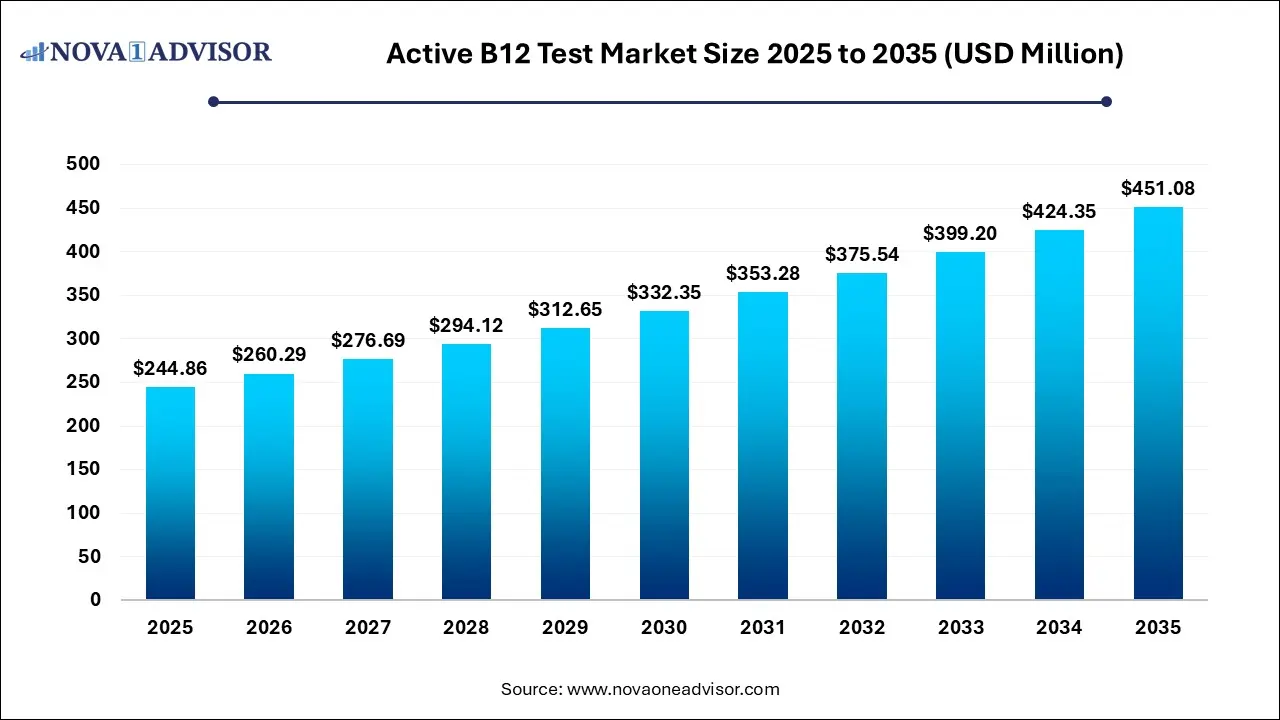
The global active B12 test market size was estimated at USD 244.86 million in 2025 and is projected to hit around USD 451.08 million by 2035, growing at a CAGR of 6.3% during the forecast period from 2026 to 2035.
Key Takeaways
- Market Size: The Active B12 Test Market is projected to grow from USD 244.86 million in 2025 to approximately USD 451.08 million by 2035.
- Market Growth: The market is expected to expand at a CAGR of 6.3% over the forecast period from 2026 to 2035.
- Test Type Insights: ELISA assays led the market in 2025, accounting for a dominant 47.2% share.
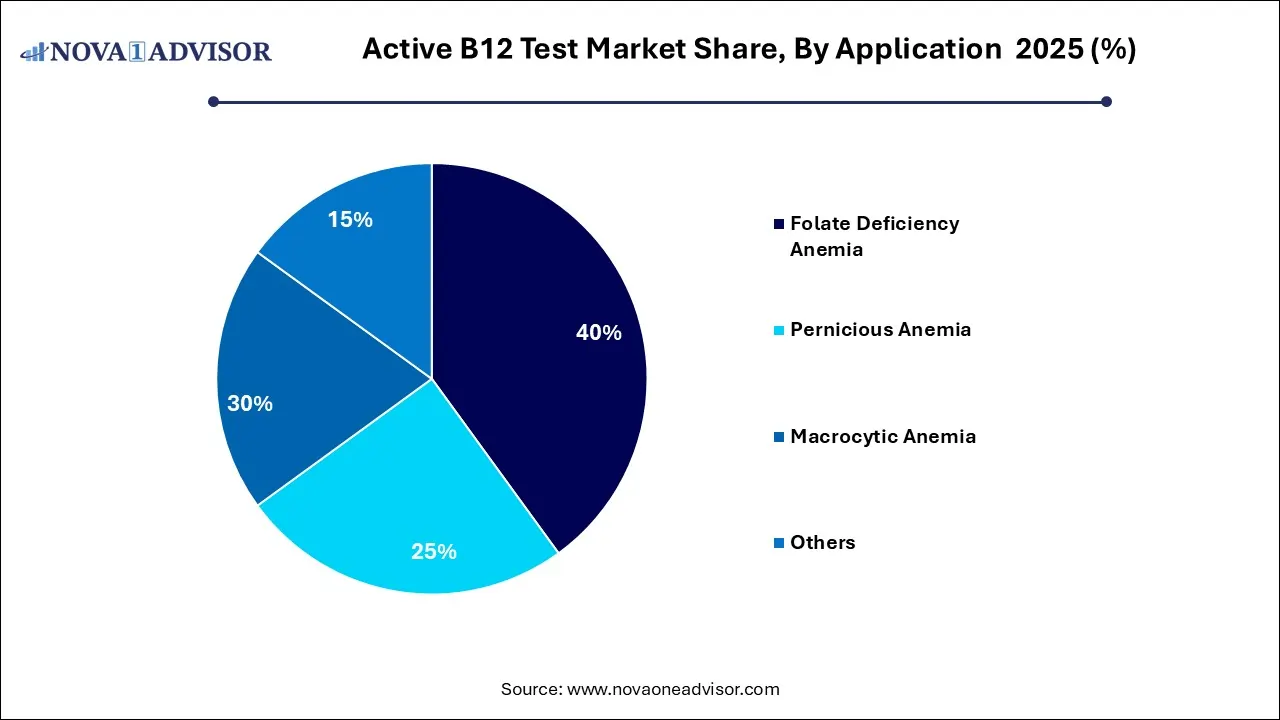
- Application Insights: Folate deficiency anemia emerged as the leading application segment, capturing 40% of the total market share.
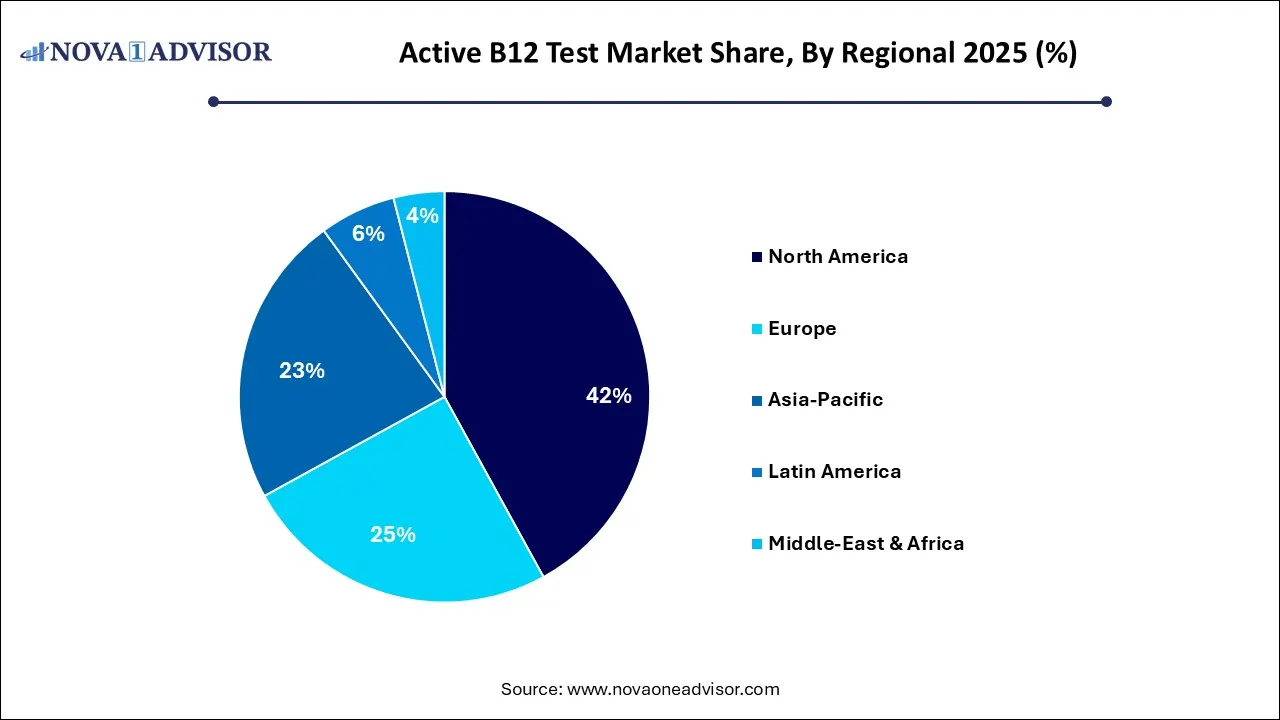
- Regional Insights: North America held the largest market share in 2025, contributing 42% to the global market.
Market Overview
The Active B12 Test Market represents a crucial segment within the broader diagnostic testing industry, focusing on the measurement of biologically active vitamin B12 (holotranscobalamin). Unlike total vitamin B12 testing, active B12 testing provides a more precise evaluation of the fraction of vitamin B12 that is readily available for cellular uptake, making it highly valuable for early detection of deficiencies.
Vitamin B12 deficiency is a widespread concern across both developed and developing regions. It is particularly prevalent among elderly populations, individuals with gastrointestinal disorders, and those following plant-based diets. Early detection is critical because prolonged deficiency can lead to irreversible neurological damage, anemia, and cognitive impairment. This has significantly increased the clinical importance of accurate diagnostic tools such as active B12 tests.
Healthcare systems worldwide are increasingly emphasizing preventive diagnostics, which is positively influencing the adoption of advanced testing solutions. Laboratories and hospitals are transitioning from traditional serum B12 tests to more precise biomarkers like holotranscobalamin. For instance, several European countries have incorporated active B12 testing into routine diagnostic protocols for anemia assessment.
Furthermore, technological advancements in immunoassay platforms and automation have enhanced test accuracy, reduced turnaround time, and improved scalability. As a result, diagnostic laboratories can process higher volumes efficiently, supporting market growth. The integration of digital health systems and laboratory information management systems (LIMS) is also contributing to streamlined workflows.
Market Outlook
- Market Growth Overview: The global active B12 test market is expected to grow significantly between 2025 and 2035, driven by the rising prevalence of B12 deficiency, the growing shift from high sensitivity of active B12 assays, and increased focus on preventative healthcare.
- Sustainability Trends: Sustainability trends involve eco-friendly and green technology, reduced resource consumption, and a shift toward preventive care.
- Major Investors: Major investors in the market include Axis-Shield Diagnostics, Abbott Laboratories, Siemens Healthineers, Roche Diagnostics, DiaSorin, LifeSpan BioSciences, and Demeditec Diagnostics.
How is AI Transforming the Active B12 Test Market?
Artificial Intelligence (AI) is playing an increasingly transformative role in the Active B12 Test Market by enhancing diagnostic accuracy, workflow efficiency, and predictive analytics. AI-powered algorithms are being integrated into laboratory systems to analyze patient data, correlate biomarkers, and assist clinicians in identifying early signs of vitamin B12 deficiency.
One significant application of AI is in clinical decision support systems (CDSS). These systems can combine patient history, dietary patterns, genetic predispositions, and laboratory results to provide a comprehensive diagnostic recommendation. For example, AI models can distinguish between functional B12 deficiency and other causes of anemia, reducing the likelihood of misdiagnosis.
AI is also improving laboratory automation. Machine learning algorithms can optimize assay calibration, detect anomalies in test results, and ensure quality control. This reduces human error and enhances reproducibility, which is critical in diagnostic testing. Automated platforms equipped with AI capabilities can handle large-scale testing with minimal manual intervention.
Another key transformation is in predictive healthcare. AI can identify populations at high risk of vitamin B12 deficiency based on demographic and lifestyle data. This enables targeted screening programs, particularly in regions with high prevalence rates. For instance, healthcare providers can proactively screen elderly patients or individuals with malabsorption conditions.
Moreover, AI-driven data analytics is helping pharmaceutical and diagnostic companies in research and development. By analyzing large datasets, companies can identify new biomarkers, improve assay sensitivity, and develop next-generation diagnostic tools. Overall, AI is shifting the market toward more personalized, efficient, and proactive healthcare solutions.
Active B12 test Market Report Scope
| Report Coverage | Details |
| Market Size in 2026 | USD 260.29 Million |
| Market Size by 2035 | USD 451.08 Million |
| Growth Rate From 2026 to 2035 | CAGR of 6.3% |
| Base Year | 2025 |
| Forecast Period | 2026 to 2035 |
| Segments Covered | By Test Type,By Application, Region |
| Market Analysis (Terms Used) | Value (USD Million/Billion) or (Volume/Units) |
| Regional Scope | North America; Europe; Asia Pacific; Central and South America; the Middle East and Africa |
| Key Companies Profiled | Axis-Shield Diagnostics Ltd. (U.S), Abbott (U.S), Siemens Healthcare Private Limited (U.S), DiaSorin S.p.A. (Italy), F. Hoffmann-La Roche Ltd (Switzerland), LifeSpan BioSciences, Inc. (U.S), Demeditec Diagnostics GmbH (Germany) |
Segmental Insights
By Test Type
How did the ELISA assay segment dominate the Global Active B12 test market?
The ELISA assay segment is driven by its exceptional sensitivity and widespread clinical validation, which established it as the gold standard for B12 diagnosis. Its cost-effectiveness and ease of integration into automated, high-throughput laboratory workflows make it the most practical choice for large-scale screenings. Advancements in sandwich ELISA techniques and miniaturization are enhancing the speed and reliability of results across healthcare settings.
How did the enzyme immunoassay segment expect to hold the fastest-growing Global Active B12 test market in the coming years?
The enzyme immunoassay segment is driven by a shift toward automated and portable diagnostic platforms is streamlining laboratory workflows and expanding testing accessibility in point-of-care settings. Global awareness of the long-term health impacts of B12 deficiency grows, particularly among high-risk demographic groups.
By Application
How did the folate deficiency anemia segment account for the largest share in the Global Active B12 test market?
The folate deficiency anemia segment is driven by identifying holotranscobalamin levels before severe clinical symptoms manifest. An active B12 test provides a critical window for intervention and nutritional management. This shift toward preventative care is particularly strong in routine monitoring, which is increasingly standard for aging populations. The ability to accurately manage chronic conditions, such as macrocytic anemia, ensures that these diagnostic tools remain indispensable to modern healthcare systems.
The macrocytic anemia segment accounts for the largest share in the Global Active B12 test market ?
The macrocytic anemia segment is driven by accurately measuring active B12 levels; these tests enable clinicians to identify the root causes of high mean corpuscular volume and low red blood cell counts early. The market's reliance on ELISA assays ensures diagnostic precision, while shifting global diets and increasing health awareness continue to fuel demand. The focus on early intervention and precise disease management positions the active B12 test market for sustained global growth.
By Regional
How did the North America region account for the largest share in the Global Active B12 test market?
North America’s highly developed healthcare system with rapid adoption of advanced diagnostic tools and precision medicine. Increasing morbidity due to vitamin B12 deficiencies, by aging populations, poor lifestyles, and changing dietary habits rising demand for testing. The Centers for Disease Control and Prevention reporting on deficiency data and increased adoption of laboratory-developed tests contribute to market growth.
U.S. Global Active B12 test Market Trends
The U.S. growing incidence of vitamin B12 deficiency in elderly populations, vegans, and patients with malabsorption syndromes drives demand for accurate diagnostics. Rising innovation in high-sensitivity assays and automated systems improves test accuracy and the development of point-of-care and home-based tests trends to provide convenience and faster results.
How did the Asia Pacific region hold the fastest-growing Global Active B12 test Market in the forecast period?
Asia Pacific’s increased government-led nutrition awareness campaigns and public health initiatives in countries, such as China, are fostering demand. High vegetarian and vegan populations, along with rising disposable incomes, increase the uptake of preventive healthcare wellness checks. Expansion of healthcare infrastructure and a high rate of prevalence of deficiency.
China Global Active B12 test Market Trends
China’s rising healthcare awareness and a massive aging population. The transition to automated immunoassay analysers and the continued reliability of ELISA technology in clinical settings. The expansion of testing into routine preventive check-ups, particularly for patients on long-term medications, such as Metformin, is creating new, consistent demand streams. As healthcare infrastructure continues to modernize, these factors ensure that the region will remain a dominant force in the global diagnostic landscape.
Key Players in the Global Active B12 test Market
- Axis-Shield Diagnostics Ltd. (U.S/UK)
Axis-Shield is a pioneer in the Active B12 market, having developed and commercialized the first enzyme-immunoassay (ELISA) kit to quantify Holotranscobalamin (HoloTC), the bioactive form of vitamin B12. Their high-precision 96-well ELISA kits, which are now widely used in laboratories across the U.S. and globally, provide an accurate alternative to total B12 tests for early deficiency detection.
- Abbott
Abbott contributes significantly by providing automated immunoassay systems, such as the Architect and Alinity series, which incorporate Axis-Shield’s assay technology to offer high-throughput, rapid, and standardized Active B12 testing in clinical labs.
- Siemens Healthcare Private Limited
Siemens Healthineers contributes through its advanced Atellica IM and ADVIA Centaur immunoassay analyzers, which enable high-volume and efficient testing for HoloTC in hospital laboratories.
Segments Covered in the Report
This report forecasts revenue growth at country levels and provides an analysis of the latest industry trends in each of the sub-segments from 2021 to 2035. For this study, Nova one advisor, Inc. has segmented the active B12 test market.
By Test Type
- ELISA Assay
- Enzyme Immunoassay
- Others
By Application
- Folate Deficiency Anemia
- Pernicious Anemia
- Macrocytic Anemia
- Others
By Region
- North America
- Europe
- Asia Pacific
- Latin America
- Middle East and Africa (MEA)
FAQ's

Proceed to Buy
Instant PDF delivery on confirmation

 Request Customization
 Download Sample

Get a Sample of this Report
Active B12 test Market