

Aesthetic Injectable Market Size, Share, and Trends 2026 to 2035
 Status Published
 Category Healthcare


Content
Aesthetic Injectable Market Size, Share, Growth, Report 2026 to 2035
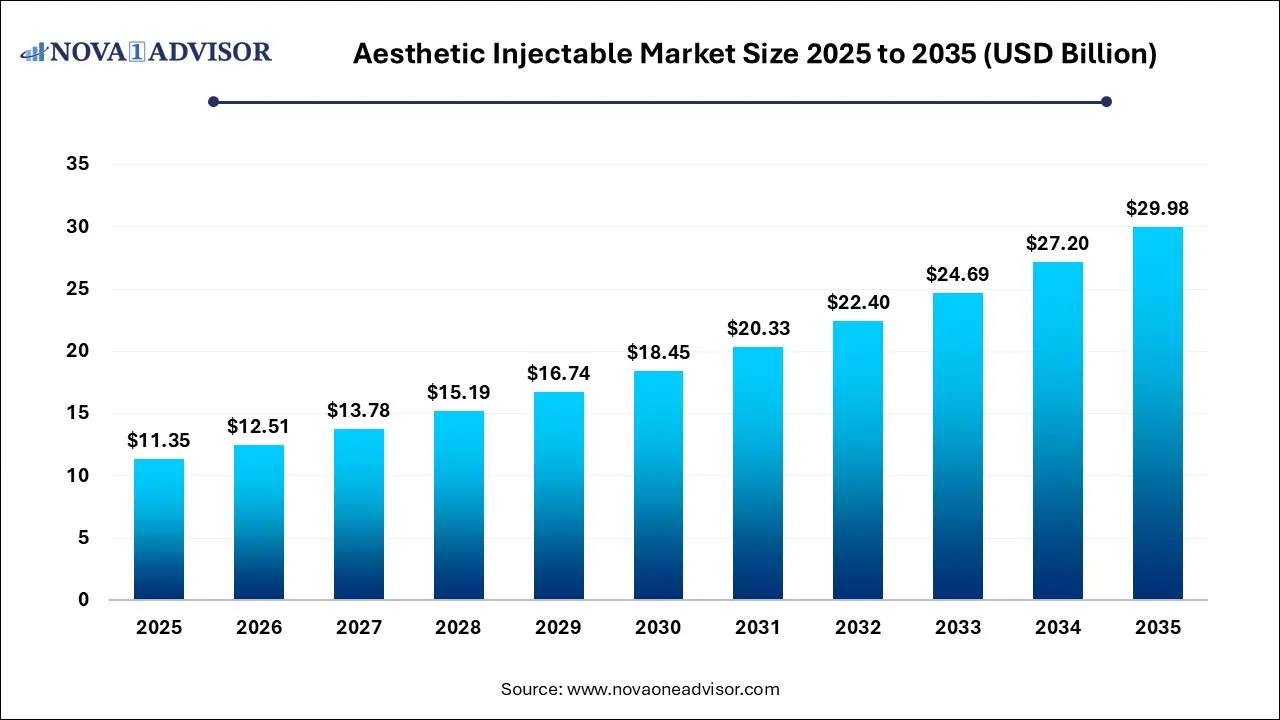
The aesthetic injectable market size was estimated at USD 11.35 billion in 2025 and is projected to increase from USD 12.51 billion in 2026 to approximately USD 29.98 billion by 2035, growing at a CAGR of 10.2% from 2026 to 2035. The aesthetic injectable market is driven by the rising consumer preference for non-surgical cosmetic procedures that offer quick, natural-looking results with minimal downtime.
Key Takeaways
- By product, the hyaluronic acid segment held a dominant position in the market with a share of 34% in 2025.
- By product, the collagen and PMMA microspheres segment is the fastest growing between 2026 and 2035.
- By application, the wrinkle correction segment held a dominant position in the market with a share of 38% in 2025.
- By application, the lip augmentation segment is the fastest growing between 2026 and 2035.
- By end-use, the MedSpas segment held a dominant position in the market with a share of 41% in 2025.
- By region, the North America region held a dominant position in the market with a share of 39% in 2025.
Innovation Driving Transformation in the Aesthetic Injectable Market
Aesthetic injectables focus on minimally invasive treatments, primarily utilizing neurotoxins and dermal fillers to alter physical appearance. These treatments offer critical advantages across various applications, such as wrinkle reduction, volume restoration, lip enhancement, and facial contouring, by delivering natural-looking results with minimal recovery time. The market growth is driven by a rising aging population, soaring consumer disposable incomes, and the normalization of cosmetic procedures as routine wellness. Furthermore, the pervasive influence of social media on beauty standards and rapid technological innovations introducing longer-lasting formulations are driving global industry expansion.
Aesthetic Injectable Market Trends
- Shift Toward Regenerative and Biostimulator Therapeutics
Consumers and clinics are prioritizing biology-first approaches that use poly-L-lactic acid and polynucleotides. These treatments stimulate the body’s natural collagen and elastin production for gradual, long-lasting, and incredibly natural rejuvenation.
- Holistic Facial Harmonization and Minimalist Interventions
The distinct move away from exaggerated, frozen expressions or overfilled features. Instead, providers are using advanced mapping techniques and holistic assessments to balance existing positive features while maintaining facial expressions.
- Early Intervention and Proactive Anti-Aging Modalities
The millennial and Gen Z cohorts are driving a surge in early-intervention clinical strategies. Demand is rising exponentially for low-dose micro-toxin protocols, which serve as pre-emptive clinical interventions to mitigate skin creasing before deep lines manifest.
Key AI Integration in the Aesthetic Injectable Market
AI and ML are transforming the aesthetic injectable industry by enabling hyper-personalized, precision-driven cosmetic treatments. Advanced computer vision and 3D facial mapping analyze individual anatomies, helping practitioners identify structural asymmetries and calculate optimal filler volumes with microscopic precision. Furthermore, predictive ML algorithms evaluate extensive datasets of clinical outcomes to forecast results and simulate changes, which significantly improves patient communication and satisfaction. By integrating augmented reality (AR) overlays for real-time guidance during procedures, these technologies also help minimize human error and reduce safety risks.
Aesthetic Injectable Market Report Scope
| Report Coverage | Details |
| Market Size in 2026 | USD 12.51 Billion |
| Market Size by 2035 | USD 29.98 Billion |
| Growth Rate From 2026 to 2035 | CAGR of 10.2% |
| Base Year | 2025 |
| Forecast Period | 2026 to 2035 |
| Segments Covered | Product, Application, End-use, Region |
| Market Analysis (Terms Used) | Value (USD Million/Billion) or (Volume/Units) |
| Regional Scope | North America; Europe; Asia Pacific; Central and South America; the Middle East and Africa |
| Key Companies Profiled | AbbVie Inc.; Galderma; Merz GmbH and Co. KGaA; Sinclair; Medytox; Prollenium Medical Technologies; Tiger Aesthetics Medical (Suneva Medical, Inc.); HUGEL, Inc.; Ipsen Pharma; Teoxane |
Market Dynamics
Driver
Minimally Invasive Appeal
The offering a convenient, virtually no-downtime alternative to traditional plastic surgery. Patients highly value these quick, lunch-break treatments because they provide natural-looking facial rejuvenation without significant discomfort or recovery time. This frictionless approach reduces barriers to entry for first-time clients while encouraging frequent maintenance visits among returning consumers.
Restraint
High Cost
The market growth is hindered by the limited widespread consumer accessibility and lower adoption in emerging regions. Because these procedures are rarely covered by insurance, the hefty out-of-pocket expense often deters potential new customers, particularly in price-sensitive demographics. Furthermore, because the effects are temporary, the continuous financial burden of maintenance sessions prevents many from committing to long-term usage. Economic fluctuations and inflation also cause consumers to cut back on discretionary wellness and cosmetic spending.
Opportunity
Male Demographic and Younger Audience
The shifting cultural norms and changing perceptions of masculinity have positioned the male demographic as one of the fastest-growing consumer segments in the aesthetic injectable market. Men are increasingly pursuing minimally invasive treatments like botulinum toxin and dermal fillers for structural refinement and anti-aging with minimal social downtime. The younger audiences, such as Millennials and Gen Y, are adopting these procedures for proactive self-care and preventative maintenance rather than transformation.
Segment Insights
By Product Insights
Why Did the Hyaluronic Acid Segment Hold a 34% Share for the Aesthetic Injectable Market?
The hyaluronic acid segment held a dominant position in the market with a share of 34% in 2025. Owing to its strong safety profile, reversibility, immediate results, and broad cosmetic applications. The increasing shift towards outpatient aesthetic treatments over expensive, surgical facelifts, HA injectables provide a convenient alternative with minimal downtime.
The collagen and PMMA microspheres segment held a 10% share of the market in 2025, with the growing preference for safer, reversible, and minimally invasive filler alternatives, such as hyaluronic acid. It offers predictable volume retention for deep facial folds and acne scars, making them highly favored by dermatologists for structural contouring.
The calcium hydroxylapatite (CaHA) segment held a 12% share of the market in 2025, due to the increasing demand for longer-lasting and collagen-stimulating fillers, which is driving higher adoption. It is practitioners use it effectively for extra facial rejuvenation, such as smoothing wrinkles on the dorsum of the hands and tightening skin on other body areas.
The PLLA segment held a 9% share of the market in 2025, with the rising preference for natural-looking, long-term aesthetic outcomes supporting segment growth. The growing adoption of off-label for body plasticity, including treating skin laxity in the neck, décolletage, thighs, and buttocks.
The PCL segment held a 7% share of the market in 2025, due to the growing awareness of advanced regenerative fillers, which is gradually increasing market penetration. It gradually improves skin quality, elasticity, and firmness over time.
The PN/PDRN segment held a 6% share of the market in 2025, owing to the expanding popularity of skin boosters and regenerative aesthetic treatments, which are accelerating adoption. It is highly effective for delicate zones, such as the under-eye region, where traditional hyaluronic acid fillers might cause puffiness or lumpiness.
The Botulinum Toxin (Botox) segment held a 22% share of the market in 2025, with the widespread acceptance and effectiveness in anti-aging cosmetic procedures. It provides highly predictable, localized muscle relaxation with a safety profile that establishes it as the gold standard in aesthetic neuromodulators.
By Application Insights
Why Did the Wrinkle Correction Segment Hold a 38% Share for the Aesthetic Injectable Market?
The wrinkle correction segment held a dominant position in the market with a share of 38% in 2025. Owing to the rising global demand for minimally invasive anti-aging procedures. The surge in the younger demographic adopting injectables as a preventative measure to stave off wrinkles before they become deep-set.
The lip augmentation segment held a 17% share of the market in 2025, with social media influence and increasing cosmetic awareness fueling demand for lip enhancement procedures. The synergy of non-permanent biomaterials, digital pre-visualization, and an expanding consumer base positions lip enhancement as a primary driver of long-term profitability in medical aesthetics.
The facial countering segment held a 20% share of the market in 2025, due to the growing consumer interest in facial sculpting and non-surgical aesthetic enhancements, which is boosting adoption. Continuous innovation in biostimulator injectables and advanced, longer-lasting HA formulations has made countering results safer and longer-lasting.
The scar treatment segment held a 8% share of the market in 2025, with the shift toward minimally invasive injectable therapies, which offer patients rapid recovery times and immediate cosmetic improvements over traditional surgical revision. The versatile therapeutic spectrum allows dermatologists to deliver highly customized, non-surgical interventions that successfully restore skin texture across diverse scar topologies.
The volume loss restoration segment held a 12% share of the market in 2025, due to the aging populations and demand for youthful facial appearance are increasing treatment adoption. The rapid adoption of medical weight loss (MWL) treatments has triggered a surge in patients seeking facial volume restoration.
The others segment held a 5% share of the market in 2025, with the most aesthetic injectable demand remains concentrated in facial treatments. This encompasses popular regenerative treatments, such as platelet-rich plasma (PRP) therapy and advanced Polydeoxyribonucleotide (PDRN) skin boosters.
By End-use Insights
Why Did the MedSpas Segment Lead the Aesthetic Injectable Market?
The MedSpas segment registered its dominance over the market with a share of 41% in 2025, owing to the rising consumer preference for affordable, convenient, and non-surgical aesthetic services. The growing consumer trend toward preventive anti-aging treatments. MedSpas actively promote these services alongside broader wellness and self-care routines.
The aesthetic surgery centers segment held the 32% share of the market in 2025, with the increasing demand for professional cosmetic expertise and premium treatments. Consumers are increasingly demanding minimally invasive procedures and comprehensive patient management and repeat cycles.
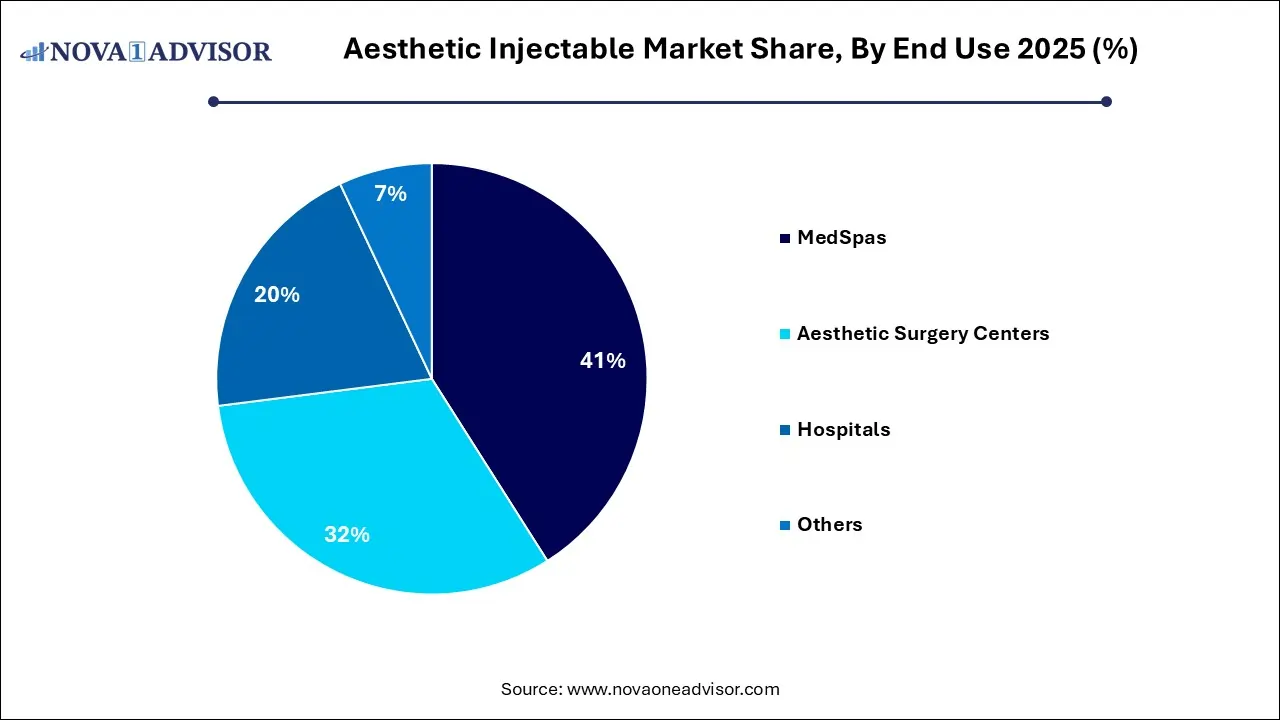
The hospitals segment held the 20% share of the market in 2025, due to the increasingly shifting toward outpatient and wellness-focused settings. Its facility safely integrates complex or large-scale facial aesthetic procedures, and it also frequently utilizes combination therapies.
The others segment held the 7% share of the market in 2025, with the surge in popularity of regenerative medicine, such as Poly-L-lactic acid and calcium hydroxyapatite. These products simulate natural collagen production rather than just adding artificial volume. It perfectly aligns with consumer desire for non-surgical procedures that require virtually no recovery time.
By Regional Insights
Why Did the North America Region Lead the Aesthetic Injectable Market?
The North America region registered its dominance over the market with a share of 39% in 2025, owing to the strong consumer spending on aesthetics, high awareness, and widespread adoption of minimally invasive treatments. Its robust network of clinics, med-spas, and dermatology centers, alongside the rapid adoption of innovative technologies.
U.S. Surgical Suture Market Trends
U. S’s district performance for absorbable biomaterials and value-added technologies, such as antibacterial and barbed designs, which minimize infection risk and optimize efficiency. The synthesis of advanced product engineering, expanding clinical applications, and strict compliance defines the current trajectory and competitive landscape of the modern suture industry.
The Europe region held the 28% share of the market in 2025, due to the aging populations and growing acceptance of aesthetic medicine. Significant beauty standards, social media influence, and a broader acceptance of grooming among all genders have driven market expansion.
U.K. Surgical Suture Market Trends
The U.K.’s high volume of age-related routine surgeries, clinical demand is shifting heavily toward specialized threads and automated suturing devices optimized for precision, driven, minimally invasive surgeries across cardiovascular, orthopaedic, and cosmetic disciplines. The intersection of demographic shifts, advanced surgical techniques, and biomaterial innovation of demographic shift, advanced surgical techniques, and biomaterial innovation is the modernization of surgical wound closure across the country.
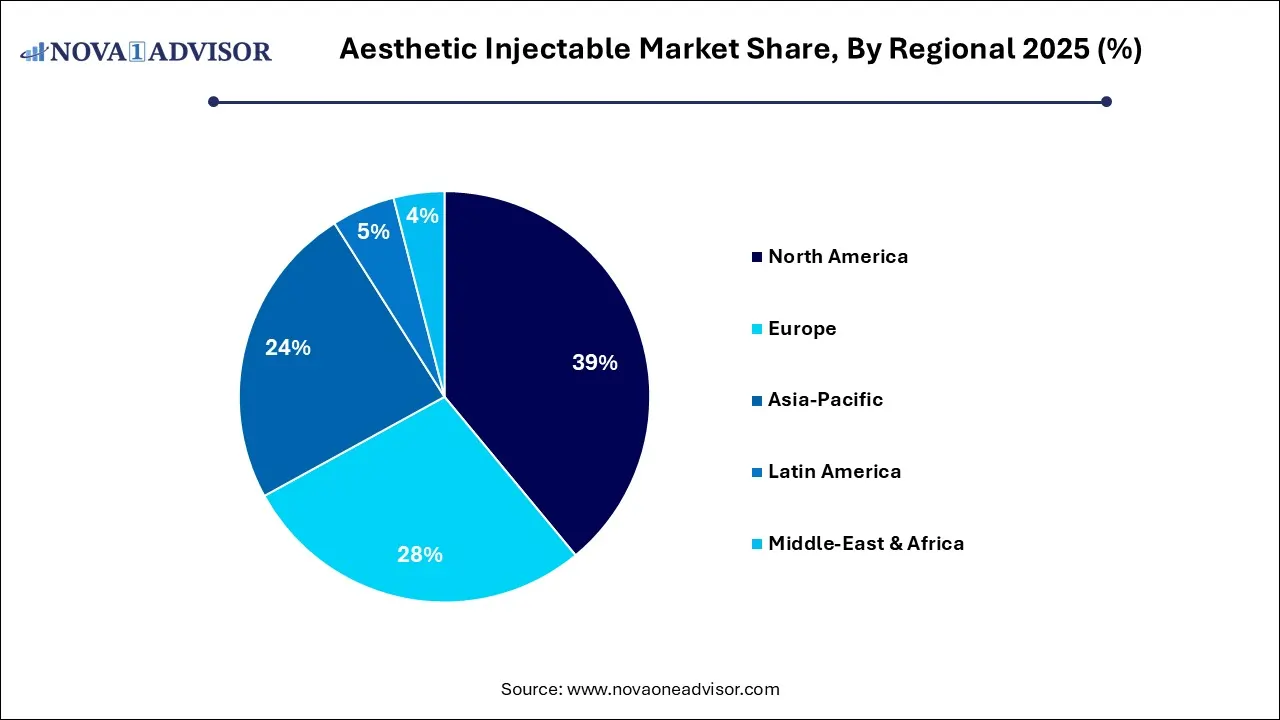
The Asia Pacific segment held 24% share of the market in 2025, due to the rising disposable income, social media influence, and expanding cosmetic clinics, which are accelerating regional growth. The social media influence significantly altered beauty standards, and younger demographics, and men are increasingly seeking quick, on-surgical enhancements with minimal downtime.
China Surgical Suture Market Trends
China’s transition toward premium, high-efficiency wound closure technologies by a strong clinical preference for absorbable and knotless barbed materials that reduce operative time and eliminate secondary removal procedures. The rise of outpatient minimally invasive surgeries and specialized high-tensile procedures requires advanced antibacterial coatings.
The Latin America region held 5% share of the market in 2025, with the deep-rooted cultural emphasis on personal grooming and a pronounced consumer preference for minimally invasive, low-downtime preventive procedures. The convergence of exceptional clinical expertise, high social acceptance, and competitive cross-border pricing positions the region as a primary driver of global aesthetic innovation.
The MEA region held 4% share of the market in 2025, due to the high disposable income and premium purchasing power of affluent populations within the GCC region, specifically the UAE and Saudi Arabia. The preventive social media influence and evolving beauty standard are successfully expanding consumer demographics to include younger adults and male patients.
Recent Developments
- In April 2026, Merz Aesthetics has received FDA approval for RADIESSE® to treat wrinkles in the décolleté area, marking it as the first regenerative biostimulator in the U.S. approved for both face and body. This fourth indication for the product is supported by trials showing high patient satisfaction and skin-tightening results that can last up to two years.
- In May 2025, Teoxane, a Swiss leader in aesthetic medicine, has launched its RHA® (Resilient Hyaluronic Acid) dermocosmetics line directly to U.S. consumers at teoxane.us, making its formerly professional-only skincare accessible online. The products, featuring patented technology and active ingredients like peptides and Vitamin C, target hydration, aging, and skin texture with prices ranging from $44 to $168.
Aesthetic Injectable Market Companies
- AbbVie Inc
- Merz GmbH and Co. KGaA
- Galderma
- Sinclair
- Prollenium Medical Technologies
- Medytox
- Tiger Aesthetics Medical (Suneva Medical, Inc.)
- Ipsen Pharma
- HUGEL, Inc.
- Teoxane
Segments Covered in the Report
This report forecasts revenue growth at country levels and provides an analysis of the latest industry trends in each of the sub-segments from 2021 to 2035. For this study, Nova one advisor, Inc. has aesthetic injectable market.
By Product
- Collagen and PMMA Microspheres
- Hyaluronic Acid
-
- Monophasic
- Biphasic
- Calcium Hydroxylapatite (CaHA)
- PLLA
- PCL
- PN/PDRN
- Botulinum Toxin (Botox)
By Application
- Wrinkle Correction
- Lip Augmentation
- Facial Contouring
- Scar Treatment
- Volume Loss Restoration
- Others
By End-use
- MedSpas
- Aesthetic Surgery Centers
- Hospitals
- Others
By Region
- North America
- Europe
- Asia Pacific
- Latin America
- Middle East and Africa (MEA)
FAQ's

Proceed to Buy
Instant PDF delivery on confirmation

Aesthetic Injectable Market Size to Hit USD 29.98 Billion by 2035
 Request Customization
 Download Sample

Get a Sample of this Report
Aesthetic Injectable Market