

Airway Stent/Lung Stent Market Size, Share, and Trends 2026 to 2035
 Status Published
 Category Healthcare


Content
Airway Stent/Lung Stent Market Size and Growth 2026 to 2035
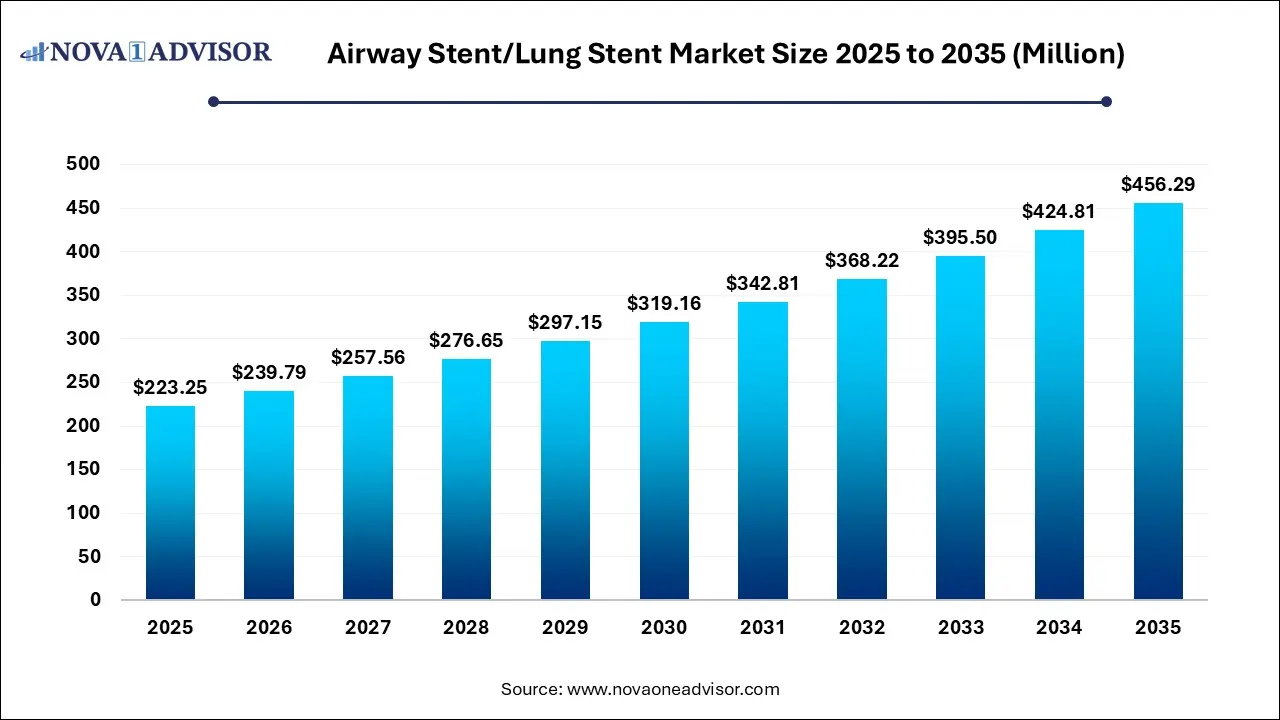
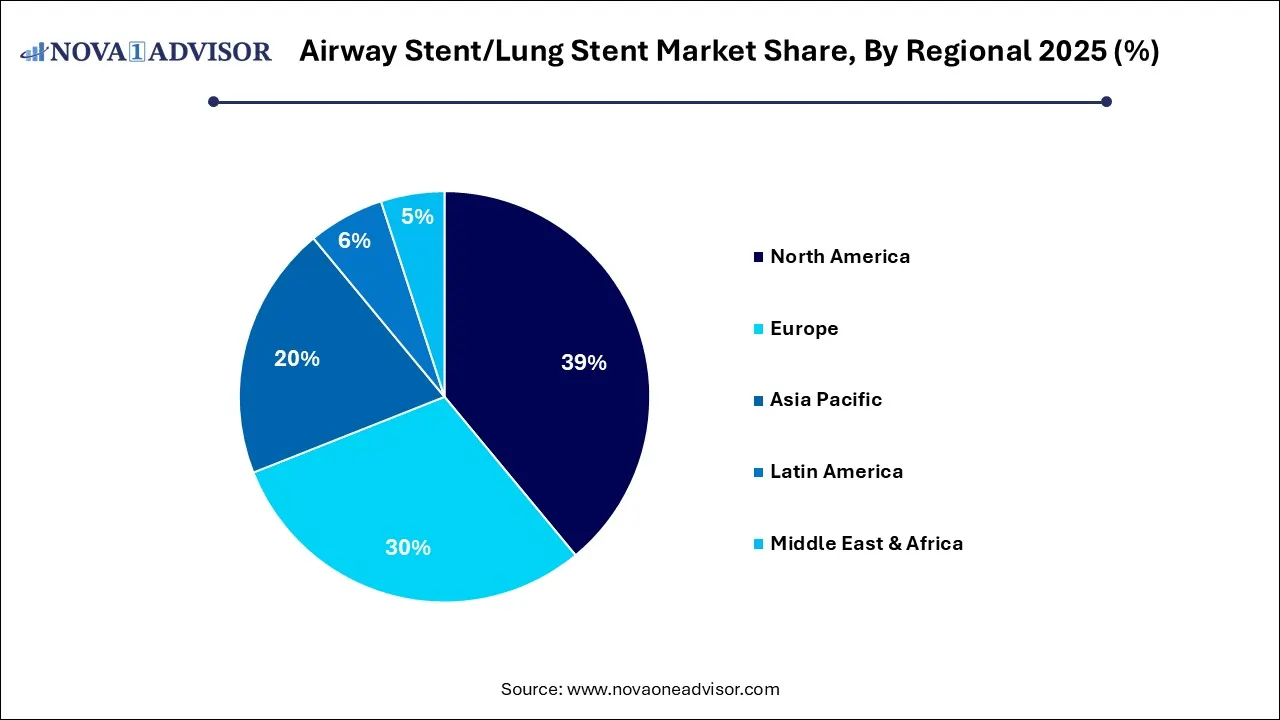
The global airway stent/lung stent market size was valued at USD 223.25 million in 2025 and is projected to grow from USD 239.79 million in 2026 to USD 456.29 million by 2035, at a CAGR of 7.41% from 2026 to 2035. North America dominated the market, accounting for a revenue share of 39.0% in 2025.
Key Takeaway:
- By product, the self-expandable devices segment dominated the market with the largest share in 2025.
- By product, the non-expandable and customized 3D-printed device segment is expected to grow at the fastest CAGR over the forecast period.
- By material, the metal frameworks segment dominated the market with the largest share in 2025.
- By type, the tracheobronchial designs segment dominated the market with the largest share in 2025.
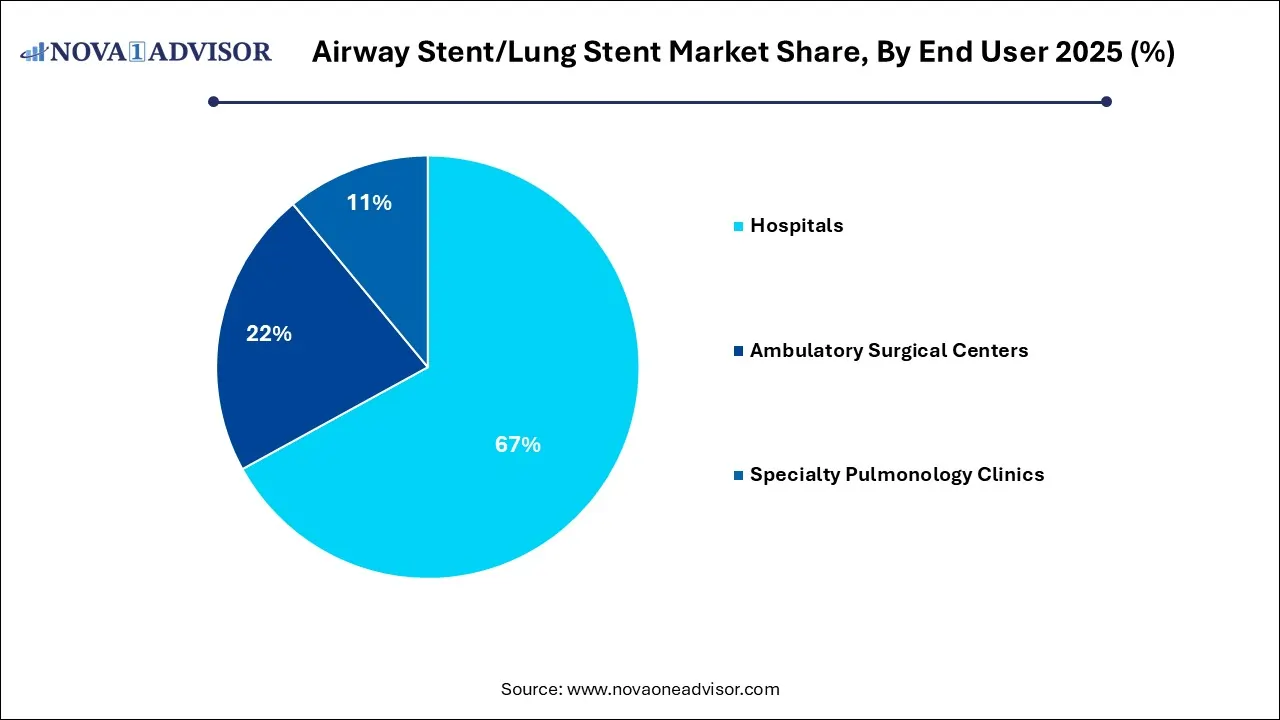
- By end user, the hospitals segment dominated the market with the largest share of 67.0% in 2025.
- By region, North America dominated the market with the largest share of 39.0% in 2025.
Market Overview
The global airway stent/lung stent market is experiencing steady growth, driven by the rising prevalence of respiratory diseases and increasing demand for minimally invasive airway management procedures. Airway stents are widely used to restore airway patency in patients with conditions such as lung cancer, chronic obstructive pulmonary disease (COPD), tracheal stenosis, tracheobronchomalacia, and airway injuries. Growing incidences of malignant airway obstruction and expanding thoracic oncology programs are significantly increasing the demand for advanced airway stenting solutions.
Technological advancements in stent materials, including nitinol, silicone, hybrid designs, and bioresorbable polymers, are improving device performance, biocompatibility, and patient outcomes. In addition, innovations in bronchoscopy, endobronchial ultrasound (EBUS), cone-beam CT imaging, and navigation-guided procedures are enhancing procedural precision and safety. The growing adoption of personalized airway stents, increased healthcare investments, and the expansion of specialized respiratory care services are expected to support sustained market growth over the forecast period.
Market Outlook
- Market Growth Overview: The global airway stent/lung stent marketis expected to grow significantly between 2025 and 2035, driven by ongoing developments in device designs and the growing prevalence of lung cancer globally.
- Sustainability Trends: Sustainability trends involve the development of biodegradable (resorbable) materials and supply chain localization to minimize environmental impacts.
- Major Investors: Major investors in the market include Boston Scientific (US), Cook Medical (US), Novatech (France), Taewoong Medical (South Korea), and Micro-Tech (China).
How is AI impacting the Global Airway Stent/Lung Stent Market?
Artificial Intelligence (AI) is revolutionizing the market by propelling procedural precision and boosting custom device manufacturing. Furthermore, through the integration of AI-driven imaging and advanced 3D printing technologies, medical professionals can now construct precise digital twins of a patient's respiratory tract to fabricate bespoke, custom-fit stents.
AI also supports the development of patient-specific airway stents through integration with three-dimensional imaging and printing technologies, enabling customized implants that better match individual anatomy. During bronchoscopy, AI-assisted navigation systems enhance stent placement accuracy and procedural efficiency. Additionally, AI-driven image analysis and predictive analytics enable early detection of complications such as stent migration, restenosis, and airway obstruction, allowing timely clinical intervention. As AI technologies continue to advance, they are expected to further improve the precision, safety, and effectiveness of airway stenting procedures.
Airway Stent/Lung Stent Market Report Scope
| Report Coverage | Details |
| Market Size in 2026 | USD 239.79 Million |
| Market Size by 2035 | USD 456.29 Million |
| Growth Rate From 2026 to 2035 | CAGR of 7.41% |
| Base Year | 2025 |
| Forecast Period | 2026 to 2035 |
| Segments Covered | By Product, By Material, By Type, By End User, By Region |
| Market Analysis (Terms Used) | Value (USD Million/Billion) or (Volume/Units) |
| Regional Scope | North America; Europe; Asia Pacific; Central and South America; the Middle East and Africa |
| Key Companies Profiled | Boston Scientific Corp., Taewoong Medical Co., Ltd., Micro-Tech Co. Ltd., Novatech SA, Boston Medical Products, Inc., E. Cook Medical, Inc. Fuji Systems Corp., S&G Biotech, Inc., C. R. Bard, Inc., Kapitex Healthcare, Ltd., and Teleflex, Inc. |
Market Driver
Rising Incidence of Lung Cancer and Airway Obstruction Drives Market Growth
The increasing prevalence of lung cancer and airway obstruction is a major driver of the airway stent/lung stent market. Patients with advanced lung cancer often develop airway narrowing due to tumor growth, making airway stents essential for restoring airflow, relieving respiratory distress, and supporting ongoing cancer treatments. Additionally, the growing incidence of chronic respiratory diseases, tracheal stenosis, tracheobronchomalacia, and airway injuries is expanding the use of airway stents. Advancements in bronchoscopy techniques and improved stent technologies are further driving market growth by enabling safer and more effective minimally invasive procedures.
Market Restraint
Device-Related Complications Limit Wider Adoption
Complications associated with airway stents remain a key challenge for market expansion. Issues such as stent migration, granulation tissue formation, mucus accumulation, infection, restenosis, and device fracture may require repeat bronchoscopic procedures, increasing treatment costs and patient burden. In addition, the limited availability of specialized interventional pulmonology centers, high procedural costs, and reimbursement challenges continue to restrict adoption, particularly in developing regions.
Market Opportunity
Personalized 3D-Printed Airway Stents Offer Significant Growth Opportunities
Advances in personalized medicine and three-dimensional (3D) printing are creating significant opportunities for the airway stent/lung stent market. Patient-specific airway stents designed using high-resolution imaging, artificial intelligence, and computer-aided design provide a better anatomical fit, improving stability and reducing complications compared to conventional devices. These customized solutions are particularly beneficial for patients with complex airway anatomies or post-surgical deformities. As manufacturing technologies become more accessible and AI-assisted procedural planning advances, personalized airway stents are expected to play an increasingly important role in precision respiratory care.
Segmental Insights
By Product
Why did the self-expandable devices segment dominate the global airway stent/lung stent market?
The self-expandable devices segment dominated the market with the largest share in 2025. The dominance of the segment can be attributed to the increasing procedural precision and escalating custom device production. In addition, interventional pulmonologists exhibit a preference for self-expanding devices, as their deployment can be executed safely while reducing trauma to adjacent tissues.
How did the non-expandable and customized 3D-printed device segment expected to hold the significantly growing global airway stent/lung stent market in the coming years?
The non-expandable and customized 3D-printed device segment is expected to grow at the fastest CAGR over the forecast period. The growth of the segment can be credited to the growing prevalence of lung diseases and the surge in need for minimally invasive treatments. Also, non-expandable stents, mainly constructed from pliable silicone, maintain a constant, rigid geometry.
By Material
Why did the metal frameworks segment dominate the global airway stent/lung stent market?
The metal frameworks segment dominated the market with the largest share in 2025. The dominance of the segment can be attributed to its excellent structural length and thin profiles that reduce the airway lumen. Surgeons often prefer metal stents for airway procedures. This is because they can be easily placed in an outpatient setting using local anaesthesia and a flexible bronchoscope.
How did the bioresorbable polymer segment expected to hold the significantly growing global airway stent/lung stent market in the coming years?
The bioresorbable polymer segment is expected to grow at the fastest CAGR over the forecast period. The growth of the segment can be driven by rapid technological innovations in biomaterials and minimized long-term tissue complications. As the polymer degrades, it facilitates the sustained and targeted delivery of medication to the respiratory tract, directly inhibiting the formation of subsequent occlusions.
By Type
Why did the tracheobronchial designs segment dominate the global airway stent/lung stent market?
The tracheobronchial designs segment dominated the market with the largest share in 2025. The dominance of the segment is owing to the increasing rates of lung cancer and airway blockages coupled with the flexible stent designs. Biodegradable stents provide transient mechanical support to bodily vessels, which gradually dissolves once healing is complete.
How did the Y-shaped carinal models segment expected to hold the significantly growing global airway stent/lung stent market in the coming years?
The Y-shaped carinal models segment is expected to grow at Facets' CAGR over the projected period. The growth of the segment is due to the growing rate of lung transplants and geometry-specific engineering that minimizes stent migration. The growing adoption of these devices is driven by a global transition from open surgery toward less invasive options, such as endoscopic therapies and rigid bronchoscopy.
By End User
Why did the hospitals segment dominate the global airway stent/lung stent market?
The hospitals segment dominated the market with the largest share in 2025. The dominance of the segment can be attributed to a growing elderly population and high rates of air pollution and smoking. Hospitals provide access to highly specialized medical teams, including interventional pulmonologists. These experts use minimally invasive, non-surgical techniques to diagnose and treat pulmonary conditions.
How did the specialty pulmonology clinics segment expected to hold the significantly growing global airway stent/lung stent market in the coming years?
The specialty pulmonology clinics segment is expected to grow at the fastest CAGR over the forecast period. The growth of the segment can be credited to the increasing outpatient demand for minimally invasive procedures (MIS) and the rise in adoption of advanced materials. Furthermore, modern healthcare consumers increasingly favor specialized clinical facilities over conventional multi-specialty hospitals.
By Regional
Why did the North American region account for the largest share in the global airway stent/lung stent market?
North America dominated the market with the largest share in 2025. The dominance of the region can be attributed to the increasing incidence of respiratory diseases and the increasing elderly population in major cities. In addition, the region is characterized by a high-income demographic, extensive healthcare coverage, and substantial per-capita medical expenditure, enabling more patients to access cutting-edge and expensive interventional pulmonology treatments.
U.S. Global Airway Stent/Lung Stent Market Trends
The growth of the market in the country can be driven by an increasing need for minimally invasive procedures and a rise in the incidence of respiratory diseases. Also, medical professionals and patients increasingly favor minimally invasive surgery (MIS) over open surgical procedures, driven by benefits such as reduced postoperative pain, expedited recuperation, and shorter hospitalizations.
Why did the Asia-Pacific region become the fastest-growing global airway stent/lung stent market during the forecast period?
Asia Pacific is expected to grow at the fastest CAGR over the forecast period. The growth of the region can be credited to the developing hospital infrastructure and heavy government investments in respiratory care centers. Furthermore, when respiratory conditions are detected at an early stage, patients are more likely to undergo stent implantation, which improves both respiratory function and overall quality of life.
China Global Airway Stent/Lung Stent Market Trends
The market in the country is growing due to high rates of lung cancer and COPD and aggressive government healthcare initiatives. China exhibits one of the highest incidences of lung cancer globally. Additionally, airway stents are widely used to maintain patency in patients presenting with inoperable tumors.
Key Players in the Global Airway Stent/Lung Stent Market
- Novatech SA (France): Serves as a dominant player primarily known for silicone-based solutions. Its patented NOVATECH GSS and TRACHEOBRONCHANE DUMON silicone stents are highly preferred by pulmonologists due to low migration risks and proven patient comfort.
- Cook Group / Cook Medical (US): A leading diversified giant providing both metallic and non-metallic airway management devices with widespread global distribution networks.
- Taewoong Medical Co., Ltd. (South Korea): A key Asian manufacturer renowned for its sophisticated, self-expanding metallic non-vascular stents designed to adapt perfectly to complex airway anatomies.
Recent Developments
- In July 2025, InspireMD, Inc., the developer of the CGuard Prime carotid stent system designed for stroke prevention, has officially announced the U.S. commercial launch of the device. This market introduction follows the receipt of Premarket Approval (PMA) from the U.S. Food and Drug Administration (FDA).
Segments Covered in the Report
This report forecasts revenue growth at country levels and provides an analysis of the latest industry trends in each of the sub-segments from 2021 to 2035. For this study, Nova one advisor, Inc. has airway stent/lung stent market.
By Product
- Self-Expandable Stents
- Balloon-Expandable Stents
- Non-Expandable / Customized 3D-Printed Stents
By Material
- Metal
- Silicone
- Hybrid (Covered / Composite)
- Bioresorbable Polymers
By Type
- Tracheobronchial Stents
- Laryngeal Stents
- Y-Shaped Carinal Stents
By End User
- Hospitals
- Ambulatory Surgical Centers
- Specialty Pulmonology Clinics
By Region
- North America
- Europe
- Asia Pacific
- Latin America
- Middle East & Africa

Proceed to Buy
Instant PDF delivery on confirmation

Airway Stent/Lung Stent Market Size to Hit USD 456.29 Million by 2035
 Request Customization
 Download Sample

Get a Sample of this Report
Airway Stent/Lung Stent Market