

Alternative Veterinary Medicine Market Size, Share, and Trends 2026 to 2035
 Status Published
 Category Healthcare


Content
Alternative Veterinary Medicine Market Size and Growth 2026 to 2035
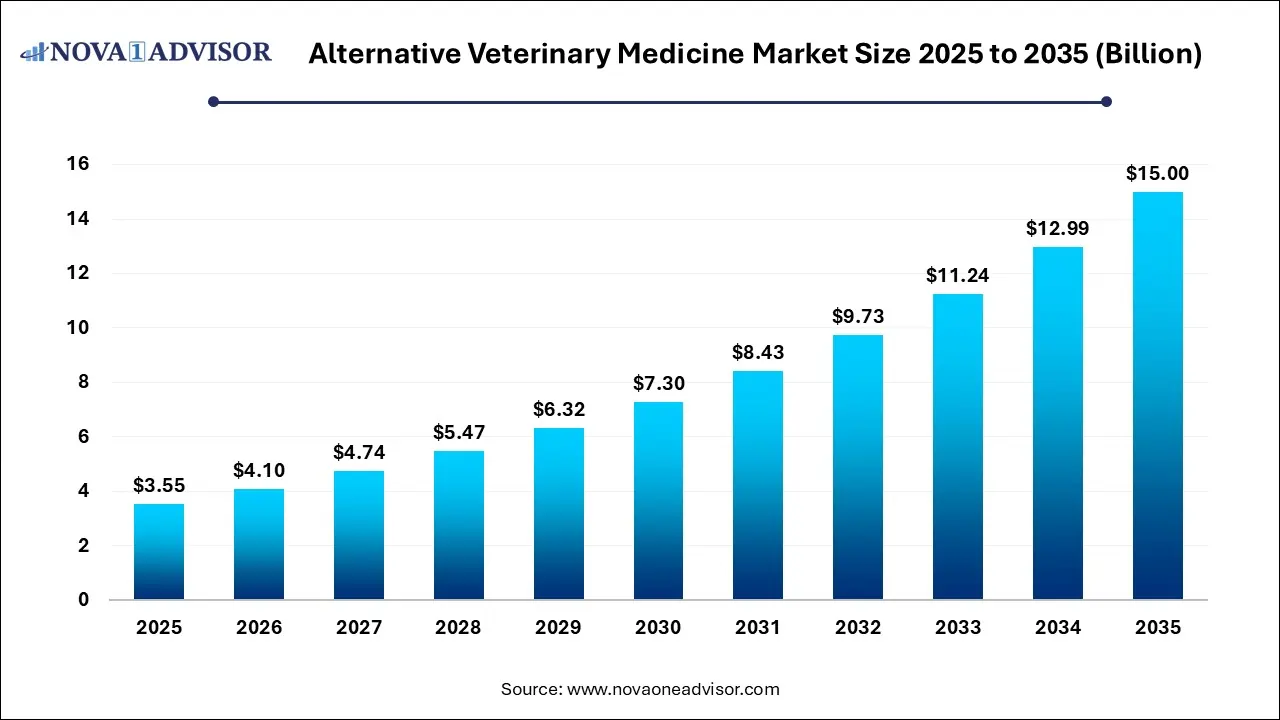
The alternative veterinary medicine market size was estimated at USD 3.55 billion in 2025 and is projected to increase from USD 4.10 billion in 2026 to approximately USD 15.00 billion by 2035, growing at a CAGR of 15.5% from 2026 to 2035. The North America region held a dominant position in the market with a share of 35% in 2025. The alternative veterinary medicine market is driven by the increasing treatment of pets as family members, growing awareness of adverse reactions from long-term use of conventional drugs, and an increase in age-related issues, such as osteoarthritis in aging companion animals, which is driving demand for ongoing therapies, such as acupuncture and chiropractic care.
Key Takeaways
- By product, the feed additives segment held a dominant position in the market with a share of 48.10% in 2025.
- By product, the nutritional supplements segment is the fastest growing between 2026 and 2035.
- By animal, the production animals segment held a dominant position in the market with a share of 71.80% in 2025.
- By animal, the companion animals segment is the fastest growing between 2026 and 2035.
- By type, the others segment held a dominant position in the market with a share of 58.80% in 2025.
- By type, the ayurvedic segment is the fastest growing between 2026 and 2035.
- By route of administration, the oral segment held a dominant position in the market with a share of 55.40% in 2025.
- By distribution channel, the retail/specialty stores segment held a dominant position in the market with a share of 56.00% in 2025.
- By region, the North America region held a dominant position in the market with a share of 35% in 2025.
Innovation Driving Transformation in the Alternative Veterinary Medicine Market
Alternative veterinary medicines comprise holistic and non-conventional therapeutic modalities, such as acupuncture, herbal medicine, and homeopathy, used to treat or complement standard veterinary care. It provides significant benefits across applications, including effective chronic pain management for companion animals and natural immune boosting for livestock. Key benefits include minimized risk of side effects and reduced reliance on synthetic pharmaceuticals. The market growth is driven by rising humanization of pets, growing owners' preference for holistic care, and strict government policies aimed at reducing antibiotic resistance.
Alternative Veterinary Medicine Market Trends
- Traditional Chinese Veterinary Medicine (TCVM) and Ayurveda ; Ayurveda and TCVM modalities are leading the alternative care sector, with many clinics integrating herbal remedies and traditional acupuncture to treat chronic companion animal disorders. Pet owners are turning to these practices to manage long-term inflammation and improve overall vitality without harsh chemical side effects.
- Customized and Organic Nutritional Therapy ; Much such as human health trends, the market is seeing a surge in demand for organic, grain-free, and personalized pet diets. Veterinarians frequently prescribe specialized botanical and nutritional supplements tailored to a pet’s breed, age, and genetic profile to optimize longevity.
- Integrative Veterinary Guidelines : Governments and veterinary bodies are formally acknowledging holistic medicine by releasing integrative care guidelines. This endorsement increases the credibility of alternative therapies, giving veterinarians the confidence to recommend holistic treatments alongside conventional medicine.
Key AI Integration in the Alternative Veterinary Medicine Market
AI and ML are revolutionizing the alternative veterinary medicine industry by enabling researchers to map and scale holistic treatment; machine learning algorithms can analyze vast datasets of animal genetics, nutritional profiles, and behavioral patterns to create highly personalized, preventative care plans. These technologies facilitate the precise exploration of whole-genome sequencing and radiomics, allowing practitioners to optimize natural therapies, herbal medicine, and acupuncture based on individual biological responses. AI-driven smart wearables and ambient monitoring systems process real-time animal behaviors and physiological responses to track the long-term effectiveness of alternative treatments.
Alternative Veterinary Medicine Market Report Scope
| Report Coverage | Details |
| Market Size in 2026 | USD 4.10 Billion |
| Market Size by 2035 | USD 15.00 Billion |
| Growth Rate From 2026 to 2035 | CAGR of 15.5% |
| Base Year | 2025 |
| Forecast Period | 2026 to 2035 |
| Segments Covered | Product, Animal, Type, Route of Administration, Distribution Channel, Region |
| Market Analysis (Terms Used) | Value (USD Million/Billion) or (Volume/Units) |
| Regional Scope | North America; Europe; Asia Pacific; Central and South America; the Middle East and Africa |
| Key Companies Profiled | Himalaya Wellness Company; Alicanto Vetcare; Natural Remedies; Zenex Health Animal Health; AYURSUN PHARMA; GreenVet; INDIAN GENOMIX (P) LTD; INDIAN HERBS; AMORVET; NU Alter Remedies |
Market Dynamics
Driver
Concerns Over Conventional Treatments
Pet owners and veterinarians increasingly seek safer, holistic alternatives to conventional treatments to avoid issues, such as systemic side effects and antibiotic resistance. By directly addressing the limitations and limitations of traditional pharmaceuticals, complementary therapies such as herbal remedies, acupuncture, and customized nutritional supplements provide a targeted way to manage chronic conditions. This shift toward comprehensive, preventative care is boosting market expansion as caregivers prioritize non-invasive solutions to improve long-term animal health outcomes.
Restraint
Lack of Scientific Evidence
The market growth is hindered by the lack of rigorous scientific evidence and controlled clinical trials for alternative therapies, which fosters widespread skepticism within the veterinary community. Because practitioners rely heavily on evidence-based medicine, this dearth of peer-reviewed data prevents mainstream adoption and slows overall market growth. The ambiguous educational standards and the absence of standardized dosage protocols make it difficult to evaluate the efficacy of these treatments compared to conventional pharmaceuticals
Opportunity
E-commerce and Digital Platforms
By dramatically expanding geographic reach and consumer access to niche products. Online platforms allow pet owners and livestock farmers to easily research, compare, and purchase holistic, natural, or herbal remedies that may not be available in local brick-and-mortar stores. Social media and digital marketing enable specialized brands and veterinarians to educate consumers directly about the benefits of complementary therapies, fostering heightened trust and widespread adoption.
Segment Insights
By Product Insights
Why Did the Feed Additives Segment Hold a 48.10% Share for the Alternative Veterinary Medicine Market?
The feed additives segment held a dominant position in the market with a share of 48.10% in 2025. Owing to its widespread use in production animals to enhance growth and productivity, capturing the largest market share. Treating large herds or flocks individually with injectable medicines is labor-intensive. Adding supplements and preventative medicine directly to bulk feed is much more efficient.
The nutritional supplements segment held a 41.20% share of the market in 2025, favored for preventive health and immunity support, driving significant adoption among both companion and production animals. The agricultural and livestock sector heavily uses functional feed additives and supplements to prevent disease transmission and promote growth, in systems focused on reducing antibiotic usage.
The pharmaceuticals segment held a 10.70% share of the market in 2025, with the aging companion animal population suffering from chronic diseases, such as osteoarthritis, which affects dogs. The broader pet humanization trend drives owners to view pets as family, triggering high preventative healthcare spending to extend companion animal lifespans and locking in sustained market growth.
By Animal Insights
Why Did the Production Animals Segment Hold a 71.80% Share for the Alternative Veterinary Medicine Market?
The production animals segment held a dominant position in the market with a share of 71.80% in 2025. Owing to the high demand driven by feed additives and nutritional supplements for livestock productivity and meat/dairy output. The industry heavily focuses on preventative alternatives to boost general animal wellness and prevent transmission before a costly quarantine becomes necessary.
The companion animals segment held a 28.20% share of the market in 2025, with the industry increasingly utilizing complementary treatments, such as targeted herbal medicines and homeopathic supplements, to manage age-related chronic joint pain and complex behavioral issues. This strong focus on preventive wellness has accelerated the daily adoption of specialized dietary supplements designed to optimize long-term digestive and immune health.
By Type Insights
Why Did the Others Segment Lead the Alternative Veterinary Medicine Market?
The others segment registered its dominance over the market with a share of 58.40% in 2025, owing to emerging therapies and innovative products, capturing the majority share in alternative treatments. Natural feed additives and herbal remedies are utilized instead to control diseases and improve feed efficiency without leaving harmful chemical residues in animal products.
The ayurvedic segment held a 27.90% share of the market in 2025, with gaining traction due to natural formulations and increasing awareness of holistic pet health solutions. The increasingly prioritizing plant-based, chemical-free preventative care to boost their animals' immunity and manage chronic conditions without long-term synthetic side effects.
The homeopathic segment held a 13.20% share of the market in 2025, due to the shift toward natural remedies to avoid conventional chemical side effects and combat antimicrobial resistance. This transition is heavily accelerated by the widespread availability of user-friendly oral formats, such as tablets, liquids, and powders, that ensure seamless, stress-free administration.
The traditional chinese veterinary medicine (CTM) segment held a 0.50% share of the market in 2025; the rise of specialized training organizations has standardized these Eastern veterinary practices, making them safer, professionally validated, and widely accepted by licensed practitioners globally. Modern veterinary hospitals are heavily adopting an integrative medicine model, seamlessly blending advanced Western diagnostics, such as MRI and blood work, with traditional principles to draft highly targeted treatment plans.
By Route of Administration Insights
Why Did the Oral Segment Lead the Alternative Veterinary Medicine Market?
The oral segment registered its dominance over the market with a share of 55.40% in 2025, owing to easier administration for both companion and production animals, leading to widespread preference. Oral administration supports accurate and consistent dosage delivery across entire treatment regimens, which is crucial for ongoing wellness maintenance.
The topical segment held the 44.20% share of the market in 2025, owing to rising use for localized treatments and skin conditions, steadily increasing its share. They achieve high local concentrations while minimizing systemic absorption, drastically reducing the risk of gastrointestinal or adrenal toxicity associated with oral or injectable drugs.
The others segment held a 0.40% share of the market in 2025, due to the growing consumer skepticism of traditional pharmaceuticals, with pet parents actively seeking natural alternatives to shield animals from the long-term side effects of synthetic drugs. This shift perfectly mirrors a broader transition in owner mindset from reactive, symptom-based treatment to proactive, wellness-focused preventative care.
By Distribution Channel Insights
Why Did the Retail/Specialty Stores Segment Lead the Alternative Veterinary Medicine Market?
The retail/specialty stores segment registered its dominance over the market with a share of 56.00% in 2025, owing to convenient access and variety for consumers, driving the largest share in over-the-counter veterinary products. The rising hybrid services ecosystem and growing personalized customer experience and guidance.
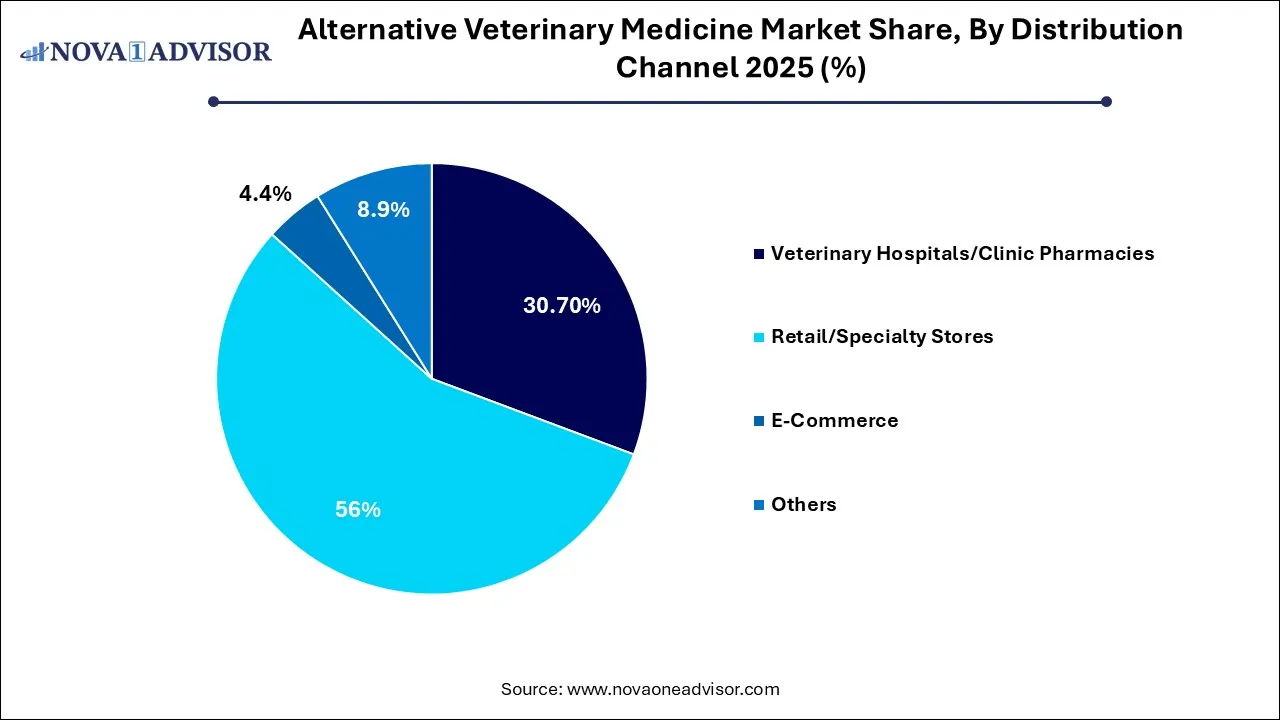
The veterinary hospitals/clinic pharmacies segment held the 30.70% share of the market in 2025, owing to trusted source for prescription products and clinical-grade supplements, ensuring high adoption. Integration of holistic care, quality assurance, and on-site convenience and immediate access.
The e-commerce segment held a 4.40% share of the market in 2025, due to providing unmatched convenience through automated subscription and autoship models that ensure continuous preventative and maintenance care. This digital procurement channel effectively solves traditional brick-and-mortar retail constraints by offering access to a massive inventory of niche global brands, homeopathic medicines, and specialized herbal supplements.
By Regional Insights
Why Did the North America Region Lead the Alternative Veterinary Medicine Market?
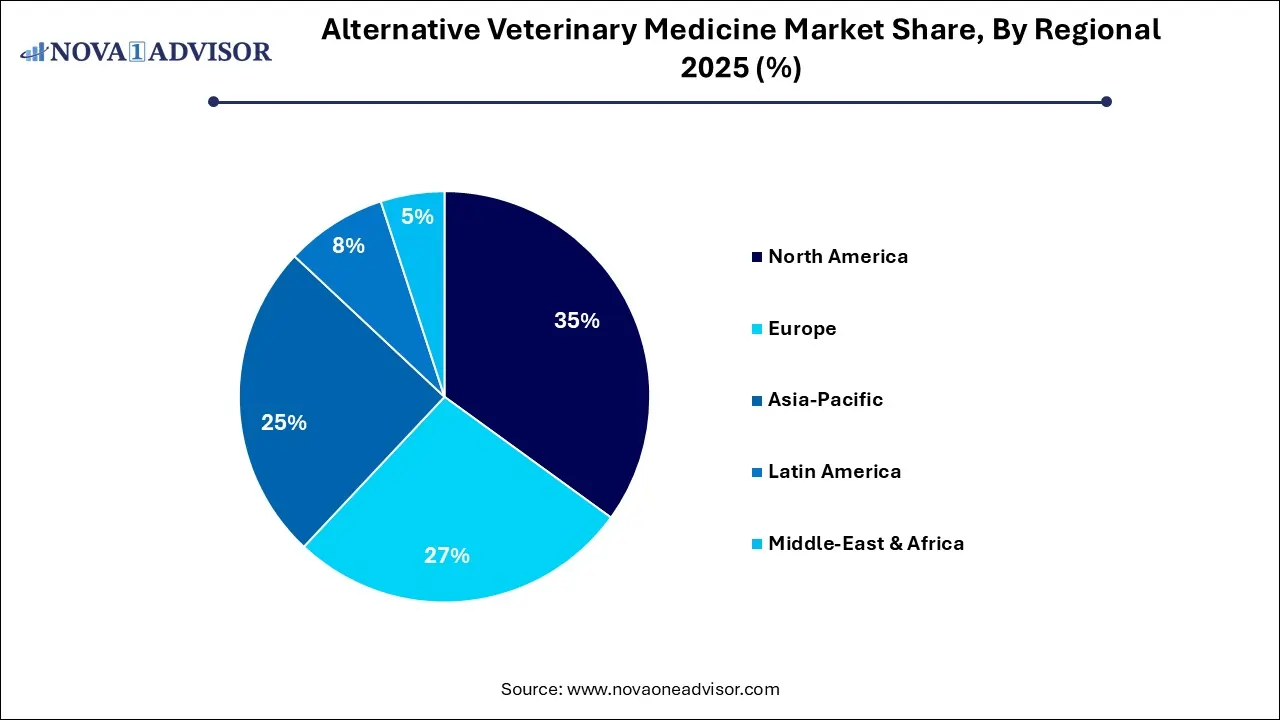
The North America region registered its dominance over the market with a share of 35% in 2025, owing to high pet ownership, strong veterinary infrastructure, and awareness of alternative therapies driving market leadership. A strong network of established pet health insurance and high per-capita spending on animal health empower owners to afford premium, holistic, and specialty care.
U.S. Surgical Suture Market Trends
The U.S. has a rapid global preference for minimally invasive surgeries across cardiology and orthopedics, elevating the demand for specialized, high-tensile-strength threads and automated suturing devices. To optimize operating room efficiency, the industry is driving a major technological push toward antimicrobial coatings and knotless barbed sutures that drastically reduce surgical time.
The Europe region held the 27% share of the market in 2025, due to the growing adoption of natural veterinary products and regulatory support enhancing market share. Favourable regional regulatory frameworks and public funding have incentivized research and development in herbal and non-conventional pharmaceuticals.
U.K. Surgical Suture Market Trends
The U. K’s clinical demand is shifting toward patient safety and infection prevention, driving hospitals to prioritize antimicrobial-coated sutures to reduce surgical site infections alongside knotless barbed sutures that improve operating room closure efficiency. The steady surgical volume combined with a continuous transition toward specialized, high-margin suture innovations ensures a highly resilient and recurring revenue stream across regional medical facilities.
The Asia Pacific segment held a 25% share of the market in 2025, due to rapid livestock industry growth and increasing companion animal care, which are boosting demand. The shift toward proactive and non-pharmaceutical healthcare, driven by a desire to avoid the adverse effects associated with long-term conventional treatments.
China Surgical Suture Market Trends
China’s clinical adoption is shifting toward specialized knotless variations that reduce operating times alongside antibacterial coatings that actively minimize surgical-site infections. The government’s Healthy China 2030 plan, a national policy, is accelerating hospital infrastructure expansion and drastically improving patient access to advanced wound-closure medical devices.
The Latin America region held an 8% share of the market in 2025, with the corporate transition heavily supported by the region’s rich biodiversity, which provides a highly cost-effective, abundant supply of native flora and raw plant-based materials for herbal manufacturing. A powerful surge in pet humanization across a massive regional population of over 250 million companion animals is triggering high consumer demand for holistic, preventative, and chemical-free wellness alternatives.
The MEA region held a 5% share of the market in 2025, due to the high cost of conventional veterinary surgeries and specialized pharmaceuticals, making complementary therapies an accessible and affordable option for long-term chronic pain management. This clinical adoption is further reinforced by deep historical and cultural roots within the region, which foster a natural alignment and strong community inclination toward traditional herbal, Ayurvedic, and homeopathic formulations.
Alternative Veterinary Medicine Market Companies
- Himalaya Wellness Company
- Natural Remedies
- Alicanto Vetcare
- Zenex Health Animal Health
- GreenVet
- AYURSUN PHARMA
- INDIAN GENOMIX (P) LTD
- AMORVET
- INDIAN HERBS
- NU Alter Remedies
Recent Developments
- In March 2026, Multiples PE-backed Zenex Animal Health India has acquired a majority stake in Netherlands-based VievePharm for an undisclosed amount. The cross-border transaction expands Zenex's natural animal nutrition portfolio and establishes a vital manufacturing, regulatory, and sales hub in Western Europe.
- In August 2025, Validated ethno-veterinary medicine (EVM) serves as a cost-effective alternative to antibiotics, with studies showing an 87.78% reduction in antibiotic residue in milk and an 80% recovery rate across over 1 million bovine cases in India. Implemented by the University of Trans-Disciplinary Health Sciences and Technology and the NDDB, this approach significantly reduced antibiotic use for diseases like mastitis and enteritis from 2016 to 2019.
Segments Covered in the Report
This report forecasts revenue growth at country levels and provides an analysis of the latest industry trends in each of the sub-segments from 2021 to 2035. For this study, Nova one advisor, Inc. has alternative veterinary medicine market.
By Product
- Pharmaceuticals
-
- Antimicrobial
- Anti-inflammatory
- Analgesics
- Others
- Nutritional Supplements
- Feed Additives
By Animal
- Companion Animals
-
- Dogs
- Cats
- Horses
- Other Companion Animals
- Production Animals
-
- Cattle
- Poultry
- Swine
- Other Production Animals
By Type
- Ayurvedic
- Traditional Chinese Veterinary Medicine (CTM)
- Homeopathic
- Others
By Route Of Administration
- Oral
- Topical
- Others
By Distribution Channel
- Veterinary Hospitals/Clinic Pharmacies
- Retail/Specialty Stores
- E-Commerce
- Others
By Regional
- North America
- Europe
- Asia Pacific
- Latin America
- Middle East & Africa
FAQ's

Proceed to Buy
Instant PDF delivery on confirmation

Alternative Veterinary Medicine Market Size to Hit USD 15.00 Billion by 2035
 Request Customization
 Download Sample

Get a Sample of this Report
Alternative Veterinary Medicine Market