

Ambulatory Surgery Centers Market Size, Share & Trends Analysis Report By Application (Pain Management/Spinal Injections, Orthopedics, Ophthalmology, Gastroenterology), By Ownership, By Center Type, By Region, And Segment- Global Industry Analysis, Size, Share, Growth, Trends, Regional Outlook, and Forecast 2026-2035
 Status Published
 Category Healthcare


Content
Ambulatory Surgery Centers Market Summary
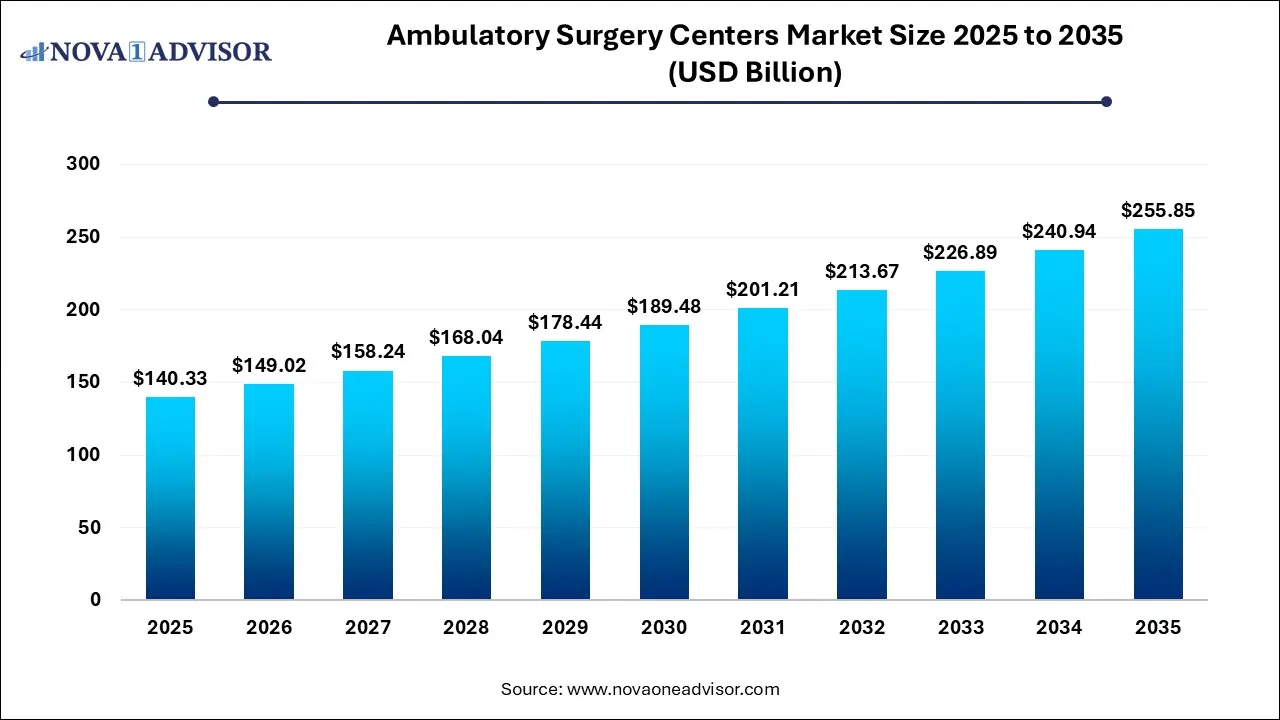
The global ambulatory surgery centers market size was estimated at USD 140.33 billion in 2025 and is projected to hit around USD 255.85 billion by 2035, growing at a CAGR of 6.19% during the forecast period from 2026 to 2035.
Key Takeaways:
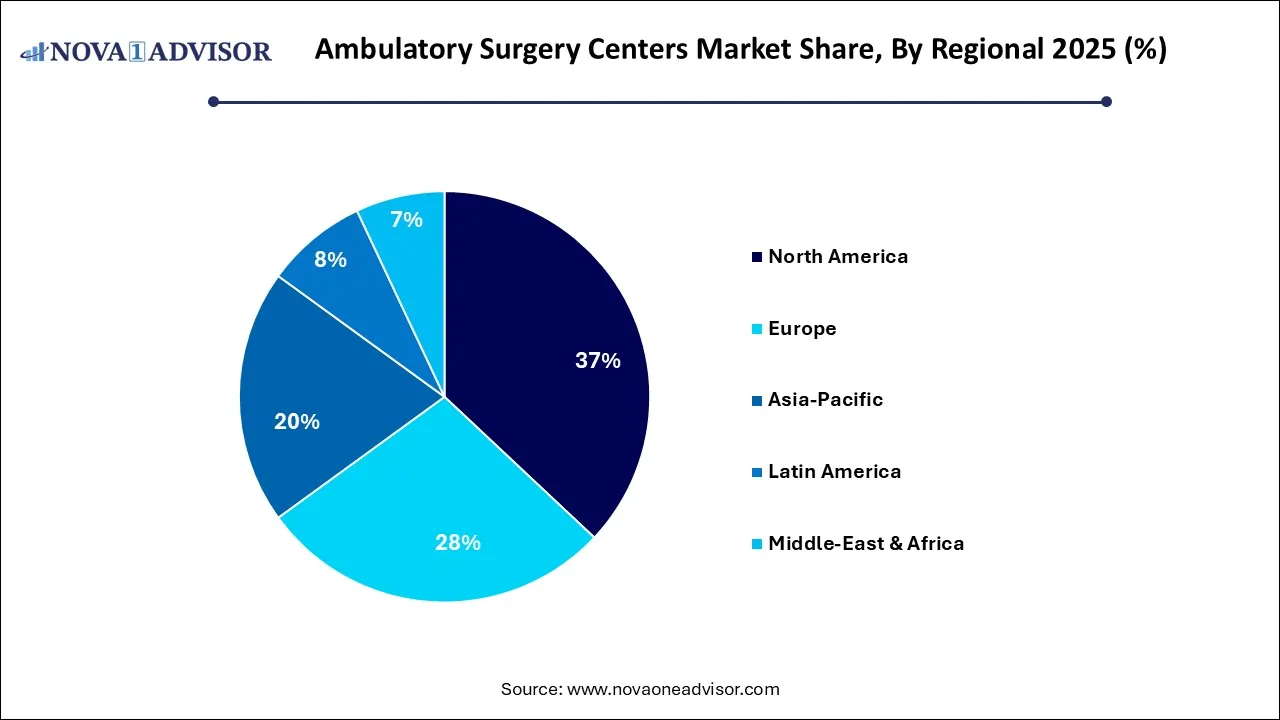
- North America contributed significantly to the market in 2025 with a revenue share of around 37%.
- Asia Pacific is expected to register the fastest growth over the coming years.
- The orthopedics segment led the global market in 2025 with a revenue share of 28.45%.
- The pain management/spinal injections segment is expected to witness strong growth over the forecast period.
- The single-specialty segment dominated the ambulatory surgery centers market in 2025 with a revenue share of 63%.
- The physician-owned segment dominated the market in 2025 with a revenue share of 63.17%.
- The hospital-owned segment is poised to expand at the fastest pace through the forecast period.
Market Overview
The Ambulatory Surgery Centers (ASC) market has emerged as a critical component of modern healthcare delivery systems, offering patients a cost-effective and efficient alternative to traditional inpatient hospital care. These centers are medical facilities that specialize in performing same-day surgical procedures that do not require hospital admission. With the rising demand for minimally invasive surgeries, improved recovery times, and increased cost savings, ASCs are playing an increasingly vital role in healthcare infrastructure globally.
The ASC model is built on efficiency. It minimizes hospital-associated costs while optimizing patient throughput and satisfaction. This has led to a shift in the delivery of outpatient care, particularly in developed economies where reimbursement policies and insurance models increasingly favor outpatient interventions. Technological advancements in surgical techniques, anesthesia, and post-operative care have also allowed a broader range of procedures to be performed safely in ambulatory settings.
In recent years, the global ASC market has experienced consistent growth, driven by factors such as the aging population, increasing prevalence of chronic diseases, and the need for healthcare systems to manage costs while maintaining high-quality care. The market is becoming increasingly competitive with the entry of new players, including corporate chains and private equity-backed groups aiming to consolidate and expand ASC networks.
Market Outlook
- Market Growth Overview: The ambulatory surgery centers market is expected to grow significantly between 2025 and 2035, driven by the increasing prevalence of chronic diseases, cost-effectiveness, cost-effective and shift to outpatient care, and rising minimally invasive surgery.
- Sustainability Trends: Sustainability trends involve waste reduction and circular economy initiatives, energy-efficient operations, green building, and digital and operational efficiency.
- Major Investors: Major investors in the market include SCA Health (Optum), Bain Capital, KKR, and TPG.
How AI is Impacting the Ambulatory Surgery Centers Market
AI and ML are significantly transforming the ambulatory surgery centers industry by optimizing operational efficiency and enhancing clinical outcomes. AI-driven predictive analytics are increasingly utilized for optimizing operating room scheduling, supply chain management, and reducing case turnaround times, directly addressing the lean staffing models of ASCs. In the clinical space, ML algorithms and computer vision are improving robotic-assisted surgeries and providing real-time intraoperative guidance, leading to greater precision and improved safety.
Major Trends in the Market
-
Expansion of Surgical Services: ASCs are now capable of performing more complex procedures including spine surgery and total joint replacements due to advances in surgical tools and patient monitoring systems.
-
Rising Prevalence of Chronic Conditions: An increase in diseases such as diabetes and arthritis fuels demand for frequent and affordable surgical interventions, which are often handled at ASCs.
-
Shift Towards Value-Based Care: Healthcare systems are transitioning from fee-for-service models to value-based care, making ASCs appealing for their cost transparency and outcome-focused services.
-
Technology Integration: Incorporation of advanced technologies such as robotic-assisted surgeries, AI in surgical planning, and telemedicine is enhancing the scope and safety of outpatient procedures.
-
Increased Corporate Investment: Large healthcare corporations and investment groups are acquiring or establishing ASCs to expand service offerings and achieve economies of scale.
-
COVID-19 Impact and Recovery: The pandemic temporarily disrupted ASC operations, but post-pandemic recovery has been strong as hospitals seek to reduce inpatient volumes and prioritize acute care.
-
Regulatory Support: Reimbursement and policy changes by agencies like CMS (Centers for Medicare & Medicaid Services) in the U.S. are expanding the list of ASC-eligible procedures.
Ambulatory Surgery Centers Market Report Scope
| Report Attribute | Details |
| Market Size in 2026 | USD 149.02 Billion |
| Market Size by 2035 |
USD 255.85 Billion |
| Growth Rate From 2026 to 2035 | CAGR of 6.19% |
| Base Year | 2025 |
| Forecast Period | 2026 to 2035 |
| Segments Covered | Application, Ownership, Center Type, Region |
| Market Analysis (Terms Used) | Value (US$ Million/Billion) or (Volume/Units) |
| Report Coverage | Revenue forecast, company ranking, competitive landscape, growth factors, and trends |
| Key Companies Profiled | CHSPSC, LLC.; Envision Healthcare Corporation; TH Medical; Pediatrix Medical Group; UNITEDHEALTH GROUP; Surgery Partners; Healthway Medical Group; SurgCenter; Prospect Medical Holdings, Inc.; Group Eifelhöhen-Klinik AG; Edward-Elmhurst Health; Nexus Day Surgery Centre |
Key Market Driver: Cost-Effectiveness of ASC Procedures
A significant driver for the ASC market is the substantial cost savings associated with performing surgeries in outpatient settings compared to inpatient hospitals. On average, surgical procedures in ASCs can be 30% to 50% cheaper, which is particularly appealing to insurers and patients with high-deductible plans. With rising healthcare expenditures globally, payers—both public and private—are under pressure to find sustainable models of care that offer quality outcomes at reduced costs.
For example, a knee arthroscopy procedure in a hospital may cost over $5,000, whereas the same procedure at an ASC could cost under $3,000. The cumulative impact of such savings is significant for healthcare systems dealing with millions of procedures annually. Additionally, the bundled payment models and transparency in billing practices at ASCs enhance their attractiveness for patients and payers alike.
Key Market Restraint: Limited Emergency Response Infrastructure
One major restraint for the growth of ASCs is their limited capacity to manage surgical complications or emergencies. Unlike hospitals, ASCs typically do not have emergency departments or intensive care units on standby. This makes them unsuitable for high-risk or emergency surgeries, limiting their scope.
Moreover, patients with comorbid conditions may face higher surgical risks that require immediate intervention, making hospital settings more appropriate. Regulatory bodies also impose strict licensing and accreditation requirements, which can be a barrier for new ASCs entering the market. These limitations may also contribute to hesitancy among some patients and providers in choosing ASCs for more complex procedures.
Key Market Opportunity: Rise in Geriatric Population
The global rise in the geriatric population presents a significant opportunity for the ASC market. As individuals age, they are more likely to require surgeries such as cataract removal, joint replacements, colonoscopies, and ENT procedures—many of which can be performed in ASCs. According to the World Health Organization, the number of people aged 60 and above will rise to 2.1 billion by 2050.
This aging demographic is more susceptible to chronic and degenerative diseases, thereby increasing the demand for surgical interventions. The convenience, shorter recovery times, and lower costs associated with ASCs make them a preferable choice for elderly patients and caregivers. Furthermore, ASCs can offer specialized geriatric care models that cater to mobility, post-operative recovery, and pain management needs in this population segment.
By Application
Orthopedics dominated the ASC market by application. The orthopedic segment holds the lion’s share due to the rising prevalence of musculoskeletal conditions and the shift toward minimally invasive orthopedic procedures such as arthroscopy and joint repair. Procedures such as ACL reconstruction, rotator cuff repair, and total joint arthroplasty are increasingly performed in ASCs. The use of robotics and image-guided surgical systems is also contributing to the rising preference for orthopedic surgeries in ambulatory settings. Moreover, orthopedic ASCs are designed to accommodate these procedures with advanced surgical suites and post-op recovery facilities.
The pain management/spinal injections segment is the fastest-growing due to the increasing burden of chronic back and neck pain across all age groups. With the rise of sedentary lifestyles, desk-bound jobs, and stress-related health issues, spinal disorders have become more prevalent. Epidural injections, nerve blocks, and other pain-relieving interventions are increasingly being handled in ASCs, which offer convenience and repeated access to care. The ongoing opioid crisis in many countries has also accelerated the demand for interventional pain procedures, positioning this segment for rapid growth.
By Ownership
Physician-owned ASCs dominated the market in terms of ownership. These facilities are often independently operated or run in small groups and are known for high levels of physician engagement and patient-centric care. Physicians often have a direct financial stake, which encourages greater operational efficiency and attention to quality outcomes. These centers benefit from physician referrals and tend to focus on specialized procedures that reflect the physician's expertise.
The corporate-owned segment is the fastest-growing. The increasing involvement of large hospital networks, investment firms, and healthcare conglomerates is reshaping the ASC landscape. Corporates are leveraging scale, technology, and administrative capabilities to open new centers or acquire existing ones. The goal is to create a network of standardized, scalable ASCs that deliver consistent care quality and revenue. This segment is expected to grow significantly, particularly in North America and emerging markets.
By Center Type
Multi-specialty ASCs dominated the market based on center type. These centers offer a wide range of services under one roof, which appeals to both patients and providers. The flexibility in scheduling, shared overhead costs, and the ability to perform various procedures make multi-specialty ASCs financially viable and operationally efficient. They also attract patients looking for convenient, one-stop healthcare solutions.
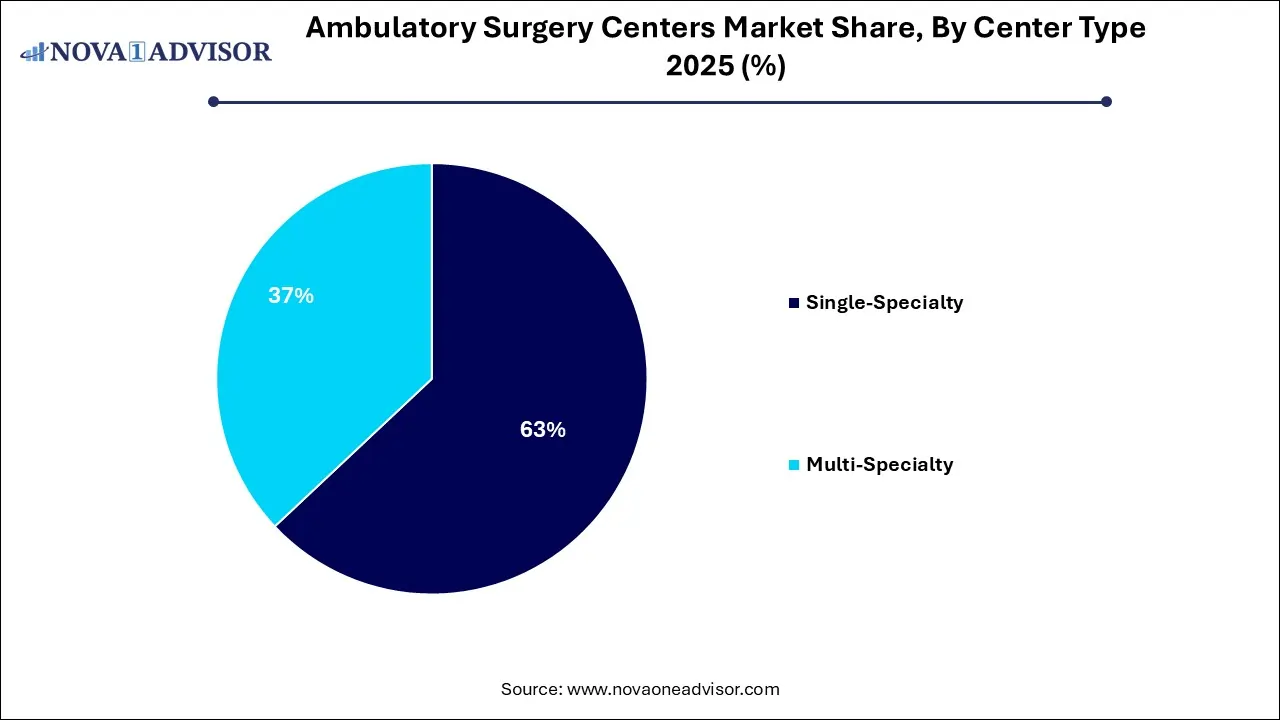
Single-specialty ASCs are the fastest-growing, particularly in ophthalmology, orthopedics, and pain management. These centers are built around a focused set of procedures, allowing them to streamline operations, reduce costs, and enhance surgical outcomes. With the growing trend of niche-specialization and subspecialty care, many providers are opening single-specialty centers to deliver highly efficient, volume-driven surgical services.
By Regional Insights
North America, particularly the United States, is the leading region in the ASC market. This dominance can be attributed to the country’s advanced healthcare infrastructure, favorable reimbursement policies, and the presence of numerous ASC chains. The U.S. has over 5,000 ASCs, and the number is rising steadily. The Centers for Medicare & Medicaid Services has played a critical role by expanding the list of approved ASC procedures and implementing value-based reimbursement models.
The high prevalence of chronic diseases, coupled with increasing consumer awareness and demand for convenience, has bolstered ASC usage across states. Moreover, insurance providers and employers prefer ASCs for cost-control, contributing to their market leadership. Leading companies like SCA Health (a UnitedHealth Group company), AmSurg, and HCA Healthcare operate extensive ASC networks across the region.
U.S. Ambulatory Surgery Centers Market Trends
The U.S. is transforming healthcare by migrating complex orthopaedic and cardiovascular procedures to cost-effective outpatient settings, offering to hospitals. The physical-led ownership and the strategic adoption of AI-driven robotics, which enable high precision, minimally invasive surgeries with significantly shorter recovery times. As payers increasingly favour these high-efficiency models, the trend toward specialized, for-profit surgical hubs contributes to dominating the critical landscape.
Asia-Pacific is the Fastest-Growing Region
Asia-Pacific is emerging as the fastest-growing region in the ASC market. The growth is fueled by rising healthcare expenditure, improving infrastructure, and increasing government support for outpatient care services in countries like India, China, and Japan. As the region undergoes rapid urbanization and economic development, access to quality healthcare services is expanding beyond metropolitan areas.
In India, for instance, private healthcare providers are setting up day-care surgical centers to cater to the growing middle-class population that seeks cost-effective and timely surgical care. Similarly, China's push towards healthcare reforms and its aging population are boosting demand for outpatient surgeries. Additionally, medical tourism is driving growth in this region, as international patients seek high-quality surgical care at lower costs in countries like Thailand, Malaysia, and South Korea.
China Ambulatory Surgery Centers Market Trends
China’s increased adoption of minimally invasive surgical techniques and robotic-assisted technology enables more complex procedures to be performed on a same-day basis. The shift toward anaesthesiologists managing the entire process, from pre-operative assessment to post-operative recovery, ensures safety.
Supply Chain Analysis of the Ambulatory Surgery Centers Market
- R&D and Medical Equipment Supply
This initial stage involves designing and manufacturing specialized medical devices, robotic systems, and surgical tools tailored for minimally invasive procedures.
Key players: Olympus America, Abbott, GE HealthCare, and Philips Healthcare.
- Facility Development and Site Management
This stage involves the planning, construction, and management of ASC facilities, ensuring they meet regulatory standards for safety and efficiency.
Key players: SurgCenter Development, Regent Surgical Health, Physicians Endoscopy, and NueHealth.
- Operational and Administrative Support Services
This stage involves the management of daily operations, including scheduling, staffing, procurement, and implementation of health information technology (IT) systems.
Key players: Cerner, McKesson Corporation, Epic Systems, and TeamHealth.
Key Players in the Ambulatory Surgery Centers Market
- CHSPSC, LLC (Community Health Systems)
Community Health Systems subsidiaries own or lease numerous hospitals and operate over 900 sites of care, including a significant number of ambulatory surgery centers (ASCs) focused on providing cost-effective, same-day surgical services.
- Envision Healthcare Corporation
Envision Healthcare offers physician-led services, primarily through its EmCare subsidiary, which provides anesthesia and surgical services to ambulatory surgery centers. They contribute by improving the efficiency and quality of care in outpatient settings, enhancing the patient experience through specialized, facility-based care.
- TH Medical
TH Medical, largely through its subsidiary United Surgical Partners International (USPI), is one of the largest operators of ambulatory surgery centers in the U.S. They contribute to the market by partnering with physicians and health systems to develop, own, and manage high-quality, efficient surgical facilities.
- Pediatrix Medical Group
Pediatrix Medical Group specializes in maternal-fetal and pediatric care, operating ASCs focused specifically on neonatology, obstetrics, and pediatric subspecialties.
Segments Covered in the Report
This report forecasts revenue growth at country levels and provides an analysis of the latest industry trends in each of the sub-segments from 2021 to 2035. For this study, Nova one advisor, Inc. has segmented the Ambulatory Surgery Centers market.
By Application
- Orthopedics
- Pain Management/Spinal Injections
- Gastroenterology
- Ophthalmology
- Plastic Surgery
- Otolaryngology
- Obstetrics/Gynecology
- Dental
- Podiatry
- Others
By Ownership
- Physician Owned
- Hospital Owned
- Corporate Owned
By Center Type
- Single-Specialty
- Multi-Specialty
By Region
- North America
- Europe
- Asia-Pacific
- Latin America
- Middle East & Africa (MEA)
FAQ's

Proceed to Buy
Instant PDF delivery on confirmation

Ambulatory Surgery Centers Market Size to Hit USD 255.85 Billion by 2035
 Request Customization
 Download Sample
Warning: Trying to access array offset on value of type null in /home/multiwpmr/public_html/report-details.php on line 1146

Get a Sample of this Report
Ambulatory Surgery Centers Market