

Aortic Coarctation Market Size, Share, Forecast Report, 2026 - 2035
 Status Published
 Category Healthcare


Content
Aortic Coarctation Market Size and Growth 2026 to 2035
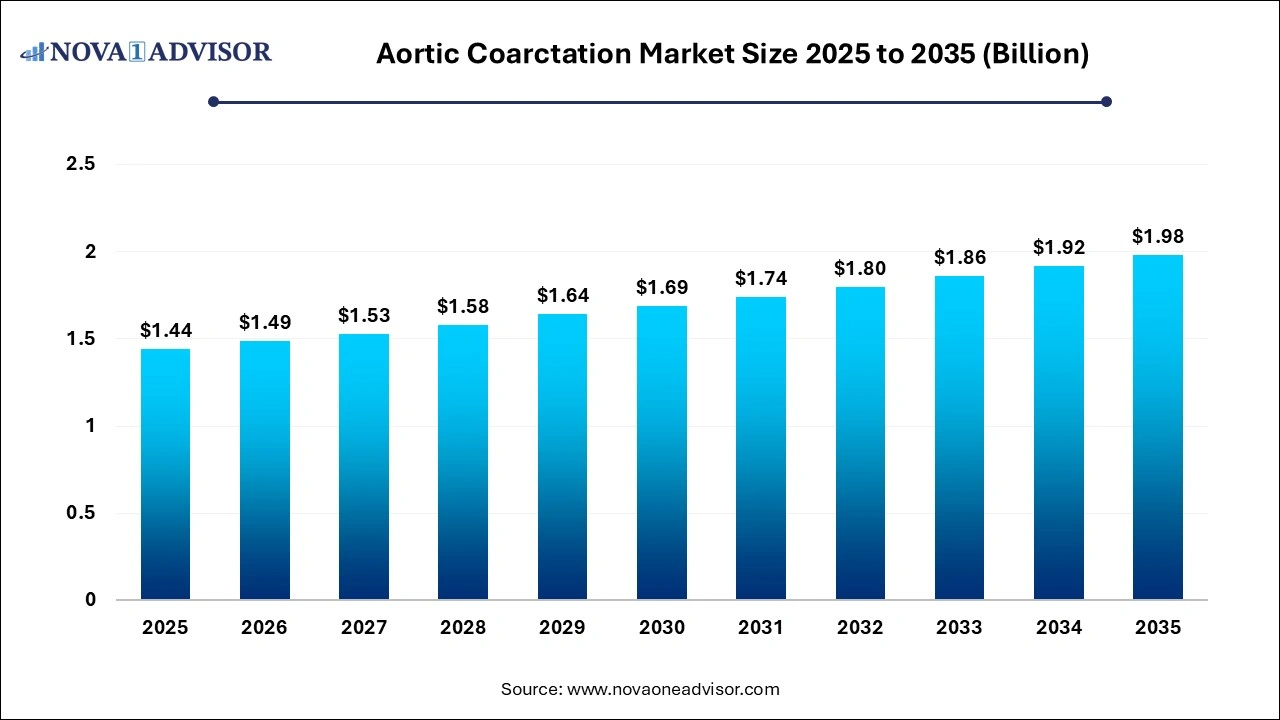
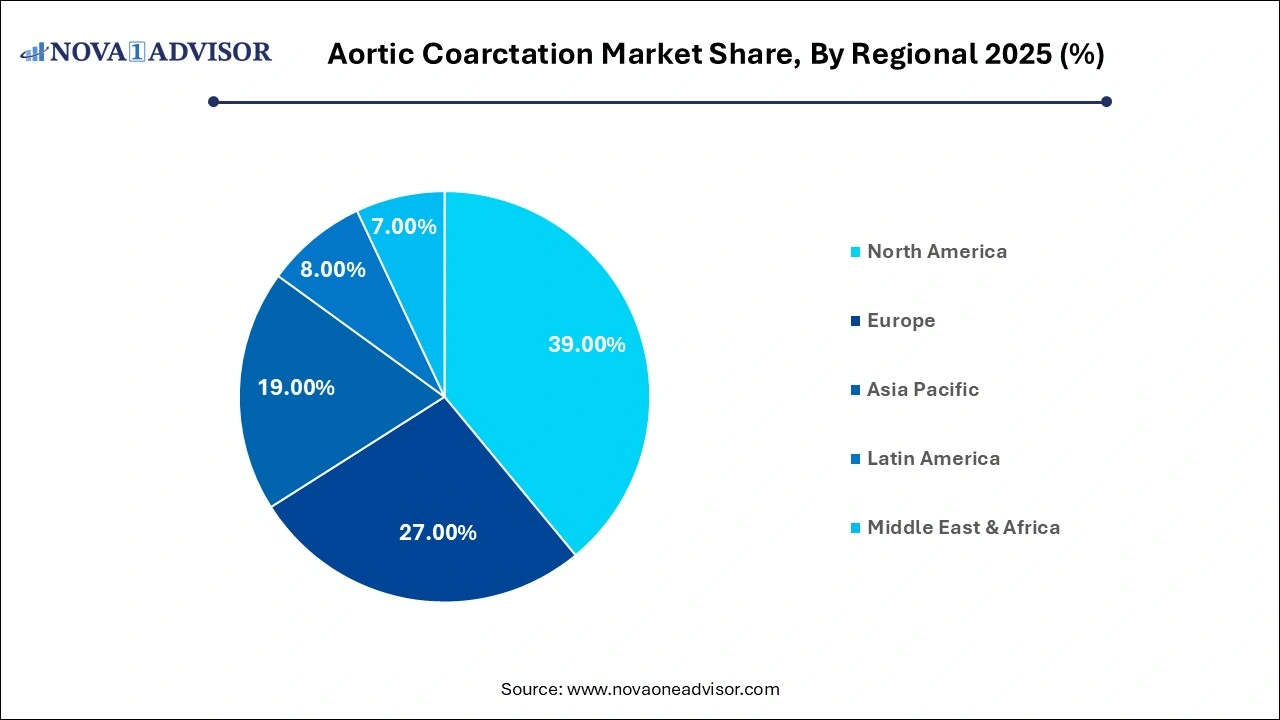
The global aortic coarctation market size was valued at USD 1.44 billion in 2025 and is projected to grow from USD 1.49 billion in 2026 to USD 1.98 billion by 2035, at a CAGR of 3.24% from 2026 to 2035. North America dominated the market, accounting for a revenue share of 39.0% in 2025.
Key Takeaway
- By treatment, the balloon angioplasty segment dominated the market with the largest share in 2025.
- By treatment, the patch aortoplasty segment is expected to grow at the fastest CAGR over the forecast period.
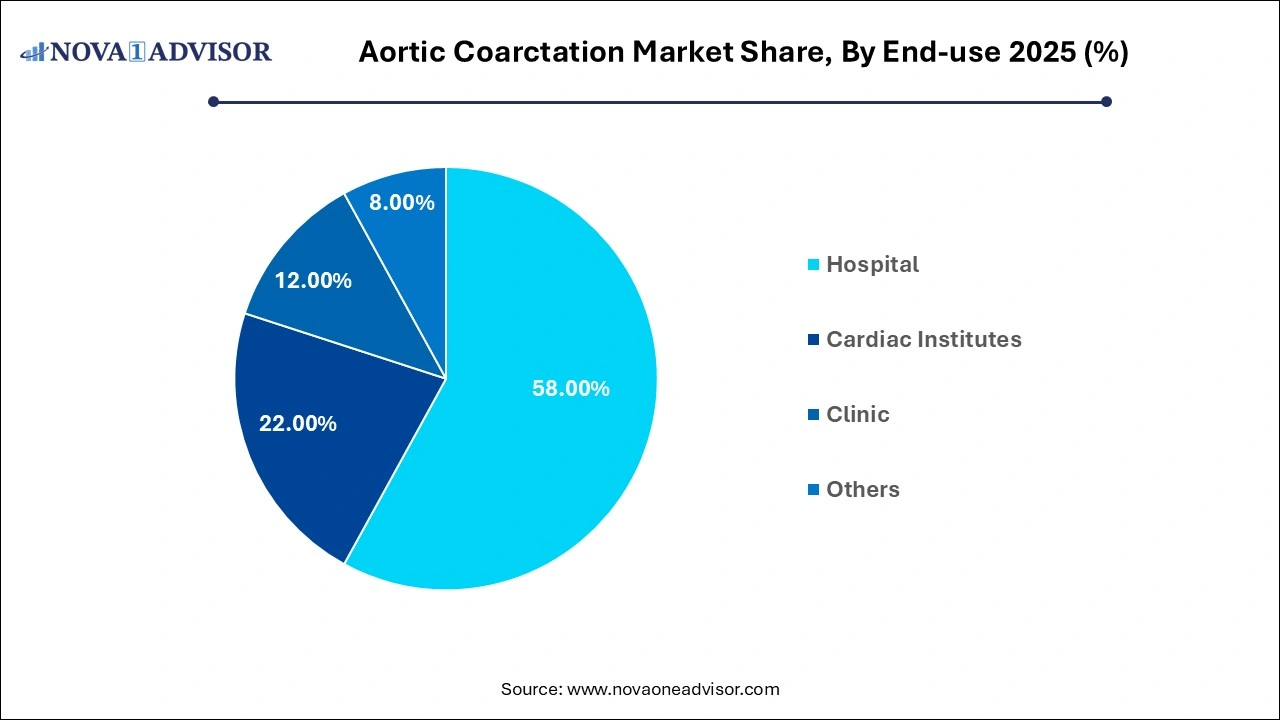
- By end user, the hospitals segment dominated the market with the largest share of 58.0% in 2025.
- By region, North America dominated the market with the largest share of 39.0% in 2025.
Market Overview
The global aortic coarctation market covers the diagnosis, monitoring, surgical treatment, catheter-based intervention, medical devices, imaging technologies, and specialized cardiac services used to manage coarctation of the aorta. The condition involves narrowing of the aorta that can increase blood-flow resistance and cardiovascular workload.
Treatment varies according to age, anatomy, severity, body size, previous repair, and associated heart defects. While surgery remains important, catheter-based treatment is expanding, particularly among older children and adults. This is increasing demand for specialized balloons, stents, covered stents, delivery systems, and advanced imaging technologies.
Pediatric-specific devices are also creating new opportunities. For example, the FDA-approved Renata Minima Stent System is indicated for coarctation of the aorta in neonates, infants, and children weighing at least 1.5 kg, reflecting the industry's movement toward solutions designed for smaller vessels and growing patients.
The market also benefits from the need for lifelong monitoring and potential repeat intervention. Recoarctation, hypertension, aneurysms, and anatomical changes can require continued imaging and specialized congenital-heart care. Growing populations of adults living with repaired congenital heart disease are therefore expanding the need for long-term follow-up.
Overall, the aortic coarctation market is evolving into a specialized, technology-driven cardiovascular intervention segment, with future opportunities centered on minimally invasive procedures, pediatric devices, advanced imaging, personalized procedural planning, and long-term congenital cardiac care.
Market Outlook
- Market Growth Overview: The global aortic coarctation market is expected to grow significantly between 2025 and 2035, driven by the ongoing innovations in surgical and minimally invasive treatment techniques.
- Sustainability Trends: Sustainability trends involve a growing emphasis on reducing overall environmental impact.
- Major Investors: Major investors in the market include Medtronic, Terumo Corporation (Terumo Aorta), W. L. Gore & Associates, Cook Medical, Endologix, and MicroPort Scientific Corporation.
How is AI Impacting The Global Aortic Coarctation Market?
AI is emerging as a decision-support technology in the aortic coarctation market, particularly in imaging, anatomical assessment, treatment planning, and long-term monitoring. AI-assisted analysis of echocardiography, CT, and cardiac MRI can help identify narrowing, measure vessel dimensions, evaluate cardiac function, and generate more consistent anatomical assessments.
A key opportunity is patient-specific procedural planning. AI and computational modeling can simulate stent placement and predict changes in vessel geometry and blood flow before intervention, potentially supporting more precise device selection and treatment strategies.
AI can also support risk prediction and follow-up care by combining imaging, blood pressure, anatomical, and clinical data to identify patients at greater risk of restenosis or future intervention. Sequential imaging analysis may help detect subtle anatomical changes and support personalized surveillance.
In addition, AI and computational modeling can assist manufacturers in optimizing stent geometry, expansion characteristics, delivery systems, and pediatric device designs. Overall, AI is expected to gradually enhance the market through more accurate imaging, individualized intervention planning, predictive monitoring, and improved device development, while clinical expertise remains central to treatment decisions.
Aortic Coarctation Market Report Scope
| Report Coverage | Details |
| Market Size in 2026 | USD 1.49 Billion |
| Market Size by 2035 | USD 1.98 Billion |
| Growth Rate From 2026 to 2035 | CAGR of 3.24% |
| Base Year | 2025 |
| Forecast Period | 2026 to 2035 |
| Segments Covered | By Treatment, By End User, By Region |
| Market Analysis (Terms Used) | Value (USD Million/Billion) or (Volume/Units) |
| Regional Scope | North America; Europe; Asia Pacific; Central and South America; the Middle East and Africa |
| Key Companies Profiled | Creganna (Ireland), Medtronic (Ireland), Freudenberg Medical, LLC (Germany), Clada Medical Devices (Ireland), B. Braun Melsungen AG (Germany), Braile Biomedica (Brazil) and others. |
Market Driver – Increasing Adoption of Minimally Invasive Interventions
Growing use of catheter-based treatment is driving the global aortic coarctation market. Advances in balloon angioplasty, stent technology, vascular access, and imaging are expanding minimally invasive options for suitable children and adults. These procedures create demand for specialized balloons, stents, guidewires, delivery systems, imaging equipment, and catheterization services.
Market Restraint – Complex Anatomy and Long-Term Risks
Complex patient anatomy and the need for long-term monitoring can limit market growth. Variations in aortic structure, arch hypoplasia, previous surgery, and associated heart conditions can complicate device selection and intervention. Risks such as restenosis, hypertension, vascular complications, and aneurysm formation may also require continued surveillance and repeat procedures.
Market Opportunity – Growth-Compatible Pediatric Stents
Growth-compatible pediatric stents represent a promising market opportunity. Devices that can be expanded as a child's vessels grow may reduce the need for repeated interventions and address limitations of conventional pediatric stenting. The development of low-profile, expandable stents and pediatric-specific delivery systems could create new opportunities in neonatal and infant coarctation treatment.
Segmental Insights
By Treatment
Why did the balloon angioplasty segment dominate the global aortic coarctation market?
The balloon angioplasty segment dominated the market with the largest share in 2025. The dominance of the segment can be attributed to its minimally invasive nature and robust clinical efficiency. In addition, AI-driven pulse wave analysis facilitates the evaluation of central aortic blood pressure in adults following clinical interventions, which reduces the risk of misdiagnosis and the overestimation of hypertension.
How did the patch aortoplasty segment expected to hold the significantly growing global aortic coarctation market in the coming years?
The patch aortoplasty segment is expected to grow at the fastest CAGR over the forecast period. The growth of the segment can be credited to the growing adoption in complicated coarctation cases, which are unsuitable for balloon angioplasty. The rising number of pediatric and adult congenital cardiac surgeons has directly contributed to improved safety outcomes and increased use of patch reconstruction methodologies.
By End User
Why did the hospitals segment dominate the global aortic coarctation market?
The hospitals segment dominated the market with the largest share in 2025. The dominance of the segment can be linked to the presence of innovative surgical facilities and the availability of an extensive range of treatment options. Furthermore, hospitals function as centralized centers for medical care because independent clinics do not possess the wide range of specialized professional skills required to reduce risks during high-risk medical procedures.
How did the cardiac institutes segment expected to hold the significantly growing global aortic coarctation market in the coming years?
The cardiac institutes segment is expected to grow at the fastest CAGR over the forecast period. The growth of the segment can be driven by growing specialization in adult cardiac and congenital care. Moreover, cardiac institutes specialize in the comprehensive management of intricate cardiovascular disorders, including aortic coarctation. These specialized centers provide a centralized multidisciplinary team having highly proficient congenital cardiac surgeons.
By Region
Why did the North American region account for the largest share of the global aortic coarctation market?
North America dominated the market with the largest share in 2025. The dominance of the region can be attributed to the increasing adoption of cutting-edge cardiovascular treatments and the robust presence of major medical device market players. In addition, the region features a dense concentration of specialized hybrid operating rooms and an advanced cardiac institute, filled with highly skilled interventional cardiologists.
U.S. Global Aortic Coarctation Market Trends
The growth of the market in the country can be driven by the surge in congenital heart defect prevalence and strong Medicaid and Medicare spending in major cities. Also, both patients and physicians favor catheter-based interventions, as they reduce overall procedural morbidity and facilitate more rapid recovery time.
Why did the Asia-Pacific region become the fastest-growing global aortic coarctation market during the forecast period?
Asia Pacific is expected to grow at the fastest CAGR over the forecast period. The growth of the region can be credited to the growing healthcare infrastructure investments and surge in awareness regarding congenital heart defects along with the growing adoption of minimally invasive procedures. Furthermore, significant public and private capital is being allocated toward the establishment of specialized cardiovascular facilities designed to handle complex congenital procedures.
China Global Aortic Coarctation Market Trends
The market in the country is growing due to growing healthcare expenditures across regional and urban centers and a surge in healthcare infrastructure investments. Moreover, government-funded public health initiatives designed to boost early childhood and neonatal screening for congenital heart disease can fuel market growth further.
Key Players in the Global Aortic Coarctation Market
- Medtronic plc: It holds a dominant global share through its vast endovascular robotics and aortic branches, offering industry-standard endovascular aneurysm repair (EVAR) systems.
- Endologix LLC: It specializes strictly in innovative anatomical fixation systems and low-profile delivery frameworks for abdominal aortic aneurysm treatments.
- Artivion, Inc. (formerly CryoLife): It leads specialized market niches focusing on biological solutions, surgical sealing matrixes, and preserved human aortic tissues.
Recent Developments
- In March 2026, S3V Vascular Technologies, an indigenous medical device manufacturer backed by former L&T Chairman A.M. Naik along with prominent market investors Utpal Sheth and Madhu Kela, officially announced the commencement of preclinical evaluations for its newly developed balloon-expandable transcatheter aortic valve replacement (TAVR) system.
Segments Covered in the Report
This report forecasts revenue growth at country levels and provides an analysis of the latest industry trends in each of the sub-segments from 2021 to 2035. For this study, Nova one advisor, Inc. has aortic coarctation market.
By Treatment
- Balloon Angioplasty
- Patch Aortoplasty
- Subclavian Flap Aortoplasty
- Others
By End User
- Hospital
- Clinic
- Cardiac Institutes
- Others
By Region
- North America
- Europe
- Asia-Pacific
- Latin America
- Middle East & Africa (MEA)
FAQ's

Proceed to Buy
Instant PDF delivery on confirmation

Aortic Coarctation Market Size to Hit USD 1.98 Billion by 2035
 Request Customization
 Download Sample

Get a Sample of this Report
Aortic Coarctation Market