

Asia Pacific Bioregenerative Aesthetic Injectable Market Size, Share, and Trends 2026 to 2035
 Status Published
 Category Healthcare


Content
Asia Pacific Bioregenerative Aesthetic Injectable Market Summary
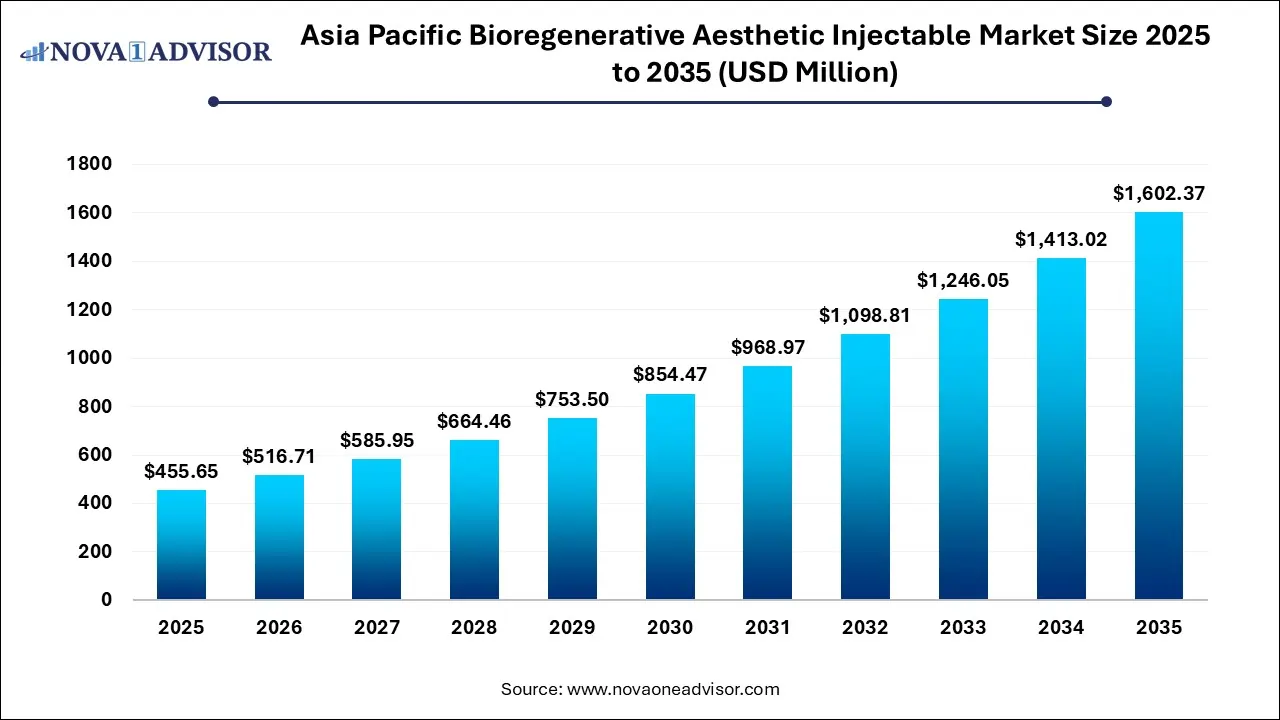
The Asia Pacific bioregenerative aesthetic injectable market size was estimated at USD 455.65 million in 2025 and is projected to increase from USD 516.71 million in 2026 to approximately USD 1,602.37 million by 2035, growing at a CAGR of 13.4% from 2026 to 2035. The Asia Pacific bioregenerative aesthetic injectable market is driven by the increasing use of platelet-rich plasma polynucleotides and exosomes, which are boosting the popularity of treatments that offer long-term skin health rather than temporary fixes. Higher income levels in the region are allowing for greater spending on cosmetic enhancements, and an ageing demographic and younger patients.
Key Takeaways
- By product, the PRP injectables segment held a dominant position in the market with a share of 22% in 2025.
- By product, the exosome-based injectables segment is the fastest growing between 2026 and 2035.
- By application, the skin hydration & moisturization segment accounted for a considerable revenue share of 20% in the market in 2025.
- By application, the body application segment is the fastest growing during 2026 and 2035.
- By end use, the MedSpa’s segment accounted for a considerable revenue share of 32% in the market in 2025.
Innovation Driving Transformation in the Asia Pacific Bioregenerative Aesthetic Injectable Market
Asia Pacific bioregenerative aesthetic injectables comprise minimally invasive, non-surgical procedures, such as polynucleotides, exosomes, and biostimulators, designed to activate the body’s natural cellular repair processes and stimulate collagen production, moving beyond temporary filter effects to provide long-term skin health. The benefits of the application, such as skin rejuvenation, anti-ageing, and facial contouring, include natural-looking results, improved skin texture and elasticity, and increased structural support for skin laxity, often with reduced maintenance compared to conventional fillers.
Asia Pacific Bioregenerative Aesthetic Injectable Market Trends
- Market Proliferation of Polynucleotide and PDRN Solutions
The region is seeing accelerated adoption of PN- and PDRN-based injectables as foundational skin-quality enhancers before structural intervention. These substances, derived from salmon DNA, are increasingly preferred for repairing the skin matrix, reducing inflammation, and boosting elasticity, especially in premium clinics in the region.
- Strategic Shift Toward Bio-stimulatory Agents
Bio-stimulatory injectables, such as Poly-L-lactic acid and polycaprolactone, are surpassing traditional hyaluronic acid fillers for volume restoration. These products stimulate the body’s own collagen production, leading to gradual, natural-looking results that last up to two years, addressing the demand for long-lasting, subtle rejuvenation.
- Expansion of the Pre-juvenation Demographic
The increase in millennials and Generation Z professionals in urban centers is seeking preventative aesthetic procedures rather than just correction. Younger patients are opting for lower doses of biostimulators and skin boosters to maintain skin health and delay the onset of ageing, shifting the demographic from older adults to younger consumers.
Key AI Integration in the Asia Pacific Bioregenerative Aesthetic Injectable Market
AI and ML are revolutionizing the Asia Pacific bioregenerative aesthetic injectable industry by enabling hyper-personalized treatment planning through advanced skin analysis of hydration, elasticity, and collagen density. Machine learning models, particularly in tech-forward markets such as South Korea and China, analyze patient datasets to predict optimal biostimulator or exosome injection sites, enhancing precision and ensuring more natural-looking, long-term regenerative outcomes. AI-powered 3D visualization and stimulation tools allow patients to visualize prospective results before treatment, improving trust and satisfaction.
Asia Pacific Bioregenerative Aesthetic Injectable Market Report Scope
| Report Coverage | Details |
| Market Size in 2026 | USD 516.71 Million |
| Market Size by 2035 | USD 1,602.37 Million |
| Growth Rate From 2026 to 2035 | CAGR of 13.4% |
| Base Year | 2025 |
| Forecast Period | 2026 to 2035 |
| Segments Covered | Product, Application, End use, Country |
| Market Analysis (Terms Used) | Value (USD Million/Billion) or (Volume/Units) |
| Regional Scope | North America; Europe; Asia Pacific; Central and South America; the Middle East and Africa |
| Key Companies Profiled | MD Skin Solutions; Mastelli s.r.l.; Merz Aesthetics; Caregen Co. Ltd; Croma Pharma; PROMOITALIA; Galderma; Fillmed; IBSA; Bio-Formula; BR Pharma; Allergan (AbbVie); Merz; Fidia; VAIM |
Market Dynamics
Driver
Rising Demand for Natural Results
The expansion of high adoption among younger demographics and men. Moving away from drastic changes, consumers now favor treatments that stimulate the body’s own collagen and regenerative processes, such as polynucleotides, PRP, and exosome-based solutions, to achieve long-term skin health. The social media influence has normalized preventative tweaks to address early signs of aging, particularly in urban areas of the region.
Restraint
Stringent and Diverse Regulatory Frameworks
The market growth is hindered by creating fragmented, country-specific approval processes that delay product launches and increase compliance costs. While stringent standards are necessary for safety, the high variability in regulations between countries, such as between Japan’s structured approach and evolving frameworks in Southeast Asia, prevents manufacturers from using a unified, regional strategy, thus hindering market entry.
Opportunity
Younger Demographic Adoption
The younger demographics in the Asia Pacific, particularly millennials and Gen Z in China and South Korea, are fueling market growth through a proactive shift towards prejuvenation and long-term skin health. Younger consumers are moving away from corrective, dramatic changes, preferring collagen-stimulating and regenerative procedures, such as exosome-based solutions and polynucleotides that offer natural, long-lasting results. The strong social media influence, which drives awareness and acceptance of preventive aesthetic treatments, shortens the cycle between product introduction and widespread adoption.
Segment Insights
By Product Insights
Why Did the PRP Injectables Segment Hold a 22% Share for the Asia Pacific Bioregenerative Aesthetic Injectable Market?
The PRP injectables segment held a dominant position in the market with a share of 22% in 2025, owing to the strong clinical acceptance, but gradually declining as advanced biologics emerge. Increasing demand for natural rejuvenation, dermatologists and cosmetic clinics in the region, in India and China, heavily utilize PRP in combination therapies for better results, strengthening its position.
The biostimulatory injectables segment held a 20% share of the market in 2025. Due to the long-lasting results and rising preference for regenerative aesthetics. Rising consumer demand for minimally invasive treatments, high buty standers, and increasing adoption of preventative, anti-aging solutions among younger urban professionals and men boost preference.
The PN (Polynucleotide) segment holds a 18% share of the market in 2025, with the market growing moderately as demand increases for scientifically backed regenerative treatments. The presence of strong, local manufacturers in the region has increased access to cost-effective PN products, fueling the market share. The advanced competitive beauty culture drives innovation and adoption, with a high percentage of the demographic seeking rejuvenation.
The peptide-based injectables segment held a 16% share of the market in 2025, due to the rising adoption of preventive and anti-aging skincare solutions. Peptide-based injectables offer high target specificity and low toxicity, acting as signaling molecules to improve skin quality with fewer side effects. Rising disposable income, high beauty awareness, and the growth of medical tourism have increased investment in research and development, and the introduction of sophisticated formulations.
The exosome-based injectables segment held a 14% share of the market in 2025, due to innovation, though still emerging in terms of market penetration. The high adoption of exosome-based products provides long-term, natural-looking skin rejuvenation by enhancing cellular communication and simulating elastin/collagen production. The companies are focusing on developing new products and collaborating on research and development to improve exosome technology.
The others segment held a 10% share of the market in 2025, due to declining as the market consolidates around clinically proven and scalable technologies. The rising popularity of minimally invasive procedures with low downtime, often performed in medical spas and clinics, boosts the adoption of specialized injectables.
By Application Insights
Why Did the Skin Hydration & Moisturization Segment Lead the Asia Pacific Bioregenerative Aesthetic Injectable Market?
The skin hydration & moisturization segment registered its dominance over the market with a share of 20% in 2025, owing to the universal demand for basic aesthetic enhancement. Advancements in polydeoxyribonucleotide and hyaluronic acid-based products improved safety and efficacy, enhancing consumer confidence. A significant shift toward quick, minimally invasive procedures with low downtime has increased the uptake of injectables in Med Spas and dermatology clinics.
The wrinkle correction segment held the 18% share of the market in 2025, due to strong but slightly declining sales as consumers shift toward preventive and regenerative treatments. Rising awareness of beauty standards, often driven by social media, alongside increased disposable income in nations such as China, India, and South Korea, is driving market growth.
The elasticity & firmness segment held a 16% share of the market in 2025 because of the steady demand with aging populations seeking non-surgical solutions. Bioregenerative products are preferred for their ability to stimulate the body’s natural collagen production, addressing the root cause of sagging skin and loss of elasticity rather than just filling wrinkles. Preventative aesthetic trends and the introduction of innovative, cost-effective, and locally manufactured products are increasing accessibility and fostering high growth rates.
The fine lines segment held a 14% share of the market in 2025, with the consistent demand in younger demographics. Increased screen time and stress-related fatigue among urban populations in the region, and rejuvenation treatments. The consumer preference for bio-stimulatory injectables that stimulate natural collagen production rather than immediate, drastic changes.
The acne scar segment held a 12% share of the market in 2024, due to a slight decline as broader skin rejuvenation solutions gain preference. The increasing competition in the aesthetic sectors led to better, more accessible price points for scar treatments. Patients prefer procedures with low downtime, high safety profiles, and, in the case of acne scars, treatments that offer significant improvement in skin texture.
The under-eye areas segment held a 10% share of the market in 2024, due to the increasing aesthetic awareness and social media influence. Significant shift toward predictive treatments, particularly among younger individuals driving demand for collagen-stimulating injectables that improve skin texture and elasticity over time.
The body application segment held a 10% share of the market in 2024, with the consumer are increasingly choosing non-surgical, low-downtime procedures for body sculpting and skin rejuvenation over invasive alternatives. Influenced by social media and cultural standards, and the expansion of medical tourism.
By End-Use Insights
Why Did the MedSpas Segment Lead the Asia Pacific Bioregenerative Aesthetic Injectable Market?
The MedSpas segment registered its dominance over the market with a share of 32% in 2025, owing to the affordability, accessibility, and high consumer preference for non-hospital settings. The introduction of advanced, long-lasting products, such as poly-L-lactic acid and polynucleotides, allows for effective, natural-looking results in body areas, such as neck, decollete, hands, and thighs.
The dermatology centers segment held the 24% share of the market in 2025, with the expertise-driven treatments and trust in professional care. The popularity of bioregenerative products, such as skin boosters and collagen stimulators, is soaring as they offer reduced downtime and natural results compared to traditional surgery.
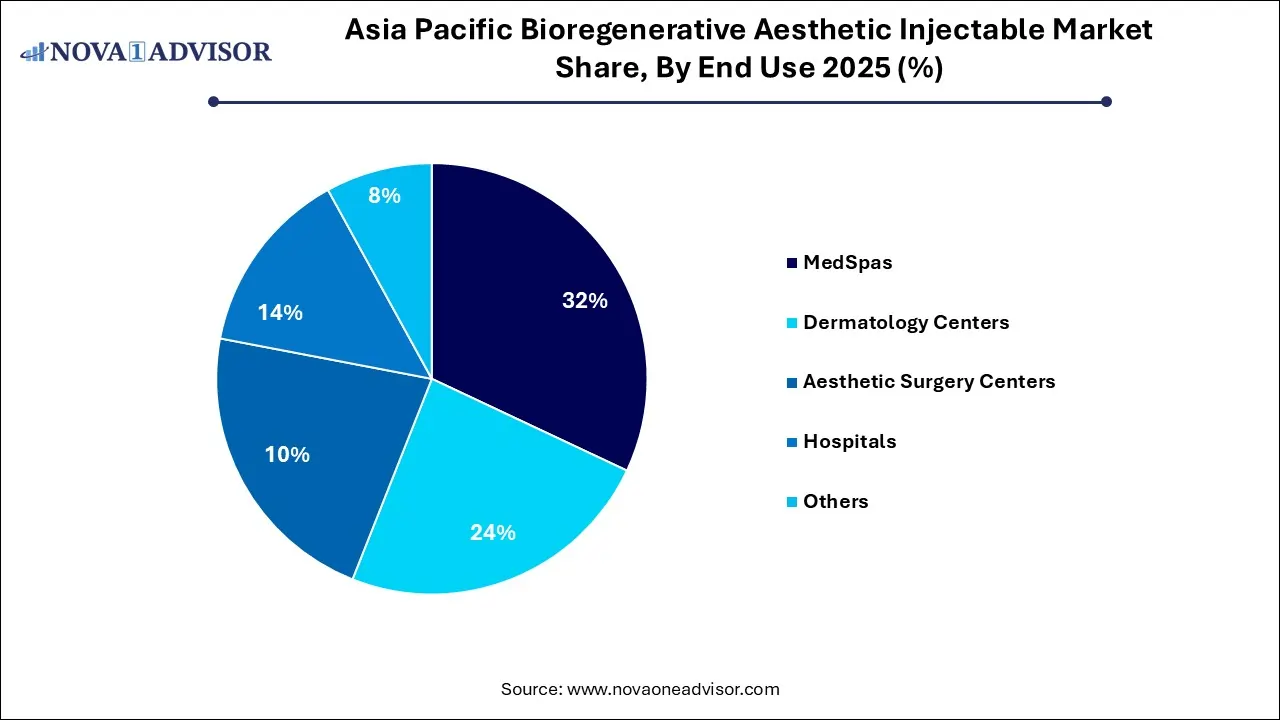
The aesthetic surgery centers segment held 22% share of the market in 2025, due to the growing shifts toward non-invasive alternatives. The increasing awareness of beauty standards, coupled with rising disposable incomes, has increased the demand for these services, leading to strong growth in the sector. Increased disposable incomes, awareness, and growing demand for minimally invasive treatments.
The hospitals segment held a 14% share of the market in 2025. With the higher costs and less focus on elective aesthetics. A rapidly aging population in East Asia, combined with higher disposable income, drives sustained demand for anti-aging aesthetic treatments. Growing investments in healthcare, along with booming medical tourism in the region, boost hospitals' capacity to handle cosmetic demands.
The others segment held 8% share of the market in 2025, because the shift toward regenerative solutions, intense research by market players is introducing a wider variety of these specialized, high-efficacy compounds, which are gaining traction over standard, single-use treatments.
Asia Pacific Bioregenerative Aesthetic Injectable Market Overview
The bioregenerative aesthetic injectable market in Asia Pacific is the largest globally, with a market share surpassing 31.15% in 2025. This growth is expected to continue in the coming years, fueled by the rapid expansion of digital platforms, medical tourism, and e-commerce. These factors have increased the accessibility and market visibility of injectables and their associated treatment protocols across the region. Both international and regional manufacturers are introducing a wide variety of bioregenerative injectable products, including formulations based on hyaluronic acid and vitamins, as well as advanced solutions containing polynucleotides, peptides, and growth-enhancing complexes. Market entry is supported through collaborations with dermatology and aesthetic clinics, well-established distribution networks, and structured practitioner training and certification programs, encouraging broader clinical adoption throughout major Asia-Pacific countries.
Medical tourism plays a crucial role in driving market growth. Asia Pacific has become a sought-after destination for international patients seeking advanced aesthetic procedures at competitive prices. This trend has led to higher treatment volumes and greater exposure for bioregenerative injectables. Leading aesthetic centers in the region are reporting increased numbers of international patients pursuing cosmetic and combination treatments, benefiting from state-of-the-art infrastructure and growing global demand for high-quality aesthetic services.
For example, Contour Clinic in Thailand, in September 2025, reported that international patients accounted for 25.4% of its total aesthetic procedures, significantly higher than the global average of around 10%. This highlights the strong cross-border demand for aesthetic services in the region. Furthermore, global aesthetic procedure volumes reached nearly 34.9 million cases in 2023, reflecting consistent growth across both surgical and non-surgical categories. Enhanced accessibility, shifting beauty ideals, and the region’s robust medical tourism ecosystem have collectively driven demand for bioregenerative aesthetic injectables in Asia Pacific.
China Bioregenerative Aesthetic Injectable Market Trends
China's bioregenerative aesthetic injectable market is growing rapidly, driven by increasing consumer demand and continuous innovation in products. The competitive landscape includes multinational companies such as PharmaResearch Products, Galderma, Merz Aesthetics, Mastelli, Ipsen, and BR Pharma, particularly in the premium and biostimulatory segments. These players are enhancing their presence through localized product strategies, partnerships with domestic aesthetic clinics, clinician training programs, and the introduction of globally recognized regenerative injectables. The competition in the market is shaped by pricing strategies, deeper penetration into lower-tier cities, and diversified portfolios catering to both traditional and regenerative aesthetic needs.
The market's growth is supported by the rising popularity of minimally invasive procedures and the increasing acceptance of aesthetic treatments across various age groups. An aging population seeking solutions to maintain a youthful appearance is a key demand driver, while younger consumers, particularly millennials and Gen Z, are influenced by social media trends and urban lifestyles, favoring natural-looking, subtle results. The shift from traditional cosmetic treatments to bioregenerative injectables reflects an increasing emphasis on safety, collagen stimulation, and long-term skin quality enhancement.
India Bioregenerative Aesthetic Injectable Market Trends
India's bioregenerative aesthetic injectable market is witnessing significant growth, with global players such as Mastelli, Merz Aesthetics, Caregen Co. Ltd., Galderma, and Fillmed making strategic moves to strengthen their positions. These companies focus on product innovation, offering next-generation injectables with enhanced biostimulatory effects and advanced delivery technologies designed to improve safety, effectiveness, and durability. In addition to product innovation, these companies are expanding regionally by extending their reach beyond major metropolitan areas through collaborations with local dermatology and aesthetic clinics and strengthening distribution networks.
The demand for bioregenerative injectables is growing as private dermatology and aesthetic centers increasingly offer these treatments. The market is driven by the rising popularity of minimally invasive procedures that stimulate the body’s natural repair mechanisms, rather than just providing cosmetic correction. Treatments such as platelet-rich therapies, exosome-based solutions, and other regenerative formulations are gaining traction among clinicians and consumers seeking collagen stimulation, tissue regeneration, and longer-lasting improvements. This shift reflects a broader global trend toward natural rejuvenation and regenerative outcomes in aesthetic treatments.
South Korea Bioregenerative Aesthetic Injectable Market Trends
South Korea’s bioregenerative aesthetic injectable market is experiencing robust growth, with both global and domestic brands competing for market share. International players like Allergan (AbbVie) and Galderma are facing strong competition from local leaders such as Medytox, which leverage strong clinical networks and localized strategies. Consumer preference for natural, regenerative, and minimally invasive treatments is contributing to the market’s expansion. Additionally, South Korea’s rapidly aging population, with over 21% aged 65 and above as of 2026, further strengthens the market's potential. The popularity of advanced formulations, such as regenerative skin boosters and collagen-stimulating hybrid injectables, aligns with evolving beauty standards, ensuring sustained market growth.
Australia Bioregenerative Aesthetic Injectable Market Trends
Australia’s bioregenerative aesthetic injectable market is growing steadily, driven by the strategic efforts of key players such as Mastelli, Merz Aesthetics, Galderma, and Allergan. These companies are focusing on next-generation biostimulatory injectables and regenerative skin boosters that provide gradual, natural-looking results with strong safety profiles, well-aligned with Australian preferences for subtle enhancement and preventive skincare. Market growth is fueled by the increasing interest in anti-aging solutions, rising disposable incomes, and growing awareness of regenerative technologies such as PRP and collagen stimulators. Product launches, clinician training, and marketing initiatives, including Rejuran’s recent expansion, are helping to boost consumer awareness and demand for bioregenerative injectables nationwide.
Recent Developments
- In April 2025, Galderma officially launched its regenerative biostimulator Sculptra in China to address high demand for premium aesthetic treatments, capitalizing on a market experiencing rapid growth in the region. The PLLA-SCA formulation works by stimulating the body's natural collagen production to correct mid-facial volume loss, offering results that last for over two years.
- In July 2025, Koru Pharma launched Reversal Neo, a 200 mg high-purity PLLA collagen-stimulating injectable featuring a uniform microsphere structure for smooth, precise applications. The product boasts a 10-minute preparation time, providing natural, long-lasting rejuvenation results that last up to 24 months.
- In April 2025, Alma Lasers launched the next-generation Alma Harmony, an aesthetic platform featuring a 45% energy increase and a "simply intelligent" interface to enhance patient personalization and treatment capabilities. The new platform integrates five advanced technologies, including Q-Switch, Fractional Ablative, and IPL, for comprehensive treatments, alongside the new, exclusive Harmony Bio-Boost, which leverages bio-stimulation for improved skin rejuvenation results.
Asia Pacific Bioregenerative Aesthetic Injectable Market Companies
- PharmaResearch Products Co., Ltd.
- Mastelli s.r.l.
- MD Skin Solutions
- Merz Aesthetics
- Croma Pharma
- Caregen Co. Ltd
- PROMOITALIA
- Fillmed
- Galderma
- IBSA
- BR Pharma
- Bio-Formula
- Allergan (AbbVie)
- Fidia
- Merz
- VAIM
Segments Covered in the Report
This report forecasts revenue growth at country levels and provides an analysis of the latest industry trends in each of the sub-segments from 2021 to 2035. For this study, Nova one advisor, Inc. has segmented the Asia Pacific bioregenerative aesthetic injectable market.
By Product
- PN
-
- PDRN
- PN Injectables
- Peptide based Injectables
- Exosome-based Injectables
- Biostimulatory Injectables
-
- PLLA
- CaHA
- PRP Injectables
- Others
By Application
- Skin Hydration & Moisturization (For Face)
- Elasticity & Firmness (For Face)
- Under eye-areas (For Face)
- Fine Lines (For Face)
- Acne Scar (For Face)
- Wrinkle Correction (For Face)
- Body Application-
-
- Arms & Thighs
- Décolletage
- Intimate Areas
- Knees
- Scalp & Hair Rejuvenation
By End Use
- MedSpas
- Aesthetic Surgery Centers
- Hospitals
- Dermatology Centers
- Others
By Country
- Asia Pacific
-
- China
- South Korea
- Japan
- India
- Thailand
- Singapore
- Malaysia
- Indonesia
- Vietnam
- Philippines
- Taiwan
- Pakistan
- Hong Kong
- Australia
- New Zealand
FAQ's

Proceed to Buy
Instant PDF delivery on confirmation

Asia Pacific Bioregenerative Aesthetic Injectable Market Size to Hit USD 1,602...
 Request Customization
 Download Sample

Get a Sample of this Report
Asia Pacific Bioregenerative Aesthetic Injectable Market