

Astigmatism Market Size, Share, and Trends 2026 to 2035
 Status Published
 Category Healthcare


Content
Astigmatism Market Size and Growth 2026 to 2035
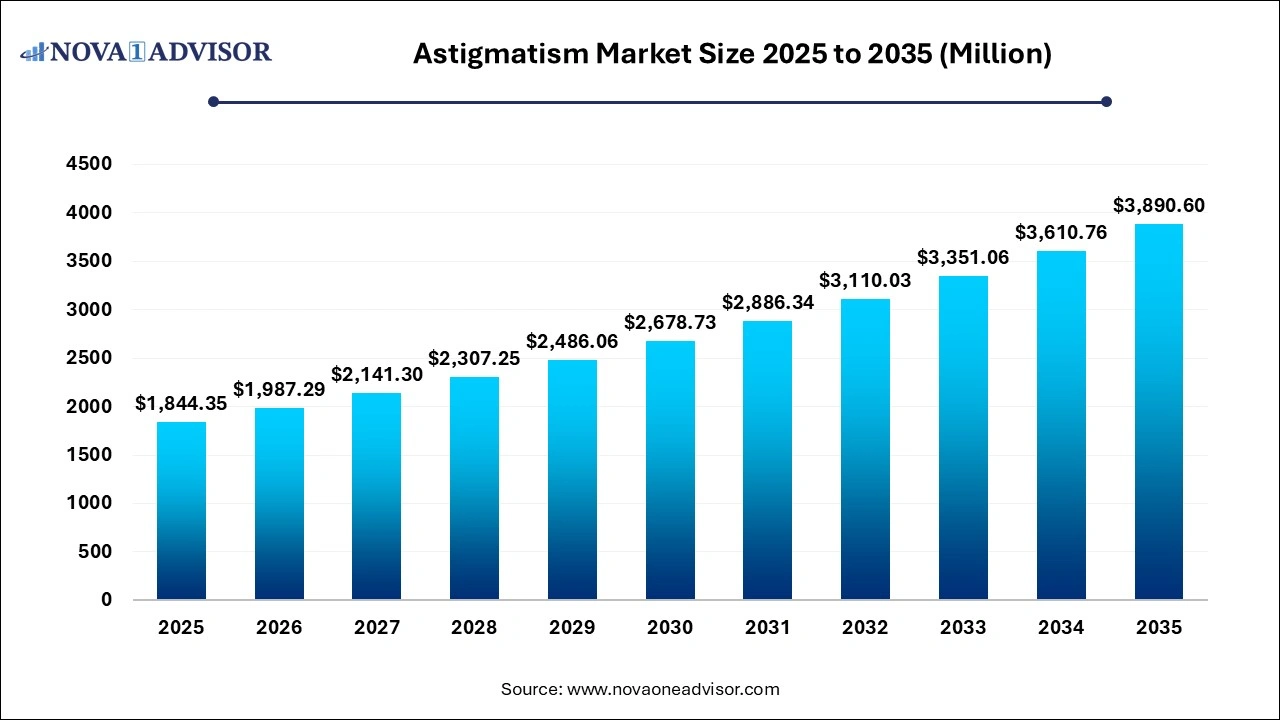
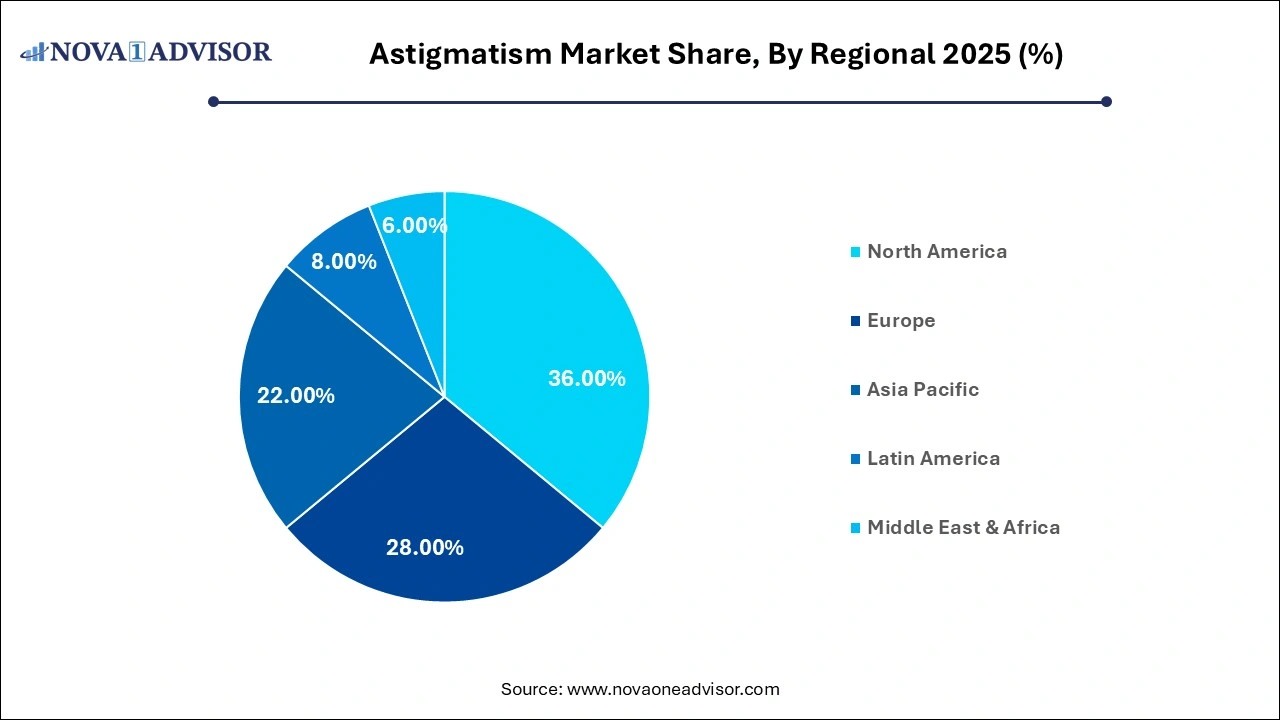
The global astigmatism market size was valued at USD 1,844.35 million in 2025 and is projected to grow from USD 1,987.29 million in 2026 to USD 3,890.60 million by 2035, at a CAGR of 7.75% from 2026 to 2035. North America dominated the market, accounting for a revenue share of 36.0% in 2025.
Key Takeaway
- By application, the contact lens segment dominated the market with the largest share in 2025.
- By application, the surgical procedures segment is expected to grow at the fastest CAGR over the forecast period.
- By end use, the hospitals segment dominated the market with the largest share in 2025.
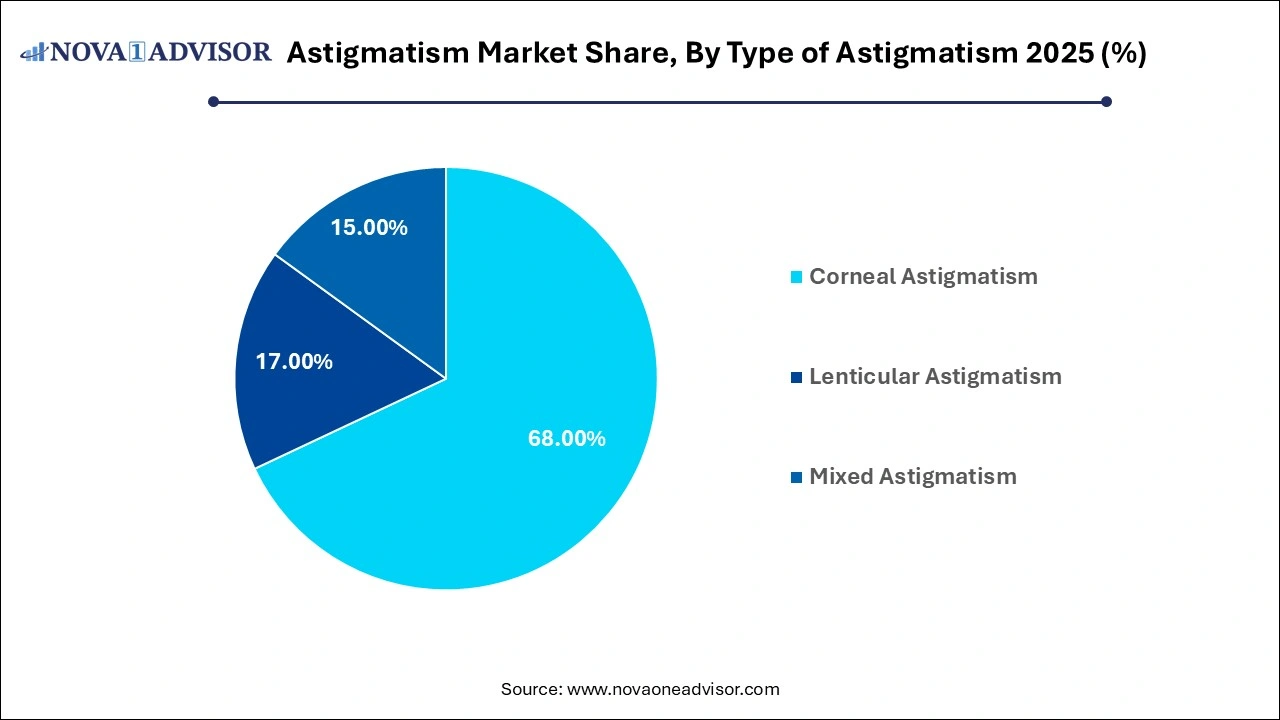
- By type of astigmatism, the corneal astigmatism segment dominated the market with the largest share of 68.0% in 2025.
- By region, North America dominated the market with the largest share of 36.0% in 2025.
Market Overview
The global astigmatism market includes products, technologies, procedures, and services used to diagnose and correct astigmatism. Key solutions include prescription eyeglasses, toric and specialty contact lenses, diagnostic devices, laser refractive surgery, and toric intraocular lenses (IOLs).
Eyeglasses remain the most widely accessible correction method, while toric contact lenses offer an alternative for patients seeking greater flexibility. Specialty lenses are also used for irregular corneal conditions. Surgical options such as LASIK, PRK, and SMILE provide longer-term correction, while toric IOLs help manage astigmatism during cataract surgery.
Market growth is supported by aging populations, rising cataract procedures, improved childhood vision screening, expanding access to eye care, and increasing demand for personalized vision correction. Advances in corneal imaging, optical biometry, and digital alignment are further improving treatment precision.
Market Outlook
- Market Growth Overview: The global astigmatism market is expected to grow significantly between 2025 and 2035, driven by the growing awareness regarding eye health globally.
- Sustainability Trends: Sustainability trends involve an increasing emphasis on minimizing medical waste and using sustainable materials for corrective lenses.
- Major Investors: Major investors in the market include CooperVision, Bausch + Lomb, EssilorLuxottica, Carl Zeiss Meditec, and HOYA Corporation.
How is AI Impacting The Global Astigmatism Market?
Artificial intelligence (AI) is reshaping the market by allowing hyper-personalized laser eye surgery planning, enhancing diagnostic accuracy for corneal irregularities, and optimizing the custom manufacture of cutting-edge toric lenses and smart corrective eyewear. Furthermore, artificial intelligence-driven behaviour modelling optimizes intraocular lens and contact lens designs by aligning optical parameters with individual visual habits and ocular motility dynamics.
AI is also being applied to refractive surgery planning and toric IOL alignment, where accurate measurements and precise axis positioning are essential. In contact-lens fitting, AI could combine corneal shape, prescription, and patient feedback to recommend suitable lenses while reducing trial-and-error fitting.
AI-enabled screening tools may also improve early detection of refractive errors in children through large-scale school and community programs. Despite these opportunities, adoption requires diverse datasets, clinical validation, cybersecurity, interoperability, and regulatory oversight. Overall, AI is expected to complement eye-care professionals by improving diagnostic accuracy, treatment personalization, and surgical precision.
Astigmatism Market Report Scope
| Report Coverage | Details |
| Market Size in 2026 | USD 1,987.29 Million |
| Market Size by 2035 | USD 3,890.60 Million |
| Growth Rate From 2026 to 2035 | CAGR of 7.75% |
| Base Year | 2025 |
| Forecast Period | 2026 to 2035 |
| Segments Covered | By Application, By End Use, By Type of Astigmatism, By Region |
| Market Analysis (Terms Used) | Value (USD Million/Billion) or (Volume/Units) |
| Regional Scope | North America; Europe; Asia Pacific; Central and South America; the Middle East and Africa |
| Key Companies Profiled | Novartis AG, SeaVision USA, Johnson & Johnson Services, Inc., Bausch & Lomb Incorporated, CooperVision, Orion Vision Group and others |
Market Driver: Rising Detection of Refractive Errors and Demand for Precise Vision Correction
The growing detection of refractive errors is driving demand for accurate astigmatism correction. As awareness of visual quality increases, patients are seeking precise cylindrical correction alongside standard spherical prescriptions. Expanded eye examinations, childhood screening, digital-device use, driving needs, and occupational requirements are supporting diagnosis.
The opportunity is also significant in contact lenses. Toric lenses can address the gap between the large population with measurable astigmatism and the share receiving dedicated cylindrical correction. Manufacturers can capture this opportunity through more comfortable, affordable, and easier-to-fit toric products. Rising cataract surgery volumes are also supporting demand for toric IOLs that correct astigmatism during surgery.
Market Restraint: Cost, Fitting Complexity, and Limited Access to Specialist Eye Care
Advanced astigmatism correction can be constrained by cost, fitting requirements, and limited access to specialized eye-care services. Toric contact lenses require accurate positioning and may need additional fitting for patients with complex prescriptions or irregular corneas.
Laser procedures, advanced diagnostic equipment, and premium toric IOLs also involve higher costs and specialized expertise. Access remains uneven between urban and rural markets, particularly in emerging economies. Limited patient awareness can further delay diagnosis or lead individuals to use basic correction despite needing more precise treatment.
Market Opportunity: Personalized and Digitally Guided Astigmatism Correction
Personalized correction is creating significant opportunities through high-resolution corneal mapping, wavefront analysis, optical biometry, digital imaging, and AI-supported planning. These technologies enable clinicians to better evaluate astigmatism magnitude, orientation, corneal characteristics, and associated optical abnormalities.
The contact-lens segment is expanding toward combination products that address multiple vision needs. Examples include ACUVUE OASYS MAX 1-Day MULTIFOCAL for ASTIGMATISM and TOTAL30 Multifocal for Astigmatism, which combine astigmatism correction with presbyopia management.
Surgical technologies also offer strong potential through digital axis marking, automated measurements, AI-supported planning, and postoperative verification. These innovations can improve treatment predictability and support the growing demand for premium cataract and refractive procedures.
Segmental Insights
By Application
Why did the contact lens segment dominate the global astigmatism market?
The contact lens segment dominated the market with the largest share in 2025. The dominance of the segment can be attributed to the increasing incidence of refractive errors and ongoing technological innovations in silicone hydrogel materials. In addition, modern silicone hydrogel contacts lenses facilitate enhanced oxygen permeability to the cornea, hence optimizing ocular health and extending safe, comfortable wear times.
How did the surgical procedures segment expected to hold the significantly growing global astigmatism market in the coming years?
The surgical procedures segment is expected to grow at the fastest CAGR over the forecast period. The growth of the segment can be credited to the rise in refractive error cases and growing preference for permanent vision correction. Using advanced excimer and femtosecond laser technologies facilitates precise corneal ablation with restricted collateral tissue impact, hence propelling patient recuperation periods.
By End Use
Why did the hospitals segment dominate the global astigmatism market?
The hospitals segment dominated the market with the largest share in 2025. The dominance of the segment can be linked to the growing volume of complicated outpatient and inpatient corrective procedures and the presence of skilled ophthalmic surgeons. Also, hospitals possess specialized capabilities required for managing complex corneal pathologies, severe astigmatism, and comprehensive postoperative patient management.
How did the optometry clinics segment expected to hold the significantly growing global astigmatism market in the coming years?
The optometry clinics segment is expected to grow at the fastest CAGR over the forecast period. The growth of the segment can be driven by growing refractive errors and demand for custom toric contact lenses. Increased patient purchasing power enables greater out-of-pocket expenditure on customized visual solutions. Hence, clinics are transitioning from standard ophthalmic care toward high-margin personalized eyewear and advanced therapeutic modalities.
By Type of Astigmatism
Why did corneal astigmatism segment dominate the global astigmatism market?
The corneal astigmatism segment dominated the market with the largest share in 2025. The dominance of the segment is owing to the growing adoption of high-precision laser procedures like LASIK and SMILE and technological advancements in customized toric contact lenses. Furthermore, these diagnostic modalities facilitate the early detection of subclinical corneal abnormalities and keratoconus to direct a higher volume of patients toward tailored clinical intervention strategies.
How did the lenticular astigmatism segment expected to hold the significantly growing global astigmatism market in the coming years?
The lenticular astigmatism segment is expected to grow at the fastest CAGR during the study period. The growth of the segment is due to growing cataract surgeries using toric intraocular lenses (IOLs) and a surge in the aging global population across the globe. Moreover, an increasing prevalence of age-related crystalline lens dysfunctions and the premature onset of cataractogenesis significantly boost the frequency of lenticular aberrations.
By Region
Why did the North American region account for the largest share of the global astigmatism market?
North America dominated the market with the largest share in 2025. The dominance of the region can be attributed to the increasing incidence of vision disorders and the presence of innovative healthcare infrastructure. In addition, increasing consumer consciousness, combined with rigorous safety mandates from regulatory agencies such as the FDA, cultivates robust patient trust and ensures reliable market entry.
U.S. Global Astigmatism Market Trends
The growth of the market in the country can be driven by the extensive digital screen exposure and growing adoption of specialized corrective technologies such as laser surgery. Also, routine diagnosis and treatment are facilitated by the widespread accessibility of specialized optometric clinics and profound medical reimbursement structures.
Why did the Asia-Pacific region become the fastest-growing global astigmatism market during the forecast period?
Asia Pacific is expected to grow at the fastest CAGR over the forecast period. The growth of the region can be credited to the surging screen time, surged disposable income, and enhanced access to eye care. Furthermore, the availability of advanced materials such as breathable silicone hydrogel toric lenses and precision laser surgery systems enhances patient comfort and clinical outcome.
China Global Astigmatism Market Trends
The market in the country is growing due to a surge in digital screen exposure among the majority of the young population along with government-supported public health initiatives. Moreover, policies prioritizing local bulk procurement for ophthalmic instruments emphasize domestic manufacturing capabilities, which ultimately lower expenditures and expand regional access to medical technology.
Key Players in the Global Astigmatism Market
- Alcon: A dominant global player offering advanced surgical equipment, refractive laser technologies, and specialized IOLs like the AcrySof IQ PanOptix Toric.
- CooperVision: Focuses heavily on high-performance custom toric and silicone hydrogel soft contact lenses, capturing substantial market share in daily wear segments.
- EssilorLuxottica: It leads the traditional prescription and specialty corrective spectacle lens market along with extensive global optical retail distribution.
Recent Developments
- In June 2026, Johnson & Johnson Vision announced the introduction of an expanded parameter range for ACUVUE OASYS 1-Day for Astigmatism. Since its inception, the product line has grown to comprise eight distinct lenses within the ACUVUE® OASYS portfolio.
Segments Covered in the Report
This report forecasts revenue growth at country levels and provides an analysis of the latest industry trends in each of the sub-segments from 2021 to 2035. For this study, Nova one advisor, Inc. has astigmatism market.
By Application
- Contact Lenses
- Eyeglasses
- Surgical Procedures
- Diagnostic Equipment
By End Use
- Hospitals
- Optometry Clinics
- Eye Care Centers
- Home Care
By Type of Astigmatism
- Corneal Astigmatism
- Lenticular Astigmatism
- Mixed Astigmatism
By Region
- North America
- Europe
- Asia-Pacific
- Latin America
- Middle East & Africa (MEA)
FAQ's

Proceed to Buy
Instant PDF delivery on confirmation

 Request Customization
 Download Sample

Get a Sample of this Report
Astigmatism Market