

Athleisure Market Size, Share, and Trends 2026 to 2035
 Status Published
 Category Healthcare


Content
Athleisure Market Size and Growth 2026 to 2035
The global athleisure market size was valued at USD 422.15 billion in 2025 and is projected to grow from USD 460.61 billion in 2026 to USD 1,009.51 billion by 2035, at a CAGR of 9.11% from 2026 to 2035.
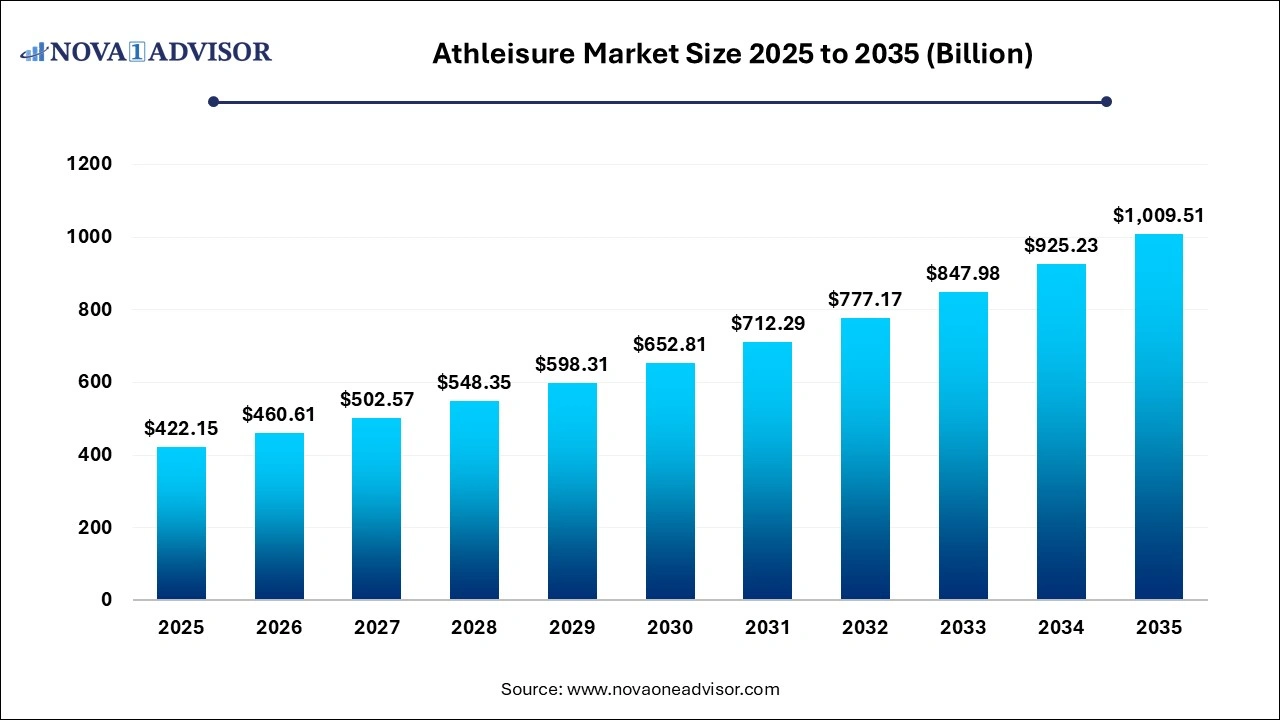
Key Takeaway
- By category, the mass athleisure segment dominated the market with the largest share in 2025.
- By category, the premium athleisure segment is expected to grow at the fastest CAGR over the forecast period.
- By product, the shirts & t-shirts segment dominated the market with the largest share in 2025.
- By end use, the women segment dominated the market with the largest share in 2025.
- By region, North America dominated the market with the largest share in 2025.
Market Overview
The Athleisure Market includes apparel that combines athletic functionality with everyday fashion, including leggings, joggers, T-shirts, sweatshirts, shorts, and lightweight jackets. Demand is driven by growing consumer preference for comfort, versatility, performance fabrics, and casual styling across fitness, work, travel, and social activities.
The market is evolving from traditional sportswear toward a broader lifestyle category, supported by hybrid work, wellness trends, fitness participation, social media, and changing fashion preferences. Competition includes sportswear specialists, fashion brands, luxury companies, and digital-first labels competing through product innovation, branding, collaborations, and direct-to-consumer channels.
E-commerce, social commerce, company-owned stores, and specialty retail are expanding distribution opportunities, while Asia-Pacific represents significant growth potential alongside established markets such as North America and Europe. Overall, future growth will depend on brands' ability to combine performance, comfort, style, innovation, and lifestyle appeal.
Market Outlook
- Market Growth Overview: The global athleisure market is expected to grow significantly between 2025 and 2035, driven by the increasing excitement for sports and outdoor recreational activities.
- Sustainability Trends: Sustainability trends involve an ongoing transition towards sustainable materials and circular fashion models.
- Major Investors: Major investors in the market include Nike, Adidas, Lululemon, Puma, and Under Armour.
How is AI Impacting The Global Athleisure Market?
Artificial intelligence (AI) is reshaping the market by revolutionizing supply chains, designs, and consumer shopping experiences.AI tools process millions of search data, social media images, and consumer preferences to forecast upcoming activewear styles. Furthermore, E-commerce platforms leverage AI recommendation engines to suggest gear, sizes, and combination styles based on buyer history.
Major Trends in the Market
- Performance-to-lifestyle crossover: Consumers increasingly wear technical sportswear outside exercise environments.
- Premiumization of activewear: Consumers are willing to pay more for advanced fabrics, durability, fit, design, and recognizable brands.
- Growth of coordinated sets: Matching leggings, tops, bras, shorts, and outerwear are becoming popular because they simplify outfit selection.
- Rise of yoga and wellness apparel: Yoga, pilates, walking, recovery, and low-impact fitness are influencing everyday apparel design.
- Fashion-sports collaborations: Partnerships between sportswear brands, fashion designers, celebrities, and cultural figures are accelerating category crossover.
- AI-powered personalization: Recommendation engines and virtual fitting tools are improving online apparel discovery.
Athleisure Market Report Scope
| Report Coverage | Details |
| Market Size in 2026 | USD 460.61 Billion |
| Market Size by 2035 | USD 1,009.51 Billion |
| Growth Rate From 2026 to 2035 | CAGR of 9.11% |
| Base Year | 2025 |
| Forecast Period | 2026 to 2035 |
| Segments Covered | Category, Product, End-use, Region |
| Market Analysis (Terms Used) | Value (USD Million/Billion) or (Volume/Units) |
| Regional Scope | North America; Europe; Asia Pacific; Central and South America; the Middle East and Africa |
| Key Companies Profiled | Lululemon Athletica Inc.; Adidas AG; Under Armour, Inc.; Nike Inc.; Hanesbrands Inc.; EILEEN FISHER; Vuori; Outerknown.; PANGAIA; Wear Pact, LLC |
Market Driver – Blurring of Performance and Everyday Fashion
The growing convergence of athletic performance and everyday fashion is a key driver of the athleisure market. Consumers increasingly prefer versatile clothing that can transition between workouts, commuting, travel, work, and social activities. Hybrid work, wellness lifestyles, casualization, and sportswear-fashion collaborations are further strengthening demand for multifunctional apparel.
Market Restraint – Premium Pricing and Intense Competition
Price sensitivity and intense competition across premium, mid-range, and mass-market segments can limit market growth. Consumers have numerous alternatives from sportswear brands, fashion retailers, fast-fashion companies, and private labels. Premium brands must continually justify higher prices through quality, performance, design, durability, and brand differentiation, while inventory and sustainability-related costs can pressure margins.
Market Opportunity – Premium, Sustainable, and Technology-Enabled Athleisure
The market offers significant opportunities for products combining technical performance, fashion, sustainability, and personalization. Temperature-regulating, odor-resistant, durable, and recycled-material fabrics can support premium positioning. AI-powered recommendations, digital fitting tools, resale programs, product repair, and take-back initiatives can further enhance customer engagement and create new revenue opportunities, particularly in emerging markets.
Segmental Insights
By Category
Why did the mass athleisure segment dominate the global athleisure market?
The mass athleisure segment dominated the market with the largest share in 2025. The dominance of the segment can be attributed to the extensive availability of mass athleisure across fast-fashion retailers and supermarkets. In addition, the increasing need for multi-use clothing enables budget-conscious buyers to wear these items for running errands and light workouts.
How did the premium athleisure segment expected to hold the significantly growing global athleisure market in the coming years?
The premium athleisure segment is expected to grow at the fastest CAGR over the forecast period. The growth of the segment can be credited to the growing health awareness and robust preference for high-end, multifunctional wear. Also, major market players such as Lululemon use strong wear testing to build customer loyalty and validate performance claims.
By Product
Why did the shirts & t-shirts segment dominate the global athleisure market?
The shirts & t-shirts segment dominated the market with the largest share in 2025. The dominance of the segment can be linked to the increasing consumer need for daily comfort and utility, along with its high versatility. Flexible work arrangements impel individuals to choose soft-touch, relaxed, and clean-silhouette clothing over conventional formal wear.
How did the yoga apparel segment expected to hold the significantly growing global athleisure market in the coming years?
The yoga apparel segment is expected to grow at the fastest CAGR over the forecast period. The growth of the segment can be credited to the growing consumer need for multifunctional clothing and ongoing advancements in fabrics. Features such as smooth construction, soft-touch finishes, and promotive high waistbands minimize friction during extended wear.
By End-Use
Why did the women segment dominate the global athleisure market?
The women segment dominated the market with the largest share in 2025. The dominance of the segment is owing to ongoing production innovations and extensive fashion preferences among the majority of individuals. Furthermore, shifts in modern lifestyles such as hybrid and remote work routines have focused on easy-to-wear and more comfortable clothing over conventional rigid office attire.
How did the children segment expected to hold the significantly growing global athleisure market in the coming years?
The children segment is expected to grow at the fastest CAGR over the study period. The growth of the segment is due to increasing adoption of innovative functional textiles like breathable and lightweight materials, along with brand growth. Moreover, parents are heavily focused on resilient and multi-use fabrics that bear heavy wear, frequent washing, and ongoing growth cycles of children.
By Region
Why did the North American region account for the largest share of the global athleisure market?
North America dominated the market with the largest share in 2025. The dominance of the region can be attributed to the increasing emphasis on personal growth and the transition towards remote and flexible work in major countries. In addition, consumers in the region boast extensive purchasing power along with the presence of a robust retail ecosystem featuring major market brands such as Lululemon and Under Armour.
U.S. Global Athleisure Market Trends
The growth of the market in the country can be driven by rapid fabric innovations and increasing participation in fitness activities such as gym workouts and running. Also, social settings and workplaces increasingly accept relaxed attire, allowing consumers to wear athletic apparel across multiple daily environments.
Why did the Asia-Pacific region become the fastest-growing global athleisure market during the forecast period?
Asia Pacific is expected to grow at the fastest CAGR over the forecast period. The growth of the region can be credited to the increasing middle-class incomes and surge in exposure to world fashion trends in emerging economies such as China and India. Furthermore, a large portion of the population in these countries is increasingly impacted by new fitness trends and other outdoor recreational activities.
China Global Athleisure Market Trends
The market in the country is growing due to the growing adoption of home workouts, fitness apps, and recreational sports in major cities. Moreover, ongoing e-commerce adoption, livestream shopping, and marketing by major market players further propels trends in cycles and visibility.
- In August 2026, Alo Yoga, the Los Angeles-based activewear brand and direct competitor to Lululemon, is set to launch its inaugural digital flagship storefront on Alibaba Group Holding’s e-commerce platform, Tmall. This strategic online debut serves as a precursor to the brand’s planned expansion into physical retail locations across China.
Key Players in the Global Athleisure Market
- Nike: It leads the global market with massive marketing visibility, extensive footwear and apparel portfolios, and continuous performance-driven product innovation.
- Under Armour: It focuses heavily on moisture-wicking technology, lightweight performance training gear, and athlete endorsements.
- Adidas: It competes globally with high-profile designer partnerships and a heavy push toward recycled and sustainable polyester materials.
Recent Developments
In January 2026, Campus Activewear Limited, a prominent leader in India’s sports and athleisure footwear industry, has formally announced its strategic expansion into the athleisure apparel market. This diversification represents a natural progression of the brand's core mission to facilitate youth self-expression.
Segments Covered in the Report
This report forecasts revenue growth at country levels and provides an analysis of the latest industry trends in each of the sub-segments from 2021 to 2035. For this study, Nova one advisor, Inc. has athleisure market.
By Category
- Mass Athleisure
- Premium Athleisure
By Product
- Yoga Apparel
- Tops
- Pants
- Shorts
- Unitards
- Capris
- Others
- Shirts & T-Shirts
- Leggings
- Shorts
- Others
By End-use
- Men
- Women
- Children
By Region
- North America
- Europe
- Asia-Pacific
- Latin America
- Middle East & Africa (MEA)
FAQ's

Proceed to Buy
Instant PDF delivery on confirmation

 Request Customization
 Download Sample

Get a Sample of this Report
Athleisure Market