

Audiology Devices Market Size, Share, Growth, Report 2026 to 2035
 Status Published
 Category Healthcare


Content
Audiology Devices Market Size and Growth 2026 to 2035
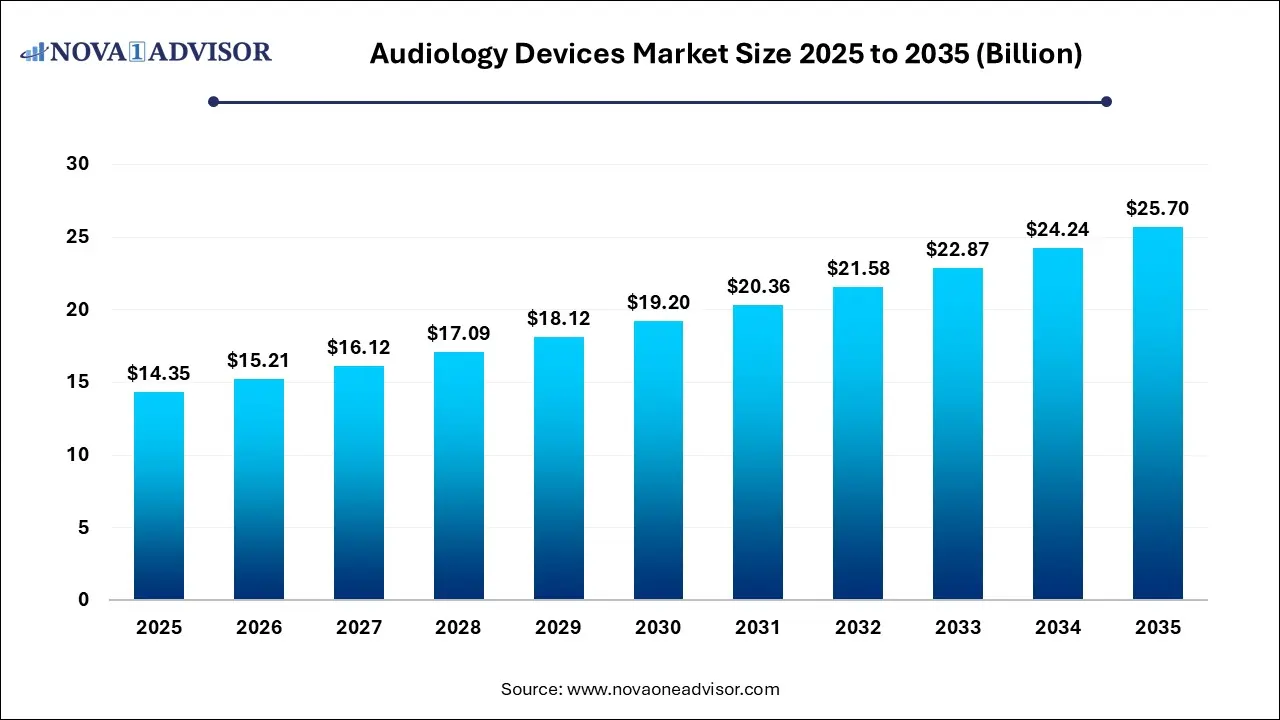
The global audiology devices market size was valued at USD 14.35 billion in 2025 and is projected to grow from USD 15.21 billion in 2026 to USD 25.70 billion by 2035, at a CAGR of 6.0% from 2026 to 2035.
Key Takeaway:
- By product, the hearing aids segment dominated the market with the largest share in 2025.
- By product, the surgical devices segment is expected to grow at the fastest CAGR over the forecast period.
- By technology, the digital segment dominated the market with the largest share in 2025.
- By sales, the retail sales segment dominated the market with the largest share in 2025.
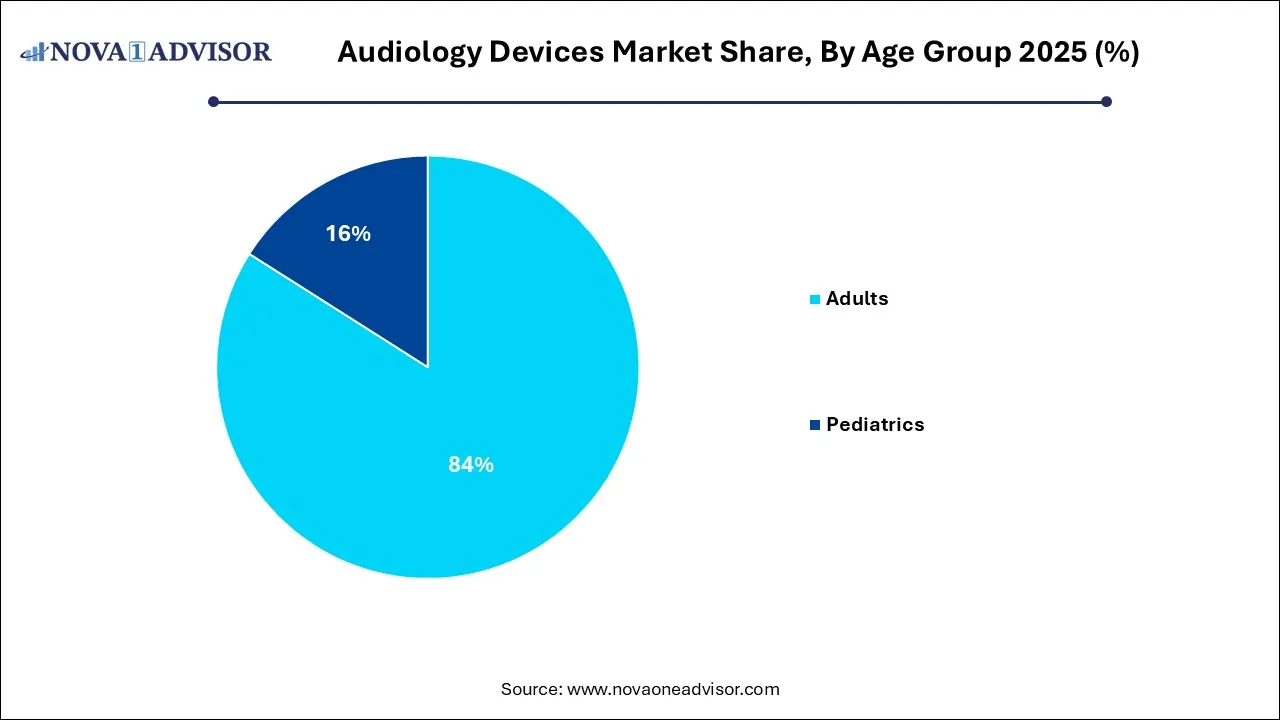
- By age group, the adult segment dominated the market with the largest share of 84% in 2025.
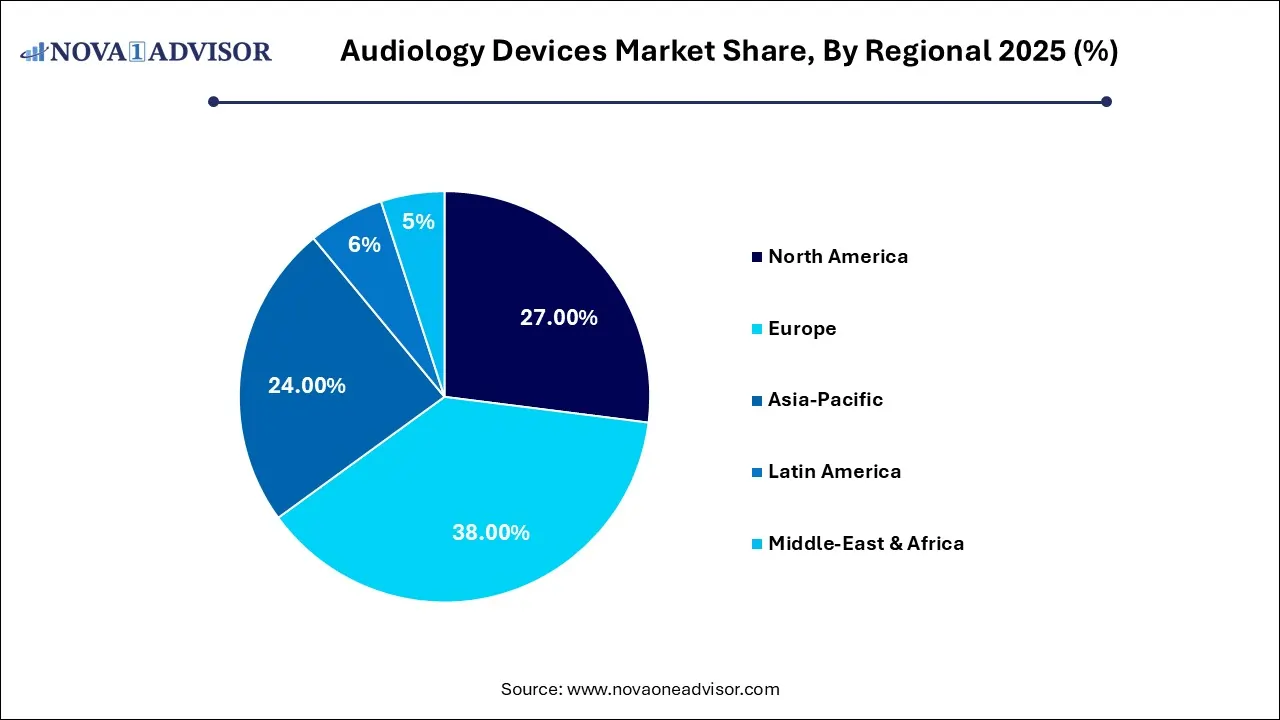
- By region, Europe dominated the market with the largest share of 38.0% in 2025.
Market Overview
The global audiology devices market is witnessing strong growth, driven by the rising prevalence of hearing loss, an aging population, and continuous advancements in hearing care technologies. Audiology devices, including hearing aids, cochlear implants, diagnostic systems, and bone-anchored hearing devices, play a vital role in the diagnosis, treatment, and management of hearing disorders across all age groups.
The market has rapidly evolved with the introduction of digital hearing aids featuring Bluetooth connectivity, artificial intelligence (AI), rechargeable batteries, and smartphone integration, delivering improved hearing experiences and personalized sound amplification. Implantable hearing technologies, such as cochlear implants and bone-anchored hearing systems, are also advancing, offering enhanced speech recognition and better hearing outcomes for patients with severe hearing loss.
Increasing awareness of hearing health, expanded newborn and occupational hearing screening programs, and the growing adoption of preventive hearing care are boosting early diagnosis and treatment. Additionally, tele-audiology platforms, remote hearing assessments, and virtual hearing aid programming are improving access to hearing care, particularly in underserved regions. Supported by ongoing technological innovation, favorable reimbursement policies, and rising consumer demand for discreet and connected hearing solutions, the audiology devices market is expected to experience sustained long-term growth.
Market Outlook
- Market Growth Overview: The global audiology devices market is expected to grow significantly between 2025 and 2035, driven by the increasing prevalence of hearing disorders across the globe.
- Sustainability Trends: Sustainability trends involve extensive adoption of rechargeable lithium-ion batteries, local sourcing, and tele-audiology.
- Major Investors: Major investors in the market include Sonova Holding AG, Demant A/S, and Cochlear Limited.
How AI is Impacting the Global Audiology Devices Market
Artificial intelligence is transforming the audiology devices market by enabling hearing aids and diagnostic systems to deliver smarter, more personalized care. AI-powered hearing devices automatically adjust sound settings based on surrounding environments, improving speech clarity, reducing background noise, and enhancing user comfort without manual intervention.
Machine learning algorithms learn individual listening preferences over time, allowing hearing aids to optimize performance according to user habits and frequently encountered environments. This personalized adaptation improves hearing experiences while minimizing the need for repeated clinical adjustments.
AI is also enhancing hearing diagnostics by supporting automated analysis of hearing tests, speech recognition, and patient data, helping clinicians detect hearing impairments more accurately and efficiently. In addition, AI-driven tele-audiology platforms enable remote hearing assessments, device monitoring, software updates, and predictive maintenance, reducing clinic visits and improving patient care.
Furthermore, cloud-connected AI ecosystems integrate hearing devices with smartphones, wearables, and smart home technologies, enabling continuous monitoring, personalized rehabilitation, and real-time hearing optimization, ultimately improving long-term hearing outcomes.
Audiology Devices Market Report Scope
| Report Coverage | Details |
| Market Size in 2026 | USD 15.21 Billion |
| Market Size by 2035 | USD 25.70 Billion |
| Growth Rate From 2026 to 2035 | CAGR of 6.0% |
| Base Year | 2025 |
| Forecast Period | 2026 to 2035 |
| Segments Covered | Product, Technology, Age Group, Sales Channel, Region |
| Market Analysis (Terms Used) | Value (USD Million/Billion) or (Volume/Units) |
| Regional Scope | North America; Europe; Asia Pacific; Central and South America; the Middle East and Africa |
| Key Companies Profiled | Demant A/S; GN Store Nord A/S; Sonova; Starkey Laboratories, Inc.; MED-EL Medical Electronics; Cochlear Ltd.; WS Audiology A/S; MAICO Diagnostics GmbH; Oticon Medical; INVENTIS srl |
Market Driver: Rising Global Burden of Hearing Loss
The increasing prevalence of hearing loss worldwide is a key driver of the audiology devices market. Aging populations, prolonged exposure to noise pollution, occupational hazards, and chronic health conditions have significantly increased the demand for hearing care solutions. Growing awareness of the health impacts of untreated hearing impairment, including cognitive decline and reduced quality of life, has prompted governments and healthcare providers to expand hearing screening programs and improve access to hearing aids, cochlear implants, and diagnostic services.
Market Restraint: High Cost of Advanced Hearing Technologies
The high cost of advanced audiology devices remains a major challenge for market growth. Premium hearing aids, cochlear implants, and modern diagnostic systems often require significant upfront investment, while maintenance, software updates, and professional fitting services add to long-term expenses. Limited reimbursement policies in many countries further restrict affordability, reducing adoption rates, particularly in developing regions.
Market Opportunity: Expansion of Tele-Audiology and Remote Hearing Care
The rapid adoption of telemedicine is creating strong growth opportunities for the audiology devices market. Tele-audiology allows patients to access remote hearing assessments, hearing aid adjustments, rehabilitation, and follow-up consultations through digital platforms, improving accessibility for rural and elderly populations. Additionally, cloud-connected hearing devices with AI-enabled remote diagnostics, software updates, and personalized sound optimization are supporting more convenient and efficient hearing care, driving future market expansion.
Segmental Insights
By Product
Why did the hearing aids segment dominate the global audiology devices market?
The hearing aids segment dominated the market with the largest share in 2025. The dominance of the segment can be attributed to the growing demand for complete-in-canal hearing aids and invisible-in-canal hearing aids along with the surge in awareness of cochlear implants. In addition, ongoing launches of innovative products are impacting positive segment growth further.
How did the surgical devices segment expected to hold the fastest-growing global audiology devices market in the coming years?
The surgical devices segment is expected to grow at the fastest CAGR over the forecast period. The growth of the segment can be credited to the rising innovations in audiology tools and the growing trend towards personalized solutions. This technology also improved surgical planning and offers real-time feedback on procedures like endoscopic sinus surgery.
By Technology
Why did the digital segment dominate the global audiology devices market?
The digital segment dominated the market with the largest share in 2025. The dominance of the segment can be linked to the artificial intelligence (AI) sound optimization, Bluetooth LE audio with Auracast, smartphone integration, and the increasing aging population across emerging economies. The transition towards digital ecosystems enables audiologists to offer remote support and diagnostics.
How did the analog segment expected to hold the fastest-growing global audiology devices market in the coming years?
The analog segment is expected to grow at the fastest CAGR over the forecast period. Analog systems remain highly sought-after in developing economies and rural regions due to their affordability, simplicity of use for older populations, and reliable, continuous sound amplification. This sustained demand increased despite the broader industry shift toward digital and artificial intelligence technologies.
By Sales Channel
Why did the retail sales segment dominate the global audiology devices market?
The retail sales segment dominated the market with the largest share in 2025. The dominance of the segment can be attributed to the increasing geriatric population and extensive availability of over-the-counter (OTC) hearing aids. Moreover, the expansion of digital retail channels has significantly facilitated remote research, product comparison, and procurement for consumers within the North American and Asia-Pacific markets.
How did the e-commerce segment expected to hold the fastest-growing global audiology devices market in the coming years?
The e-commerce segment is expected to grow at the fastest CAGR over the study period. The growth of the segment can be credited to the increasing consumer familiarity with digital purchases, evolving regulatory frameworks, and transition towards consumer-friendly devices. Modern consumers increasingly prioritize digital storefronts that offer the convenience of product comparisons, peer reviews, home-fitting services, and tele-audiology consultations.
By Age Group
Why did the adult segment dominate the global audiology devices market?
The adult segment dominated the market with the largest share in 2025. The dominance of the segment can be linked to the growing prevalence of chronic diseases, surge in the older population, and introduction of discreet hearing devices. Adult demographics are characterized by enhanced financial resources, superior health insurance coverage, and elevated awareness regarding the long-term cognitive and social advantages of early hearing intervention.
How did the paediatrics segment expected to hold the fastest-growing global audiology devices market in the coming years?
The paediatrics segment is expected to grow at the fastest CAGR over the forecast period. The growth of the segment can be driven by growing rates of congenital sensorineural hearing loss and a surge in the implementation of newborn hearing screening programs (ABR). Manufacturers are developing specialized features for children, including Deep Neural Network (DNN) sound processing, highly durable and tamper-resistant casings, and Bluetooth connectivity.
By Regional
Why did the Europe region account for the largest share in the global audiology devices market?
Europe dominated the market with the largest share in 2025. The dominance of the region can be attributed to the ongoing technological innovations such as AI-powered sound processing and robust statutory health insurance reimbursements. In addition, Europe possesses one of the oldest demographic profiles globally, a factor that inherently correlates with a higher prevalence of age-related hearing loss (presbycusis), driving regional expansion further.
Germany Global Audiology Devices Market Trends
The growth of the country is driven by an ongoing transition towards connected devices with biometric tracking and remote programming. Regions such as Bavaria and Baden-Württemberg lead in economic value growth. This expansion is driven by high levels of disposable income, robust corporate wellness initiatives, and the rapid adoption of premium, AI-integrated, and custom-fit hearing aids.
Why did the Asia-Pacific region become the fastest-growing global audiology devices market during the forecast period?
Asia Pacific is expected to grow at a significant CAGR over the forecast period. The growth of the region can be credited to the growing incidences of hearing impairment and the surge in disposable incomes in developing countries such as China and India. Also, the incorporation of artificial intelligence, Bluetooth connectivity, rechargeable power sources, and miniaturized designs has substantially enhanced overall user acceptance.
China Global Audiology Devices Market Trends
The growth of the market in the country can be driven by strategic investments by major players to expand digital infrastructure and retail networks. China has a massive and growing elderly population. Age-related hearing loss (presbycusis) is highly prevalent among seniors, driving sustained, high-volume demand for both basic amplification devices and advanced cochlear implants.
Why Did North America Hold a Notable Share in the global audiology devices market?
North America is expected to grow at a notable CAGR over the projected period. The growth of the region can be linked to the rise in consumer adoption of advanced technology and supportive government policies... Furthermore, robust insurance coverage and healthcare reimbursement frameworks, particularly via Medicare and military veterans' programs, significantly stimulate frequent hearing screenings and device acquisitions.
U.S. Global Audiology Devices Market Trends
The growth of the market is due to an increasing population with age-related hearing loss and the presence of strong healthcare infrastructure. Manufacturers are experiencing heightened market adoption, driven by the successful incorporation of artificial intelligence, wireless connectivity, and improved aesthetics.
Key Players in the Global Audiology Devices Market
- Sonova Holding AG: Headquartered in Switzerland, Sonova is one of the world's largest manufacturers of hearing care solutions. Their portfolio includes brands like Phonak (hearing aids), Unitron, and Advanced Bionics (cochlear implants).
- GN Store Nord A/S: Headquartered in Denmark, GN is renowned for GN Hearing (creators of ReSound, Beltone, and Interton) as well as GN Audio (the Jabra brand). They are notable for pioneering Made-for-iPhone hearing aids and AI-driven auditory integration.
- Starkey Laboratories (Starkey): Based in the U.S., Starkey is a major privately held hearing aid manufacturer known for its innovation in invisible, custom-fit hearing devices and health-tracking sensors embedded in aids.
Recent Developments
- In March 2026, GN announced the global release of its latest fitting software, version 2.3.1. This release marks the industry's first integration of the NAL-NL3 hearing aid prescription formula. Developed by the National Acoustic Laboratories (NAL), the NAL-NL3 formula enables evidence-based, highly precise fittings.
Segments Covered in the Report
This report forecasts revenue growth at country levels and provides an analysis of the latest industry trends in each of the sub-segments from 2021 to 2035. For this study, Nova one advisor, Inc. has audiology devices market.
By Product
- Hearing Aids
- Cochlear Implants
- BAHA/BAHS
- Diagnostic Devices
- Surgical Devices
By Technology
- Digital
- Analog
By Sales channel
- Retail Sales
- E-commerce
- Government Purchases
By Age Group
- Adults
- Pediatrics
By Region
- North America
- Europe
- Asia Pacific
- Latin America
- Middle East & Africa
FAQ's

Proceed to Buy
Instant PDF delivery on confirmation

Audiology Devices Market Size to Hit USD 25.70 Billion by 2035
 Request Customization
 Download Sample

Get a Sample of this Report
Audiology Devices Market