

Augmented Bone Graft Market Size, Share, Forecast Report, 2026-2035
 Status Published
 Category Healthcare


Content
Augmented Bone Graft Market Size and Growth 2026 to 2035
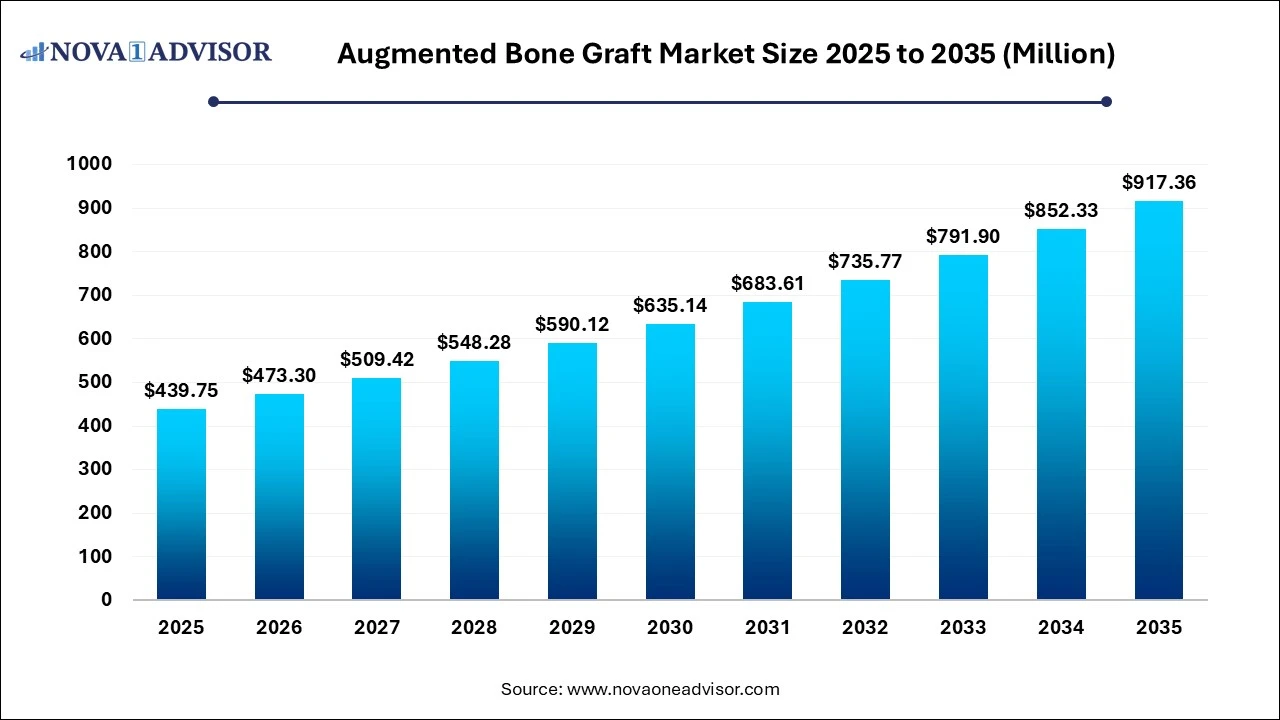
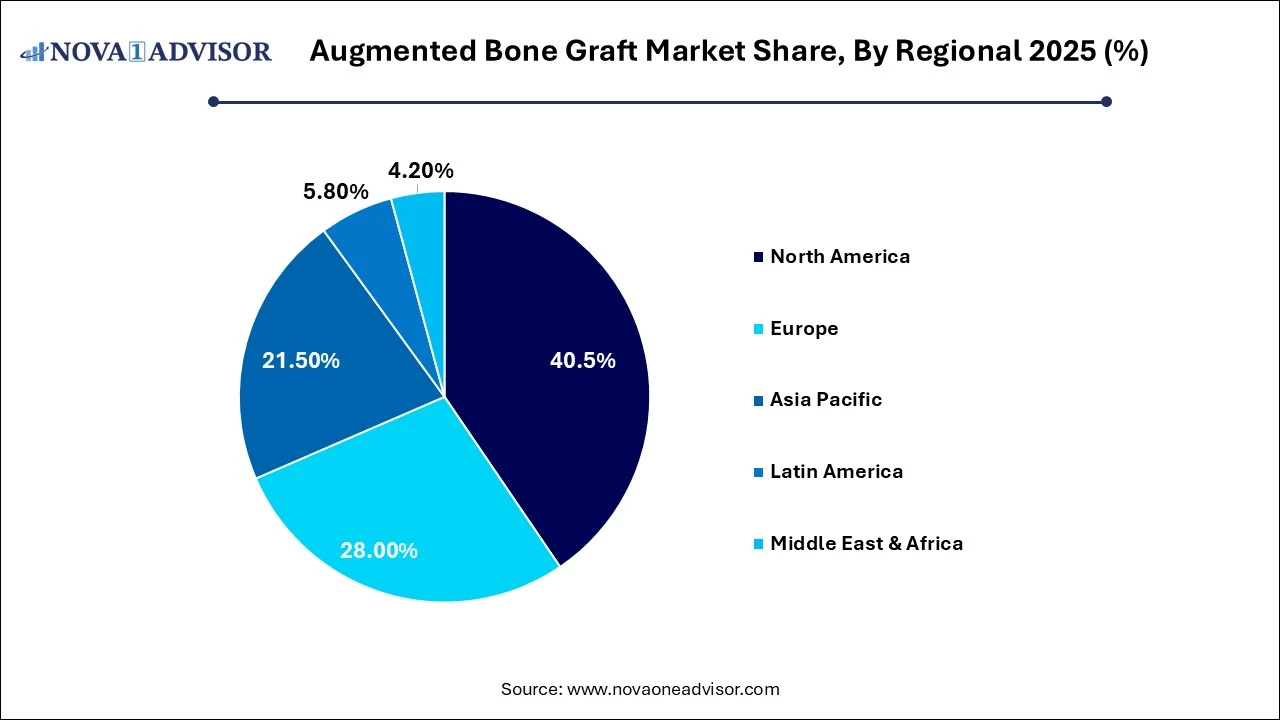
The global augmented bone graft market size was valued at USD 439.75 million in 2025 and is projected to grow from USD 473.30 million in 2026 to USD 917.36 million by 2035, at a CAGR of 7.63% from 2026 to 2035. North America dominated the market, accounting for a revenue share of 40.5% in 2025.
Key Takeaway:
- By product, the allografts segment dominated the market with the largest share in 2025.
- By product, the cell-based matrices segment is expected to grow at the fastest CAGR over the forecast period.
- By application, the spinal fusion segment dominated the market with the largest share in 2025.
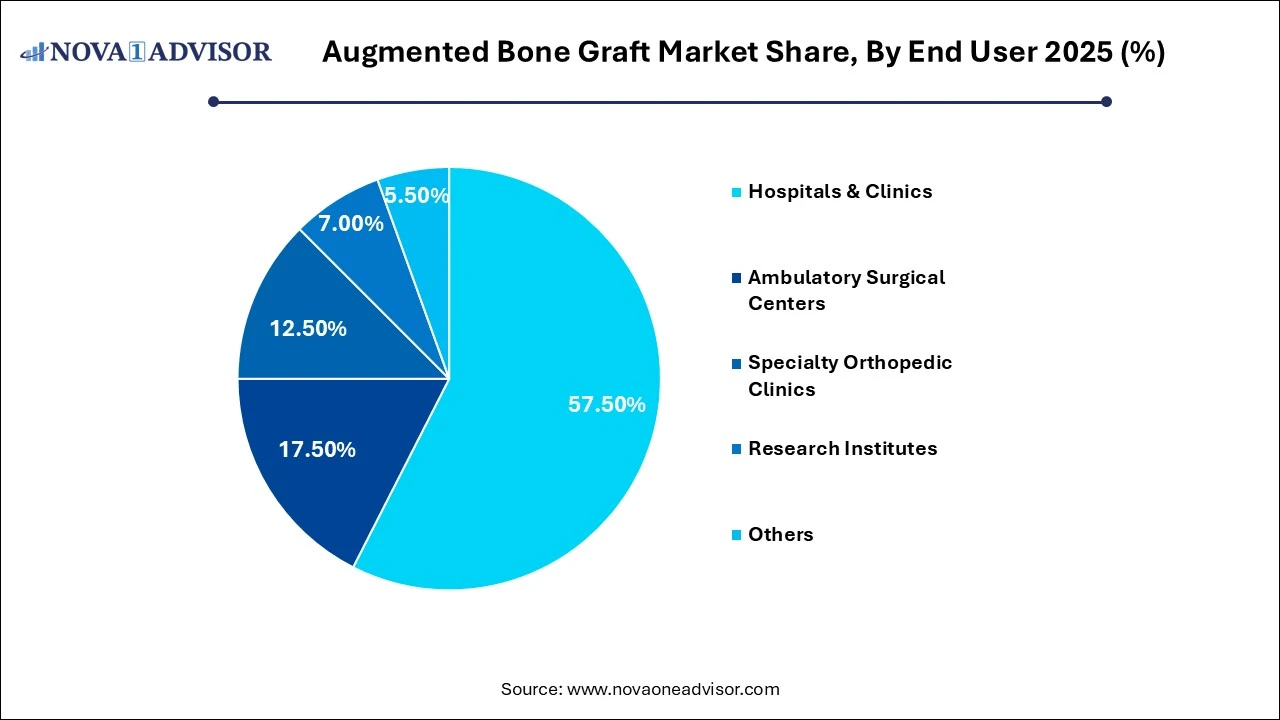
- By end user, the hospitals and clinics segment dominated the market with the largest share of 57.50%in 2025.
- By region, North America dominated the market with the largest share of 40.50% in 2025.
Market Overview
The global augmented bone graft market is witnessing steady growth, driven by increasing demand for advanced bone regeneration solutions in orthopedic, spinal, dental, trauma, and craniomaxillofacial procedures. Augmented bone grafts combine traditional graft materials with biologics, growth factors, stem cells, or synthetic biomaterials to enhance bone healing and improve surgical outcomes. Rising cases of osteoporosis, traumatic fractures, degenerative spine disorders, and sports injuries, along with the growing aging population, are fueling market expansion. Additionally, the shift from autografts to advanced allografts and synthetic bone graft substitutes is reducing donor-site complications while improving patient recovery. Technological advancements in regenerative medicine, tissue engineering, biomimetic scaffolds, and minimally invasive surgical techniques are further strengthening market growth. Increasing healthcare investments, expanding access to specialized orthopedic care in emerging economies, and the integration of AI, 3D printing, and precision biomaterials are expected to support the long-term growth of the global augmented bone graft market.
Market Outlook
- Market Growth Overview: The global augmented bone graft market is expected to grow significantly between 2025 and 2035, driven by the rapid innovations in grafting technologies.
- Sustainability Trends: Sustainability trends involve a transition towards eco-friendly manufacturing and a surge in healthcare resource efficiency.
- Major Investors: Major investors in the market include Medtronic, Stryker Corporation, Zimmer Biomet, DePuy Synthes, and Smith & Nephew.
How is AI impacting the global Augmented Bone Graft Market?
Artificial intelligence (AI) is revolutionizing the market by allowing personalized 3D implant designs and facilitating biomaterial microstructures. This incorporation enhances surgical precision and minimizes procedural complications. Furthermore, automated component sizing and alignment achieve nearly 90% accuracy through machine learning algorithms, reducing outlier occurrences in orthopedic and spinal surgeries.
AI is also accelerating the development of advanced bone graft materials by predicting the mechanical strength, biocompatibility, and degradation properties of new biomaterials before laboratory testing, significantly reducing research time and costs. In orthopedic surgery, AI-integrated robotic navigation systems optimize graft placement and implant positioning during spinal fusion and reconstructive procedures, improving fusion success rates and minimizing complications. Additionally, predictive analytics helps personalize treatment by evaluating patient-specific factors such as age, bone quality, osteoporosis, diabetes, and medical history to recommend the most effective graft solution. AI-enabled remote monitoring platforms and wearable devices further support recovery by tracking healing progress and identifying complications early. As AI adoption expands across regenerative medicine and orthopedic care, it is expected to improve treatment precision, accelerate innovation, and drive long-term growth in the global augmented bone graft market.
Augmented Bone Graft Market Report Scope
| Report Coverage | Details |
| Market Size in 2026 | USD 473.30 Million |
| Market Size by 2035 | USD 917.36 Million |
| Growth Rate From 2026 to 2035 | CAGR of 7.63% |
| Base Year | 2025 |
| Forecast Period | 2026 to 2035 |
| Segments Covered | By Product, By Application, By Type, By Diagnosis, By Treatment, By End-User, By Region |
| Market Analysis (Terms Used) | Value (USD Million/Billion) or (Volume/Units) |
| Regional Scope | North America; Europe; Asia Pacific; Central and South America; the Middle East and Africa |
| Key Companies Profiled | Zimmer Holdings, Inc., BioMimetic Therapeutics LLC, Wright Medical Technology, Inc., Stryker Corporation, Smith & Nephew Plc, RTI Surgical, Inc., Olympus Biotech Corporation, NuVasive, Inc., NovaBone Products LLC, Medtronic, Inc., LifeNet Health, Inc., Integra LifeSciences Holdings Corporation, Exactech, Inc., DePuy Spine, Inc., Synthes Inc., DePuy Synthes Companies, Biomet, Inc. and AlloSource. |
Market Driver
Rising Orthopedic Disorders and Bone Reconstruction Procedures Drive Market Growth
The growing prevalence of orthopedic disorders, osteoporosis, traumatic fractures, sports injuries, and degenerative spine diseases is a major driver of the augmented bone graft market. An aging population and increasing demand for joint replacement and spinal fusion procedures are fueling the need for effective bone regeneration solutions. Advanced augmented bone grafts, including synthetic substitutes, bioactive scaffolds, recombinant proteins, and cell-based matrices, are increasingly preferred over traditional autografts due to their ability to enhance bone healing while eliminating donor-site complications. Ongoing technological advancements and expanding clinical adoption are expected to support sustained market growth.
Market Restraint
High Cost of Advanced Bone Graft Technologies Restrains Market Expansion
The high cost of advanced biologic bone graft products remains a key challenge for market growth. Bone grafts incorporating recombinant growth factors, stem cells, and sophisticated biomaterials require complex manufacturing processes and strict regulatory compliance, making them significantly more expensive than conventional graft materials. Limited reimbursement policies and budget constraints, particularly in developing regions and smaller healthcare facilities, further restrict widespread adoption. Demonstrating long-term cost-effectiveness through improved healing outcomes and reduced revision surgeries will be essential to expand market penetration.
Market Opportunity
Advancements in Regenerative Medicine and Tissue Engineering Create Future Opportunities
Rapid progress in regenerative medicine and tissue engineering is creating significant growth opportunities for the augmented bone graft market. The development of next-generation grafts incorporating stem cells, bioactive proteins, biodegradable scaffolds, nanomaterials, and gene-based therapies is improving bone regeneration and clinical outcomes. In addition, 3D bioprinting technologies are enabling the production of patient-specific bone grafts that offer better anatomical fit and enhanced biological integration. As personalized regenerative therapies gain clinical acceptance, these innovations are expected to drive new opportunities for biotechnology companies, medical device manufacturers, and healthcare providers worldwide.
Segmental Insights
By Product
Why did the allografts segment dominate the global augmented bone graft market?
The allografts segment dominated the market with the largest share in 2025. The dominance of the segment can be attributed to its extensive clinical acceptance and alternative to autografts. In addition, allografts are highly considered by hospitals and surgical centers due to their consistent sterilization processes and demonstrated clinical efficacy.
How did the cell-based matrices segment expected to hold the significantly growing global augmented bone graft market in the coming years?
The cell-based matrices segment is expected to grow at the fastest CAGR over the forecast period. The growth of the segment can be credited to the ongoing advancements in stem cells and synthetic scaffolds. A surge in R&D investment and partnership between graft market players and hospitals promotes product awareness and adoption.
By Application
Why did the spinal fusion segment dominate the global augmented bone graft market?
The spinal fusion segment dominated the market with the largest share in 2025. The dominance of the segment can be linked to the growing volume of spinal surgeries and demand for reliable graft materials. Spinal fusion procedures generate substantial orthopedic hospital revenue, impacting positive market growth soon.
How did the dental segment expected to hold the significantly growing global augmented bone graft market in the coming years?
The dental segment is expected to grow at the fastest CAGR over the forecast period. The growth of the segment can be driven by the increasing incidence of dental implants and oral bone disorders. The growing popularity of dental implants necessitates socket preservation and ridge augmentation to ensure adequate structural support.
By End-User
Why did the hospitals and clinics segment dominate the global augmented bone graft market?
The hospitals and clinics segment dominated the market with the largest share in 2025. The dominance of the segment is due to the high volume of dental, orthopedic, and trauma-related surgeries. Institutional adoption of these procedures is primarily driven by high patient volumes, proven clinical reliability, and superior long-term therapeutic outcomes.
How did the research institutes segment expected to hold the significantly growing global augmented bone graft market in the coming years?
The research institutes segment is expected to grow at the fastest CAGR over the study period. The growth of the segment is due to growing R&D investments in stem cell technologies and novel graft materials. Furthermore, formal academic-industrial partnerships, including collaborative research grants and strategic joint ventures between biotechnology firms and university laboratories, drive segment growth soon.
By Regional
Why did the North American region account for the largest share in the global augmented bone graft market?
North America dominated the market with the largest share in 2025. The dominance of the region can be attributed to the presence of innovative healthcare infrastructure and a robust presence of major market players. In addition, continuous portfolio expansions by leading orthobiologics firms ensure consistent product availability and robust clinician education, leading to market growth soon.
U.S. Global Augmented Bone Graft Market Trends
The growth of the market in the country can be driven by the growing healthcare spending and high volume of orthopedic and spinal procedures. Also, a high concentration of leading medical device and biologics manufacturers drives continuous product innovation and rigorous clinical training programs.
Why did the Asia-Pacific region become the fastest-growing global augmented bone graft market during the forecast period?
Asia Pacific is expected to grow at the fastest CAGR over the forecast period. The growth of the region can be credited to the growing preference towards advanced orthopedic treatments and government support. Furthermore, a growing prevalence of road traffic trauma, sports-related injuries, and complex orthopedic reconstructions is driving the demand for advanced graft interventions in the region and major countries.
China Global Augmented Bone Graft Market Trends
The market in the country is growing due to growing procedural volumes, an aging population, and government manufacturing initiatives. Also, an increase in middle-class disposable income and the extension of health insurance coverage are driving higher patient utilization across primary and secondary healthcare facilities.
Key Players in the Global Augmented Bone Graft Market
- Zimmer Biomet: It focuses on comprehensive orthopedic and surgical solutions, merging digital navigation with biologic graft applications.
- Integra LifeSciences: It specializes in diverse regenerative tissue technologies, dural repair, and specialized matrix bone grafts.
- Geistlich Pharma: Recognized globally for leading natural bone regeneration and biomaterial products tailored for dental and orthobiologic uses.
Recent Developments
- In December 2025, RevBio, Inc., has secured authorization from the U.S. Food and Drug Administration to conduct a pilot clinical trial evaluating the safety and efficacy of its regenerative bone adhesive, TETRANITE®, for dental ridge augmentation.
Segments Covered in the Report
This report forecasts revenue growth at country levels and provides an analysis of the latest industry trends in each of the sub-segments from 2021 to 2035. For this study, Nova one advisor, Inc. has augmented bone graft market.
By Product
- Allografts
- Bone Grafts Substitutes
- Cell-Based Matrices
By Application
- Craniomaxillofacial
- Dental
- Foot and Ankle
- Joint Reconstruction
- Long Bone
- Spinal Fusion
By Type
- Anemic Anoxia
- Toxic Anoxia
- Stagnant Anoxia
- Anoxic Anoxia
By Diagnosis
- MRI (Magnetic Resonance Imaging)
- CAT Scan (Computerized Axial Tomography)
- Evoked Potential Tests
- EEG (Electroencephalogram)
By Treatment
- Cardiopulmonary Resuscitation (CPR)
- Rehabilitation Therapies
- Medication
By End-User
- Hospital and Clinics
- Diagnostic Centers
- Research Institutes
- Rehabilitation Centers
- Others
By Region
- North America
- Europe
- Asia Pacific
- Latin America
- Middle East & Africa
FAQ's

Proceed to Buy
Instant PDF delivery on confirmation

Augmented Bone Graft Market Size to Hit USD 917.36 Million by 2035
 Request Customization
 Download Sample

Get a Sample of this Report
Augmented Bone Graft Market