

Automated Cell Counting Market Size, Share, and Trends 2026 to 2035
 Status Published
 Category Healthcare


Content
Automated Cell Counting Market Size and Growth 2026 to 2035
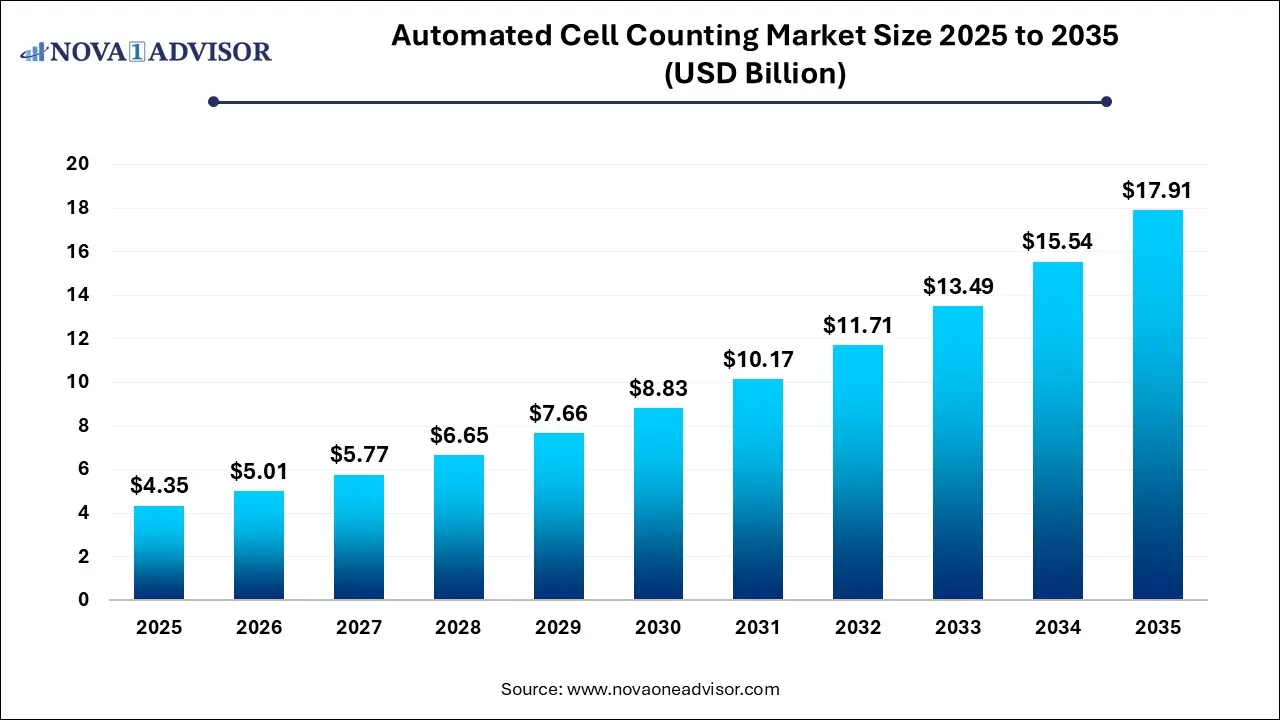
The global automated cell counting market was estimated at USD 4.35 billion in 2025 and is projected to hit USD 17.91 billion by 2035, growing at a CAGR of 15.2% over the forecast period 2026-2035. Market growth is driven by the rapid expansion of biologics, cell therapies, and vaccine manufacturing, which requires high-precision, automated cell viability assessments. The rise in cancer and hematological disorders is driving demand for diagnostic tools, particularly for complete blood counts. A high need for processing large sample volumes in academic research and clinical diagnostics favours automated solutions.
Automated Cell Counting Market Key Takeaways
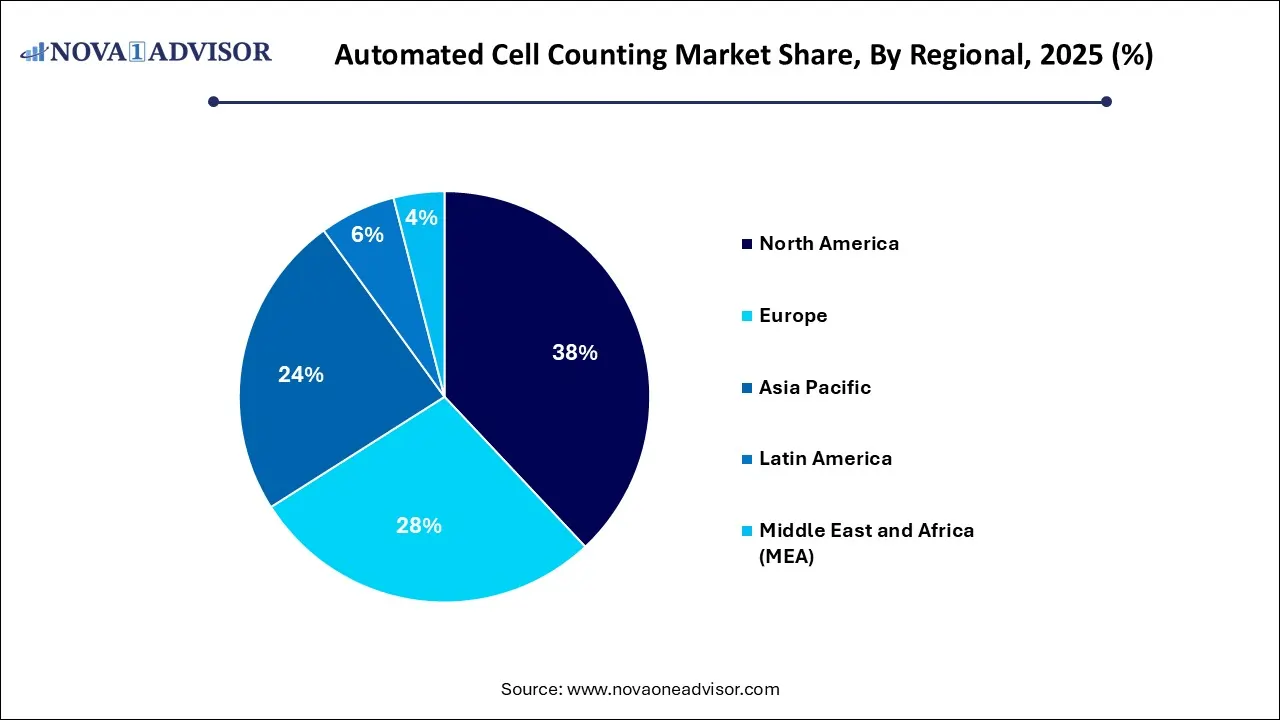
- By region, North America held the largest share of the automated cell counting market in 2025.
- By region, Asia Pacific is expected to experience the fastest growth between 2025 and 2035.
- By product, the consumables & accessories segment led the market in 2025.
- By product, the instruments segment is expected to expand at the highest CAGR over the projected timeframe.
- By application, the cell line development segment led the market in 2025.
- By application, the stem cell research segment is the fastest growing in the automated cell counting market.
- By end-use, the pharmaceutical and biotechnology companies segment dominated the automated cell counting market in 2025.
Artificial Intelligence: The Next Growth Catalyst in Automated Cell Counting
According to the National Institute of Health, AI and ML are transforming the automated cell counting industry by replacing manual, subjective processes with highly accurate, rapid, and standardized digital imaging analysis. These technologies use deep learning and convolutional neural networks to segment cells, accurately distinguishing viable cells, dead cells, and debris, even in complex or crowded samples. By reducing the need for manual intervention and limiting inter-operator variability. AI-enabled platforms deliver significant speedups, with some systems performing counts up to 180 times faster than manual methods. This shift is driving substantial growth, particularly in the biopharmaceutical industry, stem cell research, and CAR-T cell therapy production, where high-throughput, consistent results are critical for GMP compliance.
Strategic Overview of the Global Automated Cell Counting Industry
The automated cell counting market comprises advanced instruments that utilize techniques, such as flow cytometry and digital imaging, to precisely analyze cell concentration and viability, serving as an essential tool in medical diagnostics, pharmaceutical research and development, and biomanufacturing. The increased precision and speed over manual methods, reduced inter-operator variability, and the ability to process high-throughput workloads, which is essential for CAR-T therapy, cancer research, and stem cell studies.
Market Outlook
- Market Growth Overview: The automated cell counting market is expected to grow significantly between 2026 and 2035, driven by the shift from manual to automated systems, the massive expansion of biopharmaceutical and cell therapy research, and the rising incidence of chronic diseases. Innovation in AI-powered imaging, flow cytometry, and integrated microfluidics has made automated systems faster and more user-friendly, increasing regulatory emphasis on data integrity and high-throughput demand in diagnostics.
- Sustainability Trends: Sustainability trends are eco-friendly reagents and consumables, a move away from toxic viability dyes, such as trypan blue, towards safer alternatives like Erithrosin B. Manufacturers are increasingly focusing on biodegradable, recyclable, or reusable counting chambers and cartridges to minimize laboratory plastic waste, reduce energy and reusable use, and greener manufacturing processes.
- Major Investors: Major investors in the market include Thermo Fisher Scientific, Danaher Corporation, Becton, Dickinson and Company (BD), Bio-Rad Laboratories, Merck KGaA, and Agilent Technologies. They drive innovation through an extensive product portfolio of digital analyzers and automated cell counters, often strengthening their position with acquisitions, focusing on automated cell counting instruments and consumables to boost precision in personalized medicine and drug development.
- Startup Economy: The startup economy in the market consists of side-free/stain-free technology, eliminating the need for disposable slides and costly reagents. Startups are reducing operational expenses and plastic waste for laboratories. Miniaturization and portability startups are developing compact and portable devices that broaden accessibility, allowing cell counting to move from large labs to point-of-care, clinical hematology, and decentralized field diagnostics.
Automated Cell Counting Market Report Scope
| Report Coverage | Details |
| Market Size in 2026 | USD 5.01 Billion |
| Market Size by 2035 | USD 17.91 Billion |
| Growth Rate From 2026 to 2035 | CAGR of 15.2% |
| Base Year | 2025 |
| Forecast Period | 2026 to 2035 |
| Segments Covered | Product, Application, End use, Region |
| Market Analysis (Terms Used) | Value (USD Million/Billion) or (Volume/Units) |
| Regional Scope | North America; Europe; Asia Pacific; Central and South America; the Middle East and Africa |
| Key Companies Profiled | Thermo Fischer Scientific Inc.; Countstar Inc.; Bio-Rad Laboratories, Inc.; F. Hoffmann-La Roche Ltd; Chemometec A/S; Danaher; Olympus Corporation; Merck KGaA; Sysmex Corporation; Agilent Technologies, Inc.; Abbott. |
Market Dynamics
Drivers
Rising Prevalence of Chronic Diseases
The rising prevalence of chronic diseases, such as cancer, diabetes, and cardiovascular disorders, is a primary driver of the automated cell counting market because these conditions require continuous, precise monitoring of blood cell counts. As the global burden of non-communicable diseases grows, hospitals and diagnostic laboratories are increasingly adopting automated systems to improve the efficiency and speed of diagnostic procedures, surpassing the limitations of manual counting. The need for personalized medicine and stem cell research, which is intensified by chronic disease research, increases demand for high-throughput automated cell counters that provide reliable viability data.
Expansion of Biopharma and Cell Therapy R&D
The rapid expansion of biopharma research and development and the surge in cell therapy research are driving the automated cell counting industry by creating a high demand for precise, consistent, and high-throughput cell analysis solutions. As pharmaceutical companies scale up production of cell therapies, such as CAR-T and monoclonal antibodies, they require reliable, GMP- compliant tools to manage and validate large-volume samples, shifting away from labor-intensive manual methods. Automated cell counters are essential for these processes, providing rapid measurements of cell concentration and viability, which are critical for quality control, process optimization, and reducing human error.
Restraint
High Capital Cost
The market growth is hindered by the substantial upfront investment required to acquire sophisticated instruments, which limits adoption among small laboratories, startup biotech firms, and healthcare facilities with limited budgets. These high initial costs are further compounded by ongoing expenses for specialized consumables, reagents, and regular maintenance, making the total cost of ownership prohibitive for many potential users. As a result, many laboratories, particularly in price-sensitive regions, continue to rely on manual hemocytometer counting methods rather than upgrading to automation.
Opportunities
Point-of-Care Testing
The expansion of automated cell counting creates a significant opportunity by accelerating the shift from manual, time-consuming techniques to rapid, decentralized, and highly accurate analysis at the patient’s side. The need for rapid results in emergency departments, clinics, and home care environments, particularly for hematology and infection monitoring, is fueling demand for compact, easy-to-use automated cell counters. By enabling in-clinic or on-site testing for conditions like chronic disease or acute infection, POCT increases the adoption of portable devices, which provide smart functionality, including AI-powered image analysis and real-time electronic medical record (EMR) integration.
Cell-Based Food Industry
The market is creating immersive opportunities by requiring meticulous monitoring of cell growth, viability, and concentration in bioreactors. As companies scale up production of cultivated meat, fish, and dairy, the need for high-throughput, accurate, and consistent data on cell proliferation becomes critical to achieving cost parity with traditional food sources, fueling the adoption of automated instruments over slow, labor-intensive manual methods. The industry relies on these advanced tools to develop and standardize GMP-compliant processes, creating a robust, recurring market for specialized cell counting instruments, reagents, and consumables.
How Macroeconomic Variables Influence the Automated Cell Counting Market?
Economic Growth and GDP
Economic growth and rising GDP generally lead to positive growth. By increasing the availability of funds for biotechnology pharmaceutical R&D and modern healthcare infrastructure. As economies expand, particularly in emerging markets, higher healthcare spending accelerates the adoption of advanced, high-throughput technologies designed to replace slow, manual cell counting methods.
Inflation & Drug Pricing Pressures
It can negatively affect the growth of the automated cell counting market by increasing operational costs and limiting laboratory budgets for high-cost technology investments. While these macroeconomic factors pressure biopharmaceutical profit margins, they simultaneously drive long-term adoption of automation as companies seek to cut long-term labor costs, reduce manual errors, and improve production efficiency.
Exchange Rates
Exchange rate fluctuations can negatively affect, increasing operational costs, disrupting supply chains, and impacting the procurement of imported high-tech instruments and consumables. While local manufacturers in regions with depreciated currencies might gain a temporary price advantage, the overall volatility reduces investment, hampers purchasing power for laboratories, and increases costs for global suppliers.
Segment Outlook
Product Insights
Why did the Consumables & Accessories Segment Dominate the Automated Cell Counting Market in 2025?
The consumable & accessories segment dominated the market, accounting for the largest share in 2025. The continuous need for specialized reagents and disposable components transforms every diagnostic test into a steady revenue stream, making consumables the primary engine of market stability. As biopharmaceutical research into complex therapies, such as CAR-T, expands, the demand for high-quality, compliant assay kits ensures that our space one-time instrument sales. The transition from manual to high-precision automated counting solidifies consumables as the most reliable and high-growth component of the modern medical diagnostic landscape.
The instruments segment is expected to grow at the fastest CAGR during the projection period, driven by the integration of AI and machine learning into modern instruments has redefined diagnostic accuracy, effectively eliminating human error in high-stakes medical environments. This technological leap, combined with surging biopharma R&D funding, has made automated tools indispensable for the production of complex biologics and cell therapies. As the global burden of chronic diseases rises, these sophisticated systems provide the necessary speed to manage high-volume patient testing efficiently. The synergy between innovative engineering and urgent clinical needs establishes automated instruments as the foundational infrastructure for future medical breakthroughs.
Application Insights
How Does the Cell Line Segment Lead the Automated Cell Counting Market in 2025?
The cell line segment led the automated cell counting market in 2025 due to growing biopharmaceutical manufacturing applications requiring constant cell counting to monitor culture stability, ensure productivity, and avoid expensive batch failures. The rapid adoption of automated cell counters in research has streamlined the drug discovery process by enabling high-throughput analysis of cytotoxicity and protein behavior with unprecedented speed. These technological advancements, particularly the integration of AI-driven image analysis, allow labs to achieve accuracy levels that far surpass traditional manual methods while minimizing human error. As the biopharma industry shifts toward complex biologics and cell therapies, the need for scalable, automated solutions becomes critical for maintaining high standards of quality and consistency across large-scale experiments.
The stem cell research segment is projected to grow at the highest CAGR in the coming years. This is mainly because the surging focus on regenerative medicine has made standardized, high-precision cell counting a non-negotiable requirement for manufacturing safe and effective stem cell therapies. By integrating AI-enhanced imaging and fluorescence, these automated systems provide the rapid, objective analysis of cell viability that manual methods simply cannot match. The demand for rigorous quality control across drug development pipelines solidifies automated counting as the essential benchmark for accuracy in modern biotechnology.
End-use Channel Insights
How Does the Pharmaceutical & Biotechnology Companies Segment Lead the Automated Cell Counting Market in 2025?
The pharmaceutical & biotechnology companies segment led the automated cell counting market in 2025 due to a surge in high-throughput screening for novel drug candidates, which has made automated cell counters indispensable for maintaining the speed and accuracy required in modern pharmaceutical research and development. As the production of complex CAR-T and gene therapies scales up, these systems provide the precise, standardized data on cell viability necessary for regulatory GMP compliance. By replacing error-prone manual methods, automated technology ensures the reproducibility and documentation required by the FDA and EMA for final product release.
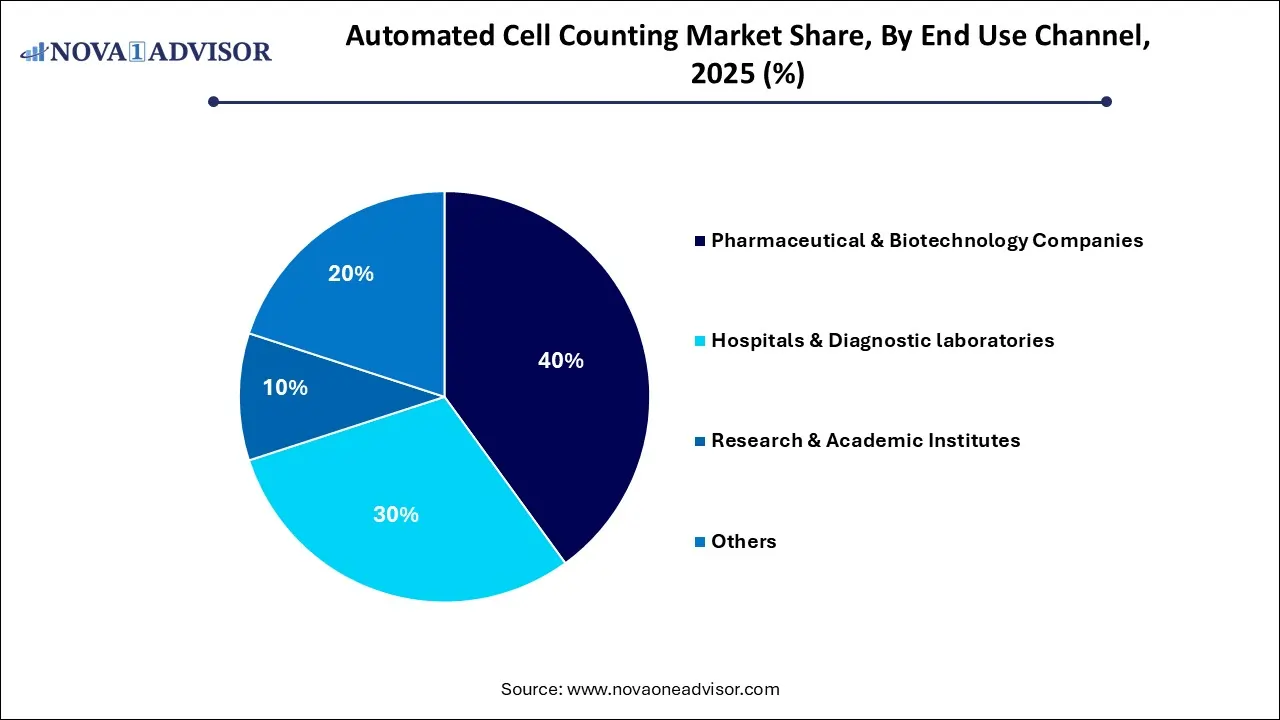
The hospitals and diagnostic laboratories segment is projected to grow at the highest CAGR in the coming years. This is mainly because the rising chronic diseases and infectious outbreaks have mandated a transition toward high-throughput automated systems to manage the massive volume of daily CBC tests. By replacing manual hemocytometers with image-based technology, hospitals can deliver diagnosis results in under 30 seconds while virtually eliminating human error. This efficiency is further bolstered by massive global investments in diagnostic infrastructure, particularly in emerging markets, making advanced analytical tools accessible to more patients.
Regional Analysis
What Made North America the Dominant Region in the Automated Cell Counting Market?
North America maintained dominance in the automated cell counting market while holding the largest share in 2025. The region’s dominance is attributed to the presence of top-tier research hubs, and a massive concentration of biotech firms has turned into a powerhouse for automated cell counting adoption. High levels of government and private research and development funding specifically target breakthroughs in cancer immunotherapy and stem cell research, where manual counting is no longer sufficient. By being early adopters of AI-driven analysis, regional laboratories have set a global standard for accuracy and reproducibility in drug development.
U.S. Automated Cell Counting Market Trends
The U.S. is a major contributor to the market in North America due to the rapid expansion of cell and gene therapy research, which has made high-precision, AI-integrated counting essential for ensuring the viability and safety of next-generation treatments. This technological shift, supported by cloud-based data management and microfluidics, allows pharmaceutical leaders to maintain strict regulatory compliance while accelerating drug discovery. The constant demand for consumables and accessories creates a sustainable, high-growth revenue model that far outpaces traditional manual counting methods.
What Makes Asia Pacific the Fastest-Growing Area in the Market?
Asia Pacific is expected to grow at the fastest rate in the coming years. This is due to the rapid expansion of biotech research and developments; the region is the leader in cell therapy and regenerative medicine. The massive healthcare infrastructure investments in emerging countries, such as India, where hospitals are swiftly adopting digital and automated lab solutions to handle rising patient volumes. As the aging population faces an increasing prevalence of chronic diseases, the demand for high-throughput diagnostic tools like automated blood counters has become a clinical necessity.
China Automated Cell Counting Market Trends
China is a key player in the Asia Pacific automated cell counting market due to the rapid expansion of biopharmaceutical production, which has turned automated monitoring into a critical necessity for maintaining the viability and concentration of high-value cell culture. The technological advancements, such as AI-powered image analysis and digital analytics, replace manual methods to deliver superior accuracy and reproducibility. The growing surge in advanced research and the continuous demand for consumables ensure a sustainable, high-growth revenue model for the worldwide industry.
How is the Opportunistic Rise of Europe in the Automated Cell Counting Market?
Europe is experiencing a strategic growth in the market due to the rising advanced therapies, including mRNA vaccines and CAR-T cell treatments, has made precise, validated cell counting a cornerstone of European biotechnology. This demand is met by a robust research infrastructure in hubs like Germany and the UK, where expanding biopharmaceutical capacities require high-throughput automation. Stricter regulatory frameworks such as the MDR and IVDR further push laboratories to adopt high-performance systems to ensure data reliability and GMP compliance. The strong synergy between academia and industry ensures that cutting-edge research is rapidly translated into standardized, commercial-grade automated technologies.
United Kingdom Automated Cell Counting Market Trends
The United Kingdom is leading the market in Europe due to the strong shift towards image-based cell counters, over manual methods, using advanced algorithms for better accuracy, viability assessment, and cell morphological data. Increased investment in biopharmaceutical research and development growth, clinical labs are upgrading from manual methods to automated systems to reduce human error and boost efficiency. Rising focus on personalized medicine and growing usage in research and biomanufacturing applications.
Automated Cell Counting Market Supply Chain Analysis
- Research & Development (R&D) and Product Design
This foundational stage involves designing automated instruments, developing sophisticated image analysis algorithms, and creating specialized reagents.
Key Players: Thermo Fisher Scientific Inc., Danaher Corporation, Bio-Rad Laboratories, Inc., Logos Biosystems, ChemoMetec A/S, Molecular Devices.
- Raw Material and Component Procurement
This stage involves sourcing high-quality materials required for assembling the counters and manufacturing consumables. Critical components include high-resolution CMOS sensors, LED lights, optics for imaging systems, microfluidic chips, and raw chemicals for staining reagents.
Key Players: BD Biosciences and Agilent Technologies.
- Distribution and Sales Channel
Finished products are distributed globally through direct sales forces or authorized distributors to laboratories and clinical settings. This stage also includes technical support, instrument installation, and the provision of customized software solutions for data management.
Key Players: Thermo Fisher, Danaher, and Bio-Rad.
Automated Cell Counting Market Companies
- Thermo Fisher Scientific Inc.; Thermo Fisher is a market leader offering high-performance, AI-powered image-based cell counters like the Invitrogen Countess 3, which enhance workflow efficiency and accuracy in research labs.
- Countstar, Inc.; Countstar specializes in advanced, image-based cell analysis technology, offering specialized systems that provide high-precision cell concentration and viability data, particularly for cell therapy and stem cell research.
- Bio-Rad Laboratories, Inc.; Bio-Rad provides reliable, fast, and versatile automated cell counters, such as the TC20, which utilize optical methods to determine total cell count and viability within 30 seconds. They contribute to the market by focusing on user-friendly, high-precision instruments suitable for a broad range of cell types in both clinical and research environments.
- F. Hoffmann-La Roche Ltd; Roche integrates advanced automated cell counting and digital pathology imaging technologies into its extensive clinical diagnostics and biopharmaceutical frameworks. They advance the market by providing specialized automated digital pathology algorithms, such as those used for tumor cell quantification in breast cancer research.
- Chemometec A/S: Chemometec contributes with its innovative NucleoCounter series, focusing on high precision and ease of use, utilizing image-based analysis that does not require staining to identify cell populations.
Recent Developments
- In April 2025, Logos Biosystems launched the LUNA-BX7™ automated cell counter, a brightfield-only system utilizing machine-learning algorithms to provide high-precision, high-throughput counting across 1–90 µm cells. This cost-effective, upgradeable model features 21 CFR Part 11 compliance via CountWire™ software and supports eco-friendly, reusable slide formats.
- In September 2025, science and technology leaders Merck and Siemens signed a landmark Memorandum of Understanding (MoU) to accelerate the digital transformation of the life sciences industry through a "digital-first" approach to drug discovery and manufacturing.
Exclusive Analysis on the Automated Cell Counting Market
The global automated cell counting market is leveraged by the urgent shift from manual hemocytometers to high-throughput automated systems to ensure standardization and high viability data in research. North America maintains the largest market share, while the Asia Pacific acts as the fastest-growing region due to expanding biopharma R&D. The consumables & accessories command the largest market share due to recurring demand, while image-based cell counters lead in instrument adoption for improved accuracy. The market is primarily driven by the rapid expansion of biopharmaceutical manufacturing, cell-based therapies, and increasing research funding for chronic diseases.
Segments Covered in the Report
This report forecasts revenue growth at country levels and provides an analysis of the latest industry trends in each of the sub-segments from 2021 to 2035. For this study, Nova One Advisor, Inc. has segmented the automated cell counting market
By Product
- Instruments
-
- Flow Cytometers
- Image-based Cell Counters
- Electrical Impendence Coulter Counters
- Consumables & Accessories
By Application
- Blood Analysis
- Stem Cell Research
- Cell Line development
-
- Biologics Production
- Cell & Gene Therapy
- Others
By End Use Channel
- Pharmaceutical & Biotechnology Companies
- Hospitals & Diagnostic laboratories
- Research & Academic Institutes
- Others
By Regional
- North America
- Europe
- Asia Pacific
- Latin America
- Middle East and Africa (MEA)
FAQ's

Proceed to Buy
Instant PDF delivery on confirmation

Automated Cell Counting Market Size to Hit USD 17.91 Billion by 2035
 Request Customization
 Download Sample
Warning: Trying to access array offset on value of type null in /home/multiwpmr/public_html/report-details.php on line 1145

Get a Sample of this Report
Automated Cell Counting Market