

Automated Dispensing Machines Market Size, Share, and Trends 2026 to 2035
 Status Published
 Category Healthcare


Content
Automated Dispensing Machines Market Size and Growth 2026 to 2035
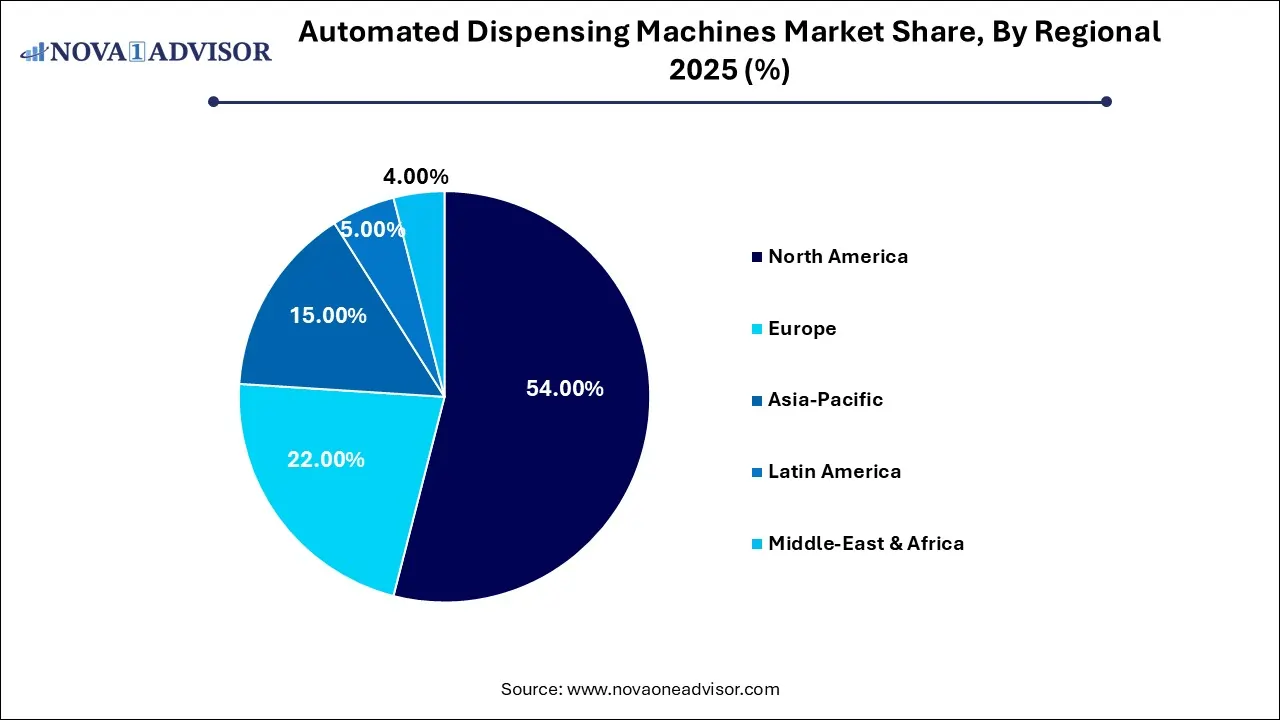
The global automated dispensing machines market size was valued at USD 5.88 billion in 2025 and is projected to grow from USD 6.32 billion in 2026 to USD 12.01 billion by 2035, at a CAGR of 7.4% from 2026 to 2035. The North America automated dispensing machines market industry dominated the market, accounting for the largest revenue share of 54% in 2025
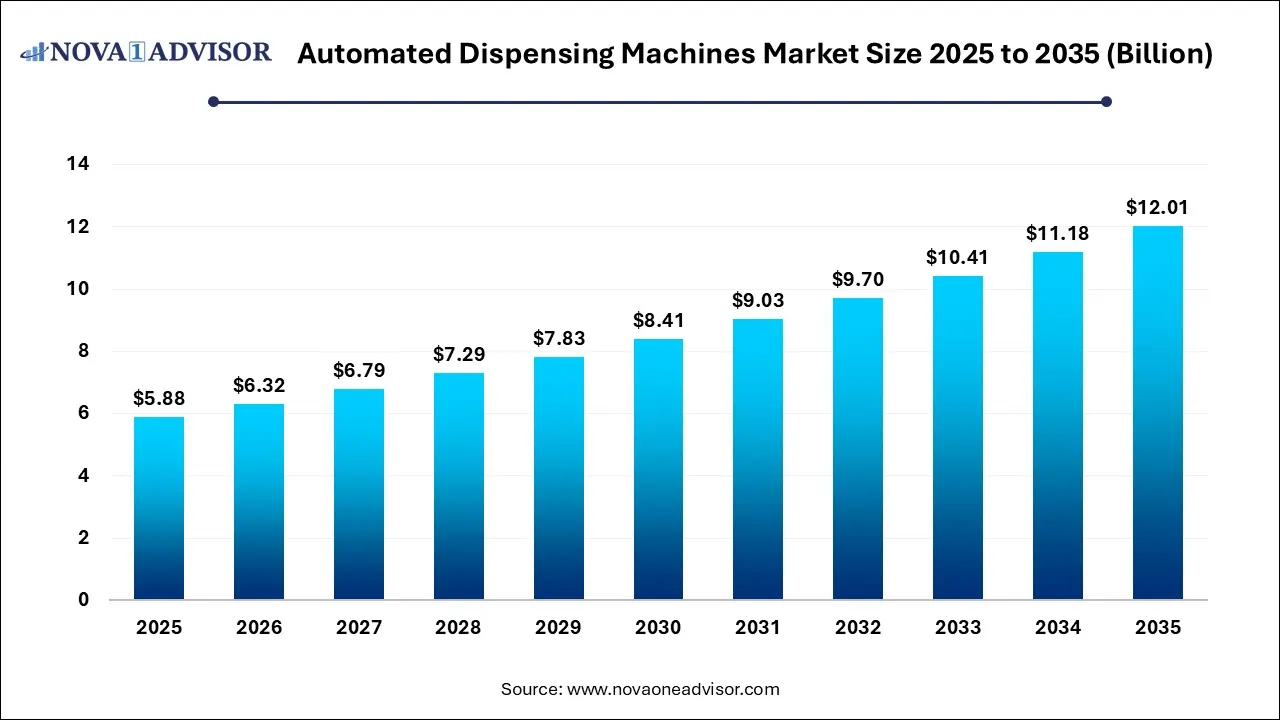
Key Takeaway:
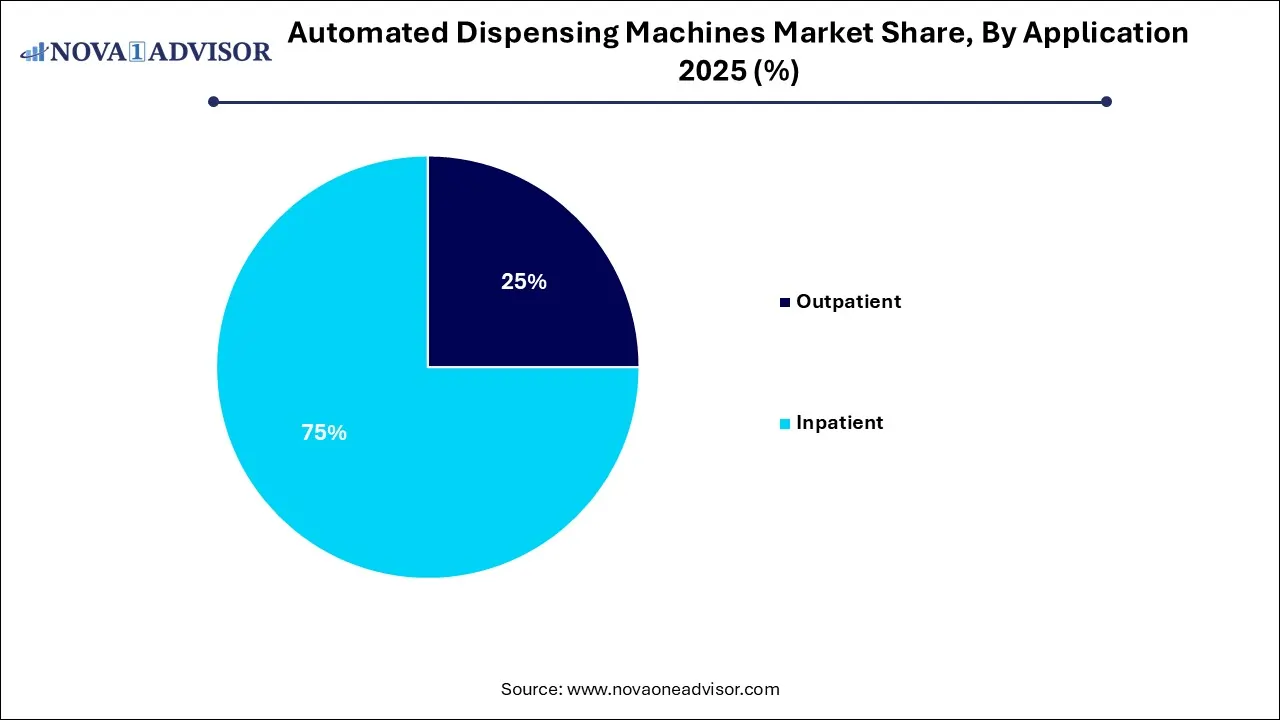
- By application, the inpatient segment dominated the market and accounted for the largest revenue share of 75% in 2025.
- By application, the outpatient segment is anticipated to witness the fastest CAGR over the forecast period.
- By end use, the hospitals segment dominated the market and accounted for the largest revenue share in 2025.
- By operation, the centralized pharmacies segment dominated the market and accounted for the largest revenue share in 2025.
- By region, North America accounted for the largest revenue share of 54% in 2025.
Market Overview
The automated dispensing machines market has become a critical component of modern healthcare infrastructure as hospitals, pharmacies, and healthcare providers seek to improve medication management, reduce dispensing errors, and enhance operational efficiency. Automated dispensing machines are computerized medication storage and dispensing systems designed to securely store pharmaceuticals while providing controlled access to authorized healthcare personnel.
Medication errors remain one of the most significant challenges facing healthcare systems worldwide. Errors associated with prescription interpretation, drug dispensing, dosage administration, and inventory management can result in adverse patient outcomes and increased healthcare costs. Automated dispensing machines address these challenges by introducing standardized medication distribution processes and advanced tracking capabilities.
Healthcare facilities are increasingly adopting automation technologies to optimize workflows and reduce manual tasks. Automated dispensing systems help pharmacists and nurses manage medication inventories more effectively while ensuring timely drug availability. These systems also enhance accountability by maintaining detailed records of medication dispensing activities, helping organizations comply with regulatory requirements.
The market has evolved significantly over the past decade. Early dispensing systems primarily focused on inventory control and medication storage. Modern solutions now incorporate advanced software, cloud connectivity, electronic health record (EHR) integration, barcode verification, remote monitoring, and predictive analytics. These advancements have transformed automated dispensing machines into comprehensive medication management platforms.
The growing burden of chronic diseases such as diabetes, cardiovascular disorders, cancer, and respiratory illnesses has further accelerated market expansion. Patients with chronic conditions often require long-term medication management involving multiple prescriptions. Automated dispensing technologies help healthcare providers ensure accurate medication delivery while reducing operational complexities.
The COVID-19 pandemic highlighted the importance of healthcare automation and contactless medication management. Hospitals experienced unprecedented patient volumes and staffing challenges, prompting increased investment in technologies that enhance efficiency and reduce human intervention. Automated dispensing machines played a crucial role in ensuring uninterrupted medication availability during periods of heightened demand.
Additionally, increasing labor shortages within healthcare facilities are driving automation adoption. Pharmacists and nurses face growing workloads due to rising patient populations and expanding healthcare services. Automated dispensing systems allow healthcare professionals to dedicate more time to patient care while reducing administrative burdens associated with medication management.
The market is also benefiting from growing digital transformation initiatives across healthcare systems. Governments, healthcare providers, and pharmaceutical organizations are investing in smart healthcare technologies that improve patient outcomes, enhance safety, and reduce costs. Automated dispensing machines align closely with these objectives, making them an essential component of modern healthcare infrastructure.
Market Outlook
- Market Growth Overview: The global automated dispensing machines market is expected to grow significantly between 2025 and 2035, driven by the rising burden of chronic diseases, medication safety and error reduction, and incorporation of technological integrations.
- Sustainability Trends: Sustainability trends involve medication waste reduction, energy and space optimization, and circular and modular manufacturing.
- Major Investors: Major investors in the market include Omnicell, Becton, Dickinson and Company (BD), Capsa Healthcare, ScriptPro, McKesson, Swisslog Healthcare, and Baxter International.
How is AI Transforming the Automated Dispensing Machines Market
Artificial intelligence is fundamentally transforming the automated dispensing machines market by introducing intelligent decision-making capabilities, predictive analytics, and enhanced medication management functionalities. The integration of AI technologies enables dispensing systems to move beyond simple storage and distribution functions toward proactive healthcare support.
One of the most significant applications of AI involves predictive inventory management. Traditional inventory systems often rely on fixed reorder points and historical usage patterns. AI-powered platforms analyze patient admissions, seasonal disease trends, prescription volumes, and medication consumption patterns to forecast future demand accurately. This capability helps healthcare facilities reduce stockouts and minimize excess inventory.
Machine learning algorithms are also improving medication safety by identifying unusual dispensing behaviors and potential errors. AI systems can analyze dispensing activities in real time and flag discrepancies that may indicate incorrect medication selection, unusual dosage requests, or unauthorized access attempts. Such capabilities contribute significantly to patient safety initiatives.
Natural language processing technologies are increasingly integrated with healthcare information systems. These tools enable automated dispensing machines to interpret prescription data, physician orders, and clinical notes more effectively. Integration with electronic medical records allows systems to verify medication appropriateness and identify potential drug interactions.
AI is also enhancing workflow optimization within hospital pharmacies. Intelligent scheduling algorithms can determine optimal medication replenishment times, predict peak dispensing periods, and allocate resources more efficiently. This improves operational performance while reducing staff workload.
Another emerging application is predictive maintenance. AI-powered monitoring systems continuously evaluate equipment performance and identify early signs of mechanical issues. Healthcare facilities can perform maintenance proactively, reducing downtime and ensuring uninterrupted medication access.
As healthcare organizations increasingly embrace digital transformation, AI-driven dispensing systems are expected to play an increasingly important role in medication management, operational efficiency, and patient safety.
Automated Dispensing Machines Market Report Scope
| Report Coverage | Details |
| Market Size in 2026 | USD 6.32 Billion |
| Market Size by 2035 | USD 12.01 Billion |
| Growth Rate From 2026 to 2035 | CAGR of 7.4% |
| Base Year | 2025 |
| Forecast Period | 2026 to 2035 |
| Segments Covered | Application, End use, Operation, Region |
| Market Analysis (Terms Used) | Value (USD Million/Billion) or (Volume/Units) |
| Regional Scope | North America; Europe; Asia Pacific; Central and South America; the Middle East and Africa |
| Key Companies Profiled | Omnicell, Inc.; BD; Omnicell, Inc.; ScriptPro LLC; Avery Weigh-Tronix; PEARSON MEDICAL TECHNOLOGIES; Accu-Chart; Baxter; Capsa Healthcare |
Segmental Insights
By Application
How did the inpatient segment dominate the Global Automated Dispensing Machines market?
The outpatient and inpatient segment is driven by high patient volumes and complex medication regimens that require automated distribution systems to relieve pressure on inpatient pharmacies. Placing these decentralized machines directly at nursing stations and intensive care units allows clinical teams to access critical drugs on-demand without waiting for centralized pharmacy dispatches.
How did the outpatient segment expected to hold the fastest-growing Global Automated Dispensing Machines market in the coming years?
The outpatient segment is driven by the rapid adoption of automated dispensing machines to drastically reduce patient waiting times and improve the overall customer experience during prescription fulfilment. These flexible, compact devices function as decentralized care models placed closer to the point-of-care, ensuring highly efficient medication distribution across modern ambulatory settings.
By End Use
How did the hospitals segment dominate the Global Automated Dispensing Machines market?
The hospitals segment is driven by the seamless integration with hospital Electronic Health Records, which enables real-time inventory tracking and automated dosage verification to effectively counter ongoing workforce shortages. These advanced systems guarantee strict regulatory compliance and prevent drug diversion by providing highly secure storage, controlled access, and complete digital traceability of high-risk controlled substances.
How did the retail drug store and pharmacies segment expected to hold the fastest-growing Global Automated Dispensing Machines market in the coming years?
The retail drug store and pharmacies segment is driven by the industry shift toward decentralized automation, such as 24/7 automated drug kiosks, effectively extending the operational reach of retail stores while expanding patient access to essential prescription drugs. Pharmacists can shift their focus to direct patient consultations and medication adherence, which drastically reduces waiting times and boosts overall customer satisfaction.
By Operation
How did the centralized pharmacies segment dominate the Global Automated Dispensing Machines market?
The centralized pharmacies segment is driven by utilizing advanced robotic units and barcode verification; these systems dramatically reduce medication wastage and virtually eliminate manual mix-ups. The shifting high-volume logistics to centralized robotics helps healthcare facilities address ongoing global pharmacist shortages while significantly optimizing the daily workload of clinical staff.
How did the decentralized pharmacies segment expected to hold the fastest-growing Global Automated Dispensing Machines market in the coming years?
The decentralized pharmacies segment is driven by the fact that the decentralized model allows healthcare facilities to efficiently manage high patient volumes and expand infrastructure by spreading medication distribution closer to the point-of-care. These localized cabinets provide highly secure storage and enforce strict barcode verification, which significantly reduces medication administration errors.
By Regional
How did the North America region account for the largest share in the Global Automated Dispensing Machines market?
North America is driven by the rigorous government regulations regarding accuracy and traceability, alongside a mature healthcare IT infrastructure that seamlessly integrates cabinets with electronic health records. This synergy of capital access, strict safety compliance, and technological integration solidifies the region’s global leadership in pharmacy automation.
U.S. Global Automated Dispensing Machines Market Trends
The U.S. has enhanced DEA regulations, which mandate strict digital chain-of-custody tracking through specialized machines engineered for controlled substances. The modern cabinets feature advanced interoperability with electronic health records while utilizing artificial intelligence and IoT frameworks to achieve predictive inventory tracking.
How did the Asia-Pacific region become the fastest-growing Global Automated Dispensing Machines Market during the forecast period?
Asia Pacific is heavily accelerated by expensive government digitization programs and healthcare modernization investments across major economies, such as Japan, China, and India. Local healthcare facilities are actively deploying these systems to automate inventory management, optimize supply chain traceability, and prevent costly medication waste.
China Global Automated Dispensing Machines Market Trends
China’s nationwide hospital automation push optimizes inventory tracking, enhances clinical safety, and ensures highly efficient drug distribution across heavily burdened healthcare systems. Local medical facilities are aggressively integrating these advanced robotic cabinets into daily workflows to drastically decrease the incidence of manual dispensing and prescription errors.
How Did Europe Hold A Notable Share in the Global Automated Dispensing Machines Market?
Europe’s strict European Union safety mandates require absolute drug traceability and the elimination of manual dispensing errors across hospital and retail networks. This regulatory compliance is crucial for managing the complex, multi-drug polypharmacy regimens necessitated by the region's rapidly aging demographic and high chronic illness caseload.
Germany Global Automated Dispensing Machines Market Trends
Germany’s evolving domestic healthcare policies pushing for increased outpatient services are accelerating the deployment of these advanced automation devices across a growing network of community and retail pharmacies. The modern German dispensing infrastructure increasingly integrates artificial intelligence and IoT frameworks to achieve automated patient adherence monitoring and predictive, real-time inventory tracking.
Key Players in the Global Automated Dispensing Machines Market
- Omnicell, Inc.
Omnicell offers advanced pharmacy robotics and cloud-based software, such as the Omnicell XT Series, which enable health systems to achieve zero-error medication management. Their Autonomous Pharmacy framework integrates central pharmacy automation with bedside supply cabinets, helping facilities reduce labor intensity and medication waste.
- BD (Becton, Dickinson and Company)
BD drives market growth through its widely utilized BD Pyxis line, providing secure automated dispensing cabinets designed to safely store and track medications in acute care settings. Their integrated platforms connect directly with electronic health records (EHRs) to optimize clinical workflows and significantly reduce human dispensing errors.
- ScriptPro LLC
ScriptPro specializes in scalable, robotic prescription dispensing systems that automate the highly precise filling, sorting, and labeling of medication vials and pouches.
Segments Covered in the Report
This report forecasts revenue growth at country levels and provides an analysis of the latest industry trends in each of the sub-segments from 2021 to 2035. For this study, Nova one advisor, Inc. has automated dispensing machines market.
By Application
- Outpatient
- Inpatient
By End Use
- Hospitals
- Retail Drug Stores and Pharmacies
- Operation Outlook (Revenue in USD Million, 2018 - 2030)
- Centralized Pharmacies
- Decentralized Pharmacies
By Region
- North America
- Europe
- Asia-Pacific
- Latin America
- Middle East & Africa (MEA)
FAQ's

Proceed to Buy
Instant PDF delivery on confirmation

Automated Dispensing Machines Market Size to Hit USD 12.01 Billion by 2035
 Request Customization
 Download Sample

Get a Sample of this Report
Automated Dispensing Machines Market