

Barlow’s Syndrome Market Size, Share, and Trends 2026 to 2035
 Status Published
 Category Healthcare


Content
Barlow’s Syndrome Market Size and Growth 2026 to 2035
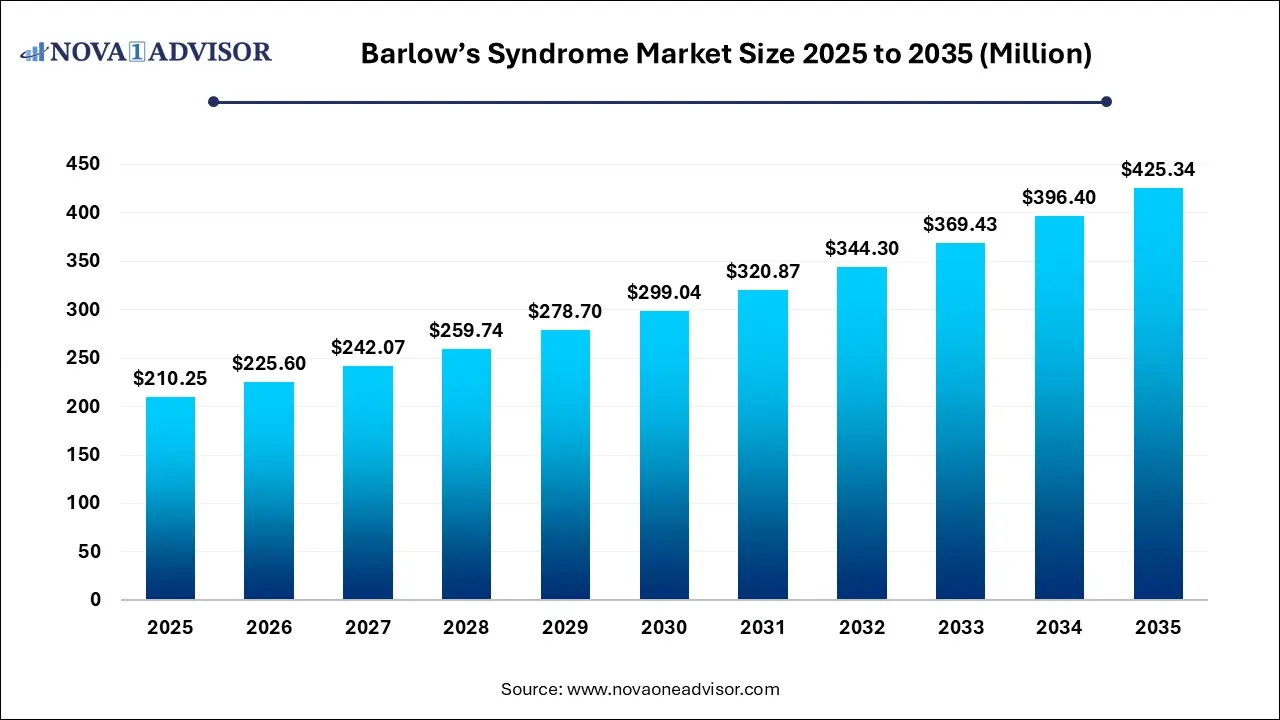
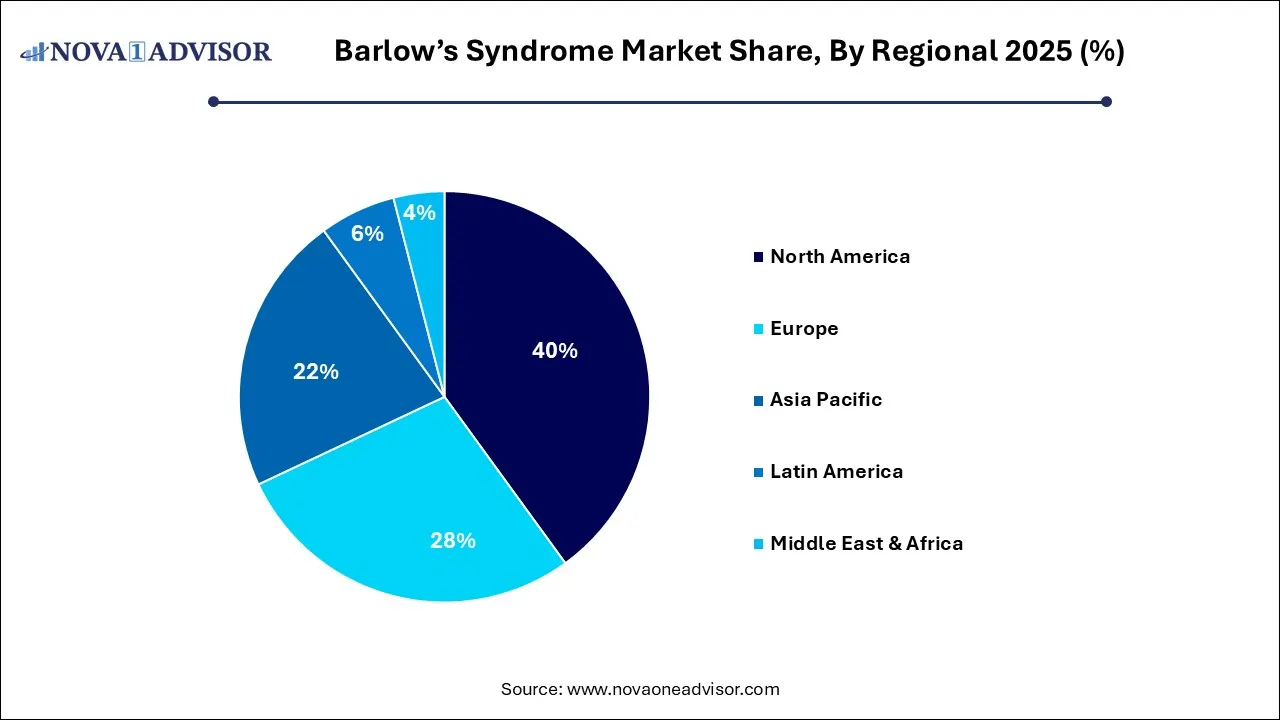
The global barlow’s syndrome market size was valued at USD 210.25 million in 2025 and is projected to grow from USD 225.60 million in 2026 to USD 425.34 million by 2035, at a CAGR of 7.3% from 2026 to 2035. North America dominated the market, accounting for a revenue share of 40.0% in 2025.
Key Takeaway
- By type of treatment, the medications segment dominated the market with the largest share in 2025.
- By type of treatment, the surgical procedures segment is expected to grow at the fastest CAGR over the forecast period.
- By diagnosis method, the echocardiogram segment dominated the market with the largest share in 2025.
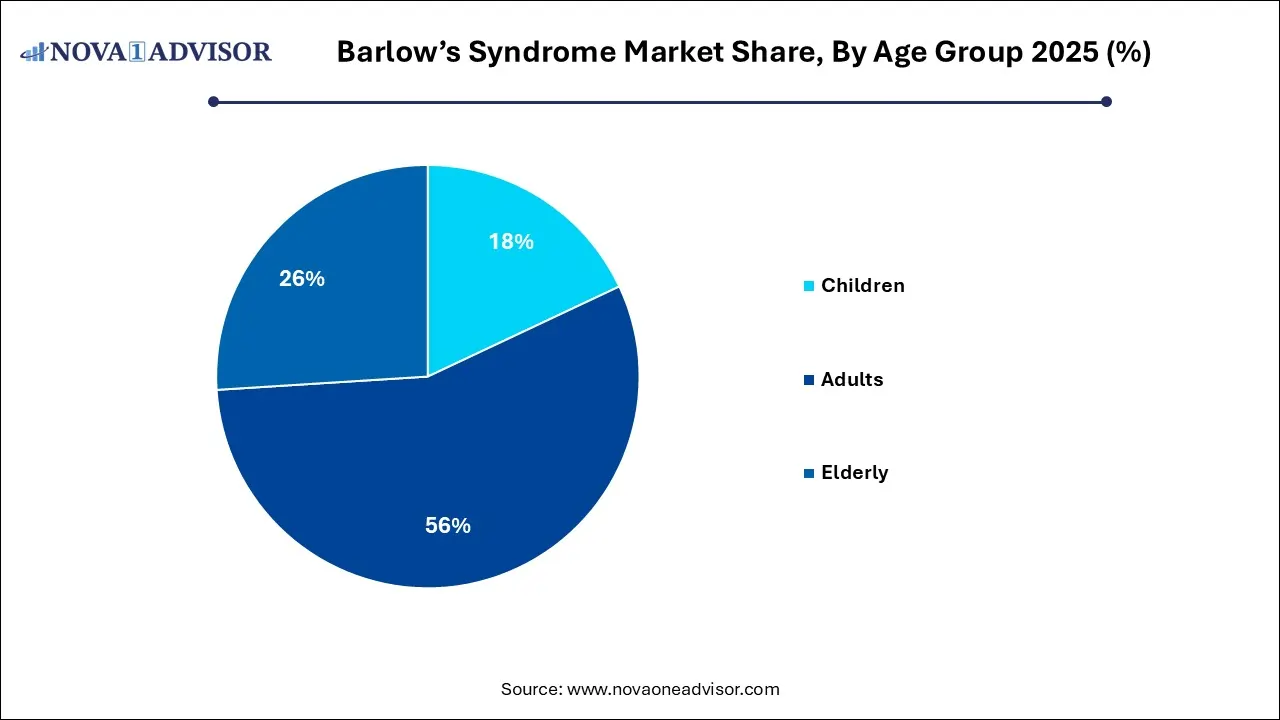
- By age group, the adults segment dominated the market with the largest share of 56.0% in 2025.
- By region, North America dominated the market with the largest share of 40.0% in 2025.
Market Overview
Barlow’s Syndrome is a complex form of mitral valve prolapse characterized by enlarged valve leaflets, elongated chordae, and mitral regurgitation. If left untreated, the condition can progress to serious complications such as atrial fibrillation, heart failure, and pulmonary hypertension, highlighting the importance of early diagnosis and intervention.
Advancements in echocardiography and cardiac imaging have improved the accurate identification of Barlow’s Syndrome, enabling personalized treatment strategies. Increasing adoption of minimally invasive and robotic-assisted mitral valve repair techniques is enhancing patient outcomes while reducing recovery time. In addition, ongoing research into genetic factors, imaging biomarkers, and structural heart disease is driving innovation in diagnostics and treatment, supporting the long-term growth of the Barlow’s Syndrome market.
Market Outlook
- Market Growth Overview: The global Barlow’s Syndrome market is expected to grow significantly between 2025 and 2035, driven by growing integration of innovative therapies and personalized medicines.
- Sustainability Trends: Sustainability trends involve building eco-friendly manufacturing and reducing the carbon footprint.
- Major Investors: Major investors in the market include Abbott Laboratories, Medtronic plc, Edwards Lifesciences Corporation, and Boston Scientific Corporation.
How is AI impacting the global Barlow’s Syndrome market?
Artificial Intelligence (AI) is revolutionizing the market by enhancing early detection, refining surgical planning, and boosting drug development. Furthermore, advanced machine learning algorithms analyze electrocardiograms (ECGs) and echocardiograms to identify structural heart defects with significantly higher accuracy than standard clinical interpretation.
Machine learning and predictive analytics are also helping physicians evaluate disease progression by combining imaging data with patient records and clinical parameters. In addition, AI-enabled remote monitoring devices can detect cardiac rhythm abnormalities, such as atrial fibrillation, supporting timely medical intervention. As healthcare providers increasingly adopt AI-assisted imaging and decision-support platforms, artificial intelligence is expected to play a vital role in improving patient outcomes and advancing the global Barlow’s Syndrome market.
Barlow’s Syndrome Market Report Scope
| Report Coverage | Details |
| Market Size in 2026 | USD 225.60 Million |
| Market Size by 2035 | USD 425.34 Million |
| Growth Rate From 2026 to 2035 | CAGR of 7.3% |
| Base Year | 2025 |
| Forecast Period | 2026 to 2035 |
| Segments Covered | By Age Group, By Diagnosis Method, By Type of Treatment, By Severity of Condition, By Region |
| Market Analysis (Terms Used) | Value (USD Million/Billion) or (Volume/Units) |
| Regional Scope | North America; Europe; Asia Pacific; Central and South America; the Middle East and Africa |
| Key Companies Profiled | Abbott, Medtronic, CryoLife, Inc., Lepu Medical Technology Co., Ltd. Boston Scientific Corporation, Micro Interventional Devices, Inc., Neovasc, Inc., Edward Lifesciences Corporation, Sorin Group, TTK HealthCare, and JenaValve Technology, Inc |
Market Driver
Rising Prevalence of Degenerative Mitral Valve Disorders
The increasing prevalence of degenerative mitral valve disorders is a key driver of the Barlow’s Syndrome market. A growing aging population, coupled with higher incidence of mitral valve prolapse and severe mitral regurgitation, is boosting demand for early diagnosis and advanced treatment. Improved awareness among healthcare professionals and advancements in cardiac imaging are enabling earlier detection and timely intervention, supporting steady market growth.
Market Restraint
Limited Availability of Specialized Mitral Valve Repair Expertise
The market is constrained by the limited availability of highly skilled cardiac surgeons experienced in complex mitral valve repair. Many healthcare facilities, particularly in developing regions, lack the expertise and advanced surgical infrastructure required for treating Barlow’s Syndrome. High costs associated with robotic surgical systems and specialized imaging technologies further restrict access, slowing market expansion.
Market Opportunity
Expansion of Minimally Invasive Structural Heart Interventions
The increasing adoption of minimally invasive and robotic-assisted mitral valve repair is creating significant growth opportunities for the Barlow’s Syndrome market. Rising patient preference for less invasive procedures, along with continuous innovation in catheter-based devices, advanced imaging, and robotic platforms, is improving treatment outcomes. Additionally, expanding cardiac care infrastructure in emerging economies is expected to increase access to advanced structural heart interventions, driving future market growth.
Segmental Insights
By Type of Treatment
Why did the medications segment dominate the global Barlow’s Syndrome market?
The medications segment dominated the market with the largest share in 2025. The dominance of the segment can be attributed to the growing prevalence of cardiovascular diseases and the growing aging population across the globe. In addition, as the global population ages, there is a notable increase in the prevalence of Barlow's syndrome, a condition largely driven by the natural, progressive degeneration of heart valves over time.
How did the surgical procedures segment expected to hold the significantly growing global Barlow’s Syndrome market in the coming years?
The surgical procedures segment is expected to grow at the fastest CAGR over the forecast period. The growth of the segment can be credited to the rapid innovations in high-resolution echocardiography and the surge in the geriatric population. Advancements in structural heart technologies, such as the Abbott MitraClip, have fundamentally transformed cardiovascular care.
By Diagnosis Method
Why did the echocardiogram segment dominate the global Barlow’s Syndrome market?
The echocardiogram segment dominated the market with the largest share in 2025. The dominance of the segment can be linked to the growing demand for non-invasive heart imaging along with the technological innovations such as 3D and 4D imaging. An echocardiogram is an ultrasound diagnostic procedure using ultrasonic sound waves to generate dynamic visual representations of the heart.
How did the electrocardiogram segment expected to hold the significantly growing global Barlow’s Syndrome market in the coming years?
The electrocardiogram segment is expected to grow at the fastest CAGR over the forecast period. The growth of the segment is driven by technological innovations in handheld and wearable heart monitors along with the surge in disease awareness. Barlow syndrome is strongly associated with cardiac arrhythmias. Electrocardiograms (ECGs), particularly 24-hour Holter monitors, are essential for detecting premature ventricular contractions (PVCs) and tachycardia.
By Age Group
Why did the children segment dominate the artificial vital organs and medical bionics market?
The children segment dominated the market with the largest share in 2025. The dominance of these segments is owing to the growing rates of connective tissue disorders and growing neonatal screening. Moreover, the syndrome typically develops in children due to congenital gene anomalies or systemic connective tissue disorders such as Ehlers-Danlos or Marfan syndrome.
How did the elderly segment expected to hold the significantly growing global Barlow’s Syndrome market in the coming years?
The elderly segment dominated the market with the largest share in 2025. The dominance of the segment is due to the growing transition towards minimally invasive surgical treatments and the rapid surge in screening and diagnosis. Furthermore, older populations show a higher prevalence of connective tissue disorders (e.g., Marfan syndrome), arterial hypertension, and chronic cardiac enlargement.
By Regional
Why did the North American region account for the largest share in the global Barlow’s Syndrome market?
North America dominated the market with the largest share in 2025. The dominance of the region can be attributed to the surge in healthcare spending and growing adoption of advanced diagnostic imaging. In addition, medical professionals in North America are highly trained to perform minimally invasive heart valve repair using catheters rather than conventional open-chest procedures. This advanced technique minimizes recovery time and facilitates significantly faster patient discharges.
U.S. Global Barlow’s Syndrome Market Trends
The growth of the market in the country can be driven by the growing incidence of structural heart diseases and extensive insurance reimbursement for minimally invasive procedures. Also, minimally invasive devices, such as the MitraClip and PASCAL Precision System, are widely preferred because they enable physicians to perform complex valve repairs via a minor incision in the leg.
Why did the Asia-Pacific region become the fastest-growing global Barlow’s Syndrome market during the forecast period?
Asia Pacific is expected to grow at the fastest CAGR over the forecast period. The growth of the region can be credited to the growing awareness of cardiovascular diseases and extensive adoption of cutting-edge diagnostic tools like echocardiograms. Furthermore, sustained public and private investments in medical infrastructure across emerging markets, such as India and Southeast Asia, are strengthening patient access to specialized cardiovascular treatments.
China Global Barlow’s Syndrome Market Trends
The market in the country is growing due to the surge in heart disease rates and growing investments in healthcare technology. The rising prevalence of heart failure and related cardiovascular conditions across China has increased the focus on, and allocation of resources toward, treating associated disorders such as Barlow's syndrome.
Key Players in the Global Barlow’s Syndrome Market
- Abbott Laboratories: Abbott is a leader in transcatheter, meaning passed through a small blood vessel instead of opening the chest, repair, and replacement devices.
- Edwards Lifesciences: Edwards pioneered heart valve therapies and focuses heavily on tissue replacements and transcatheter technologies.
- Medtronic: They offer the Intrepid transcatheter mitral valve replacement (TMVR) system and a variety of surgical rings used to reshape the natural valve (a process called annuloplasty).
Recent Developments
- In September 2025, Edwards Lifesciences introduced a new transcatheter heart valve platform in India, marking a major milestone for aortic stenosis treatment. This minimally invasive therapy provides a durable alternative for patient's ineligible for open-heart surgery, enhancing long-term health and quality of life.
Segments Covered in the Report
This report forecasts revenue growth at country levels and provides an analysis of the latest industry trends in each of the sub-segments from 2021 to 2035. For this study, Nova one advisor, Inc. has barlow’s syndrome market.
By Age Group
- Children
- Adults
- Elderly
By Diagnosis Method
- Echocardiogram
- Electrocardiogram
- Physical Examination
- Chest X-ray
By Type of Treatment
- Medications
- Surgical Procedures
- Therapies
- Lifestyle Changes
By Severity of Condition
- Mild
- Moderate
- Severe
By Region
- North America
- Europe
- Asia Pacific
- Latin America
- Middle East & Africa
FAQ's

Proceed to Buy
Instant PDF delivery on confirmation

Barlow’s Syndrome Market Size to Hit USD 425.34 Million by 2035
 Request Customization
 Download Sample

Get a Sample of this Report
Barlow’s Syndrome Market