

Bioprocess Containers Market Size, Share, Growth, Report 2026 to 2035
 Status Published
 Category Healthcare


Content
Bioprocess Containers Market Size and Growth 2026 to 2035
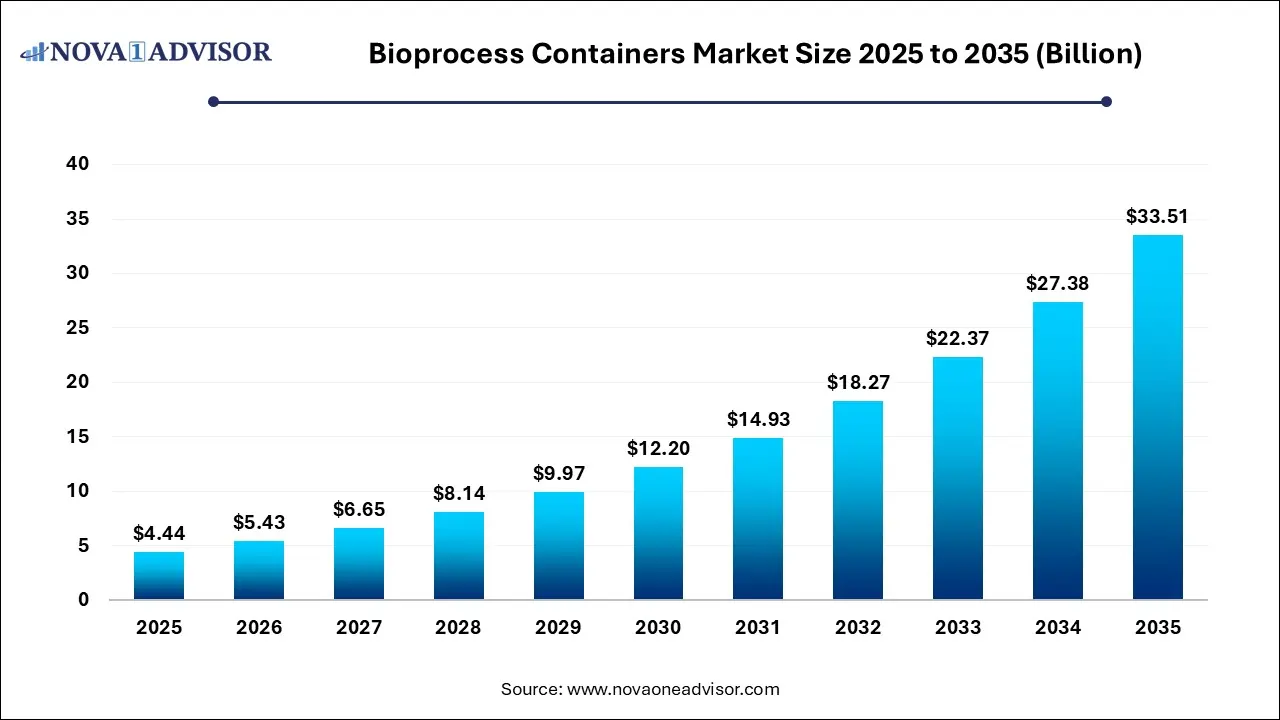
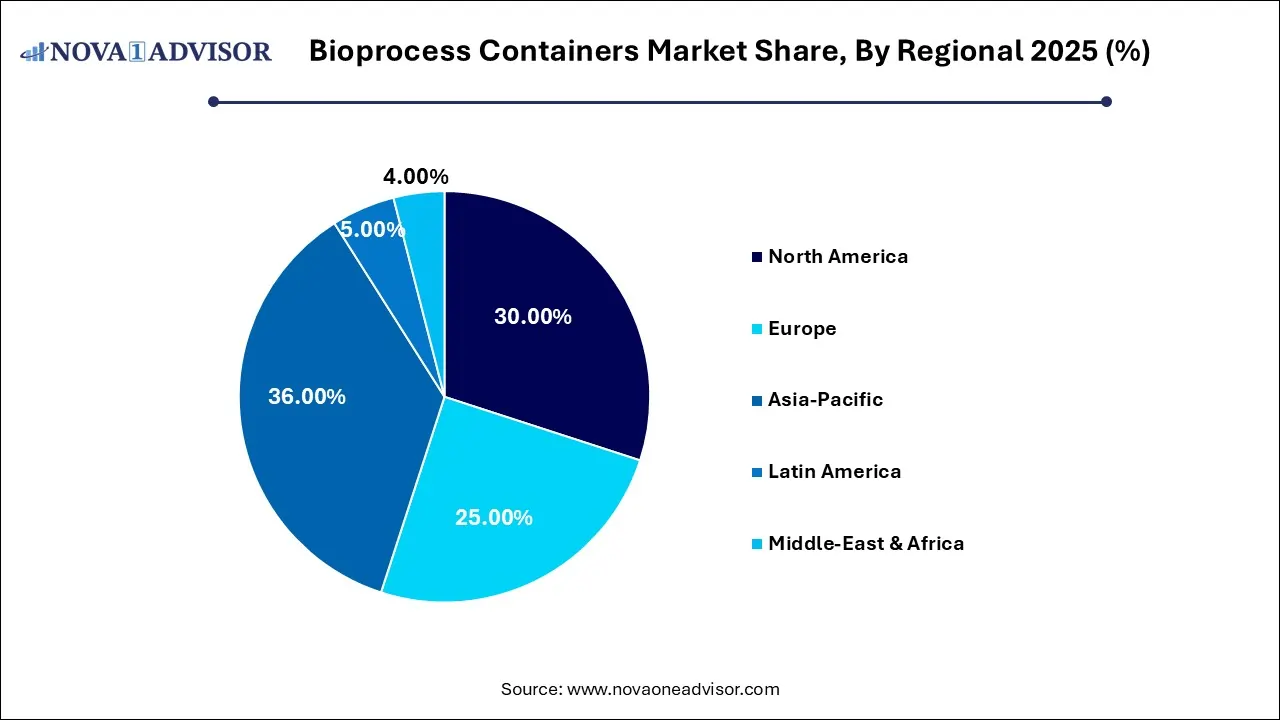
The global bioprocess containers market size was estimated at USD 4.44 billion in 2025 and is projected to hit around USD 33.51 billion by 2035, growing at a CAGR of 22.4% during the forecast period from 2026 to 2035. Asia Pacific dominated the bioprocess containers market with the largest revenue share of 36.0% in 2025.
Key Takeaway:
- By product, the 2D bioprocess containers segment dominated the market and accounted for the largest revenue share in 2025.
- By product, the 3D bioprocess containers segment is anticipated to witness the fastest CAGR over the forecast period.
- By application, the upstream processes segment dominated the market and accounted for the largest revenue share in 2025.
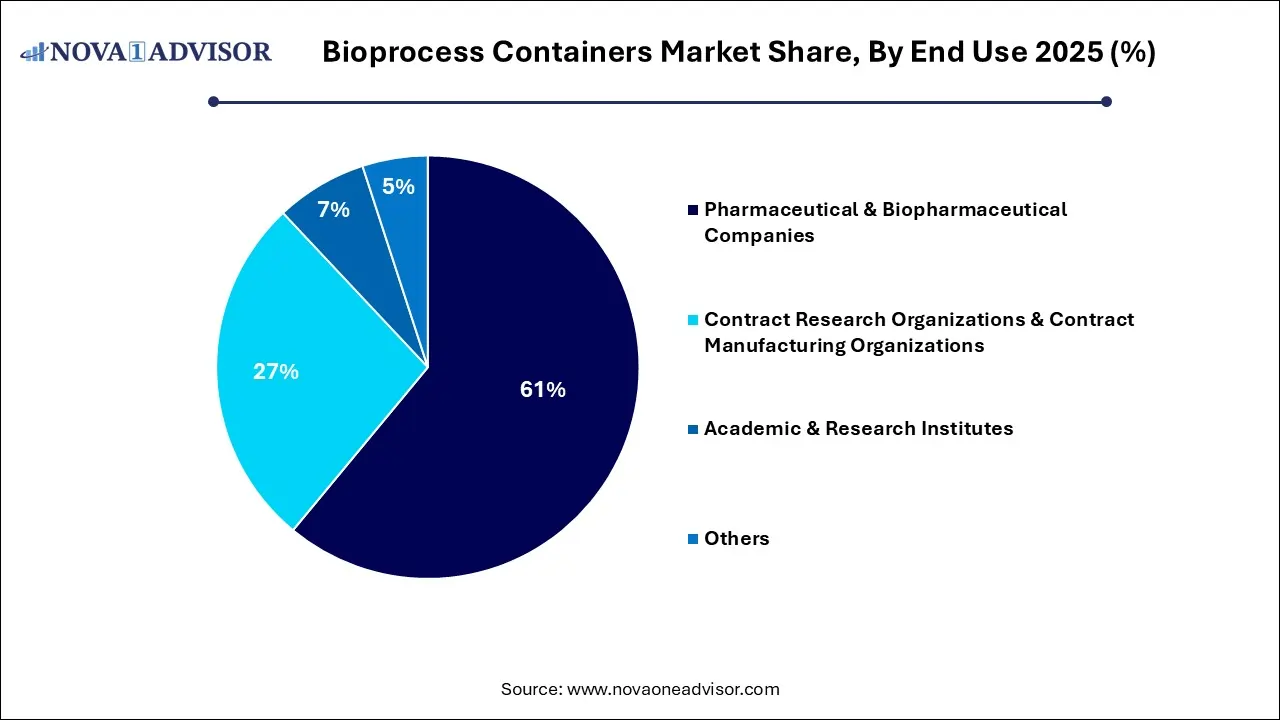
- By end use, the pharmaceutical & biopharmaceutical segment dominated the market and accounted for the largest revenue share of 61.0% in 2025.
- By region, Asia Pacific accounted for the largest revenue share of 36.0% in 2025.
Market Overview
The global bioprocess containers market has become an integral component of modern biopharmaceutical manufacturing. Bioprocess containers are flexible, sterile storage systems designed to handle biological fluids, media, buffers, intermediates, and final products throughout various stages of production. These containers are widely utilized in pharmaceutical manufacturing, biotechnology research, vaccine production, cell therapy development, and contract manufacturing operations.
The transition from traditional stainless-steel equipment toward single-use systems has fundamentally transformed bioprocessing operations worldwide. Manufacturers increasingly prefer disposable technologies because they eliminate cleaning validation requirements, reduce contamination risks, lower water consumption, and improve operational flexibility. Bioprocess containers form a critical element within this single-use ecosystem.
As biologics continue gaining prominence in healthcare, demand for efficient and scalable bioprocessing solutions has increased substantially. Monoclonal antibodies, recombinant proteins, vaccines, gene therapies, and personalized medicines require highly controlled manufacturing environments. Bioprocess containers support these processes by ensuring sterile fluid handling, storage, transfer, and transportation.
The COVID-19 pandemic further highlighted the importance of flexible biomanufacturing infrastructure. Vaccine manufacturers relied heavily on disposable technologies, including bioprocess containers, to accelerate production timelines while maintaining stringent quality standards. This experience encouraged pharmaceutical companies to invest more heavily in single-use technologies for future manufacturing resilience.
The market is also benefiting from rising investments in biotechnology research and development. Governments, venture capital firms, and pharmaceutical organizations continue allocating substantial funding toward advanced therapeutic development. As research pipelines expand, demand for bioprocess containers across laboratories, pilot-scale facilities, and commercial manufacturing plants is expected to increase significantly.
Moreover, growing outsourcing trends within the pharmaceutical industry have strengthened market demand. Contract Research Organizations (CROs) and Contract Manufacturing Organizations (CMOs) increasingly rely on flexible bioprocessing platforms that can accommodate multiple client projects simultaneously. Bioprocess containers enable such facilities to switch between production campaigns efficiently while maintaining compliance with regulatory requirements.
Market Outlook
- Market Growth Overview: The bioprocess containers market is expected to grow significantly between 2025 and 2035, driven by the cost efficiency of single-use systems, contamination preservation, and innovation in film technologies and integrated sensors, which allows for safer, more robust storage, freezing, and transportation of high-value biopharmaceutical liquids and powders.
- Sustainability Trends: Sustainability trends involve the life cycle analysis adoption, next-generation plastic films, and end-of-life waste management.
- Major Investors: Major investors in the market include Thermo Fisher Scientific, Danaher Corporation (Cytiva), Sartorius AG, Merck KGaA, Saint-Gobain, Avantor, and Lonza.
How is AI Transforming the Bioprocess Containers Market
Artificial intelligence is increasingly influencing the bioprocess containers market by enhancing operational efficiency, manufacturing intelligence, and supply chain optimization. While bioprocess containers themselves are physical products, AI-driven technologies are reshaping how these systems are utilized, monitored, and managed throughout biomanufacturing environments.
One major application involves predictive process optimization. AI algorithms analyze data from sensors, manufacturing equipment, and production workflows to determine optimal container utilization patterns. By identifying process bottlenecks and inefficiencies, manufacturers can improve fluid handling operations and reduce waste generation.
AI is also transforming contamination risk management. Advanced machine learning systems can detect abnormalities in process parameters that may indicate potential contamination events. Early identification enables operators to take corrective action before product quality is compromised, thereby improving manufacturing reliability and reducing costly batch failures.
Supply chain management represents another significant area of AI adoption. Pharmaceutical manufacturers increasingly use AI-based forecasting models to predict future demand for bioprocess containers, liners, and associated consumables. These systems help maintain optimal inventory levels while reducing shortages and excess stock accumulation.
Digital twins powered by AI are emerging within biomanufacturing facilities. These virtual representations simulate production environments, allowing manufacturers to evaluate container performance under different operating conditions. Such simulations help optimize facility layouts, process workflows, and production scheduling.
Furthermore, AI-driven quality management systems support regulatory compliance by automating documentation, tracking container usage history, and generating audit-ready records. This capability is particularly valuable for highly regulated pharmaceutical manufacturing environments where traceability is critical.
As Industry 4.0 adoption accelerates across biopharmaceutical facilities, AI integration is expected to become increasingly important in maximizing the efficiency and effectiveness of bioprocess container systems.
Bioprocess Containers Market Report Scope
| Report Coverage | Details |
| Market Size in 2026 | USD 5.43 Billion |
| Market Size by 2035 | USD 33.51 Billion |
| Growth Rate From 2026 to 2035 | CAGR of 22.4% |
| Base Year | 2025 |
| Forecast Period | 2026 to 2035 |
| Segments Covered | Type, Application, End User, and Region |
| Market Analysis (Terms Used) | Value (USD Million/Billion) or (Volume/Units) |
| Regional Scope | North America; Europe; Asia Pacific; Central and South America; the Middle East and Africa |
| Key Companies Profiled | Sartorius Stedim Biotech, Thermo Fisher Scientific, Danaher Corporation, and Merck Millipore. Merck KGaA, Danaher, Lonza ,Fenner ,Meissner ,Rim Bio ,Fluidscontrol. |
Segmental Insights
By Product
How did the 2D bioprocess containers segment dominate the Bioprocess Containers market?
The 2D bioprocess containers segment is driven by universal adoption to drive maximum workflow versatility across both upstream and downstream operations, including bulk drug transport, media preservation, and cell harvesting. These selected, disposable systems eliminate tedious cleaning, sterilization, and regulatory validation steps, drastically reducing cross-contamination risks during fluid handling.
How did the 3D bioprocess containers segment expected to hold the fastest-growing Bioprocess Containers market in the coming years?
The 3D bioprocess containers segment is driven by their high-throughput commercial and CDMO operations and massive volume capabilities that comfortably scale up to 2000 liters. Their three-dimensional, flexible structure optimizes biological yields by mimicking natural conditions to support complex gene, cell, and personalized therapies.
By Application
How did the upstream processes segment dominate the Bioprocess Containers market?
The upstream processes segment is driven by the massive, continuous consumption of media bags, buffer bags, and harvest reservoirs. This high-volume liquid-handling capacity is heavily propelled by the booming global demand for monoclonal antibodies, vaccines, and advanced gene therapies that require absolute sterility.
How did the downstream processes segment expected to hold the fastest-growing Bioprocess Containers market in the coming years?
The downstream processes segment is driven by rapid transformation as facilities adopt single-use 2D and 3D bioprocess containers to eliminate cross-contamination and product loss during high-value drug handling. By removing time-consuming cleaning and sterilization validation steps, these disposable components drastically reduce facility downtime and lower media preparation costs.
By End Use
How did the pharmaceutical & biopharmaceutical segment dominate the Bioprocess Containers market?
The pharmaceutical & biopharmaceutical segment is driven by the use of single-use technologies to accelerate production timelines and drastically eliminate costly sterilization workflows. This transition lowers initial capital investments and mitigates cross-contamination risks, creating highly agile manufacturing environments. The surging demand for complex biologics, vaccines, and personalized cell therapies requires the precise, sterile, and flexible batch processing that closed-system containers uniquely provide.
How did the CROs and CMOs segment expected to hold the fastest-growing Bioprocess Containers market in the coming years?
The CROs and CMOs segment is driven by the small-to-mid-sized biotech firms seeking to eliminate heavy, in-house manufacturing infrastructure; adopting disposable containers drastically reduces facility setup costs, shortens implementation timelines, and eliminates cross-container risks across different product batches.
In India, the BioE3 Policy promotes transformative biomanufacturing across the country. The ₹10,000 crore Biopharma SHAKTI scheme specifically aims to develop India as a global biopharma manufacturing and clinical outsourcing hub.
By Regional
How did the North America region account for the largest share in the Bioprocess Containers market?
North America is driven by the National Institute of Standards and technology drives programs designed to provide the measurement science, standards, and analytical tools necessary to produce high-quality, cost-effective biological products, fostering a highly supportive regulatory environment for container technology. The sustained high-volume research and development spending fuels an extensive pipeline of complex monoclonal antibodies that demand highly sterile, flexible fluid-handling systems.
U.S. Bioprocess Containers Market Trends
The U.S. is adopting customized 3D containers designed to handle large-volume mixing, buffer preparation, and critical media transport. This structural scaling is heavily augmented by integrated smart sensors and digital monitoring systems that provide real-time process visibility and strict aseptic control over fluid dynamics.
How did the Asia-Pacific region become the fastest-growing Bioprocess Containers Market during the forecast period?
Asia Pacific region is experiencing an aggressive expansion in bioprocess containers by a steep rise in localized similar production to serve massive regional populations. The proactive government policies, financial grants, and fast-track regulatory pathways across major hubs, such as China, India, South Korea, and Japan designed to guarantee domestic vaccine and advanced therapeutic self-sufficiency.
China Bioprocess Containers Market Trends
China’s investing in domestic production, causing local CDMOs to source bioprocess containers locally and reduce reliance on Western supply chains. Cost-effective 2D containers, while upstream demand drives the adoption of single-use bioreactors and bags to streamline facility operations and shorten build times.
How Did Europe Hold A Notable Share in the Bioprocess Containers Market?
Europe’s stringent European Medicines Agency frameworks mandate high sterility, pushing facilities to replace legacy stainless-steel vessels with compliant, closed disposable systems. The establishes infrastructure increasingly relies on flexible container configurations to handle complex, small-batch processing for monoclonal antibodies, biosimilars, and advanced regenerative therapies.
Germany Bioprocess Containers Market Trends
Germany’s advanced biotechnology infrastructure, automated facilities, and a dense network of major contract development and manufacturing organizations. Local producers are aggressively adopting single-use bioprocess containers over legacy stainless-steel systems to drastically cut down on cleaning validation times, water consumption, and contamination risks.
Key Players in the Bioprocess Containers Market
- Thermo Fisher Scientific Inc.
Thermo Fisher Scientific provides a comprehensive portfolio of customizable, single-use BioProcess Containers (BPCs) and transfer assemblies under the Thermo Scientific Bioprocess Containers brand. They supply multi-layer, low-extractable film bags in sizes ranging from 50 mL to over 2,000 L to help pharmaceutical and biotechnology companies safely handle sterile fluids during biologic development.
- Merck
Merck contributes to the market by producing single-use assemblies and process container systems at their specialized life science manufacturing facilities. Their solutions provide flexible, closed-system fluid management designed to streamline workflows, reduce contamination risks, and scale up the production of life-saving vaccines and targeted therapies.
- Saint-Gobain
Saint-Gobain specializes in material science, manufacturing a wide array of single-use bags ranging from small 25 mL cell culture containers to massive 3,000 L volumes designed with advanced, animal-free films.
Segments Covered in the Report
This report forecasts revenue growth at country levels and provides an analysis of the latest industry trends in each of the sub-segments from 2021 to 2035. For this study, Nova one advisor, Inc. has bioprocess containers market.
By Type
- 2D bioprocess containers
- 3D bioprocess containers
- Other containers and accessories
By Application
- Upstream Processes
- Downstream Processes
- Process Development
By End User
- Pharmaceutical & Biopharmaceutical Companies
- CROs & CMOs
- Academic & Research Institutes.
By Geography
North America
- U.S.
- Canada
Europe
- Germany
- France
- United Kingdom
- Rest of Europe
Asia Pacific
- China
- Japan
- India
- Southeast Asia
- Rest of Asia Pacific
Latin America
- Brazil
- Rest of Latin America
Middle East & Africa (MEA)
- GCC
- North Africa
- South Africa
- Rest of Middle East & Africa
FAQ's

Proceed to Buy
Instant PDF delivery on confirmation

Bioprocess Containers Market Size to Hit USD 33.51 Billion by 2035
 Request Customization
 Download Sample

Get a Sample of this Report
Bioprocess Containers Market