

Bromelain Market Size, Share, and Trends 2026 to 2035
 Status Published
 Category Healthcare


Content
Bromelain Market Size and Growth 2026 to 2035
The global Bromelain market garnered revenue around USD 722.25 million in 2025 and projected to reach USD 1,132.41 million in 2035, with at a compound annual growth rate (CAGR) 4.6% throughout the estimate period from 2026 to 2035.
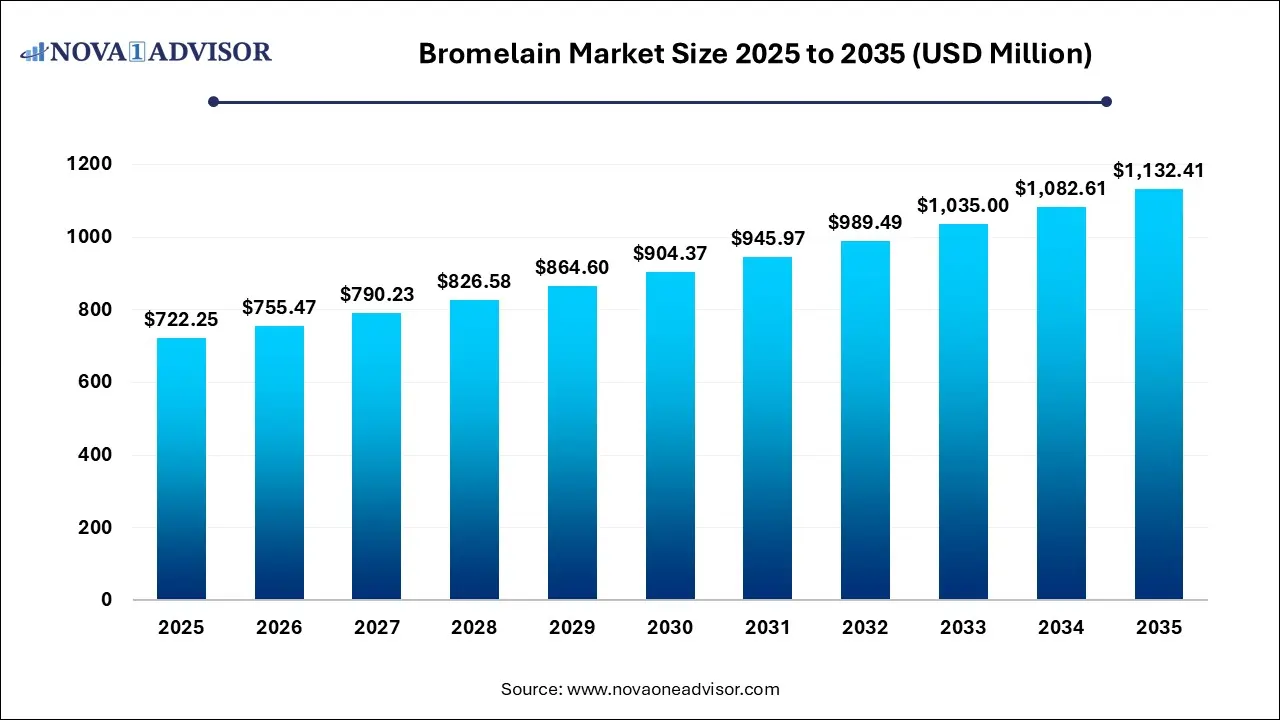
Market Key Takeaways
- Market Size: The Bromelain market is witnessing significant growth driven by increasing demand in various industries, such as healthcare, food, and cosmetics.
- Growth Rate: The market is expected to grow at a compound annual growth rate (CAGR) of over 4.6% from 2026 to 2035.
- Dominant Region: North America holds the largest share, primarily due to high consumption in the healthcare and food sectors.
- Fastest Growing Region: Asia Pacific is projected to grow at the fastest rate due to rising awareness about natural products and their health benefits.
- Key Companies: Several leading players are emerging, such as Enzybel International, NutriCo, and The Bromelain Company.
Market Overview
The bromelain market refers to the market for the enzyme extracted from the pineapple plant (Ananas comosus), particularly from its stem and fruit. Bromelain has a diverse range of applications across industries, particularly in healthcare, food & beverages, cosmetics, and pharmaceuticals. As a natural protease enzyme, bromelain is known for its anti-inflammatory and digestive properties, making it valuable in both over-the-counter and clinical health products.
The increased demand for natural and organic products has led to the growing popularity of bromelain. As consumer preferences lean more toward herbal and plant-based solutions, bromelain has garnered attention as an alternative remedy for several ailments, such as arthritis and digestive disorders. Alongside healthcare, bromelain has seen increasing use in the food & beverage industry for meat tenderizing, as well as in cosmetics for its skin benefits.
How AI is Impacting the Global Bromelain Market
AI and ML are transforming the global bromelain industry by optimizing extraction, enhancing purification, and reducing production costs. ML algorithms are used to analyse fermentation conditions and refine extraction methods, allowing for higher yields of high-quality bromelain, particularly from agricultural by-products, such as pineapple steam and peels. Generative AI is increasingly applied to predict mutation effects on enzyme stability and activity, promoting innovation in pharmaceutical and food processing applications.
Major Trends in the Market
- Increased Demand for Natural Health Products: Consumers are becoming more conscious of the side effects associated with synthetic drugs, leading to an increase in the demand for natural remedies like bromelain.
- Rising Adoption in Sports Nutrition: Bromelain is increasingly used in sports nutrition products due to its ability to reduce inflammation and improve recovery times post-exercise.
- Growing Use in Cosmetic Products: The growing demand for natural ingredients in skincare and cosmetic products is contributing to bromelain’s use in formulations aimed at reducing wrinkles, acne, and inflammation.
- Technological Advancements in Extraction Methods: New technologies in enzyme extraction, such as advanced filtration and cold-press extraction methods, are improving the efficiency and yield of bromelain production.
- E-Commerce Growth: The rise of e-commerce platforms is facilitating the growth of the bromelain market, allowing easier access to natural supplements and skincare products.
- Rising Awareness About Digestive Health: As consumers become more aware of the importance of digestive health, bromelain is being increasingly included in dietary supplements designed to support gut health.
Bromelain Market Report Scope
| Report Coverage | Details |
| Market Size in 2026 | USD 755.47 Million |
| Market Size by 2035 | USD 1,132.41 Million |
| Growth Rate From 2026 to 2035 | CAGR of 4.6% |
| Base Year | 2025 |
| Forecast Period | 2026 to 2035 |
| Segments Covered | By Source, By Application By Regional |
| Market Analysis (Terms Used) | Value (USD Million/Billion) or (Volume/Units) |
| Regional Scope | North America; Europe; Asia Pacific; Central and South America; the Middle East and Africa |
| Key Companies Profiled | Enzybel International S.A, Hong Mao Biochemicals Co., Ltd., Nanning Pangbo Bioengineering Co., Ltd., Guangxi Nanning Javely Biological Products Co., Ltd., Challenge Bioproducts Co., Ltd., Enzyme Development Corporation, Xena Bio Herbals Pvt. ltd., Enzyme Technology (PTY) Ltd., Advanced Enzyme Technologies Limited, and Bio-gen Extracts Pvt. Ltd. |
Driver: Growing Health Consciousness Among Consumers
The primary driver behind the growth of the bromelain market is the rising health consciousness among consumers. With increasing awareness of the benefits of plant-based ingredients, consumers are seeking natural alternatives to conventional medicines. Bromelain, known for its anti-inflammatory and digestive properties, fits perfectly into this trend. As people turn toward natural products for health management, bromelain is gaining popularity in supplements that support joint health, reduce swelling, and aid digestion.
For example, bromelain is often used in combination with other natural ingredients in supplements aimed at improving conditions like osteoarthritis. The increasing prevalence of chronic diseases like arthritis, along with the growing demand for holistic treatments, has driven the market for bromelain-based supplements. The adoption of these products by health-conscious individuals is expected to continue fueling market growth in the coming years.
Restraint: Lack of Standardization and Regulation
One of the key restraints in the bromelain market is the lack of standardization and regulation in the production of bromelain products. While bromelain is widely used in dietary supplements and pharmaceuticals, the inconsistency in product quality and efficacy is a significant concern. In many cases, the concentration of bromelain in these products can vary, leading to inconsistent results for consumers.
In addition, there is a lack of uniform regulatory guidelines for the production and labeling of bromelain-based products. This regulatory gap can result in misleading claims and confusion among consumers, which, in turn, affects the trustworthiness of the products. As a result, manufacturers face challenges in ensuring quality control and meeting consumer expectations, hindering the market's growth potential.
Opportunity: Increasing Applications in Sports Nutrition
An emerging opportunity for the bromelain market lies in its increasing application in sports nutrition products. Bromelain is known for its anti-inflammatory and pain-relieving properties, making it particularly valuable in products aimed at improving athletic performance and post-exercise recovery. As the global sports nutrition market continues to expand, there is growing potential for bromelain to be incorporated into supplements and protein shakes designed for athletes.
This trend is particularly pronounced in markets where sports and fitness activities are growing in popularity, such as in North America and Asia Pacific. The rising focus on recovery and injury prevention in sports, coupled with the shift towards natural ingredients, creates a fertile ground for bromelain to gain further traction in the sports nutrition sector.
Segmental Insights
By Source
How did the stem segment dominate the Global Bromelain market?
The stem segment is driven by its superior enzymatic concentration and cost-effectiveness, utilizing the non-edible portion of the pineapple for large-scale production. Its widespread industrial unity in meat tenderization and pharmaceutical formulations is supported by a stable and abundant raw material supply. The established regulatory approvals solidify its position as the primary choice for manufacturers seeking high-potency proteolytic enzymes.
How did the fruit segment expect to hold the fastest-growing Global Bromelain market in the coming years?
The fruit segment is driven by the growing demand for natural, premium ingredients and its rapid expansion in the cosmetics and skincare industries, where it is prized for its high-quality exfoliating and skin-smoothing properties. By prioritizing superior nutritional value over industrial-grade alternatives, this segment successfully captures the high-growth market for luxury wellness and organic personal care products.
By Application
How did the food and beverages segment account for the largest share in the Global Bromelain market?
The food and beverages segment is driven by its critical role as a natural proteolytic enzyme for tenderizing meat and seafood. Its leadership is reinforced by the global clean-label trend, as manufacturers replace synthetic additives with this pineapple-derived alternative to meet consumer demand. Its versatility in clarifying beverages and enhancing bakery textures ensures it remains the primary functional ingredient across the industrial food landscape.
How did the healthcare and pharmaceutical segment expect to hold the fastest-growing Global Bromelain market in the coming years?
The healthcare and pharmaceutical segment is driven by bromelain’s potent anti-inflammatory properties and its increasing use in treating arthritis and soft tissue injuries. The FDA-approved clinical innovations, such as Nexobrid for severe burn care, have significantly elevated its medical credibility. Coupled with the surging demand for high-potency nutraceuticals, strategic acquisitions in the natural enzyme sector are rapidly expanding bromelain's specialized therapeutic footprint.
By Region
North America is the dominant region in the bromelain market due to the high demand for dietary supplements and natural products. The U.S., in particular, has a large consumer base that actively seeks out natural remedies and health supplements, driving the demand for bromelain. Additionally, the presence of established pharmaceutical companies and increasing research in the health benefits of bromelain contribute to its dominance in this region.
The Asia Pacific region is witnessing the fastest growth in the bromelain market, driven by increasing health awareness and rising disposable income. Countries like India and China are seeing a surge in the demand for natural ingredients in health products, including bromelain. The growing popularity of sports nutrition and natural skincare in the region is expected to further drive the market.
Supply Chain Analysis of the Global Bromelain Market
Raw Material Sourcing
This initial stage focuses on the cultivation of pineapples and the extraction of bromelain-rich components, primarily from the stems, peels, and cores, largely driven by major producing regions like Thailand, China, and Brazil.
- Key Players: Enzybel International S.A, Hong Mal Biochemicals Co., Ltd.
Purification and Formulation
Purified bromelain is formulated into specific grades, ranging from food-grade to high-potency pharmaceutical-grade, often through processes like freeze-drying to ensure stability.
- Key Players: Enzyme Development Corporation, Bio-gen Extracts Pvt. Ltd., Challenge Bioproducts Co., Ltd.
Distribution and Logistics
Processed bromelain is packaged and shipped globally, requiring specialized, temperature-controlled logistics to maintain enzyme integrity.
- Key Players: Enzyme Technology (Pty) Ltd., Meteoric Biopharmaceuticals Pvt. Ltd., Biozym Gesellschaft für Enzymtechnologie mbH.
Key Players in the Global Bromelain Market
- Enzybel International S.A
As a fully integrated manufacturer, Enzybel produces high-quality, GMP-certified bromelain extracted from pineapple stems in Asia and Europe for pharmaceutical and food applications.
- Hong Mao Biochemicals Co., Ltd.
Hong Mao Biochemicals specializes in the production of high-grade, purified bromelain derived from pineapple, serving as a key player in the Asian and global markets.
- Nanning Pangbo Bioengineering Co., Ltd.
Nanning Pangbo Bioengineering contributes to the global bromelain market by focusing on the large-scale production and purification of plant-derived bromelain for industrial and health applications. They enhance market availability of the enzyme by supplying various bromelain grades suitable for food processing, food additives, and nutritional supplements.
Recent Developments
- Enzybel International (October 2025): Enzybel International, a leading player in the bromelain market, announced the launch of a new, enhanced bromelain product designed for use in sports nutrition. The product is expected to cater to the growing demand for natural anti-inflammatory supplements in the fitness industry.
- NutriCo (January 2026): NutriCo, a major manufacturer of plant-based enzymes, expanded its product line by introducing a new bromelain-infused skincare serum, targeting the anti-aging market. The company plans to distribute this product in North America and Europe, capitalizing on the growing demand for natural beauty products.
Bromelain Market Segmentation
By Source
- Stem
- Fruit
By Application
- Food & Beverages
- Healthcare & Pharmaceuticals
- Cosmetics
- Other Industries
By Regional
- North America
- United States
- Canada
- Europe
- Germany
- United Kingdom
- Italy
- France
- Rest of EU
- Asia Pacific
- China
- India
- Japan
- Southeast Asia
- Rest of APAC
- Central & South America
- Brazil
- Argentina
- Rest of Central & South America
- Middle East and Africa
- UAE
- Saudi Arabia
- Rest of MEA

Proceed to Buy
Instant PDF delivery on confirmation

 Request Customization
 Download Sample

Get a Sample of this Report
Bromelain Market