

Cardiac Catheter Market Size, Share, and Trends 2026 to 2035
 Status Published
 Category Healthcare


Content
Cardiac Catheter Market Size and Growth 2026 to 2035
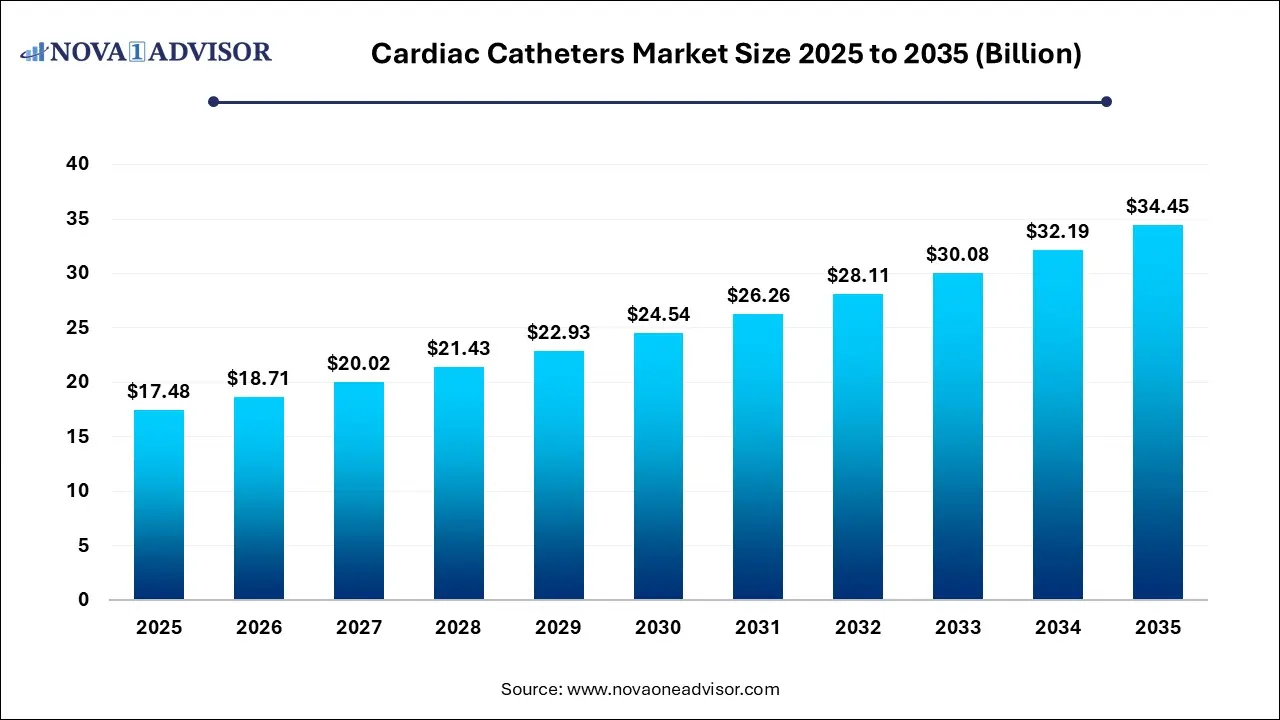
The global cardiac catheter market size was valued at USD 17.48 billion in 2025 and is projected to grow from USD 18.71 billion in 2026 to USD 34.45 billion by 2035, at a CAGR of 7.02% from 2026 to 2035.
Key Takeaway:
- By product, the PTCA balloon catheter segment dominated the market with the largest share in 2025.
- By product, the electrophysiology catheters segment is expected to grow at the fastest CAGR over the forecast period.
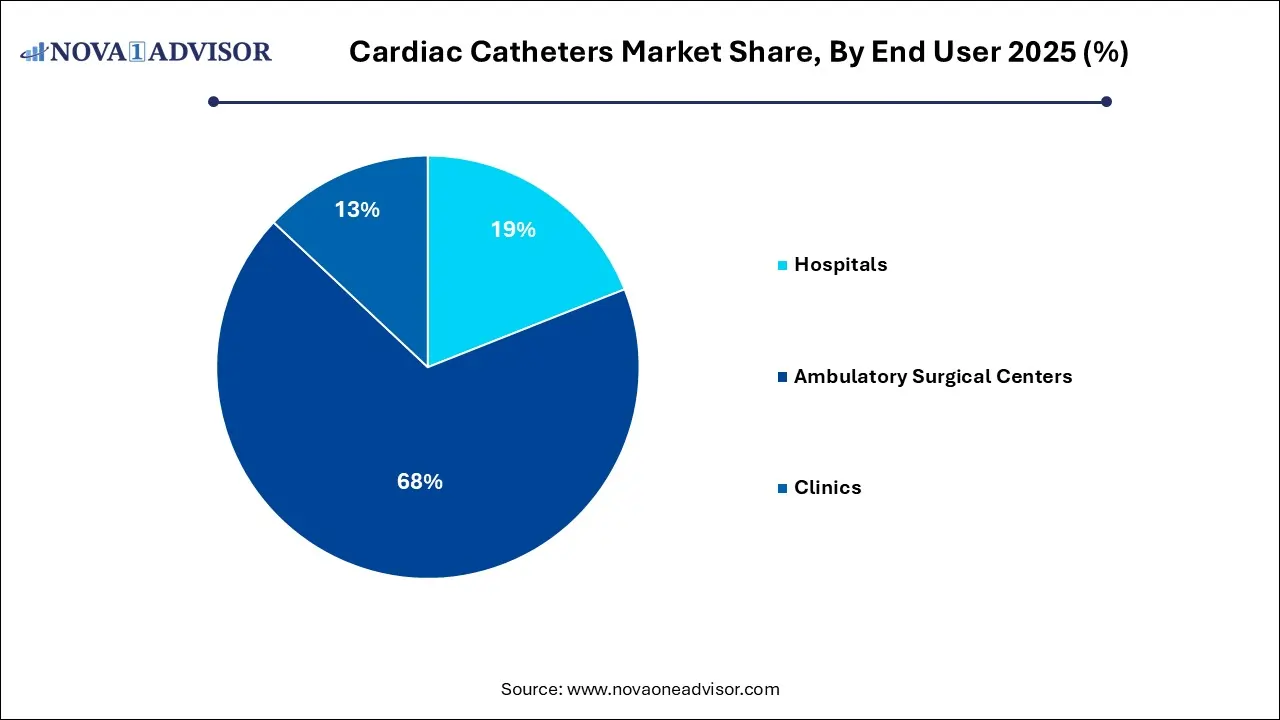
- By end users, the ambulatory surgical centers segment dominated the market with the largest share of 68.0%in 2025.
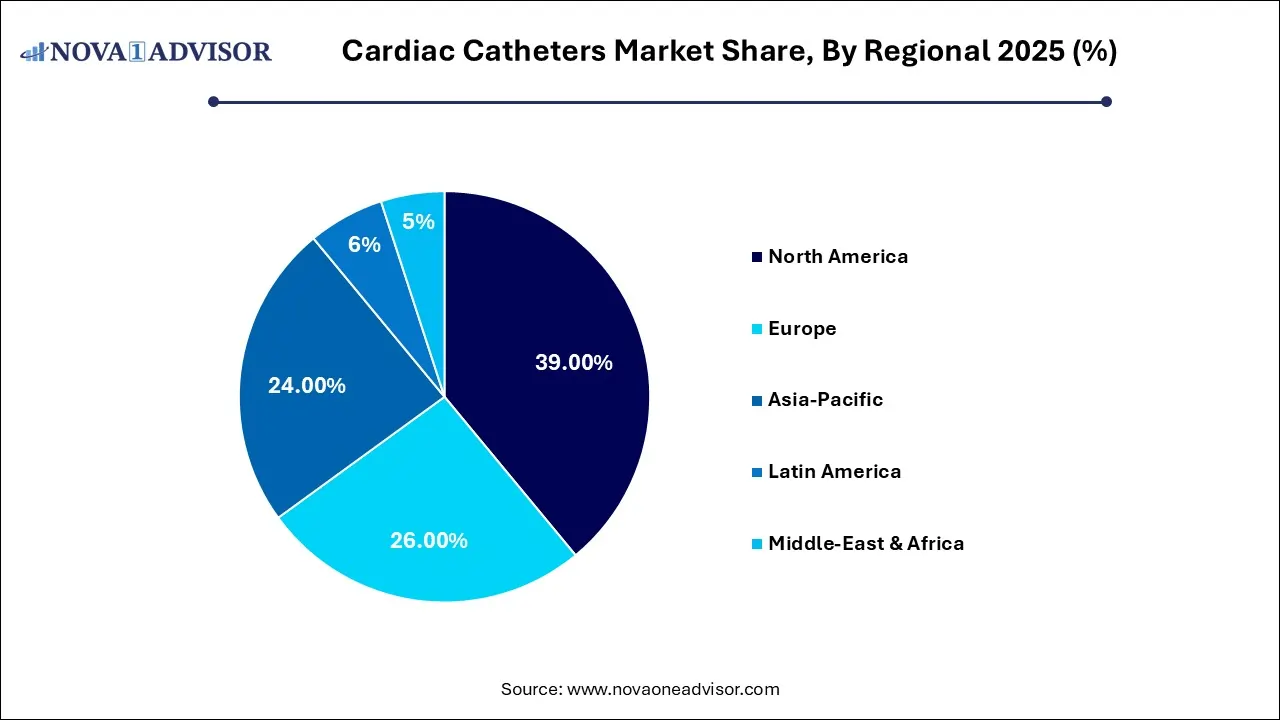
- By region, North America dominated the market with the largest share of 39.0% in 2025.
Market Overview
The global cardiac catheter market is experiencing steady growth, driven by the increasing adoption of minimally invasive procedures for diagnosing and treating cardiovascular diseases. Cardiac catheters play a critical role in interventional cardiology by enabling diagnostic imaging, angioplasty, stent placement, electrophysiology studies, and structural heart interventions with improved precision and reduced patient recovery time.
The rising prevalence of coronary artery disease, atrial fibrillation, heart failure, hypertension, diabetes, and age-related cardiovascular conditions is significantly increasing the demand for catheter-based procedures. Healthcare providers are expanding catheterization laboratories and investing in advanced imaging technologies to improve clinical outcomes and procedural efficiency.
Technological advancements, including enhanced catheter flexibility, steerable designs, hydrophilic coatings, pressure-sensing capabilities, and compatibility with imaging platforms such as IVUS and OCT, are improving procedural accuracy and safety. Growing adoption of advanced electrophysiology and structural heart procedures, including catheter ablation and transcatheter valve interventions, is further supporting market growth.
Additionally, the integration of artificial intelligence, robotic-assisted navigation, and digital imaging in catheterization laboratories is enhancing workflow efficiency and treatment precision. Rising healthcare investments, expanding access to specialized cardiac care, and improving healthcare infrastructure in emerging economies are expected to create significant growth opportunities for the global cardiac catheter market over the forecast period.
Market Outlook
- Market Growth Overview: The global cardiac catheter market is expected to grow significantly between 2025 and 2035, driven by growing usage of innovative equipment facilities in emerging economies.
- Sustainability Trends: Sustainability trends involve the use of biodegradable or antimicrobial materials and the reprocessing of single-use devices.
- Major Investors: Major investors in the market include Abbott (US), Medtronic (Ireland), and Boston Scientific Corporation (US).
How is AI impacting the global cardiac catheter market?
Artificial intelligence is transforming the cardiac catheter market by improving the accuracy, efficiency, and safety of catheter-based cardiovascular procedures. AI-powered imaging software analyzes coronary angiograms, intravascular ultrasound (IVUS), and CT scans to identify vessel blockages, plaque characteristics, and anatomical variations, enabling more precise diagnosis and treatment planning.
Machine learning algorithms support physicians by predicting procedural complexity, recommending optimal catheter selection, and providing personalized treatment insights based on patient data and clinical outcomes. In electrophysiology, AI-enhanced mapping systems improve the identification of abnormal electrical pathways, increasing the precision and success of catheter ablation procedures while reducing procedure times.
AI is also advancing robotic-assisted catheter navigation by enabling more accurate catheter control, lowering radiation exposure, and improving workflow efficiency. Additionally, AI-powered remote monitoring platforms use connected cardiac devices and wearable sensors to track patient recovery, detect potential complications early, and support timely clinical intervention, ultimately improving long-term cardiovascular outcomes.
Cardiac Catheter Market Report Scope
| Report Coverage | Details |
| Market Size in 2026 | USD 18.71 Billion |
| Market Size by 2035 | USD 34.45 Billion |
| Growth Rate From 2026 to 2035 | CAGR of 7.02% |
| Base Year | 2025 |
| Forecast Period | 2026 to 2035 |
| Segments Covered | By Product, By End User, and By Region |
| Market Analysis (Terms Used) | Value (USD Million/Billion) or (Volume/Units) |
| Regional Scope | North America; Europe; Asia Pacific; Central and South America; the Middle East and Africa |
| Key Companies Profiled | Medtronic PLC, Boston Scientific Corp., Edwards Lifesciences Corp., Biosense Webster, Inc. (Johnson & Johnson Services, Inc.), and Abbott Laboratories. |
Market Driver
Rising Global Burden of Cardiovascular Diseases
The most significant driver of the cardiac catheter market is the continuously increasing prevalence of cardiovascular diseases worldwide. Coronary artery disease, atrial fibrillation, hypertension, heart failure, congenital heart defects, and peripheral arterial disease continue rising due to aging populations, sedentary lifestyles, obesity, diabetes, smoking, unhealthy diets, and chronic stress.
As cardiovascular disorders become increasingly common, healthcare providers perform greater numbers of diagnostic angiographies, angioplasties, electrophysiology procedures, and structural heart interventions requiring specialized cardiac catheters. Improved awareness regarding early diagnosis, expanding cardiovascular screening programs, and wider availability of minimally invasive treatment options further contribute to rising procedural volumes. Consequently, hospitals continue investing heavily in catheterization laboratories, advanced imaging systems, and innovative catheter technologies to meet growing clinical demand.
Market Restraint
High Cost of Advanced Cardiac Catheter Technologies
Despite substantial clinical benefits, the high cost of technologically advanced cardiac catheters remains an important market restraint. Electrophysiology mapping catheters, intravascular ultrasound catheters, pressure-sensing catheters, and robotic navigation-compatible devices involve sophisticated engineering and premium materials that significantly increase manufacturing costs.
Healthcare providers in developing countries often face financial limitations when procuring advanced catheter technologies. Inadequate reimbursement policies, budget constraints, and high capital investment requirements for catheterization laboratories further restrict technology adoption. Additionally, highly specialized physician training requirements and ongoing equipment maintenance expenses contribute to the overall cost of implementing advanced catheter-based cardiac care.
Market Opportunity
Growing Adoption of Image-Guided Precision Cardiology
One of the greatest opportunities for the cardiac catheter market lies in the increasing adoption of image-guided precision cardiology. Physicians increasingly utilize intravascular imaging modalities such as IVUS and optical coherence tomography to optimize catheter placement, evaluate lesion morphology, and guide therapeutic decision-making.
The integration of artificial intelligence, three-dimensional imaging, robotic navigation, and digital procedural planning allows clinicians to perform highly personalized interventions tailored to individual patient anatomy. Manufacturers developing intelligent catheter platforms with embedded sensing technologies, real-time imaging compatibility, and AI-supported navigation capabilities are well positioned to capitalize on the growing demand for precision cardiovascular care.
Segmental Insights
By Product
Why did the PTCA balloon catheter segment dominate the global cardiac catheter market?
The PTCA balloon catheter segment dominated the market with the largest share in 2025. The dominance of the segment can be attributed to the increasing incidence of cardiovascular diseases and the surging global geriatric population across the globe. In addition, patients and healthcare professionals are preferring PTCA over conventional open-heart coronary artery bypass surgeries because it minimizes postoperative pain.
How did the electrophysiology catheter segment expected to hold the fastest-growing global cardiac catheter market in the coming years?
The electrophysiology catheter segment is expected to grow at the fastest CAGR over the forecast period. The growth of the segment can be credited to the increasing incidence of arrhythmia and the transition towards minimally invasive procedures. Also, catheter ablation is now established as the preferred, primary treatment over traditional open-heart surgery, offering reduced risks, shorter recovery periods, and improved patient comfort.
By End Users
Why did the ambulatory surgical centers segment dominate the global cardiac catheter market?
The ambulatory surgical centers segment dominated the market with the largest share in 2025. The dominance of the segment can be linked to the rapid transition towards minimally invasive outpatient procedures (such as PTCA), along with the implementation of convenient reimbursement policies. Moreover, Ambulatory Surgical Centers (ASCs) provide efficient scheduling and specialized surgical personnel, granting physicians enhanced control over their clinical environments.
How did the hospitals segment expected to hold the fastest-growing global cardiac catheter market in the coming years?
The hospitals segment is expected to grow at the fastest CAGR over the forecast period. The growth of the segment can be driven by wide healthcare infrastructure and a surge in the aging population in many regions. Hospitals serve as the primary facilities for executing acute, high-risk medical procedures, including percutaneous transluminal coronary angioplasty (PTCA), electrophysiology studies, and stent placements.
By Regional
Why did the North American region account for the largest share in the global cardiac catheter market?
North America dominated the market with the largest share in 2025. The dominance of the region can be attributed to the high healthcare expenditure, ongoing healthcare infrastructure development, and cutting-edge reimbursement policies. In addition, the growing preference for minimally invasive procedures, such as angioplasty, over traditional open-heart surgeries are fuelling market demand, mainly due to the benefits of reduced hospitalization periods and improved patient recovery.
U.S. Global Cardiac Catheter Market Trends
The growth of the market in the country can be driven by rapid integration of D mapping, robotics, and advanced imaging, allowing highly accurate navigation for complex electrophysiology and structural heart procedures. In addition, the United States healthcare system boosts the deployment of novel medical technologies through its sophisticated hospital infrastructure, comprehensive insurance coverage, and substantial financial investment.
Why did the Asia-Pacific region become the fastest-growing global cardiac catheter market during the forecast period?
Asia Pacific is expected to grow at the fastest CAGR over the forecast period. The growth of the region can be credited to the surge in infrastructure upgrades and growing health insurance coverage. Furthermore, regional authorities are investing substantial capital in upgrading healthcare infrastructure and constructing specialized catheterization laboratories to improve medical access for historically marginalized communities, leading to regional growth soon.
China Global Cardiac Catheter Market Trends
The market in the country is growing due to increasing preference for procedures such as Percutaneous Transluminal Coronary Angioplasty (PTCA) over direct ones and modernization of healthcare infrastructure. Government-led healthcare reforms and the expansion of medical insurance coverage in China have significantly enhanced patient affordability and driven market share for complex cardiac procedures.
Why Did Europe Hold a Notable Share in the global cardiac catheter market?
Europe is expected to grow at a notable CAGR over the forecast period. The growth of the region can be linked to the strong presence of established healthcare infrastructures in major markets such as Germany, the UK, France, and Italy. Moreover, healthcare providers are systematically modernizing their catheterization laboratories through the integration of advanced imaging systems and robotic technologies to enhance procedural precision and clinical outcomes.
Germany Global Cardiac Catheter Market Trends
The growth of the market is boosted by technological innovations in smart catheters such as nanotechnology, 3D mapping, and drug-eluting capabilities, which have enhanced overall procedural safety and precision. Germany is experiencing a significant demographic shift characterized by an aging population. This demographic is inherently more susceptible to cardiovascular disorders, driving an increased demand for surgical and catheter-based interventions.
Key Players in the Global Cardiac Catheter Market
- Johnson & Johnson (Biosense Webster, US): The market leader in cardiac electrophysiology, specializing in mapping and ablation catheters used to treat arrhythmias.
- Medtronic plc (Ireland): A global leader in interventional cardiology, offering a robust portfolio of diagnostic, ablation, and coronary catheters.
- Terumo Corporation (Japan): A key player providing a comprehensive suite of interventional catheters and guidewires renowned for their precision and trackability.
Recent Developments
- In May 2026, Johnson & Johnson MedTech officially launched the Shockwave C2 Aero Coronary IVL Catheter. This next-generation intravascular lithotripsy (IVL) device treats calcified coronary artery disease. It is currently available in the United States and Japan, with global expansion planned for the coming months.
Segments Covered in the Report
This report forecasts revenue growth at country levels and provides an analysis of the latest industry trends in each of the sub-segments from 2021 to 2035. For this study, Nova one advisor, Inc. has cardiac catheter market.
By Product
- Electrophysiology Catheters
- PTCA Balloons Catheters
- IVUS Catheters
- PTA Balloons Catheters
- Others
By End User
- Hospitals
- Ambulatory Surgical Centers
- Clinics
By Region
- North America
- Europe
- Asia Pacific
- Latin America
- Middle East & Africa
FAQ's

Proceed to Buy
Instant PDF delivery on confirmation

 Request Customization
 Download Sample

Get a Sample of this Report
Cardiac Catheter Market