

Cardiac Tamponade Market Size, Share, and Trends 2026 to 2035
 Status Published
 Category Healthcare


Content
Cardiac Tamponade Market Size and Growth 2026 to 2035
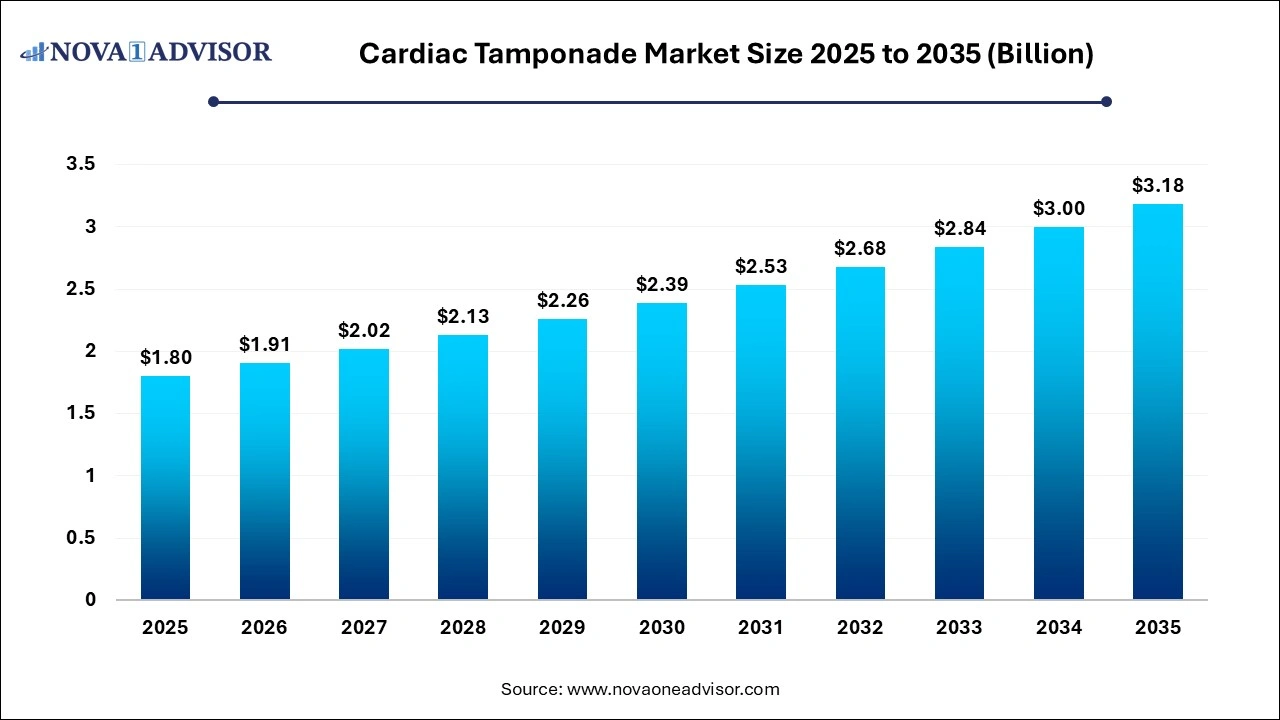
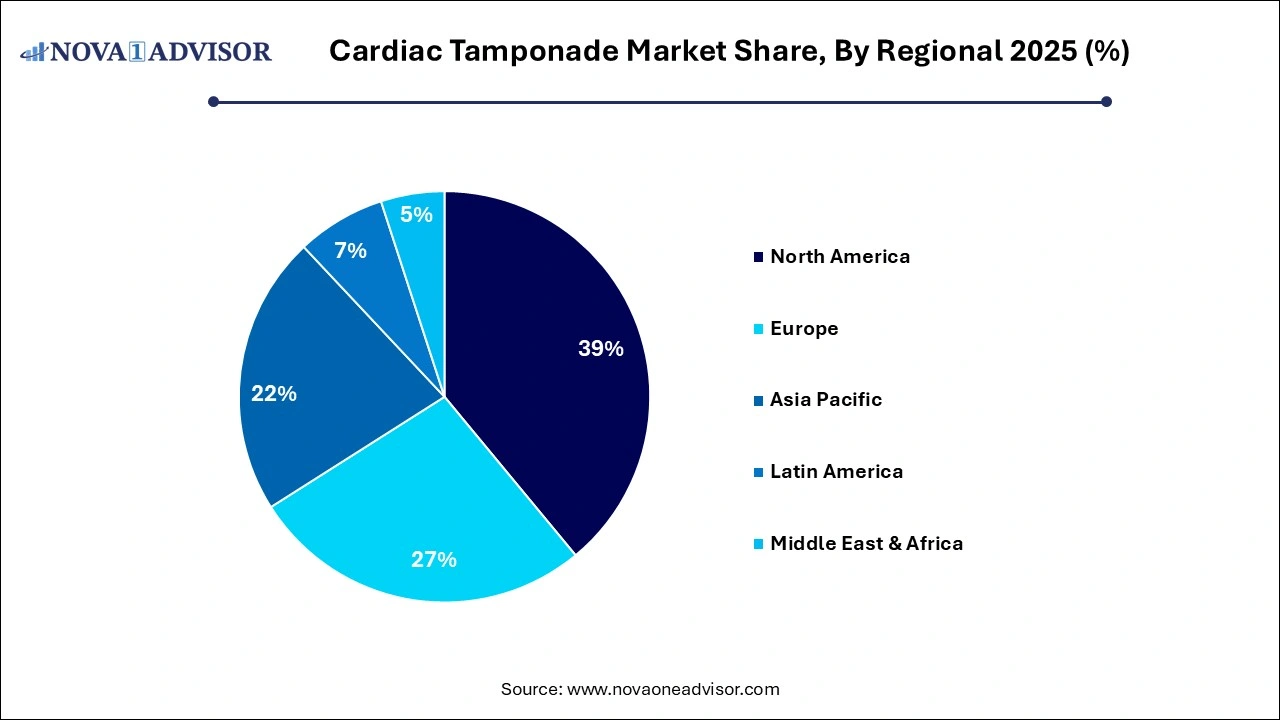
The global cardiac tamponade market size was valued at USD 1.80 billion in 2025 and is projected to grow from USD 1.91 billion in 2026 to USD 3.18 billion by 2035, at a CAGR of 5.86% from 2026 to 2035. North America dominated the market, accounting for a revenue share of 39.0% in 2025.
Key Takeaway
- By diagnosis, the computed tomography (CT) segment dominated the market with the largest share in 2025.
- By diagnosis, the magnetic resonance imaging (MRI) segment is expected to grow at the fastest CAGR over the forecast period.
- By treatment, the surgery segment dominated the market with the largest share in 2025.
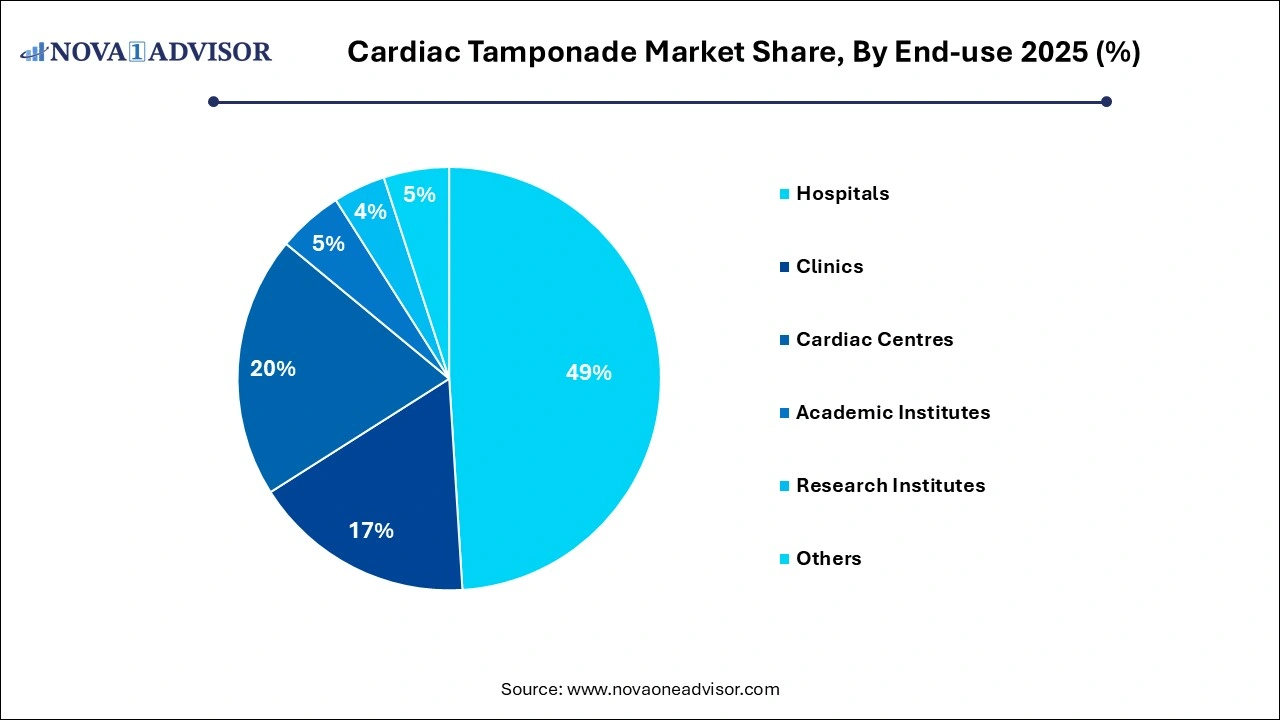
- By end use, the hospitals segment dominated the market with the largest share of 49.0% in 2025.
- By region, North America dominated the market with the largest share of 39.0% in 2025.
Market Overview
The global cardiac tamponade market is experiencing steady growth due to the rising prevalence of cardiovascular diseases, cancer, autoimmune disorders, and complications from invasive cardiac procedures. Increasing demand for rapid diagnosis has boosted the adoption of advanced imaging technologies such as echocardiography, CT, and MRI. Treatment advancements, including minimally invasive pericardiocentesis, surgical interventions, and targeted pharmaceutical therapies, are improving patient outcomes. Additionally, expanding cardiac care infrastructure, AI-powered diagnostic tools, portable ultrasound devices, and growing investments in specialized cardiovascular healthcare are expected to support the market's long-term growth.
Market Outlook
- Market Growth Overview: The global cardiac tamponade market is expected to grow significantly between 2025 and 2035, driven by the increasing awareness about early disease detection.
- Sustainability Trends: Sustainability trends involve minimizing the carbon footprint of medical procedures and reducing the single-use plastic waste through optimized device tray customization.
- Major Investors: Major investors in the market include Medtronic, Boston Scientific Corporation, Abbott Laboratories, Edwards Lifesciences, Teleflex, and Cook Medical.
How is AI Impacting The Global Cardiac Tamponade Market?
Artificial intelligence (AI) is revolutionizing the market by fueling the innovations in automated echocardiographic detection pipelines and ML risk-stratification models that forecast acute tamponade during high-risk cardiac operations such as tamponade during high-risk cardiac interventions. Furthermore, advanced analytics push clinicians to identify high-risk patients at an earlier stage, hence enhancing clinical decision-making and optimizing patient outcomes.
Beyond diagnostic imaging, AI is transforming patient monitoring and predictive healthcare. Machine learning models analyze electronic health records, laboratory findings, hemodynamic parameters, and procedural data to identify patients at elevated risk of developing cardiac tamponade following cardiac surgery, catheter-based interventions, trauma, or cancer-related pericardial disease. AI-driven clinical decision support systems also optimize emergency department triage by prioritizing high-risk patients based on symptoms, electrocardiographic findings, imaging results, and vital signs. Additionally, AI supports pharmaceutical research by accelerating biomarker discovery, optimizing clinical trial design, and identifying personalized treatment strategies for inflammatory, infectious, autoimmune, and malignant pericardial disorders. As hospitals continue investing in AI-enabled imaging platforms, portable ultrasound systems, and digital healthcare infrastructure, artificial intelligence is expected to significantly improve diagnostic efficiency, treatment precision, resource utilization, and patient outcomes across the global cardiac tamponade market.
Cardiac Tamponade Market Report Scope
| Report Coverage | Details |
| Market Size in 2026 | USD 1.91 Billion |
| Market Size by 2035 | USD 3.18 Billion |
| Growth Rate From 2026 to 2035 | CAGR of 5.86% |
| Base Year | 2025 |
| Forecast Period | 2026 to 2035 |
| Segments Covered | By Diagnosis, By Treatment, By End User, By Region |
| Market Analysis (Terms Used) | Value (USD Million/Billion) or (Volume/Units) |
| Regional Scope | North America; Europe; Asia Pacific; Central and South America; the Middle East and Africa |
| Key Companies Profiled | Boston Scientific Corporation, Medtronic, Inc., St. Jude Medical Inc., Hitachi, Ltd., Koninklijke Philips N.V., Siemens Healthcare Private Limited, Toshiba Medical Systems Corporation, General Electric Company, and others. |
Market Driver: Rising Burden of Cardiovascular Diseases and Cardiac Interventional Procedures
The increasing prevalence of cardiovascular diseases and the growing number of invasive cardiac procedures are major drivers of the cardiac tamponade market. Procedures such as angioplasty, TAVR, pacemaker implantation, and electrophysiology ablation have improved patient care but also carry a risk of complications, including cardiac tamponade. This has increased demand for advanced diagnostic imaging, emergency treatment equipment, and specialized cardiac care, supporting overall market growth.
Market Restraint: Limited Early Recognition in Resource-Constrained Healthcare Settings
Delayed diagnosis remains a key challenge, particularly in low- and middle-income countries where access to echocardiography, advanced imaging, and specialized cardiac care is limited. The non-specific symptoms of cardiac tamponade can delay timely intervention, while shortages of trained healthcare professionals and modern medical infrastructure further restrict effective diagnosis and treatment.
Market Opportunity: Expansion of Point-of-Care Cardiac Imaging and Portable Ultrasound Technologies
The growing adoption of portable ultrasound and point-of-care cardiac imaging presents a significant market opportunity. Handheld ultrasound devices enable rapid bedside diagnosis of cardiac tamponade in emergency departments, ambulances, rural healthcare facilities, and outpatient settings. Combined with AI-assisted imaging, these technologies improve diagnostic accuracy, expand access to emergency cardiac care, and are expected to drive future market growth.
Segmental Insights
By Diagnosis
Why did the computed tomography (CT) segment dominate the global cardiac tamponade market?
The computed tomography (CT) segment dominated the market with the largest share in 2025. The dominance of the segment can be attributed to its quick, precise, and non-invasive imaging capabilities along with its extensive availability. In addition, these imaging modalities monitor the dilation of the superior and inferior vena cava, as well as the reflux of contrast material into the hepatic and renal veins.
How did the magnetic resonance imaging (MRI) segment expected to hold the significantly growing global cardiac tamponade market in the coming years?
The magnetic resonance imaging (MRI) segment is expected to grow at the fastest CAGR over the forecast period. The growth of the segment can be credited to its capability to offer functional assessment and growing MRI adoption. Magnetic resonance imaging functions as a critical diagnostic modality, providing precise differentiation between true fluid collections and epicardial adipose tissue, mediastinal neoplasms, or loculated effusions.
By Treatment
Why did the surgery segment dominate the global cardiac tamponade market?
The surgery segment dominated the market with the largest share in 2025. The dominance of the segment can be linked to its efficiency in controlling severe pericardial effusions and innovations in surgical techniques. The use of real-time ultrasound guidance and specialized drainage catheters significantly reduces procedural complications and accelerates patient recovery times.
How did the drugs segment expected to hold the significantly growing global cardiac tamponade market in the coming years?
The drugs segment is expected to grow at the fastest CAGR over the study period. The growth of the segment can be driven by growing adoption of pharmacological interventions for mild cases and growth of pharmaceutical accessibility in major markets. Increased healthcare expenditures and broader accessibility to essential cardiovascular therapeutics in developing nations act as primary drivers for segment growth.
By End User
Why did the hospitals segment dominate the global cardiac tamponade market?
The hospitals segment dominated the market with the largest share in 2025. The dominance of the segment is owing to the availability of cutting-edge infrastructure and emergency care capabilities. Furthermore, the widespread implementation of point-of-care ultrasonography, real-time diagnostic imaging, and specialized catheterization laboratories significantly enhances procedural efficacy and patient outcomes.
How did the cardiac centers segment expected to hold the significantly growing global cardiac tamponade market in the coming years?
The cardiac centers segment is expected to grow at the fastest CAGR over the study period. The growth of the segment is due to the growing number of specialized facilities emphasizing cardiovascular care and increasing patient awareness. Advanced hemodynamic monitoring systems enhance the real-time evaluation of patient status during emergency drainage procedures.
By Regional
Why did the North American region account for the largest share in the global cardiac tamponade market?
North America dominated the market with the largest share in 2025. The dominance of the region can be attributed to the growing adoption of cutting-edge diagnostic and treatment technologies along with the robust presence of major market players in countries. In addition, the elevated local incidence of breast and lung malignancies has led to an increase in cases of malignant pericardial effusion, which needs a higher volume of therapeutic interventions.
U.S. Global Cardiac Tamponade Market Trends
The growth of the market in the country can be driven by the growing rates of cardiovascular disease and surge in minimally invasive pericardiocentesis procedures. The widespread integration of advanced technology, coupled with heavily resourced emergency and critical care networks, facilitates rapid diagnostic capabilities across hospitals in the United States.
Why did the Asia-Pacific region become the fastest-growing global cardiac tamponade market during the forecast period?
Asia Pacific is expected to grow at the fastest CAGR over the forecast period. The growth of the region can be credited to the superior hospital setups and use of new technology such as advanced CT scans. Furthermore, the growing implementation of cardiac biomarkers and diagnostic modalities within emergency care settings facilitates timely therapeutic intervention, leading to regional growth shortly.
China Global Cardiac Tamponade Market Trends
The market in the country is growing due to the growing number of complicated interventional and cardiovascular procedures and the surge in regional healthcare infrastructure. The national accreditation and systematic expansion of Chest Pain Centers (CPCs) across Chinese healthcare institutions have enhanced emergency triage, boosted diagnostic processing, and optimized acute surgical and drainage interventions.
Key Players in the Global Cardiac Tamponade Market
- Boston Scientific: specializes in minimally invasive medical technologies and is a primary developer of complete procedural kits used in emergency cardiac triage.
- Abbott: It is a diversified global healthcare giant that commands a dominant share of the structural heart and cardiac rhythm management spaces.
- Medtronic plc: Medtronic is the world's largest standalone medical device manufacturer, commanding a massive footprint across critical care and cardiovascular intervention.
Recent Developments
- In July 2025, Prime Healthcare announced that Saint Joseph Medical Center in Joliet has introduced Pulsed Field Ablation, offering a safe and advanced therapeutic option for patients with atrial fibrillation and related cardiac rhythm disorders.
Segments Covered in the Report
This report forecasts revenue growth at country levels and provides an analysis of the latest industry trends in each of the sub-segments from 2021 to 2035. For this study, Nova one advisor, Inc. has cardiac tamponade market.
By Diagnosis
- X-Ray
- Computed Tomography
- Magnetic Resonance Imaging
- Coronary Angiography
- Electrocardiogram
- Others
By Treatment
- Surgery
- Drugs
By End User
- Hospitals
- Clinics
- Cardiac Centres
- Academic Institutes
- Research Institutes
- Others
By Region
- North America
- Europe
- Asia Pacific
- Latin America
- Middle East & Africa
FAQ's

Proceed to Buy
Instant PDF delivery on confirmation

 Request Customization
 Download Sample

Get a Sample of this Report
Cardiac Tamponade Market