

Cataract Surgery Device Market Size, Share, and Trends 2026 to 2035
 Status Published
 Category Healthcare


Content
Cataract Surgery Device Market Size and Growth 2026 to 2035
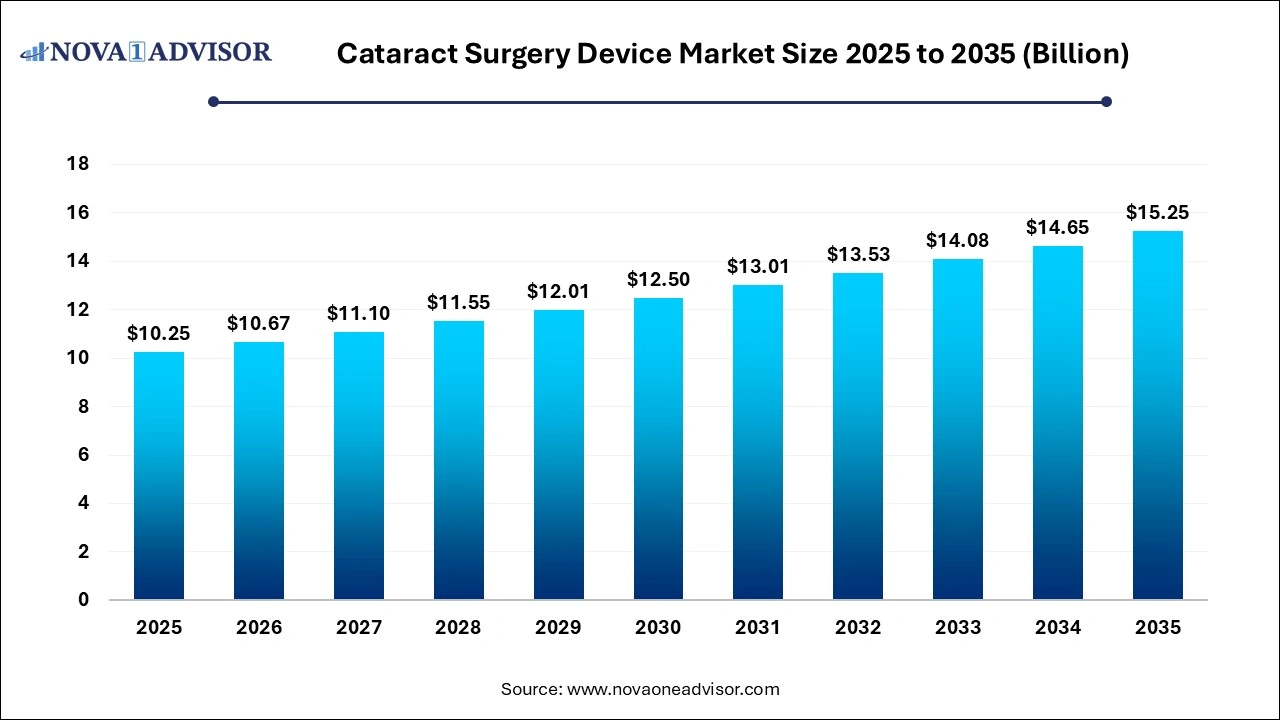
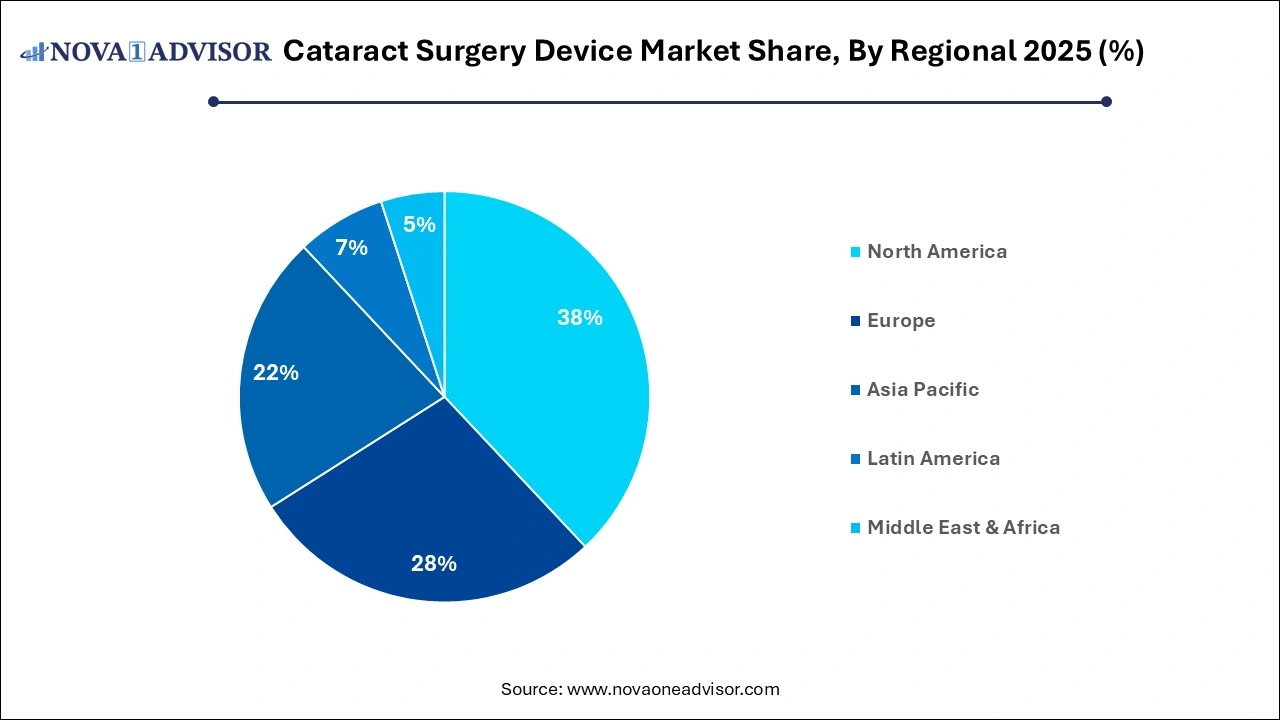
The global cataract surgery devices market size was valued at USD 10.25 billion in 2025 and is projected to grow from USD 10.67 billion in 2026 to USD 15.25 billion by 2035, at a CAGR of 4.05% from 2026 to 2035. North America dominated the market, accounting for a revenue share of 38.0% in 2025.
Key Takeaway
- By device type, the intraocular lens (IOL) segment dominated the market with the largest share in 2025.
- By device type, the femtosecond laser equipment segment is expected to grow at the fastest CAGR over the forecast period.
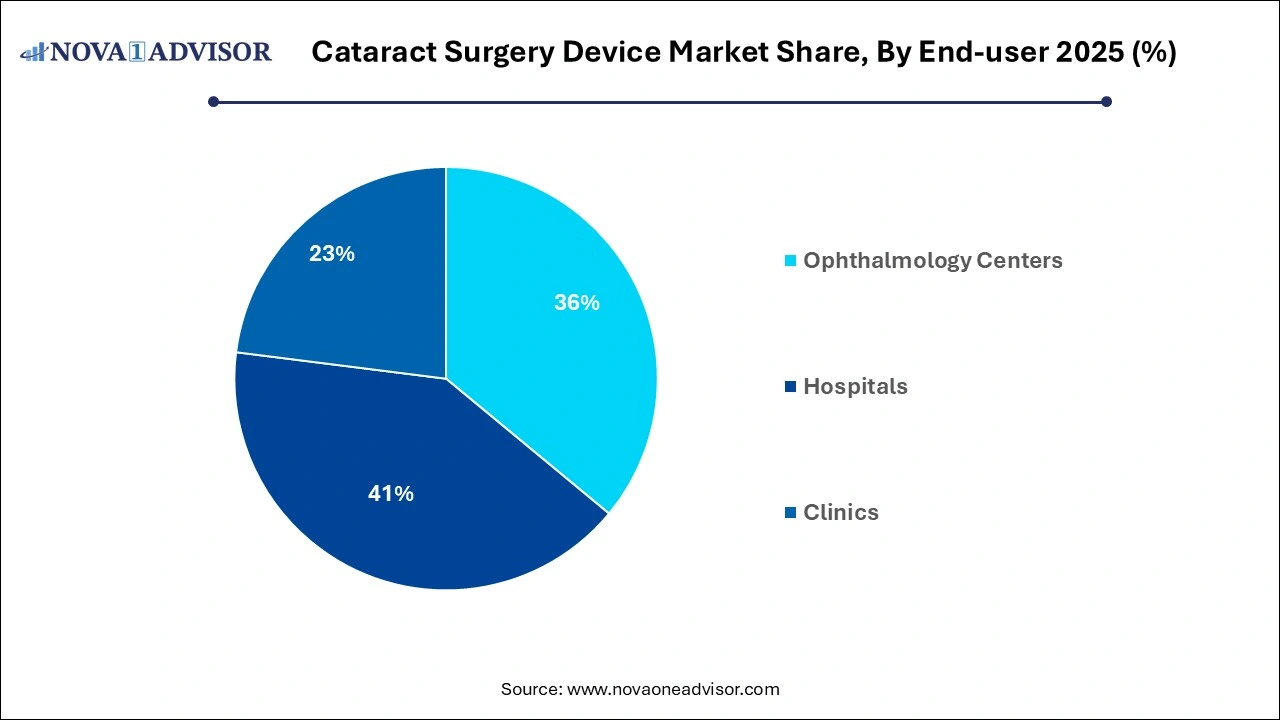
- By end user, the hospitals segment dominated the market with the largest share of 41.0% in 2025.
- By region, North America dominated the market with the largest share of 38.0% in 2025.
Market Overview
The global cataract surgery device market is witnessing steady growth, driven by the rising prevalence of cataracts, an aging population, and continuous advancements in ophthalmic surgical technologies. Cataract surgery remains the most effective treatment for restoring vision by replacing the clouded natural lens with an artificial intraocular lens (IOL). Innovations in phacoemulsification systems, femtosecond laser-assisted surgery, premium intraocular lenses, and advanced diagnostic imaging have significantly improved surgical precision, patient safety, and visual outcomes.
The growing elderly population and increasing incidence of diabetes and other age-related eye disorders are boosting the demand for cataract procedures worldwide. Governments and healthcare organizations are expanding access to vision restoration programs, while improving healthcare infrastructure and insurance coverage in emerging economies are making advanced cataract surgeries more accessible. Additionally, the availability of premium IOLs—including multifocal, toric, and extended depth-of-focus (EDOF) lenses—is increasing patient demand for greater spectacle independence after surgery.
Technological developments such as intelligent phaco systems, digital surgical planning, optical coherence tomography (OCT), AI-assisted diagnostics, and integrated ophthalmic platforms are further enhancing surgical efficiency and treatment accuracy. Growing investments in specialized eye care centers, medical tourism, and personalized surgical planning are also supporting market expansion. As innovation continues to advance, the cataract surgery device market is expected to evolve toward digitally connected, AI-enabled surgical ecosystems that deliver safer procedures, improved efficiency, and superior visual outcomes for patients worldwide.
Market Outlook
- Market Growth Overview: The global cataract surgery device market is expected to grow significantly between 2025 and 2035, driven by increasing incidence of cataracts and a surge in the geriatric population across the globe.
- Sustainability Trends: Sustainability trends involve minimizing medical waste and cutting greenhouse gas emissions.
- Major Investors: Major investors in the market include Alcon, Johnson & Johnson Vision, Carl Zeiss Meditec, and Bausch + Lomb.
How is AI Impacting The Global Cataract Surgery Device Market?
Artificial intelligence (AI) is revolutionizing the market by transitioning conventional mechanical procedures toward accurate and data-driven digital ecosystems. Furthermore, artificial intelligence uses high-resolution ocular imaging to construct precise digital replicas of a patient's eye, hence forecasting postoperative visual outcomes prior to surgical intervention.
AI is also enhancing intraocular lens (IOL) selection by analyzing key biometric parameters, including axial length, corneal curvature, and anterior chamber depth, to recommend the most suitable lens power for each patient. This personalized approach improves refractive accuracy, reduces postoperative vision correction needs, and increases patient satisfaction.
During surgery, AI-assisted systems provide real-time guidance by identifying anatomical landmarks, optimizing incision placement, monitoring phacoemulsification parameters, and ensuring accurate IOL alignment. Intelligent software also helps optimize ultrasound energy and fluidics, reducing tissue trauma and improving surgical efficiency. In addition, AI-supported robotic technologies are enhancing surgical precision by minimizing hand tremors and improving instrument control in complex procedures.
Following surgery, AI-enabled remote monitoring platforms track patient recovery, detect potential complications early, and support timely clinical intervention. Manufacturers are also leveraging AI to accelerate device development, optimize lens designs, analyze clinical trial data, and identify new product opportunities. As AI adoption continues to grow, cataract surgery is expected to become increasingly personalized, efficient, and digitally integrated, delivering better visual outcomes and improved patient care worldwide.
Cataract Surgery Device Market Report Scope
| Report Coverage | Details |
| Market Size in 2026 | USD 10.67 Billion |
| Market Size by 2035 | USD 15.25 Billion |
| Growth Rate From 2026 to 2035 | CAGR of 4.05% |
| Base Year | 2025 |
| Forecast Period | 2026 to 2035 |
| Segments Covered | By Device Type, By End Users, Region |
| Market Analysis (Terms Used) | Value (USD Million/Billion) or (Volume/Units) |
| Regional Scope | North America; Europe; Asia Pacific; Central and South America; the Middle East and Africa |
| Key Companies Profiled | Alcon, Inc. (U.S), Abbott Laboratories (U.S.), Carl Zeiss Meditech AG (Germany), Essilor International S.A. (France), Opcon Corporation (Japan), Allergan, Inc. (U.S.), Bausch & Lomb, Inc. (U.S.), NIDEK Co., Ltd. (Japan), STAAR Surgical Company (U.S.) and others |
Market Driver
Growing Aging Population and Rising Cataract Cases Drive Market Growth
The increasing global elderly population is the primary driver of the cataract surgery device market, as age-related cataracts remain one of the leading causes of vision impairment worldwide. Longer life expectancy and improved healthcare have expanded the number of patients requiring cataract surgery. In addition, the growing prevalence of diabetes and other metabolic disorders is contributing to earlier cataract development, increasing demand for advanced surgical procedures. Rising awareness of early treatment, along with investments in ophthalmic infrastructure and safer surgical technologies, is further accelerating market growth.
Market Restraint
High Cost of Advanced Cataract Surgery Technologies Limits Adoption
The high cost of premium cataract surgery technologies continues to restrain market expansion. Advanced devices such as femtosecond laser systems, AI-assisted imaging platforms, and premium intraocular lenses (IOLs), including trifocal, toric, and extended depth-of-focus (EDOF) lenses, significantly increase treatment costs. Limited reimbursement for premium procedures, particularly in developing countries, often leads patients to choose conventional cataract surgery. Additionally, high capital investment requirements for modern surgical equipment and the shortage of skilled ophthalmic surgeons in underserved regions further limit the adoption of advanced cataract surgery technologies.
Market Opportunity
Expanding Eye Care Infrastructure in Emerging Markets Creates Growth Opportunities
Emerging economies present significant long-term opportunities for the cataract surgery device market as governments invest in eye care infrastructure, blindness prevention programs, and specialized ophthalmology centers. Increasing healthcare spending, expanding health insurance coverage, and rising disposable incomes are enabling greater access to advanced cataract procedures across Asia-Pacific, Latin America, the Middle East, and Africa. The growth of private eye care hospitals, medical tourism, AI-assisted diagnostics, teleophthalmology, and digitally integrated surgical platforms is further supporting market expansion. Manufacturers offering innovative, cost-effective, and digitally connected cataract surgery solutions are well positioned to capitalize on these emerging opportunities.
Segmental Insights
By Device Type
Why did the intraocular lens (IOL) segment dominate the global cataract surgery device market?
The intraocular lens (IOL) segment dominated the market with the largest share in 2025. The dominance of the segment can be attributed to the constant rise in cataract surgeries across the globe and ongoing innovations in lens materials. In addition, the rapid advancement of multifocal, toric, and extended depth of focus (EDOF) intraocular lenses (IOLs) provides patients with enhanced visual acuity and functional performance across a wide spectrum of focal distances.
How did the femtosecond laser equipment segment expected to hold the significantly growing global cataract surgery device market in the coming years?
The femtosecond laser equipment segment is expected to grow at the fastest CAGR over the forecast period. The growth of the segment can be credited to the growing adoption of laser-assisted cataract surgery and the surge in need for minimally invasive procedures. Femtosecond laser technology optimizes critical procedural steps, including capsulotomy, corneal incision creation, and lens fragmentation, by delivering precise, microscopic reproducibility.
By End Users
Why did the hospitals segment dominate the global cataract surgery device market?
The hospitals segment dominated the market with the largest share in 2025. The dominance of the segment can be linked to the rapid surge in the elderly population and growing patient preference for detailed acute care settings. Furthermore, they provide comprehensive multispecialty support, rigorous infection control protocols, and intensive postoperative care management.
How did the ophthalmology centers segment expected to hold the significantly growing global cataract surgery device market in the coming years?
The ophthalmology centers segment is expected to grow at the fastest CAGR over the study period. The growth of the segment can be driven by the growing transition towards specialized eye care services and increasing preference for dedicated eye care facilities. Medical device manufacturers currently produce more compact and technologically sophisticated phacoemulsification and diagnostic systems, which can integrate into independent clinical environments.
By Regional
Why did the North American region account for the largest share in the global cataract surgery device market?
North America dominated the market with the largest share in 2025. The dominance of the region can be attributed to the growing adoption of premium intraocular lenses and high procedure volumes. In addition, there is a growing preference among both patients and surgeons for lifestyle-enhancing premium intraocular lenses, specifically toric and multifocal variants, designed to correct presbyopia and astigmatism.
U.S. Global Cataract Surgery Device Market Trends
The growth of the market in the country can be driven by growing adoption of innovative laser technologies and the presence of robust ambulatory surgery center (ASC) networks. Also, favorable public and private reimbursement frameworks reduce the significant foundational expenses associated with advanced ophthalmic technologies.
Why did the Asia-Pacific region become the fastest-growing global cataract surgery device market during the forecast period?
Asia Pacific is expected to grow at the fastest CAGR over the forecast period. The growth of the region can be credited to an extensive backlog of untreated cataracts and enhancing healthcare access across emerging economies such as China and India. Furthermore, growing disposable incomes and a surge in patient awareness are driving a significant shift toward premium, high-margin product categories, such as multifocal and toric intraocular lenses (IOLs).
China Global Cataract Surgery Device Market Trends
The market in the country is growing due to increasing disposable incomes and a surge in the aging population along with the government-supported blindness prevention programs. Moreover, local policy frameworks that incentivize domestic medical device manufacturing and facilitate technology transfer serve to reduce healthcare expenditures and enhance product availability.
Key Players in the Global Cataract Surgery Device Market
- Alcon Inc. (Switzerland): Alcon offers a massive portfolio including Centurion and Active Sentry phacoemulsification systems, the LenSx femtosecond laser, and advanced AcrySof/Clareon monofocal, toric, and multifocal IOL families.
- Johnson & Johnson Vision (USA): A top-tier competitor known for its advanced Tecnis lens platforms (such as the Tecnis Eyhance and Tecnis Odyssey extended depth and multifocal IOLs) alongside advanced surgical equipment like the Veritas Vision System.
- HOYA Corporation (Japan): A major global supplier holding a strong position in the Asia-Pacific and international markets with its Vivinex and iSert preloaded intraocular lens delivery systems.
Segments Covered in the Report
This report forecasts revenue growth at country levels and provides an analysis of the latest industry trends in each of the sub-segments from 2021 to 2035. For this study, Nova one advisor, Inc. has cataract surgery devices market.
By Device Type
- Intraocular lens (IOL)
- Ophthalmic Viscoelastic Device (OVD)
- Phacoemulsification Equipment
- Femtosecond Laser Equipment
By End Users
- Ophthalmology Centers
- Hospitals
- Clinics
By Region
- North America
- Europe
- Asia-Pacific
- Latin America
- Middle East & Africa (MEA)
FAQ's

Proceed to Buy
Instant PDF delivery on confirmation

Cataract Surgery device Market Size to Exceed USD 15.25 Billion by 2035
 Request Customization
 Download Sample

Get a Sample of this Report
Cataract Surgery Device Market