

Catheter Stabilization Device Market Size, Share, Forecast Report, 2026-2035
 Status Published
 Category Healthcare


Content
Catheter Stabilization Device Market Size and Growth 2026 to 2035
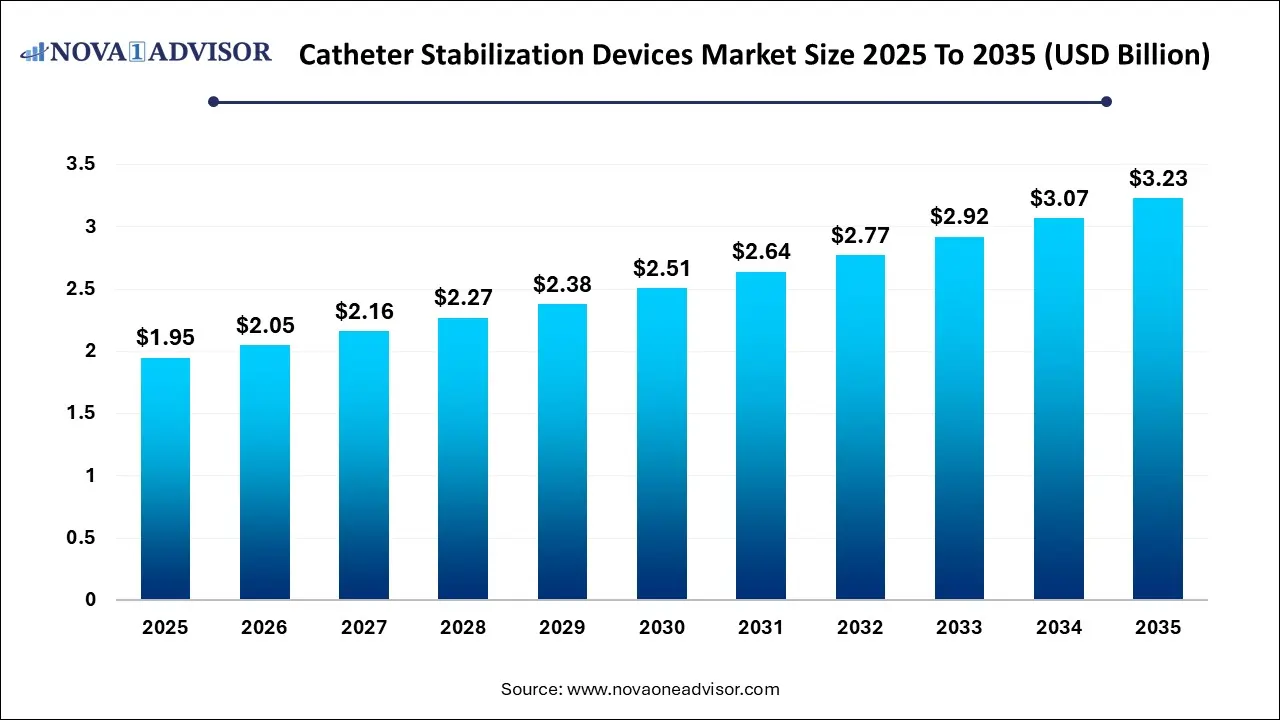
The global pharmacy automation market size was estimated at USD 1.95 billion in 2025 and is projected to hit around USD 3.23 billion by 2035, growing at a CAGR of 5.16% during the forecast period from 2026 to 2035.
Market Overview
The catheter stabilization device market represents a critical segment within the broader vascular access and patient safety industry. Catheter stabilization devices are specifically designed to secure catheters, drainage tubes, and medical lines to a patient’s body, thereby minimizing movement, accidental dislodgement, and complications such as infections or tissue trauma. These devices are increasingly being recognized as essential tools in clinical environments because even minor catheter migration can lead to severe medical complications, extended hospital stays, and increased healthcare costs.
The global healthcare landscape is evolving rapidly due to rising incidences of cardiovascular diseases, cancer, renal disorders, respiratory illnesses, and chronic infections that require long-term catheterization. As healthcare providers continue to prioritize patient safety and quality outcomes, catheter securement solutions have transitioned from optional accessories to mandatory components of standard catheter care protocols.
The growing number of surgical procedures worldwide has significantly increased the usage of central venous catheters, arterial catheters, epidural catheters, and drainage tubes. In parallel, healthcare systems are placing stronger emphasis on reducing hospital-acquired infections. Catheter-associated complications such as bloodstream infections, urinary tract infections, and thrombosis continue to burden healthcare institutions financially and clinically. Stabilization devices help reduce these risks by limiting catheter movement and maintaining insertion site integrity.
Another major factor influencing the market is the shift toward minimally invasive and outpatient procedures. Such procedures often rely on short- or medium-term catheter use, creating consistent demand for easy-to-apply securement systems. Healthcare professionals are increasingly adopting adhesive-based and sutureless stabilization devices due to their ability to reduce skin punctures and improve patient comfort.
In developing economies, healthcare infrastructure expansion and increasing awareness regarding infection prevention are creating favorable conditions for market growth. Government investments in hospital modernization, critical care facilities, and emergency healthcare services are further contributing to increased adoption.
The market is also witnessing innovation in materials science and design engineering. Manufacturers are developing breathable adhesives, antimicrobial securement systems, moisture-resistant dressings, and repositionable stabilization platforms that improve both clinical performance and patient satisfaction. Pediatric and geriatric patient populations are particularly benefiting from these advancements, as their skin is more vulnerable to injury from traditional fixation methods.
Despite the positive outlook, certain challenges such as pricing pressures, limited awareness in low-income healthcare settings, and the availability of low-cost alternatives continue to affect adoption in some regions. Nevertheless, the long-term outlook remains favorable as healthcare systems globally continue prioritizing infection prevention and patient safety initiatives.
Market Outlook
- Market Growth Overview: The global catheter stabilization device market is expected to grow significantly between 2025 and 2035, driven by the strong shift toward minimally invasive surgeries, infection prevention and patient safety, and growing adoption of home-based and self-care solutions.
- Sustainability Trends: Sustainability trends involve a shift toward eco-friendly materials, sustainable medical packaging, and longer wear times to reduce waste.
- Major Investors: Major investors in the market include Becton, Dickinson and Company, 3M Company, B. Braun SE, Baxter International, Cardinal Health, and ConvaTec Group.
How is AI Transforming the Catheter Stabilization Device Market
Artificial intelligence is gradually transforming the catheter stabilization device market by enhancing patient monitoring, predictive healthcare analytics, and catheter management workflows. Although catheter securement devices are primarily physical medical products, AI integration is influencing the broader ecosystem in which these devices are utilized.
AI-powered hospital management systems are helping clinicians identify patients at high risk of catheter-related complications. Predictive analytics algorithms can analyze patient history, catheter dwell time, mobility patterns, and infection indicators to recommend timely catheter replacement or repositioning. This reduces the probability of accidental dislodgement and catheter-associated infections.
Smart healthcare technologies are also enabling real-time catheter monitoring. Some hospitals are integrating AI-supported wearable sensors and imaging systems that can detect abnormal catheter movement, dressing loosening, or fluid leakage. Such systems can automatically alert healthcare professionals before complications become severe.
Machine learning is also improving infection prevention strategies. AI-based systems can process large datasets from intensive care units and identify patterns associated with bloodstream infections. Hospitals can then optimize catheter stabilization practices based on predictive recommendations. This is especially important in critical care settings where catheter-related complications can significantly increase mortality risks.
AI is additionally supporting product development and manufacturing optimization. Medical device manufacturers are using AI-driven simulations to evaluate adhesive durability, skin compatibility, and device ergonomics before commercialization. This accelerates innovation cycles and improves product reliability.
Another emerging application involves robotic-assisted surgeries and automated catheter placement technologies. As precision medicine and robotic interventions expand, advanced stabilization solutions compatible with AI-guided procedures are becoming increasingly important. For instance, AI-assisted navigation systems used in cardiovascular interventions require highly stable catheter placements to maintain procedural accuracy.
In home healthcare settings, AI-enabled remote monitoring systems are helping caregivers supervise patients with long-term catheter use. These technologies can notify healthcare providers if catheter stabilization integrity deteriorates, reducing emergency hospital visits and improving continuity of care.
Overall, AI is not replacing catheter stabilization devices directly but is significantly enhancing their effectiveness within modern healthcare delivery systems.
Catheter Stabilization Device Market Report Scope
| Report Coverage | Details |
| Market Size in 2026 | USD 2.05 Billion |
| Market Size by 2035 | USD 3.23 Billion |
| Growth Rate From 2026 to 2035 | CAGR of 5.16% |
| Base Year | 2025 |
| Forecast Period | 2026 to 2035 |
| Segments Covered | By Product Type,By Application, By End-User, By Region |
| Market Analysis (Terms Used) | Value (USD Million/Billion) or (Volume/Units) |
| Regional Scope | North America; Europe; Asia Pacific; Central and South America; the Middle East and Africa |
| Key Companies Profiled | 3M Company, B. Braun Melsungen Ag, Baxter International, Inc., C. R. Bard, Inc., Centurion Medical Products, Convatec, Inc M.C. Johnson Company, Inc, Medtronic PLC, Merit Medical Systems, Inc, Smiths Group PLC, TIDI Products, LLC and others |
Segmental Insights
By Product
How did the arterial securement devices segment dominate the Global Catheter Stabilization Device market?
The arterial securement devices segment is driven by the rising global incidence of cardiovascular disease, significantly escalating catheterization volumes across hospitals, intensive care units, and emergency departments. The development of advanced securement adhesives engineered with superior bonding strength and integrated antimicrobial properties.
How did the CVC securement devices segment expected to hold the fastest-growing Global Catheter Stabilization Device market in the coming years?
The CVC securement devices segment is driven by the rising global prevalence of cardiovascular diseases and complex oncology treatments; the market continues to see a sustained, high-volume demand for robust central line securement frameworks. CVCs are vital for critically ill patients requiring long-term treatments, such as intensive care, chemotherapy, and extended IV medication.
By End Use
How did the hospitals segment dominate the Global Catheter Stabilization Device market?
The hospitals segment is driven by the widespread adoption of premium stabilization technologies to mitigate the severe financial and medical risks of hospital-acquired infections, such as CAUTIs and CLABSIs. The modern medical centres leverage their advanced clinical infrastructure, specialized staff, and immense centralized purchasing power to seamlessly staff, and immense centralized purchasing power to seamlessly procure and integrate next-generation antimicrobial securement devices.
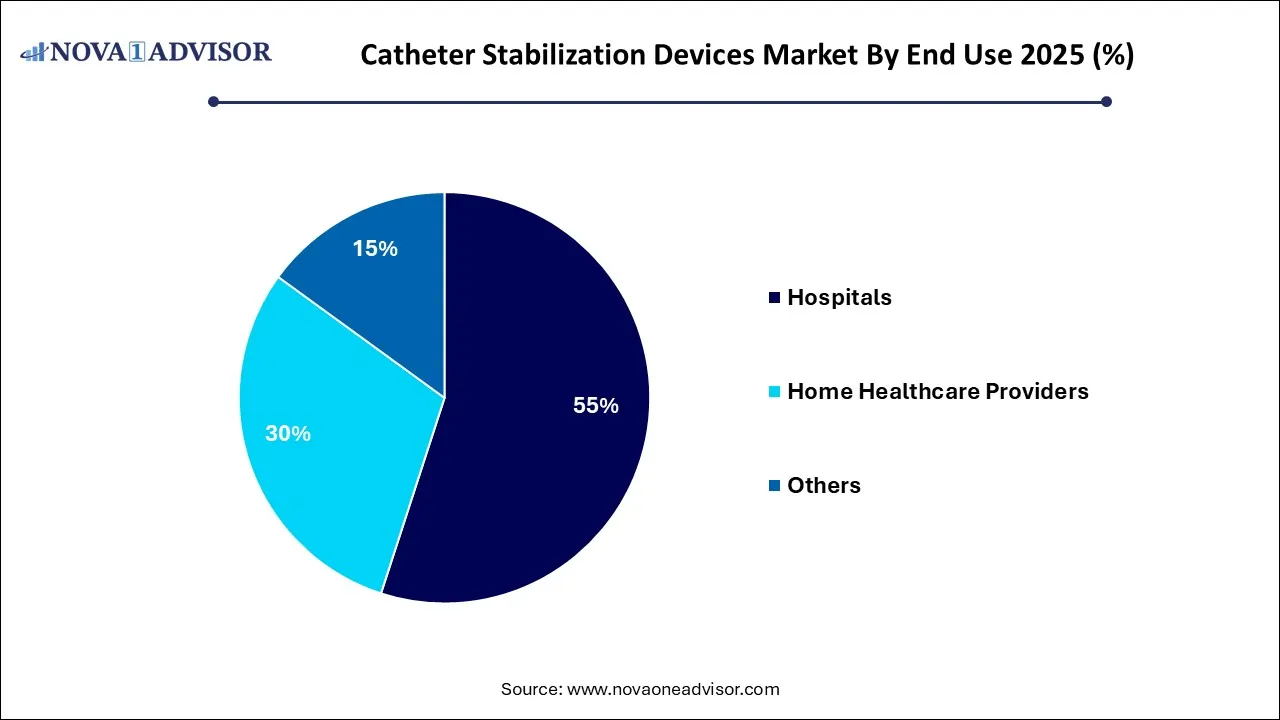
How did the home healthcare segment expected to hold the fastest-growing Global Catheter Stabilization Device market in the coming years?
The home healthcare segment is driven by the accelerating shift toward home-based management of chronic conditions, such as multiple sclerosis and urological disorders, which is driving extensive patient utilization of out-of-hospital catheter care. To support this decentralized demographic, there is a high clinical demand for user-friendly, skin-friendly adhesive securement devices that empower patients and home caregivers to prevent complex catheter-related infections without professional medical supervision.
By Regional
How did the North America region account for the largest share in the Global Catheter Stabilization Device market?
North America is driven by the region's advanced healthcare infrastructure and high spending power, fostering the rapid, widespread adoption of innovative, latex-free, and patient-comfortable medical designs. Backed by favourable government and private insurance reimbursement frameworks alongside a dense concentration of leading global manufacturers, these stabilization devices have become a standardized component of routine clinical workflows.
U.S. Global Catheter Stabilization Device Market Trends
The U.S. shift from traditional suturing and taping toward engineered suture-less stabilization devices designed to eliminate needle-stick injuries and accidental dislodgement risks. The rapid expansion of home-based and outpatient care, which fuels a high-volume demand for intuitive, patient care, which fuels a high-volume demand for intuitive, patient-friendly securement technologies.
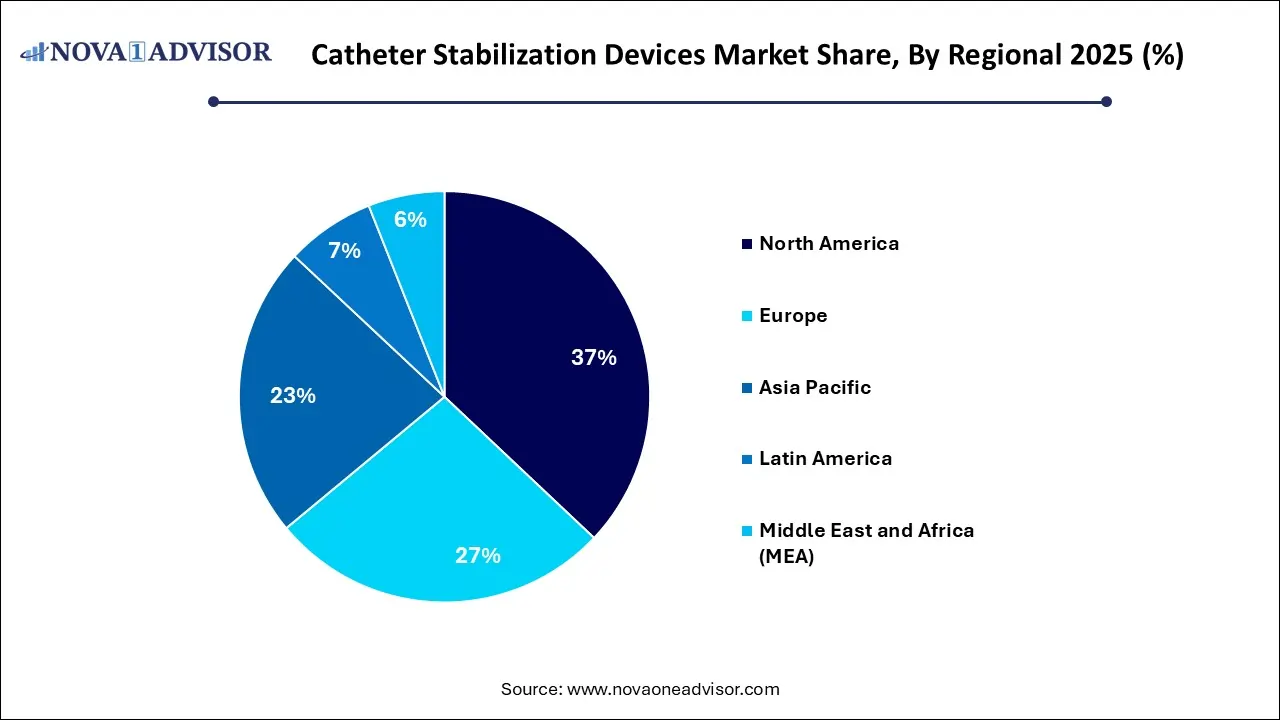
How did the Asia-Pacific region become the fastest-growing Global Catheter Stabilization Device Market during the forecast period?
Asia Pacific’s rapid expansion of healthcare infrastructure across the region has significantly upgraded hospital capabilities and tertiary care networks to accommodate higher procedural volumes. The region continues to experience an unprecedented surge in surgical and diagnostic procedure volumes that depend heavily on robust securement frameworks.
China Global Catheter Stabilization Device Market Trends
China’s intense regulatory focus on hospital-acquired infections is prompting medical facilities to extensively adopt antimicrobial-coated devices to satisfy strict patient safety protocols. The market is undergoing a structural shift as domestic Chinese medical device manufacturers invest heavily in producing high-quality, cost-effective alternatives.
How did Europe Hold A Notable share in the Global Catheter Stabilization Device Market?
Europe’s rising chronic cardiovascular, urological, and renal disorders that necessitate frequent and continuous clinical catheterization. The region’s advanced healthcare infrastructure and robust funding mechanisms ensure that elite medical supplies remain fully accessible across both hospital and home care settings.
Germany Global Catheter Stabilization Device Market Trends
Germany’s intensive clinical focus on eliminating CAUTIs and catheter-related bloodstream infections is rapidly driving European healthcare protocols away from traditional medical tape toward specialized securement devices. The shift is toward kit-based procurement, where hospitals purchase bundled procedural packages containing stabilization devices, skin preparations, and compatible dressings for optimal workflow efficiency.
Key Players in the Global Catheter Stabilization Device Market
- 3M Company
3M to the market by integrating advanced, skin-friendly materials with proprietary adhesives, such as in its Tegaderm line of securement dressings. These innovations improve product functionality by securely anchoring catheters for extended periods while preventing catheter-associated infections.
- B. Braun Melsungen AG
B. Braun advances clinical practices through holistic patient care solutions, offering ergonomic catheter stabilization technologies designed to minimize dislodgement and skin irritation.
- Baxter International, Inc.
Baxter focuses on patient-centric stabilization devices that enhance safety and ease of use in critical and long-term care environments.
Segments Covered in the Report
This report forecasts revenue growth at country levels and provides an analysis of the latest industry trends in each of the sub-segments from 2021 to 2035. For this study, Nova one advisor, Inc. has Catheter Stabilization Device Market.
By Product Type
- Arterial Securement Devices
- Central Venous Catheter Securement Devices
- Peripheral Securement Devices
- Chest Drainage Tube Securement Devices
- Abdominal Drainage Tubes Securement Devices
- Epidural Securement Devices
- Other Devices
By Application
- Cardiovascular Procedures
- Radiology
- General Surgery
- Urological Procedures
- Respiratory Procedures
- Gastric and Oropharyngeal Procedures
- Others
By End-User
- Hospitals & Clinics
- Home Healthcare Providers
- Diagnostic Centers
By Region
- North America
- Europe
- Asia Pacific
- Latin America
- Middle East and Africa (MEA)

Proceed to Buy
Instant PDF delivery on confirmation

Catheter Stabilization Device Market Size to Hit USD xx Billion by 2035
 Request Customization
 Download Sample

Get a Sample of this Report
Catheter Stabilization Device Market