

Centesis Catheters Market Size, Share, Forecast Report, 2026-2035
 Status Published
 Category Healthcare


Content
Centesis Catheters Market Size, Growth and Trends 2026 to 2035
The global centesis catheters market size was reached at USD 633.00 million in 2026 and is expected to exceed around USD 1,233.62 million by 2035, with a CAGR of 6.9%.
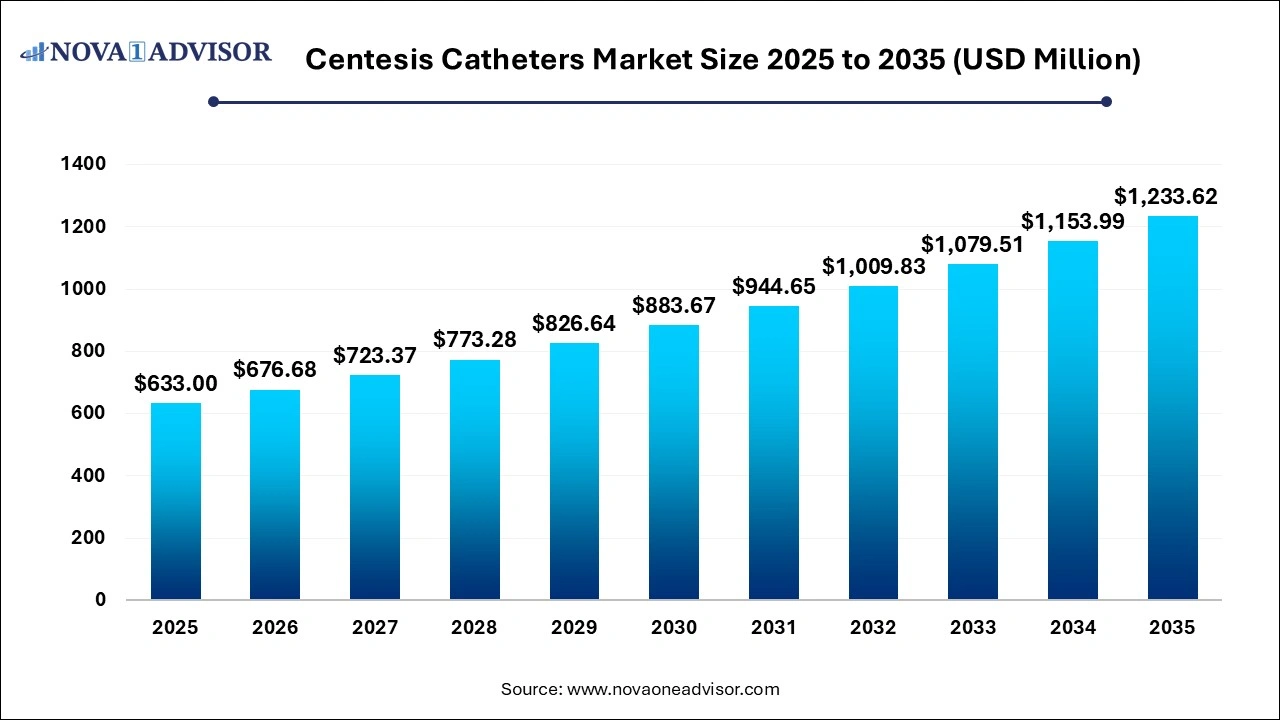
Centesis Catheters Market Outlook
- Market Growth Overview: The centesis catheters market is expected to grow significantly between 2026 and 2035, driven by the rising chronic disease prevalence, growing geriatric population, and shift towards minimally invasive procedure adoption.
- Sustainability Trends: Sustainability trends involve eco-friendly material adoption, waste management, and regulatory alignment.
- Major Investors: Major investors in the market include AngioDynamics, Inc., Teleflex Incorporated, Merit Medical Systems, Inc., and BD.
Report Scope of the Centesis Catheters Market
| Report Coverage | Details |
| Market Size in 2025 | USD 676.68 Million |
| Revenue Forecast by 2035 | USD 1,233.62 Million |
| Growth rate from 2026 to 2035 | CAGR of 6.9% |
| Base Year | 2025 |
| Forecast Period | 2026 to 2035 |
| Regions | North America, Europe, Asia Pacific, Latin America, Middle East & Africa |
| Companies Covered | ARGON MEDICAL, Avanos Medical Devices, Axiom Medical, Inc. |
Centesis Catheters Market Segment Insights
By Type Insights
How did the Small-bore Centesis Catheters Segment Dominate the Centesis Catheters Market?
The small-bore centesis catheters segment is driven by the shift toward minimally invasive interventions that prioritise patient comfort and safety. Their leadership is cemented by clinical evidence proving they are as effective as large-bore alternatives while significantly reducing complications like air entry or tissue trauma. Enhanced by Echo-Enhanced Needles for precise ultrasound-guided placement, these devices have become the gold standard for routine thoracentesis and paracentesis.
By Procedure Insights
How did the Paracentesis Segment Account for the Largest Share in the Centesis Catheters Market?
The paracentesis segment is driven by the high global prevalence of liver cirrhosis, hepatitis, and abdominal cancers. Its leadership is sustained by the critical need to manage ascites, a common complication where fluid accumulation causes severe pain and respiratory distress. By utilizing specialized, Pain-Reducing Drainage Catheters, clinicians can perform both diagnostic sampling and therapeutic relief with high safety margins. The use of paracentesis kits as a non-negotiable standard of care for chronic liver disease ensures consistent demand for high-quality paracentesis Kits.
How did the Thoracentesis Segment Expect to hold the fastest-growing Centesis Catheters Market in the Coming Years?
The thoracentesis segment is driven by the shift toward ultrasound-guided thoracentesis and the adoption of low-profile, anti-kink catheters like the Merit Medical Resolve Mini™, which enhance patient comfort in outpatient settings. As healthcare systems in the Asia-Pacific region modernize, the demand for self-sealing, minimally invasive thoracic catheters is reaching record levels to manage chronic respiratory conditions.
By Application Insights
How did the Diagnostic Application segment account for the largest share in the Centesis Catheters Market?
The diagnostic application segment is driven by the universal adoption of Small-Bore Catheters, which offer superior safety and reduced risk during high-volume, repetitive sampling procedures. The integration of real-time ultrasound imaging has further enhanced procedural accuracy, allowing clinicians to perform precise fluid extractions even in complex cystic lesions. The primary gateway for early disease intervention, ensuring that diagnostic kits remain the highest-volume product for Becton, Dickinson and Company (BD) and other market leaders.
How did the Therapeutic Application segment expect to hold the fastest-growing Centesis Catheters market in the coming years?
The therapeutic application segment is driven by the rise in Palliative Care and the adoption of advanced, Minimally Invasive One-Step Catheters like the Merit Medical ReSolve Mini™, which maximize patient comfort during long-term fluid management. As healthcare shifts toward Image-Guided Interventions, these specialized tools are becoming essential for alleviating symptoms of refractory ascites and pleural effusions in outpatient settings. The transformation of complex drainage procedures into streamlined, routine therapies that significantly enhance the quality of life for chronically ill patients.
By End-User Insights
How did the Hospitals Segment Account for the Largest Share in the Centesis Catheters Market?
The hospitals segment is driven by high patient volumes suffering from Gastrointestinal Malignancies and liver cirrhosis, alongside centralized purchasing departments that manage specialized inventories for Becton, Dickinson and Company (BD) and other major suppliers. By providing the specialized medical staff and advanced imaging infrastructure necessary for complex cases, hospitals maintain their status as the primary setting for both diagnostic and palliative fluid management.
How did the ambulatory surgical centres segment expect to hold the fastest-growing Centesis Catheters market in the coming years?
The ambulatory surgical centres segment is emerging as a favourable medicare reimbursement policies and the adoption of one-step valved catheters that allow for safer, streamlined procedures outside of traditional hospitals. As patients increasingly prioritise convenience and lower infection risks, the volume of outpatient thoracentesis and paracentesis is surging across a growing network of certified facilities. The transformation of complex drainage into a routine, accessible service that reduces the financial and operational burden on the broader healthcare system.
Key Players in the Centesis Catheters Market
- ARGON MEDICAL: Argon Medical Devices contributes to the centesis catheters market by developing and manufacturing specialized, image-guided drainage products, including their SKATER™ Safety Centesis Catheters and FIX fixation devices.
- Avanos Medical Devices: Avanos Medical contributes to the market through its recognized, high-quality, and specialized medical devices designed to facilitate fluid drainage in both thoracic and abdominal procedures.
- Axiom Medical, Inc.: Axiom Medical, Inc. contributes to the market as a key participant, often specializing in the development of specialized, high-performance catheters for various clinical applications, including drainage.
By Type
- Small-bore Centesis Catheters
- Large-bore Centesis Catheters
By Procedure
- Paracentesis
- Thoracentesis
- Arthrocentesis
- Amniocentesis
- Other procedures
By Application
- Diagnostic Applications
- Therapeutic Applications
- Palliative Care Applications
By End User
- Hospitals
- Ambulatory Surgical Centers
- Other End Users
By Region
- North America
- US
- Canada
- Europe
- Germany
- UK
- France
- Italy
- Spain
- Rest of Europe (RoE)
- Asia Pacific
- Japan
- China
- India
- Australia
- South Korea
- Rest of the Asia Pacific (RoAPAC)
- Latin America
- Brazil
- Mexico
- Rest of Latin America (Rest of LATAM)
- Middle East and Africa

Proceed to Buy
Instant PDF delivery on confirmation

Centesis Catheters Market Size to Exceed USD 1,233.62 Mn by 2035
 Request Customization
 Download Sample

Get a Sample of this Report
Centesis Catheters Market