

COPD Drug Delivery Devices Market Size, Share, and Trends 2026 to 2035
 Status Published
 Category Healthcare


Content
COPD Drug Delivery Devices Market Size and Growth 2026 to 2035
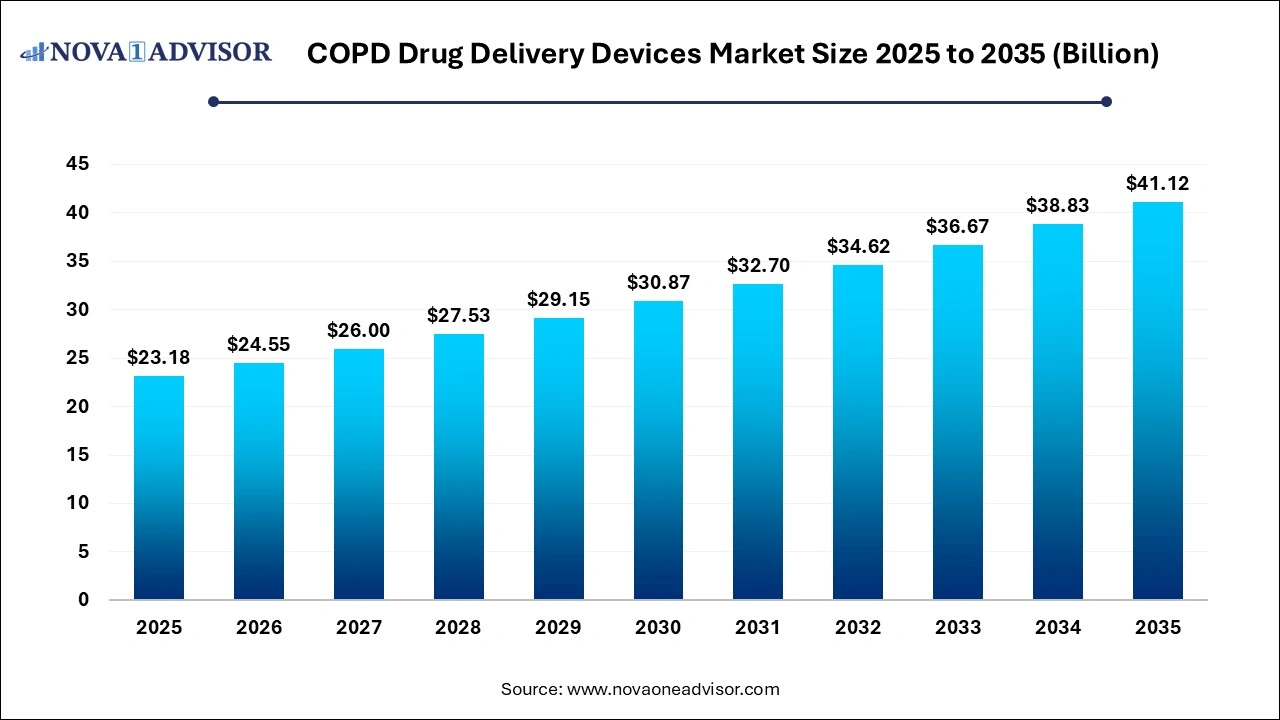
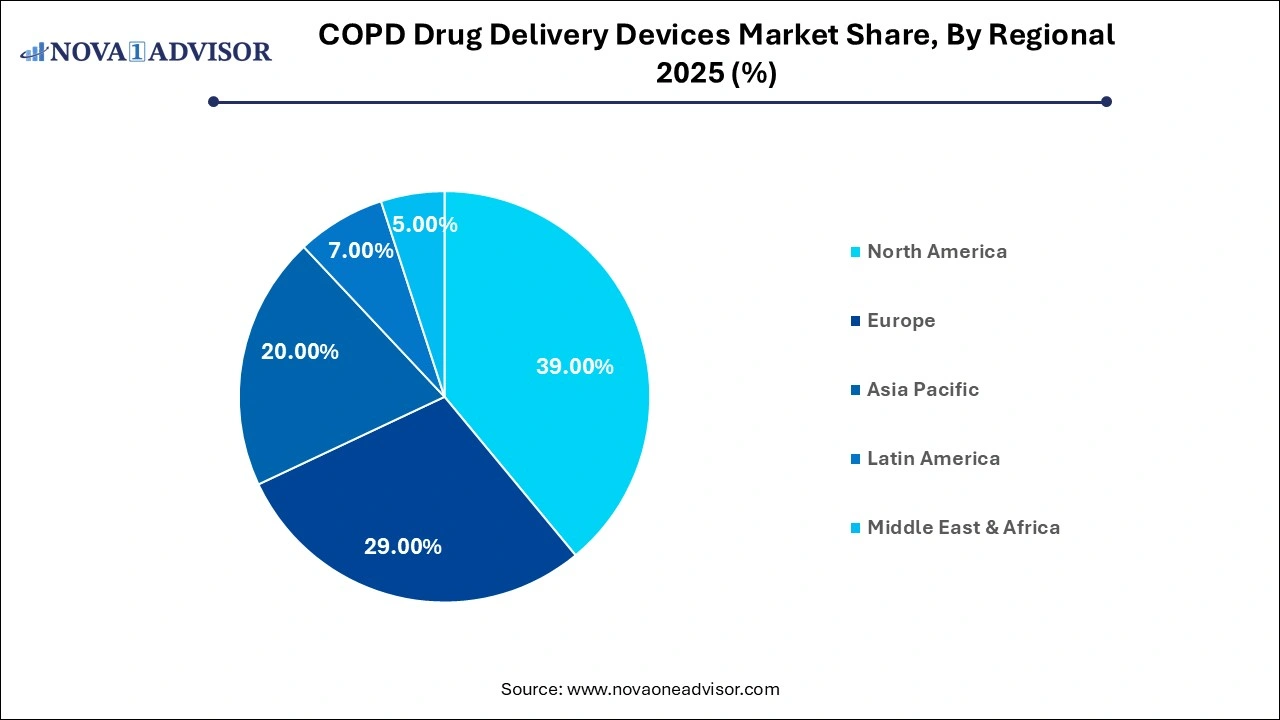
The global COPD drug delivery devices market size was valued at USD 23.18 billion in 2025 and is projected to grow from USD 24.55 billion in 2026 to USD 41.12 billion by 2035, at a CAGR of 5.9% from 2026 to 2035. North America dominated the market, accounting for a revenue share of 39.0% in 2025.
Key Takeaway
- By product type, the metered dose inhalers segment dominated the market with the largest share in 2025.
- By product type, the nebulizers segment is expected to grow at the fastest CAGR over the forecast period.
- By application, the hospital pharmacies segment dominated the market with the largest share in 2025.
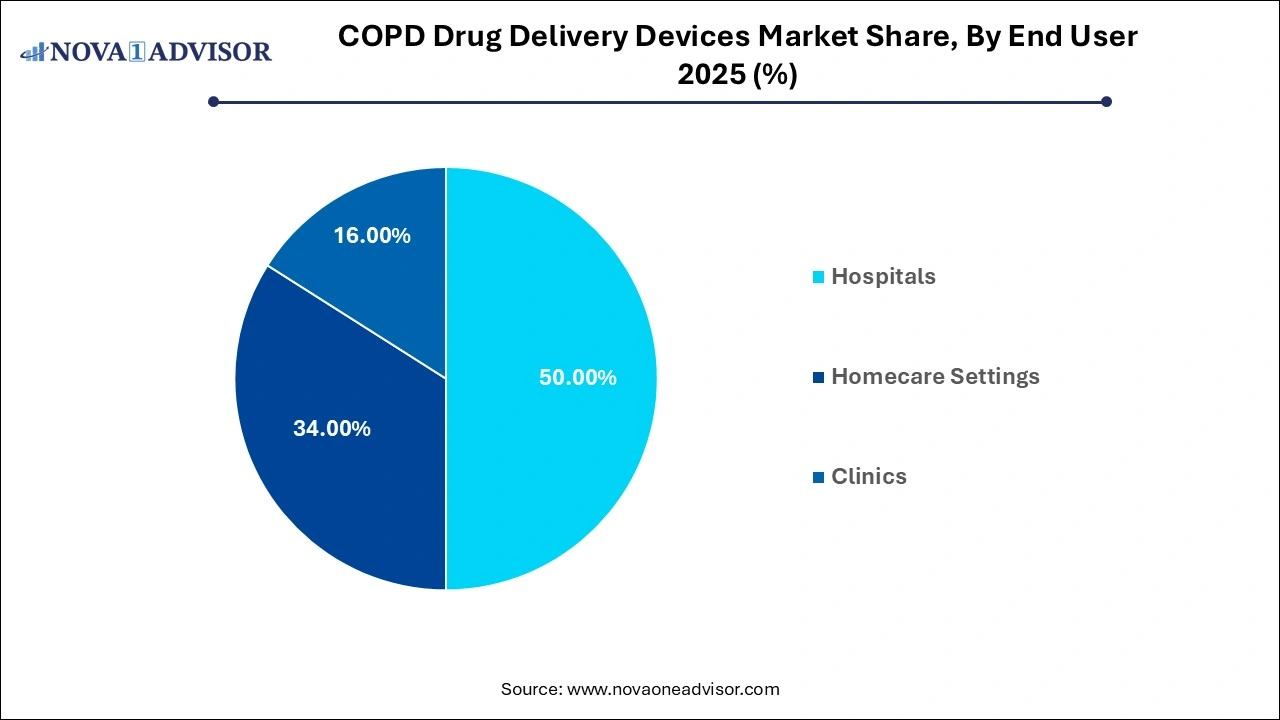
- By end user, the hospitals segment dominated the market with the largest share of 50.0% in 2025.
- By region, North America dominated the market with the largest share of 39.0% in 2025.
Market Overview
The global COPD drug delivery devices market includes metered dose inhalers (MDIs), dry powder inhalers (DPIs), nebulizers, and connected delivery technologies used to administer respiratory medicines. Device selection is increasingly important because factors such as age, inspiratory strength, coordination, dexterity, and cognitive ability can affect correct inhaler use.
The market is shifting toward patient-centric and connected solutions that combine drug delivery with dose counters, digital applications, adherence monitoring, and technique support. Growing efforts to reduce COPD exacerbations are also increasing demand for devices that improve medication adherence and ease of use.
Market Outlook
- Market Growth Overview: The global COPD drug delivery devices market is expected to grow significantly between 2025 and 2035, driven by the increasing incidence of COPD across the globe.
- Sustainability Trends: Sustainability trends involve growing use of sustainable bioplastics and emphasis on replacing high-emission propellants.
- Major Investors: Major investors in the market include GlaxoSmithKline, AstraZeneca, and Boehringer Ingelheim.
How is AI Impacting The Global COPD Drug Delivery Devices Market?
Artificial intelligence (AI) is reshaping the market by propelling a major transition towards smart, connected, and predictive remote monitoring ecosystems. Furthermore, machine learning models analyze environmental stimuli and daily physiological indicators to forecast potential episodes several weeks in advance.
AI may also help clinicians select delivery devices based on patient characteristics and historical usage patterns. For manufacturers, this creates opportunities to move toward device-plus-data business models incorporating digital applications, remote monitoring, analytics, and patient support.
At the same time, privacy, cybersecurity, interoperability, regulatory compliance, and clinical validation remain important considerations. Overall, AI is expected to strengthen COPD management by making drug delivery more personalized, measurable, and adherence-focused.
COPD Drug Delivery Devices Market Report Scope
| Report Coverage | Details |
| Market Size in 2026 | USD 24.55 Billion |
| Market Size by 2035 | USD 41.12 Billion |
| Growth Rate From 2026 to 2035 | CAGR of 5.9% |
| Base Year | 2025 |
| Forecast Period | 2026 to 2035 |
| Segments Covered | By Product Type, By Application, By End-User, By Region |
| Market Analysis (Terms Used) | Value (USD Million/Billion) or (Volume/Units) |
| Regional Scope | North America; Europe; Asia Pacific; Central and South America; the Middle East and Africa |
| Key Companies Profiled | Novartis AG, Teva Pharmaceutical Industries, Merck & Co., Inc., Cipla Inc., Sunovion Pharmaceuticals, Inc, Koninklijke Philips N.V., PARI GmbH, and Omron Corporation. |
Market Driver: Growing COPD Burden and Need for Long-Term Inhaled Therapy
The growing population living with COPD is driving sustained demand for inhaled drug delivery devices. Because COPD requires long-term disease management, patients may use maintenance and rescue inhalers for extended periods, creating recurring demand for MDIs, DPIs, and nebulizers.
Smoking remains a major risk factor, while air pollution, occupational exposure, respiratory infections, and other factors contribute to the broader disease burden. An aging population and the high healthcare costs associated with COPD exacerbations are further increasing demand for reliable, easy-to-use delivery systems and better medication adherence.
Market Restraint: Inhaler-Use Errors and Device Complexity
Incorrect inhaler technique remains a significant barrier to effective treatment. MDIs require coordination between actuation and inhalation, while DPIs depend on adequate inspiratory effort. Nebulizers can require longer administration times and regular cleaning.
These challenges can be particularly relevant for older patients or those with limited dexterity, reduced vision, cognitive difficulties, or impaired lung function. Multiple devices with different operating procedures can also increase confusion and affect adherence, creating a need for simpler and more intuitive designs.
Market Opportunity: Connected and Personalized Drug Delivery
Connected inhalers and smart drug delivery systems offer significant growth opportunities by combining medication administration with digital monitoring, adherence tracking, AI analytics, and remote patient support.
Connected devices can provide healthcare professionals with insights into medication-use patterns and potentially identify adherence or technique problems earlier. Personalized device selection based on inspiratory capacity and physical abilities can further improve usability.
Sustainability is another opportunity, with manufacturers exploring lower-global-warming-potential propellants and alternative delivery technologies. Integrated ecosystems combining inhalers, mobile applications, telehealth, pharmacy services, and patient education could create new recurring digital-care opportunities beyond traditional device sales.
Segmental Insights
By Product Type
Why did the metered dose inhalers segment dominate the global COPD drug delivery devices market?
The metered dose inhalers segment dominated the market with the largest share in 2025. The dominance of the segment can be attributed to the increasing incidence of chronic respiratory diseases and the surge in the global geriatric population. In addition, metered-dose inhalers (MDIs) sustain lower costs and broader generic availability than advanced therapeutic options. These factors ensure high prescription rates and widespread patient accessibility.
How did the nebulizers segment expected to hold the significantly growing global COPD drug delivery devices market in the coming years?
The nebulizers segment is expected to grow at the fastest CAGR over the forecast period. The growth of the segment can be credited to the increasing incidence of chronic obstructive pulmonary disease and technical advancements such as portable vibrating mesh nebulizers. Also, growing levels of urban air pollution and tobacco consumption significantly contribute to the increased incidence of pulmonary impairment and chronic respiratory morbidity.
By Application
Why did the hospital pharmacies segment dominate the global COPD drug delivery devices market?
The hospital pharmacies segment dominated the market with the largest share in 2025. The dominance of the segment can be linked to the increasing inpatient admissions for acute diseases and growing preference for supervised specialist care. Hospitals serve as primary distribution centers for innovative drug delivery mechanisms, driven by their substantial procurement capacity and exclusive formulary agreements.
How did the online pharmacies segment expected to hold the significantly growing global COPD drug delivery devices market in the coming years?
The online pharmacies segment is expected to grow at the fastest CAGR over the forecast period. The growth of the segment can be driven by a rise in digital health adoption, increasing patient convenience, and extensive e-commerce growth. Virtual medical consultations smoothly integrate with digital prescription fulfilment and the direct home delivery of respiratory equipment.
By End-User
Why did the hospital segment dominate the global COPD drug delivery devices market?
The hospital segment dominated the market with the largest share in 2025. The dominance of the segment is owing to the growing acute exacerbation admissions and advent of structured inpatient respiratory rehabilitation programs. Furthermore, hospital-based pulmonologists frequently diagnose advanced-stage chronic obstructive pulmonary disease (COPD) and initiate multifaceted combination pharmacological programs.
How did the homecare settings segment expected to hold the significantly growing global COPD drug delivery devices market in the coming years?
The homecare settings segment is expected to grow at the fastest CAGR over the forecast period. The growth of this segment is due to an increasing elderly population and a robust preference for managing chronic conditions. Moreover, portable mesh nebulizers and pocket-sized inhalers provide exceptional therapeutic aerosol delivery efficiency in non-clinical environments.
By Region
Why did the North American region account for the largest share of the global COPD drug delivery devices market?
North America dominated the market with the largest share in 2025. The dominance of the region can be attributed to the increasing incidence of chronic respiratory diseases and extensive adoption of smart digital inhalers. In addition; the regional concentration of prominent pharmaceutical market players and medical device innovators propels the preliminary market introduction of advanced inhalation systems.
U.S. Global COPD Drug Delivery Devices Market Trends
The growth of the market in the country can be driven by the increasing incidence of smoking and environmental risk factors and the growing adoption of innovative connected technologies such as smart inhalers. Also, a robust shift toward outpatient and home-based disease management effectively reduces hospital readmissions while driving sustained recurring utilization.
Why did the Asia-Pacific region become the fastest-growing global COPD drug delivery devices market during the forecast period?
Asia Pacific is expected to grow at the fastest CAGR over the forecast period. The growth of the region can be credited to the surge in pollution, rise in smoking rates, and extensive adoption of cost-effective inhalers and mesh nebulizers across developing economies such as China, India, and Japan. Furthermore, public health initiatives and the broadening of reimbursement structures enhance the identification of chronic conditions and patient access to necessary medical devices.
- In March 2026, AeroDel Technology Innovations, a Mumbai-based medical device enterprise, executed an exclusive licensing agreement with Zydus Lifesciences Limited for the nationwide commercial release of its proprietary A202 respiratory device, which is distributed to patients under the commercial designation Aerolife Mini™.
China Global COPD Drug Delivery Devices Market Trends
The market in the country is growing due to the growing urban industrial pollution and advent of cutting-edge inhalation devices. Moreover, domestic manufacturers are scaling up domestic production of respiratory delivery devices, including inhalers and nebulizers, to optimize expenditure and adhere to strategic regulatory objectives.
Key Players in the Global COPD Drug Delivery Devices Market
- GlaxoSmithKline (GSK): It leads with blockbuster multi-combination products and dry-powder inhalers like Ellipta-based portfolios (Trelegy and Breo).
- AstraZeneca: Strong global presence with advanced combination therapies and next-generation propellant-transitioned inhalers.
- Novartis AG: It offers key maintenance therapies and robust clinical backing for chronic respiratory care management.
Recent Developments
- In March 2026, Zydus Lifesciences launched Aerolife Mini™, India’s inaugural portable and collapsible spacer device designed for advanced respiratory care. This innovation directly addresses a critical clinical challenge, as an estimated 94% of patients suffer from suboptimal inhaler technique.
Segments Covered in the Report
This report forecasts revenue growth at country levels and provides an analysis of the latest industry trends in each of the sub-segments from 2021 to 2035. For this study, Nova one advisor, Inc. has COPD drug delivery devices market.
By Product Type
- Metered Dose Inhalers
- Dry Powder Inhalers
- Nebulizers
By Application
- Hospital Pharmacies
- Retail Pharmacies
- Online Pharmacies
By End-User
- Hospitals
- Homecare Settings
- Clinics
By Region
- North America
- Europe
- Asia-Pacific
- Latin America
- Middle East & Africa (MEA)
FAQ's

Proceed to Buy
Instant PDF delivery on confirmation

COPD Drug Delivery Devices Market Size to Hit USD 41.12 Billion by 2035
 Request Customization
 Download Sample

Get a Sample of this Report
COPD Drug Delivery Devices Market