

Deep Brain Stimulators Market Size, Share, and Trends 2026 to 2035
 Status Published
 Category Healthcare


Content
Deep Brain Stimulators Market Size and Growth 2026 to 2035
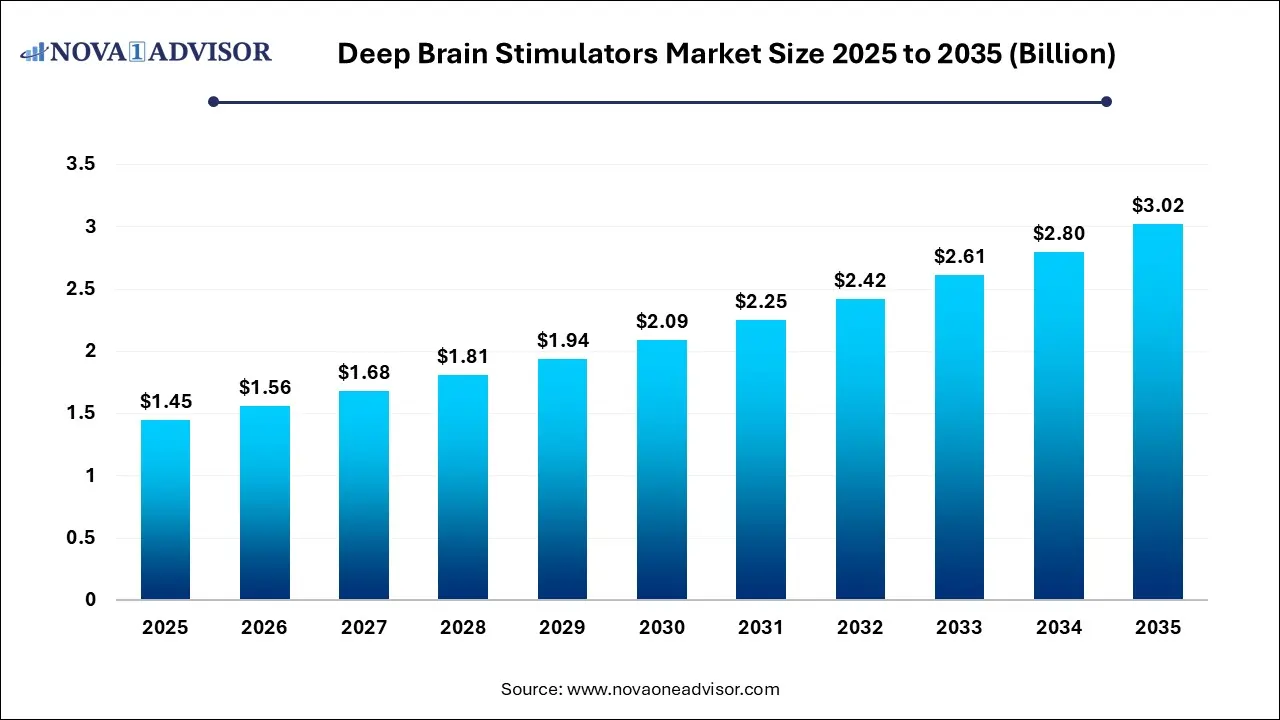
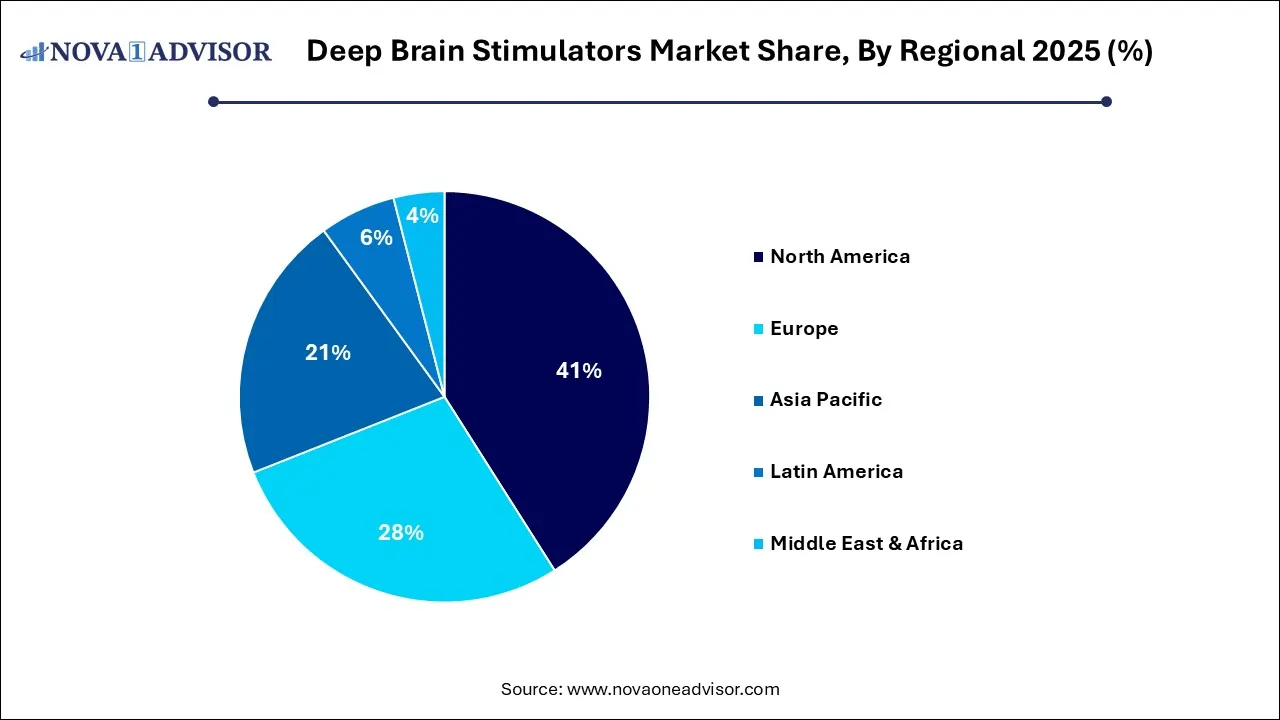
The global deep brain stimulators market size was valued at USD 1.45 billion in 2025 and is projected to grow from USD 1.56 billion in 2026 to USD 3.02 billion by 2035, at a CAGR of 7.6% from 2026 to 2035. North America dominated the market, accounting for a revenue share of 41% in 2025.
Key Takeaway
- By product, the dual-channel segment dominated the market with the largest share in 2025.
- By product, the single channel segment is expected to grow at the fastest CAGR over the forecast period.
- By application, the Parkinson’s disease segment dominated the market with the largest share in 2025.
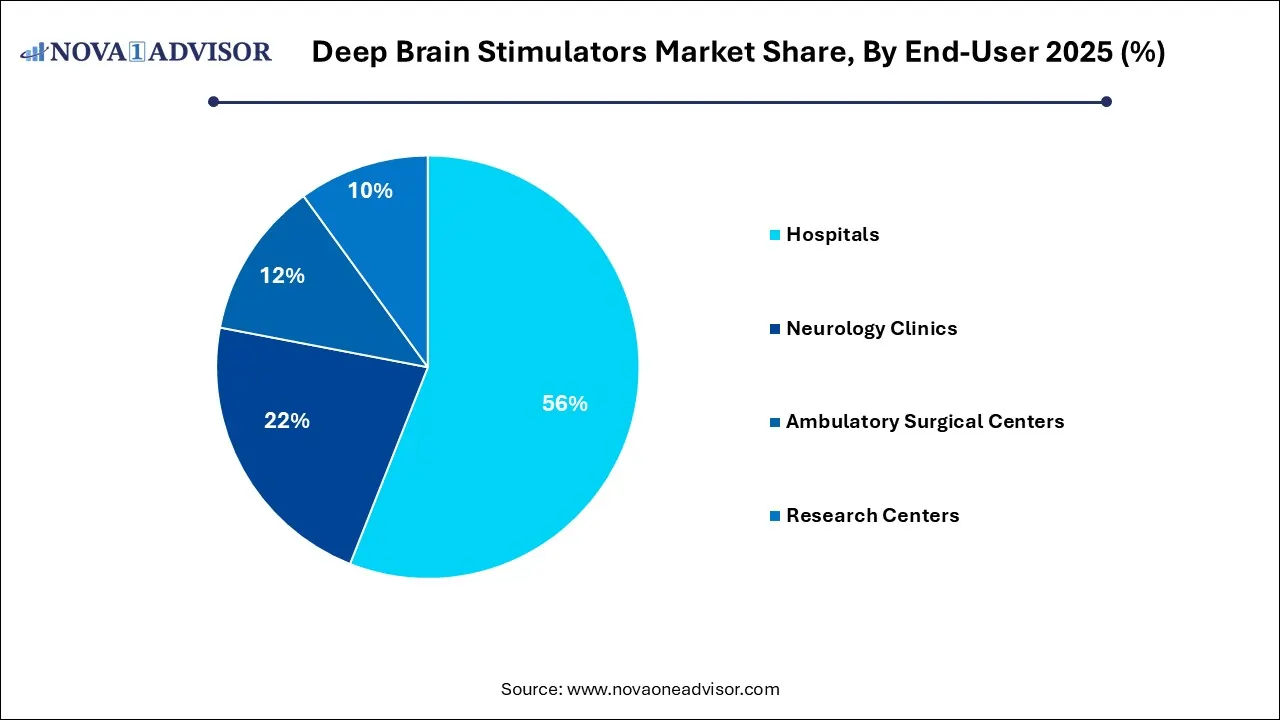
- By end user, the hospital segment dominated the market with the largest share of 56.0% in 2025.
- By region, North America dominated the market with the largest share of 41.0% in 2025.
Market Overview
The global deep brain stimulators market is witnessing steady growth, driven by the rising prevalence of neurological disorders and increasing adoption of implantable neuromodulation therapies. Deep brain stimulation (DBS) has become an effective treatment option for conditions such as Parkinson’s disease, essential tremor, dystonia, epilepsy, and treatment-resistant psychiatric disorders, particularly for patients who do not respond adequately to medication. Growing awareness, expanding neuroscience centers, and improved access to advanced neurological care are further supporting market expansion.
Technological advancements, including rechargeable batteries, directional leads, adaptive stimulation, MRI-compatible systems, wireless programming, and closed-loop DBS technology, are enhancing treatment precision and patient outcomes. In addition, ongoing clinical research exploring new therapeutic applications, along with the long-term economic benefits of DBS in reducing medication use, hospitalizations, and disability, is expected to drive sustained growth in the global deep brain stimulators market.
Market Outlook
- Market Growth Overview: The global deep brain stimulators market is expected to grow significantly between 2025 and 2035, driven by growing clinical adoption of advanced neuromodulation therapies.
- Sustainability Trends: Sustainability trends involve cutting healthcare costs, improving patient longevity, and lowering environmental impacts.
- Major Investors: Major investors in the market include Medtronic (Dublin, Ireland), Abbott (U.S.), and Boston Scientific (U.S.).
How is AI impacting the global deep brain stimulators market?
Artificial intelligence (AI) is revolutionizing the market by transitioning treatment from static pacing to highly personalized, "smart" care. Furthermore, the artificial intelligence algorithm identifies unique neural oscillations associated with the onset of symptoms, modulating therapeutic stimulation in real time to reduce the event. AI helps neurosurgeons identify the crucial trajectory for placing electrodes with sub-millimetre precision.
Major Trends in the Deep Brain Stimulators Market
The deep brain stimulators market is evolving rapidly with continuous advancements in neuromodulation technology and precision neuroscience. Rechargeable implantable pulse generators, directional leads, and adaptive (closed-loop) stimulation systems are improving therapy effectiveness and patient convenience. The integration of artificial intelligence, robotic-assisted neurosurgery, wireless programming, and remote patient monitoring is enhancing treatment accuracy and personalized care. Additionally, expanding clinical research into psychiatric and cognitive disorders, along with growing healthcare investments in emerging markets, is expected to support long-term market growth.
Deep Brain Stimulators Market Report Scope
| Report Coverage | Details |
| Market Size in 2026 | USD 1.56 Billion |
| Market Size by 2035 | USD 3.02 Billion |
| Growth Rate From 2026 to 2035 | CAGR of 7.6% |
| Base Year | 2025 |
| Forecast Period | 2026 to 2035 |
| Segments Covered | By Product, By Application, By End User, By Region |
| Market Analysis (Terms Used) | Value (USD Million/Billion) or (Volume/Units) |
| Regional Scope | North America; Europe; Asia Pacific; Central and South America; the Middle East and Africa |
| Key Companies Profiled | Medtronic PLC, Abbott Laboratories Inc., Boston Scientific Corp., LivaNova PLC, Cochlear, Ltd., Sonova Holding AG, Nevro Corp., ElectroCore LLC, and BioElectronics Corp |
Market Dynamics
Driver: Rising Global Burden of Neurological Disorders
The increasing prevalence of neurological disorders such as Parkinson's disease, essential tremor, dystonia, epilepsy, and treatment-resistant depression is a key driver of the deep brain stimulators market. An aging population, combined with the limitations of long-term drug therapy, is increasing demand for DBS systems that provide sustained symptom control, improve motor function, and enhance patients' quality of life. Growing clinical evidence, expanding reimbursement coverage, and greater physician awareness are further accelerating market adoption.
Restraint: High Procedure Costs and Limited Accessibility
The high cost of DBS devices, specialized surgical procedures, postoperative programming, and long-term patient management continues to limit widespread adoption. Inadequate reimbursement policies, limited access to specialized neurosurgical centers, and a shortage of experienced healthcare professionals further restrict treatment availability, particularly in developing regions.
Opportunity: Expanding Applications Beyond Movement Disorders
The expanding use of deep brain stimulation for psychiatric, cognitive, and behavioral disorders presents significant growth opportunities. Ongoing research into applications such as obsessive-compulsive disorder, Alzheimer's disease, Tourette syndrome, chronic pain, and treatment-resistant depression is broadening the therapeutic potential of DBS. Advances in AI-powered stimulation, personalized programming, and digital neurological monitoring are expected to improve clinical outcomes and expand the eligible patient population over the coming years.
Segmental Insights
By Product
Why did the dual-channel segment dominate the global deep brain stimulators market?
The dual-channel segment dominated the market with the largest share in 2025. The dominance of the segment can be attributed to their ability to offer bilateral therapy, treating both sides of the brain simultaneously, and less tunnelling of extension wires. Dual-channel deep brain stimulation systems are extensively used in the clinical management of movement disorders, including Parkinson's disease, essential tremor, and dystonia.
How did the single-channel segment expected to hold the fastest-growing global deep brain stimulators market in the coming years?
The single-channel segment is expected to grow at the fastest CAGR over the forecast period. The growth of the segment can be credited to the increasing demand for unilateral (one-sided) treatments and their affordability. These medical devices use streamlined hardware, which optimizes shorter surgical procedures and expedites patient recovery.
By Application
Why did the Parkinson's disease segment dominate the global deep brain stimulators market?
The Parkinson's disease segment dominated the market with the largest share in 2025. The dominance of the segment can be linked to the growing clinical shift away from drug-only therapies toward implantable and invasive neuromodulation devices. Moreover, deep brain stimulation (DBS) serves as a critical alternative intervention. By using implanted electrodes to deliver targeted electrical impulses, this procedure effectively modulates the aberrant neural activity.
How did the depression expected to hold the fastest-growing global deep brain stimulators market in the coming years?
The depression segment is expected to grow at the fastest CAGR over the forecast period. The growth of the segment can be driven by the growing rate of treatment-resistant depression (TRD) and enhanced targeting of the brain's emotional networks. Major medical firms, including Abbott, Medtronic, and Boston Scientific, are successfully capitalizing on the growing clinical and public acceptance of neuromodulation.
By End User
Why did the hospital segment dominate the global deep brain stimulators market?
The hospital segment dominated the market with the largest share in 2025. The dominance of the segment is owing to the complex infrastructure required to implant devices and the strong presence of multidisciplinary medical teams. Deep brain stimulation (DBS) relies on highly sophisticated neurosurgical equipment, including magnetic resonance imaging (MRI) for precision targeting.
How did the neurology clinics segment expected to hold the fastest-growing global deep brain stimulators market in the coming years?
The neurology clinics segment is expected to grow at the fastest CAGR over the forecast period. The growth of the segment is due to growing abandonment of brain diseases and a surge in the number of older patients. Clinics employ movement disorder specialists who possess specialized expertise in calibrating and optimizing these neurological devices.
By Regional
Why did the North American region account for the largest share in the global deep brain stimulators market?
North America dominated the market with the largest share in 2025. The dominance of the region can be attributed to the surge in a large aging population and superior insurance options compared to other regions. In addition, the growing prevalence of conditions such as Parkinson's disease, epilepsy, Alzheimer's, and obsessive-compulsive disorder (OCD) is propelling the demand for innovative treatments.
U.S. Global Deep Brain Stimulators Market Trends
The growth of the market in the country can be driven by the growing prevalence of neurological disorders such as Parkinson's disease and favourable insurance reimbursement policies. The United States maintains a robust healthcare reimbursement infrastructure that reduces the financial burden associated with deep brain stimulation (DBS) hardware for patients.
Why did the Asia-Pacific region become the fastest-growing global deep brain stimulators market during the forecast period?
Asia Pacific is expected to grow at the fastest CAGR over the forecast period. The growth of the region can be credited to the ongoing growth of regional healthcare facilities along with the rise in medical awareness and diagnosis. Furthermore, increased healthcare expenditure in nations such as China, India, and Japan has facilitated the expansion of advanced neurosurgical facilities and specialized medical expertise across numerous hospitals.
China Global Deep Brain Stimulators Market Trends
The market in the country is growing due to lower surgery costs and better healthcare facilities than in the world. The Chinese government is broadening its health insurance coverage to ensure patients can afford complex and costly neurological treatments without facing financial ruin, leading to country growth soon.
Why Did Europe hold a notable share in the global deep brain stimulators market?
Europe is expected to grow at a notable CAGR over the forecast period. The growth of the region can be linked to the supportive healthcare policies and initiatives coupled with the technological innovations in research funding. Moreover, patient diagnosis and treatment rates are optimized by high standards of neurological care, established national treatment guidelines, and the presence of specialized movement disorder clinics.
Germany Global Deep Brain Stimulators Market Trends
The growth of the market is boosted by its exceptional clinical infrastructure that adopts advanced technologies smoothly. Germany is home to premier university hospitals and specialized neurology centers. These institutions consistently invest in state-of-the-art medical technology and possess the advanced surgical proficiency needed to perform highly complex neurological procedures.
Key Players in the Global Deep Brain Stimulators Market
- Boston Scientific Corporation: This U.S.-based company specializes in high-tech directional stimulation. Their Vercise system allows doctors to specifically steer electrical fields to areas of the brain, reducing side effects and extending battery life.
- Abbott Laboratories: Abbott is a major player offering the smallest rechargeable DBS systems, such as the Liberta RC. Their focus is on maximizing battery longevity and providing wireless programming options.
- Beijing PINS Medical Co., Ltd. & SceneRay Corporation: These China-based companies are key emerging players. They are rapidly expanding their footprint by providing more accessible, advanced neuromodulation devices.
Recent Developments
- In April 2026, Medtronic, a prominent global leader in medical technology, has officially introduced its Adaptive Deep Brain Stimulation (aDBS) system in India. This next-generation therapy represents a technical advancement over conventional deep brain stimulation methods. It is specifically engineered to enhance clinical outcomes.
Segments Covered in the Report
This report forecasts revenue growth at country levels and provides an analysis of the latest industry trends in each of the sub-segments from 2021 to 2035. For this study, Nova one advisor, Inc. has deep brain stimulators market.
By Product
- Single Channel
- Dual Channel
By Application
- Depression
- Pain Management
- Dystonia
- Parkinson’s Disease,
- Epilepsy
- Essential tremors
- Others
By End User
- Hospitals
- Neurology Clinics
- Ambulatory Surgical Centers
- Research Centers
By Region
- North America
- Europe
- Asia Pacific
- Latin America
- Middle East & Africa
FAQ's

Proceed to Buy
Instant PDF delivery on confirmation

Deep Brain Stimulators Market Size to Hit USD 3.02 Billion by 2035
 Request Customization
 Download Sample

Get a Sample of this Report
Deep Brain Stimulators Market