

Dental Diagnostic And Surgical Equipment Market Size, Share & Trends Analysis Report By Product (Dental Diagnostic Equipment, Dental Surgical Equipment), By Region (North America, Europe, APAC, Latin America, MEA)- Global Industry Analysis, Share, Growth, Regional Outlook and Forecasts, 2026-2035
 Status Published
 Category Medical Devices


Content
Dental Diagnostic and Surgical Equipment Market Size and Growth 2026 to 2035
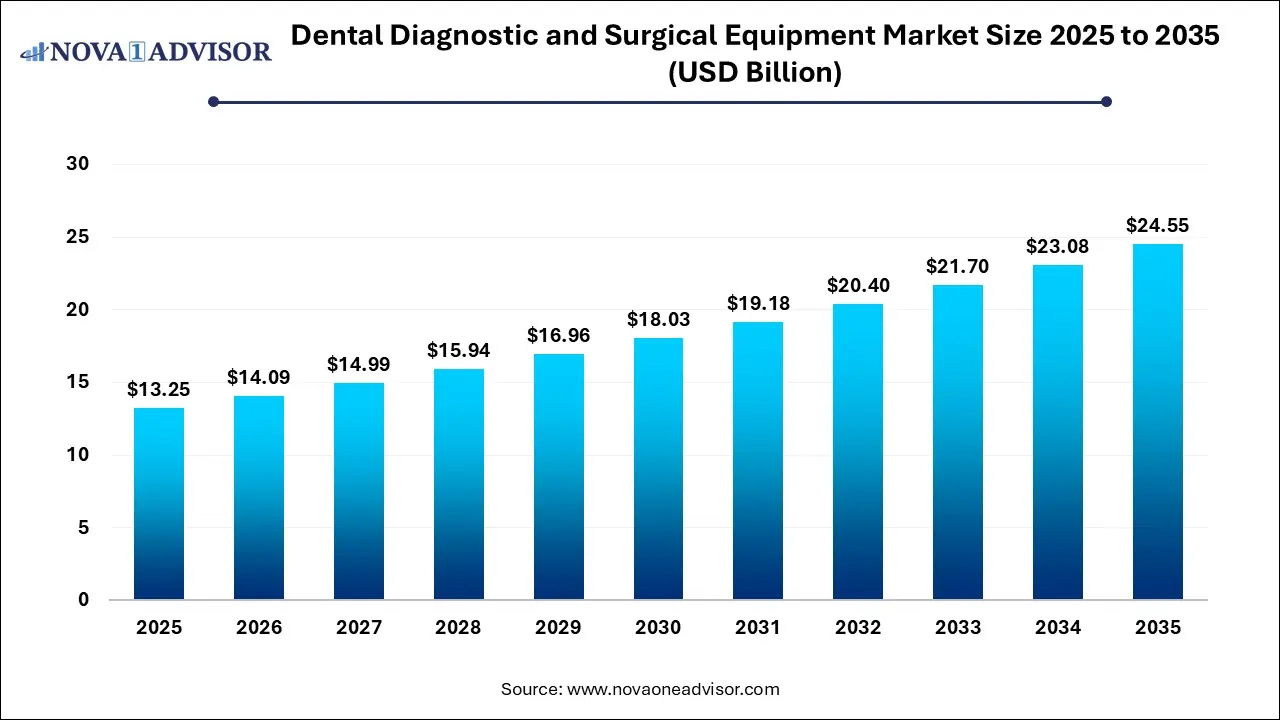
The global dental diagnostic and surgical equipment market size was exhibited at USD 13.25 billion in 2025 and is projected to hit around USD 24.55 billion by 2035, growing at a CAGR of 6.36% during the forecast period of 2026 to 2035.
Key Takeaways:
- The dental surgical equipment segment dominated the market for dental diagnostic and surgical equipment and held the largest revenue share of 54.0% in 2025.
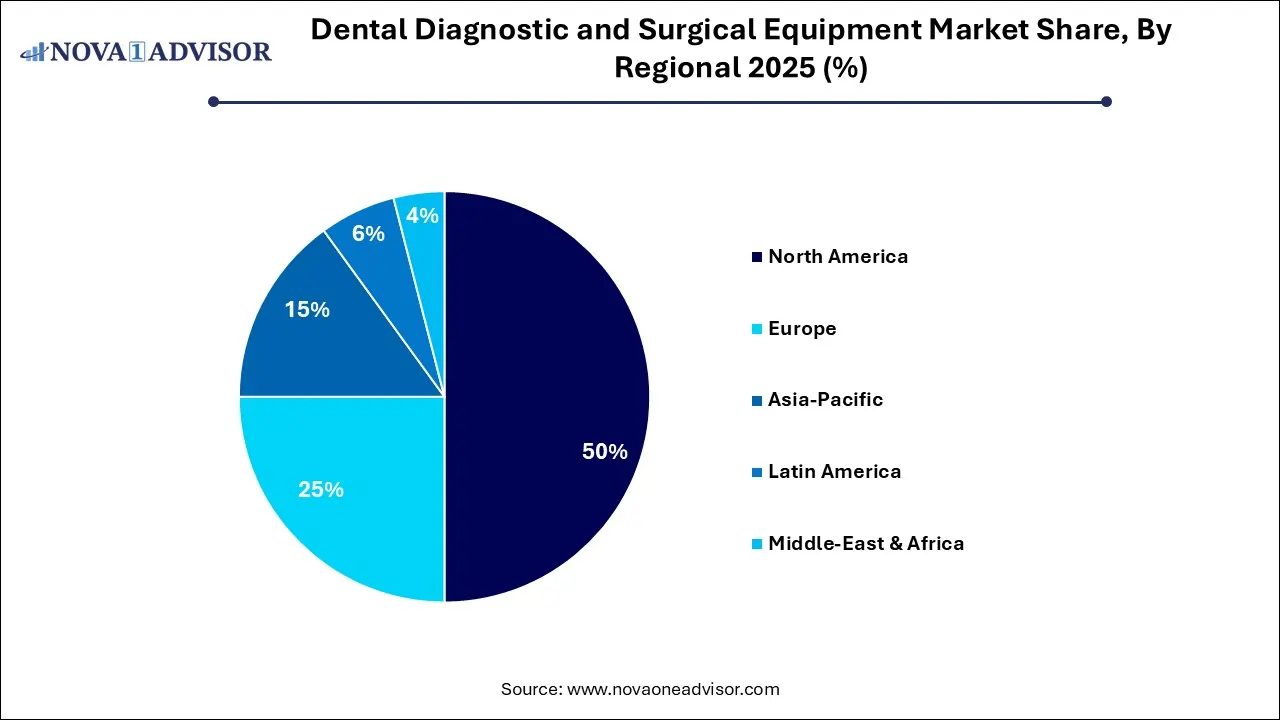
- North America dominated the dental diagnostic and surgical equipment market and accounted for the largest revenue share of over 50.0% in 2025.
Market Overview
The dental diagnostic and surgical equipment market has become an essential pillar of the modern dental care industry, integrating advanced technologies and precision tools to improve diagnosis, treatment planning, and surgical outcomes. Dental professionals rely on a wide array of equipment, ranging from intraoral radiology devices to highly specialized surgical instruments, to enhance patient experiences and deliver superior clinical results.
As the prevalence of dental diseases such as caries, periodontal conditions, and oral cancers rises, the demand for sophisticated diagnostic tools and effective surgical devices intensifies. Moreover, consumer expectations for minimally invasive, painless, and aesthetic treatments are steering dental practices toward adopting cutting-edge technologies. The market is further fueled by demographic shifts particularly aging populations and increasing dental insurance penetration, making dental care more accessible.
Innovations such as Cone Beam Computed Tomography (CBCT), CAD/CAM systems, and laser-based surgical solutions are reshaping the landscape. With the rise of cosmetic dentistry, dental implantology, and preventive care, the dental diagnostic and surgical equipment market is poised for robust expansion in the foreseeable future.
Market Outlook
- Market Growth Overview: The global dental surgical & diagnostic devices market is expected to grow significantly between 2025 and 2035, driven by the rising prevalence of oral diseases, the growing geriatric population, and the growing expansion of dental tourism.
- Sustainability Trends: Sustainability trends involve eco-friendly materials, biocompatibility, energy and resource-efficient equipment, and waste management and sterilization.
- Major Investors: Major investors in the market include Dentsply Sirona, Envista Holdings Corporation, Henry Schein, Institut Straumann AG, Danaher Corporation, and 3M.
Major Trends in the Market
-
Integration of Artificial Intelligence (AI) in diagnostics: AI-powered imaging tools are enhancing early disease detection and treatment planning.
-
Growing adoption of CBCT imaging: CBCT systems are increasingly used for 3D visualization in implantology, orthodontics, and endodontics.
-
Expansion of minimally invasive laser surgery: Dental lasers offer precise, bloodless surgeries, leading to faster patient recovery.
-
Rise of chairside CAD/CAM systems: Real-time restorations using CAD/CAM technology are reducing treatment times and improving prosthetic accuracy.
-
Increased demand for portable and handheld diagnostic devices: Mobility solutions are enabling better access to dental care, especially in rural and underserved regions.
-
Eco-friendly and energy-efficient equipment: Manufacturers are focusing on sustainable materials and energy-saving technologies.
-
Shift towards digital workflows: Fully integrated digital dental clinics are becoming the new norm, connecting diagnostics, planning, and surgery seamlessly.
Dental Diagnostic And Surgical Equipment Market Report Scope
| Report Coverage | Details |
| Market Size in 2026 | USD 14.09 Billion |
| Market Size by 2035 | USD 24.55 Billion |
| Growth Rate From 2026 to 2035 | CAGR of 6.36% |
| Base Year | 2025 |
| Forecast Period | 2026-2035 |
| Segments Covered | By Product and By End-use |
| Market Analysis (Terms Used) | Value (US$ Million/Billion) or (Volume/Units) |
| Regional Scope | North America; Europe; Asia Pacific; Central and South America; the Middle East and Africa |
| Key Companies Profiled | Carestream Health; Danaher Corporation; KaVo Kerr; Biolase Technologies; Zolar Dental Laser; 3M Company; Ivoclar Vivadent AG; American Medicals; Henry Schein; Midmark Diagnostic Group. |
Segmental Insights
By Product
How did the dental surgical equipment segment dominate the Global Dental Surgical & Diagnostic Devices market?
The dental surgical equipment segment is driven by its growth in the integration of sophisticated CAD/CAM digital systems, 3D imaging, and minimally invasive laser technologies. The rising global consumer demand for complex cosmetic implantology and advanced orthodontics is drastically reducing patient recovery times and procedural trauma. The rapid proliferation of specialized clinical networks and expanding dental tourism infrastructure has made these high-precision surgical services highly accessible.
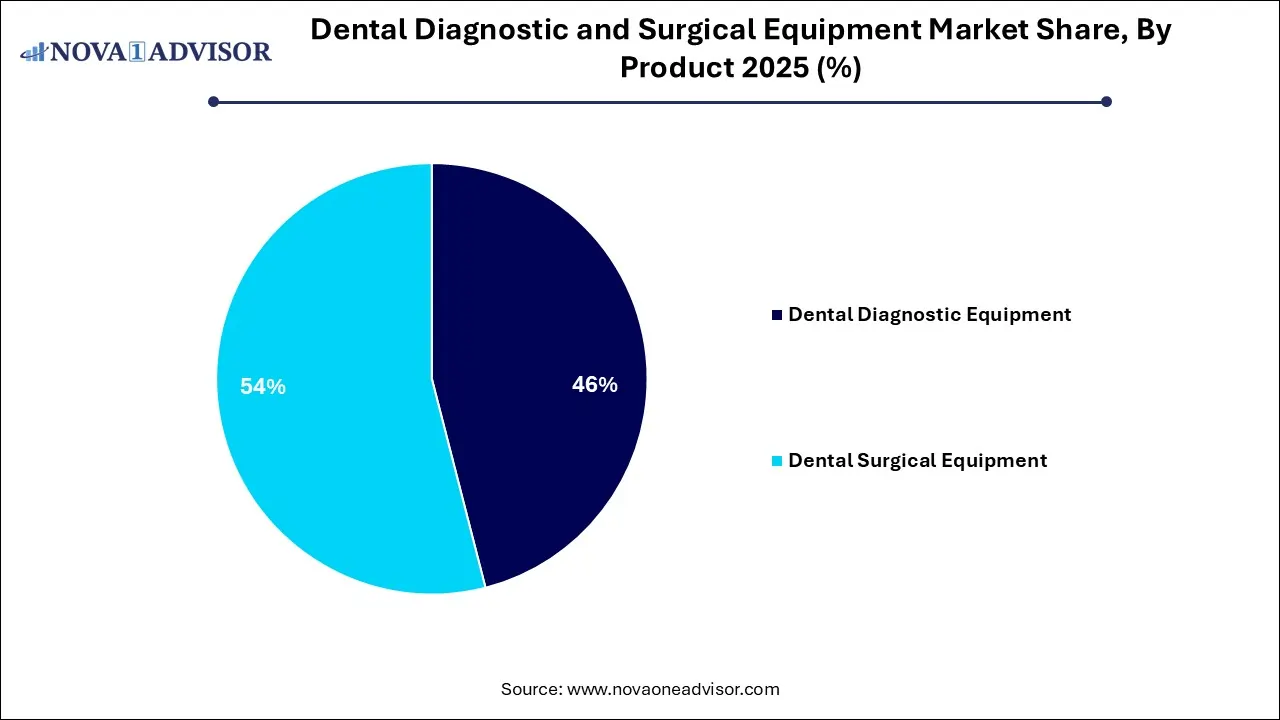
The dental diagnostic equipment segment is expected to witness the fastest growth during the projected period. The dental institutions that strategically invest in these advanced digital networks will maximize operational efficiency, optimize patient outcomes, and capture a leading position in this competitive healthcare sector.
By End-user
How did the solo practices segment dominate the Global Dental Surgical & Diagnostic Devices market?
The solo practices segment is driven by the aggressive investment in compact intraoral scanners, 3D digital imaging, and integrated CAD/CAM systems. This systemic technological migration allows independent clinics to optimize their customized workflows and seamlessly deliver high-margin treatments, such as prosthetics and endodontics.
How did the DSO/group practices segment expect to hold the fastest-growing Global Dental Surgical & Diagnostic Devices market in the coming years?
The DSO/group practices segment is driven by leveraging massive economies of scale to centralize procurement, optimize working capital, and significantly lower the cost of premium surgical equipment. By equipping their vast clinical networks with standardized, high-throughput digital workflows, such as CAD/CAM systems, 3D printing, and digital scanners, these corporate consolidations effectively improve efficiency and diagnostic precision.
By Regional
How did the North America region account for the largest share in the Global Dental Surgical & Diagnostic Devices market?
North America is driven by an aging demographic with high instances of periodontal disease alongside a surging consumer demand for cosmetic and invisible orthodontic treatments. The rapid clinical integration of 3D imaging, intraoral scanners, and CAD/CAM digital workflows drastically reduces patient chair time and enables highly precise, minimally invasive procedures. The extensive domestic R&D activities of industry-leading giants like Align Technology, Dentsply Sirona, and 3M ensure continuous pipeline innovations.
U.S. Global Dental Surgical & Diagnostic Devices Market Trends
The U.S. advanced structural transformation by the systemic integration of high-precision CAD/CAM workflows, intraoral scanners, and AI-powered diagnostic imaging software. This technology-driven evolution directly supports the clinical shift toward minimally invasive dental lasers and microsurgery tools, drastically lowering patient recovery times and enhancing restorative precision.
How did the Asia-Pacific region become the fastest-growing Global Dental Surgical & Diagnostic Devices Market during the forecast period?
Asia Pacific’s rising middle class is demanding high-margin cosmetic dentistry and expanding universal oral healthcare access under proactive WHO initiatives. The widespread clinical integration of advanced CBCT diagnostic systems and 3D imaging, which vastly elevates diagnostic precision while optimizing minimally invasive workflows. The regional proliferation of dental support organizations (DSOs) is facilitating high-volume enterprise procurement, while booming dental tourism in hubs, such as India, Thailand, and South Korea, exponentially accelerates equipment turnover.
China Global Dental Surgical & Diagnostic Devices Market Trends
China’s aging demographic and high-end public health awareness are shifting clinical priorities from reactive care to high-precision preventative diagnostics. The equipment manufacturers that deliver highly competitive, localized digital solutions will successfully capture market share within a rapidly expanding and strategically restricted healthcare ecosystem.
How Did Europe Hold A Notable Share in the Global Dental Surgical & Diagnostic Devices Market?
Europe’s medical technology vendors that align their distribution strategies with these high-precision digital workflows and thriving cross-border medical networks will capture a commanding, highly profitable share of the European healthcare economy. The highly structured healthcare reimbursement frameworks encourage robust patient volume for early preventive care, while competitive regional dental tourism firms, such as those in Hungary, exponentially accelerate equipment turnover.
Germany Global Dental Surgical & Diagnostic Devices Market Trends
Germany’s rapid mainstreaming of advanced digital dentistry tools, high-precision surgical hardware, and flexible tele-dentistry networks. This technological shift directly supports an accelerating clinical demand for intricate maxillofacial procedures using specialized surgical microscopes alongside a massive consumer surge in clear aligners and aesthetic dental devices.
Key Players in the Global Dental Surgical & Diagnostic Devices Market
- 3M
3M contributes by manufacturing advanced resin composites, glass ionomer restoratives, and adhesive technologies that ensure durable and aesthetic direct restorations.
- A-dec Inc.
A-dec leads the dental treatment center market by engineering ergonomic, digitally connected delivery systems, dental chairs, and lighting equipment. These highly integrated operatory solutions streamline procedural workflows and enhance physical comfort for both the dental surgeon and the patient during complex oral operations.
- Carestream Health
Carestream Health advances the diagnostic devices market through high-resolution 3D Cone Beam Computed Tomography (CBCT) and digital panoramic imaging systems. These sophisticated imaging and cloud-based software platforms empower dental professionals to capture highly precise anatomical data for more accurate treatment planning and diagnostics.
Segments Covered in the Report
This report forecasts revenue growth at global, regional, and country levels and provides an analysis of the latest industry trends in each of the sub-segments from 2021 to 2035. For this study, Nova one advisor, Inc. has segmented the global dental diagnostic and surgical equipment market.
By Product
- Dental Diagnostic Equipment
-
- CAD/CAM Systems
- Instrument Delivery systems
- Extra oral Radiology Equipment
- Intra Oral Radiology Equipment
- Cone Beam Computed Tomography (CBCT)
- Dental Surgical Equipment
-
- Dental Laser
- Dental handpieces
- Dental Forceps & Pliers
- Curettes and Scalers
- Dental Probes
- Dental Burs
- Electrosurgical Equipment
- Others
By End-use
- Solo Practices
- DSO/Group Practices
- Others
By Region
- North America
- Europe
- Asia-Pacific
- Latin America
- Middle East & Africa (MEA)
FAQ's

Proceed to Buy
Instant PDF delivery on confirmation

Dental Diagnostic And Surgical Equipment Market Size to Hit USD 24.55 Billion ...
 Request Customization
 Download Sample

Get a Sample of this Report
Dental Diagnostic And Surgical Equipment Market