

Dermabrasion Market Size, Share, Forecast Report, 2026-2035
 Status Published
 Category Healthcare


Content
Dermabrasion Market Size and Growth 2026 to 2035
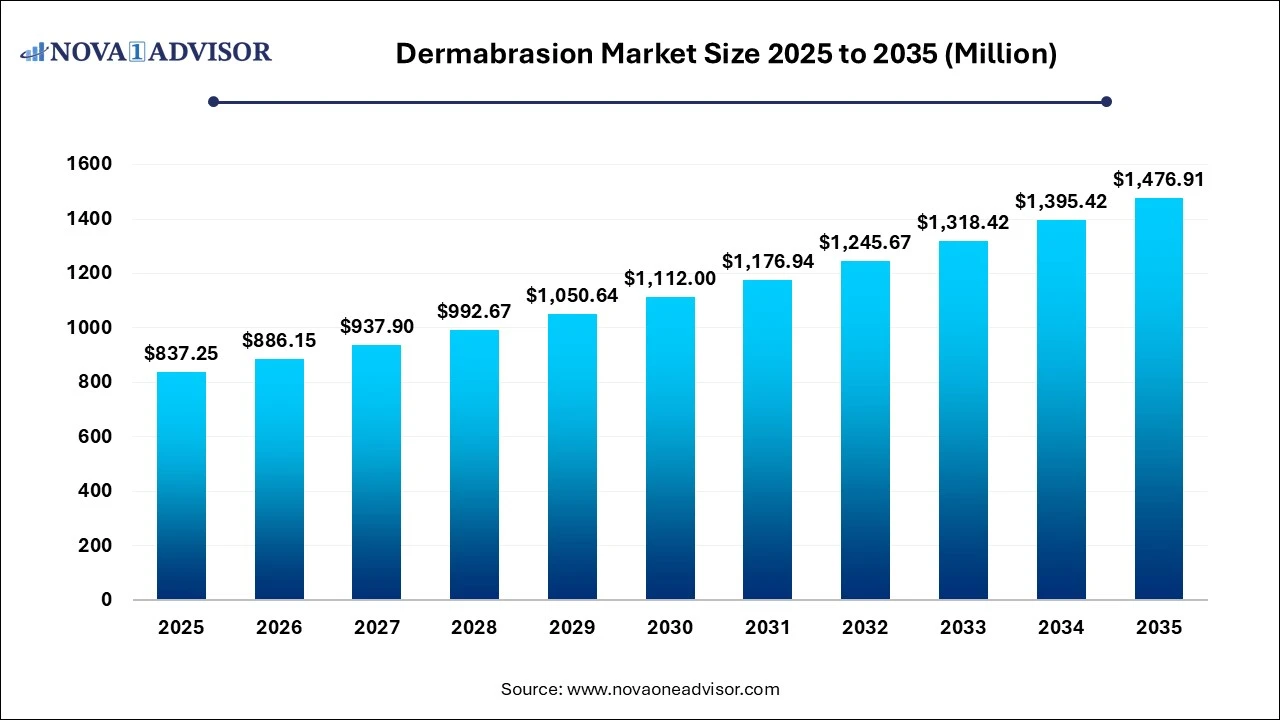
The global dermabrasion market size was valued at USD 837.25 million in 2025 and is projected to grow from USD 886.15 million in 2026 to USD 1,476.91 million by 2035, at a CAGR of 5.84% from 2026 to 2035. North America dominated the market, accounting for a revenue share of 39.0% in 2025.
Key Takeaway:
- By application, the surgical dermabrasion segment dominated the market with the largest share in 2025.
- By application, the microdermabrasion segment is expected to grow at the fastest CAGR over the forecast period.
- By end use, the dermatology clinics segment dominated the market with the largest share in 2025.
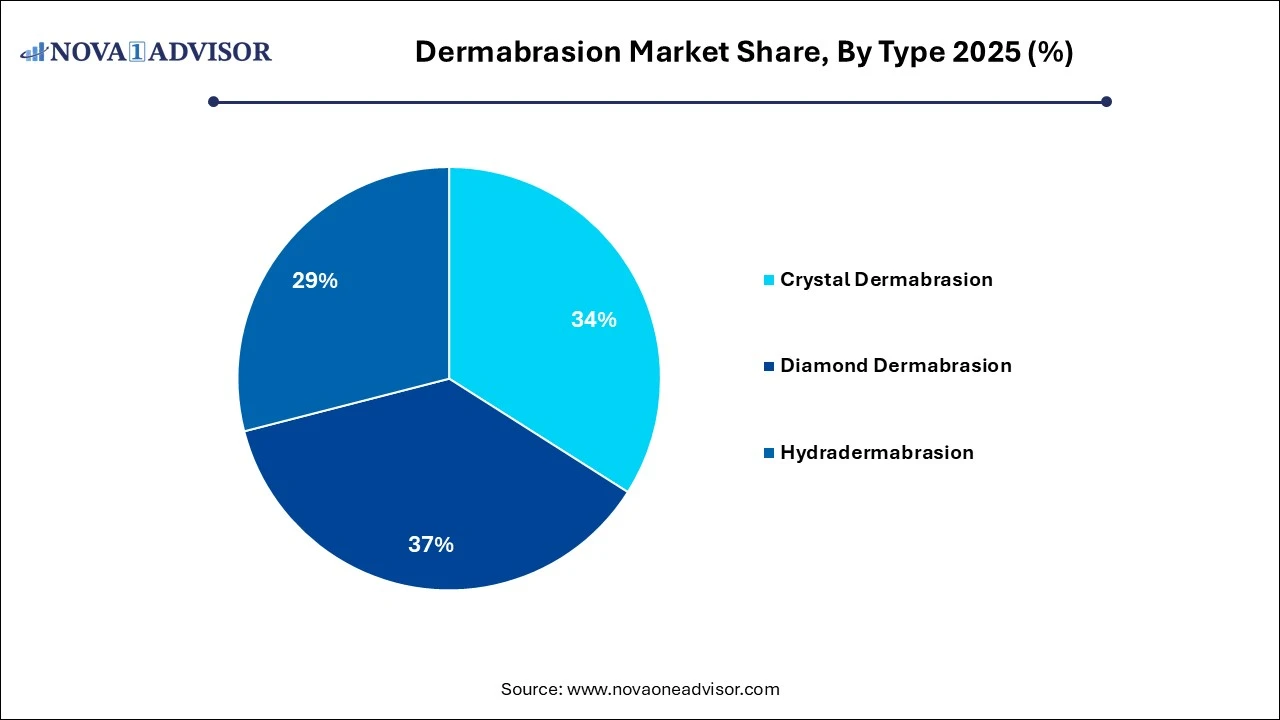
- By type, the diamond dermabrasion segment dominated the market with the largest share of 37.0% in 2025.
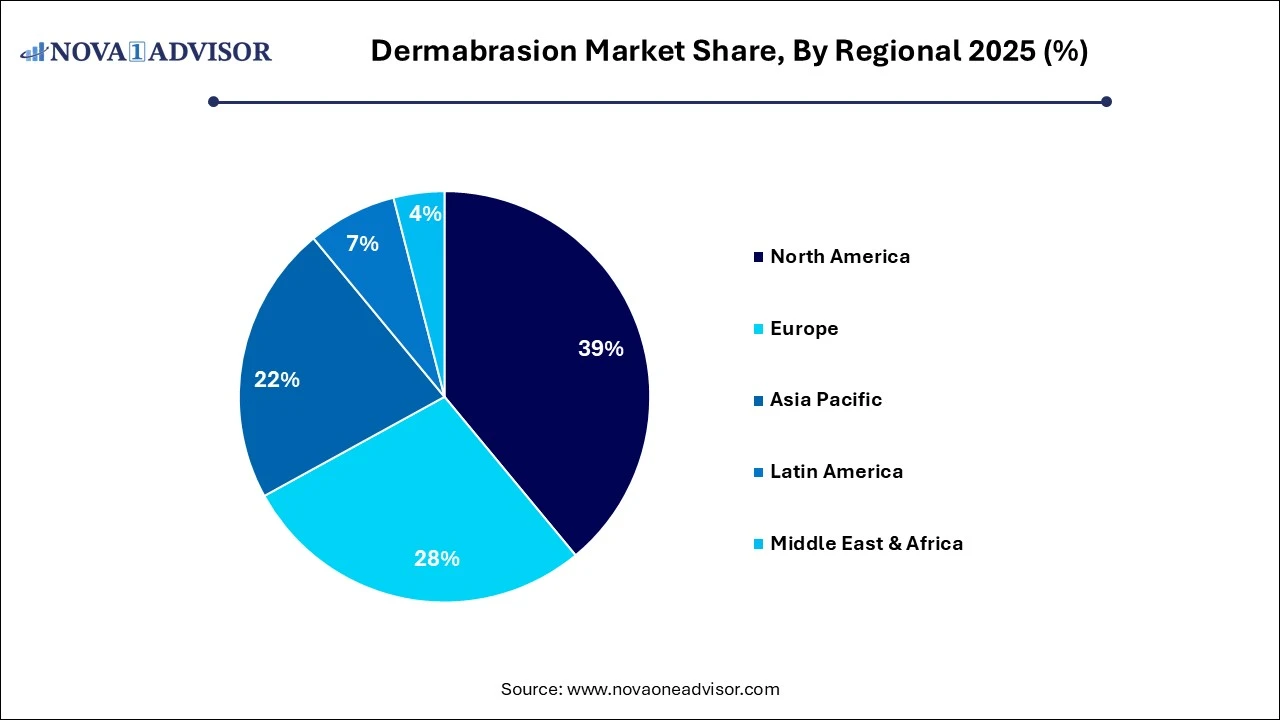
- By region, North America dominated the market with the largest share of 39.0% in 2025.
Market Overview
The global dermabrasion market is witnessing steady growth as demand for advanced skin resurfacing treatments increases worldwide. Dermabrasion is widely used to improve skin texture, reduce acne scars, wrinkles, pigmentation, and other skin imperfections, making it a popular choice among consumers seeking minimally invasive aesthetic procedures. Rising awareness of skincare, increasing disposable incomes, and growing acceptance of cosmetic treatments are driving market expansion.
Technological advancements have significantly improved treatment outcomes, with diamond-tip and hydradermabrasion systems offering greater precision, hygiene, and patient comfort than conventional methods. Dermatology clinics are also combining dermabrasion with treatments such as laser therapy, microneedling, and platelet-rich plasma (PRP) to deliver more effective skin rejuvenation results.
The influence of social media, beauty influencers, and preventive skincare trends has encouraged younger consumers to invest in professional aesthetic treatments. In addition, the growth of medical tourism and the expansion of specialized dermatology clinics in emerging economies are creating new opportunities for market players. Looking ahead, innovations in artificial intelligence, digital skin analysis, and personalized dermatology solutions are expected to further enhance treatment accuracy, patient satisfaction, and the overall growth of the global dermabrasion market.
Market Outlook
- Market Growth Overview: The global dermabrasion market is expected to grow significantly between 2025 and 2035, driven by the ongoing technological innovations in dermabrasion techniques and the growing need for aesthetic procedures.
- Sustainability Trends: Sustainability trends involve growing adoption of bio-derived and green upcycled skincare formulations.
- Major Investors: Major investors in the market include AbbVie (Allergan), Merz Pharma, and Galderma.
How is AI impacting The Global Dermabrasion Market?
Artificial intelligence (AI) is revolutionizing the market by allowing realistic outcome simulations, accurate pre-treatment analysis, and individualized recovery plans. Furthermore, algorithms assist practitioners in calculating precise exfoliation depths and device intensities specific to individual skin profiles, hence reducing the incidence of scarring and hyperpigmentation.
AI is also enhancing patient engagement through predictive imaging that can simulate expected treatment results before a procedure begins. These visual projections help patients understand potential improvements, set realistic expectations, and make informed treatment decisions. In addition, smart dermabrasion systems equipped with AI can monitor treatment pressure, speed, and skin response in real time, helping practitioners deliver safer and more consistent procedures.
The adoption of AI is further expanding access to aesthetic dermatology through teledermatology platforms, where patients can receive preliminary skin assessments remotely before visiting a clinic. At the same time, AI-powered predictive maintenance helps clinics minimize equipment downtime by identifying potential device issues before they affect performance. As AI continues to evolve alongside digital imaging, wearable skin monitoring, and personalized skincare technologies, it is expected to make dermabrasion treatments more precise, efficient, and patient-centric, supporting long-term growth in the global market.
Dermabrasion Market Report Scope
| Report Coverage | Details |
| Market Size in 2026 | USD 886.15 Million |
| Market Size by 2035 | USD 1,476.91 Million |
| Growth Rate From 2026 to 2035 | CAGR of 5.84% |
| Base Year | 2025 |
| Forecast Period | 2026 to 2035 |
| Segments Covered | By Type, By End Use, By Application, By Region |
| Market Analysis (Terms Used) | Value (USD Million/Billion) or (Volume/Units) |
| Regional Scope | North America; Europe; Asia Pacific; Central and South America; the Middle East and Africa |
| Key Companies Profiled | Photomedex, Inc (U.S.), Syneron Medical Ltd. (U.S.), Alma Lasers (Isreal), Genesis Biosystems, Inc. (U.S.), Cynosure, Inc. (U.S.), Medtronic (U.S.), and Cutera, Inc. (U.S.). |
Market Driver
Increasing Demand for Non-Invasive Cosmetic Procedures Driving Market Growth
The growing preference for minimally invasive cosmetic procedures is a key driver of the global dermabrasion market. Consumers are increasingly choosing treatments that improve skin texture, reduce acne scars, wrinkles, and pigmentation while offering shorter recovery times than surgical procedures. Dermabrasion meets these expectations by delivering effective skin rejuvenation with minimal downtime. Rising skincare awareness, higher disposable incomes, and the growing number of specialized dermatology clinics are further boosting demand. Additionally, many dermatologists include dermabrasion in long-term skin rejuvenation programs, encouraging repeat treatments and supporting sustained market growth.
Market Restraint
High Treatment Costs and Risk of Post-Treatment Side Effects Limiting Market Growth
The dermabrasion market is restrained by the relatively high cost of professional procedures and concerns over potential side effects. Advanced equipment, skilled practitioners, and comprehensive pre- and post-treatment care make dermabrasion more expensive than conventional skincare treatments. Since cosmetic procedures are often not covered by insurance, affordability remains a challenge, particularly in developing countries. In addition, improper treatment or inadequate aftercare can lead to temporary redness, pigmentation changes, infection, or scarring, making some patients hesitant to undergo the procedure. These concerns encourage some consumers to choose alternative treatments such as laser resurfacing, microneedling, or chemical peels.
Market Opportunity
Rising Demand for Personalized Treatments and Home-Use Devices Creating New Growth Opportunities
Increasing consumer demand for personalized skincare presents significant opportunities for the dermabrasion market. Advanced dermabrasion systems equipped with digital skin analysis and AI-assisted treatment recommendations allow practitioners to customize procedures based on individual skin conditions, improving treatment outcomes and patient satisfaction. At the same time, the growing popularity of home-use skincare devices is opening new revenue opportunities. Portable diamond-tip and hydradermabrasion devices designed for safe personal use are gaining traction as consumers seek convenient and cost-effective skincare solutions. The expansion of e-commerce platforms, virtual dermatology consultations, and digital skincare guidance is expected to further accelerate the adoption of home-based dermabrasion technologies.
Segmental Insights
By Application
Why did the surgical dermabrasion segment dominate the global dermabrasion market?
The surgical dermabrasion segment dominated the market with the largest share in 2025. The dominance of the segment can be attributed to the surge in the range of techniques getting prominence along with the growing adoption of its non-invasive nature. In addition, growing clinical effectiveness for addressing surgical marks and deep traumatic scars can fuel segment growth further.
How did the microdermabrasion segment expected to hold the significantly growing global dermabrasion market in the coming years?
The microdermabrasion segment is expected to grow at the fastest CAGR over the forecast period. The growth of the segment can be credited to the increasing need for non-invasive aesthetic procedures and the growing elderly population opting for anti-aging treatments. Diamond microdermabrasion has experienced rapid adoption driven by evolving consumer preferences, preferring crystal-free, cleaner, and more precise portable devices.
By End Use
Why did the dermatology clinics segment dominate the global dermabrasion market?
The dermatology clinics segment dominated the market with the largest share in 2025. The dominance of the segment can be linked to the growing need for anti-aging treatments, growing patient trust, and expert handling of innovative medical devices. The number of people seeking clinical treatments for sun damage, acne scars, and wrinkles is increasing rapidly.
How did the home care segment expected to hold the significantly growing global dermabrasion market in the coming years?
The home care segment is expected to grow at the fastest CAGR over the forecast period. The growth of the segment can be driven by technological innovations in portable devices, cost efficiency, and consumer convenience. Also, market players are designing safer, more compact, and professional-grade systems optimized for safe personal use.
By Type
Why did the diamond dermabrasion segment dominate the global dermabrasion market?
The diamond dermabrasion segment dominated the market with the largest share in 2025. The dominance of the segment is owing to the growing need for noninvasive anti-aging treatments and growing adoption in both home use and med spa devices. The commercial availability of compact, consumer-grade diamond exfoliation devices significantly expands market growth beyond traditional professional dermatology practices.
How did the surgical dermabrasion segment expected to hold the significantly growing global dermabrasion market in the coming years?
The surgical dermabrasion segment is expected to grow at the fastest CAGR over the forecast period. The growth of the segment is due to the growing need for deep scar correction and better consumer spending on aesthetics. A clinical preference for high-intensity, single-session mechanical procedures that deliver permanent or long-term structural skin rejuvenation leads segment growth soon.
By Regional
Why did the North American region account for the largest share in the global dermabrasion market?
North America dominated the market with the largest share in 2025. The dominance of the region can be attributed to the growing disposable incomes, strong presence of aesthetic clinics, and surge in consumer demand for non-invasive cosmetic procedures. In addition, device manufacturers are smoothly integrating advanced technologies, including motorized dermabraders, digital control mechanisms, and precision diamond-tip tools, to enhance patient safety and comfort.
U.S. Global Dermabrasion Market Trends
The growth of the market in the country can be driven by the surge in anti-aging demands from an aging population for non-invasive cosmetic procedures. Also, the U.S. features a wide network of specialty dermatology clinics and med spas, which offers extensive access to skilled professionals, impacting positive country growth soon.
Why did the Asia-Pacific region become the fastest-growing global dermabrasion market during the forecast period?
Asia Pacific is expected to grow at the fastest CAGR over the forecast period. The growth of the region can be credited to the growing social media influence on many beauty standards and increasing disposable incomes in major cities. Furthermore, Southeast Asia and India remain major destinations for international patients seeking cost-effective skincare, driven by the widespread availability of affordable, high-quality dermatological and aesthetic clinics, leading to regional growth soon.
China Global Dermabrasion Market Trends
The market in the country is growing due to ongoing urbanization, growing inclination towards non-invasive cosmetic procedures, and growing elderly populations. Moreover, the enforcement of more stringent clinical regulations on private dermatology practices enhances consumer confidence and increases safety protocols throughout the sector.
Key Players in the Global Dermabrasion Market
- Stryker Corporation: Leads the heavy-duty clinical dermabrasion landscape, specializing in powered surgical instruments used by dermatologists and plastic surgeons for deep scar revision.
- Medtronic plc: It focuses on professional-grade skin resurfacing equipment and precision handpieces tailored for advanced clinical environments.
- The HydraFacial Company (Edge Systems LLC): It dominates the hydradermabrasion space, combining mechanical tip exfoliation with vacuum suction and topical serum delivery.
Recent Developments
- In August 2025, Cutera, Inc., a prominent provider of medical aesthetic and dermatological systems, has officially introduced its Secret by Cutera skin revitalization portfolio to the Australian and New Zealand markets, marking a key strategic expansion and reinforcing its standing in evidence-based, practitioner-focused technology
Segments Covered in the Report
This report forecasts revenue growth at country levels and provides an analysis of the latest industry trends in each of the sub-segments from 2021 to 2035. For this study, Nova one advisor, Inc. has dermabrasion market.
By Type
- Crystal Dermabrasion
- Diamond Dermabrasion
- Hydradermabrasion
By End Use
- Dermatology Clinics
- Cosmetic Surgery Centers
- Hospitals
- Home Care
By Application
- Surgical Dermabrasion
- Mechanical Dermabrasion
- Chemical Dermabrasion
- Microdermabrasion
By Region
- North America
- Europe
- Asia Pacific
- Latin America
- Middle East & Africa
FAQ's

Proceed to Buy
Instant PDF delivery on confirmation

 Request Customization
 Download Sample

Get a Sample of this Report
Dermabrasion Market