

Dermatology Diagnostic Device Market Size, Share, Growth, Report 2026 to 2035
 Status Published
 Category Healthcare


Content
Dermatology Diagnostic Device Market Size and Growth 2026 to 2035
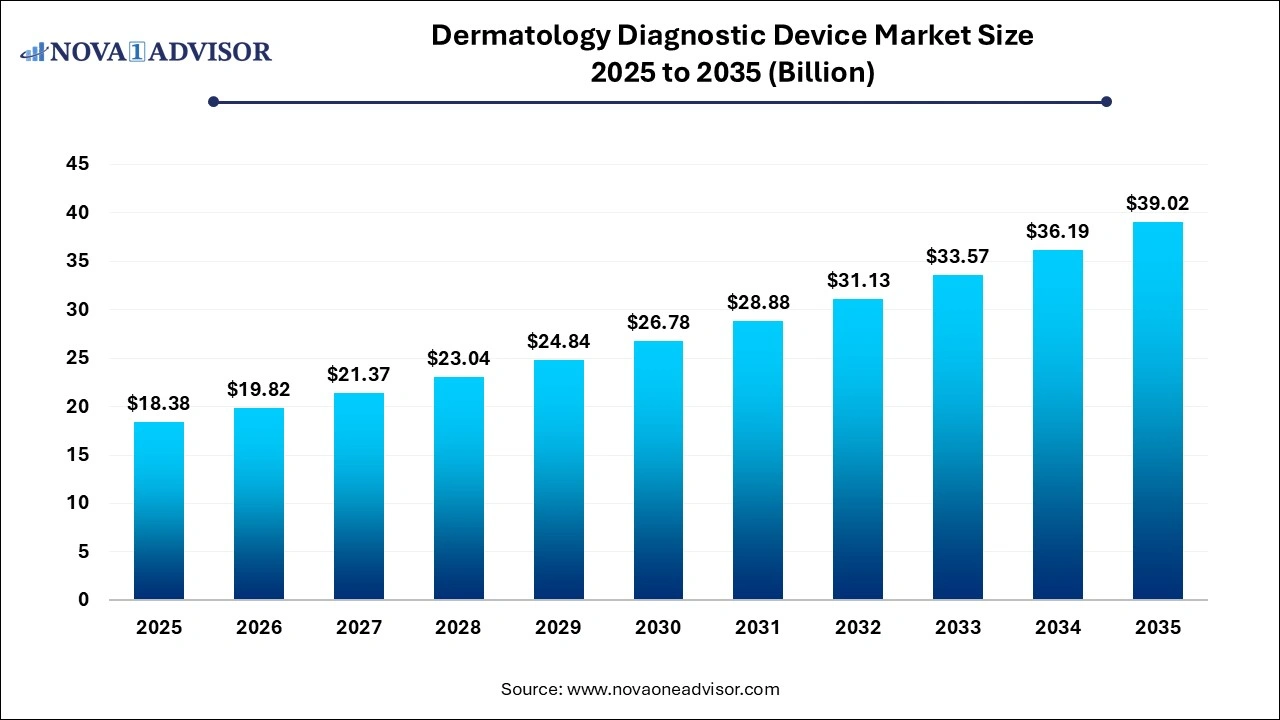
The global dermatology diagnostic devices market size was valued at USD 18.38 billion in 2025 and is projected to grow from USD 19.82 billion in 2026 to USD 39.02 billion by 2035, at a CAGR of 7.82% from 2026 to 2035. North America dominated the market, accounting for a revenue share of 39.0% in 2025.
Key Takeaway
- By product type, the imaging devices segment dominated the market with the largest share in 2025.
- By product type, the molecular diagnostics segment is expected to grow at the fastest CAGR over the forecast period.
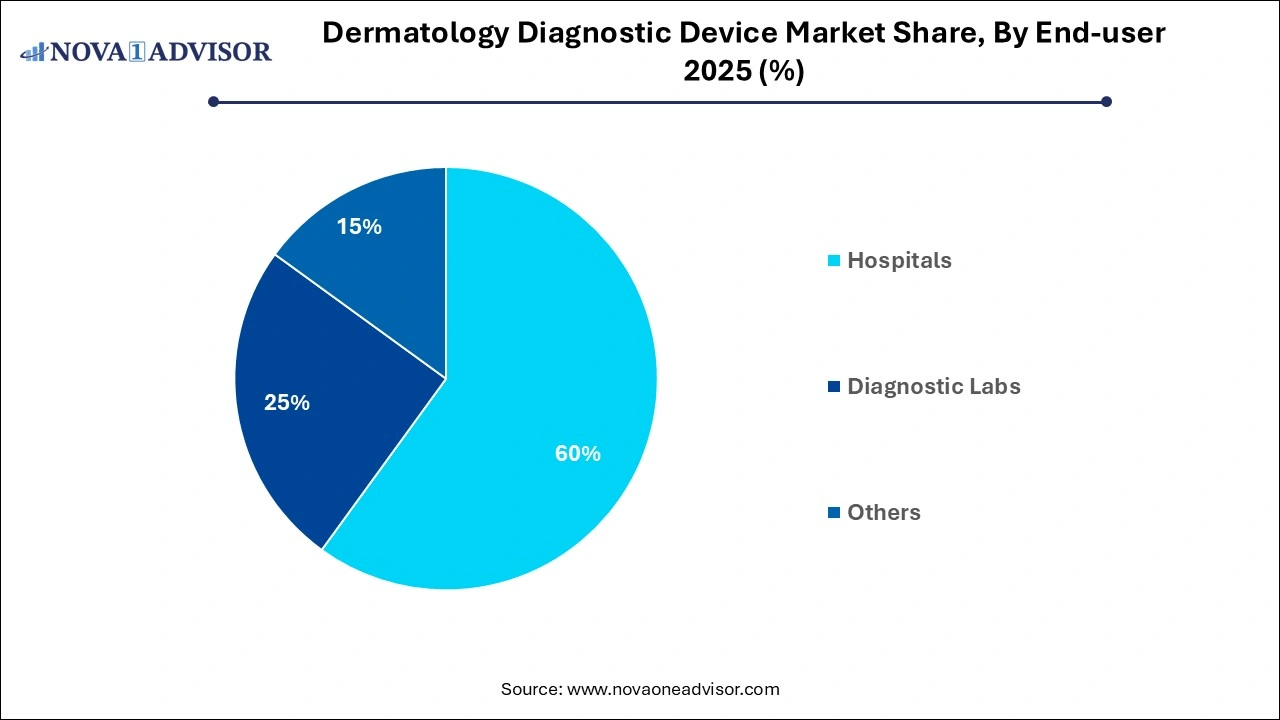
- By end use, the hospitals segment dominated the market with the largest share of 60.0% in 2025.
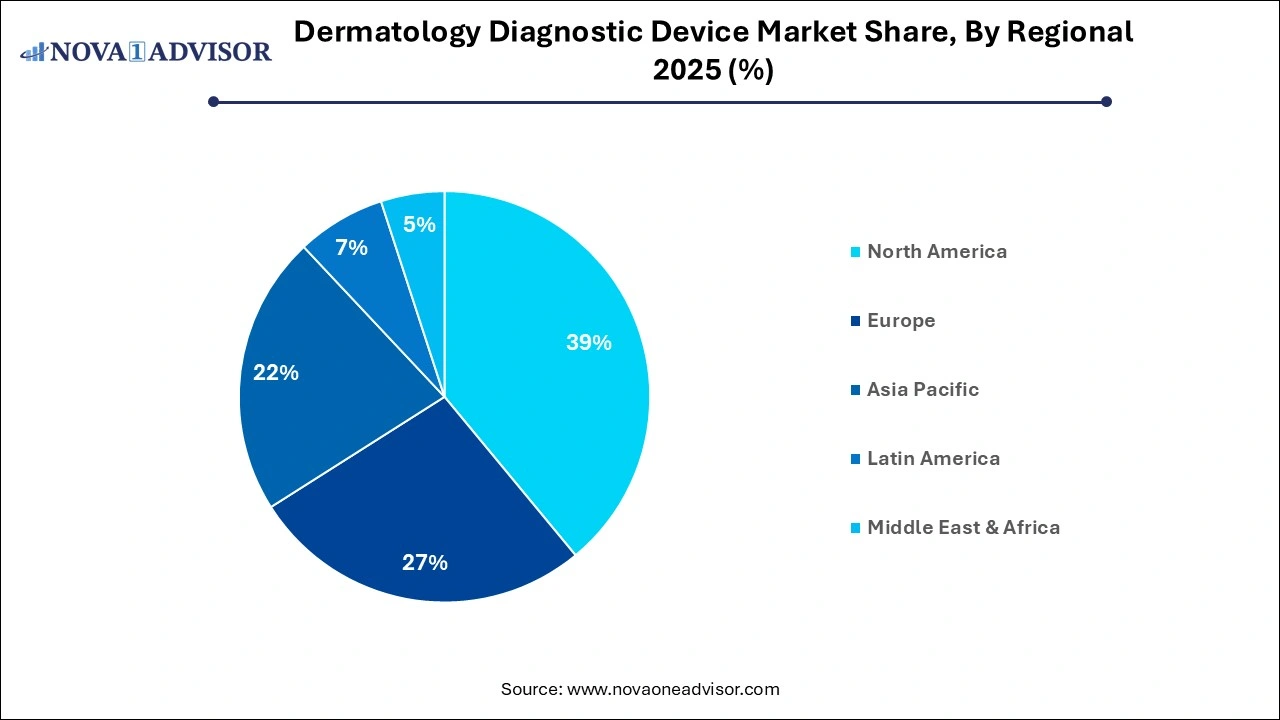
- By region, North America dominated the market with the largest share of 39.0% in 2025.
Market Overview
The global dermatology diagnostic device market is experiencing steady growth due to the rising prevalence of skin disorders, increasing awareness of skin cancer, and growing demand for accurate, non-invasive diagnostic technologies. Dermatology diagnostic devices play a vital role in detecting and monitoring a wide range of conditions, including melanoma, psoriasis, eczema, acne, dermatitis, and fungal infections. Advanced imaging technologies such as dermatoscopes, confocal microscopes, and digital skin imaging systems enable clinicians to diagnose skin diseases with greater accuracy while reducing the need for unnecessary invasive procedures.
The market is further driven by the digital transformation of healthcare, with high-resolution imaging systems integrating seamlessly with electronic health records, cloud-based image storage, and teledermatology platforms. These advancements improve diagnostic efficiency, enable remote specialist consultations, and support long-term patient monitoring. In addition, the growing adoption of molecular diagnostics and precision medicine is enhancing the early detection of skin cancers and autoimmune skin disorders by identifying genetic and biomarker-based disease profiles.
Increasing demand for cosmetic dermatology procedures, expanding healthcare infrastructure in emerging economies, and the availability of portable smartphone-connected diagnostic devices are also contributing to market expansion. Continuous innovations in artificial intelligence, digital imaging, and portable diagnostic technologies are transforming dermatology into a more personalized and data-driven specialty. As preventive healthcare gains greater importance worldwide, the dermatology diagnostic device market is expected to witness sustained growth, supported by advancements in AI-enabled diagnostics, telemedicine, and integrated digital healthcare solutions.
Market Outlook
- Market Growth Overview: The global dermatology diagnostic device market is expected to grow significantly between 2025 and 2035, driven by growing demand for non-invasive surgical procedures globally.
- Sustainability Trends: Sustainability trends involve growing emphasis on reducing environmental impacts through eco-design and low power consumption.
- Major Investors: Major investors in the market include Canfield Scientific, FotoFinder Systems, HEINE Optotechnik, DermLite (3Gen), and Michelson Diagnostics.
How is AI Impacting The Global Dermatology Diagnostic Device Market?
Artificial intelligence (AI) is revolutionizing the market by optimizing early skin cancer detection and growing teledermatology into rural or underserved regions. In addition, deep learning models and convolutional neural networks achieve diagnostic efficacy comparable to or exceeding that of medical specialists in the detection and classification of malignant skin lesions and cutaneous neoplasms.
Deep learning models evaluate characteristics including lesion shape, border irregularity, color variation, and size to generate risk assessments that help clinicians prioritize suspicious lesions for biopsy while reducing unnecessary invasive procedures. This enhances early skin cancer detection and supports more effective use of healthcare resources.
AI is also driving the growth of teledermatology by enabling patients to upload skin images through secure digital platforms for automated preliminary analysis before specialist review. This improves access to dermatological care, shortens waiting times, and expands specialist services to remote and underserved areas. In addition, AI-powered clinical decision support systems combine patient history, imaging data, and laboratory findings to assist physicians in making more consistent and evidence-based diagnoses.
Furthermore, AI streamlines clinical workflows by automating lesion measurement, image classification, documentation, and long-term monitoring of skin conditions. Many manufacturers are integrating AI directly into dermatology imaging devices, enabling real-time analysis during examinations. As AI continues to evolve, its integration with advanced imaging, molecular diagnostics, wearable sensors, and digital healthcare platforms is expected to deliver more personalized, efficient, and accurate dermatological care worldwide.
Dermatology Diagnostic Device Market Report Scope
| Report Coverage | Details |
| Market Size in 2026 | USD 19.82 Billion |
| Market Size by 2035 | USD 39.02 Billion |
| Growth Rate From 2026 to 2035 | CAGR of 7.82% |
| Base Year | 2025 |
| Forecast Period | 2026 to 2035 |
| Segments Covered | By Product Type, By End Use, By Region |
| Market Analysis (Terms Used) | Value (USD Million/Billion) or (Volume/Units) |
| Regional Scope | North America; Europe; Asia Pacific; Central and South America; the Middle East and Africa |
| Key Companies Profiled | Valeant Pharmaceuticals (Canada), Alma Lasers, Ltd. (Israel), Cutera, Inc. (U.S.), Lumenis, Ltd. (Israel), Cynosure, Inc. (U.S.), Dino-Lite Europe/IDCP B.V., Genentech, Inc., (US), Michelson Diagnostics Ltd., (UK), Galderma S.A., (Switzerland), and Cutera, Inc. (US) |
Market Driver
Rising Incidence of Skin Cancer and Chronic Skin Diseases Drives Market Growth
The growing prevalence of skin cancer and chronic dermatological disorders is a key driver of the dermatology diagnostic device market. Increasing exposure to ultraviolet radiation, environmental pollution, aging populations, and lifestyle-related factors have led to a rise in conditions such as melanoma, psoriasis, eczema, acne, and autoimmune skin diseases. Greater awareness of early skin cancer detection and expanding screening programs are encouraging more dermatology consultations, while healthcare providers continue investing in advanced imaging and molecular diagnostic technologies to improve diagnostic accuracy and patient outcomes.
Market Restraint
High Equipment Costs and Limited Healthcare Access Restrict Market Expansion
The high cost of advanced dermatology diagnostic devices remains a significant challenge for market growth. Technologies such as confocal microscopes, AI-enabled imaging systems, and molecular diagnostic platforms require substantial investment, limiting adoption among smaller clinics and healthcare facilities with constrained budgets. In many developing countries, inadequate reimbursement policies, limited access to specialized dermatology services, and a shortage of trained professionals further restrict the widespread use of advanced diagnostic technologies, particularly in rural and underserved regions.
Market Opportunity
AI-Enabled Teledermatology Creates Strong Long-Term Growth Opportunities
The rapid expansion of AI-powered teledermatology presents a significant opportunity for the dermatology diagnostic device market. Increasing smartphone usage, cloud-based healthcare platforms, and high-speed internet connectivity are enabling remote skin assessments using digital images and AI-assisted diagnostic tools. This approach improves access to specialist care, particularly in underserved regions, while reducing consultation times and healthcare costs. Growing government support for digital healthcare, combined with advances in portable imaging devices, AI-driven diagnostic software, and cloud-based dermatology platforms, is expected to accelerate teledermatology adoption and drive sustained market growth in the coming years.
Segmental Insights
By Product Type
Why did the imaging devices segment dominate the global dermatology diagnostic device market?
The imaging devices segment dominated the market with the largest share in 2025. The dominance of the segment can be attributed to the increasing prevalence of skin cancer and surge in preference for noninvasive diagnostic tools. In addition, the increasing global incidence of both melanoma and non-melanoma skin cancers requires the implementation of dependable and systematic screening methodologies.
How did the molecular diagnostics segment expected to hold the significantly growing global dermatology diagnostic device market in the coming years?
The molecular diagnostics segment is expected to grow at the fastest CAGR over the forecast period. The growth of the segment can be credited to the increasing skin cancer rates and ongoing transition towards personalized medicine. The integration of molecular analysis and digital imaging modalities significantly enhances the precision of diagnostic classification for complex pathological lesions.
By End Use
Why did the hospitals segment dominate the global dermatology diagnostic device market?
The hospitals segment dominated the market with the largest share in 2025. The dominance of this segment can be linked to the growing volume of complex skin conditions and the surge in funding for innovative non-invasive imaging techniques. Furthermore, hospitals increasingly prioritize advanced diagnostic platforms designed to minimize invasive surgical biopsies and propel patient recovery timelines.
How did the diagnostic labs segment expected to hold the significantly growing global dermatology diagnostic device market in the coming years?
The diagnostic labs segment is expected to grow at the fastest CAGR over the forecast period. The growth of the segment can be driven by an increasing need for non-invasive digital screening and a surge in the incidence of chronic inflammatory skin conditions. Favourable regional reimbursement frameworks and teledermatology provisions incentivize medical facilities and laboratories to invest in portable and stationary diagnostic equipment.
By Regional
Why did the North American region account for the largest share in the global dermatology diagnostic device market?
North America dominated the market with the largest share in 2025. The dominance of the region can be attributed to the robust presence of advanced healthcare infrastructure and growing adoption of non-invasive tools. In addition, agencies such as the United States Food and Drug Administration employ extensive regulatory frameworks to facilitate the rapid commercialization and clinical deployment of innovative diagnostic technologies.
U.S. Global Dermatology Diagnostic Device Market Trends
The growth of the market in the country can be driven by the growing patient inclination for non-invasive optical and digital diagnostic tools. Also, patients and healthcare providers increasingly prefer non-invasive diagnostic techniques, such as optical coherence tomography and high-frequency ultrasound, over conventional surgical procedures.
Why did the Asia-Pacific region become the fastest-growing global dermatology diagnostic device market during the forecast period?
Asia Pacific is expected to grow at the fastest CAGR over the forecast period. The growth of the region can be credited to the increasing disposable incomes and growing private healthcare infrastructure in emerging economies. Furthermore, nations such as South Korea, Thailand, and India consistently draw international patients seeking cost-effective, high-standard dermatological and aesthetic medical services.
China Global Dermatology Diagnostic Device Market Trends
The market in the country is growing due to growing consumer demand for anti-aging and aesthetic treatments coupled with the growth of private dermatology clinics. Moreover, local manufacturing of cost-effective diagnostic instrumentation substantially reduces capital spending and operational outlays for regional healthcare facilities and private clinical practices.
Key Players in the Global Dermatology Diagnostic Device Market
- Canfield Scientific, Inc. (U.S.): Global leader in medical imaging systems; famed for the VECTR A 3D whole-body imaging ecosystem and VISIA skin analysis are used extensively in clinical trials and advanced dermatology clinics.
- MetaOptima Technology Inc. (Canada): A leader in intelligent dermatology software, its MoleScope and DermEngine cloud platforms utilize smart AI tools for workflow optimization and telehealth/tele-dermatology.
- FotoFinder Systems GmbH (Germany): A pioneer in automated total body mapping and digital dermoscopy; uses advanced artificial intelligence (AI) algorithms for early skin cancer and melanoma detection.
Recent Developments
- In March 2026, NanoEntek announced the commencement of global shipments for the "Lancôme Cell BioPrint," an advanced skin diagnostic device developed in collaboration with the L’Oréal Group. The initial deployment of field-test equipment and consumable kits will begin in late March, with subsequent shipments planned for the second half of the year pending results.
Segments Covered in the Report
This report forecasts revenue growth at country levels and provides an analysis of the latest industry trends in each of the sub-segments from 2021 to 2035. For this study, Nova one advisor, Inc. has dermatology diagnostic devices market.
By Product Type
- Imaging Devices
- Microscopes
- Immunoassays
- Molecular Diagnostics
- Others
By End Use
- Hospitals
- Diagnostic Labs
- Others
By Region
- North America
- Europe
- Asia-Pacific
- Latin America
- Middle East & Africa (MEA)
FAQ's

Proceed to Buy
Instant PDF delivery on confirmation

Dermatology Diagnostic Device Market Size to Hit USD 39.02 Billion by 2035
 Request Customization
 Download Sample

Get a Sample of this Report
Dermatology Diagnostic Device Market