

Diabetes Clinical Trials Market Size, Share, and Trends 2026 to 2035
 Status Published
 Category Healthcare


Content
Diabetes Clinical Trials Market Summary
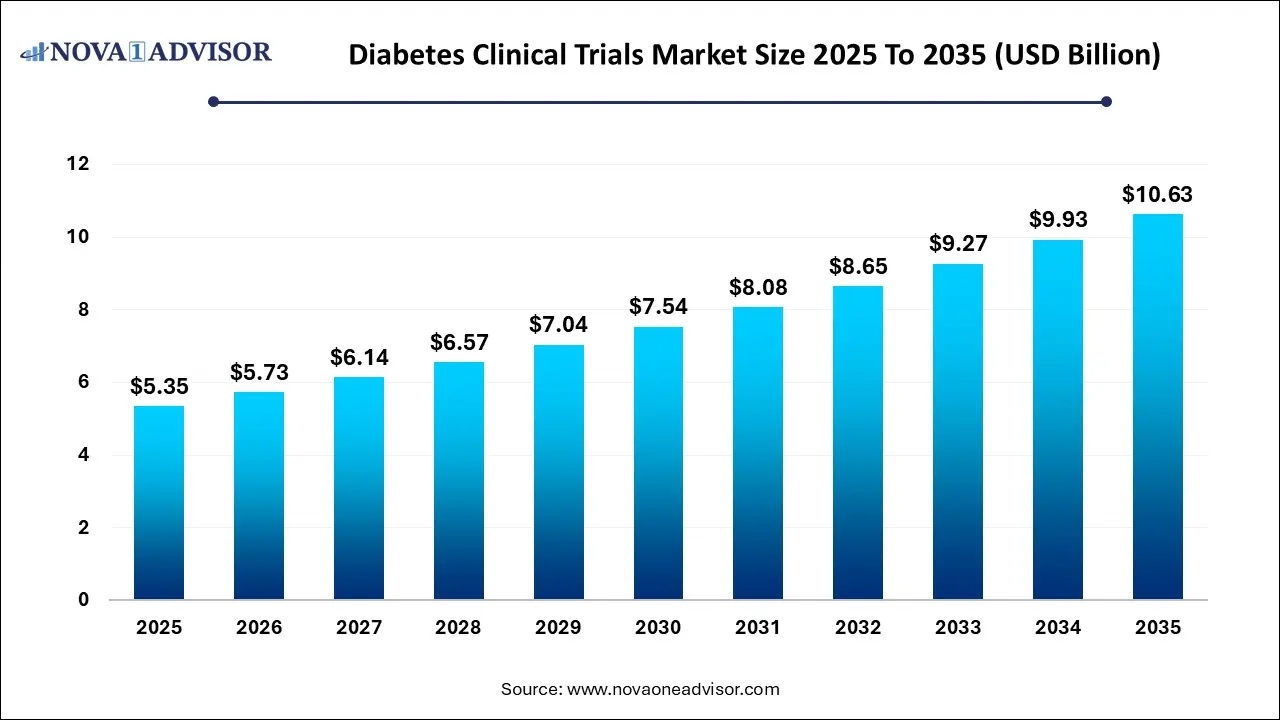
The diabetes clinical trials market size was estimated at USD 5.35 billion in 2025 and is projected to increase from USD 5.73 billion in 2026 to approximately USD 10.63 billion by 2035, growing at a CAGR of 7.11% from 2026 to 2035. The diabetes clinical trials market is driven by the rising global diabetic population, expansion of GLP-1 and cardiometabolic drugs, and growing focus on precision medicine and significant funding for research and development.
Key Takeaways
- By phase, the phase III segment held a dominant position in the market with a share of 42% in 2025.
- By phase, the phase II segment is the fastest growing between 2026 and 2035.
- By study design, the interventional trials segment held a dominant position in the market with a share of 68% in 2025.
- By study design, the observational trials segment is the fastest growing between 2026 and 2035.
- By indication, the type 2 diabetes mellitus (T2DM) segment held a dominant position in the market with a share of 58% in 2025.
- By indication, the type 1 diabetes mellitus (T1DM) segment is the fastest growing between 2026 and 2035.
- By indication by study design, the type 2 diabetes mellitus (T2DM) segment held a dominant position in the market with a share of 57% in 2025.
- By service, the patient recruitment segment held a dominant position in the market with a share of 24% in 2025.
- By sensors, the pharmaceutical and biopharmaceutical companies segment held a dominant position in the market with a share of 72% in 2025.
- By region, the North America region held a dominant position in the market with a share of 39% in 2025.
Innovation Driving Transformation in the Diabetes Clinical Trials Market
Diabetes clinical trials comprise research studies designed to evaluate the safety, efficacy, and long-term outcomes of metabolic therapies, insulin products, and medical devices. These trials offer vital advantages, such as providing patients with cutting-edge care, securing regulatory approval for groundbreaking medications, and optimizing glycemic management. Primary benefits span various applications, ranging from treating Type 1 and Type 2 diabetes to managing obesity-linked cardiometabolic disorders.
Diabetes Clinical Trials Market Trends
- Commercial and Clinical Acceleration of GLP-1 Portfolios
The massive market success of GLP-1 receptor agonists and incretin-based medicines has driven pharmaceutical companies to expand their clinical pipelines aggressively. Investors are heavily funding research into obesity-related diabetes, cardiovascular outcomes, and newer oral or long-acting formulations.
- Data Optimization via Digital Wearables and Real-World Evidence
Clinical trials are heavily utilizing continuous glucose monitors and smart insulin delivery systems to gather accurate, real-time physiological data. This continuous monitoring allows researchers to track patient metrics remotely, improving trial compliance and generating high-quality real-world evidence.
- Operational Efficiency via Decentralized and Hybrid Trial Architectures
To combat high operational costs and historically low patient retention rates, trial sponsors are moving toward decentralized models. Allowing patients to participate diversity and trial enrollment.
Key AI Integration in the Diabetes Clinical Trials Market
AI and ML fundamentally transform the diabetes clinical trials industry by streamlining patient recruitment and optimizing trial designs. These technologies accelerate drug development and metabolic research by using predictive analytics to forecast enrollment and identify optimal clinical trial sites. Continuous real-time monitoring through wearable biosensors integrated with AI enables decentralized trial formats. This minimizes patient dropout rates and improves data accuracy for diverse patient cohorts. The companies are forming strategic partnerships to leverage these solutions, directly driving growth in diabetes drug and metabolic device sectors.
Diabetes Clinical Trials Market Report Scope
| Report Coverage | Details |
| Market Size in 2026 | USD 5.73 Billion |
| Market Size by 2035 | USD 10.63 Billion |
| Growth Rate From 2026 to 2035 | CAGR of 7.11% |
| Base Year | 2025 |
| Forecast Period | 2026 to 2035 |
| Segments Covered | Phase, Study Design, Indication, Indication by Study Design, Service, Sponsor, Region |
| Market Analysis (Terms Used) | Value (USD Million/Billion) or (Volume/Units) |
| Regional Scope | North America; Europe; Asia Pacific; Central and South America; the Middle East and Africa |
| Key Companies Profiled | Syneos Health; Medpace; IQVIA; ICON plc; Fortrea; Parexel; ProSciento; Profil Institut für Stoffwechselforschung; Novo Nordisk; Eli Lilly and Company; Sanofi; AstraZeneca |
Market Dynamics
Driver
Rising Global Prevalence
The continuous increase in the patient pool requiring novel, efficacious treatments. As diagnoses surge worldwide, pharmaceutical companies face heightened urgency to develop and test advanced therapies, such as next-generation insulin, GLP-1 receptor agonists, and oral medications. This epidemiological surge directly translates into a greater demand for specialized clinical trial services, thereby accelerating research funding, trial activations, and patient recruitment efforts across the globe.
Restraint
High Operational Cost
The market growth is hindered by the straining pharmaceutical and biotech research and development budgets. These trials require lengthy observation periods, specialized cardiovascular outcomes monitoring, and complex compliance protocols, all of which drive up expenses. The massive data management needs and demanding patient requirement process compounds these financial burdens.
Opportunity
Decentralized Clinical Trials
By replacing frequent, burdensome physical clinic visits with remote participation options. By integrating wearable continuous glucose monitors and telemedicine, DCTs make trial enrollment far more accessible and flexible for a geographically diverse patient base. This increased convenience dramatically reduces patient dropout rates, which translate to higher retention and better long-term engagement.
Segment Insights
By Phase Insights
Why Did the Phase III Segment Hold a 42% Share for the Diabetes Clinical Trials Market?
The phase III segment held a dominant position in the market with a share of 42% in 2025. Owing to the large-scale confirmatory trials designed to establish the effectiveness and safety of diabetes therapies before regulatory approval. The successful execution of these rigorous multi-year studies serves as the definitive commercial catalyst for market authorization and scalable product launch.
The phase II segment held a 28% share of the market in 2025, with high failure risk and limited patient enrollment compared to later-stage trials. The surge in biotechnology research focusing on biologics, stem cell therapies, and beta-cell replacement technologies requires robust mid-stage testing to prove efficacy before advancing to Phase III.
The Phase I segment held a 15% share of the market in 2025, due to the early-stage clinical trials focused on evaluating the safety, dosage, and side effects of diabetes therapies in a small patient population. Progress in biomarker and genomic research allows investigators to design sophisticated, targeted Phase I studies for metabolic conditions.
The phase IV segment held a 15% share of the market in 2025, with the growing emphasis on real-world evidence and post-launch surveillance. As decentralized studies and AI-driven monitoring become standard, pharmaceutical companies continuously refine drug administration and dosing operations in real-world settings.
By Study Design Insights
Why Did the Interventional Trials Segment Hold a 68% Share for the Diabetes Clinical Trials Market?
The interventional trials segment held a dominant position in the market with a share of 68% in 2025. Owing to the strong demand for drug efficacy validation and regulatory approvals. The massive surge in research and development budgets is currently directed toward interventional trials testing GLP-1 receptor agonists and therapies targeting obesity-linked diabetes.
The observational trials segment held a 24% share of the market in 2025, mainly used for epidemiological insights and long-term disease monitoring. It requires strict controls and heavy financial investments; observational studies are less invasive, faster to execute, and significantly more cost-effective to conduct.
The expanded access trials segment held an 8% share of the market in 2025, due to expanded access programs, allows these critically ill patients to receive investigational drugs before they are officially approved. The surge in novel, first-in-class therapies necessitates controlled means for eligible patients to access life-saving treatments for conditions, such as post-bariatric hypoglycemia or severe chronic metabolic complications.
By Indication Insights
Why Did the Type 2 Diabetes Mellitus (T2DM) Segment Lead the Diabetes Clinical Trials Market?
The type 2 diabetes mellitus (T2DM) segment registered its dominance over the market with a share of 58% in 2025, owing to its massive global patient population and continuous therapeutic advancements. The high demand for trial participants makes it highly attractive for pharmaceutical investments.
The type 1 diabetes mellitus (T1DM) segment held a 24% share of the market in 2025, with research activity rising for insulin innovations and immune-targeted therapies. Numerous clinical trials dedicated to testing next-generation closed-loop automated insulin delivery systems, artificial pancreases, and advanced continuous glucose monitors.
The gestational diabetes segment held a 10% share of the market in 2025, due to the rising prevalence of gestational diabetes from modern lifestyle shifts, which has accelerated clinical research into maternal and fetal health outcomes. With strict regulatory guidelines and universal early screening protocols, this heightened detection directly fuels the global demand for dedicated gestational diabetes management trials.
The others segment held the 9% share of the market in 2025, owing to the rapid evaluation of metabolic care, which catalyzed a shift toward advanced combination therapies and long-acting insulins designed to optimize both glycemic control and weight loss. Late-stage clinical research has intensified its focus on mitigating critical cardiovascular and renal comorbidities, recognizing that diabetes rarely occurs in isolation.
By Indication by Study Design Insights
Why Did the type 2 diabetes mellitus (T2DM) Segment Lead the Diabetes Clinical Trials Market?
The type 2 diabetes mellitus (T2DM) segment registered its dominance over the market with a share of 57% in 2025, owing to the extensive global research funding and high unmet clinical needs. Clinical research pipelines are optimizing patient compliance by validating innovative delivery mechanisms, including long-acting formulations and personalized combination therapies.
The type 1 diabetes mellitus (T1DM) segment held the 24% share of the market in 2025, owing to precision medicine and advanced insulin delivery research continuing to expand. Growing funding from governments, biotech companies, and advocacy groups, and growing focus on optimizing artificial pancreas systems, automated insulin delivery, and advanced continuous glucose monitoring to minimize severe glycemic fluctuations.
The gestational diabetes segment held an 11% share of the market in 2025, due to the narrower patient recruitment opportunities and shorter study windows. Strict public health guidelines demand. Stricter public health guidelines demand comprehensive clinical trials to validate the safety and efficacy of novel therapeutic interventions during pregnancy.
The others segment held an 8% share of the market in 2025, with the shift toward multifaceted therapies that simultaneously target multiple metabolic pathways or act as powerful adjuncts to traditional treatments. This comprehensive, system-wide shift toward holistic metabolic management and highly tailored patient interventions.
By Service Insights
Why Did the Patient Recruitment Segment Lead the Diabetes Clinical Trials Market?
The patient recruitment segment registered its dominance over the market with a share of 24% in 2025, owing to the rising challenges in enrolling qualified diabetic patient populations. It requires patients to meet highly specific metabolic and physiological benchmarks, narrowing the pool of eligible candidates.
The clinical trial data management services segment held an 18% share of the market in 2025, due to the modern diabetes research environment demanding highly sophisticated data management systems to accurately clean and synthesize vast, multi-variable datasets across extensive timeframes. Robust data management serves as the foundational backbone enabling the industry to safely accelerate complex metabolic therapies to market.
The protocol designing segment held a 12% share of the market in 2025, due to increasingly outsourced specialized trial planning activities. The integration of AI into protocol design has streamlined cohort selection, predicted trial outcomes, and expedited decision-making, increasing reliance on specialized design services.
The site identification segment held a 10% share of the market in 2025, with the complex inclusion and exclusion criteria characteristic of modern diabetes trials demanding meticulous site identification to successfully source highly specific patient profiles and comorbidities. The rapid proliferation of novel metabolic therapies for specialized investigators makes precise site identification services a critical driver of operational trial success.
The laboratory services segment held a 15% share of the market in 2025, with the growing importance of biomarker-driven research. The shift toward personalized endocrinology requires complex molecular, genetic, and bioanalytical testing that only dedicated trial laboratory services can seamlessly support on a large scale.
The analytical testing services segment held a 13% share of the market in 2025, due to the increasing complexity in diabetes drug evaluation. The shift toward biologics, gene therapies, and precision medicine in diabetes management necessitates highly advanced pharmacokinetic (PK) and pharmacodynamic (PD) analyses, keeping analytical testing in high demand.
The others segment held an 8% share of the market in 2025, with the core operational functions capture the majority of outsourcing demand. The industry is aggressively studying combination therapies to improve glycemic control while minimizing side effects and addressing obesity-linked metabolic syndromes.
By Sponsor Insights
Why Did the Pharmaceutical and Biopharmaceutical Companies Segment Lead the Diabetes Clinical Trials Market?
The pharmaceutical and biopharmaceutical companies segment registered its dominance over the market with a share of 72% in 2025, owing to substantial R&D investments and a strong diabetes drug development pipeline. Rising complex, multi-phase, global clinical trials for cardiometabolic conditions require immense capital that only major pharmaceutical corporations possess.
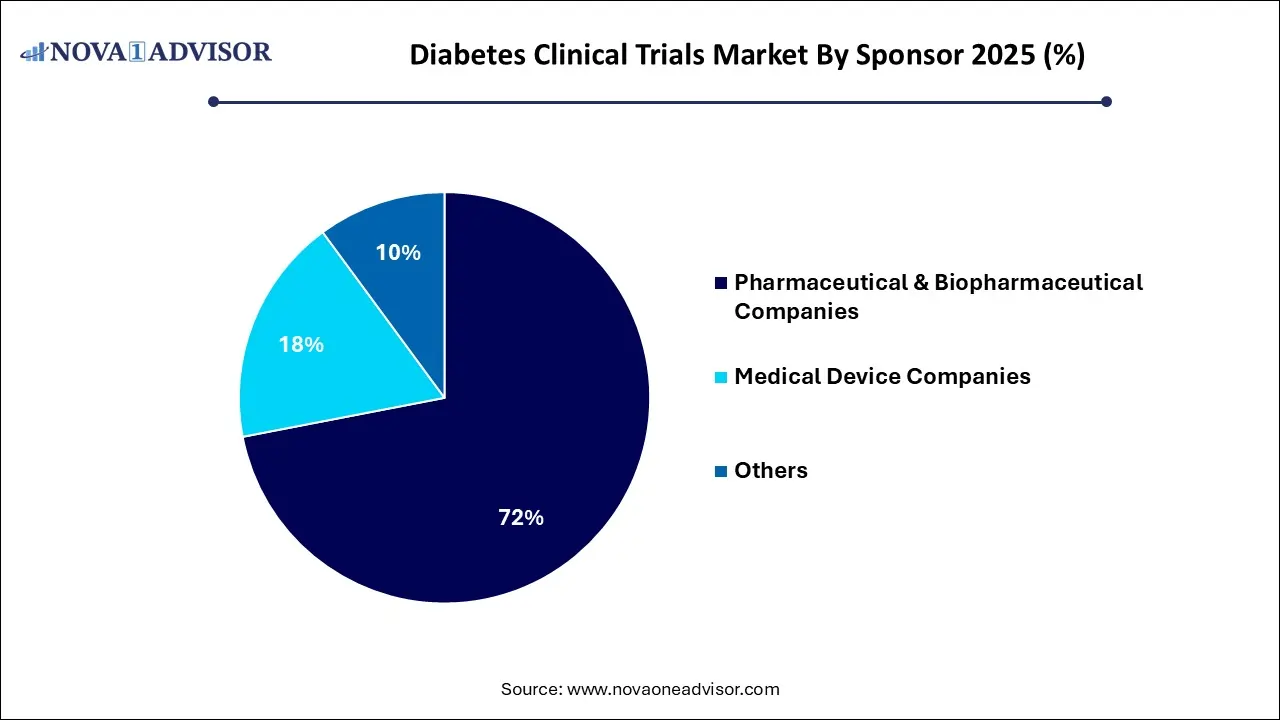
The medical device companies segment held an 18% share of the market in 2025, due to device innovation continuing to expand alongside digital health adoption. Integration of digital health and heavy investment in artificial pancreas are closed-loop systems that require comprehensive clinical evaluation.
The others segment held a 10% share of the market in 2025, due to non-commercial sponsors typically operating with limited funding capacity. Rising demand for specialized services, integration of advanced technology, and complex metabolic pipelines.
By Regional Insights
Why Did the North America Region Lead the Diabetes Clinical Trials Market?
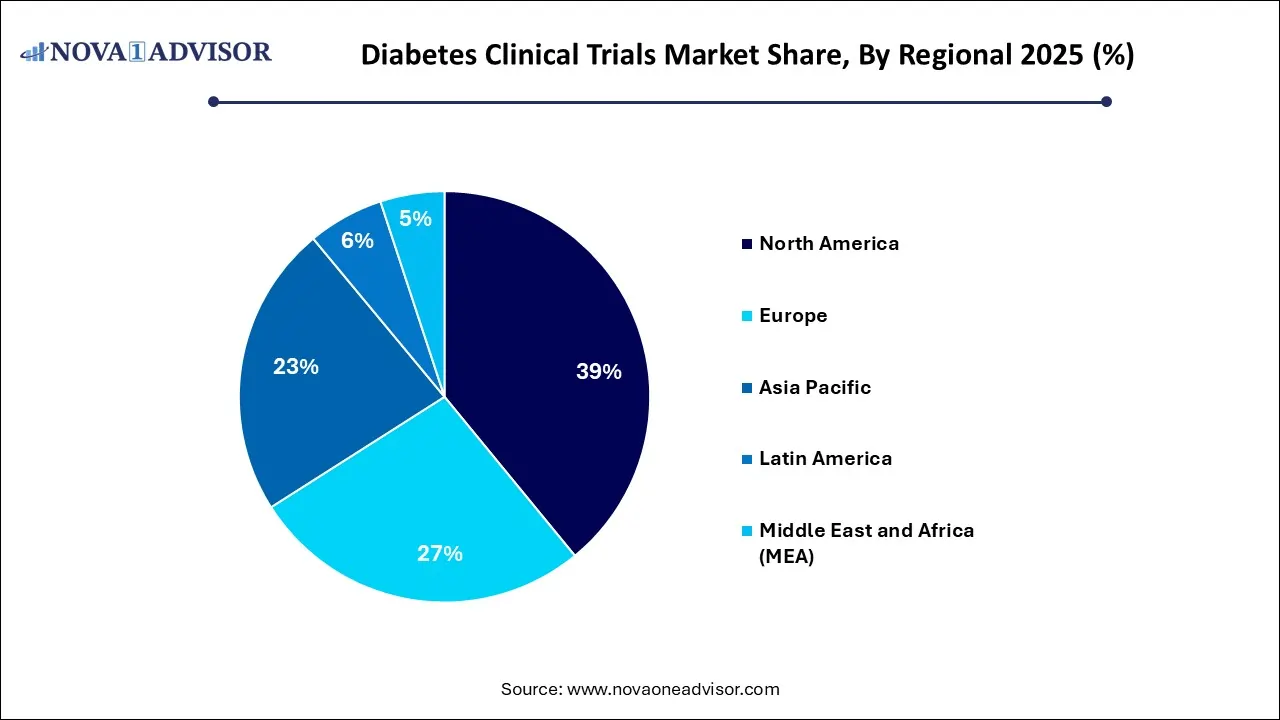
The North America region registered its dominance over the market with a share of 39% in 2025, owing to high R&D spending, strong regulatory support, and a large diabetic population. The region features world-class clinical research organizations and well-established collaborations between sponsors and academic research institutions.
U.S. Surgical Suture Market Trends
The U.S. is increasingly dominated by absorbable technologies and advanced synthetic polymers that align with value-based care incentives and offer highly predictable tensile strength. The adoption of self-anchoring barbed sutures is rising sharply due to their ability to optimize hospital economics by drastically reducing operating room times.
The Europe region held the 27% share of the market in 2025, due to the well-established clinical research networks and increasing diabetes prevalence. The highest absolute number of Type 1 diabetes cases drives urgent clinical demand for next-generation biologics and advanced therapeutics.
U.K. Surgical Suture Market Trends
The U. K’s critical material shift toward technologically advanced products, including antibacterial and self-anchoring barbed sutures designed to prevent surgical site infections. The nationwide rise in minimally invasive surgeries has intensified the clinical demand for precision suturing materials engineered specifically for smaller incisions.
The Asia Pacific segment held 23% share of the market in 2025, due to the rising clinical trial outsourcing and increasing diabetes incidence. The expanding clinical infrastructure and CROs across various country highly advanced trial centers and expert key opinion leaders. Lower operational costs and faster patient requirements timelines allow global biotechnology companies to accelerate their research and development processes.
China Surgical Suture Market Trends
China’s rapid shift toward complex, minimally invasive procedures is driving intensive clinical utilization of specialized, smaller-gauge suturing devices to optimize outpatient healing. Severe demographic aging, which has triggered a massive nationwide spike in age-related surgeries and chronic disease interventions.
The Latin America region held a 6% share of the market in 2025, with the sizable patient pool and high urban concentration in major hubs, such as Mexico City and São Paulo, which enable rapid subject enrollment. The modernized, streamlined significant cost advantages in clinical infrastructure and requirements compared to traditional Western markets.
The MEA region held a 5% share of the market in 2025, due to rapid urbanization and sedentary lifestyles, particularly across wealthy Gulf nations, such as Saudi Arabia and the UAE. To address this epidemic, global pharmaceutical companies are heavily targeting the region’s massive pools of treatment-naïve patients to capture highly accurate clinical data unaffected by prior therapies.
Recent Developments
- In December 2025, Novo Nordisk submitted a New Drug Application to the FDA for CagriSema (cagrilintide 2.4 mg and semaglutide 2.4 mg), aiming to create the first once-weekly injectable GLP-1 and amylin analogue combination for weight management. Data from the REDEFINE 1 Phase 3 trial showed participants achieved up to 22.7% body weight loss at 68 weeks.
Diabetes Clinical Trials Market Companies
- Syneos Health
- IQVIA
- Medpace
- ICON plc
- Parexel
- Fortrea
- ProSciento
- Novo Nordisk
- Profil Institut für Stoffwechselforschung
- Eli Lilly and Company
- AstraZeneca
- AstraZeneca
Segments Covered in the Report
This report forecasts revenue growth at country levels and provides an analysis of the latest industry trends in each of the sub-segments from 2021 to 2035. For this study, Nova one advisor, Inc. has diabetes clinical trials market.
By Phase
- Phase I
- Phase II
- Phase III
- Phase IV
By Study Design
- Interventional Trials
- Observational Trials
- Expanded Access Trials
By Indication
- Type 1 Diabetes Mellitus (T1DM)
- Type 2 Diabetes Mellitus (T2DM)
- Gestational Diabetes
- Others
By Indication by Study Design
- Type 1 Diabetes Mellitus (T1DM)
-
- Interventional Trials
- Observational Trials
- Expanded Access Trials
- Type 2 Diabetes Mellitus (T2DM)
-
- Interventional Trials
- Observational Trials
- Expanded Access Trials
- Gestational Diabetes
-
- Interventional Trials
- Observational Trials
- Expanded Access Trials
- Others
-
- Interventional Trials
- Observational Trials
- Expanded Access Trials
By Service
- Protocol Designing
- Site Identification
- Patient Recruitment
- Laboratory Services
- Analytical Testing Services
- Clinical Trial Data Management Services
- Others
By Sponsor
- Pharmaceutical & Biopharmaceutical Companies
- Medical Device Companies
- Others
By Region
- North America
- Europe
- Asia Pacific
- Latin America
- Middle East and Africa (MEA)

Proceed to Buy
Instant PDF delivery on confirmation

Diabetes Clinical Trials Market Size to Hit USD 10.63 Billion by 2035
 Request Customization
 Download Sample

Get a Sample of this Report
Diabetes Clinical Trials Market