

Diabetes Pen Market Size, Share, and Trends 2026 to 2035
 Status Published
 Category Healthcare


Content
Diabetes Pen Market Size and Growth 2026 to 2035
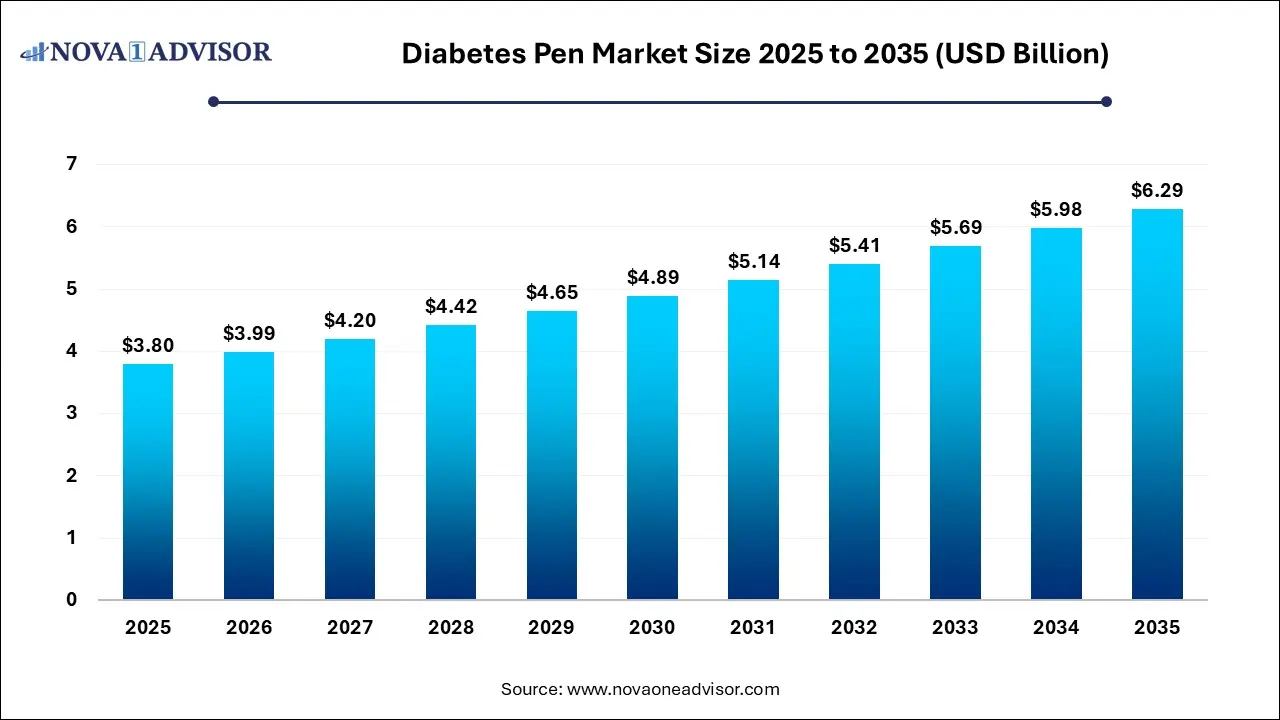
The global diabetes pen market size was estimated at USD 3.80 billion in 2025 and is projected to hit around USD 6.29 billion by 2035, growing at a CAGR of 5.19% during the forecast period from 2026 to 2035.
Market Overview
The diabetes pen market has emerged as one of the most significant segments within the global diabetes care industry due to the growing demand for convenient, accurate, and patient-friendly insulin delivery systems. Diabetes pens are medical devices designed to administer insulin in a controlled and user-friendly manner for patients suffering from Type 1, Type 2, and gestational diabetes. These pens have gradually replaced traditional vial-and-syringe methods because they offer improved dosage accuracy, portability, ease of use, and enhanced patient compliance.
The increasing prevalence of diabetes worldwide remains the primary factor driving the market. Sedentary lifestyles, unhealthy dietary patterns, obesity, and aging populations have contributed significantly to the growing number of diabetic patients globally. According to international health organizations, diabetes cases continue to rise rapidly across both developed and developing countries. As insulin therapy becomes essential for long-term diabetes management, the adoption of insulin pens is expanding steadily.
Diabetes pens are particularly beneficial for patients requiring frequent insulin administration. Traditional syringes often create psychological discomfort and dosage errors, whereas insulin pens simplify the injection process. Modern devices provide preset dosing mechanisms, finer needles, and ergonomic designs that improve patient convenience and confidence. This is especially important for elderly patients and children who may face difficulties using conventional injection systems.
The market includes reusable pens, disposable pens, and smart insulin pens. Reusable pens utilize replaceable insulin cartridges and are preferred for long-term use due to environmental and cost considerations. Disposable pens are prefilled and discarded after use, offering convenience and minimal maintenance. Smart pens represent the latest technological advancement, integrating digital connectivity and dose-monitoring capabilities to improve treatment adherence and glucose management.
Growing awareness regarding diabetes complications is also encouraging early diagnosis and continuous insulin therapy. Patients increasingly recognize the importance of maintaining blood glucose control to avoid complications such as cardiovascular disease, kidney failure, neuropathy, and vision loss. This awareness is driving adoption of advanced insulin delivery systems globally.
Healthcare providers are increasingly recommending diabetes pens because they improve dosing accuracy and reduce medication errors. Hospitals, diabetes clinics, and endocrinologists favor pen-based insulin administration due to its efficiency and patient adherence benefits. Furthermore, the growth of telemedicine and remote diabetes monitoring is encouraging the integration of connected smart pens with mobile health platforms.
Emerging economies are becoming major growth centers for the market. Rapid urbanization, rising disposable incomes, expanding healthcare infrastructure, and growing diabetic populations in countries such as India and China are significantly increasing demand for insulin pens. Government initiatives focused on diabetes screening and affordable treatment access are further accelerating market penetration.
Despite strong growth prospects, the market faces certain challenges including high device costs, limited reimbursement in developing economies, and patient concerns regarding needle usage. However, ongoing innovations in needle-free injection systems, connected healthcare technologies, and eco-friendly reusable devices are expected to create long-term opportunities.
Overall, the diabetes pen market is positioned for substantial expansion due to increasing diabetes prevalence, rising healthcare awareness, technological innovation, and growing demand for convenient self-administration solutions.
Market Outlook
- Market Growth Overview: The global diabetes pen market is expected to grow significantly between 2025 and 2035, driven by the rising global burden of diabetes, patient preference for self-administration and home care, and favorable reimbursement policies and government support.
- Sustainability Trends: Sustainability trends involve eco-friendly packaging, recycling, take-back programs, and extended action therapies.
- Major Investors: Major investors in the market include BD, Ypsomed Holding AG, Novo Nordisk, Sanofi, and Eli Lilly.
How is AI Transforming the Diabetes Pen Market
Artificial intelligence is significantly transforming the diabetes pen market by improving insulin delivery precision, patient monitoring, treatment personalization, and disease management efficiency. AI technologies are increasingly integrated into smart insulin pens and connected healthcare ecosystems to support better glycemic control and patient adherence.
One of the most important applications of AI is personalized insulin dosing. Smart insulin pens equipped with AI-powered software can analyze patient glucose readings, meal intake, activity levels, and insulin history to recommend optimized insulin doses. This reduces the likelihood of overdosage or underdosage and improves overall diabetes management.
AI-driven analytics are also helping physicians monitor patient adherence remotely. Connected insulin pens can automatically record injection timing, dosage amounts, and missed injections. These data points are analyzed through AI platforms that identify behavioral trends and treatment gaps. Healthcare providers can use these insights to intervene early and improve treatment outcomes.
Another major advancement is predictive glucose management. AI algorithms integrated with continuous glucose monitoring (CGM) systems and insulin pens can forecast blood glucose fluctuations before they occur. This enables patients to take preventive action and avoid dangerous hypoglycemic or hyperglycemic events. Such predictive capabilities are especially valuable for Type 1 diabetes patients requiring intensive insulin therapy.
Manufacturers are also using AI in product development and manufacturing operations. Machine learning systems improve production efficiency by identifying defects, optimizing assembly lines, and predicting maintenance needs. AI-assisted manufacturing enhances product quality and ensures compliance with stringent medical device regulations.
Voice-enabled digital assistants and AI-driven diabetes applications are further enhancing patient engagement. Some smart insulin pens can synchronize with smartphone applications that provide reminders, educational support, and lifestyle recommendations. These digital ecosystems encourage better long-term treatment adherence.
AI is additionally supporting population-level diabetes management. Healthcare systems use AI-powered analytics to identify high-risk diabetic populations, monitor treatment effectiveness, and optimize resource allocation. This broader integration of AI within diabetes care is expected to strengthen demand for connected insulin pen technologies over the coming years.
Overall, AI is transforming diabetes pens from simple injection devices into intelligent healthcare management tools that support personalized treatment, remote monitoring, and improved clinical outcomes.
Diabetes Pen Market Report Scope
| Report Coverage | Details |
| Market Size in 2026 | USD 3.99 Billion |
| Market Size by 2035 | USD 6.29 Billion |
| Growth Rate From 2026 to 2035 | CAGR of 5.19% |
| Base Year | 2025 |
| Forecast Period | 2026 to 2035 |
| Segments Covered | By Type, By End User, By Delivery Method, By Therapeutic Area, By Region |
| Market Analysis (Terms Used) | Value (USD Million/Billion) or (Volume/Units) |
| Regional Scope | North America; Europe; Asia Pacific; Central and South America; the Middle East and Africa |
| Key Companies Profiled | AstraZeneca (U.K), Teruma Medical Corporation (Japan), Greinier Bio One International GmBH (U.S.), F. Hoffman La Roche AG (Switzerland), Becton, Dickinson and Company (U.S.), Bayer Cropscience Ltd. (Germany), and HTL STREFA SA (Poland) |
Segmental Insights
By Type
How did the reusable pens segment dominate the Global Diabetes Pen market?
The reusable pens segment is driven by the high economic solution for individuals on chronic, high-frequency therapeutic regimens. This baseline value is significantly amplified by technological breakthroughs in Bluetooth connectivity, transforming durable hardware into smart devices that sync directly with continuous glucose monitoring and mobile tracking applications. Its engineered structural design enables high-precision micro-dosing and multi-insulin cartridge compatibility, giving patients exceptional flexibility to adapt to real-time prescription adjustments.
How did the smart pens segment expect to hold the fastest-growing Global Diabetes Pen market in the coming years?
The smart pens segment is driven by the durable, reusable smart pen architectures that optimize long-term cost efficiency and environmental sustainability through simple, high-frequency cartridge replacements. The enhancement in the automated missed-dose reminders and direct integration with continuous glucose monitoring systems creates a highly personalized, digital ecosystem.
By Delivery Method
How did the subcutaneous injection segment dominate the Global Diabetes Pen market?
The subcutaneous injection segment is driven by its compact, highly portable architecture, which allows diabetic individuals to administer medications discreetly in public or workplace environments, supporting an active lifestyle while managing their long-term health. With the rising global prevalence of diabetes and obesity, these systems have become an absolute necessity for executing multiple daily injections, particularly as novel GLP-1 and biosimilar therapies are increasingly launched in exclusive pre-filled pen formats.
How did the intramuscular injection segment expect to hold the fastest-growing Global Diabetes Pen market in the coming years?
The intramuscular injection segment is driven by its robust delivery architecture, which has become the primary standard for the expanding global pharmaceutical pipeline, heavily driven by the high-volume launch of novel biologics, biosimilars, and blockbuster GLP-1 medications, such as Mounjaro. Self-administration devices, such as pens and auto-injectors, utilize engineered, hidden-needle mechanisms to drastically minimize the risk of accidental needlestick injuries for both patients and healthcare workers.
By Therapeutic Area
How did the type 2 diabetes segment dominate the Global Diabetes Pen market?
The type 2 diabetes segment is driven by an immense patient pool where rising obesity rates, sedentary lifestyles, and a rising aging population continue to drive a surge in Type 2 diabetes diagnoses. A significant percentage of patients experience diminished efficacy from oral medications, necessitating a critical clinical transition to long-term injectable insulin therapies.
How did the type 1 diabetes segment expect to hold the fastest-growing Global Diabetes Pen market in the coming years?
The type 1 diabetes segment is driven by the increasing reliance on advanced insulin pens that deliver high-precision micro-dosing alongside automated dose logging, Bluetooth connectivity, and patient-centred reminders to optimize daily glycaemic control. The future of the market rests on blending these highly accessible, budget-friendly hardware designs with smart digital ecosystems to maximize patient adherence and streamline remote clinical monitoring.
By End User
How did the hospitals segment dominate the Global Diabetes Pen market?
The hospitals segment is driven by the accelerating adoption of advanced clinical tech by integrating smart, connected insulin delivery systems with centralized digital health platforms for real-time patient surveillance. It is an institutional hub for diabetes care, acting as the critical setting where newly diagnosed patients initiate therapy, receive vital device training, and undergo essential blood sugar education.
How did the homecare settings segment expect to hold the fastest-growing Global Diabetes Pen market in the coming years?
The homecare settings segment is driven by the expanding insurance frameworks and favourable government reimbursement policies, making advanced, home-based therapeutic technologies highly accessible and economically viable for a broad patient demographic. The synergy between user-friendly hardware, smart connectivity, and robust financial support enables healthcare systems to efficiently manage an aging global population and a surging baseline of insulin-dependent patients outside traditional hospital walls.
By Regional
How did the North America region account for the largest share in the Global Diabetes Pen market?
North America is driven by the rapid commercial integration of smartphone-connected insulin pens with continuous, real-time dose monitoring features ensures superior patient adherence and sustained regional market growth. The high prevalence of diabetes, driven by an aging population and rising obesity rates, fuels a consistent, high-volume demand for advanced injectable therapies.
U.S. Global Diabetes Pen Market Trends
The U.S. is smart connected pens equipped with Bluetooth and dose-tracking memory, which minimize human error and stand. This digital migration is heavily supported by the seamless integration of delivery hardware with continuous glucose monitoring (CGM) networks, creating an interconnected health ecosystem that offers real-time adjustments and automated alerts across regions.
How did the Asia-Pacific region become the fastest-growing Global Diabetes Pen Market during the forecast period?
Asia Pacific’s rapid urbanization, shifting dietary habits, and a massive aging demographic across heavily populated nations like Japan, China, and India. This vast patient pool is aggressively shifting away from traditional vials and syringes toward discrete, portable injection pens that ensure high dosing accuracy and superior treatment compliance.
China Global Diabetes Pen Market Trends
China’s rapid expansion of digital prescription channels and online-to-offline (O2O) platforms is completely restructuring the retail landscape, successfully shifting consumer purchase volumes away from traditional hospital pharmacies. The continuous shift away from legacy vials and syringes toward mechanical and reusable injection pens, which remain the market's largest revenue-generating segment due to superior dosing precision.
Key Players in the Global Diabetes Pen Market
- AstraZeneca
AstraZeneca develops and supplies long-acting injectable GLP-1 receptor agonists, such as the Bydureon Bcise (exenatide) autoinjector pen. These once-weekly, pre-filled pens allow Type 2 diabetes patients to manage their blood sugar and promote weight loss without needing to transfer medication to syringes.
- Terumo Medical Corporation
Terumo Medical Corporation manufactures ultra-fine, pain-reducing pen needles (such as FineGlide) designed for comfortable, daily insulin self-administration. Their specialized thin-wall technology and electropolished needles aim to significantly minimize injection pain and improve overall medication adherence among patients.
- Greiner Bio-One International GmbH
Greiner Bio-One produces high-quality microplates and specialized pre-analytical blood collection tubes (like the VACUETTE system) that are essential for medical laboratories.
Segments Covered in the Report
This report forecasts revenue growth at country levels and provides an analysis of the latest industry trends in each of the sub-segments from 2021 to 2035. For this study, Nova one advisor, Inc. has diabetes pen market.
By Type
- Reusable Pens
- Disposable Pens
- Smart Pens
By End User
- Hospitals
- Homecare Settings
- Diabetes Clinics
By Delivery Method
- Subcutaneous Injection
- Intramuscular Injection
- Intravenous Injection
By Therapeutic Area
- Type 1 Diabetes
- Type 2 Diabetes
- Gestational Diabetes
By Region
- North America
- Europe
- Asia Pacific
- Latin America
- Middle East and Africa (MEA)
FAQ's

Proceed to Buy
Instant PDF delivery on confirmation

 Request Customization
 Download Sample

Get a Sample of this Report
Diabetes Pen Market