

Durable Medical Equipment Market Size, Share, and Trends 2026 to 2035
 Status Published
 Category Healthcare


Content
Durable Medical Equipment Market Size and Growth 2026 to 2035
The global durable medical equipment market size was valued at USD 246.15 million in 2025 and is projected to grow from USD 260.67 million in 2026 to USD 436.68 million by 2035, at a CAGR of 5.9% from 2026 to 2035. North America dominated the market, accounting for a revenue share of 35.0% in 2025.
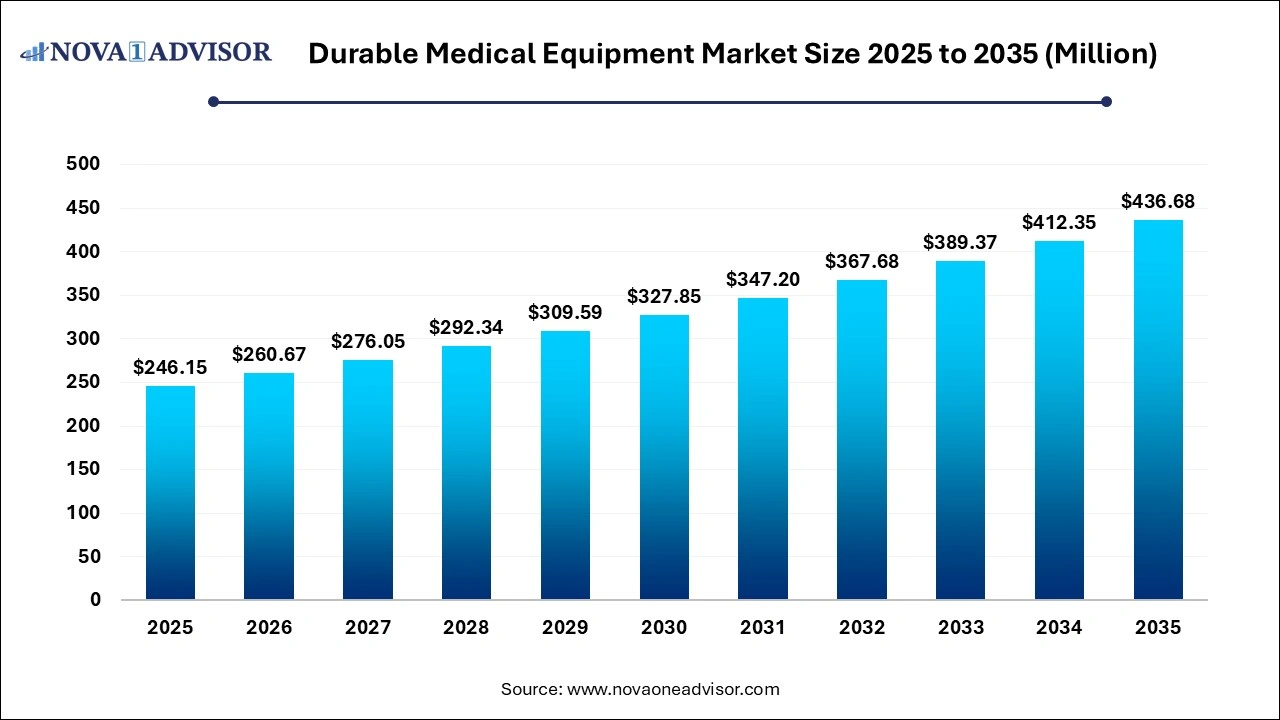
Key Takeaway:
- By product, the monitoring and therapeutic devices segment dominated the market with the largest share in 2025.
- By product, the bathroom safety devices and medical furniture segment is expected to grow at the fastest CAGR over the forecast period.
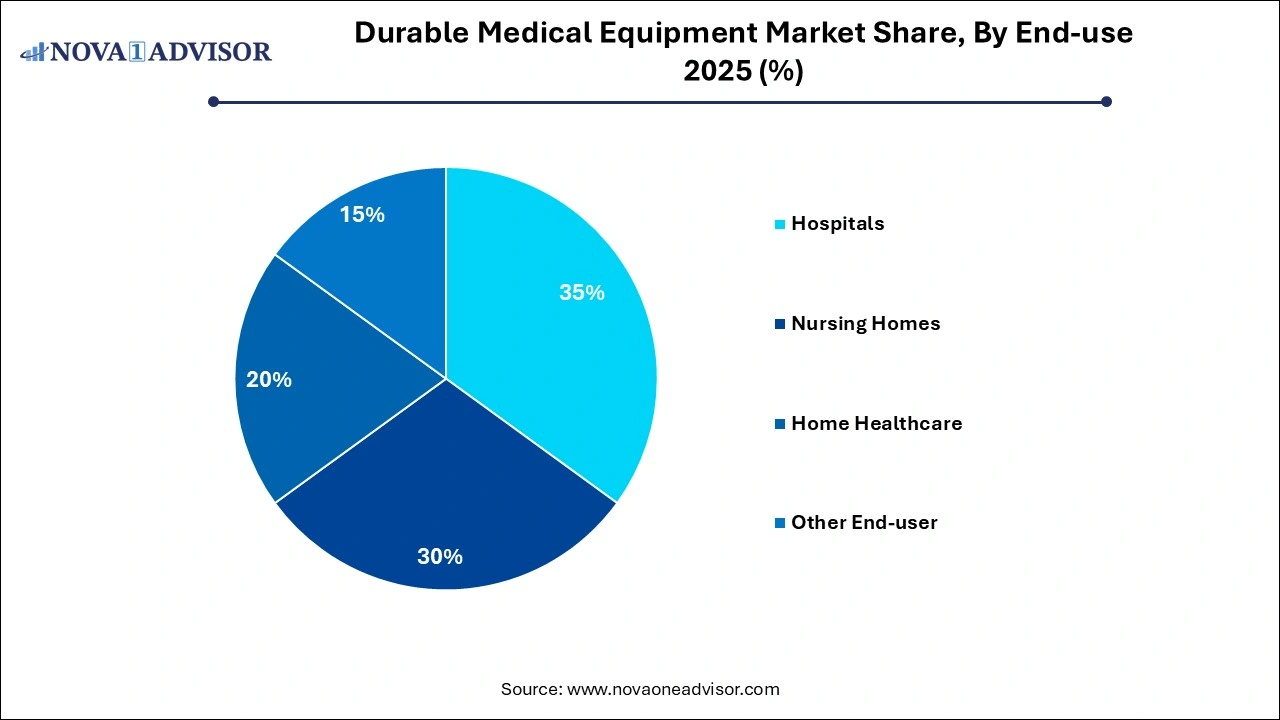
- By end use, the hospitals segment dominated the market with the largest share of 35.0%in 2025.
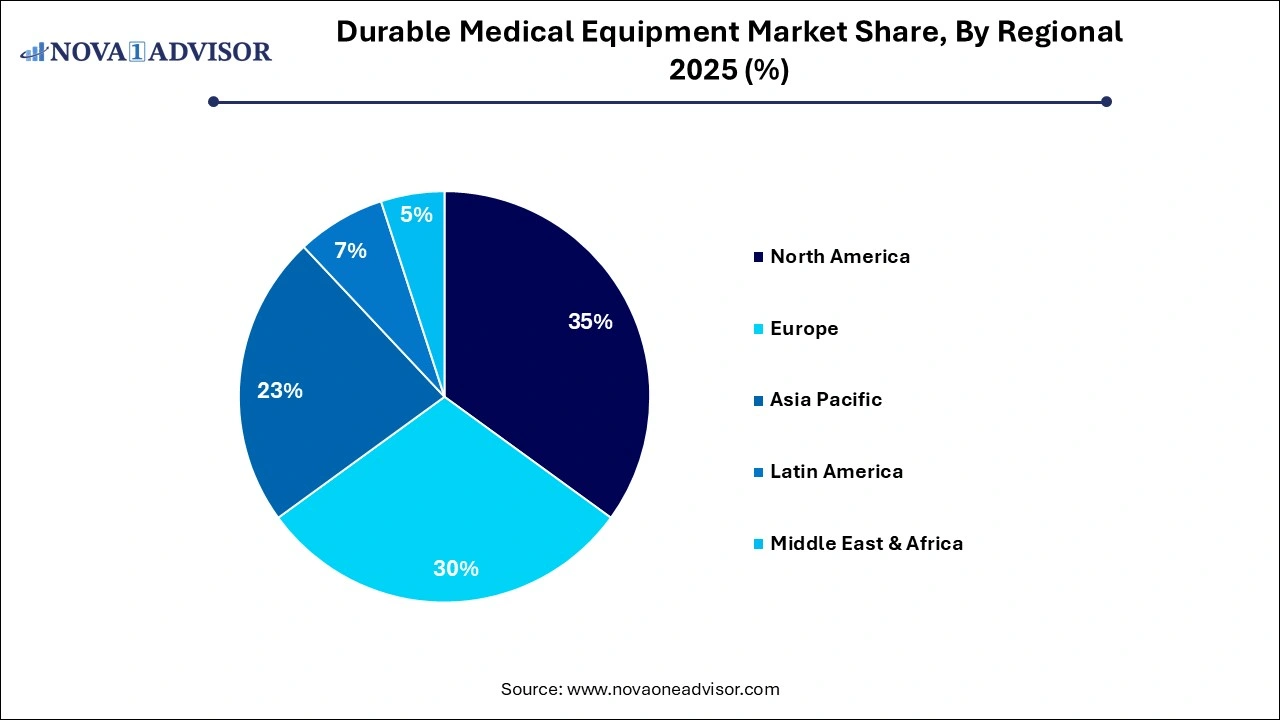
- By region, North America dominated the market with the largest share of 35.0% in 2025.
Market Overview
The global durable medical equipment (DME) market is witnessing steady growth, driven by the rising demand for long-term patient care, home healthcare, and chronic disease management. Durable medical equipment includes reusable devices such as wheelchairs, hospital beds, oxygen concentrators, CPAP machines, infusion pumps, walkers, patient lifts, and monitoring systems that support mobility, therapy, respiratory care, and rehabilitation. Growing life expectancy, an aging population, and the increasing prevalence of chronic diseases including diabetes, cardiovascular disorders, COPD, and neurological conditions are fueling demand for these essential medical devices.
The transition toward home-based healthcare is further accelerating market expansion as healthcare providers and insurers seek cost-effective alternatives to prolonged hospital stays. Technological advancements, including wireless connectivity, cloud integration, artificial intelligence, remote patient monitoring, and digital health platforms, are enhancing the functionality of DME products and improving patient outcomes. Additionally, increasing healthcare investments, expanding healthcare infrastructure in emerging economies, and continuous innovations in ergonomic design, battery performance, and infection control are expected to support sustained growth in the durable medical equipment market over the coming years.
Market Outlook
- Market Growth Overview: The durable medical equipment market is expected to grow significantly between 2025 and 2034, driven by the growing demand for long-term and home-based care.
- Sustainability Trends: Sustainability trends involve the growing adoption of sustainable materials and a growing emphasis on the linear "take-make-dispose" model to circular economy practices.
- Major Investors: Major investors in the market include Medtronic, GE HealthCare, Koninklijke Philips, and Stryker.
How is AI Impacting The Durable Medical Equipment Market?
Artificial intelligence (AI) is revolutionizing the market by automating claims processing, advancing back-office operations, and allowing smart, connected equipment. Furthermore, predictive analytics forecast equipment demand, effectively reducing stockouts for essential medical devices such as oxygen concentrators and wheelchairs.
One of the most significant applications of AI is in remote patient monitoring. AI-powered devices continuously track vital parameters such as oxygen saturation, heart rate, blood pressure, respiratory rate, blood glucose, and sleep patterns. Machine learning algorithms analyze this data to identify early signs of health deterioration, enabling timely intervention and reducing hospital admissions. AI is also enhancing mobility and rehabilitation equipment through features such as smart navigation, obstacle detection, personalized therapy programs, and gait analysis, helping patients recover more effectively and safely.
In addition, AI supports predictive maintenance by monitoring the performance of critical medical equipment, including ventilators, infusion pumps, hospital beds, and patient monitoring systems, allowing healthcare providers to detect potential failures before they occur. Combined with cloud computing and the Internet of Medical Things (IoMT), AI enables centralized management of connected medical devices, improving equipment utilization, maintenance efficiency, and patient care. As digital healthcare adoption continues to grow, AI is expected to play a pivotal role in driving innovation across the global durable medical equipment market.
Durable Medical Equipment Market Report Scope
| Report Coverage | Details |
| Market Size in 2026 | USD 260.67 Million |
| Market Size by 2035 | USD 436.68 Million |
| Growth Rate From 2026 to 2035 | CAGR of 5.9% |
| Base Year | 2025 |
| Forecast Period | 2026 to 2035 |
| Segments Covered | By Product, By End-use, By Region |
| Market Analysis (Terms Used) | Value (USD Million/Billion) or (Volume/Units) |
| Regional Scope | North America; Europe; Asia Pacific; Central and South America; the Middle East and Africa |
| Key Companies Profiled | Invacare Corporation; ArjoHuntleigh; Stryker Corporation; Hill Rom, Inc.; Drive Medical; GF Health Products, Inc.; Sunrise Medical; Medline Industries, Inc.; Carex Health Brands, Inc. Becton, Dickinson and Company; General Electric Company; Medtronic PLC; Compass Health Brands; Getinge AB; and Resmed Inc. |
Market Driver
Growing Burden of Chronic Diseases and Aging Population
The rising prevalence of chronic diseases and the rapidly expanding elderly population are major drivers of the global durable medical equipment (DME) market. Conditions such as cardiovascular diseases, diabetes, COPD, neurological disorders, and mobility impairments require long-term use of medical equipment, including respiratory devices, mobility aids, rehabilitation products, and patient monitoring systems. Additionally, growing adoption of aging-in-place healthcare models is increasing demand for wheelchairs, walkers, hospital beds, oxygen concentrators, CPAP devices, infusion pumps, and remote monitoring solutions that enable patients to receive quality care at home.
Market Restraint
High Equipment Costs and Reimbursement Challenges
High acquisition costs and complex reimbursement policies continue to restrain market growth. Advanced durable medical equipment featuring AI, wireless connectivity, remote monitoring, and digital health capabilities requires substantial upfront investment, making adoption difficult for smaller healthcare providers and uninsured patients. Variations in reimbursement regulations across regions, coupled with lengthy approval procedures and documentation requirements, can delay patient access to essential medical devices and limit market penetration, particularly in developing economies.
Market Opportunity
Expansion of Home Healthcare and Connected Care Solutions
The rapid growth of home healthcare presents a significant opportunity for the durable medical equipment market. Increasing preference for home-based treatment of chronic diseases, post-operative recovery, and elderly care is driving demand for portable and connected medical devices such as oxygen concentrators, infusion pumps, smart hospital beds, patient monitoring systems, and mobility equipment. Integration with telemedicine, cloud-based platforms, AI-powered analytics, and remote patient monitoring is enabling healthcare providers to deliver continuous care outside traditional clinical settings, creating substantial growth opportunities for manufacturers developing intelligent, user-friendly home healthcare solutions.
Segmental Insights
By Product
Why did the monitoring and therapeutic devices segment dominate the durable medical equipment market?
The monitoring and therapeutic devices segment dominated the market with the largest share in 2025. The dominance of the segment can be attributed to the increasing incidence of chronic diseases and the surge in demand for patient care. In addition, patients and healthcare providers increasingly favor the home-based management of chronic conditions to reduce overall medical expenditures and reduce the need for prolonged hospital admissions.
How did the bathroom safety devices and medical furniture segments expect to hold the significantly growing durable medical equipment market in the coming years?
The bathroom safety devices and medical furniture segment is expected to grow at the fastest CAGR over the forecast period. The growth of the segment can be credited to the increasing emphasis on home safety and rise in injury awareness. Bathrooms represent high-risk environments for slips and falls, leading to a rising demand for assistive devices such as commodes, shower chairs, and grab rails.
By End Use
Why did the hospitals segment dominate the durable medical equipment market?
The hospitals segment dominated the market with the largest share in 2025. The dominance of the segment can be linked to the increasing demand for innovative patient care, surgical support, and advanced materials. Furthermore, rising hospital admission rates for chronic illnesses and cardiovascular conditions significantly increase the need for uninterrupted patient surveillance and advanced bedside therapeutic equipment.
How did the home healthcare segment expected to hold the significantly growing durable medical equipment market in the coming years?
The home healthcare segment is expected to grow at the fastest CAGR over the forecast period. The growth of the segment can be driven by increasing patient preference for home care and a surge in the geriatric population globally. Wider public and private healthcare financing frameworks have substantially improved the domestic availability of critical medical devices.
By Regional
Why did the North American region account for the largest share in the durable medical equipment market?
North America dominated the market with the largest share in 2025. The dominance of the region can be attributed to the growing number of patients with chronic conditions and the rise in demand for home health additions and established devices. In addition, established public frameworks, such as Medicare and Medicaid in the United States, along with provincial health plans in Canada, significantly improve the affordability and accessibility of crucial medical equipment.
U.S. Durable Medical Equipment Market Trends
The growth of the market in the country can be driven by the growing transition towards home-based healthcare and the surge in healthcare spending. Also, the growing prevalence of diabetes, sleep apnea, and cardiovascular disorders drives a sustained demand for medical devices such as glucose monitors, CPAP machines, and home oxygen systems, leading to country growth soon.
Why did the Asia-Pacific region become the fastest-growing durable medical equipment market during the forecast period?
Asia Pacific is expected to grow at the fastest CAGR over the forecast period. The growth of the region can be credited to the increasing demand for home care devices and surge in chronic diseases across emerging nations such as China and India. Furthermore, nations such as Japan, China, and South Korea are experiencing rapidly aging demographics, creating an increasing demand for long-term mobility solutions and therapeutic interventions.
China Durable Medical Equipment Market Trends
The market in the country is growing due to increasing chronic illnesses like diabetes and growing investment in healthcare modernization. Moreover, the growing prevalence of chronic conditions, such as cardiovascular diseases and diabetes, sustains a consistent market demand for advanced home monitoring systems and therapeutic medical devices.
Some of the prominent players in the Durable Medical Equipment Market include:
- Invacare Corporation
- ArjoHuntleigh
- Stryker Corporation
- Hill Rom, Inc.
- Drive Medical
- GF Health Products, Inc.
- Sunrise Medical
- Medline Industries
- Hill Rom, Inc.
- Carex Health Brands, Inc
- Becton, Dickinson and Company
- General Electric Company
- Medtronic PLC
- Compass Health Brands
- Getinge AB
- Resmed Inc.
Recent Developments
In January 2026, Unify Healthcare Services, a medical billing and revenue cycle management (RCM) corporation, has officially launched Medicraft. This specialized billing software is engineered to assist durable medical equipment (DME) providers in optimizing their billing operations, claims processing, and revenue workflows.
Segments Covered in the Report
This report forecasts revenue growth at country levels and provides an analysis of the latest industry trends in each of the sub-segments from 2021 to 2035. For this study, Nova one advisor, Inc. has durable medical equipment market
By Product
- Personal Mobility Devices
- Wheelchairs
- Scooters
- Walker And Rollators
- Cranes And Crutches
- Door Openers
- Other Devices
- Bathroom Safety Devices And Medical Furniture
- Commodes And Toilets
- Mattress & Bedding Devices
- Monitoring And Therapeutic Devices
- Blood Glucose Monitors
- Continuous Passive Motion (CPM)
- Infusion Pumps Market
- Nebulizers
- Oxygen Equipment
- Continuous Positive Airway Pressure (CPAP)
- Suction Pumps
- Traction Equipment
- Others Equipment
By End-use
- Hospitals
- Nursing Homes
- Home Healthcare
- Other End-user
By Region
- North America
- Europe
- Asia-Pacific
- Latin America
- Middle East & Africa (MEA)
FAQ's

Proceed to Buy
Instant PDF delivery on confirmation

Durable Medical Equipment Market Size to Hit USD 436.68 Million by 2035
 Request Customization
 Download Sample

Get a Sample of this Report
Durable Medical Equipment Market