

Effective Microorganisms Market Size, Share, and Trends 2026 to 2035
 Status Published
 Category Healthcare


Content
Effective Microorganisms Market Size and Growth 2026 to 2035
The global effective microorganisms market was estimated at USD 383.55 million in 2025 and is projected to reach USD 904.68 million by 2035, growing at a CAGR of 8.96% over the forecast period 2026-2035. The market growth is driven by growing technological advancement producing new, more effective microbial formulations for varied agriculture needs, a shift away from chemical fertilizers and pesticides towards bio-based soil enhancers has spurred adoption, and environmental remediation and waste management.

Effective Microorganisms Market Key Takeaways
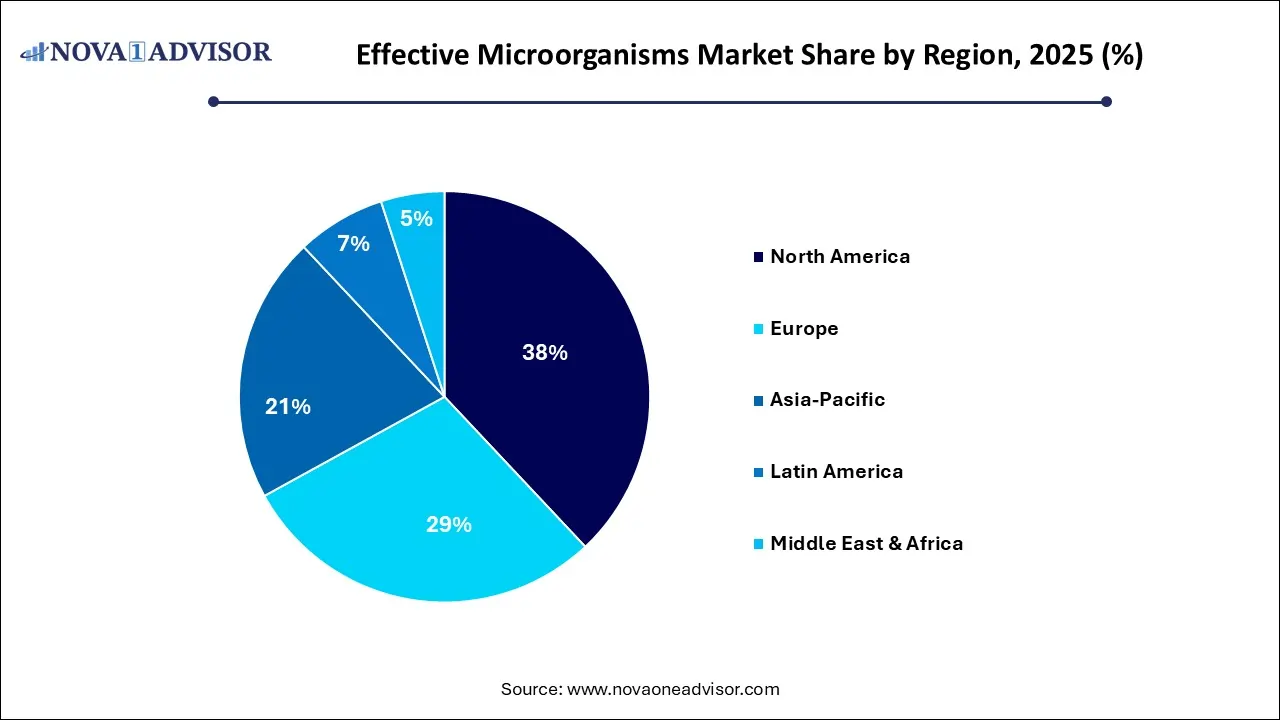
- By region, North America held the largest share of the Effective Microorganisms market in 2025.
- By region, Asia Pacific is expected to experience the fastest growth between 2026 and 2035.
- By type, the lactic acid bacteria segment led the market in 2025.
- By type, the photosynthetic bacteria segment is expected to expand at the highest CAGR over the projected timeframe.
- By application, the agriculture segment led the market in 2025.
- By application, the animal husbandry segment is the fastest growing in the Effective Microorganisms market.
- By end user, the farming segment dominated the market in 2025.
Artificial Intelligence: The Next Growth Catalyst in Effective Microorganisms
AI and ML are transforming the effective microorganism industry by enabling precise, data-driven optimization of microbial cultivation and formulation, increasing overall yield and quality consistency. ML models analyze complex environmental data to predict optimal conditions for microbial growth, reducing the trial-and-error approach in product development. AI technologies, such as computer vision and predictive analytics, are being integrated into reduction lines for real-time monitoring of microbial quality, ensuring high standards in agricultural and industrial applications.
Strategic Overview of the Global Effective Microorganisms Industry
The effective microorganisms market focuses on utilizing mixed cultures of beneficial, naturally occurring microorganisms, primarily lactic acid bacteria, yeast, and photosynthetic bacteria, to improve soil health, plant growth, and waste management. As a sustainable alternative to chemical fertilizers and pesticides, EM technology enhances nutrient availability, accelerates organic matter decomposition, and suppresses soil-borne pathogens, resulting in higher crop yields, better nutrient uptake, and stronger plant resistance to environmental stress. In environmental applications, these microbial solutions are used for rapid composting, sewage treatment, odor control, and reducing sludge volume, offering an eco-friendly approach to pollution control.
Market Outlook
- Market Growth Overview: The effective microorganisms market is expected to grow significantly between 2025 and 2034, driven by the shift toward organic farming and the need for soil rejuvenation, as EM boosts nutrient cycling and improves soil fertility and crop yields, rising demand for bio-based soil enhancers and fertilizers instead of chemical alternatives is driving adoption, and waste management and odor control.
- Sustainability Trends: Sustainability trends are regenerative agriculture and soil health, which are moving away from heavy chemical use, adopting EM to restore soil ecology, improve nutrient cycling, and increase soil carbon storage, green waste management, and bioremediation used in municipal solid waste treatment and bioremediation of industrial pollutants, utilizing beneficial microbes to degrade pollutants in an eco-friendly manner. EM technology is heavily used in bio-based composting and waste-to-energy technologies, aligning with the growing emphasis on closed-loop, sustainable agriculture.
- Major Investors: Major investors in the market include EMRO, SCD Probiotics, EMNZ, TeraGanix, Efficient Microbes, BASF, Bayer, and Syngenta. These players drive the market through intense research and development (R&D) in multi-strain microbial formulations, improving shelf life, and increasing product stability. They accelerate growth by expanding applications into specialized agricultural, livestock, and wastewater treatment sectors, often through strategic acquisitions and partnerships to strengthen distribution networks.
- Startup Economy: The startup economy in the market contains agile biotech firms focusing on sustainable agricultural inputs, bio-based waste management, and animal gut health to replace chemical inputs. These startups drive the market by accelerating innovation in tailored microbial consortia, developing niche products, such as EM Bokashi, and improving formulation stability for better application. They also expand market access through customized solutions in wastewater treatment and accelerate the shift toward organic farming with certified microbial inputs.
Effective Microorganisms Market Report Scope
| Report Attribute | Details |
| Market Size Value in 2026 | USD 417.92 Million |
| Revenue Forecast in 2035 | USD 904.68 Million |
| Growth Rate | CAGR of 8.96% From 2026 to 2035 |
| Base Year for Estimation | 2025 |
| Forecast Period | 2026 - 2035 |
| Quantitative Units | Revenue in USD Million/Billion, and CAGR from 2026 to 2035 |
| Segments Covered | Type, Application, End user, Region |
| Regional Scope | North America; Europe; Asia Pacific; Latin America; MEA |
| Key Companies Profiled | EMRO; EMNZ; SCD Probiotics; Efficient Microbes; Asia Plant; VIOOO Biology; TeraGanix, Inc.; EM Technologies, Inc.; EM Agriton; Bio-Energy Systems |
Market Dynamics
Drivers
Shift toward sustainable agriculture
The rapid growth of the effective microorganism has created a strong demand for natural alternatives to synthetic fertilizers and pesticides. As farmers increasingly adopting regenerative farming practices to combat soil ecology, improve nutrient cycling, and increase microbial diversity. Regulatory pressure to reduce chemical residue, exemplified by initiatives such as Europe's farm-to-fork strategy, encourages the adoption of EM-based biofertilizers and soil amendments.
Rising Demand For Organic Products
The necessary natural farming inputs that boost crop resilience and soil health without synthetic chemicals. As consumers demand residue-free and sustainably produced food, farmers are increasingly adopting EM technology to improve nutrient cycling, suppress soil-borne pathogens, and enhance crop yields, aligning with strict organic certification standards. The environmental concerns are prompting the use of beneficial microorganisms, such as bacteria and fungi, to rehabilitate degraded soil and reduce reliance on conventional pesticides.
Restraint
Lack of Standardization and Quality Control
The market growth is hindered by creating inconsistencies in product efficacy, which diminishes consumer trust and hampers widespread adoption. Because many beneficial microbes are sensitive to environmental conditions, improper formulation or inadequate sterilization during production leads to high variability in microbial viability, resulting in unpredictable performance in agricultural and environmental applications.
Opportunities
Expansion into Consumer Products
The expansion of effective microorganisms into consumer products creates a significant opportunity by tapping into the rising demand for eco-friendly, sustainable household alternatives. By diversifying from traditional agriculture into consumer orienteer good, such as household cleaning agents, septic tank treatments, and pet odor eliminators, the market reaches a broader, more eco-conscious demographic.
Integration with Precision Agriculture
The market is creating immersive opportunities by enabling targeted, data-driven application of microbial products rather than blanket spraying. Precision tools allow farmers to identify specific soil deficiencies or plant stress points in real-time, facilitating the precise, on-demand application of beneficial microbes to maximize efficiency and ROI. This targeted approach reduces waste and lowers application costs, making microbial solutions more economically attractive to large-scale commercial operations. The synergy between precise environmental monitoring and microbial application strengthens regenerative farming and sustainable practices, accelerating the adoption of EM in climate-smart agriculture.
How Macroeconomic Variables Influence the Effective Microorganisms Market?
Economic Growth and GDP
Economic growth and rising GDP generally lead to positive growth. By increasing industrial investments in biotechnology, pharmaceuticals, and sustainable agriculture. Increased economic output facilitates higher adoption of microbial solutions, such as biofertilizers, probiotics, and industrial enzymes, as companies aim to improve yields and transition to eco-friendly practices.
Inflation & Drug Pricing Pressures
It can negatively affect the growth of the effective microorganisms market by increasing input costs for raw materials, energy, and labor while squeezing profit margins. Rising operational costs and regulatory pressure to lower drug prices limit the ability of companies to reinvest in research and development, which can hinder the advancement of new microbial-based products.
Exchange Rates
Exchange rate fluctuations can positively and negatively affect, by increasing the cost of imported raw materials and specialized equipment. A depreciation of the local currency can boost export-oriented industrial microbiology sectors, but it often increases costs for firms relying on imported strains or high-tech equipment. By creating uncertainty, reducing foreign direct investment, and disrupting the cash flows needed for long-term R&D.
Segment Outlook
Type Insights
Why Did the Lactic Acid Bacteria Segment Dominate the Effective Microorganisms Market in 2025?
The lactic acid bacteria segment dominated the market, accounting for the largest share in 2025. This is due to its versatility in sustainable agriculture, where it serves as a natural alternative to chemical fertilizers and pesticides. LAB’s recognized safety profile in animal feed and its essential role in organic waste management fuel the market growth. The global shift toward environmentally friendly farming and probiotic solutions.
The photosynthetic bacteria segment is expected to grow at the fastest CAGR during the projection period, driven by the demand for eco-friendly agriculture inputs, which has surged to improve soil health and replace synthetic chemicals. These bacteria enhance plant productivity by fixing nitrogen and synthesizing metabolites that increase crop yields and environmental stress tolerance. Their ability to decompose organic waste also makes them indispensable for wastewater treatment and odor control.
Application Insights
How Does the Agriculture Segment Lead the Effective Microorganisms Market in 2025?
The agriculture segment led the effective microorganisms market in 2025 due to the industry shift toward microbial products to reduce reliance on synthetic chemicals. These effective microorganisms are prized for their ability to enhance soil fertility and promote natural plant growth while meeting stringent environmental standards, such as the EU’s farm-to-fork strategy. The integration of microbial seed coatings into precision farming optimizes early root development and crop resilience
The animal husbandry segment is projected to grow at the highest CAGR in the coming years. This is mainly because of adoption of microbes as sustainable alternatives for livestock gut health and immunity. These microorganisms enhance feed conversion rates and productivity in poultry, dairy, and aquaculture while effectively managing farm waste and odors. As global protein demand rises with urbanization, high-efficiency microbial additives are becoming essential for large-scale production. The increased investment in emerging markets like India is further accelerating the growth of these probiotic solutions.
End User Insights
How Does the Farming Segment Lead the Effective Microorganisms Market in 2025?
The farming segment led the effective microorganisms market in 2025 due to restoring ecological balance and enhancing nutrient cycling in over-farmed lands. Driven by the demand for organic farming and residue-free produce, EM technology is now a staple for creating high-quality compost, Bokashi, and soil amendments that comply with strict global safety regulations. These microbial solutions are particularly vital for high-value crops, such as fruits and vegetables, where they significantly improve disease resistance and ensure a higher return on investment.
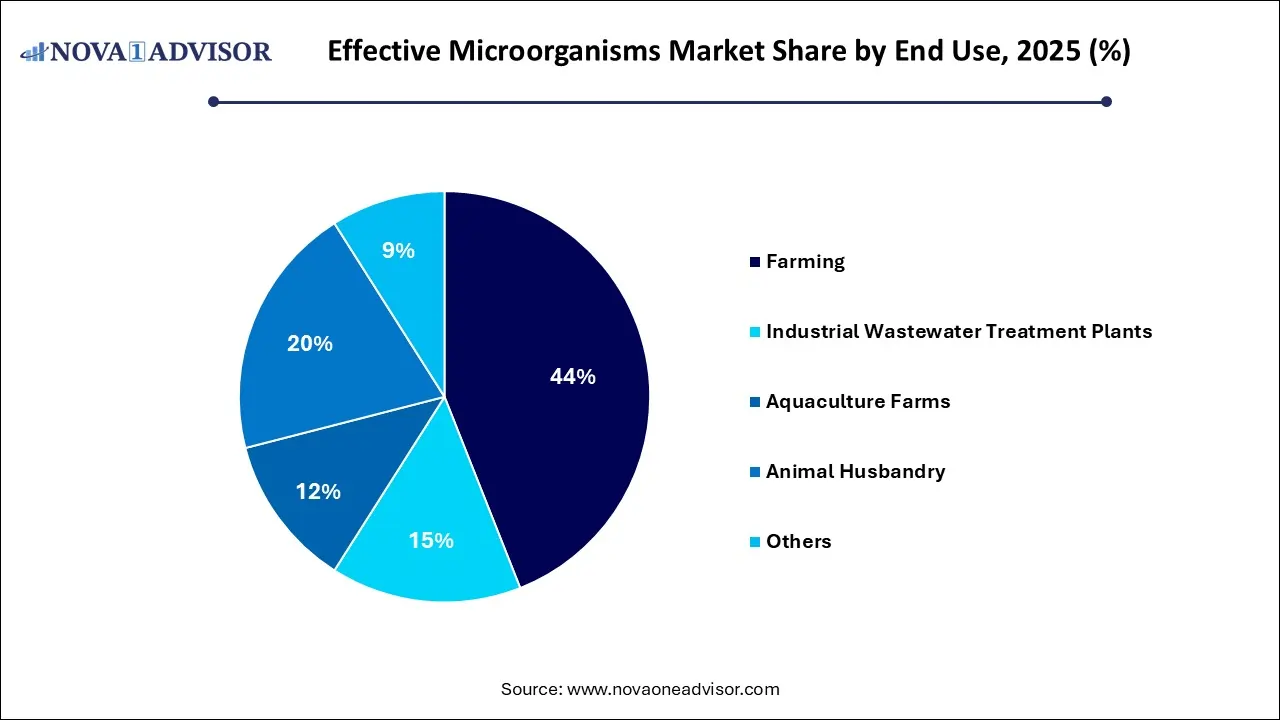
The animal industry segment is projected to grow at the highest CAGR in the coming years. This is mainly because of strict antibiotic regulations and consumer demand for antibiotic-free products; producers are rapidly adopting microbial solutions, such as probiotics, to maintain livestock gut health. These EM products significantly improve feed efficiency and weight gain, boosting profitability across poultry, dairy, and aquaculture operations. Beyond nutrition, microbes play a vital role in environmental management by reducing odors and pathogens in intensive farming waste. The shift toward natural microbial strains aligns with global sustainability goals and modern animal welfare standards.
Regional Analysis
What Made North America the Dominant Region in the Effective Microorganisms Market?
North America maintained dominance in the effective microorganisms market while holding the largest share in 2025. The region’s dominance is attributed to the strong shift towards sustainable and regenerative farming in the US, is drive massive demand for microbial soil health solutions. Strict regulatory frameworks and consumer preference for organic produce have compelled farmers to adopt high-quality biofertilizers as essential alternatives to synthetic chemicals. The advanced biotech sector, innovation in microbial formulations ensures high efficiency and superior crop productivity. The integration of these solutions with precision agriculture tools allows for targeted application, solidifying North America's leadership in the market.
U.S. Effective Microorganisms Market Trends
The U.S. is a major contributor to the market in North America due to widespread adoption of effective microorganisms as a natural alternative to chemical inputs. With the stringent environmental regulations, these microbial solutions, particularly lactic acid bacteria, are becoming essential for soil productivity, wastewater treatment, and waste management. Industry leaders, such as SCD probiotics and EMRO, Inc., are fueling this strategy and product innovation. The integration of these microorganisms across agriculture and animal husbandry is creating their role in a sustainable, critical economy.
What Makes Asia Pacific the Fastest-Growing Area in the Market?
Asia Pacific is expected to grow at the fastest rate in the coming years. This is due to a shift toward sustainable agriculture, rapidly adopting effective microorganisms as essential bio-based amendments. Strong government support through subsidies has accelerated the shift towards organic fertilizers and microbial inputs. The expanding aquaculture and livestock sectors are increasingly relying on lactic acid bacteria for waste treatment and productivity. The boom in organic farming and consumer demand for food quality are cementing the region's role as a global leader in microbial adoption.
China Effective Microorganisms Market Trends
China is a key player in the Asia Pacific effective microorganisms market due to government mandates to reduce chemical fertilizers in favor of biofertilizers. This transition is supported in agriculture and widespread EM adoption in the rapidly growing animal husbandry and aquaculture sectors. As consumers prioritize organic food, farmers are increasingly incentivized to use microbial solutions. China's aggressive environmental policies and shifting consumer habits have established it as the regional leader in effective microorganisms.
How is the Opportunistic Rise of Europe in the Effective Microorganisms Market?
Europe is experiencing a strategic growth in the market due to a rapid shift from synthetic chemicals to biological alternatives. The EU is heavily incentivizing the use of microbial soil enhancers and sustainable inputs. Beyond the field, the region is expanding EM applications into circular economy initiatives, such as advanced composting and wastewater treatment. The high adoption of precision agriculture, which maximizes the efficacy of microbial products through targeted application.
United Kingdom Effective Microorganisms Market Trends
The United Kingdom is leading the market in Europe due to a global push to improve soil fertility and reduce synthetic chemical usage. Lactic acid bacteria have emerged as the most lucrative segment, prized for their ability to suppress pathogens and accelerate organic decomposition. While sustainability policies and organic farming trends are boosting market adoption, the industry still faces hurdles such as high R&D costs and short product shelf lives.
Effective Microorganisms Market Supply Chain Analysis
- Raw Material Sourcing & Procurement:
This stage involves acquiring organic materials, beneficial microbes (lactic acid bacteria, yeast, photosynthetic bacteria), molasses, and water needed for fermentation.
Key Players: EMRO (EM Research Organization).
- Production & Fermentation:
Manufacturers initiate fermentation, combining raw materials and controlling environmental conditions (temperature, pH) to cultivate the microbial consortium.
Key Players: TeraGanix, EMRO.
- Marketing & Distribution:
This involves distributing the finished products through agricultural distributors, online platforms, and specialized agricultural dealers. Marketing focuses on demonstrating the ROI of using microorganisms in sustainable farming.
Effective Microorganisms Market Companies
- EMRO (EM Research Organization): As the developer of the original EM Technology, EMRO provides the fundamental microbial consortia used worldwide for agriculture, environmental purification, and health.
- EMNZ (Effective Microorganisms New Zealand): EMNZ focuses on providing certified organic EM products, tailored for agricultural and horticultural applications in the New Zealand region.
- SCD Probiotics: This company pioneers specialized fermentation techniques that grow multiple microbial strains together as a consortium rather than in isolation, producing more stable, resilient probiotics. They contribute to the market by producing patented probiotic-based solutions for soil restoration, agriculture, and livestock production.
- Efficient Microbes: This company offers a range of beneficial microorganism products tailored for both agricultural applications and human/animal probiotic health. They contribute to the market by providing non-GMO microbial solutions for wastewater treatment, farming, and probiotic supplements.
- Asia Plant: Based in a region dominating the EM market, Asia Plant focuses on utilizing EM Technology to optimize agricultural techniques and enhance soil health.
- VIOOO Biology: This company contributes to the effective microorganism market by developing specialized formulations that enhance the microbial community in degraded ecosystems and agriculture. They focus on creating customized microbial blends for environmental remediation and boosting plant-associated probiotics.
Recent Developments
- In June 2025, Bayer and Kimitec announced the launch of Ambition Complete Gen2 and Ambition Secure Gen2, two next-generation biological products developed at Kimitec’s MAAVi Innovation Center to advance regenerative agriculture. Utilizing artificial intelligence and natural chemistry, these products aim to improve nutrient assimilation, stress resilience, and calcium uptake in crops.
- In October 2025, Indorama Ventures launched SURFOM® ETHOS, a customizable portfolio of surfactants, thickeners, and polymers designed to optimize biopesticide performance and stability. Targeting the growing biologicals market, this formulator's toolbox aims to overcome technical barriers like limited shelf-life and environmental vulnerability to improve agricultural application efficacy.
- In March 2026, Birufinery launched full-scale production of BiruLift, a scalable biostimulant merging tropical seaweed extracts with beneficial microbes to enhance crop yields and soil health. Backed by recent investment, the company’s solution significantly improves plant growth while reducing synthetic fertilizer reliance for emerging markets.
Exclusive Analysis on the Effective Microorganisms Market
The global effective microorganisms market is leveraging the rapid shift toward sustainable agriculture, increased adoption of bio-based soil enhancers, and expanding applications in waste management. Segmentally, lactic acid bacteria hold the largest share due to their widespread use in agriculture and composting, while the agriculture segment dominates application due to rising demand for residue-free produce and soil fertility restoration. Key growth drivers include government-supported organic farming initiatives, the need for eco-friendly wastewater treatment, and increased use in livestock farming to reduce chemical dependence.
Segments Covered in the Report
By Type
- Lactic Acid Bacteria
- Photosynthetic Bacteria
- Yeasts
- Fermenting Fungi
- Others
By Application
- Agriculture
- Animal Husbandry
- Wastewater Treatment
- Sanitation Systems
- Others
By End Use
- Farming
- Industrial Wastewater Treatment Plants
- Aquaculture Farms
- Animal Husbandry
- Others
By Regional
- North America
- Europe
- Asia Pacific
- Latin America
- Middle East & Africa
FAQ's

Proceed to Buy
Instant PDF delivery on confirmation

Effective Microorganisms Market Size to Hit USD 904.68 Million by 2035
 Request Customization
 Download Sample

Get a Sample of this Report
Effective Microorganisms Market