

Heart Scan Market Size, Share, and Trends 2026 to 2035
 Status Published
 Category Healthcare


Content
Heart Scan Market Size and Growth 2026 to 2035
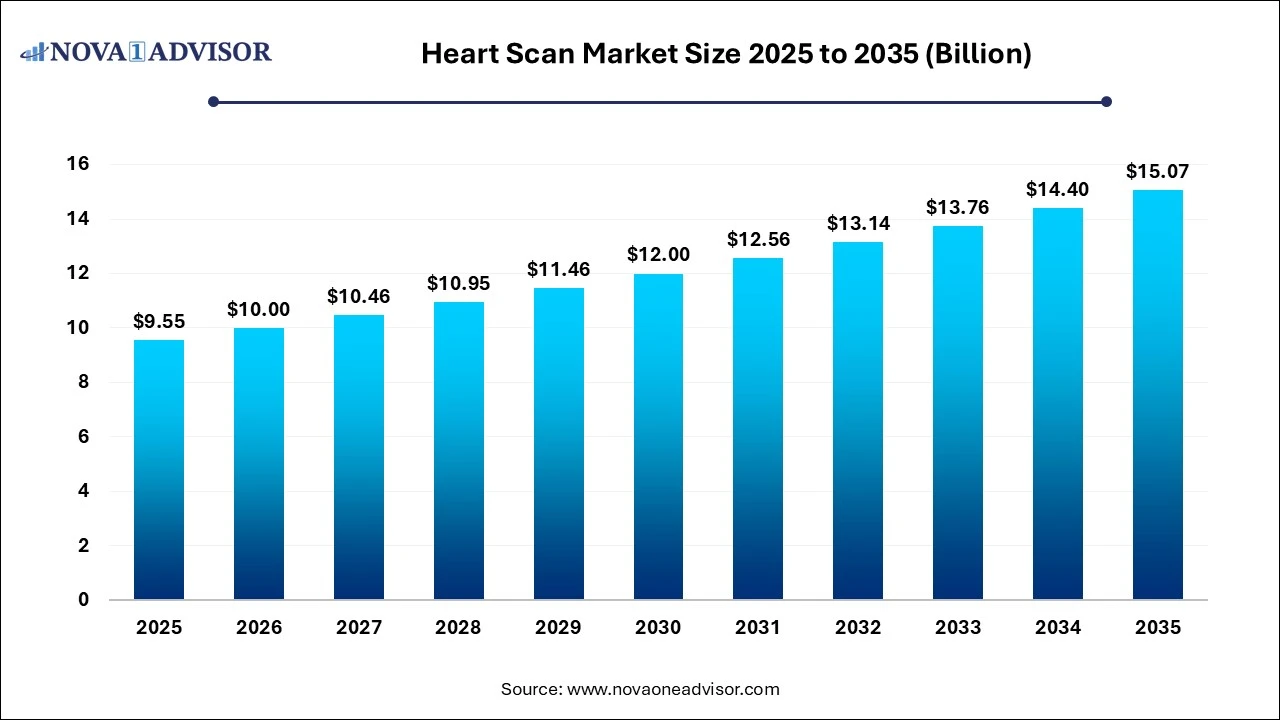
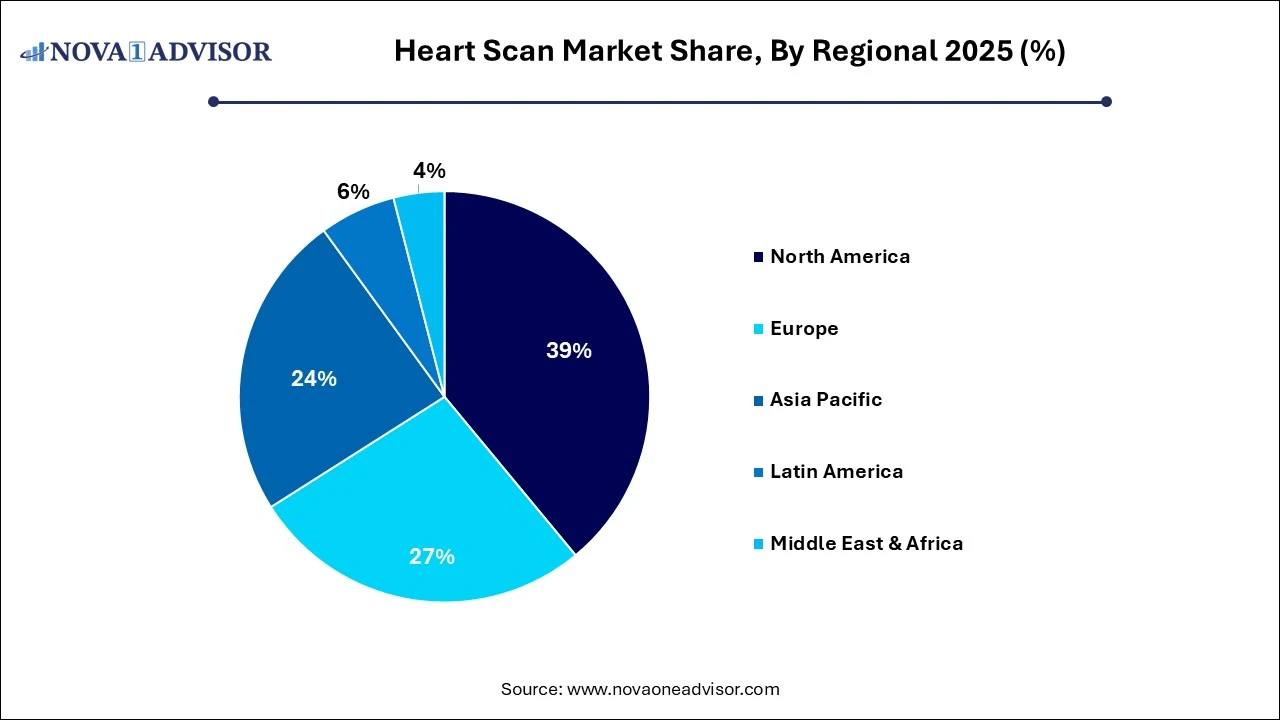
The global heart scan market size was valued at USD 9.55 billion in 2025 and is projected to grow from USD 10.00 billion in 2026 to USD 15.07 billion by 2035, at a CAGR of 9.55% from 2026 to 2035. North America dominated the market, accounting for a revenue share of 39.0% in 2025.
Key Takeaway:
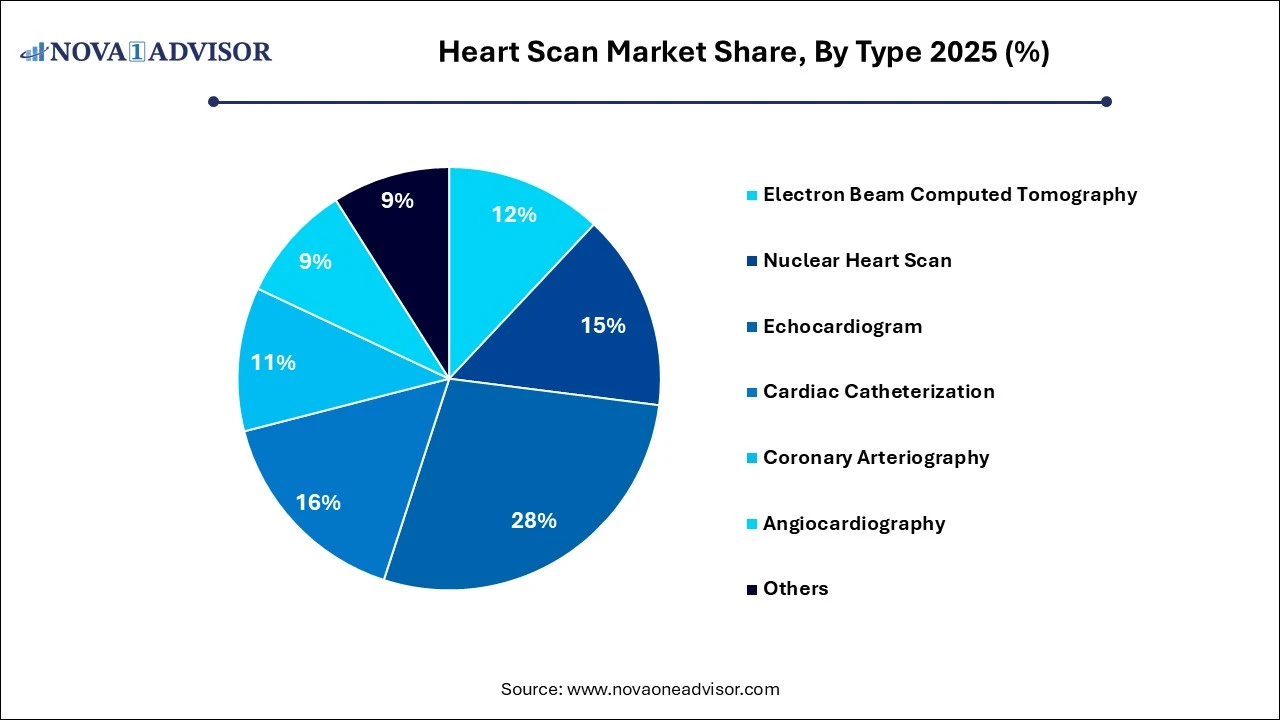
- By type, the echocardiogram segment dominated the market with the largest share OF 28.0%in 2025.
- By type, the coronary artery blockage segment dominated the market with the largest share in 2025.
- By indication, the coronary artery blockage segment dominated the market with the largest share in 2025.
- By end user, the hospitals & clinics segment dominated the market with the largest share in 2025.
- By region, North America dominated the market with the largest share of 39.0% in 2025.
Market Overview
The global heart scan market is experiencing significant growth due to the rising prevalence of cardiovascular diseases and the increasing demand for accurate, non-invasive diagnostic imaging. Heart scans, including echocardiography, cardiac CT, MRI, nuclear imaging, and angiography, play a vital role in the early detection, diagnosis, and monitoring of heart conditions such as coronary artery disease, heart failure, arrhythmias, and valvular disorders. Growing awareness of preventive cardiology, an aging population, and the increasing burden of lifestyle-related diseases are driving demand for advanced cardiac imaging worldwide. Technological advancements, including high-resolution imaging, 3D visualization, low-radiation systems, and minimally invasive diagnostic techniques, are improving diagnostic precision and patient outcomes. Additionally, the integration of digital healthcare, telecardiology, cloud-based imaging, and artificial intelligence is enhancing clinical workflows and expanding access to cardiovascular diagnostics. Rising healthcare investments and the expansion of specialized cardiac care centers in emerging economies are expected to further support the long-term growth of the global heart scan market.
Market Outlook
- Market Growth Overview: The global heart scan market is expected to grow significantly between 2025 and 2035, driven by the growing awareness regarding cardiovascular health.
- Sustainability Trends: Sustainability trends involve growing emphasis on carbon footprints and reducing medical waste.
- Major Investors: Major investors in the market include GE HealthCare, Siemens Healthineers, and Koninklijke Philips N.V.
How is AI impacting the global Heart Scan Market?
Artificial intelligence (AI) is transforming the global heart scan market by improving diagnostic accuracy, accelerating image analysis, and enhancing clinical decision-making. AI-powered algorithms integrated into echocardiography, cardiac CT, MRI, and nuclear imaging systems can automatically detect coronary artery disease, heart valve abnormalities, ventricular dysfunction, and structural heart defects with high precision. Automated image segmentation and measurement reduce analysis time, minimize observer variability, and enable faster, more consistent diagnoses.
AI is also strengthening preventive cardiology through predictive analytics that combines imaging data with patient history, laboratory results, and electronic health records to assess cardiovascular risk and support early intervention. In addition, AI-assisted workflow automation prioritizes urgent cases, generates structured reports, and streamlines clinical operations, improving efficiency in busy cardiology departments. AI-powered cloud platforms and telecardiology solutions further enable remote image interpretation and specialist consultations, expanding access to advanced cardiac care in underserved regions. As AI adoption continues to grow, it is expected to deliver more personalized, standardized, and efficient cardiovascular imaging, improving patient outcomes and driving innovation in the global heart scan market.
Heart Scan Market Report Scope
| Report Coverage | Details |
| Market Size in 2026 | USD 10.00 Billion |
| Market Size by 2035 | USD 15.07 Billion |
| Growth Rate From 2026 to 2035 | CAGR of 9.55% |
| Base Year | 2025 |
| Forecast Period | 2026 to 2035 |
| Segments Covered | By Type, By End Users, By Indication, By Region |
| Market Analysis (Terms Used) | Value (USD Million/Billion) or (Volume/Units) |
| Regional Scope | North America; Europe; Asia Pacific; Central and South America; the Middle East and Africa |
| Key Companies Profiled | Boston Scientific Corporation (U.S.), Coloplast (Denmark), Dispocard GmbH (Germany), St. Jude Medical (U.S.), Abbott Laboratories (U.S.), Johnson & Johnson (U.S.), Teleflex Incorporated (U.S.)., Smiths Medical (U.S.), Edwards Life Sciences Corporation (U.S.), Medtronic Inc (U.S.), Rochester Medical Corporation (U.S), Maquet Medical India Private Limited (India), Terumo Medical Corporation (Japan) and others. |
Market Driver
Rising Prevalence of Cardiovascular Diseases Drives Market Growth
The increasing global burden of cardiovascular diseases is a major driver of the heart scan market. Rising cases of coronary artery disease, heart failure, hypertension, arrhythmias, and valvular disorders—driven by aging populations, obesity, diabetes, sedentary lifestyles, and smoking—are fueling demand for early and accurate cardiac diagnosis. Advanced heart scanning technologies enable timely detection, improved treatment planning, and better patient outcomes. In addition, expanding cardiovascular screening programs, growing awareness of preventive healthcare, and broader insurance coverage for diagnostic imaging are expected to support sustained market growth.
Market Restraint
High Cost of Advanced Cardiac Imaging Systems Limits Market Expansion
The high cost of advanced cardiac imaging equipment remains a key restraint for the heart scan market. Technologies such as cardiac CT, MRI, hybrid imaging systems, and catheterization laboratories require significant capital investment, specialized infrastructure, ongoing maintenance, and skilled healthcare professionals. These costs can limit adoption in smaller hospitals and resource-constrained regions. Inconsistent reimbursement policies, high examination costs for uninsured patients, and shortages of trained cardiologists and imaging specialists further restrict access to advanced heart scanning services, particularly in developing economies.
Market Opportunity
Growth of Preventive Cardiology and Precision Medicine Creates New Opportunities
The increasing focus on preventive cardiology and precision medicine presents significant opportunities for the heart scan market. Growing use of cardiac imaging for early risk assessment in patients with hypertension, diabetes, obesity, and family histories of heart disease is expanding demand for advanced diagnostic services. The integration of heart scans with artificial intelligence, genetic testing, wearable health devices, and biomarker analysis enables more personalized treatment planning and improved clinical outcomes. Emerging technologies such as AI-powered risk prediction, cloud-based imaging platforms, remote cardiac diagnostics, and digital health solutions are expected to create substantial growth opportunities for imaging manufacturers, healthcare providers, and digital health companies.
Segmental Insights
By Type
Why did the echocardiogram segment dominate the global heart scan market?
The echocardiogram segment dominated the market with the largest share in 2025. The dominance of the segment can be attributed to the growing incidence of cardiovascular disease and technological innovations such as 3D/4D and AI integration. In addition, there is a strong preference among both patients and healthcare providers for ultrasound testing, which is safe, painless, and radiation-free.
How did the cardiac catheterization segment expected to hold the significantly growing global heart scan market in the coming years?
The cardiac catheterization segment is expected to grow at the fastest CAGR over the forecast period. The growth of the segment can be credited to the growing adoption of advanced imaging technologies and the rise in preference for minimally invasive procedures. Supportive government healthcare investments and insurance reimbursement standards fuel segment growth further.
By Indication
Why did the coronary artery blockage segment dominate the global heart scan market?
The coronary artery blockage segment dominated the market with the largest share in 2025. The dominance of the segment can be linked to the ongoing transition towards non-invasive testing and increasing rates of cardiovascular disease. Older adults face a higher risk of natural artery narrowing and heart blockages.
How did the congenital heart disease segment expected to hold the significantly growing global heart scan market in the coming years?
The congenital heart disease segment is expected to grow at the fastest CAGR over the forecast period. The growth of the segment can be driven by a surge in AI integration and the advent of advanced imaging technologies. Also, the integration of 3D and 4D echocardiography facilitate high-resolution structural evaluation of the heart.
By End Users
Why did the hospitals & clinics segment dominate the global heart scan market?
The hospitals & clinics segment dominated the market with the largest share in 2025. The dominance of the segment is owed to the growing preference for specialized diagnostic centers and the integration of advanced AI workflow. Ambulatory care centers and outpatient clinics achieve rapid expansion by delivering cost-effective treatments.
How did the diagnostic centers segment expected to hold the significantly growing global heart scan market in the coming years?
The diagnostic centers segment is expected to grow at the fastest CAGR over the forecast period. The growth of the segment is due to the growing transition towards outpatient and non-invasive testing along with the healthcare infrastructure decentralization. There is an increasing emphasis among both patients and healthcare providers on early detection and routine cardiac risk assessment, leading to segment growth soon.
By Regional
Why did the North American region account for the largest share in the global heart scan market?
North America dominated the market with the largest share in 2025. The dominance of the region can be attributed to the growing prevalence of heart conditions across the U.S. and Canada along with the surge in the elderly population. In addition, robust public and private investment in medical research, combined with advanced clinical infrastructure, facilitates the extensive utilization of diagnostic tools.
U.S. Global Heart Scan Market Trends
The growth of the market in the country can be driven by the surge in rates of obesity and chronic heart conditions coupled with the ongoing integration of AI-enhanced cardiac software. Also, the widespread availability of adequately financed medical centers, standardized emergency procedures, and advantageous reimbursement frameworks facilitates routine diagnostic testing.
Why did the Asia-Pacific region become the fastest-growing global heart scan market during the forecast period?
Asia Pacific is expected to grow at the fastest CAGR over the forecast period. The growth of the region can be credited to the growing rates of heart conditions linked to diabetes, hypertension, and urban lifestyles. Furthermore, the growing emphasis on early diagnosis and screening of congenital heart conditions is driving the expansion of pediatric cardiac imaging, with notable boosts in China and India.
China Global Heart Scan Market Trends
The market in the country is growing due to the rise in the burden of cardiovascular diseases and the growing aging population across major cities. Moreover, extensive 5G deployment, cloud infrastructure integration, and artificial intelligence incorporation enhances scanning accuracy and remote data transmission efficiency.
Key Players in the Global Heart Scan Market
- GE HealthCare: It leads with comprehensive diagnostic imaging suites spanning CT, MRI, and nuclear cardiology systems optimized for early disease detection.
- Koninklijke Philips N.V.: It specializes in advanced ultrasound, diagnostic imaging, and integrated cardiac therapy solutions designed for real-time clinical intervention.
- Siemens Healthineers: It provides cutting-edge computed tomography and high-field magnetic resonance scanners, emphasizing AI-powered workflow efficiency.
Recent Developments
- In June 2024, Mankind Pharma introduced ‘Act at 30 – It’s Time for a Heart Check,' a national preventive healthcare initiative. This program encourages individuals in India to commence cardiovascular screenings at age 30 in response to increasing rates of hypertension and cardiac risks among young adults.
Segments Covered in the Report
This report forecasts revenue growth at country levels and provides an analysis of the latest industry trends in each of the sub-segments from 2021 to 2035. For this study, Nova one advisor, Inc. has heart scan market.
By Type
- Electron beam computed tomography
- Nuclear heart scan
- Echocardiogram
- Cardiac catheterization
- Coronary arteriography
- Angiocardiography
- Others
By End Users
- Hospitals & clinics
- Diagnostic centers
- Cardiac care centers
- Ambulatory centers & home care
- Academic institutes
- Others
By Indication
- Congenital heart disease
- Coronary arteries blockage
- Defects or injury to the heart’s four primary valves
- Blood clots within the heart’s chambers
- Tumors in or on the heart
- Others
By Region
- North America
- Europe
- Asia Pacific
- Latin America
- Middle East & Africa
FAQ's

Proceed to Buy
Instant PDF delivery on confirmation

 Request Customization
 Download Sample

Get a Sample of this Report
Heart Scan Market