

Hemifacial Spasm Market Size, Share, Forecast Report, 2026-2035
 Status Published
 Category Healthcare


Content
Hemifacial Spasm Market Size and Growth 2026 to 2035
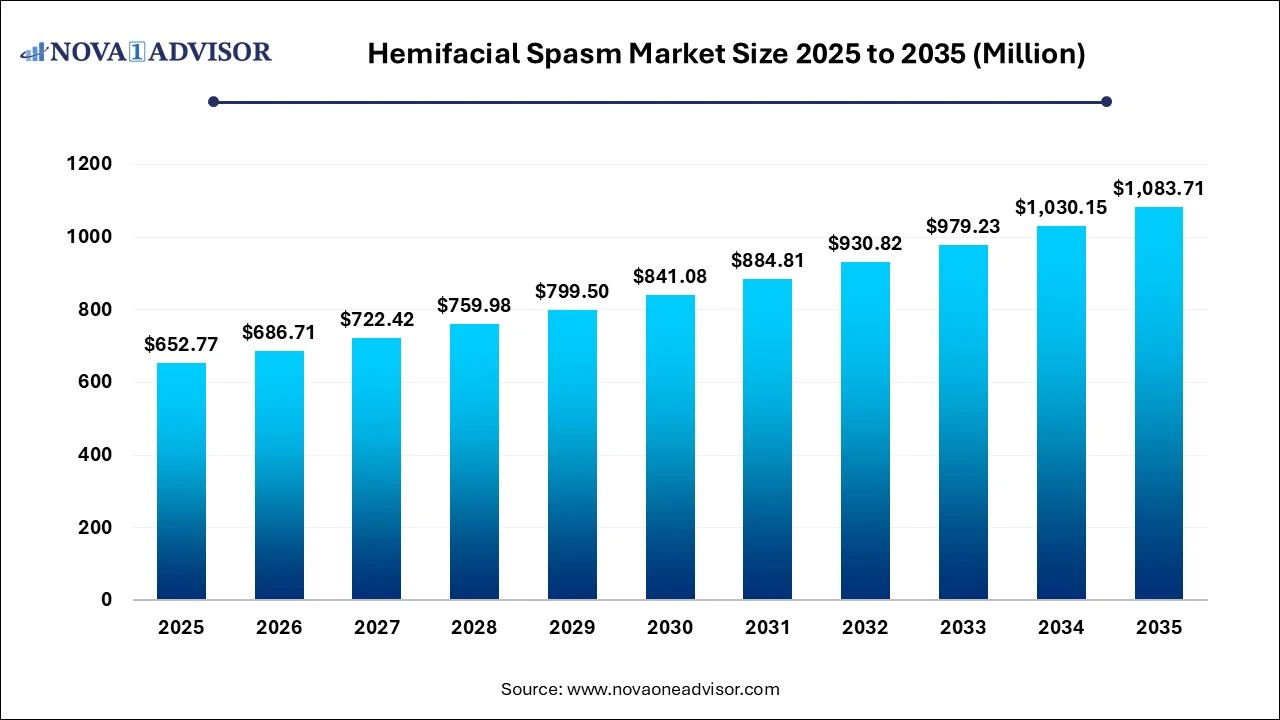
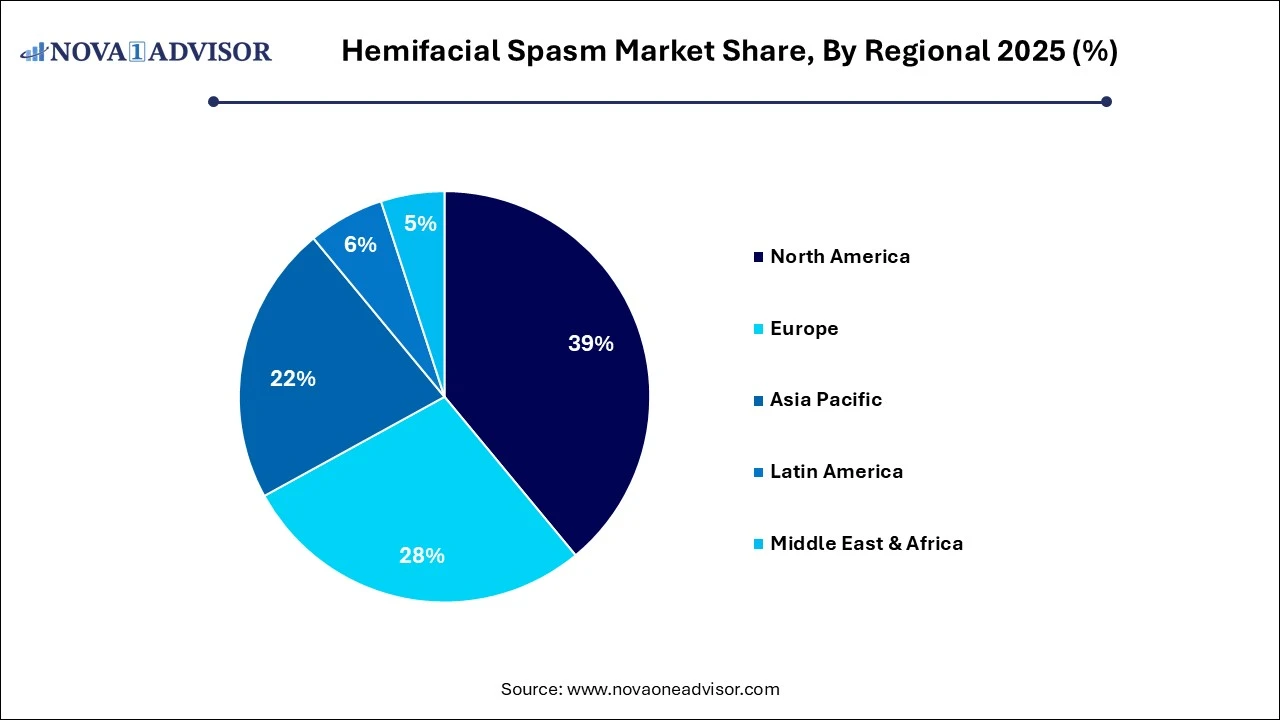
The global hemifacial spasm market size was valued at USD 652.77 million in 2025 and is projected to grow from USD 686.71 million in 2026 to USD 1,083.71 million by 2035, at a CAGR of 5.2% from 2026 to 2035. North America dominated the market, accounting for a revenue share of 39.0% in 2025.
Key Takeaway
- By treatment, the botulinum toxin segment dominated the market with the largest share in 2025.
- By treatment, the surgical segment is expected to grow at the fastest CAGR over the forecast period.
- By route of administration, the parenteral segment dominated the market with the largest share in 2025.
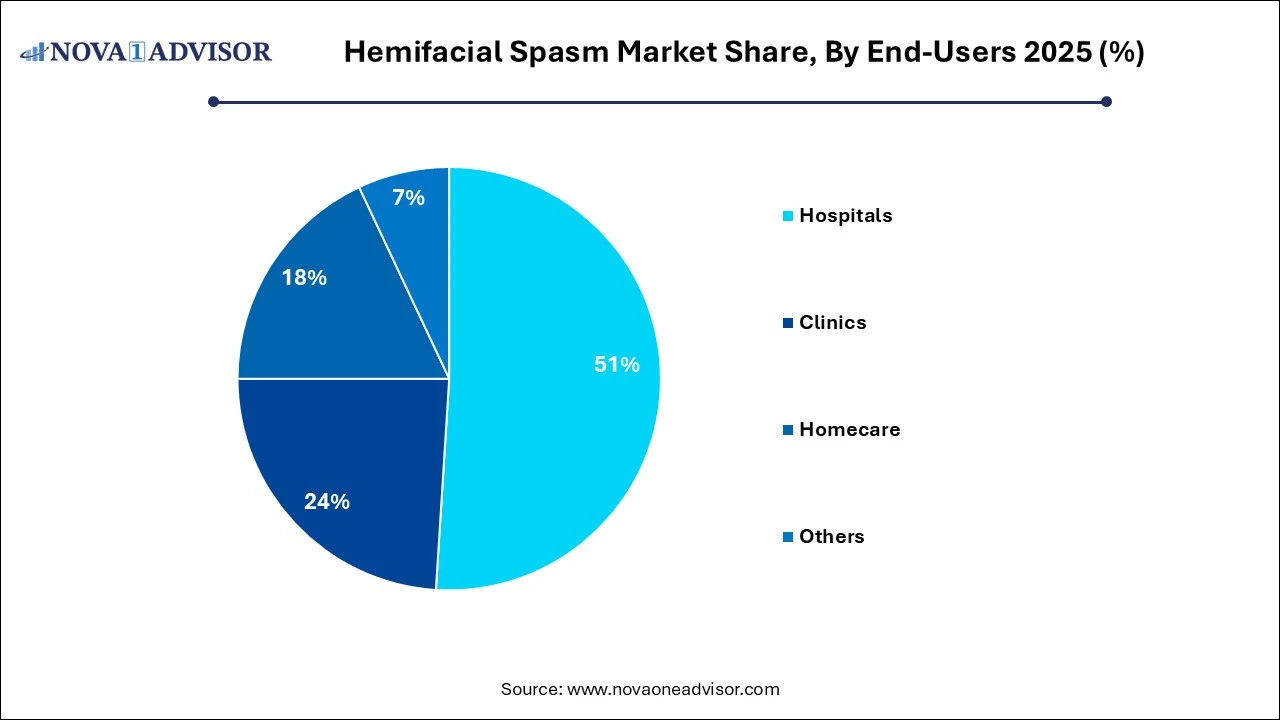
- By end users, the hospital segment dominated the market with the largest share of 51.0% in 2025.
- By region, North America dominated the market with the largest share of 39.0% in 2025.
Market Overview
Hemifacial spasm (HFS) is a neurological disorder characterized by involuntary muscle contractions on one side of the face, primarily caused by compression of the facial nerve. While not life-threatening, the condition can significantly impact daily activities, vision, communication, and overall quality of life. Growing awareness of neurological disorders, improvements in diagnostic imaging, and increasing access to effective treatments are driving market growth. Botulinum toxin injections remain the leading treatment option due to their proven efficacy and minimally invasive nature, while advances in microvascular decompression surgery offer long-term relief for eligible patients. Additionally, innovations in neuroimaging, biologics, digital health technologies, and personalized treatment approaches are supporting better disease management and expanding growth opportunities in the global hemifacial spasm market.
Market Outlook
- Market Growth Overview: The global hemifacial spasm market is expected to grow significantly between 2025 and 2035, driven by the growing awareness of neurological disorders and surge in incidence of facial nerve compression.
- Sustainability Trends: Sustainability trends involve reducing procedural waste and focusing on adoption of value-based healthcare.
- Major Investors: Major investors in the market include AbbVie (via Allergan), Ipsen Pharma, Merz Pharma, Revance Therapeutics, and Medytox.
How is AI impacting the global hemifacial spasm market?
Artificial intelligence (AI) is transforming the diagnosis and management of hemifacial spasm by enabling faster, more accurate, and data-driven clinical decisions. AI-powered computer vision and machine learning algorithms can analyze facial muscle movements from videos to detect involuntary spasms, helping clinicians differentiate hemifacial spasm from other facial movement disorders at an earlier stage. These technologies also provide objective assessments of spasm frequency and severity, improving treatment monitoring and botulinum toxin dose optimization.
AI is further enhancing neuroimaging by assisting in the identification of facial nerve compression on MRI scans, supporting more accurate diagnosis and better patient selection for microvascular decompression surgery. Predictive analytics models are also being developed to forecast treatment outcomes based on patient history, imaging data, and clinical characteristics, enabling more personalized treatment strategies. In addition, AI is accelerating neurological drug development by supporting biomarker discovery, optimizing clinical trials, and improving patient recruitment. The integration of AI with remote monitoring platforms and smartphone-based facial assessments is expanding access to specialist care, allowing continuous disease tracking and timely intervention. As AI adoption grows across healthcare, it is expected to improve diagnostic precision, treatment outcomes, and overall patient management in the global hemifacial spasm market.
Hemifacial Spasm Market Report Scope
| Report Coverage | Details |
| Market Size in 2026 | USD 686.71 Million |
| Market Size by 2035 | USD 1,083.71 Million |
| Growth Rate From 2026 to 2035 | CAGR of 5.2% |
| Base Year | 2025 |
| Forecast Period | 2026 to 2035 |
| Segments Covered | By Treatment, By Route of Administration, By End-User, By Distribution Channel, By Region |
| Market Analysis (Terms Used) | Value (USD Million/Billion) or (Volume/Units) |
| Regional Scope | North America; Europe; Asia Pacific; Central and South America; the Middle East and Africa |
| Key Companies Profiled | Abbott, Allergan, Inc., Cephalon Inc., GlaxoSmithKline plc, Ipsen Group, Johnson & Johnson Services, Inc., Medytox,Inc., Merz Pharma GmbH and Co. KGaA, Novartis AG, Pfizer, Revance Therapeutics, Inc., ROCHE, Sanofi S.A, Shire plc, Stryker, Sunovion Pharmaceuticals, Inc., UCB S.A., US WorldMeds, LLC., and Valeant Pharmaceuticals International, Inc. |
Market Driver
Increasing Adoption of Botulinum Toxin Therapy Fuels Market Growth
The rising use of botulinum toxin injections as the primary treatment for hemifacial spasm is a key driver of market growth. The therapy effectively reduces involuntary facial muscle contractions, offering rapid symptom relief with minimal invasiveness and a strong safety profile. Performed in outpatient settings with short recovery times, botulinum toxin treatment has become the preferred option for both physicians and patients. Improved injection techniques, wider product availability, expanding reimbursement coverage, and growing access to neurological care are expected to further boost treatment adoption worldwide.
Market Restraint
Limited Awareness and Delayed Diagnosis Hinder Market Expansion
Low disease awareness and delayed diagnosis remain significant barriers to market growth. Hemifacial spasm is often misdiagnosed as benign eye twitching or facial tics, leading to delayed treatment. In many developing and rural regions, limited access to neurologists, advanced MRI imaging, and specialized healthcare services further restricts early diagnosis. Additionally, concerns regarding treatment costs, repeated injections, and surgical procedures discourage some patients from seeking timely care, reducing overall treatment penetration.
Market Opportunity
Advancements in Precision Neurology and Digital Health Create Growth Opportunities
The expansion of precision neurology and digital healthcare is creating new opportunities in the hemifacial spasm market. Artificial intelligence, advanced neuroimaging, wearable devices, and telemedicine platforms are improving diagnosis, treatment planning, and long-term patient monitoring. Pharmaceutical companies are developing longer-lasting botulinum toxin formulations, while innovations in microsurgery and image-guided procedures are enhancing surgical outcomes. These technological advancements are expected to improve patient care, expand treatment accessibility, and drive future market growth.
Segmental Insights
By Treatment
Why did the botulinum toxin segment dominate the global hemifacial spasm market?
The botulinum toxin segment dominated the market with the largest share in 2025. The dominance of the segment can be attributed to its high efficiency, non-invasive nature, and quick symptomatic relief. In addition, products such as Botox and Dysport have a long-term safety record and extensive approvals for muscle spasms.
How did the surgical segment expected to hold the significantly growing global hemifacial spasm market in the coming years?
The surgical segment is expected to grow at the fastest CAGR over the forecast period. The growth of the segment can be linked to the growing awareness regarding MIS procedures like microvascular decompression (MVD) and technological innovations in imaging. The expansion of the global aging population directly aligns with a higher incidence and diagnosis rate of neurovascular compression disorders.
By Route of Administration
Why did the parenteral segment dominate the global hemifacial spasm market?
The parenteral segment dominated the market with the largest share in 2025. The dominance of the segment can be linked to the extensive utilization of injectable botulinum toxin therapies and its quick onset of action. Development of innovative neurotoxin-like formulations free of accessory proteins can lower the risk of immune resistance.
How did the oral medication segment expected to hold the significantly growing global hemifacial spasm market in the coming years?
The oral medication segment is expected to grow at the fastest CAGR over the forecast period. The growth of the segment can be driven by growing R&D of neuroprotective drugs. Also, oral medications act as crucial alternatives in regions with availability of less specialized injection services or trained neurologists.
By End-Users
Why did the hospital segment dominate the global hemifacial spasm market?
The hospital segment dominated the market with the largest share in 2025. The dominance of the segment is due to their comprehensive care capabilities and cutting-edge surgical infrastructure. Hospitals are frequently extending public health and awareness campaigns, which effectively drive patient acquisition, leading to segment growth.
How did the homecare segment expected to hold the significantly growing global hemifacial spasm market in the coming years?
The homecare segment is expected to grow at the fastest CAGR over the forecast period. The growth of the segment is due to the growing need for at-home botulinum toxin administration along with the rising geriatric population. Furthermore, growing emphasis on comfort and minimizing frequent clinic travel for chronic symptom management can fuel market growth soon.
By Regional
Why did the North American region account for the largest share in the global hemifacial spasm market?
North America dominated the market with the largest share in 2025. The dominance of the region can be attributed to the growing investments in neurological research and the presence of strong healthcare infrastructure. In addition, advancements in microvascular decompression (MVD) surgical techniques and increasing patient awareness of definitive curative options give a steady pathway for market expansion.
U.S Global Hemifacial Spasm Market Trends
The growth of the market in the country can be driven by the growing incidence of facial nerve disorders with the rapid adoption of innovative treatment alternatives. The region also boasts a highly dense network of cutting-edge neurosurgery and neurology centers equipped for microvascular decompression (MVD) surgery.
Why did the Asia-Pacific region become the fastest-growing global hemifacial spasm market during the forecast period?
Asia Pacific is expected to grow at the fastest CAGR over the forecast period. The growth of the region can be credited to the rapid urbanization and surge in geriatric population coupled with enhanced access to neurological care in developing countries. Furthermore, the strategic integration of telemedicine, domestic distribution partnerships, and homecare therapy solutions effectively addresses the gaps in healthcare accessibility for rural and remote patients.
China Global Hemifacial Spasm Market Trends
The market in the country is growing due to a surge in healthcare investments and a growing need for innovative microvascular decompression surgeries. Also, this country's market is further driven by structural healthcare reforms that significantly expand medical access and improve insurance reimbursement frameworks for neurological therapies.
Key Players in the Global Hemifacial Spasm Market
- AbbVie (Allergan): Produces Botox (OnabotulinumtoxinA), the most widely prescribed and globally recognized drug for managing hemifacial spasms.
- Merz Pharma GmbH & Co. KGaA: Manufactures Xeomin (IncobotulinumtoxinA), which is highly utilized as a next-generation alternative offering low immunogenicity due to its highly purified structure.
- Medytox: A prominent South Korean biopharmaceutical manufacturer capturing critical market share across the Asia-Pacific region.
Recent Developments
- In October 2025, AbbVie (NYSE: ABBV) recently announced positive topline data from its Phase 2 ELATE clinical trial, which assessed the safety and efficacy of onabotulinumtoxinA (BOTOX®) against a placebo for treating upper limb essential tremor.
Segments Covered in the Report
This report forecasts revenue growth at country levels and provides an analysis of the latest industry trends in each of the sub-segments from 2021 to 2035. For this study, Nova one advisor, Inc. has hemifacial spasm market.
By Treatment
- Oral Medication
- Botulinum Toxin
- Surgery
By Route of Administration
- Oral
- Parenteral
- Others
By End-Users
- Clinics
- Hospitals
- Homecare
- Others
By Distribution Channel
- Hospital Pharmacy
- Retail Pharmacy
- Online Pharmacy
- Others
By Region
- North America
- Europe
- Asia Pacific
- Latin America
- Middle East & Africa
FAQ's

Proceed to Buy
Instant PDF delivery on confirmation

Hemifacial Spasm Market Size to Hit USD 1,083.71 Million by 2035
 Request Customization
 Download Sample

Get a Sample of this Report
Hemifacial Spasm Market