

In-Vitro Diagnostics (IVD) Market Size, Share, and Trends 2026 to 2035
 Status Published
 Category Healthcare


Content
In-Vitro Diagnostics (IVD) Market Size and Growth 2026 to 2035
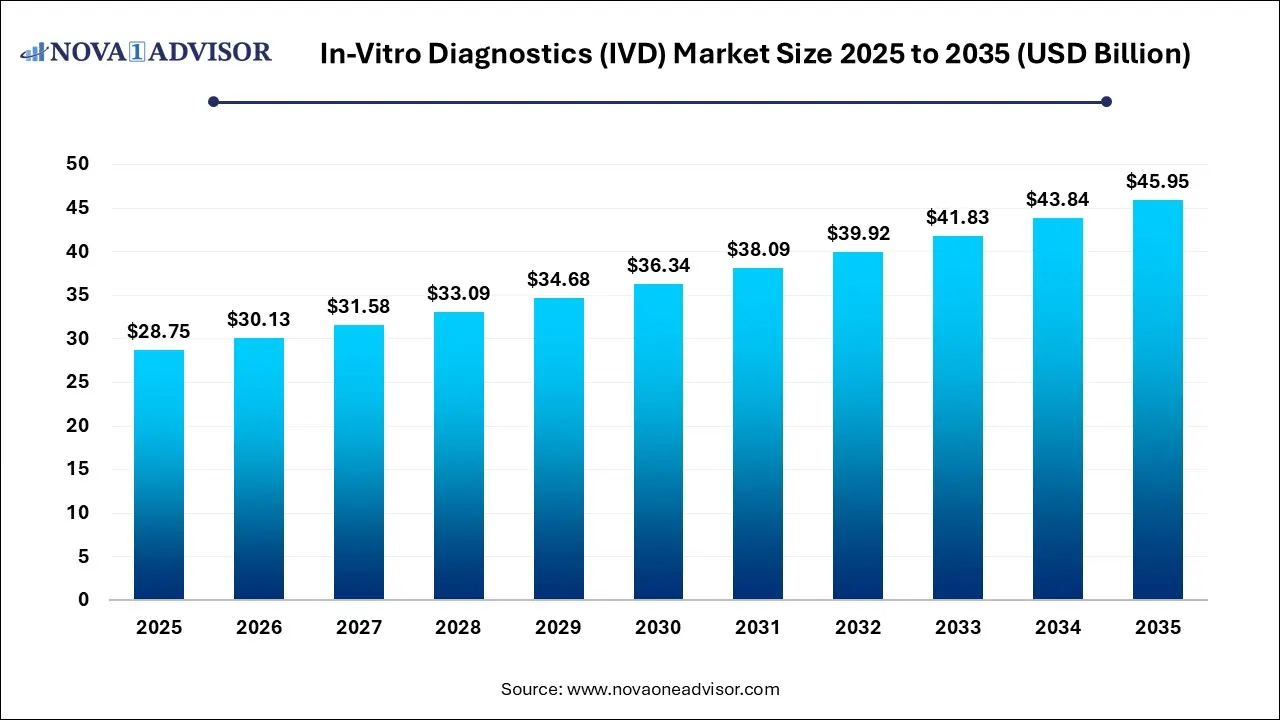
The in-vitro diagnostics (IVD) market size was estimated at USD 28.75 billion in 2025 and is projected to increase from USD 30.13 billion in 2026 to approximately USD 45.95 billion by 2035, growing at a CAGR of 4.8% from 2026 to 2035. The in-vitro diagnostics (IVD) market is driven by the rising prevalence of chronic and infectious diseases, rapid expansion of point-of-care testing, and growing investment in healthcare infrastructure, improving access to advanced diagnostic tools.
Key Takeaways
- By product type, the reagents and kits segment held a dominant position in the market with a share of 65% in 2025.
- By product type, the instruments segment is the fastest growing between 2026 and 2035.
- By technology, the immunoassay segment held a dominant position in the market with a share of 30% in 2025.
- By technology, the clinical chemistry segment is the fastest growing between 2026 and 2035.
- By application, the oncology segment accounted for a considerable revenue share of 25% in the market in 2025.
- By end use, the hospitals and clinics segment accounted for a considerable revenue share of 40% in the market in 2025.
Innovation Driving Transformation in the In-Vitro Diagnostics (IVD) Market
In-vitro diagnostics (IVD) comprises medical devices, reagents, and instruments used to analyze human samples, such as blood, urine, or tissue, outside the body to detect diseases, monitor health conditions, and guide treatment. The primary benefits include early disease detection, enhanced precision medicine, and rapid, accurate results, which allow for timely therapeutic interventions and better management of chronic or infectious conditions. The market growth is driven by increasing prevalence of chronic diseases, a rapidly expanding geriatric population, and rising demand for point-of-care testing.
In-Vitro Diagnostics (IVD) Market Trends
- Decentralization and the Upscale of Point-of-Care (POC) Infrastructure
POCT is accelerating as diagnostic tools move from centralized labs to hospital bedsides, pharmacies, and home-care settings, enabling faster decision-making. Innovation in miniaturized devices allows for accurate testing of infectious diseases, chronic conditions, and cardiac markers within minutes rather than days.
- Precision Medicine Through Molecular Diagnostics and NGS Scale-up
The significant shift toward molecular assays, including PCR and next-generation sequencing, offers superior sensitivity in detecting genetic disorders and infectious pathogens. This high-precision technology is increasingly being used for personalized medicine to determine individualized treatment strategies.
- Focus on Personalized Medicine and Companion Diagnostics
IVD companies are focusing on companion diagnostics, which are tests that help clinicians tailor medical treatments to individual patient profiles, especially in oncology. The shift towards molecular diagnostics and genetic testing enables specialized and targeted therapies, improving patient outcomes and driving new revenue streams.
Key AI Integration in the In-Vitro Diagnostics (IVD) Market
AI and ML are revolutionizing the in-vitro diagnostics industry by transitioning it from reactive testing to proactive, personalized, and rapid diagnostics. These technologies enhance diagnostic accuracy by analyzing complex, high-volume datasets, including genomic, proteomic, and digital pathology data, faster and more rapidly than traditional methods. ML algorithms are critical in enabling rapid, AI-driven point-of-care testing (POCT) and liquid biopsies, which allow for earlier detection of chronic diseases and cancer. AI optimizes laboratory efficiency by automating workflows, reducing human error, and interpreting imaging, which addresses staff shortages and cuts operational costs.
In-Vitro Diagnostics (IVD) Market Report Scope
| Report Coverage | Details |
| Market Size in 2026 | USD 30.13 Billion |
| Market Size by 2035 | USD 45.95 Billion |
| Growth Rate From 2026 to 2035 | CAGR of 4.8% |
| Base Year | 2025 |
| Forecast Period | 2026 to 2035 |
| Segments Covered | By Product Type, By Technology, By Application, By End-user, By Region |
| Market Analysis (Terms Used) | Value (USD Million/Billion) or (Volume/Units) |
| Regional Scope | North America; Europe; Asia Pacific; Central and South America; the Middle East and Africa |
| Key Companies Profiled | Abbott, Siemens Healthineers AG, Bio-Rad Laboratories, Inc, BIOMÉRIEUX, QIAGEN, BD, Quidel Corporation, Danaher, F. Hoffmann-La Roche Ltd., Quest Diagnostics Incorporated |
Market Dynamics
Driver
Rising Prevalence of Chronic and Infectious Diseases
The rising prevalence of chronic conditions, such as diabetes and cancer, alongside infectious diseases, necessitates frequent, precise testing and long-term monitoring. This increased burden of diseases boosts the demand for rapid, accurate diagnostic solutions, including molecular diagnostics and point-of-care testing, to facilitate early detection, which improves patient outcomes and lowers overall healthcare costs. The aging global population is particularly susceptible to these conditions, intensifying the need for regular screenings and routine laboratory diagnostics.
Restraint
Operational Challenges and Workforce Shortages
The market growth is hindered by reduced operational capacity and increasing operational costs. A critical shortage of skilled laboratory personnel limits the ability to utilize advanced diagnostics, while high maintenance costs and inconsistent infrastructure, particularly in developing regions, hinder the implementation of new technology. Supply chain bottlenecks and rising operational demands result in longer turnaround times, reducing laboratory efficiency and delaying patient diagnosis.
Opportunity
Expansion of Companion Diagnostics
The driving demand for highly specialized molecular and genetic testing is particularly in oncology and chronic disease management. As companion tests become integral to prescribing targeted therapies, they facilitate the adoption of precision medicine, which boosts the consumption of advanced IVD consumables such as assays, kits, and reagents. The co-development of these tests alongside novel drugs by pharmaceutical firms fosters strategic collaborations, increasing the volume of high-value diagnostic approvals.
Segment Insights
By Product Type Insights
Why Did the Reagents and Kits Segment Hold a 65% Share for the In-Vitro Diagnostics (IVD) Market?
The reagents and kits segment held a dominant position in the market with a share of 65% in 2025, owing to recurring usage and high testing volumes driving continuous demand. Increased incidence of chronic disease and infectious diseases, shift toward automated high-throughput laboratory systems requires large volumes of reagents, while the rise of home-based self-testing kits drives the market growth.
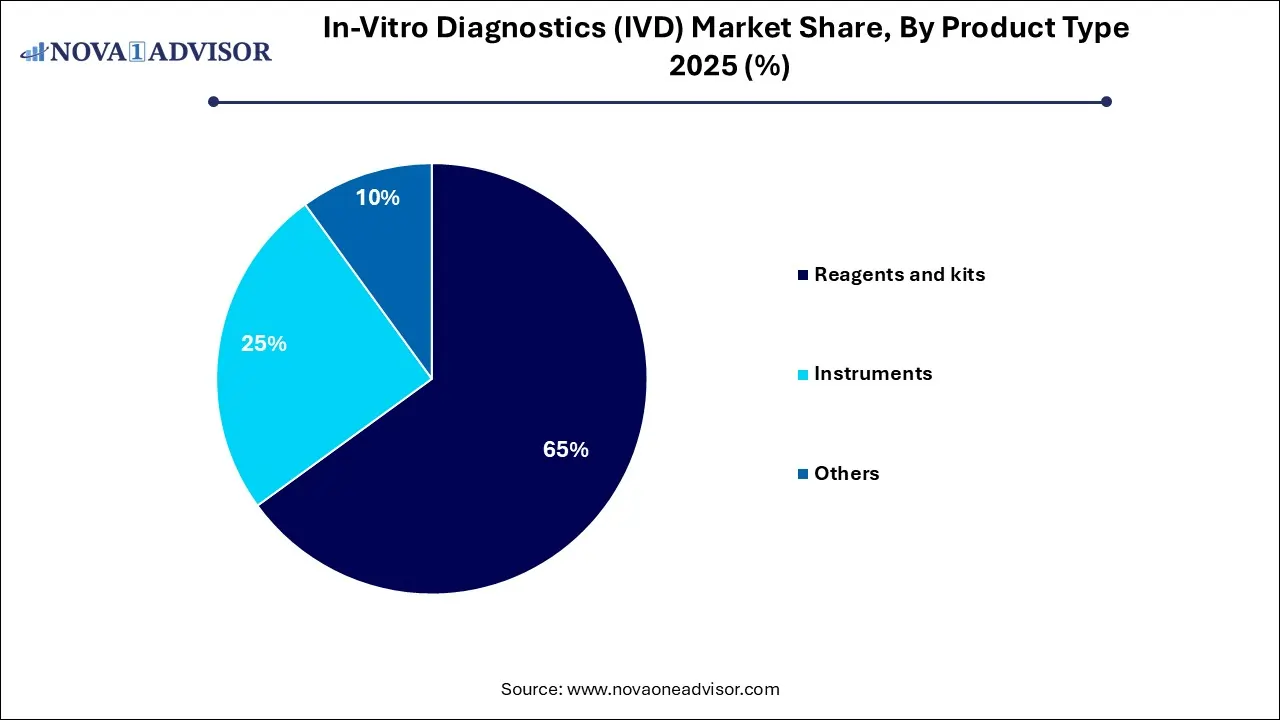
The instruments segment held a 25% share of the market in 2025, due to the integration of advanced sensor technology, molecular diagnostics platforms, and AI-driven control algorithms, which have increased the demand for advanced analyzers. The rising prevalence of conditions requiring constant testing necessitates the use of robust and advanced machinery.
The others segment held a 10% share of the market in 2025, due to the growing need for specific diagnostic tests in neurology and nephrology, among other areas, which has increased the adoption of specialized, non-conventional diagnostics. The rise in chronic conditions worldwide necessitates a wider range of diagnostic options beyond traditional immunoassays and molecular diagnostics.
By Technology Insights
Why Did the Immunoassay Segment Lead the In-Vitro Diagnostics (IVD) Market?
The immunoassay segment registered its dominance over the market with a share of 30% in 2025, owing to its reliability and accuracy. Immunoassays are the cornerstone of lab testing, with high adoption in hospital networks and laboratories, contributing to the largest share. The rapid adoption of latency flow assays and other rapid immunoassays in hospitals and self-testing drives the market.
The molecular diagnostics segment held the 20% share of the market in 2025, due to the high precision medicine and rising demand for advanced diagnostics. Innovation in molecular tools, including high-sensitivity PCR and next-generation sequencing, has facilitated quicker and more reliable results.
The clinical chemistry segment held the 18% share of the market in 2025, with a strong but slightly behind due to mature technology with a slower innovation pace. The growing global prevalence of chronic illnesses, such as diabetes and heart disease, requires regular, ongoing monitoring, which fuels the demand for routine chemistry tests.
The hematology segment held the 15% share of the market in 2025, with superior routine use but limited expansion compared to newer technologies. The rising number of surgeries and blood transfusions necessitates high-volume, quick, and accurate haematology testing for patient care.
The others segment held the 25% share of the market in 2025, due to the limited adoption and early-stage development. Increased adoption of new applications and emerging biomarkers allows for a more significant position alongside traditional segments.
By Application Insights
Why Did the Oncology Segment Lead the In-Vitro Diagnostics (IVD) Market?
The oncology segment registered its dominance over the market with a share of 25% in 2025, owing to the rising global cancer prevalence and screening initiatives. High adoption of sophisticated techniques, such as next-generation sequencing, flow cytometry, and biomarker testing, allows for precise, personalized cancer analysis.
The cardiology segment held the 20% share of the market in 2025, with a strong presence but slightly lower due to competition from oncology advancements. Increased funding for cardiovascular research and the new, accurate diagnostics are expanding market growth. Cardiac diagnosis tests involve routine and high-frequency testing, leading to sustained demand for reagents and kits.
The autoimmune disease segment held 18% share of the market in 2025, due to the increasing awareness, but is limited compared to major diseases. Increased healthcare focus on identifying diseases earlier to prevent further progression, which boosts the market for specialized high-sensitivity diagnostics.
The neurology segment held 12% share of the market in 2025, with complex diagnostics and limited routine screening. The industry is moving from traditional methods toward advanced molecular diagnostics and, importantly, the identification of novel biomarkers for early diagnosis.
The others segment held 25% share of the market in 2025, with the broad coverage of multiple common conditions. The surging need for early detection of cancer and chronic conditions, combined with the continuous need for infectious disease surveillance, drives the demand for these specialized, high-sensitivity tests.
By End Use Insights
Why Did the Hospital and Clinic Segment Lead the In-Vitro Diagnostics (IVD) Market?
The hospital and clinic segment registered its dominance over the market with a share of 40% in 2025, owing to the high patient inflow and integrated diagnostic capabilities. The increasing number of hospitals worldwide, combined with rising healthcare expenditure and aging populations, drives consistent, sustained demand for IVD products.
The research institutes segment held the 15% share of the market in 2025, with increased investment by manufacturers and government bodies heavily fueling research and development in research institutions to create highly sensitive and cost-effective diagnostics. Growing adoption of emerging, cutting-edge technologies, such as flow cytometry, mass spectrometry, and advanced genetic sequencing.
The diagnostic laboratories segment held 35% share of the market in 2025, due to the outsourcing trends and high-throughput testing demand. A trend toward larger laboratories creates efficiencies that favor centralized testing and bulk purchasing, solidifying the market dominance of these large operators.
The other segments held 10% share of the market in 2025, with the rising need for early detection of cancer and chronic conditions, continuous need for infectious diseases surveillance, and demand for these specialized, high-sensitivity tests.
By Regional Insights
Why Did the North America Region Lead the In-Vitro Diagnostics (IVD) Market?
The North America region registered its dominance over the market with a share of 40% in 2025, owing to the high healthcare spending and early adoption of technologies. The high adoption of advanced technologies, including molecular diagnostics, immunoassay, and AI-powered diagnostics platforms. Growing focus on personalized medicine and personalized diagnostic tests has surged rapid-at home molecular diagnostics tests, molecular diagnostics for sexually transmitted infections.
The Europe region held the 25% share of the market in 2025, with the slower growth compared to emerging regions. Increasing use of genetic testing for targeted therapies and personalized medicine fuels the demand for specialized assays.
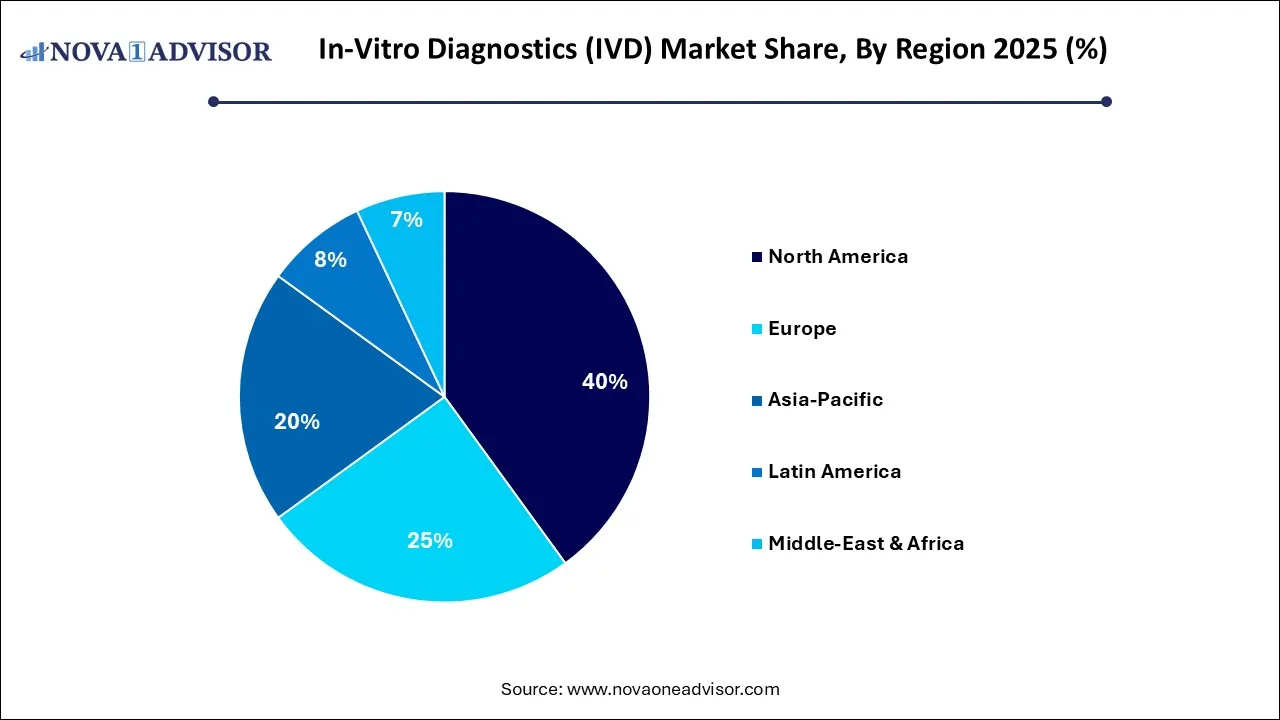
The Asia Pacific segment held 20% share of the market in 2025, due to the large population base and expanding healthcare access. The growing adoption rate of advanced molecular diagnostic results, especially in remote or underserved areas, has boosted the popularity of portable POCT devices.
The Latin America region held 8% share of the market in 2025, with infrastructure and funding limitations. Enhanced, modernized healthcare infrastructure and increased insurance coverage have increased access to diagnostics. The increased adoption of molecular diagnostics and point-of-care testing allows for more accurate diagnosis, favorable government policies, and collaboration.
The MEA region held 7% share of the market in 2025, due to the limited access and uneven healthcare infrastructure. The surge in adoption of advanced molecular diagnostics, next-generation sequencing, and point-of-care testing is improving accuracy and speed.
Recent Developments
- In April 2025, Roche introduced a CE-marked, AI-driven Chest Pain Triage algorithm within its navify® Algorithm Suite, designed in collaboration with Universitätsklinikum Heidelberg to optimize Acute Coronary Syndrome (ACS) detection in emergency settings. The tool utilizes high-sensitivity troponin data and ESC guidelines to provide rapid rule-in or rule-out recommendations, potentially reducing patient emergency department stay times by over three hours.
- In March 2025, Thermo Fisher Scientific introduced the Applied Biosystems SeqStudio Flex Dx Genetic Analyzer, an IVDR-compliant capillary electrophoresis system designed for clinical and research applications. The system offers 8- or 24-capillary configurations with features like urgent sample reprioritization, three operating modes, and smart lab connectivity to enhance laboratory workflow efficiency.
- In March 2026, Thermo Fisher Scientific launched Brilliance Candida 2 Agar (Europe) and Spectra Candida Agar (U.S.), new chromogenic culture media designed for the rapid detection and visual differentiation of Candida species. A primary focus of these products is the early identification of Candida auris, a highly drug-resistant fungal pathogen that poses a severe global antimicrobial resistance (AMR) threat.
In-Vitro Diagnostics (IVD) Market Companies
- Abbott
- Siemens Healthineers AG
- Bio-Rad Laboratories, Inc
- BIOMÉRIEUX
- QIAGEN
- BD
- Quidel Corporation
- Danaher
- F. Hoffmann-La Roche Ltd.
- Quest Diagnostics Incorporated
Segments Covered in the Report
This report forecasts revenue growth at country levels and provides an analysis of the latest industry trends in each of the sub-segments from 2021 to 2035. For this study, Nova one advisor, Inc. has segmented the in-vitro diagnostics market.
By Product Type
- Reagents and kits
- Instruments
- Others
By Technology
- Immunoassay
- Molecular diagnostics
- Clinical chemistry
- Hematology
- Others
By Application
- Oncology
- Cardiology
- Autoimmune diseases
- Neurology
- Others
By End-user
- Hospitals and clinics
- Research institutes
- Diagnostics laboratories
- Others
By Region
- North America
- Europe
- Asia-Pacific
- Latin America
- Middle-East & Africa
FAQ's

Proceed to Buy
Instant PDF delivery on confirmation

In-Vitro Diagnostics (IVD) Market Size to Hit USD 45.95 Billion by 2035
 Request Customization
 Download Sample

Get a Sample of this Report
In-Vitro Diagnostics (IVD) Market