

Inguinal Hernia Market Size, Share, and Trends 2026 to 2035
 Status Published
 Category Healthcare


Content
Inguinal Hernia Market Size and Growth 2026 to 2035
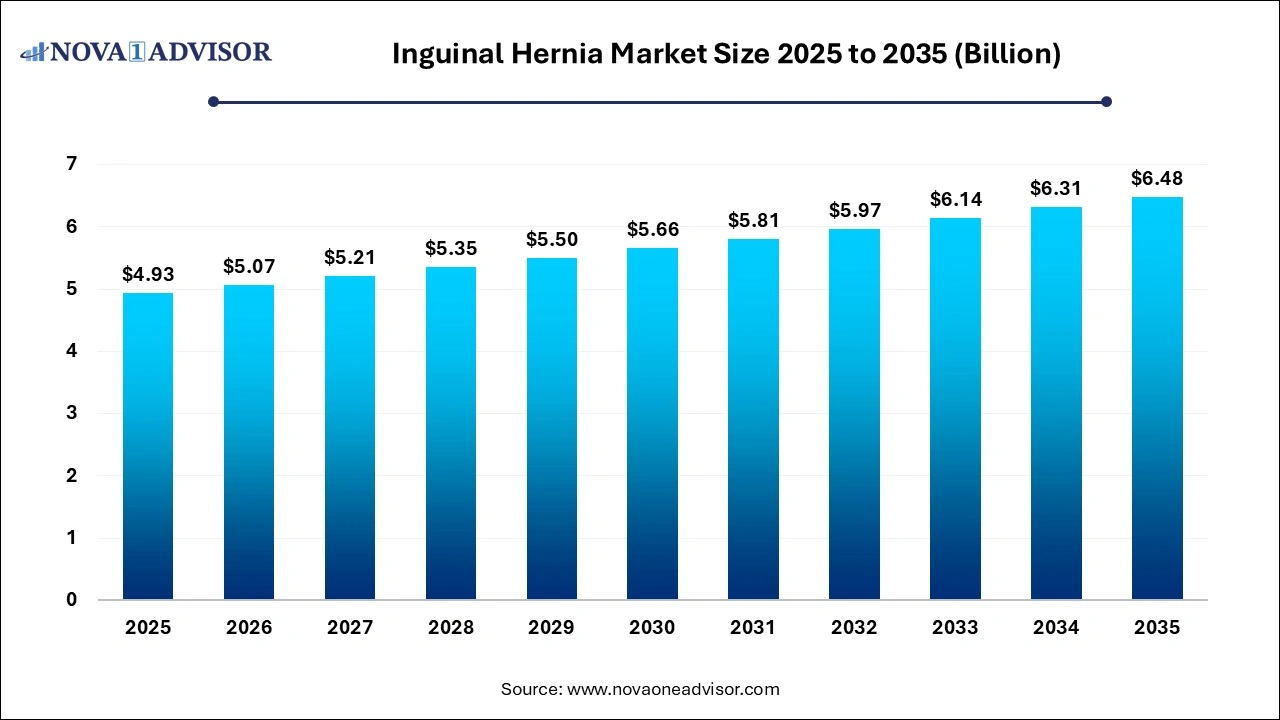
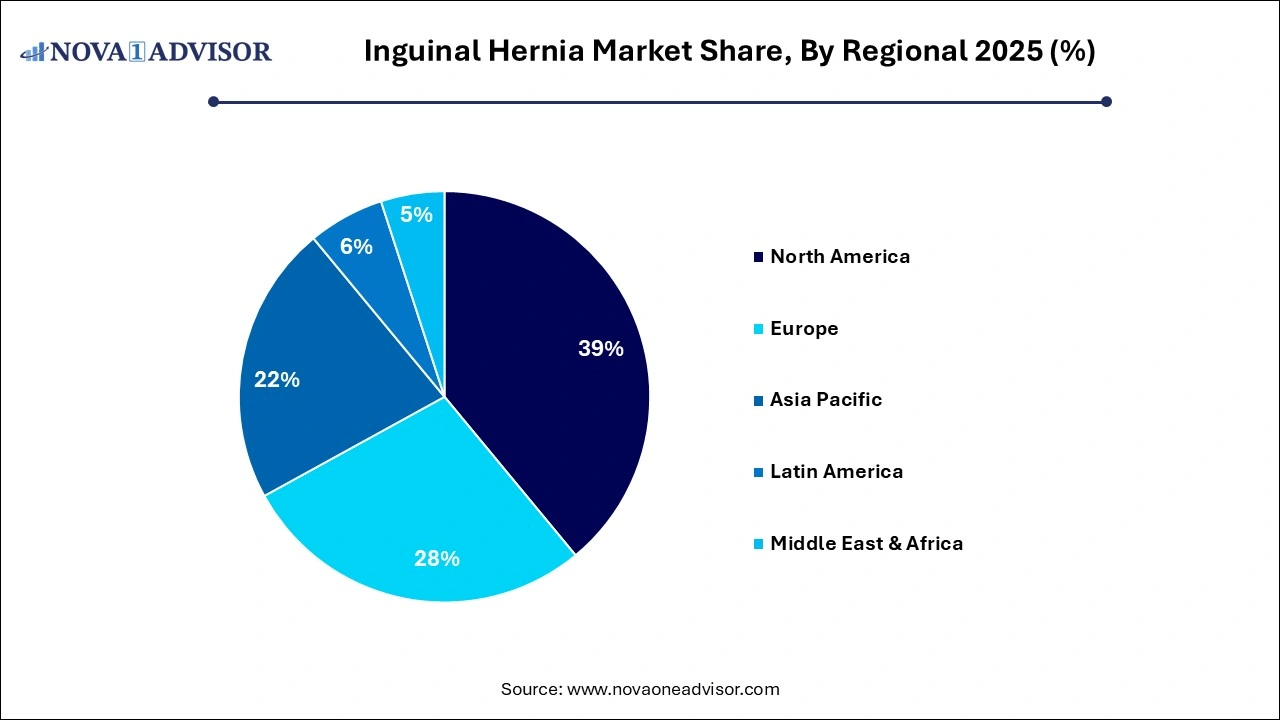
The global inguinal hernia market size was valued at USD 4.93 billion in 2025 and is projected to grow from USD 5.07 billion in 2026 to USD 6.48 billion by 2035, at a CAGR of 2.77% from 2026 to 2035. North America dominated the market, accounting for a revenue share of 39.0% in 2025.
Key Takeaway
- By type, the direct inguinal hernia segment dominated the market with the largest share in 2025.
- By type, the indirect inguinal hernia segment is expected to grow at the fastest CAGR over the forecast period.
- By diagnosis, the physical examination segment dominated the market with the largest share in 2025.
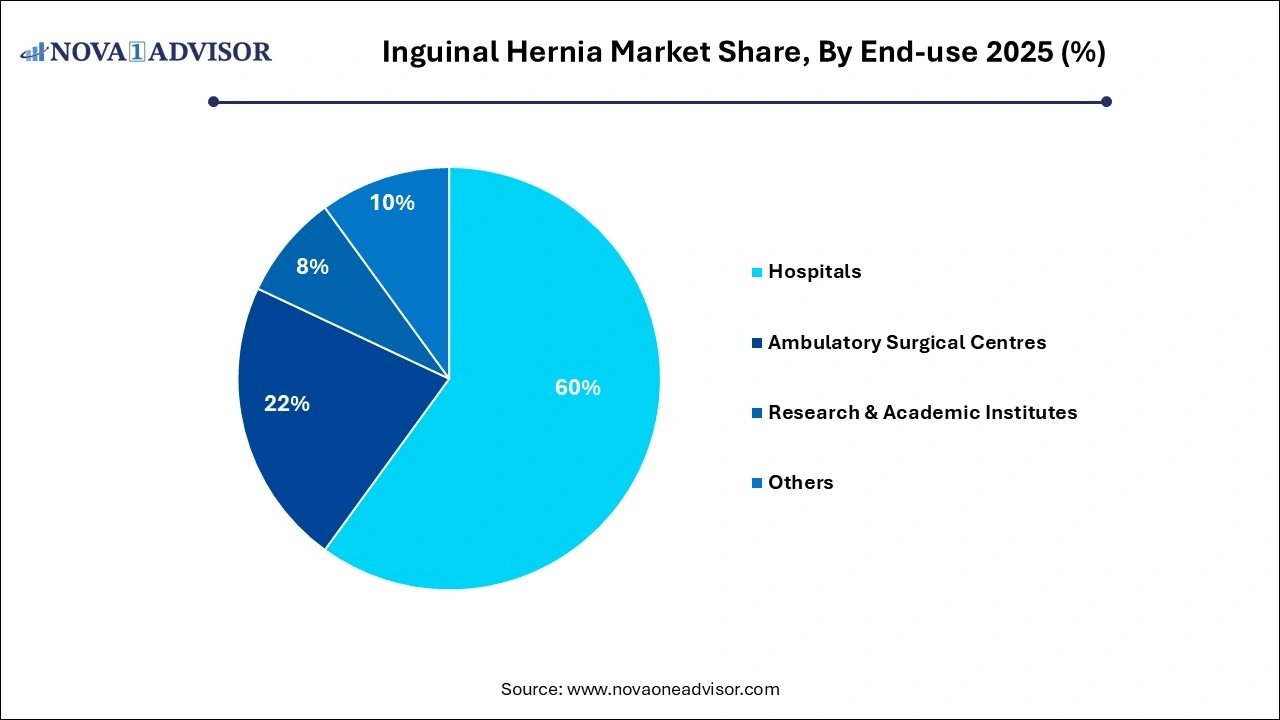
- By end use, the hospitals segment dominated the market with the largest share of 60.0% in 2025.
- By region, North America dominated the market with the largest share of 39.0% in 2025.
Market Overview
The inguinal hernia market is witnessing steady growth due to the increasing prevalence of hernias, an aging population, rising obesity rates, and greater adoption of minimally invasive surgical procedures. Advancements in mesh technologies, laparoscopic and robotic-assisted surgeries, and improved biomaterials are enhancing treatment outcomes while reducing recovery time and recurrence rates. Expanding healthcare infrastructure, better insurance coverage, and increasing access to elective surgeries in emerging economies are further supporting market expansion. Continuous innovation in surgical devices and growing emphasis on patient-centered care are expected to sustain the market's long-term growth.
Market Outlook
- Market Growth Overview: The global inguinal hernia market is expected to grow significantly between 2025 and 2035, driven by the growing awareness regarding minimally invasive surgical procedures.
- Sustainability Trends: Sustainability trends involve the adoption of sustainable manufacturing techniques and a transition towards energy-efficient surgical devices.
- Major Investors: Major investors in the market include Medtronic; Johnson & Johnson's Ethicon; Becton, Dickinson and Company (BD); B. Braun SE; and W. L. Gore & Associates.
How is AI Impacting The Global Inguinal Hernia Market?
Artificial intelligence (AI) is revolutionizing the market by enhancing surgical precision, automating phase recognition and video-based workflow, and empowering machine learning models that forecast patient-specific post-operative complications. Furthermore, automated artificial intelligence frameworks continuously monitor intraoperative workflow phases during minimally invasive procedures such as transabdominal preperitoneal (TAPP) and totally extraperitoneal (TEP) repairs.
Inguinal Hernia Market Report Scope
| Report Coverage | Details |
| Market Size in 2026 | USD 5.07 Billion |
| Market Size by 2035 | USD 6.48 Billion |
| Growth Rate From 2026 to 2035 | CAGR of 2.77% |
| Base Year | 2025 |
| Forecast Period | 2026 to 2035 |
| Segments Covered | By Type, By Diagnosis, By Treatment, By End-Use, By Region |
| Market Analysis (Terms Used) | Value (USD Million/Billion) or (Volume/Units) |
| Regional Scope | North America; Europe; Asia Pacific; Central and South America; the Middle East and Africa |
| Key Companies Profiled | Ethicon, Inc. (U.S.), Medtronic (U.S.), C.R. Bard, Inc. (U.S.), Atrium (U.S.), W.L. Gore & Associates Inc. (U.S.), Acelity (U.S.) and B Braun Melsungen AG (Germany) |
Market Driver: Rising Adoption of Minimally Invasive Hernia Repair Procedures
The growing preference for minimally invasive hernia repair is a key driver of the inguinal hernia market. Laparoscopic and robotic-assisted surgeries offer benefits such as smaller incisions, reduced pain, faster recovery, lower infection risk, and shorter hospital stays. Increasing investments in advanced surgical technologies and surgeon training programs are further accelerating the adoption of these procedures worldwide.
Market Restraint: High Cost of Advanced Surgical Technologies
The high cost of robotic surgical systems, premium surgical meshes, and specialized instruments remains a major challenge for market growth. Significant capital investment, maintenance expenses, and training requirements limit adoption, particularly in developing countries. Inadequate reimbursement policies also make hospitals cautious about implementing advanced surgical technologies on a larger scale.
Market Opportunity: Expanding Surgical Access Across Emerging Economies
Emerging economies present significant growth opportunities due to expanding healthcare infrastructure, improved insurance coverage, and increased access to surgical care. Government investments in hospitals, ambulatory surgical centers, and minimally invasive surgery programs are driving procedural volumes. Growing awareness of timely hernia treatment and the expansion of global medical device manufacturers into these regions are expected to support long-term market growth.
Segmental Insights
By Type
Why did the direct inguinal hernia segment dominate the global inguinal hernia market?
The direct inguinal hernia segment dominated the market with the largest share in 2025. The dominance of the segment can be attributed to its growing prevalence among the elderly population and growing awareness about early disease detection. In addition, individuals engaged in physically demanding activities or regular heavy lifting experience repeated elevations in intra-abdominal pressure.
How did the indirect inguinal hernia segment expected to hold the significantly growing global inguinal hernia market in the coming years?
The indirect inguinal hernia segment is expected to grow at the fastest CAGR over the forecast period. The growth of the segment can be credited to the increasing incidence of congenital hernias, especially in younger and pediatric adult populations. The integration of high-definition laparoscopic systems and specialized neonatal instruments significantly enhances surgical safety and reduces postoperative complications.
By Diagnosis
Why did the physical examination segment dominate the global inguinal hernia market?
The physical examination segment dominated the market with the largest share in 2025. The dominance of the segment can be linked to their rapid assessment capability, inexpensive nature, and fewer equipment requirements. Also, it needs no specialized machinery, which makes it crucial for routine check-ups and budget-constrained primary care clinics.
How did the CT scan segment expected to hold the significantly growing global inguinal hernia market in the coming years?
The CT scan segment is expected to grow at the fastest CAGR over the forecast period. The growth of the segment can be driven by its better precision in differentiating between direct and indirect hernias along with the growing utilization of high-grade CT imaging. Computed tomography (CT) scans provide critical diagnostic information for patients experiencing persistent, unexplained chronic groin pain.
By End-Use
Why did the hospitals segment dominate the global inguinal hernia market?
The hospitals segment dominated the market with the largest share in 2025. The dominance of the segment is owing to the growing accessibility of innovative surgical infrastructure and capability to handle emergency repairs. Hospitals feature advanced surgical suites equipped with cutting-edge technology for minimally invasive and robotic-assisted procedures.
How did the ambulatory surgical centers (ASCs) segment expected to hold the significantly growing global inguinal hernia market in the coming years?
The ambulatory surgical centers (ASCs) segment is expected to grow at the fastest CAGR during the study period. The growth of the segment is due to the growing shift towards outpatient surgeries and rapid discharge procedures. Furthermore, ASCs offer optimized scheduling as compared to congested major hospital systems.
By Regional
Why did the North American region account for the largest share in the global inguinal hernia market?
North America dominated the market with the largest share in 2025. The dominance of the region can be attributed to the growing adoption of innovative surgical technologies and the robust presence of major device manufacturers. In addition, extensive surgeon and patient preference for laparoscopic and robotic-assisted repairs ensures a much more rapid recovery and fewer complications.
U.S. Global Inguinal Hernia Market Trends
The growth of the market in the country can be driven by the growing incidence of obesity and sedentary lifestyles. Also, the presence of prominent medical device manufacturers such as BD, Ethicon, and Medtronic within the United States significantly boosts the domestic commercialization of new products.
Why did the Asia-Pacific region become the fastest-growing global inguinal hernia market during the forecast period?
Asia Pacific is expected to grow at the fastest CAGR over the forecast period. The growth of the region can be credited to the increasing disposable incomes and expanding surgical infrastructure across developing countries such as China and India. Furthermore, the transition toward laparoscopic and robotic-assisted hernia repair techniques yields a reduction in the duration of hospitalization and a decrease in postoperative discomfort.
China Global Inguinal Hernia Market Trends
The market in the country is growing due to increasing healthcare expenditure and a growing number of over one million annual hernia surgeries. Moreover, the localized manufacturing of cost-effective synthetic meshes, and fixation systems enhances the accessibility of surgical treatments across regional medical centers.
Key Players in the Global Inguinal Hernia Market
- Medtronic: A dominant industry leader providing advanced surgical fixation systems, lightweight meshes and expanding robotic-assisted surgery integrations (such as clinical updates involving the Hugo™ RAS system for hernia repair).
- Johnson & Johnson (Ethicon): It offers an extensive portfolio of synthetic and biological meshes, fixation devices, and open/laparoscopic hernia solutions backed by a massive global distribution network.
- B. Braun SE: A major European medical technology company supplying specialized hernia meshes, fixation systems, and comprehensive surgical instruments.
Recent Developments
- In July 2026, Johnson & Johnson announced that the U.S. Food and Drug Administration (FDA) has granted De Novo authorization for its OTTAVA™ Robotic Surgical System, marking it as the world’s first table-integrated soft tissue robotic system. The platform has received marketing clearance for a variety of general surgery procedures, including Roux-en-Y gastric bypass, gastrectomy, and cholecystectomy.
Segments Covered in the Report
This report forecasts revenue growth at country levels and provides an analysis of the latest industry trends in each of the sub-segments from 2021 to 2035. For this study, Nova one advisor, Inc. has inguinal hernia market.
By Type
- Direct
- Indirect
By Diagnosis
- Physical Examination
- CTScan
- Abdominal Ultrasound
- Magnetic Resonance Imaging (MRI)
- Others
By Treatment
- Open Hernia Repair
- laparoscopy
- Others
By End-Use
- Hospitals
- Ambulatory Surgical Centres
- Research & Academic Institutes
- Others
By Region
- North America
- Europe
- Asia Pacific
- Latin America
- Middle East & Africa
FAQ's

Proceed to Buy
Instant PDF delivery on confirmation

 Request Customization
 Download Sample

Get a Sample of this Report
Inguinal Hernia Market