

Intrauterine Devices Market Size, Share, and Trends 2026 to 2035
 Status Published
 Category Healthcare


Content
Intrauterine Devices Market Size and Growth 2026 to 2035
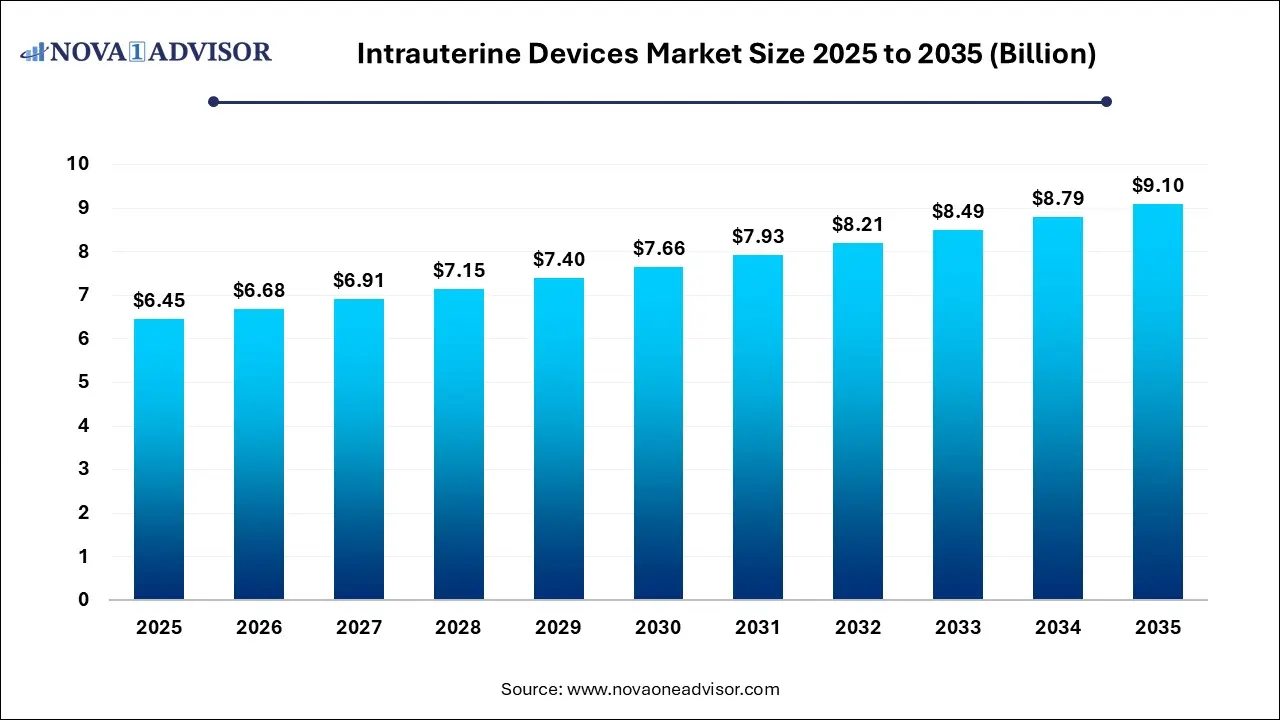
The global intrauterine devices market size was valued at USD 6.45 billion in 2025 and is projected to grow from USD 6.68 billion in 2026 to USD 9.10 billion by 2035, at a CAGR of 3.5% from 2026 to 2035.
Key Takeaway:
- By type, the hormonal IUD segment dominated the market and accounted for the largest revenue share in 2025.
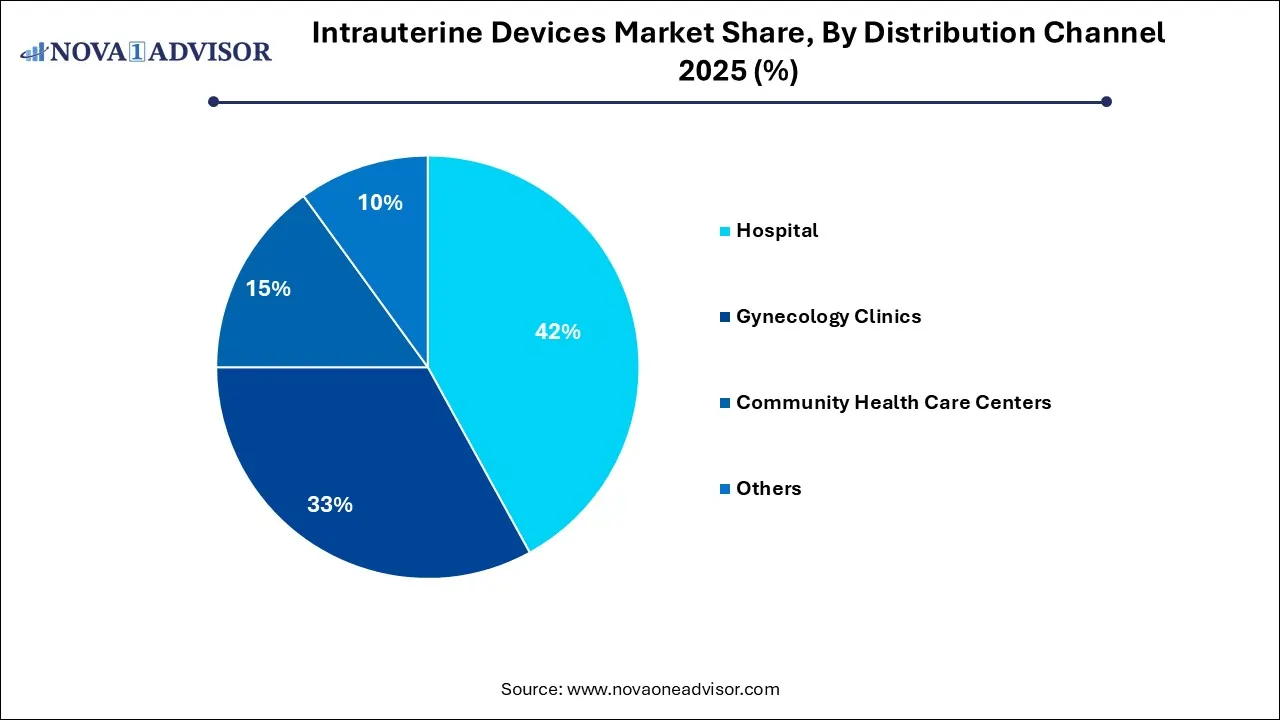
- By distribution channel, the hospital segment dominated the market and accounted for the largest revenue share of 42% in 2025.
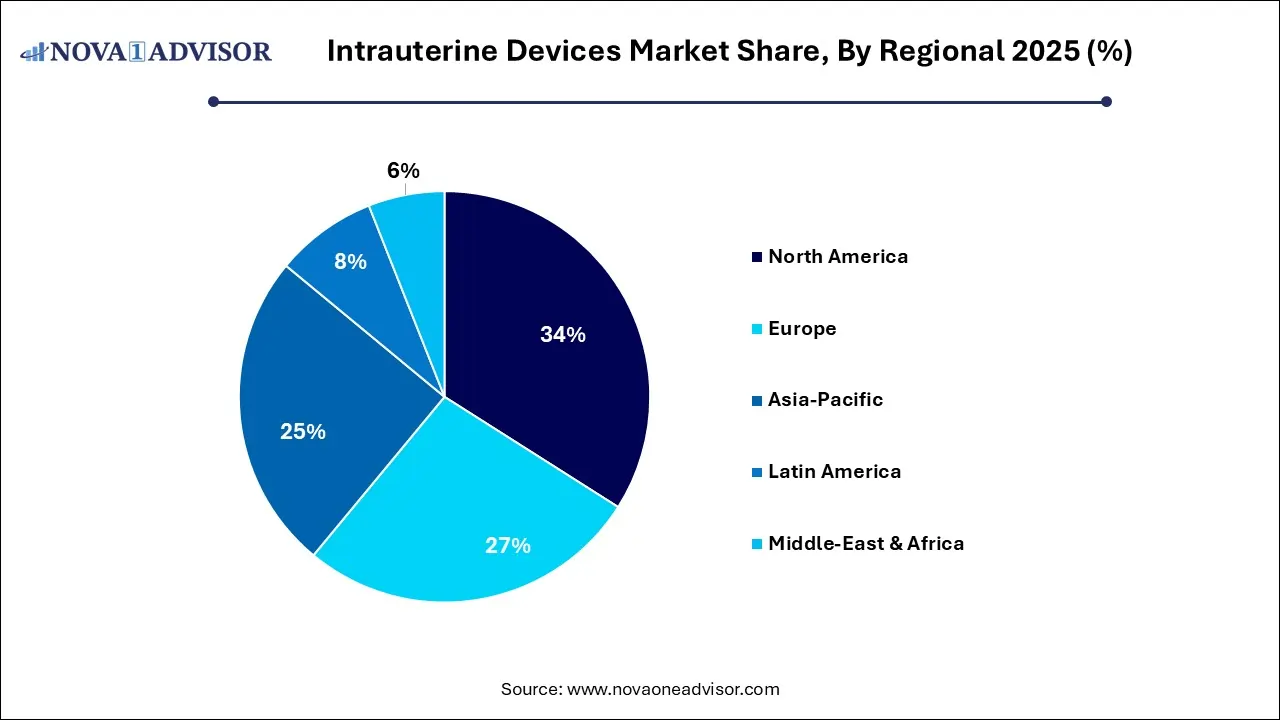
- By region, North America accounted for the largest revenue share of 34% in 2025.
Market Overview
The intrauterine devices (IUDs) market is experiencing steady growth, driven by increasing demand for safe, effective, and long-acting reversible contraceptive (LARC) methods. IUDs provide highly reliable, long-term pregnancy prevention with a single clinical procedure while allowing rapid return of fertility after removal, making them a preferred contraceptive option for women across various age groups. Rising awareness of reproductive health, greater emphasis on family planning, and evolving lifestyle preferences are encouraging wider adoption of both hormonal and copper IUDs. Government initiatives, public reimbursement programs, and expanding access to reproductive healthcare services are further supporting market growth, particularly in emerging economies. In addition, continuous product innovations, including smaller insertion systems, lower-dose hormonal devices, and improved patient comfort, are enhancing adoption rates. Beyond contraception, the growing use of hormonal IUDs for managing heavy menstrual bleeding, dysmenorrhea, and other gynecological conditions is expanding their clinical applications and contributing to sustained market growth.
Market Outlook
- Market Growth Overview: The global intrauterine devices market is expected to grow significantly between 2025 and 2035, driven by rising preference for LARC, growing therapeutic benefits of hormonal IUDs, and regulatory approvals for extended usage.
- Sustainability Trends: Sustainability trends involve eco-friendly manufacturing and packaging, emerging biodegradable materials, and global health initiatives and accessibility.
- Major Investors: Major investors in the market include Bayer AG, CooperSurgical, AbbVie, Sebela Pharmaceuticals, and Pregna International.
How is AI Impacting the Global Intrauterine Devices Market?
AI and ML are transforming the global intrauterine devices industry by enabling highly personalized, data-driven contraceptive counseling and care. By analyzing individual health information such as medical histories, hormonal profiles, and genetic data, AI-powered systems can recommend the most suitable IUD, whether hormonal or non-hormonal, to maximize contraceptive effectiveness while minimizing adverse side effects. Intelligent algorithms are actively integrated into medical imaging and pelvic ultrasounds to assist clinicians in the precise positioning, tracking, and detection of IUD placement.
Major Trends in the Intrauterine Devices (IUDs) Market
- Rising global adoption of long-acting reversible contraceptives (LARCs).
- Increasing preference for hormonal IUDs due to their therapeutic benefits beyond contraception.
- Expansion of government-supported family planning and reproductive healthcare programs.
- Growing awareness of women's reproductive health and contraceptive choices.
- Development of smaller, lower-dose, and more comfortable IUD insertion systems.
- Increasing use of telehealth for contraceptive counseling and follow-up care.
- Adoption of AI-enabled reproductive health decision support tools.
- Growing demand among younger women and nulliparous patients as clinical guidelines evolve.
- Expansion of specialized gynecology clinics offering minimally invasive contraceptive procedures.
- Continuous product innovation focused on improving patient comfort and extending device duration.
Intrauterine Devices Market Report Scope
| Report Coverage | Details |
| Market Size in 2026 | USD 6.68 Billion |
| Market Size by 2035 | USD 9.10 Billion |
| Growth Rate From 2026 to 2035 | CAGR of 3.5% |
| Base Year | 2025 |
| Forecast Period | 2026 to 2035 |
| Segments Covered | Type, Distribution Channel, Region |
| Market Analysis (Terms Used) | Value (USD Million/Billion) or (Volume/Units) |
| Regional Scope | North America; Europe; Asia Pacific; Central and South America; the Middle East and Africa |
| Key Companies Profiled | AbbVie Inc.; Bayer AG; CooperSurgical Inc.; DKT International; EUROGINE, S.L.; Mona Lisa N.V.; OCON Medical Ltd.; Pregna International Limited.; Prosan International BV; SMB Corporation of India |
Market Driver
Increasing Adoption of Long-Acting Reversible Contraception (LARC)
The growing preference for long-acting reversible contraceptives is a major driver of the intrauterine devices market. IUDs provide highly effective, long-term pregnancy prevention with minimal user intervention, making them a preferred alternative to short-term contraceptive methods. Increasing recommendations from healthcare providers, along with government family planning initiatives promoting hormonal and copper IUDs, are accelerating adoption and supporting market growth worldwide.
Market Restraint
Concerns Over Insertion Procedures and Side Effects
Concerns related to IUD insertion procedures, discomfort, and potential side effects continue to limit broader adoption. Fear of pain, irregular bleeding, device expulsion, and other perceived complications, combined with misinformation and limited access to trained healthcare professionals in some regions, remain key challenges affecting patient acceptance and market expansion.
Market Opportunity
Expansion of Women's Healthcare Programs in Emerging Economies
The expansion of women's healthcare and family planning programs in emerging economies presents significant growth opportunities for the IUD market. Increased government investments, improved access to reproductive healthcare, growing awareness of modern contraceptive methods, and expanding telemedicine services are driving adoption across developing regions. Manufacturers offering affordable products, physician training, and partnerships with public health organizations are well positioned to benefit from these expanding opportunities.
Segmental Insights
By Type
Why did the hormonal IUD segment dominate the Global Intrauterine Devices market?
The hormonal IUD segment is driven by reducing blood loss and relieving menstrual cramps, making it a preferred clinical treatment for painful periods. The technological advancements have extended the operational lifespan of these devices, with regulatory approvals allowing products such as Mirenda to be utilized for up to eight years. These devices remove the daily compliance burden of traditional oral contraceptives while offering users the added long-term convenience of lighter or completely absent periods.
By Distribution Channel
Why did the hospital segment dominate the Global Intrauterine Devices market?
The hospital segment is driven by offering integrated reproductive health services that span pre-insertion counseling, surgical procedures, and routine follow-up care in a centralized location. A significant percentage of IUD insertions occur immediately following childbirth within hospital mandatory wards, optimizing patient convenience and postpartum tracking. The institutional funding, as bulk purchasing by healthcare networks and government-backed family planning programs, frequently channels resources directly through the hospital system.
How did the gynecology clinics segment expected to hold the fastest-growing Global Intrauterine Devices market in the coming years?
The gynecology clinics segment is driven by the clinics providing a complete, one-stop solution ranging from initial counseling and IUD insertion to subsequent follow-ups and removal, eliminating the need for hospital visits. The strong and growing global push toward highly effective, long-term birth control methods for specialized clinics is the primary point of distribution.
By Regional
Why did the North American region account for the largest share in the Global Intrauterine Devices market?
North America is driven by a strong clinical and cultural shift towards reversible contraceptives over short-acting options, directly boosting demand for IUDs. The region’s advanced healthcare infrastructure and robust distribution networks ensure highly accessible family planning services and safe insertion procedures. The continuous research and development from major pharmaceutical companies has resulted in frequent FDA approvals for advanced hormone-releasing and copper devices.
U.S. Global Intrauterine Devices Market Trends
The U.S. has been driven by physical hospitals, and dedicated gynecology clinics still account for the vast majority of physical insertions; digital health platforms are increasingly influencing patient purchasing decisions and provider selection. With the legal shift in reproductive healthcare, American consumers are placing a higher priority on long-term, reliable birth control options, which has sustained strong market momentum despite macro-level legal turbulences.
Why did the Asia-Pacific region become the fastest-growing global veterinary point-of-care (PoC) Diagnostics Market during the forecast period?
In Asia-Pacific, the massive production animal base and ongoing transition to large-scale commercial farming have necessitated strict biosecurity measures and rapid, on-farm disease monitoring. The expansion of rural veterinary healthcare programs and stricter biosecurity regulations demand immediate diagnostic confirmation, making point-of-care (PoC) devices essential for modern veterinary practices.
China Global Intrauterine Devices Market Trends
China's surge in hormonal adoption, copper IUDs remain the most widely used contraceptive method in China. High efficacy, cost-effectiveness, and inclusion in public family planning initiatives account for their extensive use. The introduction of transcervical innovations, such as specialized cervical stabilizers and applications, has reduced pain and bleeding during IUD insertions.
Why Did Europe Hold A Notable Share in the Global Intrauterine Devices Market?
Europe’s advanced healthcare infrastructure and well-established gynecology networks that ensure positive attitudes toward LARC safety and efficacy over daily oral contraceptives. European providers heavily prescribe hormonal systems to leverage their dual therapeutic benefits for managing heavy menstrual bleeding and dysmenorrhea. The region's robust healthcare reimbursement frameworks seamlessly absorb the higher costs of these advanced, biocompatible, and hormone-releasing devices.
Germany Global Intrauterine Devices Market Trends
Germany’s shift toward patient preference for non-hormonal copper alternatives over traditional high-dose hormonal systems. The statutory public health insurance framework, which provides full contraceptive coverage for all individuals up to age 22. Beyond this age threshold, users transition to out-of-pocket self-pay structures unless the device is clinically prescribed to manage chronic medical conditions like endometriosis.
Key Players in the Global Intrauterine Devices Market
Bayer holds a dominant market position primarily driven by its highly utilized hormonal IUD portfolio, including the Mirena and Kyleena brands. The company continually boosts its market presence through strategic pipeline developments and securing regulatory approvals for extended IUD usage.
CooperSurgical contributes significantly by offering a wide array of both hormonal and copper IUDs, largely cemented by its acquisition of key products like Paragard. They actively support the market by manufacturing globally distributed devices and investing heavily in digital training platforms for healthcare providers to ensure safe and comfortable insertions.
HLL Lifecare operates as a vital manufacturer and key supplier of affordable contraceptives, partnering directly with government entities and global NGOs to deliver IUDs in developing nations.
Recent Developments:
- In February 2025, the FDA approved MIUDELLA®, the first new hormone-free, low-dose copper intrauterine system (IUS) in the U.S. in over 40 years, developed by Sebela Women's Health for up to three years of pregnancy prevention. Featuring a flexible, small-frame design with 175 mm² of copper, the device aims to reduce side effects like pain and expulsion compared to existing options.
Segments Covered in the Report
This report forecasts revenue growth at country levels and provides an analysis of the latest industry trends in each of the sub-segments from 2021 to 2035. For this study, Nova one advisor, Inc. has intrauterine devices market.
By Type
- Hormonal IUD
- Copper IUD
By Distribution Channel
- Hospital
- Gynecology Clinics
- Community Health Care Centers
- Others
By Regional
North America
- U.S.
- Canada
- Mexico
Europe
- UK
- Germany
- France
- Italy
- Spain
- Denmark
- Sweden
- Norway
Asia Pacific
- China
- Japan
- India
- South Korea
- Australia
- Thailand
Latin America
- Brazil
- Argentina
Middle East and Africa (MEA)
- South Africa
- Saudi Arabia
- UAE
- Kuwait
FAQ's

Proceed to Buy
Instant PDF delivery on confirmation

Intrauterine Devices Market Size to Hit USD 9.10 Billion by 2035
 Request Customization
 Download Sample

Get a Sample of this Report
Intrauterine Devices Market