

Ischemic stroke Market Size, Share, Growth, Report 2026 to 2035
 Status Published
 Category Healthcare


Content
Ischemic Stroke Market Size and Growth 2026 to 2035
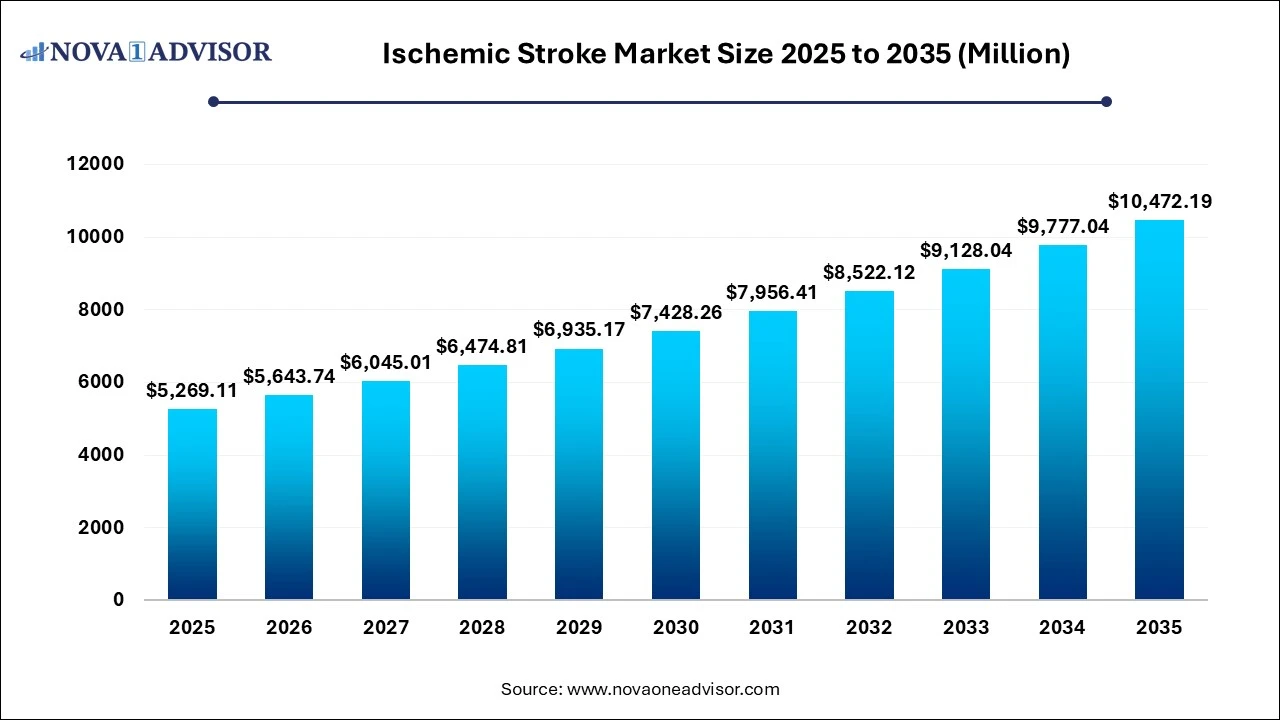
The global ischemic stroke market size was valued at USD 5,269.11 million in 2025 and is projected to grow from USD 5,643.74 million in 2026 to USD 10,472.19 million by 2035, at a CAGR of 7.11% from 2026 to 2035. North America dominated the market, accounting for a revenue share of 39.0% in 2025.
Key Takeaway
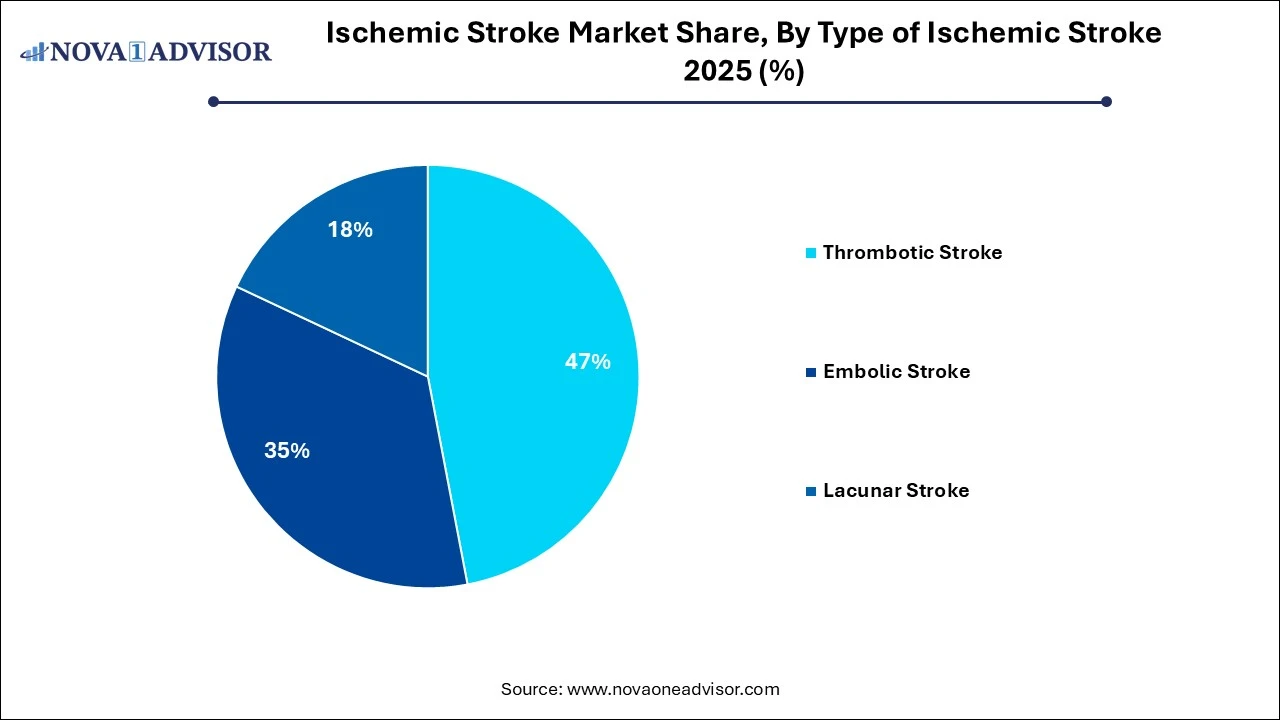
- By type of ischemic stroke, the thrombotic stroke segment dominated the market with the largest share of 47.0% in 2025.
- By type of ischemic stroke, the embolic stroke segment is expected to grow at the fastest CAGR over the forecast period.
- By treatment method, the medication segment dominated the market with the largest share in 2025.
- By healthcare setting, the hospital segment dominated the market with the largest share in 2025.
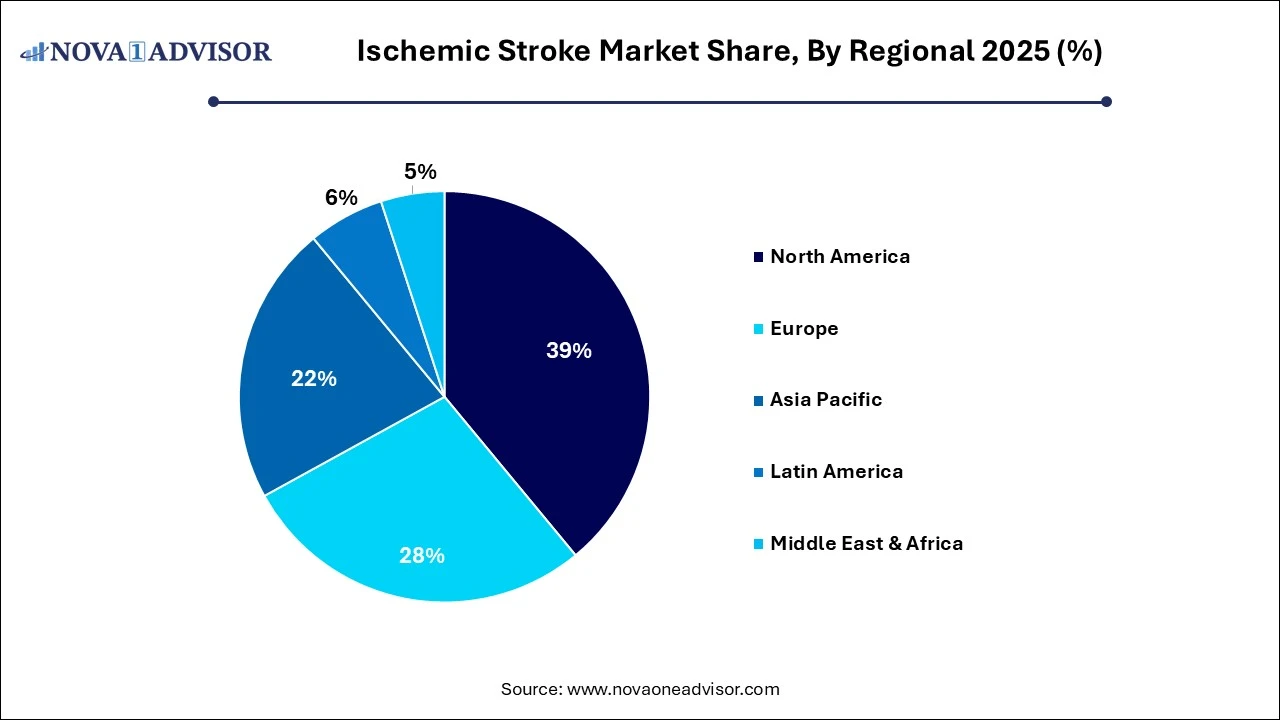
- By region, North America dominated the market with the largest share of 39.0% in 2025.
Market Overview
The global ischemic stroke market is experiencing steady growth due to the rising incidence of stroke and increasing demand for rapid diagnosis, effective treatment, and comprehensive rehabilitation. Ischemic stroke, caused by the blockage of blood flow to the brain, accounts for the majority of stroke cases worldwide and requires immediate medical intervention to minimize disability and mortality. Growing prevalence of hypertension, diabetes, obesity, atrial fibrillation, and aging populations is driving the demand for advanced stroke care. Technological advancements in CT, MRI, vascular imaging, and mechanical thrombectomy have significantly improved early diagnosis and treatment outcomes, while thrombolytic therapies continue to play a crucial role in acute stroke management. Additionally, increasing investments in stroke centers, tele-neurology, digital healthcare, and rehabilitation technologies are enhancing patient care and recovery. Ongoing innovations in artificial intelligence, precision medicine, neuroprotective therapies, and minimally invasive interventions are expected to further strengthen the long-term growth of the global ischemic stroke market.
Market Outlook
- Market Growth Overview: The global ischemic stroke market expected to grow significantly between 2025 and 2035, driven by the growing prevalence of ischemic stroke and advancements in medical technology.
- Sustainability Trends: Sustainability trends involve growing adoption of sustainable manufacturing practices to reduce overall carbon footprints.
- Major Investors: Major investors in the market include Medtronic, Stryker, and Boehringer Ingelheim.
How is AI impacting the global Ischemic Stroke Market?
Artificial intelligence (AI) is transforming the global ischemic stroke market by enabling faster diagnosis, improving treatment decisions, and enhancing patient outcomes. AI-powered algorithms can rapidly analyze CT and MRI scans to detect large vessel occlusions, identify ischemic brain tissue, assess perfusion abnormalities, and rule out hemorrhage within minutes. This accelerates patient selection for thrombolytic therapy and mechanical thrombectomy, reducing treatment delays and improving the chances of neurological recovery.
AI is also optimizing emergency stroke workflows by automatically prioritizing critical imaging findings, alerting stroke specialists in real time, and streamlining communication between emergency physicians, radiologists, and neurologists. Predictive analytics further supports personalized care by evaluating patient-specific factors such as age, medical history, blood pressure, imaging findings, and laboratory data to estimate treatment response and recovery outcomes. In rehabilitation, AI-powered wearable devices, robotic therapy systems, and virtual rehabilitation platforms monitor patient progress and tailor recovery programs to individual needs. Additionally, AI is accelerating stroke research by identifying new therapeutic targets, improving clinical trial design, and supporting biomarker discovery. As AI adoption continues to expand, it is expected to make ischemic stroke care more precise, efficient, and accessible, driving innovation and long-term growth in the global ischemic stroke market.
Ischemic Stroke Market Report Scope
| Report Coverage | Details |
| Market Size in 2026 | USD 5,643.74 Million |
| Market Size by 2035 | USD 10,472.19 Million |
| Growth Rate From 2026 to 2035 | CAGR of 7.11% |
| Base Year | 2025 |
| Forecast Period | 2026 to 2035 |
| Segments Covered | By Risk Factors, By Treatment Method, By Patient Demographics, By Type of Ischemic Stroke, By Region |
| Market Analysis (Terms Used) | Value (USD Million/Billion) or (Volume/Units) |
| Regional Scope | North America; Europe; Asia Pacific; Central and South America; the Middle East and Africa |
| Key Companies Profiled | Abbott Laboratories (U.S.), Medtronic plc (U.S.), Boston Scientific Corporation (U.S.), Cordis Corporation (U.S.), Koninklijke Philips N.V. (Netherland), GE Healthcare (U.S.), Stryker Corporation (U.S.), Genentech, Inc. (U.S.), Merck & Co., Inc. (U.S.), Bayer AG (Germany), Boehringer Ingelheim (Germany), Sanofi (France), Covidien plc (Ireland), Philips Healthcare (U.S.), Johnson & Johnson (U.S.), Penumbra, Inc. (U.S.), GE Healthcare (U.S.), Siemens Healthcare (U.S.), Hitachi, Ltd (Japan), Biogen (U.S.), Daiichi Sankyo (U.S.), Pfizer Inc. (U.S.), and others |
Market Driver
Rising Prevalence of Cardiovascular Risk Factors Drives Market Growth
The growing incidence of hypertension, diabetes, obesity, atrial fibrillation, hyperlipidemia, and other cardiovascular risk factors is a major driver of the global ischemic stroke market. Aging populations, sedentary lifestyles, and unhealthy dietary habits continue to increase the number of patients at risk of ischemic stroke, fueling demand for rapid diagnosis, emergency treatment, and long-term rehabilitation. Expanding stroke care networks, greater adoption of advanced imaging technologies, and increased implementation of evidence-based treatment protocols are improving patient outcomes and supporting sustained market growth. In addition, government initiatives promoting cardiovascular disease prevention and early screening are further increasing demand for stroke-related healthcare services.
Market Restraint
Limited Treatment Window and Unequal Access to Specialized Stroke Care Restrain Market Growth
The narrow therapeutic window for thrombolysis and mechanical thrombectomy remains a significant challenge for the ischemic stroke market. Many patients fail to receive timely treatment due to delayed symptom recognition, transportation barriers, or limited emergency medical services, reducing eligibility for life-saving interventions. Furthermore, access to comprehensive stroke centers equipped with advanced imaging systems, specialized neurologists, and neurointerventional facilities remains limited in many developing regions. Healthcare infrastructure gaps, workforce shortages, and financial constraints continue to restrict access to advanced stroke diagnosis and treatment.
Market Opportunity
Precision Neurology and Digital Health Create Significant Growth Opportunities
Advancements in precision neurology, artificial intelligence, and digital healthcare are creating major opportunities for the ischemic stroke market. AI-powered imaging, genomic profiling, and predictive analytics are enabling personalized treatment strategies based on patient-specific characteristics and stroke severity. At the same time, tele-neurology, wearable monitoring devices, remote patient monitoring, and digital rehabilitation platforms are improving long-term stroke management and expanding access to specialized care. Ongoing research in stem cell therapy, neuroprotective drugs, neuroregeneration, and brain-computer interface technologies is expected to further enhance recovery outcomes and drive future market growth.
Segmental Insights
By Type of Ischemic Stroke
Why did the thrombotic stroke segment dominate the global ischemic stroke market?
The thrombotic stroke segment dominated the market with the largest share in 2025. The dominance of the segment can be attributed to the ongoing innovations in thrombolytic therapies and mechanical thrombectomy along with the surge in chronic diseases. In addition, recent advancements in endovascular mechanical thrombectomy devices and newer-generation oral anticoagulants significantly enhance patient clinical outcomes.
How did the embolic stroke segment expected to hold the significantly growing global ischemic stroke market in the coming years?
The embolic stroke segment is expected to grow at the fastest CAGR over the forecast period. The growth of the segment can be credited to the growing use of advanced mechanical thrombectomy devices and the surge in cardiovascular comorbidities. The expansion of thrombectomy-capable and comprehensive stroke centers significantly optimizes acute procedural response times.
By Treatment Method
Why did the medication segment dominate the global ischemic stroke market?
The medication segment dominated the market with the largest share in 2025. The dominance of the segment can be linked to the growing amount of tissue plasminogen activator (tPA) applications and extensive adoption of novel oral anticoagulants. Ongoing research focuses on advanced neuroprotective agents, personalized combination therapies, and targeted delivery formulations.
How did the surgical intervention segment expected to hold the significantly growing global ischemic stroke market in the coming years?
The surgical intervention segment is expected to grow at the fastest CAGR over the forecast period. The growth of the segment can be driven by increasing stroke cases, growing treatment time windows, and the availability of better imaging tools. The expansion of dedicated stroke centers and specialized neurovascular units significantly enhances emergency surgical response times.
By Healthcare Setting
Why did the hospital segment dominate the global ischemic stroke market?
The hospital segment dominated the market with the largest share in 2025. The dominance of the segment is owing to the preferred inpatient reimbursement policies and its cutting-edge endovascular surgical capabilities. Furthermore, the existence of dedicated inpatient procedure codes to facilitate reimbursement for specialized neurovascular devices and emergency medical services.
How did the home care segment expected to hold the significantly growing global ischemic stroke market in the coming years?
The home care segment is expected to grow at the fastest CAGR over the forecast period. The growth of the segment is due to increasing post-stroke survival rates and growing hospital costs. Patient recovery in a familiar home setting improves psychological outcomes and increases compliance with long-term care plans.
By Regional
Why did the North American region account for the largest share in the global ischemic stroke market?
North America dominated the market with the largest share in 2025. The dominance of the region can be attributed to the rapid technological innovations in medical devices and AI diagnostics along with the rise in incidence of chronic lifestyle disorders. In addition, the widespread implementation and rapid clinical adoption of mechanical thrombectomy systems, aspiration catheters, and stent retrievers lead to regional growth further.
U.S. Global Ischemic Stroke Market Trends
The growth of the market in the country can be driven by growing adoption of endovascular technologies and a surge in stroke incidence. The increasing domestic diagnosis of hypertension, diabetes, obesity, and atrial fibrillation serves as a primary driver expanding the baseline patient population.
Why did the Asia-Pacific region become the fastest-growing global ischemic stroke market during the forecast period?
Asia Pacific is expected to grow at the fastest CAGR over the forecast period. The growth of the region can be credited to the growing healthcare expenditure and ongoing government health initiatives. Furthermore, national stroke awareness campaigns and public health investments enhance early symptom recognition and fuel emergency access.
China Global Ischemic Stroke Market Trends
The market in the country is growing due to the growing incidence of metabolic risk factors such as hypertension and a rise in government investments in establishing thousands of new specialized stroke centers. Growing incidence rates are mainly driven by high systolic blood pressure, elevated low-density lipoprotein (LDL) cholesterol, high body mass index (BMI), and sodium-dense dietary intake.
Key Players in the Global Ischemic Stroke Market
- Boehringer Ingelheim: A veteran leader in the cardiovascular market, the company is highly focused on therapies for acute stroke management and primary/secondary stroke prevention.
- Bristol Myers Squibb & Pfizer: Operating via partnerships and individual pipelines, these firms lead the market in antiplatelet and oral anticoagulant drugs designed to prevent blood clots and lower the risk of recurrent strokes.
- Stryker Corporation: Stryker is a top competitor in the endovascular mechanical thrombectomy space, producing prominent microcatheters, stent retrievers, and aspiration systems to physically clear arterial blockages.
Recent Developments
- In January 2026, Imperative Care, Inc. officially announced the commercial release and initial clinical applications of its new Zoom 4S Catheter, an advanced aspiration thrombectomy system developed for ischemic stroke intervention.
Segments Covered in the Report
This report forecasts revenue growth at country levels and provides an analysis of the latest industry trends in each of the sub-segments from 2021 to 2035. For this study, Nova one advisor, Inc. has ischemic stroke market.
By Risk Factors
- Hypertension
- Diabetes
- Hyperlipidemia
- Smoking
- Obesity
By Treatment Method
- Medication
- Surgical Intervention
- Rehabilitation Therapy
By Patient Demographics
- Age Group
- Gender
- Ethnicity
By Type of Ischemic Stroke
- Thrombotic Stroke
- Embolic Stroke
- Lacunar Stroke
By Region
- North America
- Europe
- Asia Pacific
- Latin America
- Middle East & Africa
FAQ's

Proceed to Buy
Instant PDF delivery on confirmation

Ischemic Stroke Market Size to Hit USD 10,472.19 Million by 2035
 Request Customization
 Download Sample

Get a Sample of this Report
Ischemic stroke Market