

Kidney Function Market Size, Share, and Trends 2026 to 2035
 Status Published
 Category Healthcare


Content
Kidney Function Tests Market Summary
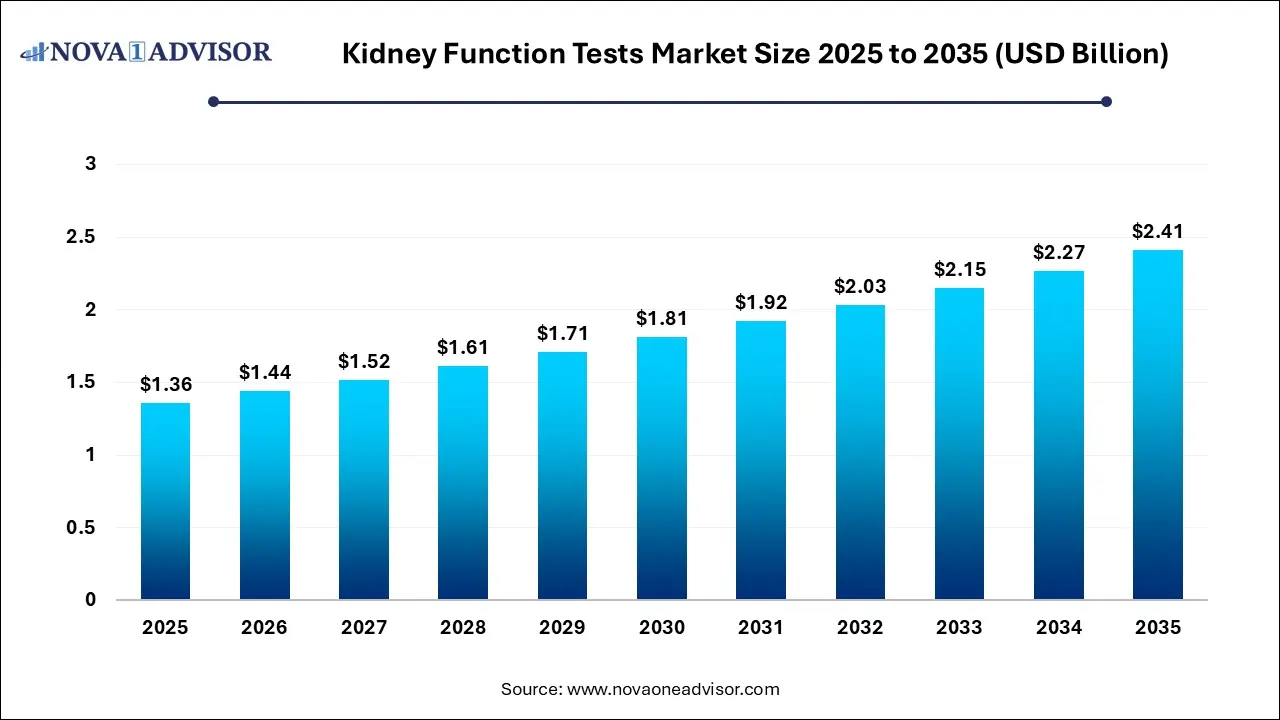
The global kidney function tests market size was estimated at USD 1.36 billion in 2025 and is projected to hit around USD 2.41 billion by 2035, growing at a CAGR of 5.87% during the forecast period from 2026 to 2035.
Key Takeaways
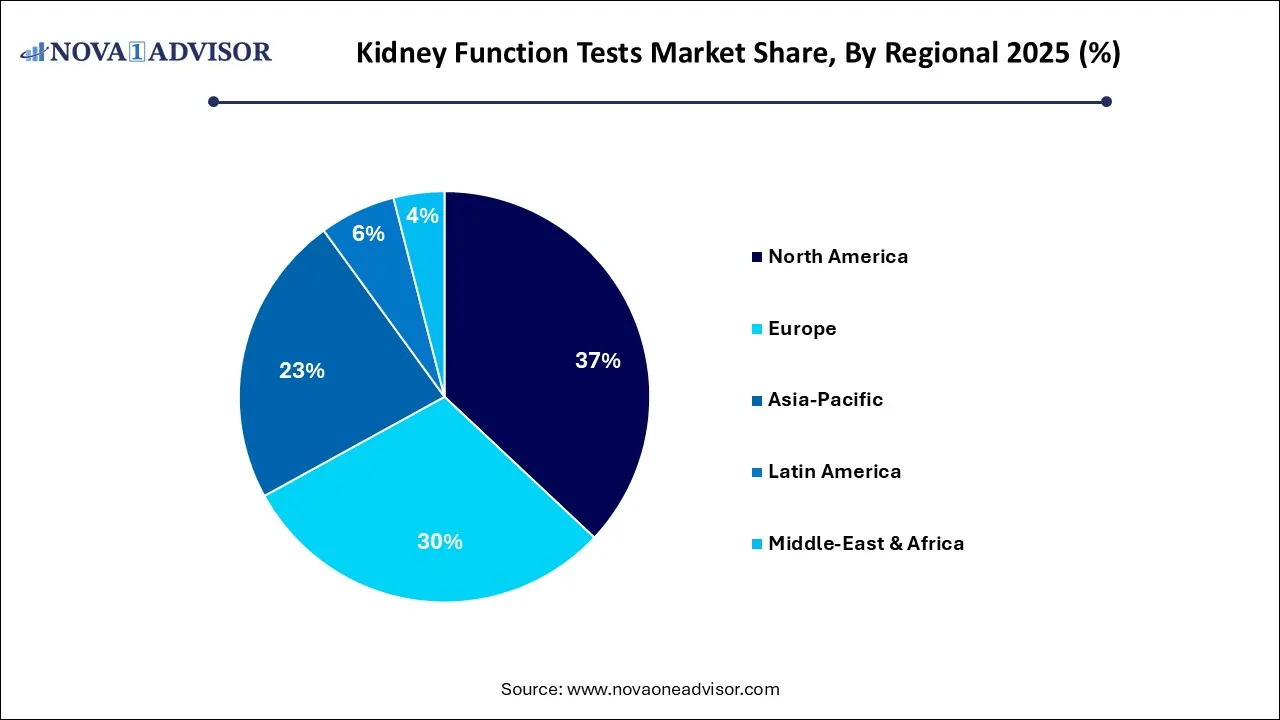
- North America kidney function tests industry dominated and accounted for a 37% share in 2025.
- The U.S. kidney function tests market is projected to grow significantly during the forecast period.
- By product, the clearance tests segment held the highest market share of 27.53% in 2025.
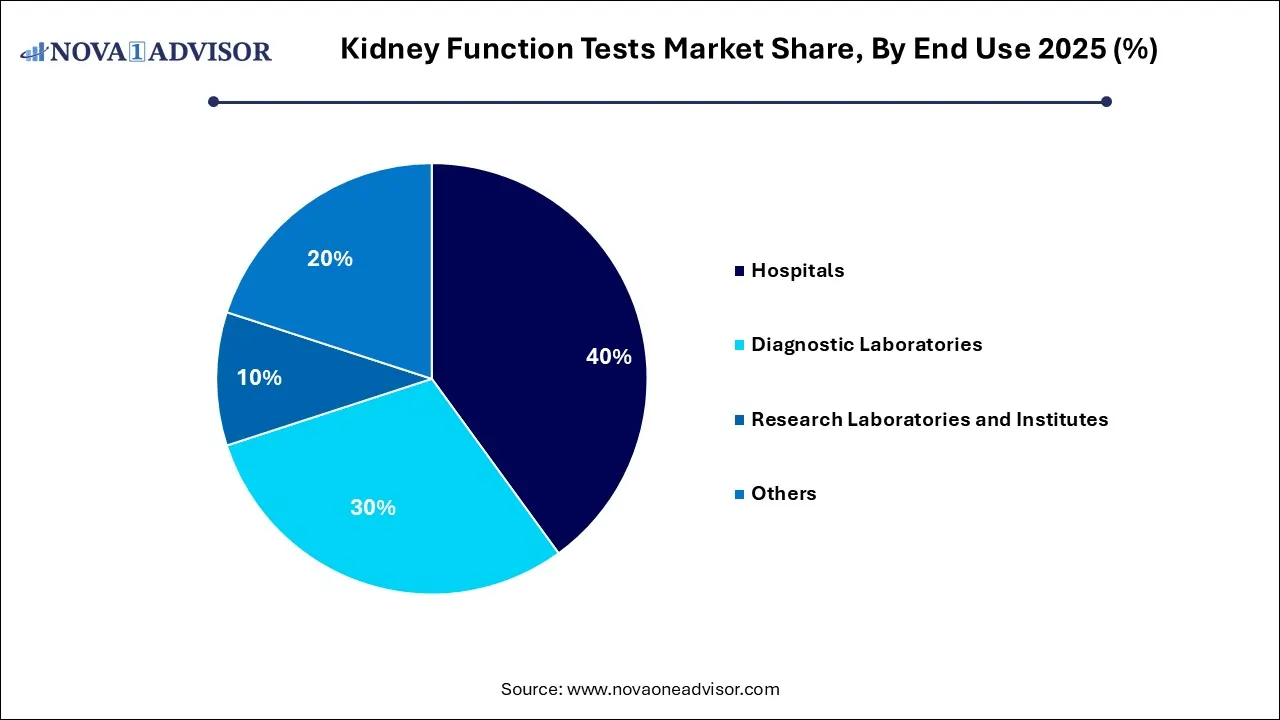
- Based on end use, the hospitals segment held the highest market share of 40% in 2025.
Market Overview
The Kidney Function Tests Market is witnessing remarkable growth, primarily fueled by the increasing prevalence of kidney diseases, advancements in diagnostic technologies, and rising awareness of kidney health. Kidney function tests are crucial in diagnosing and monitoring kidney diseases, providing insights into how well the kidneys are filtering waste and maintaining fluid and electrolyte balance. As kidney diseases are becoming more common due to risk factors like diabetes, hypertension, and an aging population, the demand for kidney function tests is growing.
Key players in the market are investing in research and development to create more efficient and accurate diagnostic tools. The growing trend of personalized medicine is also contributing to the market expansion. The rise of artificial intelligence (AI) in diagnostic procedures is one of the transformative elements in the kidney function tests market, improving test accuracy and speed, and contributing to the overall growth of the sector.
Market Outlook
- Market Growth Overview: The global kidney function market is expected to grow significantly between 2025 and 2035, driven by the rising healthcare preventative and awareness, high prevalence of kidney disorders, and increasing alcohol consumption.
- Sustainability Trends: Sustainability trends involve green dialysis and sorbent technology, preventative care and early detection, and a shift toward home-based therapies.
- Major Investors: Major investors in the market include F. Hoffmann-La Roche, Abbott Laboratories, Siemens Healthineers, Quest Diagnostics, and Sysmex Corporation.
How AI is Transforming the Kidney Function Tests Market
Artificial Intelligence (AI) is a game-changer in the healthcare industry, and its impact on kidney function tests is no exception. AI has the potential to significantly improve the speed, accuracy, and efficiency of kidney diagnostics. AI-powered tools can analyze large datasets, including blood and urine tests, and identify abnormalities in kidney function more quickly than traditional methods.
One example of AI's transformative role is its ability to predict the likelihood of chronic kidney disease (CKD) progression. With predictive analytics, AI systems can analyze patient data to forecast how kidney function will change over time, helping healthcare providers make more informed decisions.
AI is also enhancing the precision of imaging tests used to detect kidney problems. For instance, AI systems can be trained to detect subtle changes in imaging scans, which human doctors may miss. This could lead to earlier diagnosis and better outcomes for patients.
In the near future, AI will not only assist in diagnosing kidney conditions but also help healthcare professionals in managing treatment regimens by identifying patterns in kidney function test results and correlating them with patient-specific health data. This shift toward AI-driven diagnostics presents significant opportunities for growth in the Kidney Function Tests Market.
Major Trends in the Market
- Advancement in AI Integration: AI tools are increasingly integrated into kidney function diagnostics, enhancing the accuracy and speed of results.
- Point-of-Care (POC) Testing: Demand for point-of-care testing is on the rise, driven by convenience and the increasing need for quick results.
- Non-invasive Diagnostic Methods: The development of non-invasive kidney function tests is attracting attention as patients seek alternative diagnostic solutions that are less painful.
- Increased Chronic Kidney Disease Incidence: As the global prevalence of CKD continues to rise, more people are seeking kidney function tests for early detection.
- Technological Collaborations: Partnerships between technology firms and healthcare providers are becoming common to introduce innovative solutions in kidney diagnostics.
- Growing Focus on Preventive Healthcare: More emphasis is being placed on early diagnosis and preventive care for kidney diseases, which is driving market growth.
Kidney Function Tests Market Report Scope
| Report Coverage | Details |
| Market Size in 2026 | USD 1.44 Billion |
| Market Size by 2035 | USD 2.41 Billion |
| Growth Rate From 2026 to 2035 | CAGR of 5.87% |
| Base Year | 2025 |
| Forecast Period | 2026 to 2035 |
| Segments Covered | Product, end use, region |
| Market Analysis (Terms Used) | Value (USD Million/Billion) or (Volume/Units) |
| Regional Scope | North America; Europe; Asia Pacific; Central and South America; the Middle East and Africa |
| Key Companies Profiled | Abbott; Danaher; F. Hoffmann-La Roche Ltd.; Sysmex Corporation; Siemens Healthineers; Randox Laboratories Ltd; Quest Diagnostics; ACON Laboratories, Inc.; Nova Biomedical Corporation; Laboratory Corporation of America Holdings |
Segmental Insights
By Product
How did the clearance tests segment dominate the Kidney Function Tests Market?
The clearance tests segment is driven by the widespread accessibility and low cost, which have made them the primary diagnostic choice for managing the rising global prevalence of CKD and diabetes. The intensive adoption of these methods within hospital settings ensures consistent, high-volume demand for routine patient care and disease management. The combination of economic feasibility and diagnostic precision cements this segment's dominance in the renal testing market.
How did the urine tests segment expect to hold the fastest-growing Kidney Function Tests Market in the coming years?
The urine tests segment is driven by the shift toward smartphone-based diagnostics and home testing kits is revolutionizing kidney health by making frequent monitoring accessible and convenient. Enhanced by AI-integrated point-of-care tools, urine tests now provide rapid, high-precision detection of early-stage proteinuria and albuminuria. Favorable regulatory guidelines and the inherent cost-effectiveness of dipstick methods are further driving large-scale adoption across both clinical and emerging markets.
By End User
How did the hospitals segment account for the largest share in the Kidney Function Tests Market?
The hospitals segment is driven by the concentrated presence of advanced in-house diagnostic infrastructure, which allows hospitals to manage high-volume, frequent testing for critical markers. This internal capability, combined with specialized renal care units, ensures that inpatient settings remain the primary hub for comprehensive kidney health management. As the prevalence of diabetes and hypertension rises, hospitals are increasingly utilizing these diagnostic tools for early detection and preventative treatment of renal failure.
How did the diagnostic laboratories segment expect to hold the fastest-growing Kidney Function Tests Market in the coming years?
The diagnostic laboratories segment is driven by the adoption of automation and high-throughput technologies, such as CLIA, which significantly enhance workflow efficiency and accuracy. By integrating advanced biomarkers such as Cystatin C, these facilities are providing more precise GFR measurements that are less susceptible to individual physiological variations. The growing trend of hospitals outsourcing to centralised labs, combined with the expansion of digital reporting networks, is making high-tier diagnostics more accessible and scalable.
By Regional
How did the North America region account for the largest share in the Kidney Function Tests Market?
North America is driven by the high prevalence of diabetes and hypertension, high volume demand for routine renal monitoring, and early CKD diagnosis. The sophisticated infrastructure of clinical laboratories and hospitals is capable of integrating the largest diagnostic innovations and transplant technologies. The combination of a high disease burden and a proactive preventative healthcare focus cements the region's position as the global market leader.
U.S. Kidney Function Tests Market Trends
The U.S. is shifting toward AI-enhanced biomarkers and automated laboratory systems that maximize both accuracy and testing throughput. The rise of portable point-of-care kits is decentralizing care, making consistent monitoring more accessible in outpatient and home settings. The lasting impact of AKI cases following the pandemic has solidified the necessity for a robust, technologically advanced testing infrastructure across the country.
How did the Asia Pacific region hold the fastest-growing Kidney Function Tests Market in the forecast period?
The Asia Pacific’s critical rise in obesity, diabetes, and hypertension-related renal failures. The aggressive government spending and private investments are rapidly modernizing diagnostic infrastructure and dialysis centres in developing economies. The integration of advanced renal biomarkers is facilitating earlier disease detection, significantly expanding the market beyond traditional late-stage crisis management. The combination of a high disease burden and expanding healthcare access positions this region as the global engine for the next decade of renal diagnostic growth.
China Kidney Function Tests Market Trends
China’s rising prevalence of CKD in China, affecting over 156 million people, is creating a massive and sustained demand for diagnostic and therapeutic services. This growth is compounded by an ageing patient demographic, which necessitates more frequent and long-term renal monitoring. The expanded government insurance coverage for kidney replacement therapy has drastically lowered financial barriers, significantly boosting the market for diagnostic consumables.
Key Players in the Kidney Function Tests Market
- Urit Medical
Urit Medical contributes to the Kidney Function Tests Market by providing automated urinalysis workflows and dry chemistry analyzer systems that enable high-throughput testing for renal function parameters like Creatinine and ACR.
- Sysmex Corporation
Sysmex holds a leading position in the global urine testing market, utilizing advanced flow cytometry for automated particle analysis to streamline and standardize urinalysis.
- Siemens Healthcare GmbH
Siemens Healthineers provides a comprehensive renal care portfolio, offering automated laboratory chemistry systems and point-of-care diagnostics for efficient, early detection of kidney disease.
Segments Covered in the Report
This report forecasts revenue growth at country levels and provides an analysis of the latest industry trends in each of the sub-segments from 2021 to 2035. For this study, Nova one advisor, Inc. has segmented the kidney function tests market.
By Product
- Clearance Tests
- Urine Tests
- Blood Tests
- Dilution And Concentration Tests
- Other Tests
By End Use
- Hospitals
- Diagnostic Laboratories
- Research Laboratories and Institutes
- Others
By Region
- North America
- Europe
- Asia Pacific
- Latin America
- Middle East and Africa (MEA)

Proceed to Buy
Instant PDF delivery on confirmation

Kidney Function Tests Market Size to Hit USD 2.41 Billion by 2035
 Request Customization
 Download Sample

Get a Sample of this Report
Kidney Function Market