

Kyphosis Market Size, Share, and Trends 2026 to 2035
 Status Published
 Category Healthcare


Content
Kyphosis Market Size and Growth 2026 to 2035
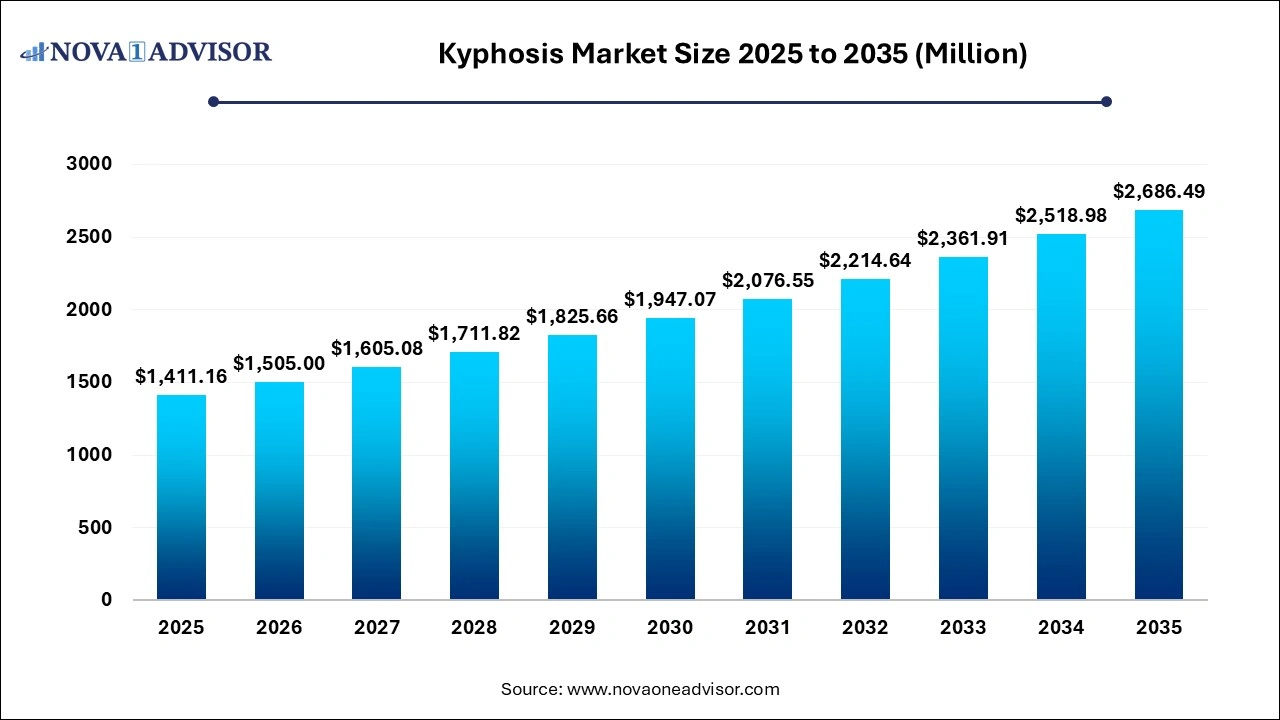
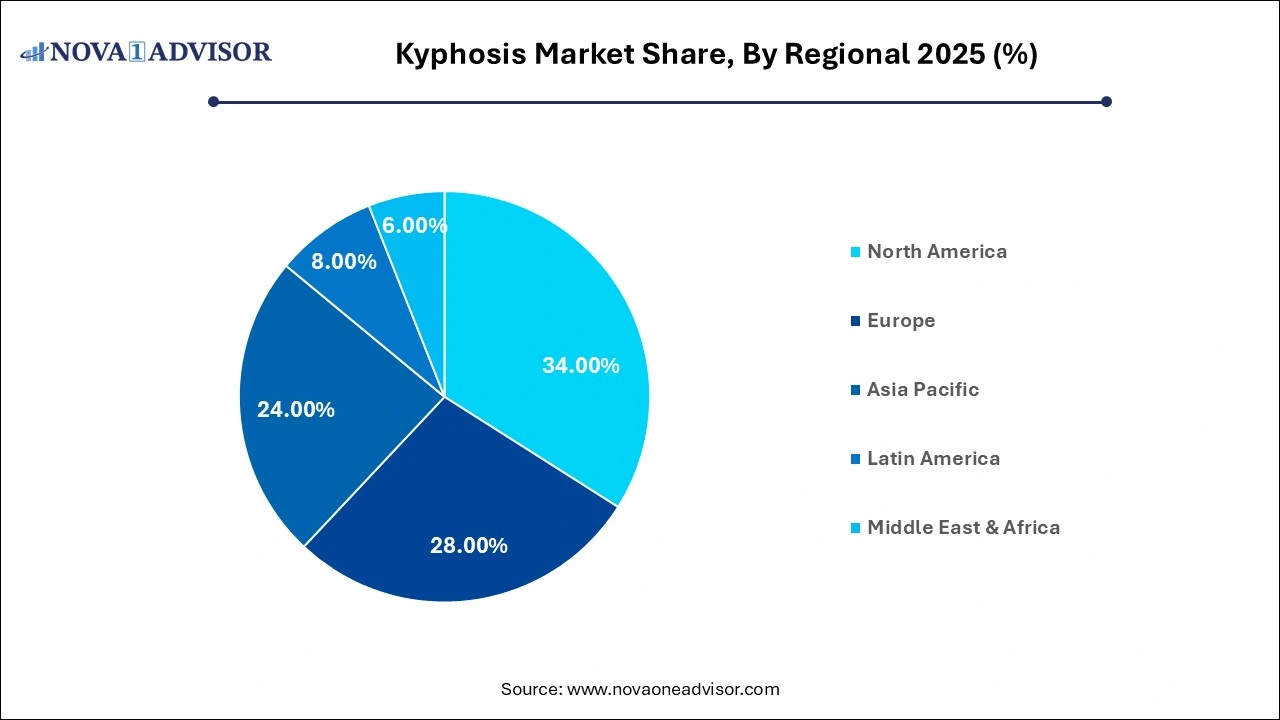
The global kyphosis market size was valued at USD 1,411.16 million in 2025 and is projected to grow from USD 1,505.00 million in 2026 to USD 2,686.49 million by 2035, at a CAGR of 6.65% from 2026 to 2035. North America dominated the market, accounting for a revenue share of 34.0% in 2025.
Key Takeaway
- By application, the surgical treatment segment dominated the market with the largest share in 2025.
- By application, the non-surgical treatment segment is expected to grow at the fastest CAGR over the forecast period.
- By end use, the hospitals segment dominated the market with the largest share in 2025.
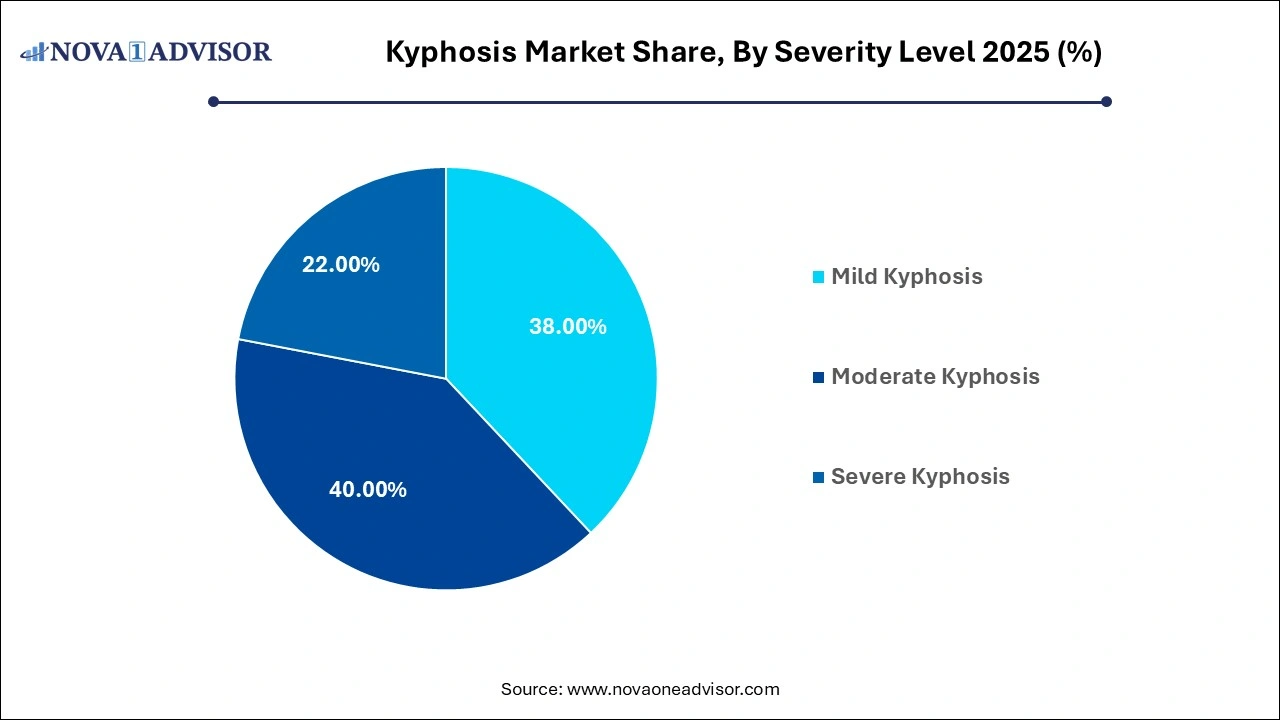
- By severity level, the moderate kyphosis segment dominated the market with the largest share of 40.0% in 2025.
- By region, North America dominated the market with the largest share of 34.0% in 2025.
Market Overview
The global kyphosis market includes diagnostic technologies, medical devices, surgical procedures, rehabilitation services, medications, and supportive solutions for managing excessive spinal curvature. Major causes include aging, osteoporosis, vertebral fractures, degenerative conditions, Scheuermann's disease, congenital disorders, and spinal trauma.
Mild cases are commonly managed with physical therapy, posture correction, strengthening exercises, observation, or bracing, while severe deformities may require spinal surgery. Key market solutions include spinal implants, fixation systems, interbody devices, bone grafts, imaging technologies, navigation systems, surgical robotics, orthoses, and rehabilitation services.
Growing adoption of patient-specific planning, minimally invasive procedures, robotic assistance, and navigation technologies is improving treatment precision. Overall, market growth is supported by the aging population, rising spinal disorders, increasing demand for advanced diagnostics, and continued innovation in surgical and rehabilitation technologies.
Market Outlook
- Market Growth Overview: The global kyphosis market is expected to grow significantly between 2025 and 2034, driven by the growing focus on preventive care.
- Sustainability Trends: Sustainability trends involve a growing emphasis on long-term clinical viability and a shift towards resource-efficient procedures.
- Major Investors: Major investors in the market include Medtronic, Stryker Corporation, Johnson & Johnson, Zimmer Biomet, and Globus Medical.
How is AI Impacting The Global Kyphosis Market?
AI is increasingly supporting kyphosis diagnosis, surgical planning, and rehabilitation by analyzing spinal imaging and anatomical measurements. AI-based systems can identify vertebral structures, calculate spinal angles, detect abnormalities, and reduce the manual effort involved in deformity assessment.
A key application is automated imaging analysis. AI can assist with vertebral segmentation, landmark detection, and three-dimensional spinal reconstruction, helping clinicians evaluate complex deformities more efficiently. These capabilities are particularly relevant to pediatric and adolescent spinal conditions.
AI is also improving surgical planning and robotic-assisted procedures. By analyzing patient-specific anatomy and spinal alignment parameters, AI-enabled platforms can support correction planning and improve the precision of implant and pedicle-screw placement. Integrated systems combining AI, navigation, robotics, imaging, and implants are creating more connected spinal surgery workflows.
Postoperative monitoring is another emerging application. AI can compare pre- and postoperative images, evaluate alignment changes, and support long-term monitoring for complications. In rehabilitation, computer-vision systems could assess posture, movement, gait, and exercise technique to provide personalized feedback.
Despite these opportunities, AI adoption requires robust clinical validation, diverse datasets, interoperability, and regulatory oversight. Differences in patient populations, imaging systems, and deformity types can affect algorithm performance.
Overall, AI is expected to strengthen the kyphosis market by enabling faster imaging analysis, personalized surgical planning, precise navigation, improved postoperative monitoring, and digitally supported rehabilitation.
Kyphosis Market Report Scope
| Report Coverage | Details |
| Market Size in 2026 | USD 1,505.00 Million |
| Market Size by 2035 | USD 2,686.49 Million |
| Growth Rate From 2026 to 2035 | CAGR of 6.65% |
| Base Year | 2025 |
| Forecast Period | 2026 to 2035 |
| Segments Covered | By Application, By End Use, By Severity Level, By Region |
| Market Analysis (Terms Used) | Value (USD Million/Billion) or (Volume/Units) |
| Regional Scope | North America; Europe; Asia Pacific; Central and South America; the Middle East and Africa |
| Key Companies Profiled | Amneal Pharmaceuticals LLC, Aurobindo Pharma Limited, B. Braun Melsungen AG, Integra LifeSciences, Integra Lifesciences Holdings Corp, Johnson and Johnson (DePuy Synthes), Medtronic Plc., MicroPort Scientific Corporation, Nuvasive Inc., NuVasive, Inc., Orthofix Holdings, Inc., Perrigo Company, Stryker Corporation, Teva Pharmaceuticals USA, Inc., Zimmer Biomet Holdings. Inc., |
Market Driver: Aging Population and Osteoporosis
An aging population is increasing the prevalence of osteoporosis, vertebral fractures, spinal degeneration, and postural disorders, driving demand for kyphosis diagnosis and treatment. Osteoporotic compression fractures can worsen spinal curvature, causing pain, reduced mobility, and functional limitations. This supports demand for imaging, bracing, rehabilitation, and advanced spinal implants, including technologies designed for patients with poor bone quality.
Market Restraint: Surgical Complexity and High Costs
Advanced kyphosis surgery can involve lengthy procedures, specialized implants, extensive rehabilitation, and significant postoperative care. Elderly patients with poor bone quality and multiple health conditions may face higher risks of infection, implant failure, nonunion, and neurological complications. High costs for robotic systems, navigation platforms, training, and maintenance can also limit adoption, particularly in hospitals with constrained resources.
Market Opportunity: AI, Robotics, and Personalized Treatment
AI, robotics, advanced imaging, and digital planning are creating opportunities for more precise and personalized kyphosis management. These technologies can integrate imaging and clinical data to support deformity assessment, surgical planning, and intraoperative navigation. Digital rehabilitation, remote monitoring, and posture-tracking technologies can further improve recovery. Integration with osteoporosis diagnosis and management can also enable more comprehensive treatment strategies for high-risk patients.
Segmental Insights
By Application
Why did the surgical treatment segment dominate the global kyphosis market?
The surgical treatment segment dominated the market with the largest share in 2025. The dominance of the segment can be attributed to the surge in elderly populations and growing osteoporosis-associated vertebral compression fractures. In addition, balloon kyphoplasty and vertebroplasty present clinical advantages over open surgical interventions, including reduced postoperative discomfort, rapid functional recovery, and a shorter duration of hospital stay.
How did the non-surgical treatment segment expected to hold the significantly growing global kyphosis market in the coming years?
The non-surgical treatment segment is expected to grow at the fastest CAGR over the forecast period. The growth of the segment can be credited to the growing pediatric screening for Scheuermann’s kyphosis and innovations in lightweight custom spinal brace designs. The proliferation of specialized spine-care and rehabilitation facilities enhances patient accessibility to structured, non-surgical therapeutic interventions.
By End Use
Why did the hospitals segment dominate the global kyphosis market?
The hospitals segment dominated the market with the largest share in 2025. The dominance of the segment can be linked to the increasing patient preference for detailed surgical care and extensive insurance reimbursement policies. In addition, hospitals provide comprehensive post-operative rehabilitation, intensive care oversight, and specialized physical therapy facilities crucial for complex spinal surgical interventions.
How did the rehabilitation centers segment expected to hold the significantly growing global kyphosis market in the coming years?
The rehabilitation centers segment is expected to grow at the fastest CAGR over the forecast period. The growth of the segment can be driven by increasing post-surgical recovery demands and a surge in the aging population susceptible to osteoporosis. A rising volume of complex spinal procedures and minimally invasive surgeries has generated an escalating clinical demand for structured physical rehabilitation protocols.
By Severity Level
Why did the moderate kyphosis segment dominate the global kyphosis market?
The moderate kyphosis segment dominated the market with the largest share in 2025. The dominance of the segment is owing to the increasing incidence of age-related spinal degeneration and the surge in adoption of non-surgical physical therapy. Furthermore, enhanced detection of moderate Scheuermann's disease and postural hyperkyphosis during routine pediatric and school screenings facilitates early orthotic intervention.
How did the severe kyphosis segment expected to hold the significantly growing global kyphosis market in the coming years?
The severe kyphosis segment is expected to grow at the fastest CAGR over the forecast period. The growth of the segment is due to growing rates of osteoporosis-related vertebral compression fractures and growing healthcare spending for complex spinal reconstructions. Moreover, advancements in spinal fixation devices, rod engineering, and osteotomy techniques have enhanced procedural safety and increased the prevalence of complex surgical interventions.
By Region
Why did the North American region account for the largest share of the global kyphosis market?
North America dominated the market with the largest share in 2025. The dominance of the region can be attributed to the growing geriatric population along with the extensive adoption of innovative minimally invasive procedures. In addition, continuous introductions of new products and specialized spinal devices by prominent regional medical device manufacturers significantly enhance patient recovery results.
U.S. Global Kyphosis Market Trends
The growth of the market in the country can be driven by the growing osteoporosis cases and surge in healthcare spending by major market players. Also, comprehensive public and private insurance frameworks facilitate broader patient access to advanced spinal implant technologies, driving market growth soon.
- In April 2026, Biocon Limited commercially launched two FDA-approved denosumab biosimilars, Bosaya™ and Aukelso™, in the United States, both achieving interchangeable designations. Developed to treat extensive patient populations suffering from osteoporosis and bone metastasis.
Why did the Asia-Pacific region become the fastest-growing global kyphosis market during the forecast period?
Asia Pacific is expected to grow at the fastest CAGR over the forecast period. The growth of the region can be credited to the increasing cases of osteoporosis and vertebral compression fractures along with a surge in awareness of minimally invasive spinal surgeries. Furthermore, expanded public and private sector investments have boosted the modernization of healthcare infrastructure throughout emerging markets such as India and China.
China Global Kyphosis Market Trends
The market in the country is growing due to the increasing prevalence of osteoporosis-related vertebral compression fractures and a rise in investments in innovative hospital infrastructure. Moreover, national medical insurance policy revisions serve to reduce the financial expenditures borne by patients undergoing specialized spinal surgical procedures.
Key Players in the Global Kyphosis Market
- Medtronic: A leading global player providing advanced balloon kyphoplasty systems, spinal alignment implants, and minimally invasive surgical tools.
- Stryker Corporation: Offers an extensive portfolio of vertebral compression fracture treatment options, cement mixing kits, and spinal trauma systems.
- Globus Medical: Specializes in disruptive spinal technology, advanced biologics, and minimally invasive interventional solutions for complex spinal deformities.
Recent Developments
- In June 2026, CinnaGen announced that the European Commission has granted centralized marketing authorization for Zandoriah® (teriparatide), a biosimilar referenced to Forsteo®, for the treatment of adult osteoporosis. This regulatory milestone establishes a unified legal framework for the commercialization of Zandoriah® across all 27 European Union Member States.
Segments Covered in the Report
This report forecasts revenue growth at country levels and provides an analysis of the latest industry trends in each of the sub-segments from 2021 to 2035. For this study, Nova one advisor, Inc. has kyphosis market.
By Application
- Surgical Treatment
- Non-Surgical Treatment
- Physical Therapy
- Medication
By End Use
- Hospitals
- Clinics
- Rehabilitation Centers
- Home Care
By Severity Level
- Mild Kyphosis
- Moderate Kyphosis
- Severe Kyphosis
By Region
- North America
- Europe
- Asia-Pacific
- Latin America
- Middle East & Africa (MEA)
FAQ's

Proceed to Buy
Instant PDF delivery on confirmation

 Request Customization
 Download Sample

Get a Sample of this Report
Kyphosis Market