

Laser Resurfacing Market Size, Share, and Trends 2026 to 2035
 Status Published
 Category Healthcare


Content
Laser Resurfacing Market Size and Growth 2026 to 2035
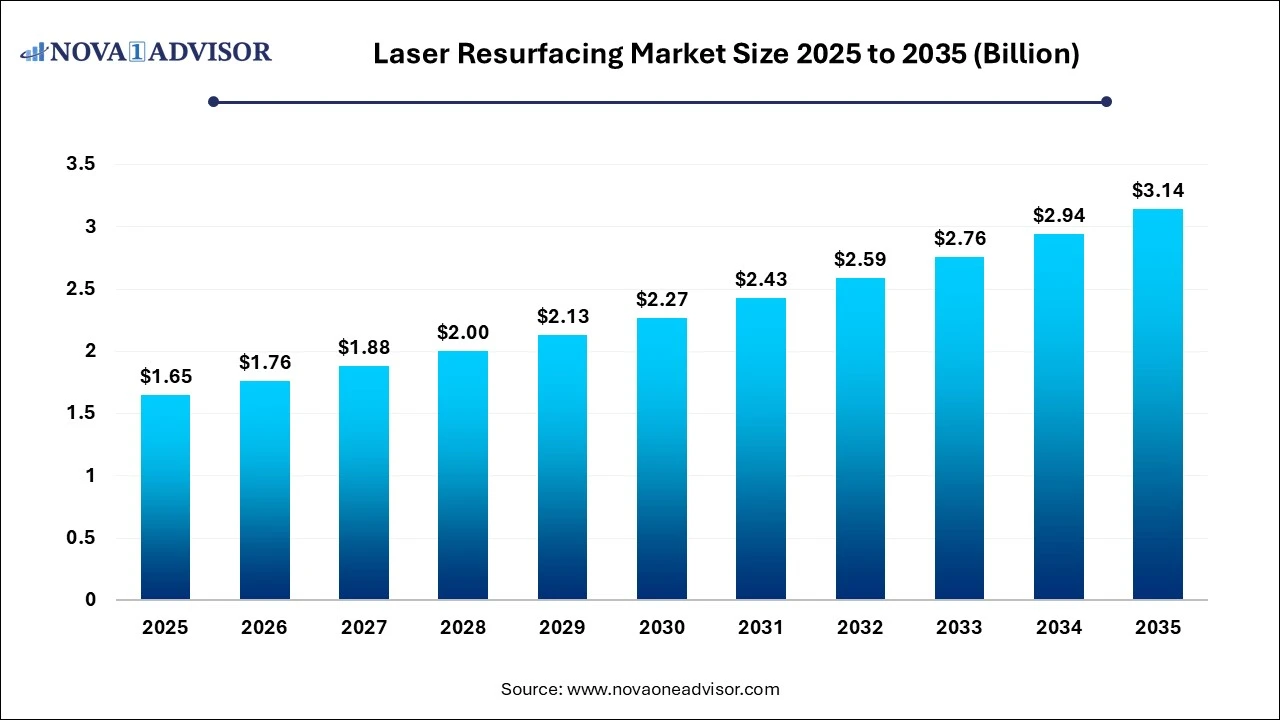
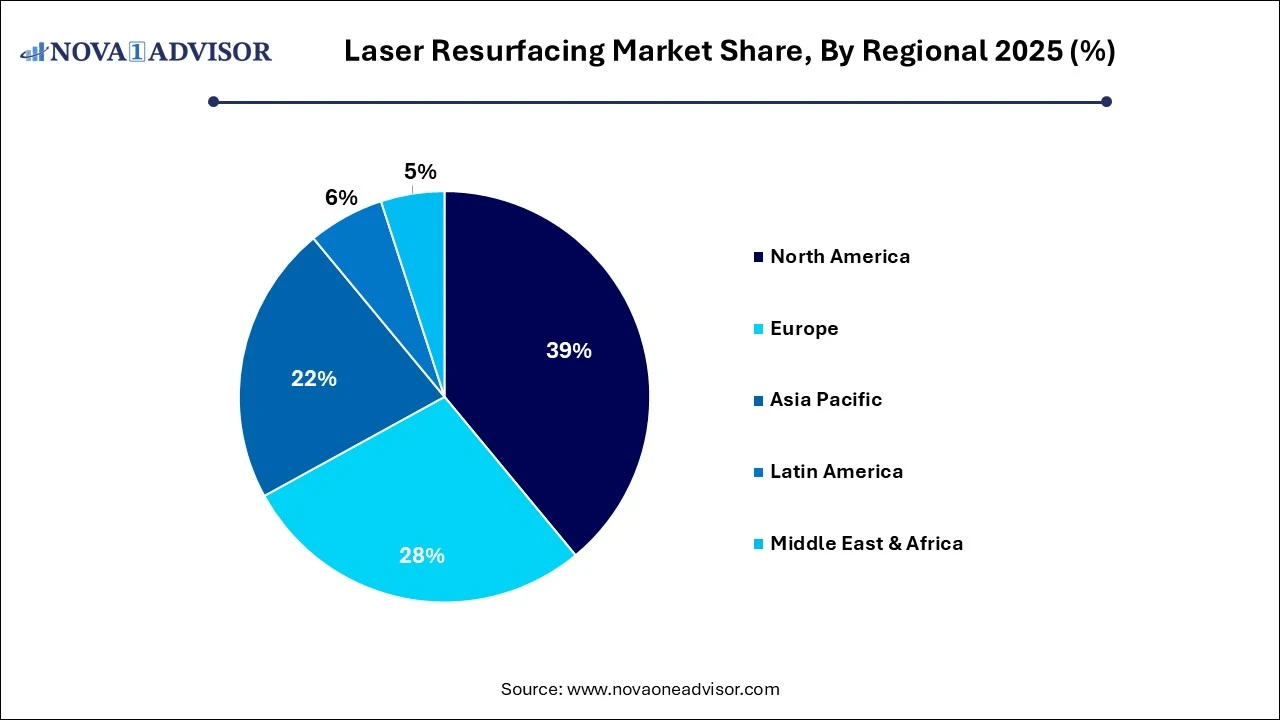
The global laser resurfacing market size was valued at USD 1.65 billion in 2025 and is projected to grow from USD 1.76 billion in 2026 to USD 3.14 billion by 2035, at a CAGR of 6.63% from 2026 to 2035. North America dominated the market, accounting for a revenue share of 39.0% in 2025.
Key Takeaway:
- By type, the non-ablative segment dominated the largest market with the largest share in 2025.
- By type, the laser skin resurfacing machine segment dominated the market with the largest share in 2025.
- By device, the laser skin resurfacing machine segment dominated the market with the largest share in 2025.
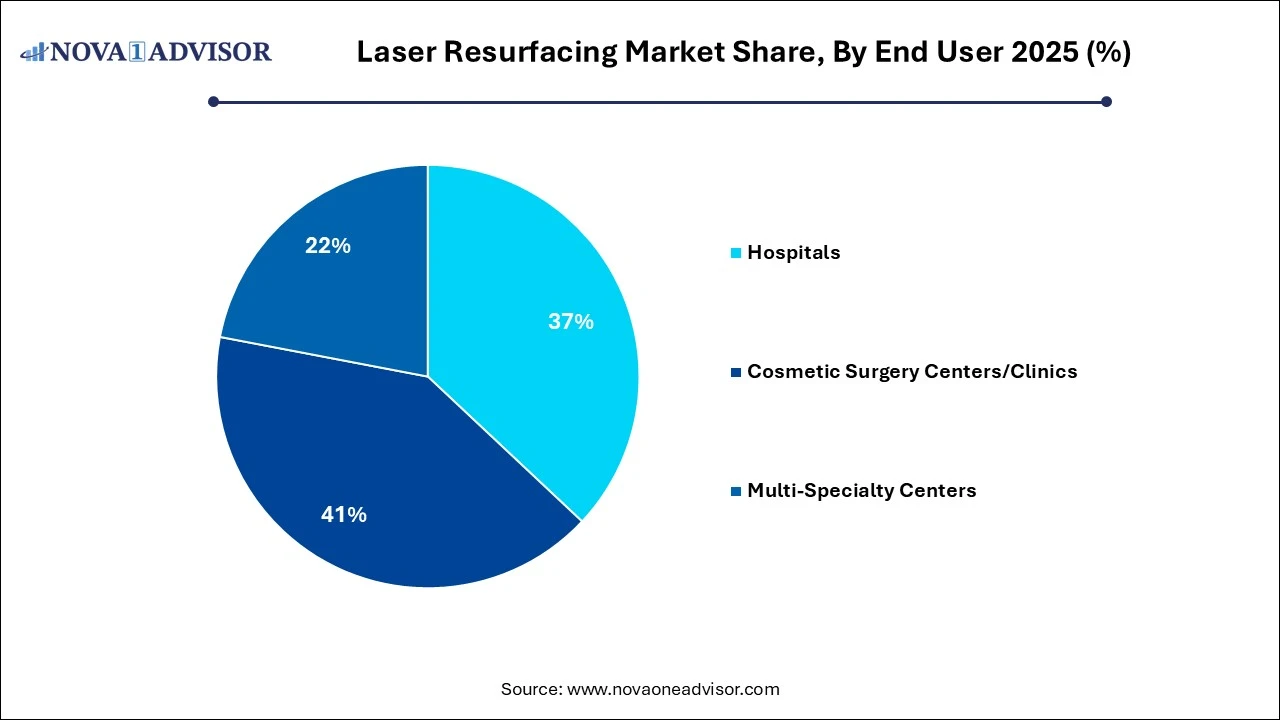
- By end use, the cosmetic surgery centers/clinics segment dominated the market with the largest share of 41.0% in 2025.
- By region, North America dominated the market with the largest share of 39.0% in 2025.
Market Overview
The global laser resurfacing market is witnessing strong growth, driven by rising demand for minimally invasive aesthetic procedures, technological advancements in laser systems, and increasing awareness of skin rejuvenation treatments. Laser resurfacing is widely used to improve skin texture, reduce wrinkles, treat acne scars, correct pigmentation, and stimulate collagen production, offering effective results with shorter recovery times than surgical alternatives. Growing aging populations, increasing focus on preventive skincare among younger consumers, and expanding demand for cosmetic dermatology are further fueling market expansion. Technological innovations such as fractional lasers, hybrid laser platforms, integrated cooling systems, and AI-assisted treatment planning are enhancing treatment safety, precision, and personalization across different skin types. In addition, the rising popularity of combination aesthetic therapies, expanding medical tourism, and greater patient engagement through digital marketing and teledermatology are supporting market growth. Continued advancements in laser technology, regenerative medicine, and personalized skincare solutions are expected to drive the long-term expansion of the global laser resurfacing market.
Market Outlook
- Market Growth Overview: The global laser resurfacing market is expected to grow significantly between 2025 and 2035, driven by the ongoing technological innovations in laser systems.
- Sustainability Trends: Sustainability trends involve a robust preference for low-consumable devices and sustainable manufacturing practices.
- Major Investors: Major investors in the market include Alma Lasers, Cynosure, Lumenis, Cutera, and Sciton.
How is AI Impacting The Global Laser Resurfacing Market?
Artificial intelligence (AI) is transforming the global laser resurfacing market by improving skin analysis, treatment planning, procedural precision, and patient outcomes. AI-powered imaging systems can assess skin characteristics such as wrinkles, pigmentation, acne scars, pore size, elasticity, and sun damage, enabling dermatologists to develop highly personalized treatment plans. Based on this analysis, AI recommends optimal laser settings—including wavelength, energy level, and treatment duration—helping improve treatment effectiveness while minimizing the risk of complications.
AI is also enhancing procedural safety through real-time monitoring systems that analyze tissue response during laser treatment and automatically adjust energy delivery for greater precision. Machine learning algorithms support accurate skin type classification, allowing clinicians to safely treat patients with diverse skin tones and reduce the risk of post-inflammatory pigmentation. In addition, AI-powered consultation tools generate realistic treatment simulations, helping patients understand expected outcomes and make informed decisions. Remote monitoring platforms using computer vision can evaluate healing progress through smartphone images, enabling timely follow-up and early identification of complications. As AI continues to advance, it is expected to make laser resurfacing more personalized, efficient, and accessible, driving innovation and long-term growth in the global laser resurfacing market.
Laser Resurfacing Market Report Scope
| Report Coverage | Details |
| Market Size in 2026 | USD 1.76 Million |
| Market Size by 2035 | USD 3.14 Million |
| Growth Rate From 2026 to 2035 | CAGR of 6.63% |
| Base Year | 2025 |
| Forecast Period | 2026 to 2035 |
| Segments Covered | By Type, By Device, By End User, By Indication, By Region |
| Market Analysis (Terms Used) | Value (USD Million/Billion) or (Volume/Units) |
| Regional Scope | North America; Europe; Asia Pacific; Central and South America; the Middle East and Africa |
| Key Companies Profiled | Alma Lasers, Altair Instruments, Lumenis Cynosure, Inc., Lynton Lasers Ltd, Cutera, Syneron Medical Ltd., Lutronic Corporation, Quanta Aesthetic Lasers USA, and Sciton, Inc. |
Market Driver
Rising Demand for Minimally Invasive Aesthetic Procedures Drives Market Growth
The growing preference for minimally invasive cosmetic treatments is a key driver of the global laser resurfacing market. Consumers are increasingly seeking effective skin rejuvenation solutions that improve wrinkles, acne scars, pigmentation, and sun damage while offering shorter recovery times and lower procedural risks than surgical alternatives. Advancements in fractional and non-ablative laser technologies have enhanced treatment safety, comfort, and effectiveness, encouraging wider adoption. Additionally, rising awareness through social media, increasing disposable incomes, and the expansion of dermatology clinics and aesthetic centers are further supporting long-term market growth.
Market Restraint
High Treatment Costs and Procedure-Related Risks Restrain Market Growth
The high cost of laser resurfacing procedures remains a major barrier to wider market adoption. Advanced laser systems require substantial investment, regular maintenance, and skilled practitioners, resulting in higher treatment costs for patients. Multiple treatment sessions are often needed to achieve optimal results, increasing the overall expense. Furthermore, potential side effects such as redness, swelling, pigmentation changes, scarring, and temporary discomfort may discourage some individuals, particularly those with darker skin tones or pre-existing skin conditions. Continued technological improvements and practitioner training are essential to enhance safety and increase patient confidence.
Market Opportunity
Personalized Aesthetic Medicine and Advanced Laser Technologies Create Growth Opportunities
The growing adoption of personalized aesthetic medicine is creating significant opportunities for the laser resurfacing market. AI-powered skin analysis, advanced imaging technologies, and digital treatment planning enable customized laser therapies tailored to individual skin types and cosmetic goals. At the same time, innovations such as hybrid fractional lasers, picosecond lasers, ultra-short pulse systems, and combination therapies with platelet-rich plasma (PRP), exosomes, and regenerative skincare products are expanding treatment capabilities and improving clinical outcomes. These advancements are expected to drive innovation, enhance patient satisfaction, and create substantial long-term growth opportunities for manufacturers and aesthetic care providers.
Segmental Insights
By Type
Why did the non-ablative segment dominate the global laser resurfacing market?
The non-ablative segment dominated the largest market with the largest share in 2025. The dominance of the segment can be attributed to the growing patient awareness about safer aesthetic treatments and the surge in preference for outpatient procedures. In addition, these procedures are extensively used for mild to harsh pigmentation issues and skin rejuvenation.
How did the ablative segment expected to hold the significantly growing global laser resurfacing market in the coming years?
The ablative segment is expected to grow at the fastest CAGR over the forecast period. The growth of the segment can be credited to its better efficacy in treating deep wrinkles and harsh skin issues. Increasing adoption of longer recovery periods for enhanced outcomes promotes segment growth further by offering time-efficient solutions.
By Device
Why did the laser skin resurfacing machine segment dominate the global laser resurfacing market?
The laser skin resurfacing machine segment dominated the market with the largest share in 2025. The dominance of the segment can be linked to its wide adoption across cosmetics and clinic centers, along with the versatility in treating various skin conditions. The surge in need for aesthetic treatments globally has boosted the installation of these machines.
How did the CO₂ skin laser scanner machine segment expected to hold the significantly growing global laser resurfacing market in the coming years?
The CO₂ skin laser scanner machine segment is expected to grow at the fastest CAGR during the forecast period. The growth of the segment can be driven by rapid technological innovations like fractional CO₂ lasers and fewer complication risks. Moreover, growing use in medical dermatology and reconstructive procedures further propels segment growth.
By End User
Why did the cosmetic surgery centers/clinics segment dominate the global laser resurfacing market?
The cosmetic surgery centers/clinics segment dominated the market with the largest share in 2025. The domain of the segment is owing to their high number of aesthetic procedures performed in these facilities along with the rising consumer inclination for standalone cosmetic clinics. These centers further give skilled professionals and customized treatment plans, attracting a large patient pool.
How did the hospitals segment expected to hold the significantly growing global laser resurfacing market in the coming years?
The hospitals segment is expected to grow at a faster CAGR over the study period. The growth of the segment is due to the increasing need for medically supervised aesthetic treatments and a surge in investment in advanced laser technologies. Furthermore, more patients and individuals trust hospital settings due to the proper availability of post-procedure care.
By Regional
Why did the North American region account for the largest share in the global laser resurfacing market?
North America dominated the market with the largest share in 2025. The dominance of the region can be attributed to the presence of well-established aesthetic healthcare infrastructure and increasing consumer expenditure on cosmetic procedures in major countries. In addition, consumers in the region place a premium on minimally invasive cosmetic procedures designed to deliver skin rejuvenation, wrinkle reduction, and scar revision.
U.S. Global Laser Resurfacing Market Trends
The growth of the market in the country can be driven by the increasing consumer preference for minimally invasive procedures and rapid technological innovations such as hybrid and fractional lasers. The nation is experiencing a rapid proliferation of specialized dermatology clinics, plastic surgery centers, and accessible medical spas.
Why did the Asia-Pacific region become the fastest-growing global laser resurfacing market during the forecast period?
Asia Pacific is expected to grow at the fastest CAGR over the forecast period. The growth of the region can be credited to the increasing disposable incomes and surge in beauty awareness in emerging economies. Furthermore, the growth of the middle class in emerging markets increases disposable income, hence driving higher consumer demand for branded cosmetic treatments, leading to regional growth soon.
China Global Laser Resurfacing Market Trends
The market in the country is growing due to an increasing middle-class population, ongoing urbanization, and a surge in adoption of aesthetic medical procedures. Digital lifestyle and social media trends exert a significant influence on the younger population, impelling them to pursue flawless complexions.
Key Players in the Global Laser resurfacing Market
- Alma Lasers: known for multi-application aesthetic platforms providing fractional laser skin remodeling with reduced recovery time.
- Lumenis: It offers advanced energy-based tech, like CO₂ laser systems, for deep skin resurfacing and scar reduction.
- Cutera: It focuses on customizable light and laser delivery systems targeting pigmentation, tone, and texture.
Recent Developments
- In July 2026, Galderma officially introduced Alastin, its premium regenerative skincare line, into Japan, Singapore, South Korea, and Taiwan. The Japan and Asia Pacific (JPAC) region represents one of the world's fastest-growing markets for medical aesthetics and dermatological skincare.
Segments Covered in the Report
This report forecasts revenue growth at country levels and provides an analysis of the latest industry trends in each of the sub-segments from 2021 to 2035. For this study, Nova one advisor, Inc. has laser resurfacing market.
By Type
- Ablative
- Non-Ablative
By Device
- Laser Skin Resurfacing Machine
- CO₂ Skin Laser Scanner Machine
- Others
By End User
- Hospitals
- Cosmetic Surgery Centers/Clinics
- Multi-Specialty Centers
By Indication
- Facial Wrinkles
- Acne Scars
By Region
- North America
- Europe
- Asia Pacific
- Latin America
- Middle East & Africa
FAQ's

Proceed to Buy
Instant PDF delivery on confirmation

 Request Customization
 Download Sample

Get a Sample of this Report
Laser Resurfacing Market