

Latin America Autotransfusion Devices Market Size, Share, Growth, Report 2026 to 2035
 Status Published
 Category Healthcare


Content
Latin America Autotransfusion Devices Market Size and Growth 2026 to 2035
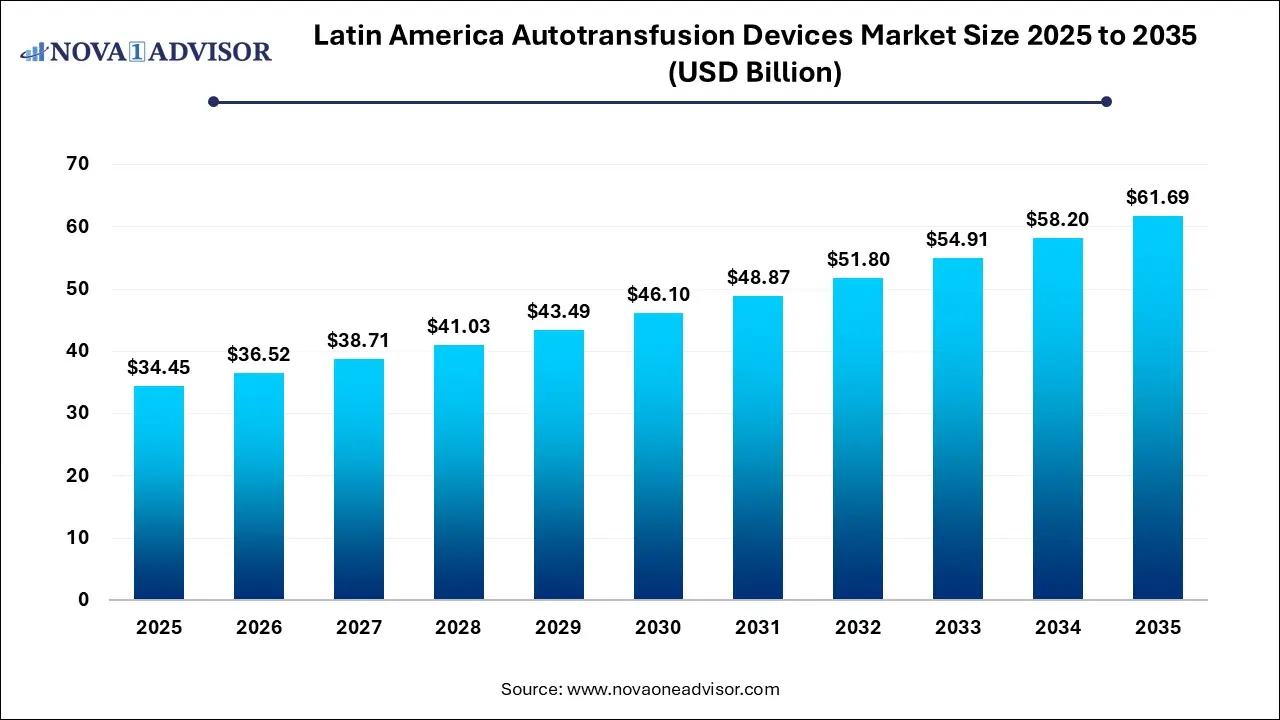
The Latin America autotransfusion devices market size was estimated at USD 34.45 billion in 2025 and is projected to increase from USD 36.52 billion in 2026 to approximately USD 61.69 billion by 2035, growing at a CAGR of 6.0% from 2026 to 2035. The Latin America autotransfusion devices market is driven by increasing surgical demand and chronic disease, advancements in safety and efficiency, and a rising focus on patient-centric care and stringent blood management protocols across the region.
Key Takeaways
- By type, the autotransfusion systems segment held a dominant position in the market with a share of 60% in 2025.
- By type, the oxygenators, consumables, & accessories segment is the fastest growing between 2026 and 2035.
- By application, the cardiac & cardiovascular surgeries segment accounted for a considerable revenue share of 35% in the market in 2025.
- By application, the orthopedic surgeries segment is the fastest growing during 2026 and 2035.
- By end use, the public healthcare institutions segment held the dominant position in the market with a share of 55% in 2025.
Innovation Driving Transformation in the Latin America Autotransfusion Devices Market
Latin America autotransfusion devices comprise devices and consumables used to collect, process, and reinfuse apatient own blood during surgeries. Primarily adopted in high-blood-loss fields, such as cardiac and orthopedic surgeries, these systems offer significant benefits, including a reduced risk of transfusion-transmitted infections, superior oxygen transfer, and lower reliance on donor blood banks. The market growth is driven by rising volumes of complex surgeries, increasing adoption of patient blood management initiatives, and a push toward cost-effective surgical care in private hospitals.
Latin America Autotransfusion Devices Market Trends
- Strategic Integration of Patient Blood Management Frameworks
Increasingly adopting PBM protocols to minimize the risk of transfusion-related infections and reactions. This strategy drives demand for autotransfusion systems, allowing clinicians to conserve the patient’s own blood and avoid allogenic transfusion, especially during high-risk cardiac and orthopedic surgeries.
- Market Penetration of Portable and High-Efficiency Cell Salvage Systems
Using smaller, portable, and user-friendly autotransfusion devices that fit into varied operating room environments. These devices, sustainable for mid-sized hospitals, allow for efficient intraoperative and postoperative blood salvage, making the technology accessible beyond top-tier tertiary centers.
- Expansion of Autotransfusion in Cardiovascular and Transplant Procedures
Cardiovascular surgeries remain the major application area for autotransfusion devices in the region. Due to high blood loss during complex procedures like heart bypass, valve replacements, and organ transplants, specialized autotransfusion systems that process blood efficiently are in high demand in leading Brazilian and Colombian hospitals.
Key AI Integration in the Latin America Autotransfusion Devices Market
AI and ML are Latin American autotransfusion devices industry by enabling the integration of intelligent, real-time monitoring and advanced cell salvage technologies. These technologies enhance patient safety and operational efficiency by improving blood washing and filtration processes, which reduces the need for allogeneic blood in complex surgeries. AI-driven predictive analytics are being applied to optimize patient blood management (PBM) by assessing bleeding risks and tailoring transfusion strategies, addressing the region's challenges with blood donor shortages.
Latin America Autotransfusion Devices Market Report Scope
| Report Coverage | Details |
| Market Size in 2026 | USD 36.52 Billion |
| Market Size by 2035 | USD 61.69 Billion |
| Growth Rate From 2026 to 2035 | CAGR of 6.0% |
| Base Year | 2025 |
| Forecast Period | 2026 to 2035 |
| Segments Covered | Type, Application, End use, Country |
| Market Analysis (Terms Used) | Value (USD Million/Billion) or (Volume/Units) |
| Regional Scope | Latin America |
| Key Companies Profiled | Medtronic plc; Fresenius Kabi, AG; LivaNova PLC; Terumo Corporation; Haemonetics Corporation; EUROSETS; Braile Biomédica |
Market Dynamics
Driver
Rising Surgical Procedures
With the rising volume of complex surgeries and an increasing prevalence of chronic conditions, healthcare institutions in countries such as Brazil and Mexico are adopting intraoperative blood management strategies to manage blood loss efficiently. The increasing surgical throughput, combined with a limited viability of donor blood, compels hospitals to utilize autotransfusion to ensure safe, cost-effective procedures. This surge in demand directly boosts the sales of autotransfusion systems, along with the recurring demand for consumables and accessories.
Restraint
High Initial Costs
The market growth is hindered by the fact that many healthcare facilities operate on tight budgets and prioritize cost-effective alternatives over expensive, advanced cell-salvage technologies. The substantial capital expenditure required for these systems, coupled with recurring expenses for single-use disposables like collection reservoirs, creates a barrier for widespread adoption, particularly in underfunded or smaller hospitals. This financial strain is worsened by inconsistent reimbursement models in the region, which often do not fully cover the procedural costs, reducing the incentive for hospitals to adopt this technology.
Opportunity
Improved Healthcare Infrastructure
The upgrading of surgical capabilities and increasing the number of complex, high-blood-loss procedures performed in both public and private institutions. As governments and private sectors invest in advanced hospital facilities, the demand for sophisticated intraoperative blood-management technology, such as cell-salvage devices, has increased to improve patient safety and reduce dependency on limited allogeneic blood supplies. The modernization of hospital operating rooms, particularly in Brazil and Mexico, allows for the integration of cost-efficient and portable autotransfusion systems, which are increasingly adopted even in mid-sized, regional hospitals.
Segment Insights
By Type Insights
Why Did the Autotransfusion Systems Segment Hold a 60% Share for the Latin America Autotransfusion Devices Market?
The autotransfusion systems segment held a dominant position in the market with a share of 60% in 2025, owing to its critical role in major surgeries, though gradually declining as consumables gain traction. Increased awareness of blood management protocols in major emerging markets, such as Brazil and Mexico, is boosting the adoption rate of these devices.
The oxygenators, consumables, & accessories segment held a 40% share of the market in 2025. Due to recurring usage, higher procedure volumes, and continuous replacement demand. Advancements in biocompatible materials and specialized coatings in disposable products have improved patient outcomes, encouraging wider adoption.
By Application Insights
Why Did the Cardiac & Cardiovascular Surgeries Segment Lead the Latin America Autotransfusion Devices Market?
The cardiac & cardiovascular surgeries segment registered its dominance over the market with a share of 35% in 2025, owing to the high blood loss risk, though slightly declining as other applications expand. The strong support from healthcare policies, increased feed for blood conservation, and rising regional concentration of specialized care.
The orthopedic surgeries segment held the 20% share of the market in 2025, due to the rising aging population and increasing joint replacement surgeries. Improved clinical outcomes and cost savings, increased surgical load, modernizing hospital infrastructure, and high rates of orthopedic and trauma surgeries.
The trauma/emergency surgery segment held a 15% share of the market in 2025 because of the increasing trauma cases and emergency care infrastructure. Addressing donor shortage and safety, the growing need for rapid blood management, and increasing emergency care investments.
The obstetrics & gynecological procedures segment held a 10% share of the market in 2025, with the growing awareness of blood conservation in maternal care. Improvements in more efficient and user-friendly devices are easier to integrate into existing surgical protocols in both private and public hospitals.
The neurosurgery segment held a 10 % share of the market in 2025, due to the procedure volumes being relatively lower and more specialized. Reduced infection and complication risk, advancement in technology, and accessibility. Countries face ongoing blood donor shortages, which forces reliance on family donors and creates a high dependency on blood conservation technologies to ensure safety.
The others segment held a 10% share of the market in 2025, because of fragmented and less frequent usage across diverse procedures. The development of portable and automated, efficient blood filtration systems allows for broader use in various hospital departments, enhancing the efficiency of the category. Cost effectiveness and awareness, increased surgical volumes.
By End-use Insights
Why Did the Public Healthcare Institutions Segment Hold a 55% Share for the Latin America Autotransfusion Devices Market?
The public healthcare institutions segment led the market with a share of 55% in 2025, due to the higher patient inflow, though slowly declining with private sector expansion. Addressing the blood shortage, prioritizing the modernization of operating rooms, and adopting patient blood management programs in public hospitals.
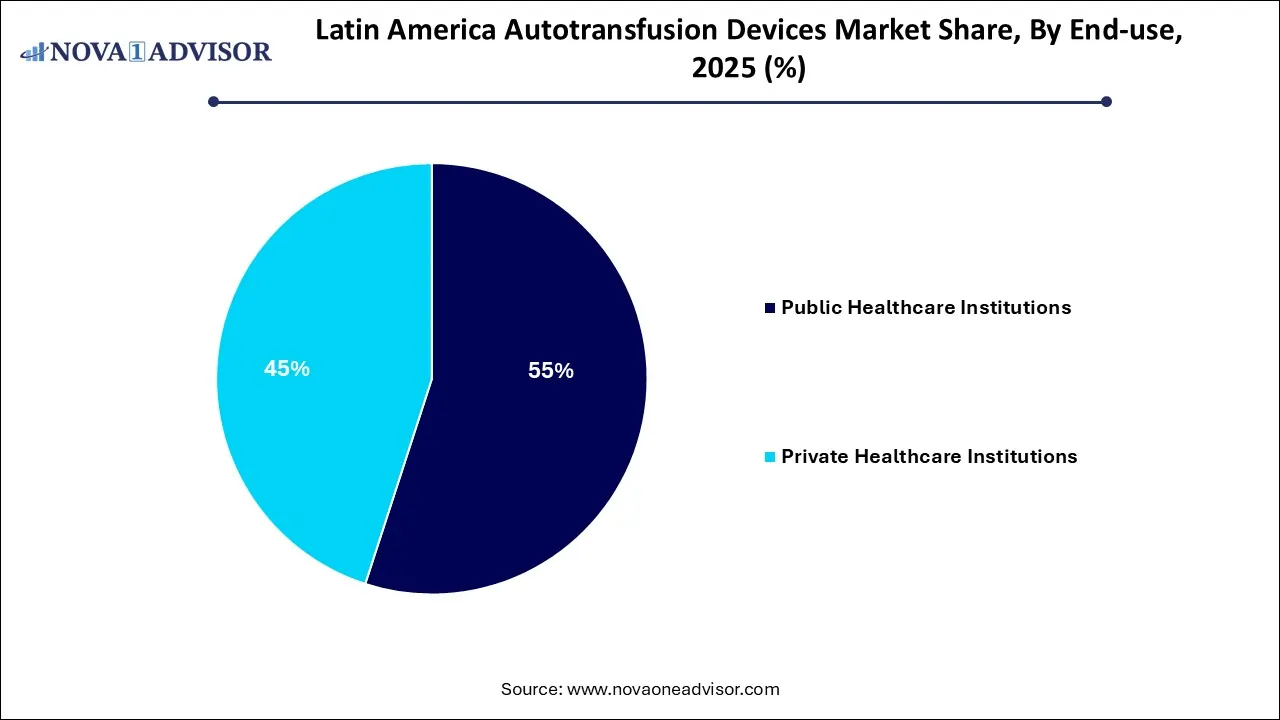
The private healthcare institutions segment held a 45% share of the market in 2025, with better infrastructure, faster adoption of advanced devices, and rising healthcare spending. The high volume of complex, high blood-loss surgeries, such as cardiac, orthopedic, and vascular procedures, which are primary driver for autotransfusion systems.
Country Insights
Brazil Autotransfusion Devices Market Trends
Brazil’s shift toward a more resilient, technology-driven model to combat chronic donor blood shortages and rising surgical complexity. By integrating automated cell salvage across both hospitals and ambulatory settings, healthcare providers are successfully optimizing patient safety while reducing long-term operational costs. This shift is sustained by a robust demand for specialized consumables, ensuring a consistent revenue stream for manufacturers.
Mexico Autotransfusion Devices Market Trends
Mexico’s rising incidence of chronic diseases and an aging population have significantly increased the demand for complex, high-blood-loss surgeries, such as cardiovascular and orthopedic procedures. The high demand for single-use accessories, such as filters and reservoirs, is essential for maintaining infection control standards across rising procedure volumes.
Argentina Autotransfusion Devices Market Trends
Argentina’s expanding applications from high-risk surgeries to routine, moderate-blood-loss procedures. This transition is fueled by technological innovations in portability and centrifugation, which significantly enhance red blood cell recovery and operational flexibility. As healthcare systems in countries like Argentina prioritize cost-effective, high-yield solutions, the move away from allogeneic blood is becoming a regional standard for safety and efficiency.
Colombia Autotransfusion Devices Market Trends
Colombia’s strategic shift toward high-acuity surgical efficiency is led by the dominance of the cardiovascular and orthopedic segments. The transition to automated, platelet-preserving technologies from global leaders like LivaNova and Haemonetics, which mitigate the risks of transfusion-transmitted infections. While high initial capital costs remain a hurdle for some facilities, the surge in recurring revenue from consumables indicates a deepening institutional commitment to these systems.
Latin America Autotransfusion Devices Market Companies
- Medtronic plc
- LivaNova PLC
- Fresenius Kabi AG
- Haemonetics Corporation
- Terumo Corporation
- Braile Biomédica
- EUROSETS
Recent Developments
In March 2023, Haemonetics launched Intelligent Control software for its Cell Saver Elite+ autotransfusion system, featuring over 50 automation upgrades and enhanced data connectivity. This launch follows a series of strategic moves, including the divestiture of whole blood assets, acquisitions in cardiology, and a focus on expanding its hospital and plasma segments.
Latin America Autotransfusion Devices Market Segment
By Type
- Autotransfusion Systems
-
- Intraoperative Systems
- Postoperative Systems
- Oxygenators, Consumables, & Accessories
By Application
- Cardiac & Cardiovascular Surgeries
- Orthopedic Surgeries
- Trauma/Emergency Surgery
- Obstetrics & Gynecological Procedures
- Neurosurgery
- Others
By End Use
- Public Healthcare Institutions
- Private Healthcare Institutions
By Country
- Latin America
-
- Brazil
- Mexico
- Argentina
- Colombia
- Chile
FAQ's

Proceed to Buy
Instant PDF delivery on confirmation

Latin America Autotransfusion Devices Market Size to Hit USD 61.69 Billion by ...
 Request Customization
 Download Sample

Get a Sample of this Report
Latin America Autotransfusion Devices Market