

Lithotripsy Market Size, Share, and Trends 2026 to 2035
 Status Published
 Category Healthcare


Content
Lithotripsy Market Size and Growth 2026 to 2035
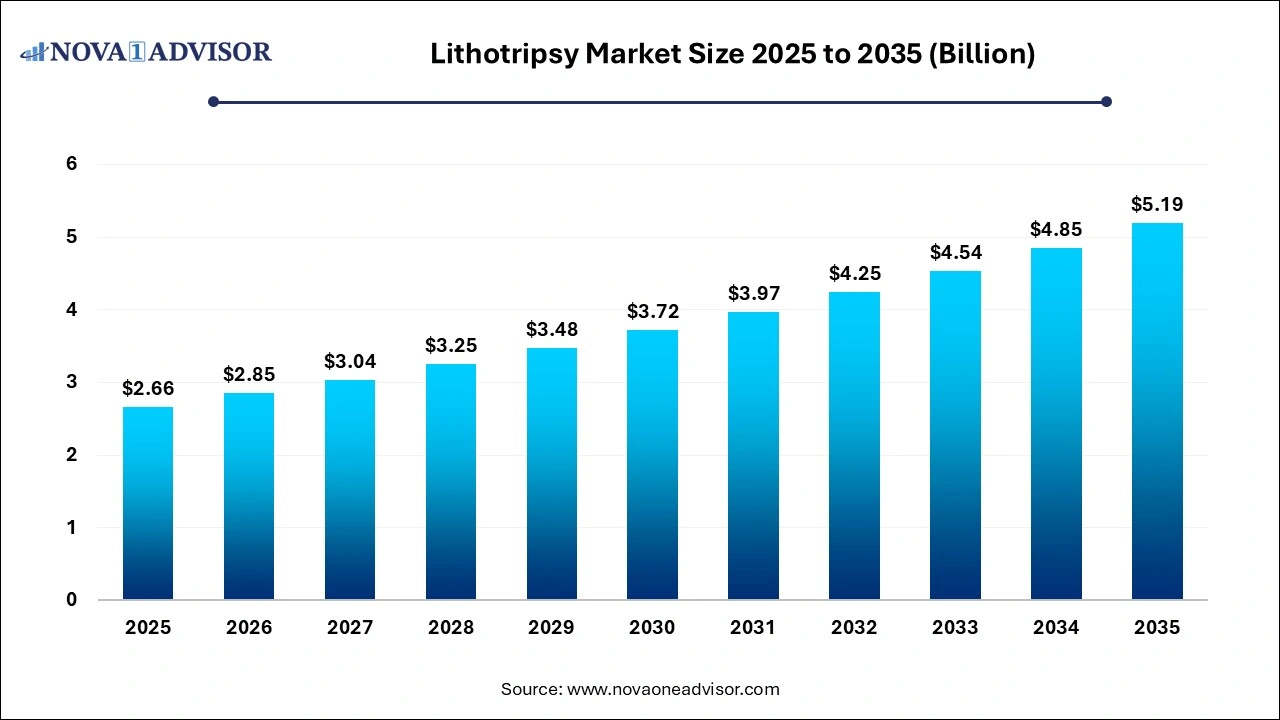
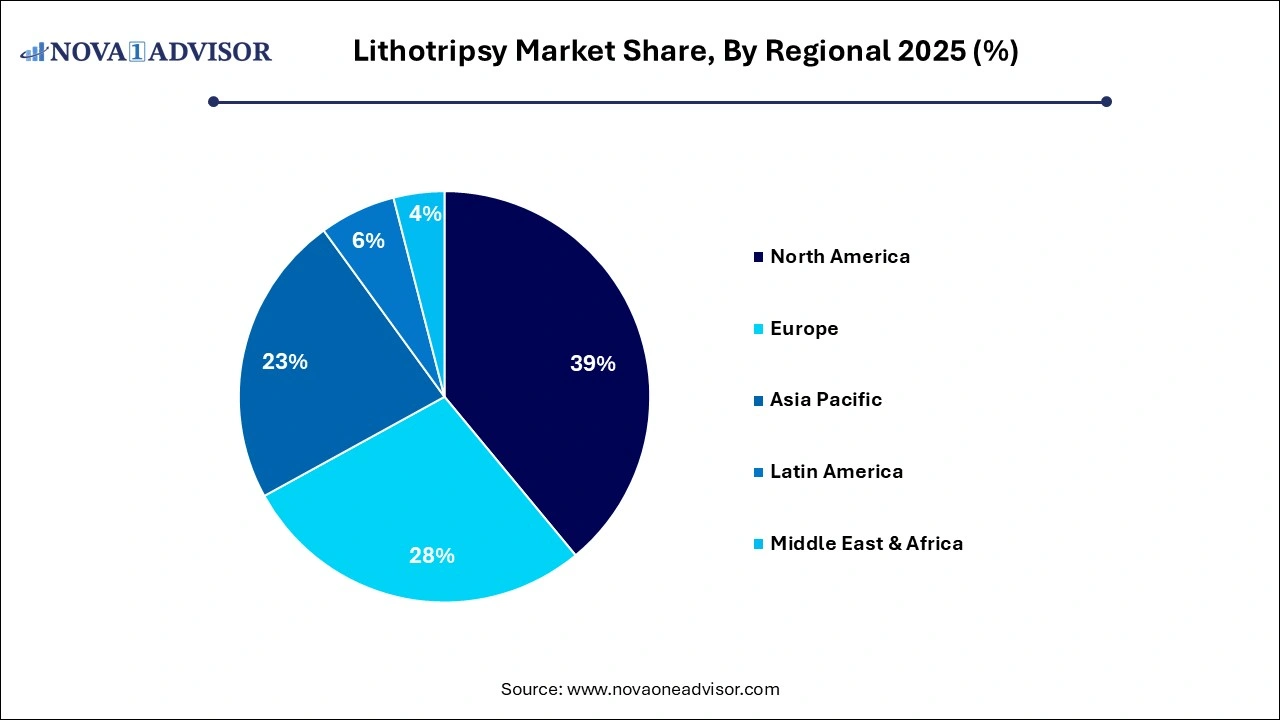
The global lithotripsy market size was valued at USD 2.66 billion in 2025 and is projected to grow from USD 2.85 billion in 2026 to USD 5.19 billion by 2035, at a CAGR of 6.9% from 2026 to 2035. North America dominated the market, accounting for a revenue share of 39.0% in 2025.
Key Takeaway:
- By type, the ESWL segment dominated the market with the largest share in 2025.
- By type, the intracorporeal lithotripsy segment is expected to grow at the fastest CAGR over the forecast period.
- By modality, the standalone segment dominated the market with the largest share in 2025.
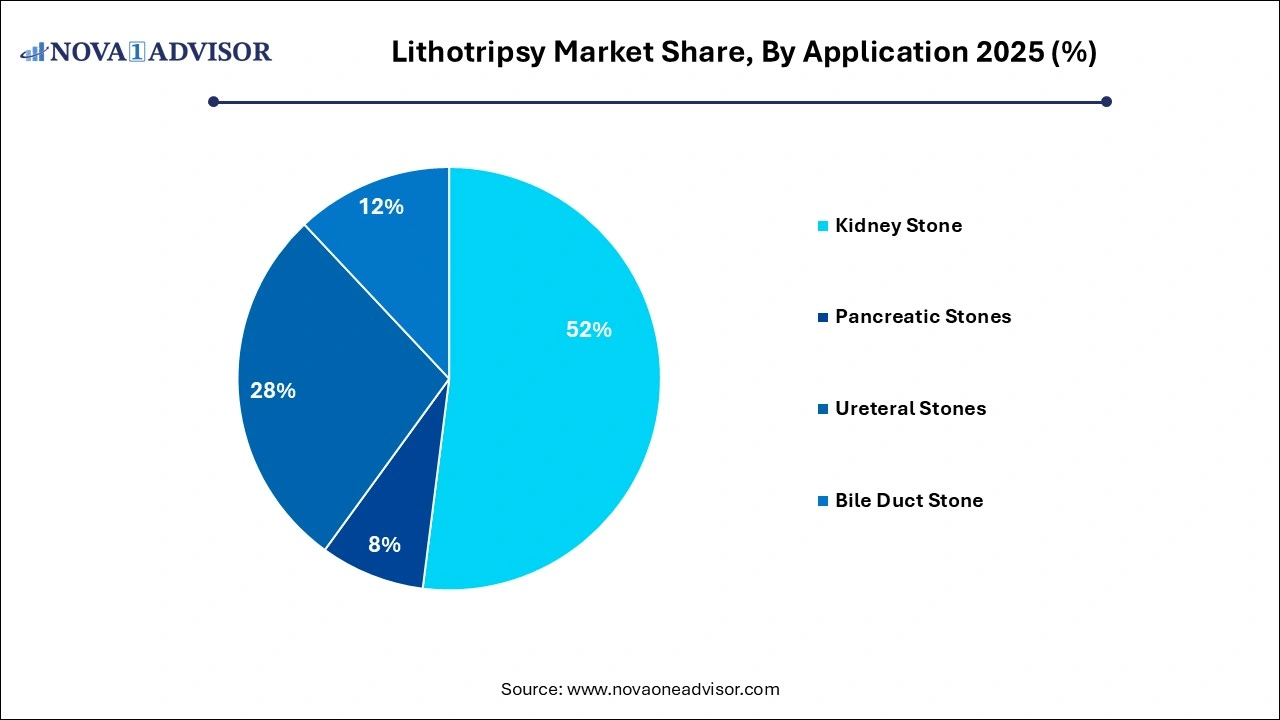
- By application, the kidney stone segment dominated the market with the largest share of 52.0% in 2025.
- By region, North America dominated the market with the largest share of 39.0% in 2025.
Market Overview
The global lithotripsy market is experiencing steady growth, driven by the increasing prevalence of kidney stone disease and the growing preference for minimally invasive treatment procedures. Lithotripsy uses shock waves, laser energy, ultrasonic, pneumatic, or electrohydraulic technologies to break urinary and biliary stones into smaller fragments for natural passage or endoscopic removal. Compared with conventional surgery, lithotripsy offers reduced patient trauma, shorter hospital stays, fewer complications, and faster recovery, making it a preferred treatment option for stone disease.
The rising incidence of urolithiasis, fueled by obesity, poor dietary habits, diabetes, dehydration, sedentary lifestyles, and aging populations, continues to increase demand for advanced lithotripsy systems. While Extracorporeal Shock Wave Lithotripsy (ESWL) remains a widely used non-invasive treatment, intracorporeal technologies such as Holmium:YAG and thulium fiber laser (TFL) systems are gaining popularity due to their superior precision and treatment efficiency. Advancements in digital imaging, robotic assistance, real-time guidance, automated stone targeting, and portable lithotripsy platforms are further enhancing clinical outcomes and expanding access to minimally invasive stone treatment. Additionally, increasing healthcare investments, expanding urology centers, and growing awareness of advanced treatment options are expected to support continued market growth.
Market Outlook
- Market Growth Overview: The global lithotripsy market is expected to grow significantly between 2025 and 2035, driven by the increasing need for minimally invasive treatment options globally.
- Sustainability Trends: Sustainability trends involve growing emphasis on sustainable device manufacturing and transition towards decentralized outpatient care.
- Major Investors: Major investors in the market include Boston Scientific Corporation, Siemens Healthineers, Olympus Corporation, Dornier MedTech, Richard Wolf GmbH, Storz Medical AG, and EDAP TMS.
How is AI Impacting The Global Lithotripsy Market?
Artificial intelligence (AI) is transforming the lithotripsy market by enhancing stone detection, treatment planning, procedural precision, and postoperative care. AI-powered imaging platforms can automatically identify urinary stones, measure their size and density, estimate composition, and analyze imaging data from CT scans, ultrasound, and X-rays, enabling faster and more accurate diagnosis. These capabilities help clinicians select the most appropriate treatment approach while improving clinical decision-making.
Machine learning algorithms support personalized treatment planning by evaluating factors such as stone density, anatomical location, patient characteristics, renal anatomy, and treatment history to determine whether extracorporeal shock wave lithotripsy (ESWL) or intracorporeal laser lithotripsy is likely to provide the best outcome. During procedures, AI-assisted imaging improves stone targeting, optimizes energy delivery, and helps distinguish residual stone fragments from surrounding tissues, increasing treatment efficiency and reducing retreatment rates.
AI also plays an important role in predicting kidney stone recurrence by analyzing metabolic risk factors, urinary chemistry, dietary habits, and previous medical history. These insights enable healthcare providers to recommend personalized preventive strategies, including dietary modifications, hydration plans, and follow-up schedules. In addition, AI-powered remote monitoring platforms track patient recovery after treatment, helping detect complications such as infection, urinary obstruction, or incomplete stone clearance at an early stage. As AI continues to integrate with digital imaging, robotic systems, and advanced lithotripsy technologies, it is expected to improve treatment accuracy, patient outcomes, and overall efficiency across the global lithotripsy market.
Lithotripsy Market Report Scope
| Report Coverage | Details |
| Market Size in 2026 | USD 2.85 Billion |
| Market Size by 2035 | USD 5.19 Billion |
| Growth Rate From 2026 to 2035 | CAGR of 6.9% |
| Base Year | 2025 |
| Forecast Period | 2026 to 2035 |
| Segments Covered | By Type, By Modality, By Application, By Regional |
| Market Analysis (Terms Used) | Value (USD Million/Billion) or (Volume/Units) |
| Regional Scope | North America; Europe; Asia Pacific; Central and South America; the Middle East and Africa |
| Key Companies Profiled | Boston Scientific (US), DIREX, S.L. (Spain), Dornier MedTech.(Germany), EDAP TMS (France), Elmed Electronics & Medical Industry & Trade Inc.(Turkey), Jena Med Tech GmbH (Germany), Medispec LTD (US), Olympus Corporation (Japan), Siemens Healthcare GmbH (Germany), STORZ MEDICAL AG (Switzerland) |
Market Driver
Rising Prevalence of Kidney Stone Disease and Growing Preference for Minimally Invasive Treatment
The increasing incidence of kidney stone disease is a major driver of the global lithotripsy market. Factors such as poor hydration, unhealthy dietary habits, obesity, diabetes, metabolic disorders, sedentary lifestyles, and aging populations have contributed to the growing burden of urolithiasis worldwide. In addition, patients and healthcare providers are increasingly favoring minimally invasive treatment options such as extracorporeal shock wave lithotripsy (ESWL) and laser lithotripsy due to their ability to reduce pain, shorten hospital stays, minimize complications, and accelerate recovery. Continuous improvements in imaging guidance, endoscopic visualization, and energy delivery systems are further enhancing treatment outcomes and supporting market growth.
Market Restraint
High Equipment Costs and Variable Treatment Outcomes
The high cost of advanced lithotripsy systems remains a key challenge for market expansion. Modern laser platforms, digital imaging technologies, fluoroscopy systems, and robotic-compatible equipment require substantial capital investment, limiting adoption among smaller hospitals and healthcare facilities. In addition, treatment effectiveness can vary depending on factors such as stone size, composition, anatomical location, and physician expertise. Some complex cases may require multiple treatment sessions or alternative surgical procedures, while advanced laser lithotripsy also demands specialized training, creating barriers to widespread implementation.
Market Opportunity
Advancement of Laser Lithotripsy and Personalized Stone Management
The growing adoption of advanced laser technologies and personalized stone management presents significant opportunities for the lithotripsy market. Next-generation thulium fiber laser (TFL) systems offer improved stone fragmentation, reduced retropulsion, greater precision, and shorter procedure times compared with conventional laser technologies, driving their increasing clinical use. At the same time, advances in metabolic evaluation, urinary biomarker analysis, artificial intelligence, and recurrence prediction are enabling personalized treatment and prevention strategies. These developments support comprehensive patient care through tailored dietary recommendations, hydration management, pharmacological therapy, and long-term monitoring, creating new opportunities for device manufacturers, digital health providers, and urology care centers.
Segmental Insights
By Type
Why did the ESWL segment dominate the global lithotripsy market?
The ESWL segment dominated the market with the largest share in 2025. The dominance of the segment can be attributed to its ability to treat kidney stones and non-invasive approach. In addition, compared to conventional open or invasive surgical procedures, minimally invasive interventions offer patients reduced postoperative discomfort and shortened or fewer hospital stays.
How did the intracorporeal lithotripsy segment expected to hold the significantly growing global lithotripsy market in the coming years?
The intracorporeal lithotripsy segment is expected to grow at the fastest CAGR over the forecast period. The growth of the segment can be credited to the increasing need for laser-based devices for pancreatic, ureteral, and bile duct stones. The proliferation of specialized clinics and ambulatory surgical centers facilitates rapid patient recovery and a reduction in procedural expenditures.
By Modality
Why did the standalone segment dominate the global lithotripsy market?
The standalone segment dominated the market with the largest share in 2025. The dominance of the segment can be linked to its strong performance, high capacity, and suitability for hospital environments. Hospitals increasingly favor these robust platforms, supported by reliable vendor partnerships, extensive maintenance initiatives, and thorough clinical training programs.
How did the portable segment expected to hold the significantly growing global lithotripsy market in the coming years?
The portable segment is expected to grow at the fastest CAGR over the forecast period. The growth of the segment can be driven by growing needs in outpatient facilities and rural healthcare centers. Modern portable designs equipped with battery-powered functionality effectively reduce energy instability challenges within developing regions.
By Application
Why did the kidney stone segment dominate the global lithotripsy market?
The kidney stone segment dominated the market with the largest share in 2025. The dominance of the segment is owing to the increasing disease incidence and robust adoption of laser lithotripsy systems in hospitals. The growing global geriatric demographic is subject to an increased incidence of metabolic and age-related urological disorders.
How did the ureteral stones segment expected to hold the significantly growing global lithotripsy market in the coming years?
The ureteral stones segment is expected to grow at the fastest CAGR over the forecast period. The growth of the segment is due to growing utilization of intracorporeal laser lithotripsy and increasing incidence of ureteral calculi. The integration of advanced holmium and thulium fiber laser systems delivers exceptional precision and versatility, facilitating navigation through constricted ureteral anatomy.
By Regional
Why did the North American region account for the largest share in the global lithotripsy market?
North America dominated the market with the largest share in 2025. The dominance of the region can be attributed to the growing healthcare spending and robust presence of major market players across major countries. In addition, major per capita healthcare spending enables medical facilities and specialized centers to regularly upgrade their laser and shockwave technology to next-generation systems.
U.S. Global Lithotripsy Market Trends
The growth of the market in the country can be driven by extensive adoption of minimally invasive urological surgeries and the presence of cutting-edge healthcare infrastructure. Also, established coverage frameworks by Medicare and private insurers for medically necessary stone fragmentation increase financial constraints for both patients and healthcare facilities.
Why did the Asia-Pacific region become the fastest-growing global lithotripsy market during the forecast period?
Asia-Pacific is expected to grow at the fastest CAGR over the forecast period. The growth of the region can be credited to the growing disposable incomes and surge in incidence of urolithiasis in emerging economies. Furthermore, regional medical hubs provide superior yet economically accessible urological interventions, serving as a primary draw for international medical tourists and propelling the local integration of advanced medical devices.
China Global Lithotripsy Market Trends
The market in the country is growing due to the ongoing urbanization and surge in incidence of kidney stone disorders. Moreover, the rise of competitive local medical device manufacturers enhances system affordability, hence expanding accessibility for regional clinics and lower-tier hospitals.
Key Players in the Global Lithotripsy Market
- Boston Scientific Corporation: A dominant force in urology and interventional devices, offering a broad portfolio of intracorporeal lithotripsy and ureteroscopic accessories alongside its footprint in intravascular lithotripsy (IVL) technology.
- Dornier MedTech: A pioneer in shock wave technology, providing advanced extracorporeal shock wave lithotripsy (ESWL) systems like the Dornier Delta III designed for precise, efficient stone fragmentation.
- Olympus Corporation: Specializes in endourology visualization, lasers, and surgical lithotripsy workstations widely deployed in hospital operating rooms globally.
Recent Developments
- In May 2026, Johnson & Johnson announced the commercial availability of its Shockwave C2 Aero Coronary Intravascular Lithotripsy (IVL) catheter, an advanced therapeutic device engineered to optimize the treatment of calcified coronary artery disease (CAD).
Segments Covered in the Report
This report forecasts revenue growth at country levels and provides an analysis of the latest industry trends in each of the sub-segments from 2021 to 2035. For this study, Nova one advisor, Inc. has lithotripsy market.
By Type
- Intracorporeal Lithotripsy
- Extracorporeal Shock Wave Lithotripsy (ESWL)
By Modality
- Standalone
- Portable
By Application
- Kidney Stone
- Pancreatic Stones
- Ureteral Stones
- Bile Duct Stone
By Region
- North America
- Europe
- Asia Pacific
- Latin America
- Middle East & Africa
FAQ's

Proceed to Buy
Instant PDF delivery on confirmation

 Request Customization
 Download Sample

Get a Sample of this Report
Lithotripsy Market