

Microelectronic Medical Implants Market Size, Share, and Trends 2026 to 2035
 Status Published
 Category Healthcare


Content
Microelectronic Medical Implants Market Size and Growth 2026 to 2035
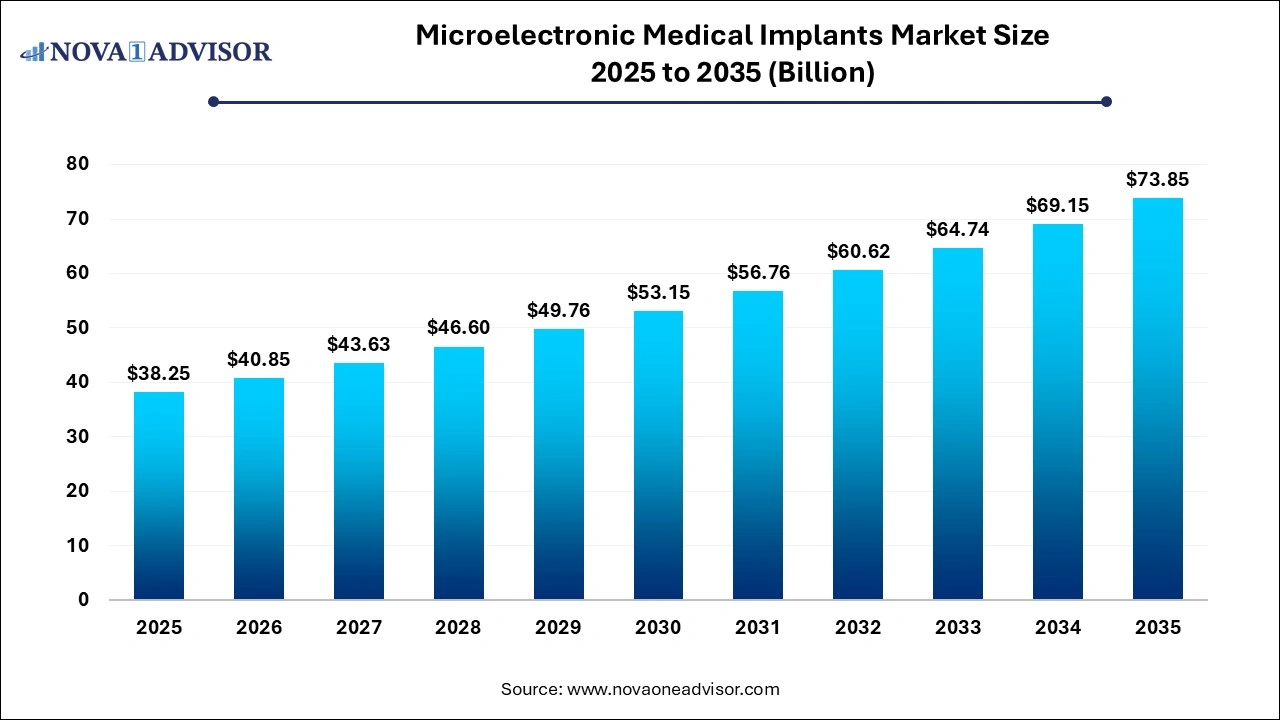
The global microelectronic medical implants market size was valued at USD 38.25 billion in 2025 and is projected to grow from USD 40.85 billion in 2026 to USD 73.85 billion by 2035, at a CAGR of 6.8% from 2026 to 2035. North America dominated the market, accounting for a revenue share of 44.0% in 2025.
Key Takeaway
- By product, the pacemakers & defibrillators segment dominated the market with the largest share in 2025.
- By product, the neurostimulators segment is expected to grow at the fastest CAGR over the forecast period.
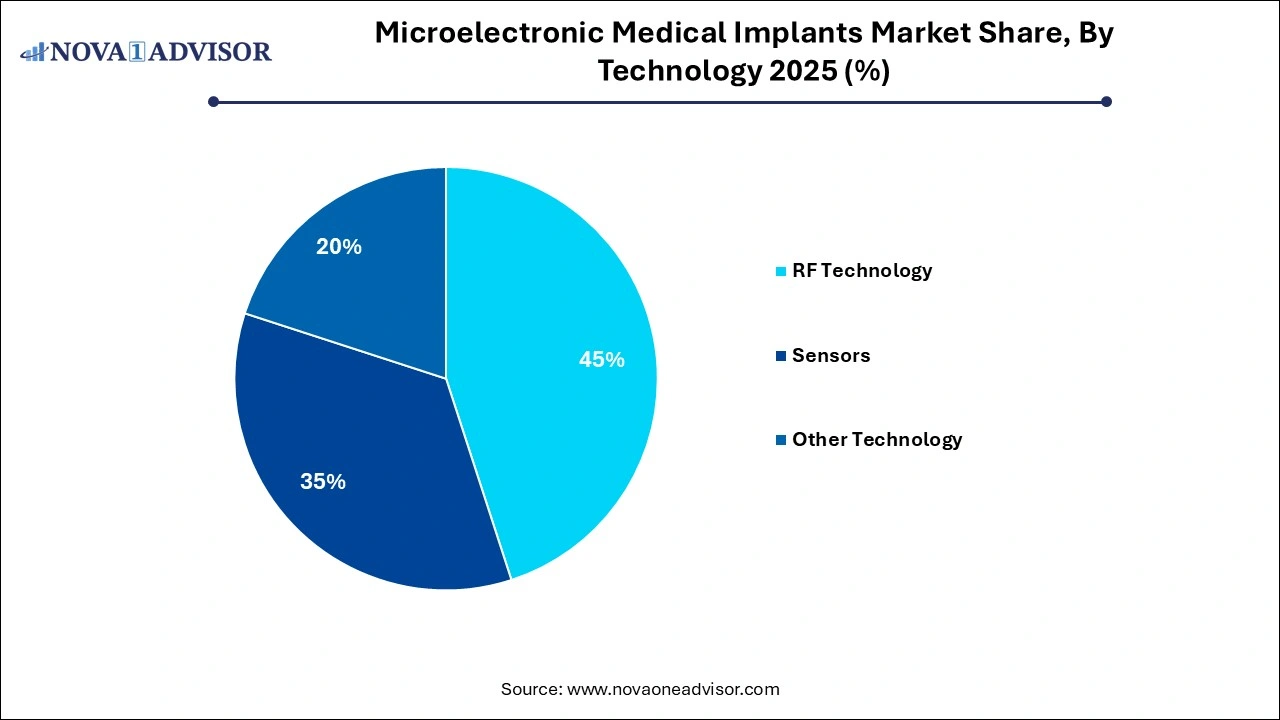
- By technology, the radiofrequency (RF) technology segment dominated the market with the largest share of 45.0% in 2025.
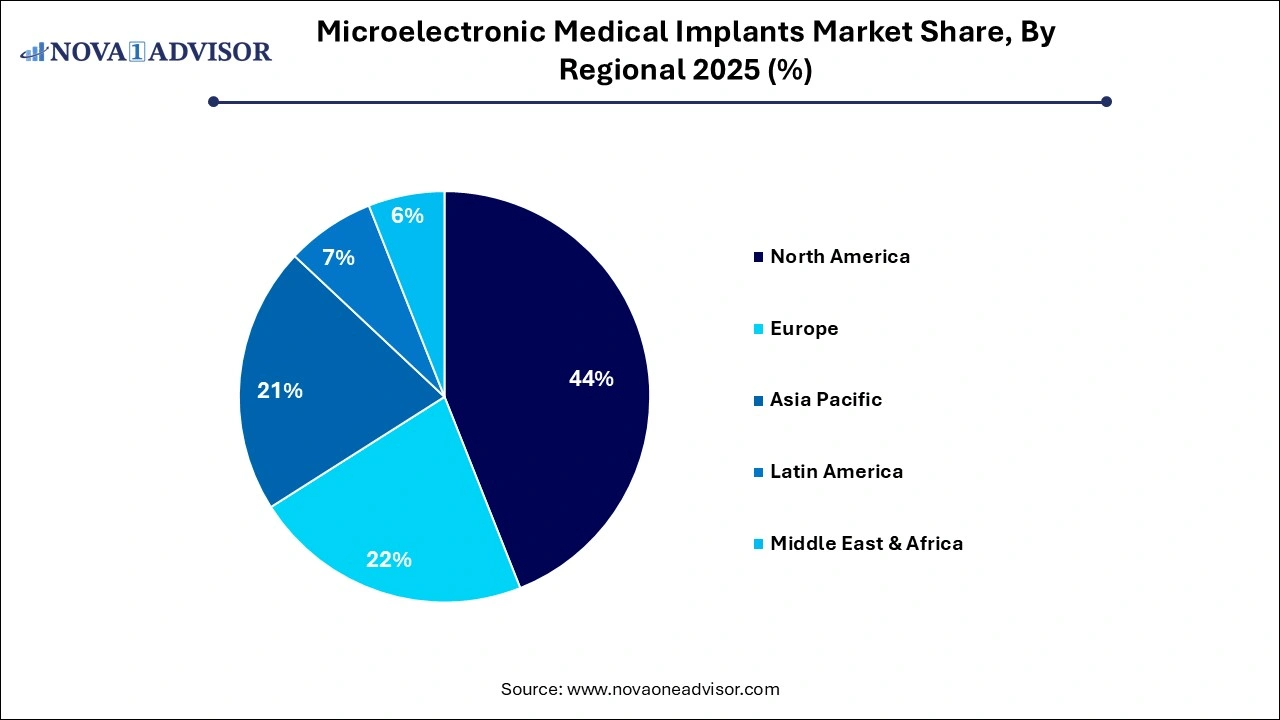
- By region, North America dominated the market with the largest share of 44.0% in 2025.
Market Overview
The global Microelectronic Medical Implants Market is experiencing strong growth due to rapid advancements in semiconductor technology, biomedical engineering, and digital healthcare. These implantable devices provide continuous monitoring and targeted therapy for chronic conditions such as cardiovascular diseases, neurological disorders, hearing loss, diabetes, chronic pain, and ophthalmic diseases, improving patient outcomes while reducing the need for frequent medical interventions.
Technological innovations, including miniaturized microprocessors, wireless connectivity, biosensors, rechargeable batteries, and cloud-enabled remote monitoring, are enhancing the performance and reliability of implantable medical devices. The increasing adoption of intelligent implants, along with rising demand from aging populations and the expansion of minimally invasive surgical procedures, is further driving market growth. In addition, advances in microfabrication, MEMS technology, nanotechnology, and AI-powered bioelectronics are enabling the development of smaller, smarter, and more energy-efficient implants. These innovations are expected to support the long-term expansion of the global microelectronic medical implants market.
Market Outlook
- Market Growth Overview: The global microelectronic medical implants market is expected to grow significantly between 2025 and 2035, driven by the growing incidence of cardiac disorders, epilepsy, and Parkinson’s disease.
- Sustainability Trends: Sustainability trends involve growing emphasis on sustainable power sources and biodegradable materials.
- Major Investors: Major investors in the market include Medtronic, Abbott Laboratories, Boston Scientific Corporation, Zimmer Biomet Holdings, Cochlear Ltd., LivaNova PLC, Biotronik, and ZOLL Medical.
How is AI Impacting The Global Microelectronic Medical Implants Market?
Artificial intelligence (AI) is revolutionizing the market by transitioning passive hardware into self-regulating and active systems. AI algorithms can process complex physiological data in real time via remote monitoring. Furthermore, artificial intelligence integrates with continuous biosensors to evaluate real-time health data. This capability allows devices to predict potential cardiac events, epileptic seizures, or equipment failures before physical symptoms occur.
AI is significantly improving the performance of implantable cardiac devices through advanced arrhythmia detection, reducing false alarms while enabling earlier clinical intervention. In neurostimulation, AI-driven closed-loop systems continuously monitor neural signals and automatically optimize electrical stimulation, improving symptom control and extending battery life. AI also supports cloud-based remote patient monitoring by transmitting implant data to healthcare providers, enabling proactive care through predictive alerts and automated clinical insights. Additionally, emerging technologies such as digital twins and AI-powered simulation models help physicians personalize implant programming before treatment begins. As bioelectronics and AI continue to advance, intelligent implantable devices are expected to deliver more precise, personalized, and preventive healthcare, driving innovation across the global microelectronic medical implants market.
Microelectronic Medical Implants Market Report Scope
| Report Coverage | Details |
| Market Size in 2026 | USD 40.85 Billion |
| Market Size by 2035 | USD 73.85 Billion |
| Growth Rate From 2026 to 2035 | CAGR of 6.8% |
| Base Year | 2025 |
| Forecast Period | 2026 to 2035 |
| Segments Covered | Product, Technology, Region |
| Market Analysis (Terms Used) | Value (USD Million/Billion) or (Volume/Units) |
| Regional Scope | North America; Europe; Asia Pacific; Central and South America; the Middle East and Africa |
| Key Companies Profiled | Abiomed Inc, Biomet Inc., Cyberonics Inc., Envoy Medical, Medtronic Inc., Microsemi Corporation., Neuropace Inc., Retina Implant AG, St. Jude Medical Inc., Worldheart Corporation. and others |
Market Driver
Rising Burden of Chronic Diseases and Aging Population Drives Market Growth
The increasing prevalence of chronic diseases and the growing aging population are major drivers of the microelectronic medical implants market. Conditions such as cardiovascular diseases, Parkinson’s disease, epilepsy, hearing loss, chronic pain, and neurological disorders require long-term treatment solutions that implantable electronic devices can effectively provide. Devices including pacemakers, neurostimulators, cochlear implants, and implantable glucose monitoring systems improve patient outcomes through continuous therapy while reducing hospitalizations. Additionally, advancements in minimally invasive procedures, remote monitoring, and longer-lasting implant technologies are expanding the adoption of microelectronic medical implants worldwide.
Market Restraint
High Development Costs and Complex Regulatory Requirements
The high cost of developing implantable medical devices remains a significant challenge for market growth. Manufacturers must invest heavily in research and development, semiconductor technologies, biocompatibility testing, cybersecurity, software validation, and extensive clinical trials before receiving regulatory approval. Strict safety and performance standards, along with lengthy approval processes, increase both development time and commercialization costs. Furthermore, concerns related to battery replacement, implant maintenance, reimbursement limitations, and cybersecurity continue to pose challenges for wider market adoption.
Market Opportunity
Connected and Intelligent Implants Offer Strong Growth Potential
The growing adoption of connected healthcare technologies presents significant opportunities for the microelectronic medical implants market. Modern implantable devices equipped with wireless connectivity, cloud integration, and AI-powered analytics enable continuous patient monitoring and personalized therapy adjustments. Technologies such as Bluetooth Low Energy (BLE), near-field communication (NFC), and RF telemetry allow healthcare providers to remotely monitor device performance and optimize treatment in real time. In addition, emerging innovations including brain-computer interfaces, implantable biosensors, bioelectronic medicines, and digital therapeutics are expected to create new growth avenues, driving the next generation of intelligent implantable medical devices.
Segmental Insights
By Product
Why did the pacemakers & defibrillators segment dominate the global microelectronic medical implants market?
The pacemakers & defibrillators segment dominated the market with the largest share in 2025. The dominance of the segment can be attributed to the growing prevalence of cardiac diseases and the surge in the geriatric population across the globe. In addition, the integration of artificial intelligence and advanced wireless connectivity facilitates remote cardiac monitoring with enhanced diagnostic precision.
How did the neurostimulators segment expected to hold the significantly growing global microelectronic medical implants market in the coming years?
The neurostimulators segment is expected to grow at the fastest CAGR over the forecast period. The growth of the segment can be credited to the increasing number of cases of neurological disorders and the surge in awareness among the public regarding neurostimulation therapy. Enhanced battery performance, rechargeable micro-cells, and Bluetooth or radiofrequency connectivity allows real-time clinical adjustments by physicians.
By Technology
Why did the radiofrequency (RF) technology segment dominate the global microelectronic medical implants market?
The radiofrequency (RF) technology segment dominated the market with the largest share in 2025. The dominance of the segment can be linked to the growing need for remote patient tracking and the surge in chronic disease rates. Furthermore, radiofrequency technology enables continuous data exchange for medical devices, such as pacemakers and neurostimulators, cutting the need for transcutaneous wiring.
How did the sensors segment expected to hold the significantly growing global microelectronic medical implants market in the coming years?
The sensors segment is expected to grow at the fastest CAGR over the forecast period. The growth of the segment can be driven by the increasing need for ongoing real-time patient monitoring and rapid innovations in sensor miniaturization and biocompatibility. Healthcare providers increasingly rely on continuous telemetry to detect early physiological anomalies and reduce the risk of recurrent hospital readmissions.
By Regional
Why did the North American region account for the largest share in the global microelectronic medical implants market?
North America dominated the market with the largest share in 2025. The dominance of the region can be attributed to the growing incidence of chronic conditions such as heart and neurological diseases along with the strong presence of advanced healthcare infrastructure. In addition, substantial investment in research and development facilitates the integration of sophisticated capabilities, including wireless power transmission and batteryless energy harvesting.
U.S. Global Microelectronic Medical Implants Market Trends
The growth of the market in the country can be driven by the ongoing technological miniaturization and strong government research funding. Also, significant financial support and research grants from institutions such as the National Institutes of Health (NIH) fuel continuous research and development, hence advancing medical device innovation in the country.
Why did the Asia-Pacific region become the fastest-growing global microelectronic medical implants market during the forecast period?
Asia Pacific is expected to grow at the fastest CAGR over the forecast period. The growth of the region can be credited to the increasing disposable incomes, growing medical tourism hubs, and transition towards cutting-edge minimally invasive procedures. Furthermore, the rising incidence of cardiovascular diseases, neurological conditions such as epilepsy, and sensory hearing impairments has propelled the clinical adoption of pacemakers and neurostimulators.
China Global Microelectronic Medical Implants Market Trends
The market in the country is growing due to growing domestic innovations in AI and bioelectronic R&D. Moreover, government backing incentivizes domestic enterprises to advance the development of sophisticated, artificial intelligence-optimized smart health monitoring systems and bioelectronic apparatuses.
Key Players in the Global Microelectronic Medical Implants Market
- Medtronic: A global leader in healthcare technology, specializing in leadless pacemakers, cardiac defibrillators, and deep brain stimulation systems.
- Abbott Laboratories: It offers advanced neurostimulation and cardiovascular electronic devices, including deep brain stimulation systems for Parkinson's disease and pacemakers.
- Cochlear Ltd.: A pioneer and market frontrunner specializing in implantable auditory solutions, including cochlear implant systems and bone conduction devices.
Recent Developments
- In May 2025, ITEN, a global leader in micro solid-state batteries, and the A*STAR Institute of Microelectronics (A*STAR IME), a pioneer in advanced packaging research, have announced a significant milestone in the integration of ITEN’s micro-batteries utilizing A*STAR IME’s sophisticated, advanced packaging platform.
Segments Covered in the Report
This report forecasts revenue growth at country levels and provides an analysis of the latest industry trends in each of the sub-segments from 2021 to 2035. For this study, Nova one advisor, Inc. has microelectronic medical implants market.
By Product
- Pacemakers & Defibrillators
- Neurostimulators
- Implantable Drug Pumps
- Spinal Fusion Stimulators
- Cochlear Implants
- Ocular Implants
- Others
By Technology
- RF Technology
- Sensors
- Other Technology
By Region
- North America
- Europe
- Asia Pacific
- Latin America
- Middle East & Africa

Proceed to Buy
Instant PDF delivery on confirmation

Microelectronic Medical Implants Market Size to Hit USD 73.85 Billion by 2035
 Request Customization
 Download Sample

Get a Sample of this Report
Microelectronic Medical Implants Market