

Minimally Invasive Cardiac Surgery Market Size, Share, and Trends 2026 to 2035
 Status Published
 Category Healthcare


Content
Minimally Invasive Cardiac Surgery Market Size and Growth 2026 to 2035
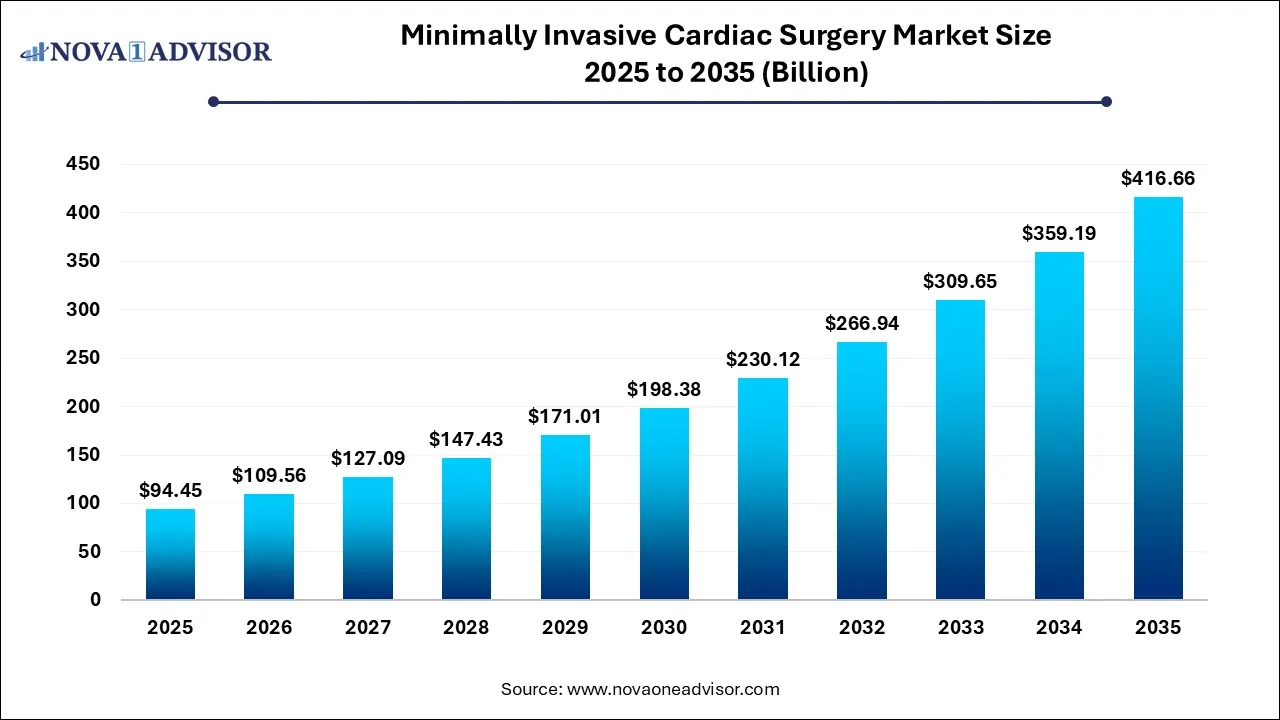
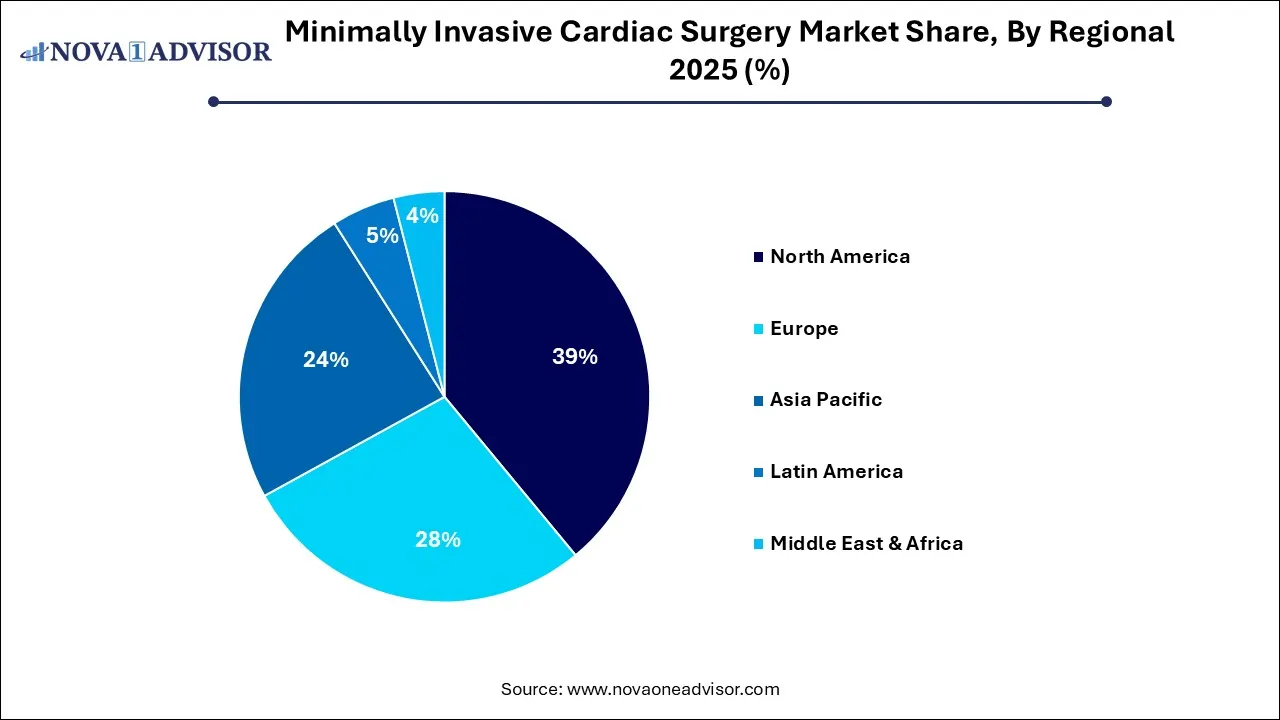
The global minimally invasive cardiac surgery market size was valued at USD 94.45 billion in 2025 and is projected to grow from USD 109.56 billion in 2026 to USD 416.66 billion by 2035, at a CAGR of 16.0% from 2026 to 2035. North America dominated the market, accounting for a revenue share of 39.0% in 2025.
Key Takeaway
- By surgery type, the robotic-assisted surgery segment dominated the market with the largest share in 2025.
- By surgery type, the thoracoscopy surgery segment is expected to grow at the fastest CAGR over the forecast period.
- By procedure type, the coronary artery bypass grafting segment dominated the market with the largest share in 2025.
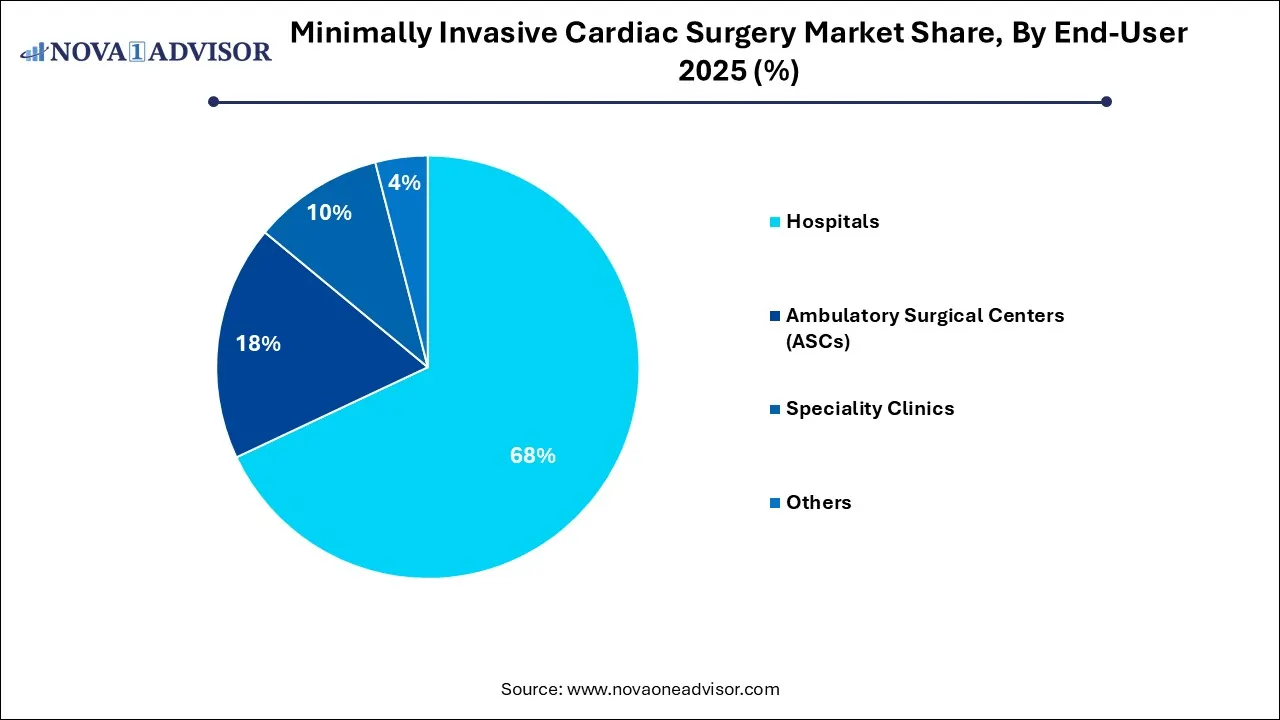
- By end user, the hospitals segment dominated the market with the largest share of 68.0% in 2025.
- By region, North America dominated the market with the largest share of 39.0% in 2025.
Market Overview
The global minimally invasive cardiac surgery (MICS) market is witnessing strong growth due to the rising adoption of advanced surgical techniques that reduce tissue trauma while delivering excellent clinical outcomes. Unlike conventional open-heart surgery, MICS uses small incisions, thoracoscopic visualization, robotic-assisted systems, and specialized instruments to perform complex cardiac procedures with faster recovery and fewer complications. The increasing prevalence of cardiovascular diseases, including coronary artery disease, valvular disorders, atrial fibrillation, and congenital heart defects, continues to drive demand for these minimally invasive procedures.
Technological advancements in robotic surgery, high-definition imaging, hybrid operating rooms, and catheter-based interventions are significantly improving surgical precision and patient outcomes. Additionally, growing patient preference for less invasive treatments, expanding clinical applications, favorable reimbursement policies, and increasing investments in surgeon training and healthcare infrastructure are supporting long-term market expansion.
Market Outlook
- Market Growth Overview: The global minimally invasive cardiac surgery market is expected to grow significantly between 2025 and 2035, driven by growing patient preference for minimally invasive procedures.
- Sustainability Trends: Sustainability trends involve the processable hybrid devices, biocompatible materials, and energy-efficient surgical systems.
- Major Investors: Major investors in the market include Medtronic, Abbott Laboratories, and Intuitive Surgical.
How is AI impacting the global minimally invasive cardiac surgery market?
Artificial intelligence (AI) is transforming the minimally invasive cardiac surgery market by enhancing surgical planning, robotic assistance, intraoperative imaging, and postoperative patient care. AI-powered imaging tools analyze CT scans, MRI, echocardiography, and angiography to create detailed 3D anatomical models, enabling surgeons to plan procedures with greater accuracy and confidence. Machine learning also improves robotic-assisted surgery by optimizing instrument navigation, motion control, and tissue recognition, resulting in greater surgical precision.
AI further supports real-time intraoperative imaging by identifying cardiac structures, assessing blood flow, and guiding surgeons during complex procedures. Following surgery, AI-enabled wearable devices and remote monitoring platforms continuously track patient recovery, detect potential complications early, and facilitate timely clinical intervention. As AI-driven predictive analytics and personalized treatment planning continue to advance, they are expected to improve clinical outcomes, enhance procedural efficiency, and accelerate the adoption of minimally invasive cardiac surgery worldwide.
Minimally Invasive Cardiac Surgery Market Report Scope
| Report Coverage | Details |
| Market Size in 2026 | USD 109.56 Billion |
| Market Size by 2035 | USD 416.66 Billion |
| Growth Rate From 2026 to 2035 | CAGR of 16.0% |
| Base Year | 2025 |
| Forecast Period | 2026 to 2035 |
| Segments Covered | By Surgery Type, By Procedure Type, By End User, By Region |
| Market Analysis (Terms Used) | Value (USD Million/Billion) or (Volume/Units) |
| Regional Scope | North America; Europe; Asia Pacific; Central and South America; the Middle East and Africa |
| Key Companies Profiled | Abbott Laboratories, Inc., Edwards Lifesciences Corp., Boston Scientific Corp., Medtronic plc, and Intuitive Surgical, Inc. |
Market Dynamics
Driver: Increasing Global Burden of Cardiovascular Diseases
The growing prevalence of cardiovascular diseases, including coronary artery disease, valvular heart disease, atrial fibrillation, and heart failure, is a major driver of the minimally invasive cardiac surgery (MICS) market. Aging populations, unhealthy lifestyles, obesity, diabetes, and hypertension continue to increase the demand for advanced cardiac interventions. MICS offers significant advantages over traditional open-heart surgery, including smaller incisions, reduced pain, faster recovery, lower infection risk, and shorter hospital stays. Continuous technological advancements and favorable reimbursement policies are further accelerating the adoption of minimally invasive cardiac procedures.
Restraint: High Capital Investment and Specialized Training Requirements
The high cost of robotic surgical systems, hybrid operating rooms, advanced imaging technologies, and specialized surgical instruments remains a major challenge for market growth. In addition, minimally invasive cardiac procedures require highly skilled surgeons and extensive training, limiting adoption in hospitals with limited resources or experienced personnel. These financial and workforce constraints continue to restrict broader market penetration, particularly in developing regions.
Opportunity: Expansion of Robotic and AI-Assisted Cardiac Surgery
Advancements in robotic-assisted surgery and artificial intelligence are creating significant growth opportunities for the MICS market. AI-powered surgical planning, enhanced robotic platforms, augmented reality, and personalized treatment approaches are improving procedural precision and patient outcomes. Furthermore, increasing investments in cardiovascular healthcare infrastructure, physician training, and hybrid operating rooms across emerging economies are expected to expand access to minimally invasive cardiac procedures and support long-term market growth.
Segmental Insights
By Surgery Type
Why did the robotic-assisted surgery segment dominate the global minimally invasive cardiac surgery market?
The robotic-assisted surgery segment dominated the market with the largest share in 2025. The dominance of the segment can be attributed to the ongoing technological innovations and better surgical precision along with a surge in preference for less invasive surgical procedures. In addition, robotic surgical systems reduce physiological hand tremors and facilitate a 360-degree range of motion, allowing precise articulation.
How did the thoracoscopy surgery segment expected to hold the fastest-growing global minimally invasive cardiac surgery market in the coming years?
The thoracoscopy surgery segment is expected to grow at the fastest CAGR over the forecast period. The growth of the segment can be credited to the increasing incidence of cardiovascular diseases (CVDs) and the transition towards video-assisted thoracoscopic surgery (VATS) technology. Also, emerging economies within the Asia-Pacific region are investing in the development of modern healthcare infrastructure.
By Procedure Type
Why did the coronary artery bypass grafting segment dominate the global minimally invasive cardiac surgery market?
The coronary artery bypass grafting segment dominated the market with the largest share in 2025. The dominance of the segment can be linked to the growing rates of heart diseases and robust patient preference for smaller incisions. The application of advanced bioengineered graft materials and endoscopic vessel harvesting techniques substantially reduces post-operative complication rates.
How did the aortic valve repair/replacement segment expected to hold the fastest-growing global minimally invasive cardiac surgery market in the coming years?
The aortic valve repair/replacement segment is expected to grow at the fastest CAGR over the forecast period. The growth of the segment can be driven by robust patient preferences for faster recovery times and an extensive aging population across the globe. The market continuously introduces smaller, more advanced valve technologies. Manufactured from durable, flexible materials such as nitinol and bovine pericardium.
By End User
Why did the hospitals segment dominate the global minimally invasive cardiac surgery market?
The hospitals segment dominated the market with the largest share in 2025. The dominance of the segment is owing to the availability of cutting-edge diagnostic equipment and financial resources to buy costly robotic systems. Also, hospitals are uniquely equipped to manage highly delicate and complex cardiac procedures, such as mitral valve repair and coronary artery bypass.
How did the ambulatory surgical center segment expected to hold the fastest-growing global minimally invasive cardiac surgery market in the coming years?
The ambulatory surgical center segment is expected to grow at the fastest CAGR over the forecast period. The growth of the segment is due to a growing transition towards outpatient care and more rapid recovery times. Healthcare players and regulatory bodies are progressively expanding coverage for ambulatory surgical center (ASC) procedures, as these facilities significantly reduce the systemic burden on healthcare infrastructure.
By Regional
Why did the North American region account for the largest share in the global minimally invasive cardiac surgery market?
North America dominated the market with the largest share in 2025. The dominance of the region can be attributed to the robust healthcare spending and ongoing transition towards robotic and outpatient surgeries. In addition, North America serves as a premier global center for medical technology, characterized by the world's highest concentration of advanced catheter-based instruments and robotic surgical platforms, such as the da Vinci system.
U.S. Global Minimally Invasive Cardiac Surgery Market Trends
The growth of the market in the country can be driven by the increasing prevalence of heart diseases among the adult population and the growing need for faster recovery times. Financial incentives from U.S. healthcare providers and Medicare for minimally invasive and robotic surgeries encourage hospitals to invest in and perform these modern procedures.
Why did the Asia-Pacific region become the fastest-growing global minimally invasive cardiac surgery market during the forecast period?
Asia Pacific is expected to grow at the fastest CAGR over the forecast period. The growth of the region can be credited to the rapid healthcare infrastructure innovations and transition towards procedures with rapid recovery times. Furthermore, developing nations in the region, particularly India, are experiencing substantial market expansion propelled by a rapidly growing medical tourism sector. This surge is primarily due to the availability of highly skilled surgical professionals.
China Global Minimally Invasive Cardiac Surgery Market Trends
The market in the country is growing due to robust government support for modernizing healthcare and a rise in aging population growth. The government in the country is actively expanding medical infrastructure, scaling the specialized training of cardiovascular surgeons, and promoting the integration of advanced medical technologies, driving country growth soon.
Why did Europe hold a notable share in the global minimally invasive cardiac surgery market?
Europe is expected to grow at a notable CAGR over the forecast period. The growth of the region can be linked to the growing burden of heart disease in major countries and technological innovations in surgical processes. The advanced, high-quality treatments are accessible to a broader patient base due to favorable government initiatives, robust public healthcare funding, and established reimbursement policies.
Germany Global Minimally Invasive Cardiac Surgery Market Trends
The growth of the market is boosted by a strong inclination towards procedures that need smaller incisions and an extensively growing population in the country. Extensive adoption of advanced, innovative surgical techniques is heavily supported by substantial investments in healthcare infrastructure and robust statutory reimbursement frameworks.
Key Players in the Global Minimally Invasive Cardiac Surgery Market
- Medtronic: A global leader that provides a broad range of surgical instruments, including valve replacement systems, ablation devices, and vessel-sealing tools designed specifically for minimally invasive procedures.
- Edwards Lifesciences: A major player specializing in structural heart disease, they develop advanced instruments and technologies for transcatheter aortic valve replacement (TAVR) and minimally invasive valve repair.
- Boston Scientific Corporation: This company produces a variety of specialized catheters, guidewires, and balloon devices designed to navigate complex cardiac anatomies through small incisions.
Recent Developments
- In March 2026, Royal Philips received U.S. Food and Drug Administration (FDA) 510(k) clearance for EchoNavigator R5.0 with DeviceGuide. This artificial intelligence (AI)-powered software aids physicians during minimally invasive mitral valve repairs. It provides real-time tracking and visualization to simplify highly complex cardiovascular procedures.
Segments Covered in the Report
This report forecasts revenue growth at country levels and provides an analysis of the latest industry trends in each of the sub-segments from 2021 to 2035. For this study, Nova one advisor, Inc. has minimally invasive cardiac surgery market.
By Surgery Type
- Robotic-assisted Surgery
- Thoracoscopy Surgery
By Procedure Type
- Aortic Valve Repair/Replacement
- Mitral Valve Repair/Replacement
- Surgical Radiofrequency Ablation for Atrial Fibrillation
- Tricuspid Valve Repair or Replacement
- Atrial Septal Defect (ASD)
- Ventricular Assist Device (VAD) Implantation
- Coronary Artery Bypass Grafting (CABG)
- Other Procedures
By End User
- Hospitals
- Ambulatory Surgical Centers (ASCs)
- Speciality Clinics
- Others
By Region
- North America
- Europe
- Asia Pacific
- Latin America
- Middle East & Africa
FAQ's

Proceed to Buy
Instant PDF delivery on confirmation

Minimally Invasive Cardiac Surgery Market Size to Hit USD 416.66 Billion by 2035
 Request Customization
 Download Sample

Get a Sample of this Report
Minimally Invasive Cardiac Surgery Market