

Neurorehabilitation Devices Market Size, Share, and Trends 2026 to 2035
 Status Published
 Category Healthcare


Content
Neurorehabilitation Devices Market Size and Growth 2026 to 2035
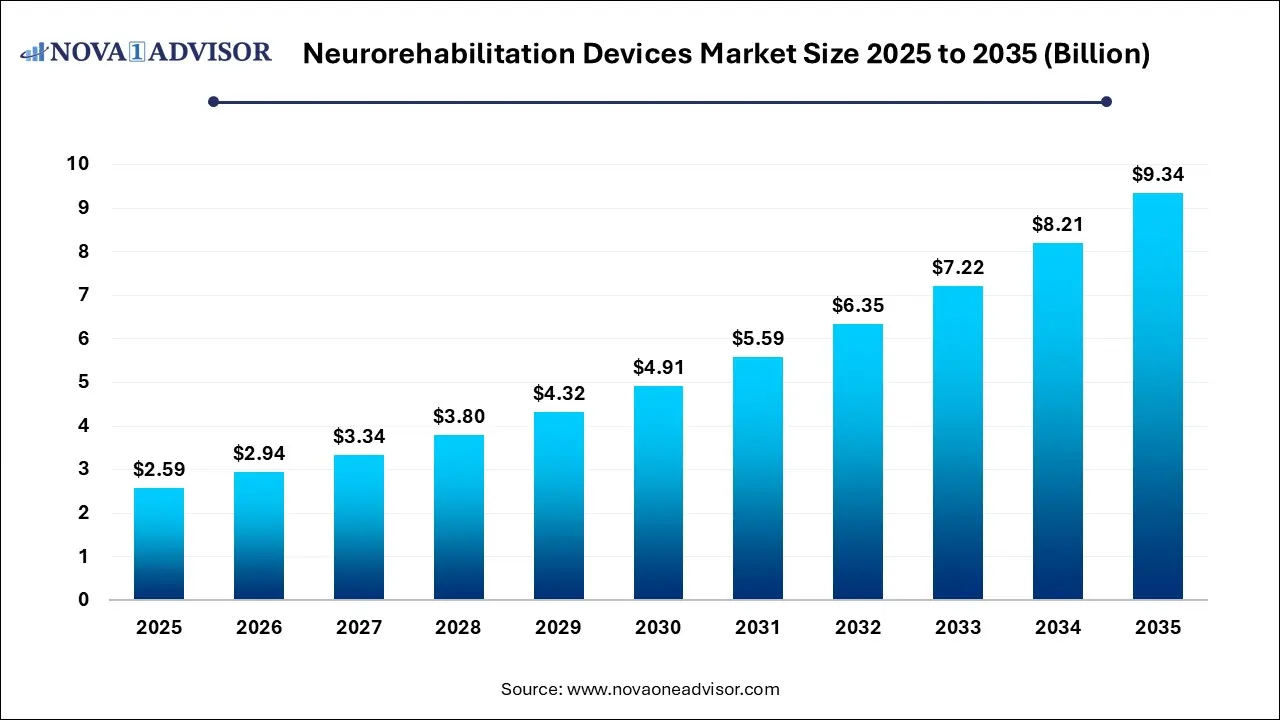
The global neurorehabilitation devices market size was valued at USD 2.59 billion in 2025 and is projected to grow from USD 2.94 billion in 2026 to USD 9.34 billion by 2035, at a CAGR of 13.7% from 2026 to 2035.
Key Takeaway
- By product, the neurorobotics segment dominated the market and accounted for the largest revenue share in 2025.
- By product, the brain computer interface segment is the fastest-growing in the market in 2025.
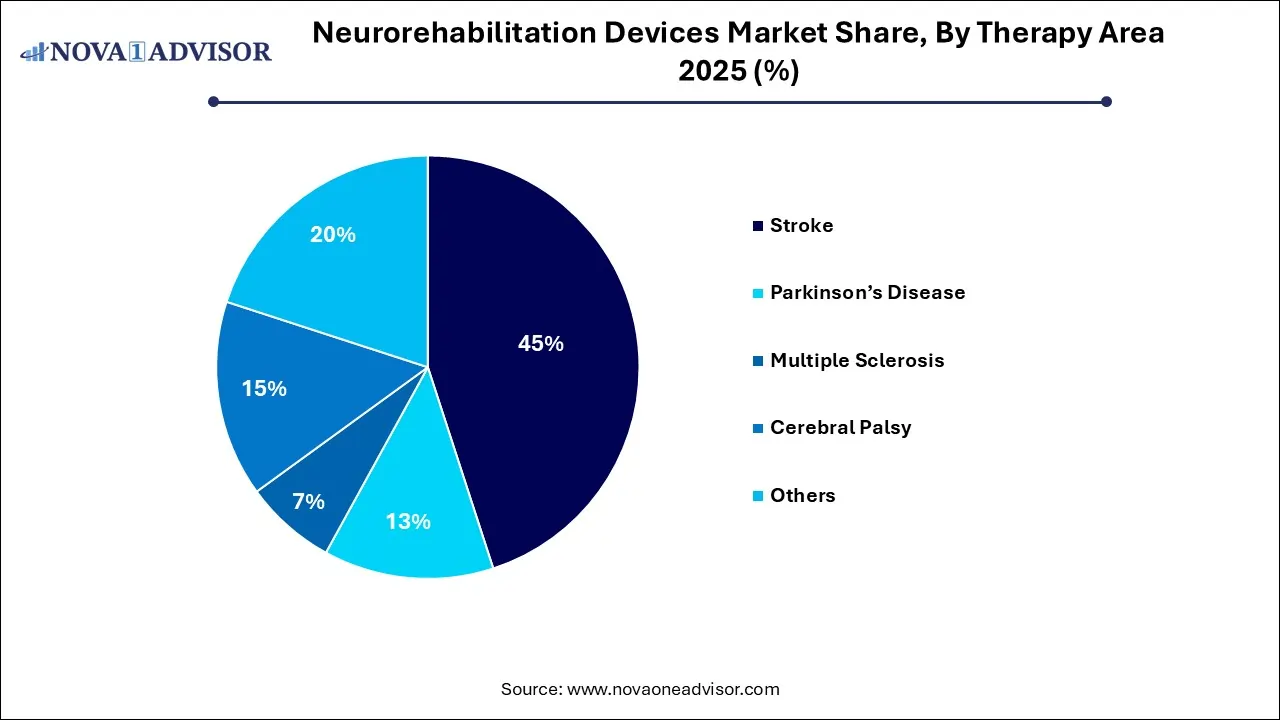
- By therapy area, the stroke segment dominated the market and accounted for the largest revenue share of 45.0% in 2025.
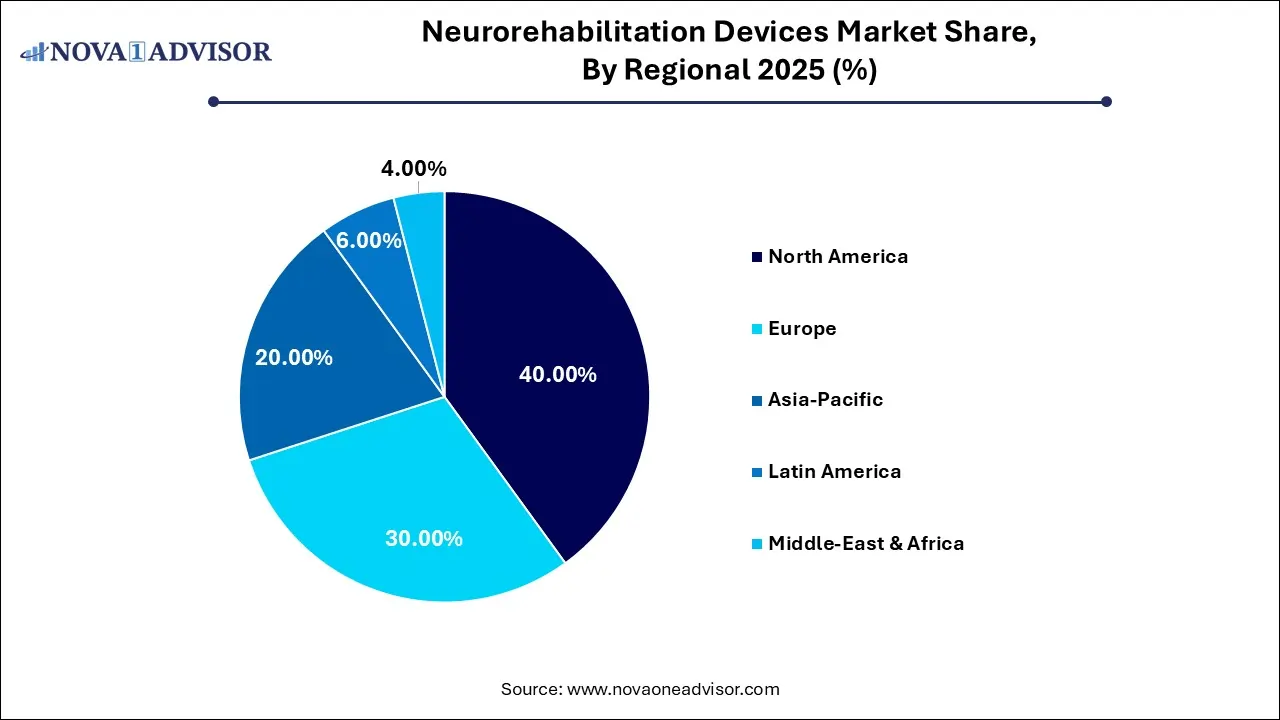
- By region, North America accounted for the largest revenue share of 40.0% in 2025.
Market Overview
The global neurorehabilitation devices market is witnessing robust growth as healthcare providers increasingly focus on improving recovery and long-term functional outcomes for patients with neurological disorders. These advanced devices, including robotic rehabilitation systems, wearable technologies, functional electrical stimulation equipment, brain-computer interfaces, and AI-powered therapy platforms, help restore mobility, balance, cognitive abilities, and independence following conditions such as stroke, Parkinson’s disease, spinal cord injury, traumatic brain injury, and multiple sclerosis.
Rising neurological disease prevalence, expanding elderly populations, and greater awareness of early rehabilitation are key factors driving market demand. Technological advancements such as artificial intelligence, virtual reality, remote patient monitoring, and cloud-connected rehabilitation solutions are transforming conventional therapy into personalized, data-driven treatment. Additionally, the growing adoption of home-based rehabilitation and tele-rehabilitation platforms is improving access to continuous care while reducing healthcare costs. With ongoing innovation, supportive government initiatives, and increasing investment in neuroengineering research, the neurorehabilitation devices market is expected to experience sustained growth worldwide.
Market Outlook
- Market Growth Overview: The global neurorehabilitation devices market is expected to grow significantly between 2025 and 2035, driven by the aging population and high prevalence of neurological disorders, integration of technological innovation, and increasing research and development and funding.
- Sustainability Trends: Sustainability trends involve tele-rehabilitation and remote monitoring, upgradable and modular hardware, energy-efficient manufacturing, and ECG compliance.
- Major Investors: Major investors in the market include Medtronic, Abbott Laboratories, Boston Scientific, Ekso Bionics, Hocoma, and Bionik Labs.
How is AI Impacting the Global Neurorehabilitation Devices Market?
AI and ML are rapidly transforming the global neurorehabilitation devices industry by shifting therapy from a one-size-fits-all model to highly personalized, data-driven recovery plans. By integrating with robotic systems to create highly personalized, data-driven recovery plans. By integrating with robotic systems and wearable sensors, these algorithms dynamically adjust rehabilitation exercises in real-time based on a patient’s exact movement quality and daily progress. ML models apply predictive analytics to forecast recovery timelines and optimize telerehabilitation for remote tracking.
Major Trends in the Neurorehabilitation Devices Market
- Increasing adoption of robotic-assisted devices for motor and gait rehabilitation.
- Growing integration of AI to deliver personalized rehabilitation programs.
- Rising use of brain-computer interfaces and wearable rehabilitation technologies.
- Expansion of virtual reality (VR), augmented reality (AR), and gamified therapy platforms.
- Greater demand for home-based rehabilitation supported by telemedicine and remote monitoring.
- Development of lightweight exoskeletons and advanced functional electrical stimulation systems.
- Increasing use of cloud-based data management and digital therapeutics.
- Stronger research collaborations and improved reimbursement for advanced rehabilitation solutions.
Neurorehabilitation Devices Market Report Scope
| Report Coverage | Details |
| Market Size in 2026 | USD 2.94 Billion |
| Market Size by 2035 | USD 9.34 Billion |
| Growth Rate From 2026 to 2035 | CAGR of 13.7% |
| Base Year | 2025 |
| Forecast Period | 2026 to 2035 |
| Segments Covered | Product, Therapy Area, Region |
| Market Analysis (Terms Used) | Value (USD Million/Billion) or (Volume/Units) |
| Regional Scope | Value (USD Million/Billion) or (Volume/Units) |
| Key Companies Profiled | Bionik Laboratories Corp., Ekso Bionics, DIH Technologies Corporation (Hocoma),Neurostyle Pte Ltd, Saebo, Inc., Neuro Device Group S.A., ReWalk Robotics, Tyromotion GmbH, Boston Scientific Corporation, DIH Technologies Corporation (Hocoma), Reha Technology AG, Medtronic plc, and MindMaze Holding SA. |
Market Driver
Rising Burden of Neurological Disorders Driving Rehabilitation Demand
The increasing prevalence of stroke, Parkinson’s disease, spinal cord injuries, traumatic brain injuries, and other neurological disorders is a major driver of the neurorehabilitation devices market. As survival rates improve, more patients require long-term rehabilitation to restore mobility, cognitive function, and independence. Advanced technologies such as robotic rehabilitation systems, wearable devices, and neuromodulation platforms are enhancing recovery outcomes, encouraging broader adoption across hospitals, rehabilitation centers, and outpatient facilities.
Market Restraint
High Costs and Limited Accessibility of Advanced Rehabilitation Technologies
The high cost of robotic rehabilitation systems, exoskeletons, brain-computer interfaces, and other advanced devices remains a key challenge for market growth. Significant investments in equipment, maintenance, software, and specialist training limit adoption, particularly in developing regions. Inadequate reimbursement policies and shortages of skilled rehabilitation professionals further restrict access to these technologies.
Market Opportunity
Growth of Home-Based and Connected Neurorehabilitation Solutions
The expanding adoption of home healthcare creates significant opportunities for the neurorehabilitation devices market. Portable rehabilitation devices integrated with AI, wearable sensors, cloud connectivity, and tele-rehabilitation platforms enable patients to continue therapy remotely while remaining under clinical supervision. These solutions improve treatment accessibility, reduce healthcare costs, and support long-term recovery, making connected home-based rehabilitation a major growth avenue for the market.
Segmental Insights
By Product
Neurorobotics Dominated the Product Segment
Neurorobotics held the largest market share due to its widespread use in rehabilitation for stroke, spinal cord injuries, Parkinson’s disease, and other neurological conditions. Robotic gait trainers, upper-limb rehabilitation systems, and exoskeletons enable repetitive, precise therapy that improves recovery while reducing therapist workload. Continuous advancements in robotics, motion sensors, and AI-powered monitoring further support the segment’s leadership.
Brain-Computer Interface (BCI) is the Fastest-Growing Segment
Brain-computer interface (BCI) technology is expected to witness the fastest growth, driven by advances in AI, neural signal processing, and wearable neurotechnology. BCIs enable patients to control assistive devices using brain signals, improving mobility and communication for individuals with severe neurological impairments. Growing commercialization, research investments, and the emergence of affordable non-invasive BCIs are accelerating market adoption.
By Therapy Area
Stroke Dominated the Application Segment
Stroke accounted for the largest share of the neurorehabilitation devices market due to the high number of patients requiring long-term rehabilitation after motor and cognitive impairments. Advanced rehabilitation devices, including robotic systems and functional electrical stimulation technologies, support faster recovery by enhancing neuroplasticity. Rising awareness of early rehabilitation and increasing investments in stroke care continue to strengthen this segment.
Parkinson’s Disease is the Fastest-Growing Application Segment
Parkinson’s disease is projected to be the fastest-growing application segment as the aging population and disease prevalence continue to rise. Wearable monitoring devices, robotic gait trainers, balance rehabilitation systems, and AI-enabled therapy platforms help improve mobility and disease management. Expanding use of digital rehabilitation and personalized treatment approaches is expected to drive significant growth during the forecast period.
By Regional
Why did the North American region account for the largest share in the Global Neurorehabilitation Devices market?
The growing geriatric population in North America, a higher risk of developing age-related neurodegenerative diseases and stroke, and increasing demand for rehabilitation. A well-established ecosystem of specialized rehabilitation centers and strong research capabilities allows for early adoption of cutting-edge therapies, including neuro-robotic systems and brain-computer interfaces.
U.S. Global Neurorehabilitation Devices Market Trends
The U.S. has been driven by wearable sensors and lightweight exoskeletons, which are enabling continuous therapy monitoring and better treatment adherence. Incorporating AI-driven biofeedback and virtual reality into their devices to improve therapy precision and reduce rehabilitation timelines.
Why did the Asia-Pacific region become the fastest-growing global veterinary point-of-care (PoC) Diagnostics Market during the forecast period?
In Asia-Pacific, the rapid urbanization and increasing disposable incomes in emerging economies have led to a massive surge in pet ownership and higher expenditure on veterinary wellness. The increased surveillance and mandated strict biosecurity programs to prevent transboundary animal diseases and ensure food safety.
China Global Neurorehabilitation Devices Market Trends
China's lightweight wearable technologies and AI-enabled brain-computer interfaces enable at-home monitoring and continuous neural repair. The digital transformation within the Chinese healthcare system and expanding neuro-rehab reimbursement schemes are facilitating greater access to advanced therapies outside of hospitals.
Why Did Europe Hold A Notable Share in the Global Neurorehabilitation Devices Market?
Europe’s increasing proportion of older adults has led to a higher incidence of neurodegenerative diseases such as Parkinson’s disease, Alzheimer’s and stroke. The favorable medical device regulatory frameworks and cross-border healthcare directives provide robust reimbursement policies for high-cost rehabilitation technologies.
Germany Global Neurorehabilitation Devices Market Trends
Germany’s strong regional shift toward integrating virtual reality gamification, and remote monitoring into therapeutic devices to allow for continuous, data-driven treatment plans. The rise in robotic exoskeletons, robotic arms, and self-guided systems is allowing therapists to deliver accurate, repetitive, and tailored training to patients recovering from strokes or spinal injuries.
Key Players in the Global Neurorehabilitation Devices Market
- Bionik Laboratories Corp.
Bionik Laboratories develops intelligent robotic solutions for upper and lower limb rehabilitation, such as their flagship InMotion systems [InMotion ARM™ | Bionik Laboratories Corp. Their devices utilize machine learning and data analytics to provide "assist-as-needed" therapy, which customizes the resistance or support based on a patient's real-time physical abilities.
- Ekso Bionics
Ekso Bionics is a recognized leader in wearable exoskeleton technology [Exoskeletons and Neurorehabilitation - Ekso Bionics. Their FDA-cleared devices, like the EksoNR, enable individuals with spinal cord injuries, strokes, and brain injuries to stand and relearn natural walking patterns
- DIH Technologies Corporation
DIH Medical is a global leader in advanced rehabilitation technology, acting as the parent company for industry pioneers such as Hocoma and Motek DIH Technology.
Recent Developments
- In December 2025, Lifeward Ltd. partnered with Verita Neuro to distribute the ReWalk Personal Exoskeleton in Mexico, Thailand, and the United Arab Emirates, targeting an estimated $1.75 billion market for spinal cord injury (SCI) recovery. The partnership utilizes an intensive in-patient training model within Verita’s rehabilitation centers, marking a shift toward a hybrid commercial strategy for global expansion.
Segments Covered in the Report
This report forecasts revenue growth at country levels and provides an analysis of the latest industry trends in each of the sub-segments from 2021 to 2035. For this study, Nova one advisor, Inc. has neurorehabilitation devices market.
By Product
- Neurorobotics
- Brain-Computer Interface
- Wearable Devices
- Non-Invasive Stimulators
- Others
By Application
- Stroke
- Parkinson’s Disease
- Multiple Sclerosis
- Cerebral Palsy
- Others
By Regional
- North America
- Europe
- Asia Pacific
- Latin America
- MEA

Proceed to Buy
Instant PDF delivery on confirmation

Neurorehabilitation Devices Market Size to Hit USD 9.34 Billion by 2035
 Request Customization
 Download Sample

Get a Sample of this Report
Neurorehabilitation Devices Market