

North American Radiation Protection Apron Market (By Type; By Material) - Industry Analysis, Share, Growth, Regional Outlook and Forecasts, 2026-2035
 Status Published
 Category Healthcare


Content
North American Radiation Protection Apron Market Size, Growth and Trends 2026 to 2035
The North American radiation protection apron market size was estimated at USD 59.63 million in 2026 and is expected to surpass around USD 114.06 million by 2035 and poised to grow at a compound annual growth rate (CAGR) of 6.7% during the forecast period 2026 to 2035.
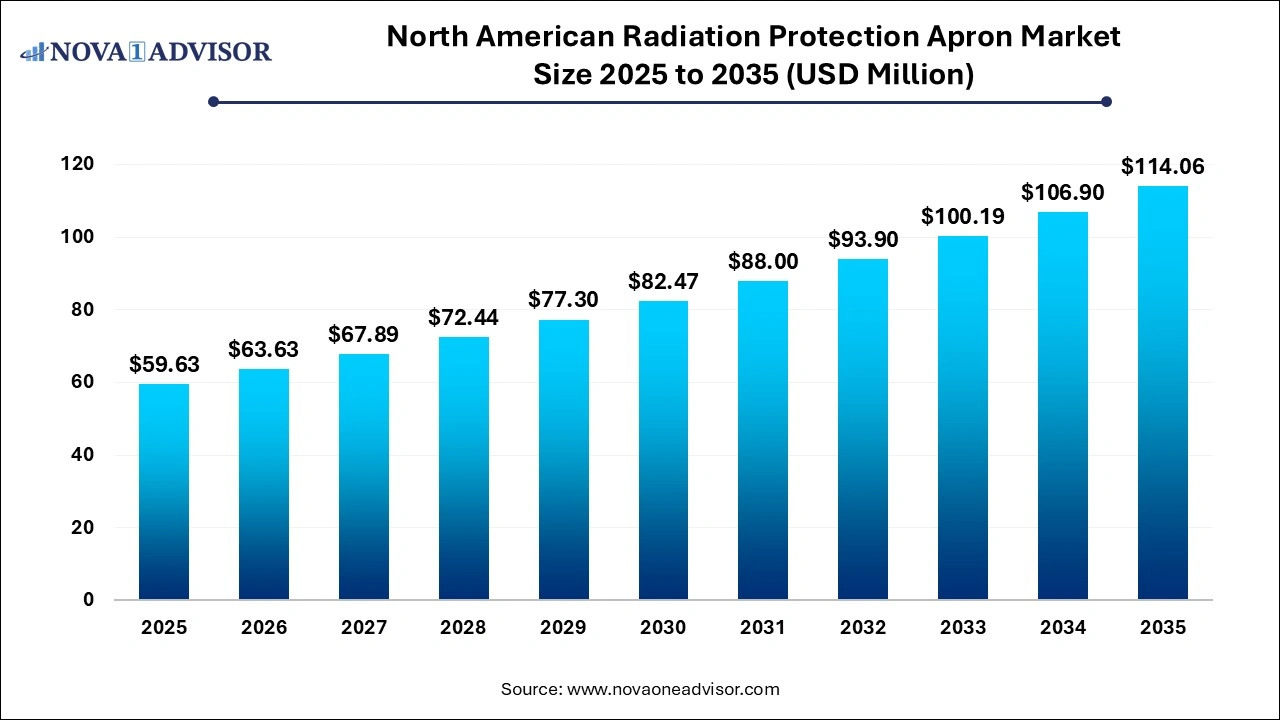
North American Radiation Protection Apron Market Outlook
- Market Growth Overview: The North American radiation protection apron market is expected to grow significantly between 2026 and 2035, driven by the rising imaging procedures, safety regulations and compliance, and increased surgical procedures.
- Sustainability Trends: Sustainability trends involve lead-free material adoption, recyclability, and environmental safety, and emerging design and comfort.
- Major Investors: Major investors in the market include Infab Corporation, Burlington Medical, AliMed, Inc., Bar-Ray Products, and Shielding International, Inc.V
COVID-19 impact on the North American radiation protection aprons market
Healthcare policies have recommended pausing elective and routine medical services, particularly surgical procedures and imaging examinations. The public is also hesitant to visit any healthcare facility for fear of being exposed to the disease. Financial hardships faced by radiology centers also contribute to the decline in imaging case volumes. This decline would lead to lesser radiology procedures conducted in the coming few months, which will lead to lesser demand for radiation protection aprons.
The COVID-19 pandemic has also impacted nuclear power and the nuclear fuel industry on both the supply and demand sides. According to the International Association for Energy Economics, the demand for electricity in the US will decline by 4.1% in 2021. These factors have negatively impacted the radiation protection aprons market during the pandemic. Many companies operating in the market have also faced disruptions in the supply chain and a decline in sales during the COVID-19 pandemic.
Report Scope of the North American Radiation Protection Apron Market
| Report Coverage | Details |
| Market Size in 2026 | USD 63.63 Million |
| Market Size by 2035 | USD 114.06 Million |
| Growth Rate From 2026 to 2035 | CAGR of 6.7% |
| Base Year | 2025 |
| Forecast Period | 2026 to 2035 |
| Segments Covered | By Type, By Material |
| Market Analysis (Terms Used) | Value (USD Million/Billion) or (Volume/Units) |
| Regional Covered | North America; Europe; Asia Pacific; Latin America; MEA |
| Key Companies Profiled | Infab Corporation, Bar-Ray Products, AliMed, Inc, Burlington Medical, Shielding International, Inc. |
North American radiation protection aprons Market Dynamics
DRIVER
Increasing number of trained radiologic technologists
Trained radiologic technologists are required to effectively operate medical imaging equipment, such as X-ray and computed tomography (CT), which are widely used for diagnostic and treatment applications in hospitals and other healthcare facilities. Radiologic technologists use personal protective equipment (PPE), such as clothing or other special equipment (including aprons), to protect themselves against exposure to ionizing radiations during the use of this medical imaging equipment. As a result, the growth in the number of radiologic technologists is expected to directly impact the medical radiation protection aprons market
RESTRAINT
No mandate for using lead aprons during dental x-ray procedures in the US
Conventionally, in dental clinics across the US, the use of lead aprons was mandated for patients to protect themselves from excessive radiation during dental X-ray procedures. However, according to the Center for Health Protection, Radiation Protection Services (RPS), as of 2016, lead aprons in dental are not mandatory for adult patients. Though the RPS has recommended providing lead aprons for patients who want to wear them during treatment procedures voluntarily, this policy change is expected to affect the demand for medical radiation protection aprons in dental clinics. Similarly, according to a report from the American Academy of Oral and Maxillofacial Radiology, the benefits of lead aprons for patients in dental radiography are minimal as compared to the benefits offered by E-speed films and rectangular collimation (rectangular collimation is used in dental clinics to reduce radiation doses for patients). With the availability of alternatives for lead aprons in dental clinics, the demand for adult medical radiation protection aprons is expected to decrease among these end users during the forecast period.
OPPORTUNIT
Recommendations for cancer screening
Governments in developed countries and primary care doctors recommend cancer screening tests for patients to detect cancer in the early stages and decrease the mortality rate. The US Preventive Services Task Force (USPSTF) recommends screening for colorectal cancer starting at 50 years of age to 75 years of age in the US as a means of preventing disease incidence and ensuring early-stage treatment. Canada has also implemented biennial colorectal cancer screening guidelines for people aged 50–74 years.
These recommendations are expected to increase the number of tests conducted in diagnostic labs. This will drive the demand for radiation protection aprons products in the coming years.
CHALLENGE
High and growing cost of lead
Lead is the most important raw material required to manufacture radiation safety accessories such as gloves, aprons, and eyewear. However, it is extensively used for other purposes such as fire protection and manufacturing lead storage batteries. Due to its increasing use in other industries, its cost is projected to increase soon. This brings up the need to develop novel raw materials. Hence, the increasing cost of lead will challenge the North American radiation protection aprons market during the forecast period.
Front protection aprons segment dominated the North American radiation protection aprons market in 2021.
Based on type, the North American radiation protection aprons market is segmented into front protection aprons, vest & skirt aprons, and other aprons. In 2020, the front protection aprons segment accounted for the largest share of this market primarily due to the wide availability and high usage of these aprons in dental clinics and hospital settings.
The lead aprons segment to witness the highest market share during the forecast period.
Based on material, the North American radiation protection aprons market is segmented into lead aprons, light lead composite aprons, and lead-free aprons. The lead aprons segment accounted for the largest share of the North American medial radiation protection aprons market in 2021. The large share of this segment can be attributed to the durability of these aprons and their efficiency in blocking radiation and protecting the body.
North American Radiation Protection Apron Market Segment Insights
By Type Insights
How did the Front Protection Aprons Segment Dominate the North American Radiation Protection Apron Market?
The front protection aprons segment is driven by the strict safety regulations and a high volume of routine diagnostic procedures; front protection aprons remain the most widely utilized shielding solution in the region. Design innovations in lead-free and lightweight composites are successfully replacing traditional heavy lead, significantly improving ergonomic comfort for healthcare workers. The rising incidence of cancer and orthopedic cases is further accelerating the demand for these modernized protective garments across clinical settings.
How did the Vest and skirt Aprons Segment Expect to Hold the Fastest-Growing North American Radiation Protection Apron Market in the Coming Years?
The vest & skirt aprons segment is driven by the ergonomic design that redistributes weight to reduce musculoskeletal fatigue. The integration of lightweight, lead-free composites and custom-fit options is further accelerating adoption among professionals performing high-volume interventional procedures. As safety standards tighten alongside rising diagnostic workloads, these two-piece systems are becoming the preferred choice for long-duration clinical use.
By Material Insights
How did the Lead Aprons Segment Account for the Largest Share in the North American Radiation Protection Apron Market?
The lead aprons segment is driven by its unmatched 90%+ radiation attenuation and proven reliability. Their long-term durability and cost-effectiveness make them the preferred standard for high-volume hospitals and dental clinics. Strict OSHA and NRC compliance requirements continue to anchor steady demand for these standardized protective solutions. The integration of ergonomic padding and adjustable designs is effectively sustaining the relevance of lead-based shielding in modern radiology.
How did the Lead-Free Aaprons Segment Expect to Hold the Fastest-Growing North American Radiation Protection Apron Market in the Coming Years?
The lead-free apron segment is driven by the shift toward lead-free aprons is accelerating as medical professionals prioritize weight reduction to prevent musculoskeletal fatigue during long-duration surgeries. Advanced composite materials now offer equivalent attenuation to lead without the environmental toxicity, aligning with stricter North American hazardous waste regulations. This transition is further fueled by the rise in complex interventional procedures that demand ergonomic, high-performance shielding.
North American Radiation Protection Apron Market Country
How did the U.S. Region Account for the Notable Share in the North American Radiation Protection Apron Market?
The U.S. region is driven by the high volume of interventional procedures and a sophisticated healthcare infrastructure that prioritizes the latest shielding technology. Adherence to strict OSHA safety mandates ensures consistent procurement of high-performance gear across all clinical settings. Industry leaders, such as Infab and Bar-Ray, are further accelerating this growth by introducing ergonomic, lead-free innovations tailored for long-duration use. The U.S. remains the primary hub for radiation safety standards and the rapid adoption of premium protective apparel.
How did the Canada Region Expect to Hold the Fastest-Growing North American Radiation Protection Apron Market in the Coming Years?
The Canada region is increasingly expanding through a robust healthcare infrastructure that prioritizes occupational safety and high-quality shielding. Strict regulatory enforcement effectively mandates the use of compliant gear across both nuclear and medical facilities, preventing significant non-compliance fines. The surge in complex interventional radiology and CT procedures is further accelerating the transition toward advanced, lightweight, and ergonomic aprons.
US was the largest regional market for North American radiation protection aprons market in 2025.
Based on country, the North American radiation protection aprons market is segmented into the US and Canada. The growth of the North American market can be attributed to increasing awareness of radiation safety, the increasing number of radiography procedures performed, and ongoing research aimed at the development of new and advanced radiation protection products. In 2021, the US accounted for the largest share of the North American radiation protection aprons market. The large share can be attributed to the increasing number of radiography procedures performed and the rising number of healthcare professionals that use radiography equipment.
Key Players in the North American Radiation Protection Apron Market
- Infab Corporation: As a leading player, Infab focuses on developing technologically advanced, durable radiation safety products and utilizes strategic partnerships to expand its market footprint.
- Bar-Ray Products: Recognized as a top manufacturer, Bar-Ray offers a wide variety of customizable, lightweight, and aerated aprons for enhanced comfort. They also provide the SmartID service, allowing customers to easily track and manage the inventory and inspection of their protective gear.
- AliMed, Inc.: AliMed holds a significant position in the market by providing a diverse portfolio of sophisticated, high-quality radiation protection apparel. They focus on enhancing patient and staff safety through advanced materials and broad product offerings.
- Burlington Medical: Burlington Medical drives the market with innovations like their XENOLITE 800 NL, which offers lightweight, lead-free, and flexible protection for medical professionals.
- Shielding International, Inc.: Shielding International contributes to the market by focusing on manufacturing high-quality, durable radiation protection apparel tailored to the needs of healthcare and industrial professionals.
Segments Covered in the Report
This report forecasts revenue growth at regional & country levels and provides an analysis of the industry trends in each of the sub-segments from 2026-2035. For this study, Nova one advisor has segmented North American Radiation Protection Apron market based on services and region:
By Type
- Front Protection Aprons
- Vest & Skirt Aprons
- Other Aprons
By Material
- Lead Aprons
- Light Lead Composite Aprons
- Lead-free Aprons
By Country
- US
- Canada

Proceed to Buy
Instant PDF delivery on confirmation

North American Radiation Protection Apron Market Size to Worth Around USD 114....
 Request Customization
 Download Sample

Get a Sample of this Report
North American Radiation Protection Apron Market