

Organ Preservation Solutions Market Size, Share, Forecast Report, 2026-2035
 Status Published
 Category Healthcare


Content
Organ Preservation Solutions Market Size and Growth 2026 to 2035
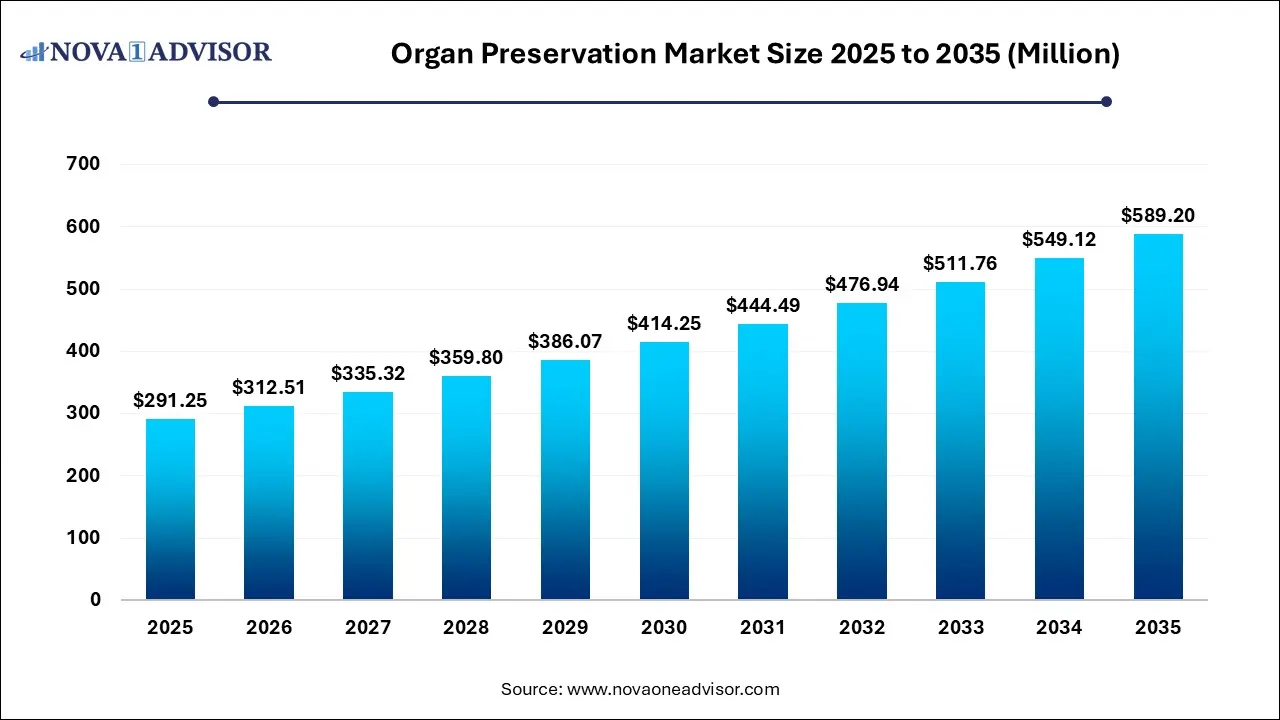
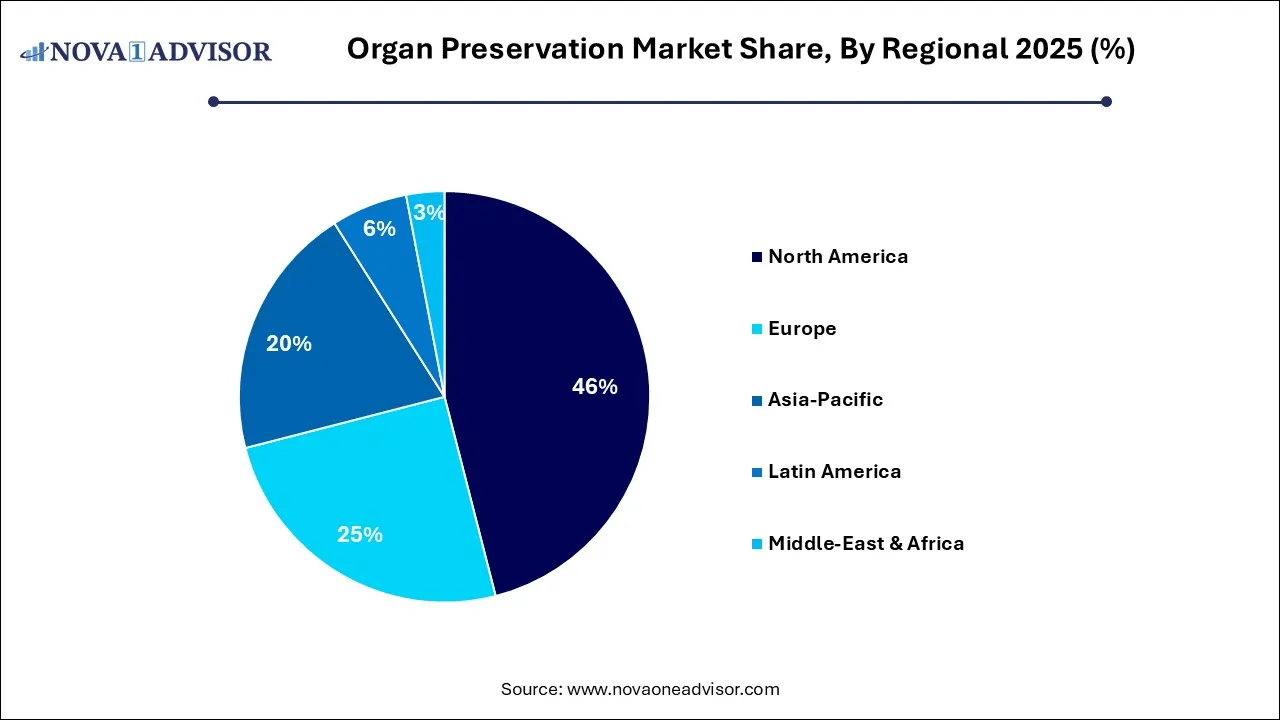
The global organ preservation solutions market size was estimated at USD 291.25 million in 2025 and is projected to hit around USD 589.20 million by 2035, growing at a CAGR of 7.3% during the forecast period from 2026 to 2035. The North America organ preservation industry accounted for the largest revenue share of 46.0% in 2025.
Market Key Takeaways
- The North America organ preservation industry accounted for the largest revenue share of 46.0% in 2025.
- The Asia Pacific organ preservation industry is expected to grow significantly over the forecast period.
- By solution, the University of Wisconsin (UW) segment held the largest market share of 36.0% in 2025.
- By organ, the kidneys segment held a leading market share in 2025.
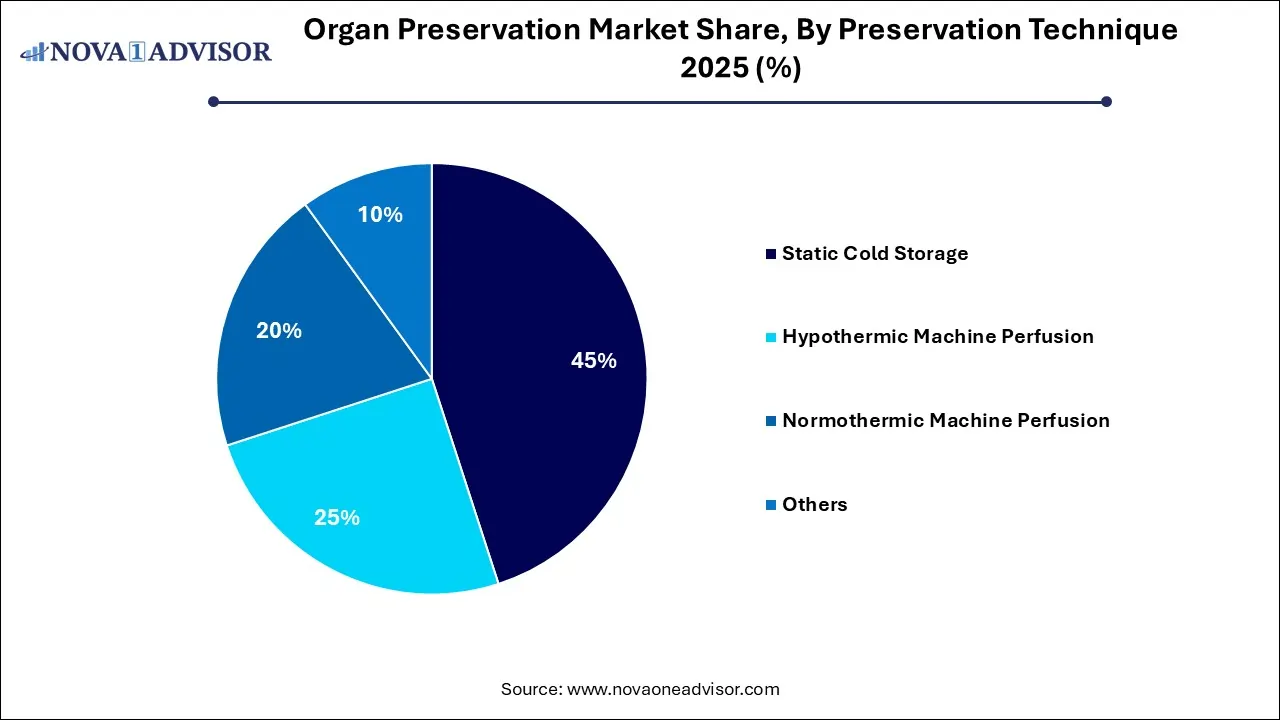
- By preservation technique, the static cold storage segment held a leading market share of 45.0% in 2025..
Market Overview
The organ preservation solutions market represents a critical segment of the global transplantation ecosystem. Organ preservation solutions are specialized chemical formulations designed to maintain the structural integrity, metabolic stability, and functional viability of donor organs between procurement and transplantation. These solutions play an essential role in reducing cellular injury during transportation and storage, thereby increasing transplant success rates and improving patient outcomes.
Over the past two decades, organ transplantation has become one of the most effective treatment options for patients suffering from end-stage organ failure. However, one of the greatest challenges facing healthcare systems worldwide is the limited availability of viable donor organs. As a result, preserving donor organs for longer durations while maintaining their functionality has become a major clinical priority.
The growing prevalence of chronic diseases such as chronic kidney disease (CKD), liver cirrhosis, heart failure, and pulmonary disorders has significantly increased transplant demand. According to global healthcare statistics, millions of patients remain on organ transplant waiting lists every year, highlighting the need for improved preservation technologies capable of extending organ viability.
Organ preservation solutions help minimize ischemic injury that occurs when blood supply is interrupted during organ retrieval and transportation. Solutions such as Viaspan, Custodiol HTK, Perfadex, and Hypothermosol have become indispensable components of modern transplantation procedures. These formulations maintain cellular hydration, electrolyte balance, and energy metabolism while reducing oxidative stress.
Recent technological advancements have expanded preservation beyond conventional static cold storage. Machine perfusion technologies now enable continuous circulation of oxygenated preservation fluids through donor organs. These approaches allow clinicians to evaluate organ functionality in real time and improve the utilization of organs that may otherwise be discarded.
As transplantation medicine advances, the market is expected to witness increasing demand for next-generation preservation fluids, AI-enabled monitoring systems, and precision preservation technologies designed to maximize graft survival and patient outcomes.
Market Outlook
- Market Growth Overview: The global organ preservation solutions market is expected to grow significantly between 2025 and 2035, driven by the surging organ transplant demand, advancements in cold and warm machine perfusion technologies, and expansion in emerging markets.
- Sustainability Trends: Sustainability trends involve a shift to machine perfusion and extended viability, digitalization, AI, predictive monitoring, and sustainable and reusable platforms.
- Major Investors: Major investors in the market include XVIVO Perfusion, TransMedics, OrganOx Limited, Paragonix Technologies, and Bridge to Life Ltd.
How is AI Transforming the Organ Preservation Solutions Market?
Artificial intelligence is emerging as a transformative force across the organ transplantation value chain. While organ preservation has traditionally relied on standardized protocols, AI-driven systems are enabling more personalized and data-driven preservation strategies.
One of the most significant applications of AI involves predictive organ viability assessment. Machine learning algorithms can analyze donor characteristics, preservation parameters, ischemic times, and physiological indicators to predict post-transplant outcomes. This capability allows clinicians to make more informed decisions regarding organ acceptance and allocation.
AI is also improving machine perfusion systems. Advanced sensors continuously monitor parameters such as oxygen consumption, perfusion pressure, metabolic activity, lactate production, and tissue temperature. AI algorithms analyze these data streams in real time to optimize perfusion conditions and identify early signs of organ deterioration.
For example, AI-powered perfusion platforms can recommend adjustments to flow rates or preservation temperatures based on organ-specific responses. Such interventions help maximize organ viability and reduce the risk of graft dysfunction.
Another emerging application involves logistics optimization. AI-driven transportation management systems can predict transit delays, recommend optimal delivery routes, and monitor preservation conditions throughout transport. These capabilities are particularly valuable when organs must travel long distances between donor and recipient hospitals.
Computer vision technologies are also being explored for tissue assessment. High-resolution imaging combined with AI algorithms can evaluate organ quality and detect subtle signs of tissue injury that may not be visible through conventional assessment methods.
As AI integration continues, organ preservation is expected to become increasingly precise, efficient, and predictive, ultimately improving transplant success rates and expanding access to donor organs.
Organ Preservation Solutions Market Report Scope
| Report Coverage | Details |
| Market Size in 2026 | USD 312.51 Million |
| Market Size by 2035 | USD 589.20 Million |
| Growth Rate From 2026 to 2035 | CAGR of 19.76% |
| Base Year | 2025 |
| Forecast Period | 2026 to 2035 |
| Segments Covered | Solution, Organ, Preservation Technique, Region |
| Market Analysis (Terms Used) | Value (USD Million/Billion) or (Volume/Units) |
| Regional Scope | North America; Europe; Asia Pacific; Central and South America; the Middle East and Africa |
| Key Companies Profiled | XVIVO; TransMedics, Inc.; 21st Century Medicine; Bridge to Life Ltd.; Preservation Solutions, Inc.; Global Transplant Solutions; Organ Recovery Systems; CryoLife, Inc. (Artivion, Inc); Paragonix Technologies, Inc (Getinge) |
Segmental Insights
By Solution
How did the University of Wisconsin segment dominate the Global Organ Preservation Solutions market?
The University of Wisconsin segment is driven by dominance in organ preservation by utilizing a high-potassium, low-sodium intracellular formulation paired with impermeants, such as latipinnate, to effectively prevent cellular swelling. The despite rises of dynamic machine perfusion alternatives, UW solution’s unmatched compatibility with traditional static cold storage ensures its ongoing financial and operational leadership within the transplant sector.
How did the perfadex segment expected to hold the fastest-growing Global Organ Preservation Solutions market in the coming years?
The perfadex segment is driven by pulmonary transplantation by utilizing an endothelium-rich formulation that minimizes reperfusion injury and preserves lung tissue integrity during long-distance transportation. By introducing a premixed formula that simplifies operating room preparation, this modern iteration successfully minimizes handling error and solidifies Perfixx as the global clinical standard for lung preservation.
By Organ
How did the kidney segment dominate the Global Organ Preservation Solutions market?
The kidney segment is driven by the continuous clinical need, propelled by the global rise of chronic kidney diseases and end-stage renal diseases, which place millions on waiting lists and position transplantation as the preferred therapeutic pathway. To meet this demand, innovations in preservation fluids, such as the University of Wisconsin solution, are paired with advanced transport devices to successfully extend organ viability times.
How did the heart segment expected to hold the fastest-growing Global Organ Preservation Solutions market in the coming years?
The heart segment is driven by the continuous pumping of warm, nutrient-rich blood to keep the heart beating ex-vivo and significantly reduce ischemic injury. This advanced method, supported by reportable organ care systems, allows clinicians to monitor the heart’s metabolic function during transport and safely utilize marginal donor organs that traditional static cold storage would reject.
By Preservation Technique
How did the static cold storage segment dominate the Global Organ Preservation Solutions market?
The static cold storage segment is driven by the global logistical baseline for organ transplantation due to its remarkable cost-effectiveness compared to expensive, complex machine perfusion systems. The method requires no specialized mechanical training or intricate setups, relying instead on a simple protocol of flushing the organ with cold preservation solutions and maintaining a stable low-temperature environment.
How did the normothermic machine perfusion segment expected to hold the fastest-growing Global Organ Preservation Solutions market in the coming years?
The normothermic machine perfusion segment is driven by allowing medical teams to assess real-time metabolic function and verify organ viability before surgical implantation. The continuous flow of oxygenated solution actively repairs ischemia-reperfusion flow of oxygenated solution actively repairs ischemia-reperfusion tissue damage, significantly reducing delayed graft function rates. This dynamic preservation capability successfully sustains marginal or extended-criteria donor organs, dramatically expanding the global pool of available tissue.
By Regional
How did the North America region account for the largest share in the Global Organ Preservation Solutions market?
North America is driven by the massive patient demographic suffering from chronic kidney and liver diseases, which drives exceptionally high transplant waiting lists. This continuous clinical demand is supported by an advanced medical infrastructure featuring specialized transplant centers, elite research institutions, and highly established organ procurement networks.
U.S. Global Organ Preservation Solutions Market Trends
The U.S. is navigating severe capacity crunches by actively circulating oxygenated fluids to extend organ viability. New CMS payment bundles that cover ex-vivo perfusion disposables effectively remove financial barriers and incentivize widespread hospital adoption. Furthermore, leading innovators, such as Paragonix Technologies, under Getinge, have revolutionized logistics by launching advanced, portable transport systems that guarantee monitored thermal control and robust mechanical protection during transit.
How did the Asia-Pacific region become the fastest-growing Global Organ Preservation Solutions Market during the forecast period?
Asia Pacific’s heavy government and private investments are aimed at modernising healthcare infrastructure and establishing specialized regional transplant centers. The rising geriatric demographic and higher rates of end-stage renal and cardiovascular diseases are generating an unprecedented demand for life-saving organ transplants.
China Global Organ Preservation Solutions Market Trends
China’s successfully phasing out historical practices and transitioning to a voluntary, donation-based system that aligns with global World Health Organization benchmarks. While traditional static cold storage remains the dominant and most cost-effective logistical method during transit, the domestic market is experiencing a rapid rise in the adoption of dynamic hypothermic and normothermic machine perfusion techniques to maximize organ viability.
How did Europe Hold A Notable Share in the Global Organ Preservation Solutions Market?
Europe’s transplant centers pioneer the clinical adoption of maintaining organ tissue integrity over long transit distances. European transplant centers pioneer the clinical adoption of cutting-edge normothermic machine perfusion to successfully extend viability windows and utilize marginal organs for an aging demographic suffering from chronic heart and renal failure.
Germany Global Organ Preservation Solutions Market Trends
Germany’s strong transition toward advanced hypothermic and normothermic machine perfusion systems to circulate oxygenated solutions and expand the usable donor pool. To support these dynamic setups, both established biopharma players and startups are investing heavily in novel preservation fluid formulations designed to mitigate cell damage and ischemia-reperfusion injuries.
Key Players in the Global Organ Preservation Solutions Market
- Viaspan
Viaspan acts as a gold-standard reference solution for static cold storage. Its unique composition prevents cellular swelling and minimizes oxidative damage during transit, which dramatically improves post-transplant function and organ survival rates.
- Custodiol HTK
Custodiol HTK (Histidine-Tryptophan-Ketoglutarate) is favored in complex transplant procedures for its low viscosity and specific electrolyte balance. Because of these properties, organs can be continuously protected from ischemia with a single flush, significantly reducing the risk of reperfusion injury.
- Renograf
Renograf contributes to the market by providing a highly specific, reliable preservation medium used for the flushing and storage of delicate donor organs. It aids in rapidly cooling the tissues and stabilizing cellular membranes, making it a critical component of multi-organ recovery protocols.
Segments Covered in the Report
This report forecasts revenue growth at country levels and provides an analysis of the latest industry trends in each of the sub-segments from 2021 to 2035. For this study, Nova one advisor, Inc. has organ preservation solutions market.
By Solution
- Viaspan
- Custodiol HTK
- Renograf
- Hypothermosol
- Perfadex
- Lifor
- HBS Solution
- siRNA Transplant Solutions
- Others
By Preservation Technique
- Hypothermic Perfusion Preservation
- Static Cold Storage
- Others
By Region
- North America
- Europe
- Asia-Pacific
- Latin America
- Middle East & Africa (MEA)

Proceed to Buy
Instant PDF delivery on confirmation

Organ Preservation Solutions Market Size to Hit USD 589.20 Million by 2035
 Request Customization
 Download Sample

Get a Sample of this Report
Organ Preservation Solutions Market