

Orthopedic Trauma Devices Market Size, Share, and Trends 2026 to 2035
 Status Published
 Category Healthcare


Content
Orthopedic Trauma Devices Market Size and Growth 2026 to 2035
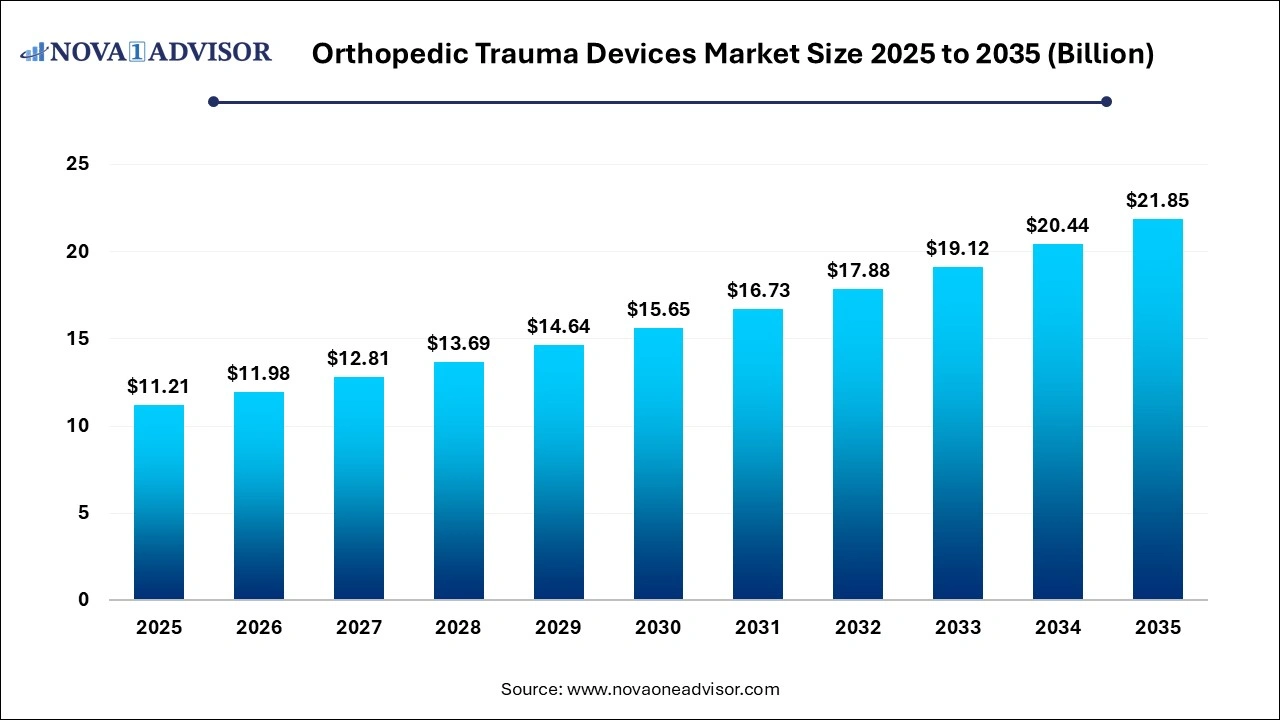
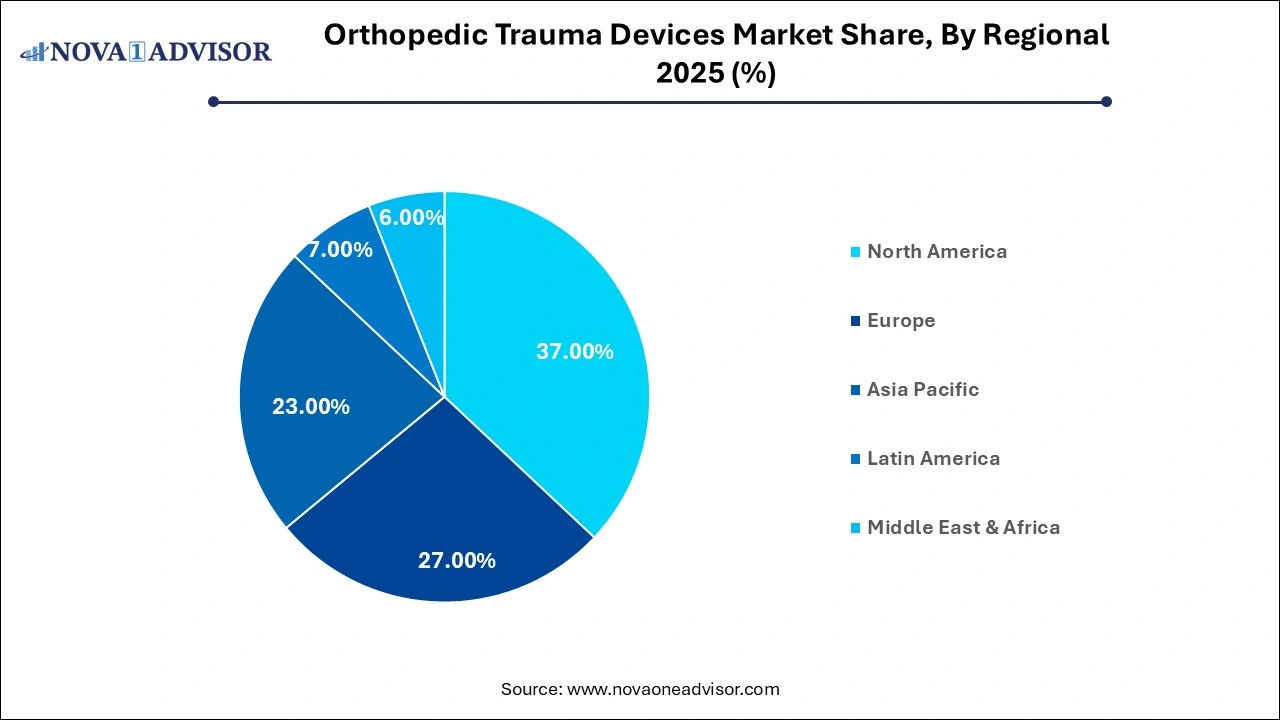
The global orthopedic trauma devices market size was valued at USD 11.21 billion in 2025 and is projected to grow from USD 11.98 billion in 2026 to USD 21.85 billion by 2035, at a CAGR of 6.9% from 2026 to 2035. North America dominated the market, accounting for a revenue share of 37.0% in 2025.
Key Takeaway
- By application, the fracture fixation segment dominated the market with the largest share in 2025.
- By application, the joint reconstruction segment is expected to grow at the fastest CAGR over the forecast period.
- By device type, the plates segment dominated the market with the largest share in 2025.
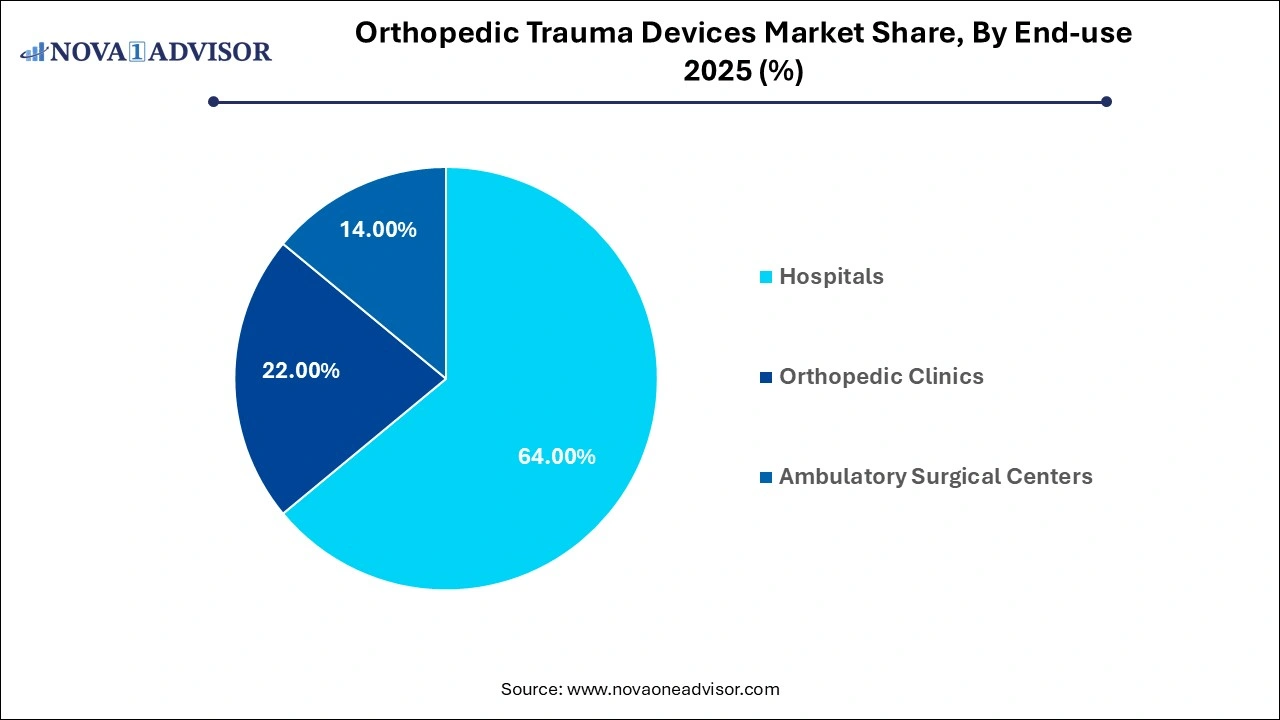
- By end use, the hospitals segment dominated the market with the largest share of 64.0% in 2025.
- By region, North America dominated the market with the largest share of 37.0% in 2025.
Market Overview
The global orthopedic trauma devices market comprises medical technologies used to stabilize, align, repair, and reconstruct bones following traumatic injuries. Key products include plates, screws, intramedullary nails, and external fixation systems, serving applications ranging from routine fractures and sports injuries to complex trauma, osteoporotic fractures, and limb reconstruction.
Market demand is supported by road accidents, falls, sports-related injuries, workplace incidents, and the growing elderly population, where reduced bone density increases fracture risk. Treatment requirements vary considerably, creating demand for both standard fixation products and specialized implants designed for complex anatomical and clinical conditions.
Technological advancement is increasingly influencing the market. Variable-angle locking plates, advanced instrumentation, 3D imaging, digital surgical planning, navigation, robotics, and AI-enabled tools are helping improve implant positioning, surgical precision, and workflow efficiency. Manufacturers are also shifting toward integrated product platforms that combine implants, instruments, and digital capabilities.
From a competitive perspective, the market includes major orthopedic manufacturers and specialized trauma companies. Leading participants such as DePuy Synthes, Stryker, Zimmer Biomet, Smith+Nephew, B. Braun, Orthofix, Globus Medical, Acumed, and Arthrex are expanding their portfolios through product innovation, specialized fixation systems, and broader trauma solutions. Overall, growth is being shaped by rising trauma incidence, aging demographics, technological innovation, and increasing demand for clinically versatile fixation solutions.
Market Outlook
- Market Growth Overview: The global orthopedic trauma devices market is expected to grow significantly between 2025 and 2035, driven by the growing adoption of innovative fixation technologies.
- Sustainability Trends: Sustainability trends involve growing adoption of sustainable and bioresorbable materials.
- Major Investors: Major investors in the market include DePuy Synthes (Johnson & Johnson), Stryker Corporation, Zimmer Biomet, Smith+Nephew, and Orthofix Medical Inc.
How is AI Impacting The Global Orthopedic Trauma Devices Market?
Artificial intelligence (AI) is revolutionizing the market by transitioning care from manual fracture fixation to data-driven accuracy. Major impacts include 3D patient-specific implant modeling and automated fracture diagnostics. Furthermore, deep learning algorithms autonomously process standard radiological scans to generate patient-specific 3D structural variants, effectively cutting the need for manual editing.
AI is also becoming part of navigation and robotic-assisted orthopedic workflows, helping surgeons interpret images and identify anatomical landmarks. These developments indicate a broader shift toward data-driven and digitally integrated orthopedic procedures.
Looking ahead, AI could enable more personalized trauma care and predictive monitoring by combining imaging, surgical, and patient data. However, adoption will depend on clinical validation, regulatory compliance, data quality, interoperability, cybersecurity, and surgeon confidence. Overall, AI is emerging as an enabling technology that enhances clinical decision-making rather than replacing orthopedic expertise.
Orthopedic Trauma Devices Market Report Scope
| Report Coverage | Details |
| Market Size in 2026 | USD 11.98 Billion |
| Market Size by 2035 | USD 21.85 Billion |
| Growth Rate From 2026 to 2035 | CAGR of 6.9% |
| Base Year | 2025 |
| Forecast Period | 2026 to 2035 |
| Segments Covered | Application, Device Type, End User, Region |
| Market Analysis (Terms Used) | Value (USD Million/Billion) or (Volume/Units) |
| Regional Scope | North America; Europe; Asia Pacific; Central and South America; the Middle East and Africa |
| Key Companies Profiled | Invibio (UK), BIOTEK (India), DePuy Synthes Companies, Ortho Max Manufacturing Company Pvt. Ltd., Auxein Medical (India), Stryker, Johnson & Johnson Services, Inc. (US), Smith & Nephew, MEDTRONIC, B. Braun Melsungen AG, Zimmer Holding Inc, Integra LifeSciences Corporation, and others |
Market Driver – Rising Incidence of Traumatic and Fragility Fractures
The growing burden of traumatic and fragility fractures is a major structural driver of the orthopedic trauma devices market. Road accidents, falls, sports injuries, workplace incidents, and other trauma events continue to generate demand for fracture fixation products. At the same time, population aging is increasing the prevalence of fragility fractures involving the hip, wrist, pelvis, and proximal humerus.
The impact on device demand extends beyond fracture volume. Complex injuries often require specialized plates, screws, intramedullary nails, external fixators, and staged procedures. As surgical access and trauma-care capabilities improve, more patients are receiving operative fixation, supporting continued demand for increasingly sophisticated orthopedic trauma solutions.
Market Restraint – High Device Costs and Complex Reimbursement
High costs and varying reimbursement policies can limit the adoption of advanced orthopedic trauma devices, particularly in price-sensitive healthcare systems. Premium fixation systems may require specialized implants, instrumentation, imaging technologies, and trained surgical teams, increasing the overall treatment cost.
Hospitals must also balance clinical benefits against budget constraints and inventory requirements. Reimbursement differences between countries can further create uneven adoption. Consequently, manufacturers increasingly need to demonstrate measurable value through shorter procedures, improved fixation outcomes, fewer complications, workflow efficiency, and optimized inventory management.
Market Opportunity – Expansion of Advanced Trauma Care in Emerging Economies
The expansion of trauma-care infrastructure in emerging economies presents significant growth opportunities. Increasing urbanization, motorization, healthcare investment, specialist availability, and improvements in emergency services are enabling more trauma patients to receive advanced surgical treatment.
Asia-Pacific, Latin America, and parts of the Middle East offer particularly attractive opportunities. Manufacturers can target these markets through cost-efficient implants, modular fixation systems, simplified instrumentation, local manufacturing, regional distribution networks, and surgeon-training programs.
Countries such as India, China, Brazil, Mexico, and Gulf-region economies can become important growth markets as hospitals expand their orthopedic capabilities. Success will depend on competitive pricing, regulatory access, reimbursement, surgeon education, and partnerships with local healthcare providers.
Segmental Insights
By Application
Why did the fracture fixation segment dominate the global orthopedic trauma devices market?
The fracture fixation segment dominated the market with the largest share in 2025. The dominance of the segment can be attributed to the increasing incidence of road accidents and technological innovations in internal fixators such as plates and nails. In addition, the shift toward lightweight, biocompatible titanium alloys and bioabsorbable or biodegradable implants effectively reduces long-term patient complications, driving segment growth soon.
How did the joint reconstruction segment expected to hold the significantly growing global orthopedic trauma devices market in the coming years?
The joint reconstruction segment is expected to grow at the fastest CAGR over the forecast period. The growth of the segment can be credited to the increasing incidence of osteoarthritis, surge in global geriatric population, and cutting-edge 3D-printed surgical tools adoption. Rising global obesity rates create substantial mechanical stress on weight-bearing joints, propelling structural degeneration among younger populations, requiring an earlier demand for surgical interventions.
By Device Type
Why did the plates segment dominate the global orthopedic trauma devices market?
The plates segment dominated the market with the largest share in 2025. The dominance of the segment can be linked to the increasing trauma cases, surge in elderly population susceptible to osteoporotic fractures, and innovations such as bioresorbable designs. The development of anatomically contoured plates, variable-angle locking mechanism systems, and low-profile designs has significantly enhanced surgical fit and improved clinical outcomes.
How did the screws segment expected to hold the significantly growing global orthopedic trauma devices market in the coming years?
The screws segment is expected to grow at the fastest CAGR over the forecast period. The growth of the segment can be driven by the increasing prevalence of road traffic accidents and ongoing technological transition towards variable-angle locking designs. The use of color-coded, specialized instrumentation and dedicated screw insertion sets effectively reduces overall operative duration and minimizes procedural risks.
By End Use
Why did the hospitals segment dominate the global orthopedic trauma devices market?
The hospitals segment dominated the market with the largest share in 2025. The dominance of the segment is owing to the surge in the incidence of emergency cases and the presence of advanced surgical infrastructure in major regions. Furthermore, hospitals function as the primary centers equipped with advanced surgical suites, intensive care units, and diagnostic imaging modalities essential for the management of complex, multi-fragmentary fractures.
How did the ambulatory surgical centers segment expected to hold the significantly growing global orthopedic trauma devices market in the coming years?
The ambulatory surgical centers segment is expected to grow at the fastest CAGR during the study period. The growth of the segment is due to growing patient preference for low-cost procedures and growing implementation of favorable insurance policies. Additionally, patients favor outpatient care due to its rapid administrative procedures, reduced risk of nosocomial infections, and the enhanced convenience offering within a domestic environment.
By Regional
Why did the North American region account for the largest share in the global orthopedic trauma devices market?
North America dominated the market with the largest share in 2025. The dominance of the region can be attributed to the increasing geriatric population prone to osteoporosis and fractures and strong healthcare spending. In addition, substantial regional capital investment toward medical research, the systemic modernization of hospital trauma centers, and the development of advanced ambulatory care infrastructure can drive market growth soon.
U.S. Global Orthopedic Trauma Devices Market Trends
The growth of the market in the country can be driven by the growing healthcare expenditure and strong presence of cutting-edge hospital infrastructure. Also, favorable reimbursement policies and comprehensive coverage frameworks boost the rapid adoption and utilization of premium internal and external fixation systems.
Why did the Asia-Pacific region become the fastest-growing global orthopedic trauma devices market during the forecast period?
Asia Pacific is expected to grow at the fastest CAGR over the forecast period. The growth of the region can be credited to the increasing number of road traffic accidents and the growing elderly population prone to osteoporosis. Furthermore, an expanding middle-class population enables a greater portion of the population to access private healthcare services and invest in premium internal and external fixation devices.
China Global Orthopedic Trauma Devices Market Trends
The market in the country is growing due to the increasing incidence of road traffic accidents and growing hospital infrastructure in major cities. Moreover, driven by state-backed healthcare initiatives, domestic manufacturers are expanding production capacities and optimizing cost structures, hence enhancing local accessibility to fixators.
Key Players in the Global Orthopedic Trauma Devices Market
- B. Braun Melsungen AG (Aesculap): A major European player that designs precision computer-assisted surgical guidance systems and high-quality local trauma fixation devices.
- Orthofix Medical Inc.: A recognized specialist in limb reconstruction, adult and pediatric complex trauma, external fixation, and specialized upper extremity plating systems.
- Medtronic plc: It leverages its strong footprint in spine and neurosurgery to drive advanced trauma implants, biologics, and UNIBRAZE titanium osteosynthesis plates.
Recent Developments
- In May 2026, Stryker (SYK) officially announced the European launch of its Pangea Plating System, a specialized anatomical plating platform engineered to address a comprehensive range of complex bone fracture patterns. In conjunction with this rollout, the first clinical procedure using the system in Europe was successfully completed at St. George's University Hospital in London.
Segments Covered in the Report
This report forecasts revenue growth at country levels and provides an analysis of the latest industry trends in each of the sub-segments from 2021 to 2035. For this study, Nova one advisor, Inc. has orthopedic trauma devices market.
By End User
- Hospitals
- Orthopedic Clinics
- Ambulatory Surgical Centers
By Application
- Fracture Fixation
- Joint Reconstruction
- Spinal Surgery
- Soft Tissue Repair
By Device Type
- Plates
- Screws
- Nails
- External Fixators
By Region
- North America
- Europe
- Asia-Pacific
- Latin America
- Middle East & Africa (MEA)
FAQ's

Proceed to Buy
Instant PDF delivery on confirmation

Orthopedic Trauma Devices Market Size to Hit USD 21.85 Billion by 2035
 Request Customization
 Download Sample

Get a Sample of this Report
Orthopedic Trauma Devices Market