

Otoscope Market Size and Growth 2026 to 2035
 Status Published
 Category Healthcare


Content
Otoscope Market Size and Growth 2026 to 2035
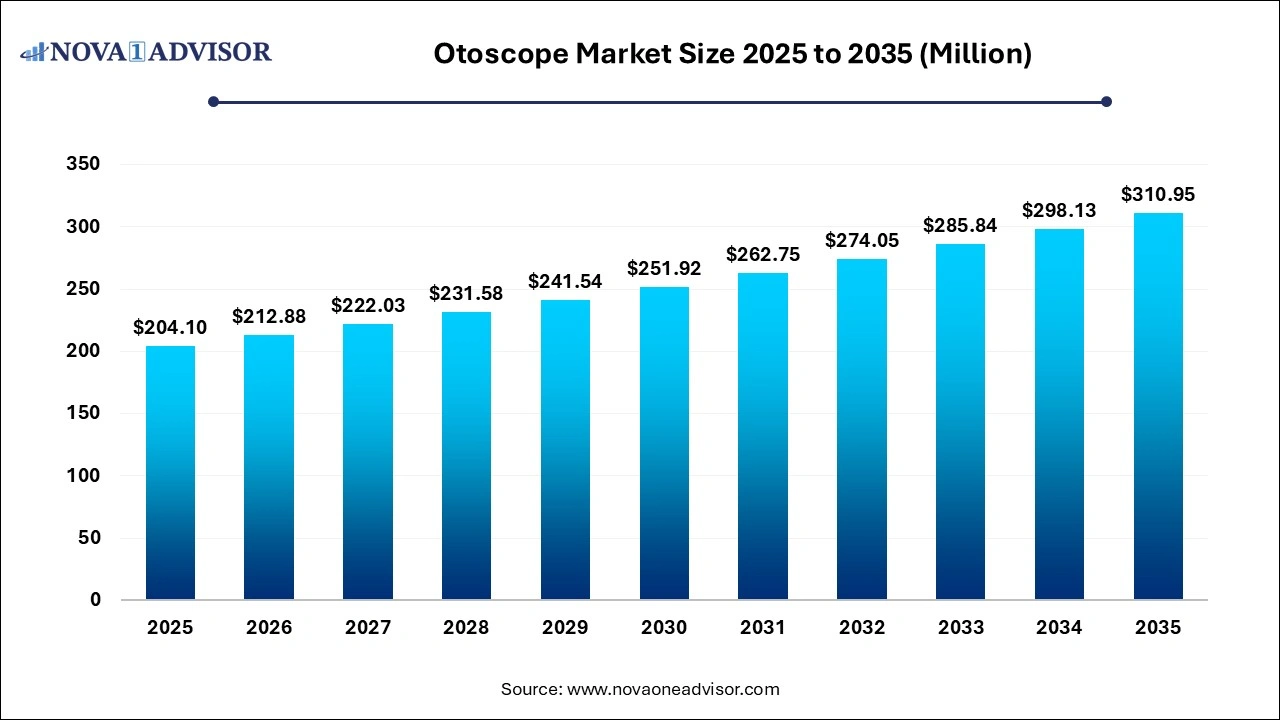
The global otoscope market size was valued at USD 204.10 million in 2025 and is projected to grow from USD 212.88 million in 2026 to USD 310.95 billion by 2035, at a CAGR of 4.3% from 2026 to 2035.
Key Takeaways
- By type, the pocket otoscope segment dominated the market with the largest share in 2025.
- By type, the video otoscope segment is expected to grow at the fastest CAGR over the forecast period.
- By modality, the wired digital segment dominated the market with the largest share in 2025.
- By end user, the hospital segment dominated the market with the largest share in 2025.
- By region, North America dominated the market with the largest share in 2025.
Market Overview
The global Otoscope Market includes devices used to examine the external ear canal and tympanic membrane across primary care, pediatrics, emergency medicine, ENT clinics, hospitals, and specialized ear-care settings. Major product categories include pocket, full-sized, and video otoscopes, with technologies evolving from conventional optical instruments toward LED illumination, high-definition imaging, digital recording, and wireless connectivity.
Digital and video otoscopes are transforming the market by enabling clinicians to capture, store, share, and compare ear images. These capabilities are particularly valuable in pediatric care, telemedicine, remote consultations, and specialist referrals, where clear visualization and documentation can support more efficient clinical assessment.
The market is also expanding into community screening, rural healthcare, emergency settings, and home-based care through portable and wireless devices. As a result, competition is shifting from basic optical performance toward image quality, portability, connectivity, interoperability, software integration, AI-assisted assessment, cybersecurity, consumables, and total cost of ownership.
Market Outlook
- Market Growth Overview: The global otoscope market is expected to grow significantly between 2025 and 2035, driven by the surge in the elderly population across the globe.
- Sustainability Trends: Sustainability trends involve growing emphasis on manufacturing and energy-efficient LED tech.
- Major Investors: Major investors in the market include HEINE Optotechnik, Rudolf Riester (Halma plc), American Diagnostic Corporation, Midmark Corporation, and Olympus Corporation.
How is AI Impacting The Global Otoscope Market?
Artificial intelligence (AI) is reshaping the market by transitioning the early exam towards digital, smart, and cloud-connected diagnostics. AI algorithms can analyze images captured by video and pocket otoscopes. Furthermore, automated image categorization improves clinical decision-making, which reduces manual review times and supports high-volume pediatric and primary care environments.
Major Trends in the Otoscope Market
- Transition from optical to digital otoscopy: More devices are incorporating cameras and software for image capture, storage, and sharing.
- Rapid growth of video otoscopes: High-resolution video enables clinicians to view the ear on larger displays and preserve examination records.
- Wireless connectivity: Bluetooth and Wi-Fi-enabled systems are improving portability and facilitating telemedicine workflows.
AI-assisted ear-disease detection: Machine learning is increasingly being incorporated into digital otoscopy platforms. - Growth of pediatric applications: The need for better visualization and objective assessment of childhood ear infections is encouraging technology adoption.
Otoscope Market Report Scope
| Report Coverage | Details |
| Market Size in 2026 | USD 212.88 Million |
| Market Size by 2035 | USD 310.95 Million |
| Growth Rate From 2026 to 2035 | CAGR of 4.3% |
| Base Year | 2025 |
| Forecast Period | 2026 to 2035 |
| Segments Covered | Type, Modality, End-user, Region |
| Market Analysis (Terms Used) | Value (USD Million/Billion) or (Volume/Units) |
| Regional Scope | North America; Europe; Asia Pacific; Central and South America; the Middle East and Africa |
| Key Companies Profiled | 3M; Welch Allyn, Inc.; American Diagnostic Corporation; Orlvision GmbH; SyncVision Technology Corporation; Rudolf Riester GmbH; Heine Optotechnik; Mindmark Corporation; Olympus Corporation; Inventis SRL; Prestige Medical; GF Health Products, Inc; CellScope, Inc. |
Market Driver – Rising Burden of Ear Infections and Demand for Early Diagnosis:
The high prevalence of ear infections, particularly among children, is driving continued demand for otoscopes across pediatric clinics, primary care, urgent-care centers, emergency departments, and ENT practices. The need for clear tympanic-membrane visualization also supports adoption of improved optical and digital otoscopes, while AI-assisted examination could further strengthen demand for advanced systems.
Market Restraint – Diagnostic Variability and Cost of Advanced Digital Systems:
Conventional otoscopes remain affordable, durable, and widely available, creating long replacement cycles. Digital otoscopes can require higher investment in cameras, software, connectivity, maintenance, and training. Image quality can also be affected by cerumen, patient movement, positioning, and illumination, creating challenges for reliable digital and AI-assisted interpretation.
Market Opportunity – AI-Enabled and Remote Otoscopy:
The combination of portable digital otoscopes, wireless connectivity, AI analysis, and remote specialist review creates opportunities to expand ear diagnostics beyond conventional ENT facilities. These technologies can support primary-care assessment, telemedicine, pediatric monitoring, rural healthcare, school screening, and home-based care while helping determine which patients require specialist evaluation.
Segmental Insights
By Type
Why did the pocket otoscope segment dominate the global otoscope market?
The pocket otoscope segment dominated the market with the largest share in 2025. The dominance of the segment can be attributed to the benefits given by a pocket otoscope over a full-sized otoscope and access to innovative medical imaging in rural areas. In addition, incorporating bright, uniform LED illumination and long-lasting rechargeable batteries enhances diagnostic clarity while maintaining the compact dimensions of the device.
How did the video otoscopes segment expected to hold the significantly growing global otoscope market in the coming years?
The video otoscopes segment is expected to grow at the fastest CAGR over the forecast period. The growth of the segment can be credited to the growth in telemedicine's and innovations in high-definition digital imaging. Also, routine medical evaluations are increasingly supported by the rising incidence of otitis media among paediatric populations and progressive hearing impairment in elderly demographics.
By Modality
Why did the wired digital segment dominate the global otoscope market?
The wired digital segment dominated the market with the largest share in 2025. The dominance of the segment can be linked to the rapid product launches, ongoing R&D, and growth by major market players. The expansion of public health insurance frameworks and universal hearing screening initiatives in developing economies significantly boosts the procurement and integration of advanced clinical diagnostic instrumentation.
How did the wireless otoscopes segment expected to hold the significantly growing global otoscope market in the coming years?
The wireless otoscopes segment is expected to grow at the fastest CAGR over the forecast period. The growth of the segment can be driven by surges in demand for remote patient monitoring and growth in telemedicine and app integrations. Enhanced LED illumination efficiency, lightweight ergonomic designs, and advanced optical zoom capabilities facilitate precise self-diagnostics and informed point-of-care decision-making.
By End-User
Why did the hospital segment dominate the global otoscope market?
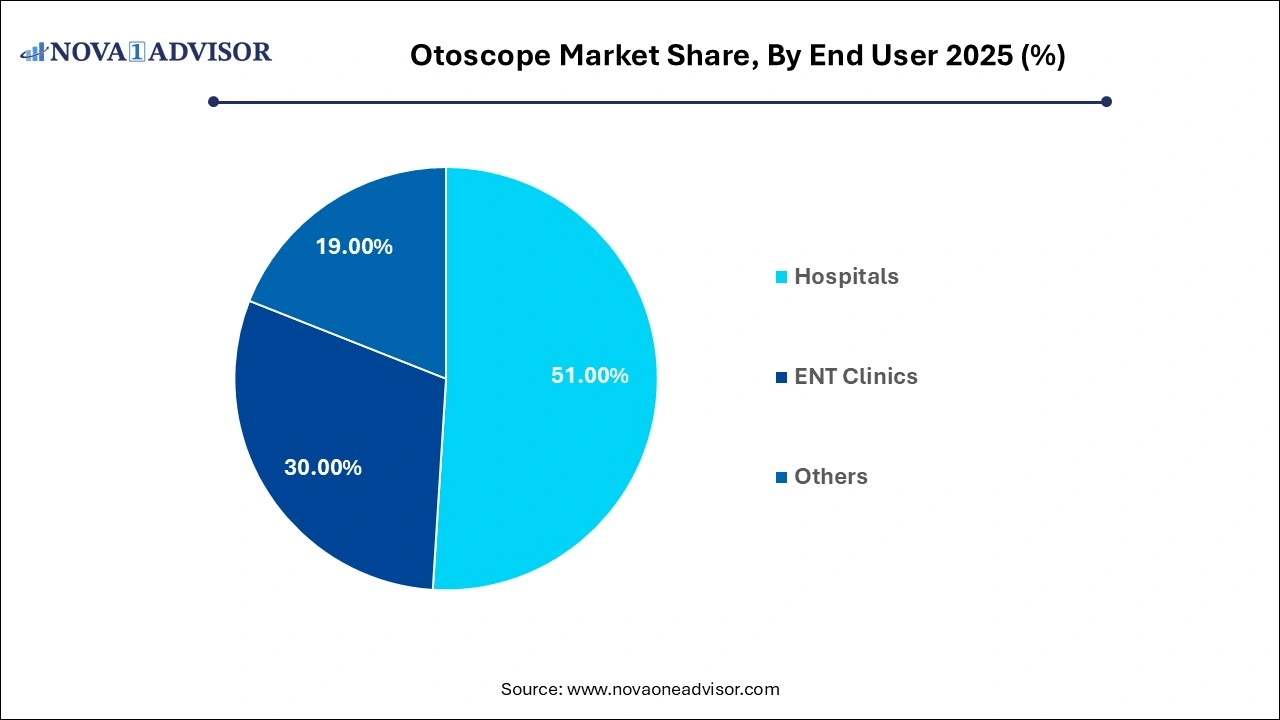
The hospital segment dominated the market with the largest share in 2025. The dominance of the segment is owing to the surge in the number of patient admissions in hospitals and the increase in chronic illness incidence. Furthermore, enhanced capital capacity enables healthcare institutions to acquire advanced digital pneumatic and video otoscopes and ensures smooth integration with hospital electronic health records (EHR).
How did the ENT clinics segment expected to hold the significantly growing global otoscope market in the coming years?
The ENT clinics segment is expected to grow at the fastest CAGR over the study period. The growth of the segment is due to growing numbers of nose, ear, and throat disorders along with a shift towards specialized outpatient care. Moreover, the integration of advanced digital, LED, and video otoscopes allows clinical specialists to obtain higher-resolution visual documentation and facilitate immediate data sharing.
By Region
Why did the North American region account for the largest share of the global otoscope market?
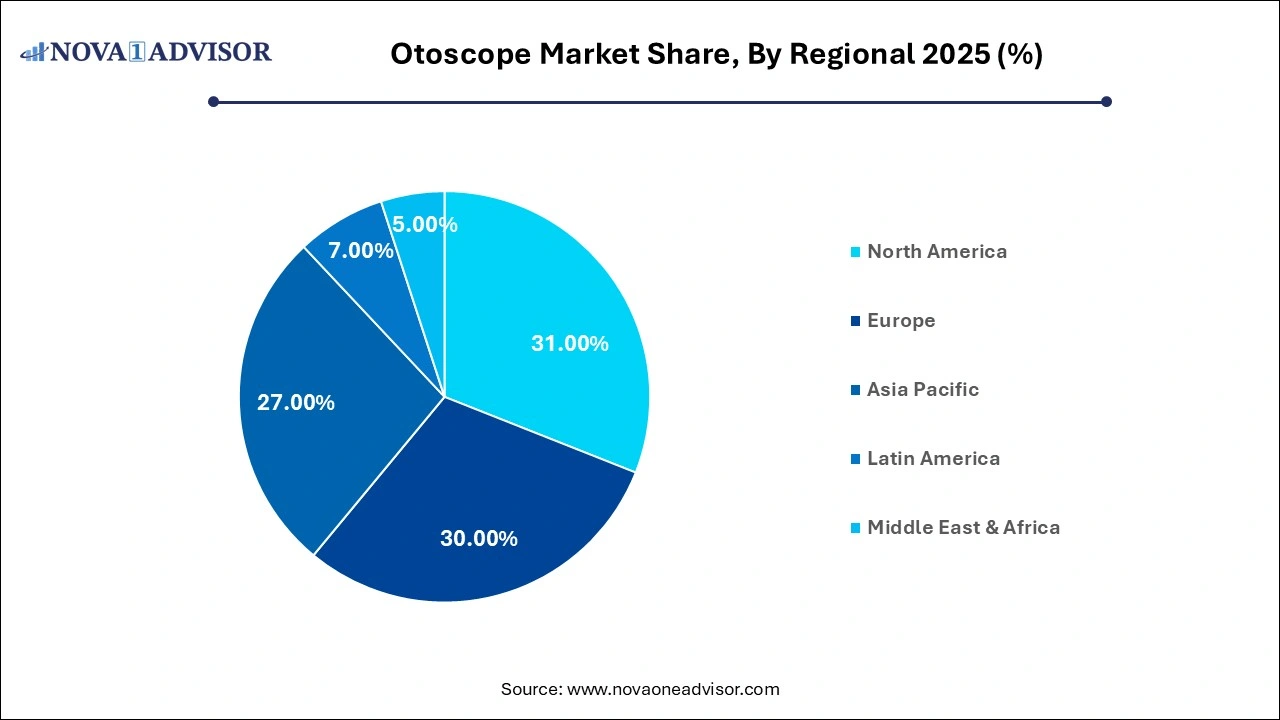
North America dominated the market with the largest share in 2025. The dominance of the region can be attributed to the growing incidence of ENT-related disorders and the surge in the elderly population across major countries. In addition, the growth of the aging population throughout the United States and Canada has resulted in an increased frequency of clinical consultations for age-related hearing loss and chronic auditory pathologies.
U.S. Global Otoscope Market Trends
The growth of the market in the country can be driven by the growing incidence of ear infections and hearing conditions coupled with growth of telehealth platforms. Also, advanced optics, enhanced LED illumination, and artificial intelligence-driven diagnostic software collectively increase clinical precision and reduce the incidence of diagnostic errors.
Why did the Asia-Pacific region become the fastest-growing global otoscope market during the forecast period?
Asia Pacific is expected to grow at the fastest CAGR over the forecast period. The growth of the region can be credited to the growing adoption of digital and portable diagnostic tools and growing healthcare infrastructure in emerging economies such as China and India. Furthermore, governments and private companies are allocating substantial capital toward the modernization and enhancement of public hospitals, community health facilities, and specialized otolaryngology clinics.
China Global Otoscope Market Trends
The market in the country is growing due to the growing healthcare expenditures and growing incidence of ear infections and hearing disorders. Moreover, the robust domestic presence of cost-effective medical device manufacturers in China guarantees extensive equipment availability and affordability across all levels of the healthcare system.
Key Players in the Global Otoscope Market
- Welch Allyn (Hillrom / Baxter): A dominant U.S. market leader offering industry-standard macro-view and digital diagnostic otoscopes widely used in hospitals and primary care.
- HEINE Optotechnik: A premier German manufacturer recognized for high-performance, precision-engineered diagnostic lighting, fiber-optic, and LED otoscopes.
- American Diagnostic Corporation (ADC): A major U.S. provider specializing in cost-effective, durable diagnostic equipment and physical examination kits for clinical professionals.
Recent Developments
In May 2026, TytoCare has secured FDA De Novo authorization for the Tyto Insights for ENT Suite, an artificial intelligence-driven platform designed to evaluate otoscopic video data. This milestone establishes a novel regulatory classification for ear, nose, and throat image analyzers.
Segments Covered in the Report
This report forecasts revenue growth at country levels and provides an analysis of the latest industry trends in each of the sub-segments from 2021 to 2035. For this study, Nova one advisor, Inc. has otoscope market.
By Type
- Pocket Otoscope
- Full-sized Otoscope
- Video Otoscope
By Modality
- Wired Digital
- Wireless
By End-user
- Hospitals
- ENT Clinics
- Others
By Region
- North America
- Europe
- Asia-Pacific
- Latin America
- Middle East & Africa (MEA)

Proceed to Buy
Instant PDF delivery on confirmation

 Request Customization
 Download Sample

Get a Sample of this Report
Otoscope Market